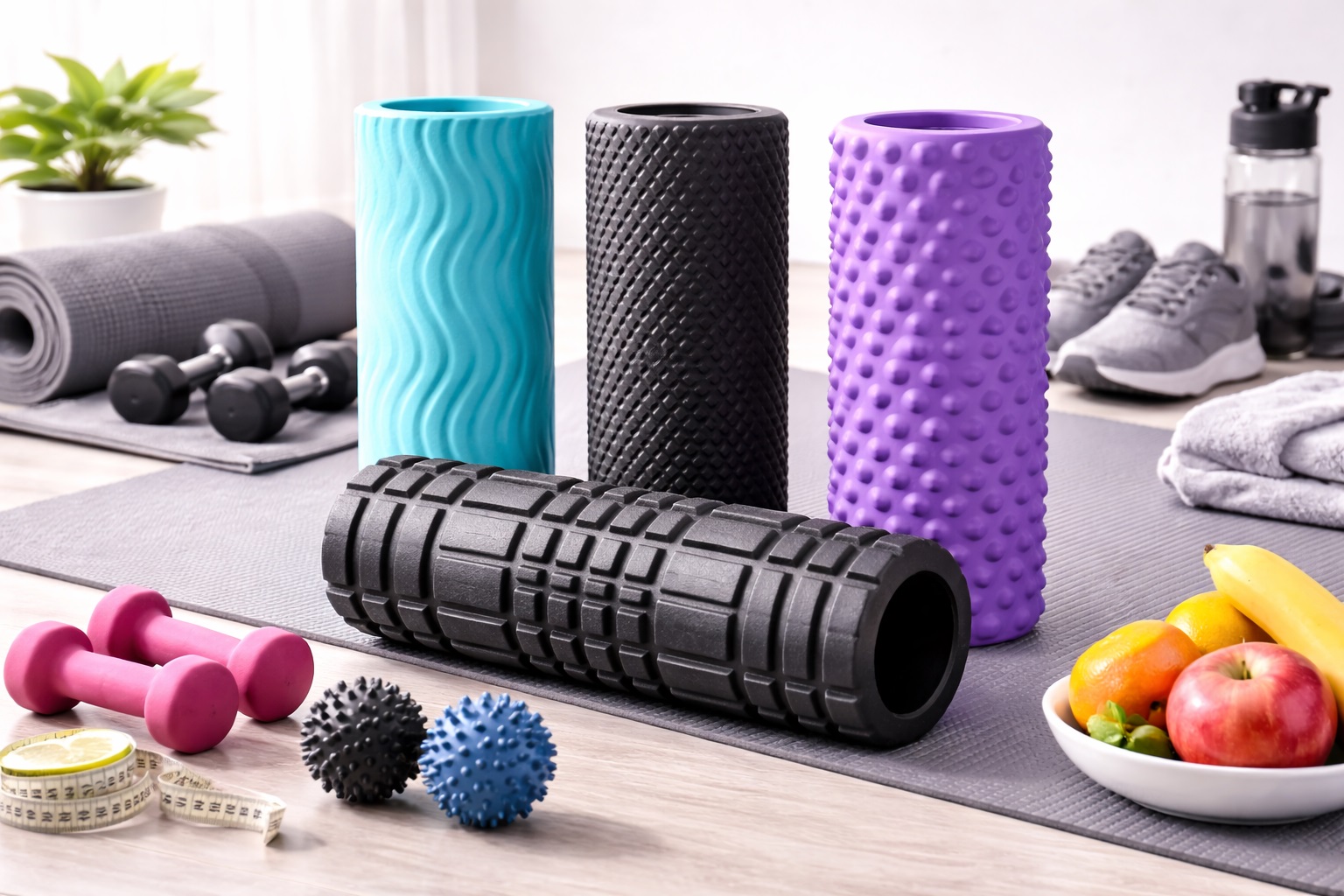
Best Foam Roller for Recovery & Weight Loss in 2026
A good foam roller does two jobs at once: it works out the knots and tightness that build up after a hard training session, and it keeps you moving well enough to actually stick with a fat-loss program. If sore hips, tight quads, or a stiff upper back have been cutting your workouts short, adding a few minutes of rolling before and after training can make a real difference in how consistent you are able to be week to week. That consistency, more than any single session, is what drives results over time.
Not every roller is built the same way. Some are soft and forgiving, designed for people who are new to self-myofascial release. Others are firm, ridged, or textured to dig into stubborn knots that a smooth surface simply glides over. Picking the right one for your body and your goals matters just as much as picking the right pair of running shoes or the right resistance band.
Price is not always a reliable signal either. Some of the most useful rollers on this list cost less than a single training session with a massage therapist, while a couple of premium options justify their price through specialized textures rather than sheer size. What matters most is matching the roller's density, texture, and length to how your body actually responds and how consistently you are realistically going to use it.
Below we break down eight of the most popular foam rollers on the market in 2026, followed by a detailed buying guide and answers to the questions we hear most often from people building a recovery routine around weight loss and active training.
Top 8 Best foam roller Picks (Detailed Reviews)
1. OPTP Pro-Roller – Best For Overall Recovery
The OPTP Pro-Roller has built its reputation on being a dependable, no-nonsense recovery tool that works for almost any muscle group. Its soft density makes it approachable for daily use without feeling harsh on tender spots, which is exactly what most people need when they are rolling out after a long run, a leg day, or simply a day spent sitting at a desk. At around $40, it sits in the middle of the pricing spectrum, reflecting the brand's focus on physical-therapy-grade construction rather than gimmicks.
The closed-cell foam used in the Pro-Roller resists flattening far better than the cheap open-cell foam found in bargain-bin rollers, so it keeps delivering consistent pressure session after session rather than developing soft spots after a few months of regular use. Because the surface is smooth rather than textured, it is also one of the more forgiving choices for rolling larger areas like the quads, hamstrings, and upper back without the sharper sensation that knobbed rollers can produce.
- Pros:
- Soft density is comfortable for daily, whole-body use
- Holds its shape well over months of regular rolling
- Reputable brand with a long history in rehab and recovery equipment
- Cons:
- Costs more than basic foam rollers with similar dimensions
- Softer density may feel too gentle for people who prefer deep pressure
Best For: Anyone who wants one reliable roller for general recovery, from post-run tightness to everyday desk-related stiffness.
Why We Recommend It: It strikes a comfortable balance that makes it easy to use consistently, and consistency is what actually drives recovery results over time.
2. LuxFit Foam Roller – Best For Firm Deep-Tissue Pressure
Where the OPTP leans soft, the LuxFit Foam Roller goes the other direction with an extra-firm density built for people who want real pressure behind their rolling sessions. It is a favorite among athletes who feel like softer rollers simply do not get deep enough into tight hip flexors, calves, or IT bands. At roughly $20, it is also one of the more affordable options on this list, making the firm-density experience accessible without a big investment.
Riders and runners who deal with recurring IT band or calf tightness tend to gravitate toward this roller because the extra-firm foam does not compress much under body weight, so pressure stays concentrated rather than dispersing the way it would with a softer core. It is a straightforward, smooth-surface design without special zones or knobs, which keeps the learning curve low even though the pressure itself is intense.
- Pros:
- Extra-firm density delivers noticeably deeper pressure
- Budget-friendly price point for a firm-density roller
- Compact enough to store in a gym bag or under a bed
- Cons:
- Firmness can feel intense for rolling beginners
- Smooth surface means less targeted pressure than knobbed designs
Best For: Experienced users and athletes who want strong, direct pressure without paying a premium price.
Why We Recommend It: Few rollers offer this much firmness at this price, making it an easy pick for anyone who has outgrown softer foam.
3. RumbleRoller – Best For Trigger Point Release
The RumbleRoller stands out immediately thanks to its deep tissue knobs, which are designed to mimic the fingers and thumbs of a massage therapist working into a specific trigger point. This is not a roller for casual, all-over use; it is built for people who have a particular area, like a stubborn spot in the glutes or upper back, that flat rollers never quite reach. At around $50, it is the priciest pick here, but the specialized knob pattern is hard to replicate with a smooth cylinder.
Because the knobs vary in size and firmness across the roller's surface, you can rotate the tool to find a texture that matches how deep you want to go, from a light pass over generally tight muscle to a more concentrated push directly into a stubborn spot. It takes a session or two to learn how to angle the roller comfortably, but once you do, it becomes one of the more precise recovery tools available.
- Pros:
- Deep tissue knobs target specific trigger points effectively
- Durable, textured surface holds up to aggressive use
- Well regarded among massage therapists and physical trainers
- Cons:
- Highest price point among the rollers on this list
- The textured surface can feel uncomfortable for sensitive muscles
Best For: Athletes and lifters dealing with stubborn knots that smooth rollers cannot reach.
Why We Recommend It: The knobbed design genuinely changes how a rolling session feels, delivering targeted relief a flat roller cannot match.
4. Gaiam Restore – Best For Travel and Small Spaces
The Gaiam Restore is built around a compact 18-inch length, making it noticeably easier to pack for a trip, tuck into a closet, or store under a couch than the full-length 36-inch rollers many brands sell. At about $12, it is also one of the most budget-conscious options on this list, which makes it a sensible first roller for someone who is not yet sure how often they will actually use one.
Despite the smaller footprint, the Restore still covers individual muscle groups like calves, quads, and forearms effectively; it simply requires a bit more repositioning to work the entire back compared to a full 36-inch roller. For someone who mostly rolls single limbs rather than lying across the roller for a full back pass, the shorter length is rarely a real drawback and mostly a storage and travel advantage.
- Pros:
- Compact 18-inch size is easy to travel with and store
- Low price point lowers the barrier to trying self-myofascial release
- Lightweight and simple to move between rooms or gym bags
- Cons:
- Shorter length is less practical for rolling the full back at once
- Basic construction may not last as long as premium alternatives
Best For: Travelers, small apartments, or anyone who wants an easy, low-commitment entry point into rolling.
Why We Recommend It: Its size makes it genuinely convenient to use often, and a roller you actually reach for beats a bulkier one collecting dust.
5. TriggerPoint CORE – Best For Sensitive Muscles and Beginners
The TriggerPoint CORE is built with a softer compression that makes it a comfortable starting point for people who are new to rolling or who simply have more sensitive muscle tissue. Rather than overwhelming a beginner with intense pressure right away, it eases them into the practice so they can build the habit before moving on to firmer tools. At around $30, it sits at a fair mid-range price for a trusted recovery brand.
Many people who try foam rolling for the first time give up because their initial roller was simply too aggressive, and the CORE is designed specifically to avoid that mistake. It applies enough pressure to still feel effective without crossing into the kind of discomfort that makes someone dread their next session, which is exactly the balance a beginner routine needs during the first few weeks of building the habit.
- Pros:
- Softer compression is gentle on sensitive or tender areas
- Approachable for people brand new to foam rolling
- Backed by a brand with a strong reputation in recovery gear
- Cons:
- Gentler feel may not satisfy users seeking deep pressure
- Mid-range price is higher than basic no-frills rollers
Best For: First-time users, or anyone whose muscles are too sensitive for firm or knobbed rollers.
Why We Recommend It: Starting gentle keeps rolling sessions enjoyable rather than something to dread, which helps the habit actually stick.
6. 321 STRONG Roller – Best For Targeted Massage Zones
The 321 STRONG Roller uses distinct massage zones along its surface, each shaped a little differently to address a different type of muscle tightness in one pass. It is a versatile middle-ground option for people who want more texture than a plain roller but do not need the intensity of a fully knobbed design. At roughly $25, it is priced to compete directly with other mid-range multi-purpose rollers.
The idea behind the zoned design is to give you options within a single tool rather than forcing a choice between a smooth roller and a knobbed one. You can roll a ridged section over a tight calf, then rotate to a flatter zone for a broader muscle group like the quads, all without switching equipment mid-session, which is convenient for people who like to work through a full-body routine in one sitting.
- Pros:
- Multiple massage zones address different tightness types on one roller
- Reasonably priced for the variety of texture it offers
- Versatile enough for both recovery and pre-workout activation
- Cons:
- Zoned texture is less targeted than dedicated trigger-point knobs
- Some users may find the varied surface less predictable to use
Best For: People who want a single roller that can handle several different muscle groups and tightness patterns.
Why We Recommend It: The zoned design offers a nice middle ground between a plain smooth roller and a fully aggressive knobbed one.
7. TriggerPoint GRID – Best For Multi-Density Versatility
The TriggerPoint GRID is known for its multi-density surface, which combines firmer ridges with softer channels so a single roller can handle broad muscle groups and more focused spots without switching tools. At around $35, it reflects TriggerPoint's reputation for durable, physical-therapy-inspired construction that tends to outlast cheaper solid-foam rollers.
What sets the GRID apart is how it distributes pressure differently depending on where you position your body weight: firmer ridges catch and work into deeper tightness, while the softer channels between them let broader areas glide more comfortably. That combination makes it a reasonable one-roller solution for someone who does not want to own separate soft and firm models for different muscle groups.
- Pros:
- Multi-density surface adapts to different muscle groups
- Well-known, trusted name in the recovery equipment space
- Durable construction built to withstand frequent use
- Cons:
- Costs more than simpler single-density rollers
- The varied texture takes some getting used to at first
Best For: Users who want one versatile roller that can transition between light and deep-tissue work.
Why We Recommend It: Its layered surface design means it rarely feels like the wrong tool, no matter which muscle group you are working on.
8. Amazon Basics High-Density – Best For Budget Buyers
The Amazon Basics High-Density roller keeps things simple with firm support at one of the lowest prices on this list, around $15. It will not win any awards for special features, but for people who just want a solid, no-frills roller to start a recovery habit, it gets the job done reliably.
This is the roller we point people toward when they are not yet sure foam rolling is going to become part of their routine and do not want to spend much finding out. The firm support delivers real pressure despite the low price, and the smooth surface makes it easy to use across large muscle groups like the quads and back without any texture-related learning curve.
- Pros:
- Very affordable entry point into foam rolling
- Firm support suits users who prefer deeper pressure
- Simple, straightforward design with no learning curve
- Cons:
- Lacks the specialized textures found on pricier rollers
- Basic construction may wear faster under heavy daily use
Best For: Budget-conscious buyers who want a reliable firm roller without paying for extras they may not need.
Why We Recommend It: It proves that an effective recovery tool does not have to come with a premium price tag.
Buying Guide: How to Choose the Best Foam Roller
Choosing a foam roller is less about finding the single "best" product and more about matching a roller's density, texture, and size to your body, your training style, and your recovery goals. The sections below cover the factors that matter most.
1. Density and Firmness Level
Density is the single biggest factor in how a foam roller feels. Soft rollers are gentle and forgiving, which makes them a good starting point for beginners or anyone with particularly sensitive muscles. Firm and extra-firm rollers deliver deeper pressure and tend to be favored by more experienced users and athletes who feel like softer foam does not reach deep enough into tight tissue.
2. Surface Texture: Smooth vs Textured
A smooth roller distributes pressure evenly across a broad area, which is ideal for general recovery and warming up large muscle groups. A textured or knobbed roller concentrates pressure into specific points, which can be more effective for stubborn knots but also more intense, especially for first-time users.
3. Roller Length and Size
Full-length rollers, typically around 36 inches, make it easier to roll your entire back in one motion, while shorter rollers around 12 to 18 inches are easier to travel with and store but require more repositioning during a session. Think about where you will actually use the roller most often before deciding on size.
4. Material Quality and Longevity
Higher-density, closed-cell foam tends to hold its shape and resist flattening far longer than cheaper open-cell foam, which can develop dents and soft spots after repeated use. A roller that keeps its shape will continue applying consistent pressure session after session.
5. Portability and Storage
If you plan to bring your roller to the gym, on trips, or between rooms at home, a compact and lightweight design matters more than it might seem. Full-length rollers offer more coverage per pass but are harder to fit in a bag or a small closet.
6. Matching the Roller to Your Goal
Someone rolling primarily to support a weight-loss training program benefits from a versatile, moderate-density roller that can be used frequently without excessive soreness, while someone managing a specific chronic tight spot may lean toward a firmer or textured design built for targeted release.
7. Comfort During Use
A roller that feels too aggressive is a roller people stop using. Comfort during a session directly affects how consistently you will actually incorporate rolling into your routine, so it is worth erring toward a gentler option if you are unsure.
8. Price Versus Long-Term Value
Foam rollers span a wide price range, but a higher price does not automatically mean better results for your specific needs. A simple, affordable roller used consistently will outperform an expensive one that sits unused in a closet.
9. Brand Reputation and Track Record
Brands with a long history in physical therapy and recovery equipment, such as TriggerPoint and OPTP, generally have more experience refining density and texture for genuine muscle relief rather than novelty.
10. Weight Capacity and Support
Most quality foam rollers are built to support full body weight comfortably during rolling, but very firm or hollow-core designs can sometimes flex or compress differently depending on your body weight, which is worth keeping in mind if you are on the heavier or lighter end of the spectrum.
11. Noise and Floor Contact
Textured and knobbed rollers can be noisier on hard flooring than smooth ones, which is a small but real consideration if you are rolling in a shared living space or an apartment with thin floors.
12. Ease of Cleaning
Because a foam roller sits directly against your skin and workout clothes, a surface that wipes down easily helps keep it hygienic, especially if it gets used daily as part of an active weight-loss routine.
13. Beginner-Friendliness
If you are new to self-myofascial release altogether, starting with a softer, smooth roller and working your way toward firmer or textured designs as your tissue adapts is generally more sustainable than starting with the most aggressive option available.
14. Rolling Speed and Technique
How you roll matters almost as much as which roller you buy. Slow, controlled passes give tight tissue time to respond, while fast back-and-forth motions tend to skim over the surface without releasing much. Pausing briefly on a particularly tender spot, rather than rolling straight through it, is generally more effective than rushing through a session.
15. Building It Into a Weight-Loss Routine
For anyone using foam rolling as part of a broader weight-loss plan, the roller works best as a supporting habit rather than the centerpiece. Pairing a short rolling session with your warm-up and cool-down helps you train harder and more often, which is ultimately what drives calorie expenditure and progress over weeks and months.
16. Core and Hollow-Center Designs
Some rollers are built with a rigid hollow core wrapped in foam, while others are solid foam all the way through. Hollow-core designs tend to hold their shape longer and can offer a slightly different feel underfoot, though solid-foam rollers are often more forgiving for beginners and typically cost less to produce, which is reflected in their price.
Frequently Asked Questions
Is a premium foam roller worth it?
For many people, yes. Premium rollers often use higher-density foam that holds its shape longer, along with more refined textures that target specific muscle issues more effectively than basic models.
Can foam rolling actually help with weight loss?
Foam rolling itself does not burn significant calories, but by reducing soreness and improving mobility, it helps you train more consistently and recover faster between workouts, which supports the training volume that drives weight-loss progress.
How often should I use a foam roller?
Many people benefit from rolling several times a week, either before workouts to warm up tissue or afterward to aid recovery. Listening to how your body responds is the best guide for finding your own frequency.
What is the difference between a soft and a firm foam roller?
Soft rollers apply gentler, more forgiving pressure and are easier for beginners to tolerate, while firm rollers apply deeper pressure that experienced users often prefer for stubborn tightness.
Do textured rollers hurt more than smooth ones?
Textured and knobbed rollers concentrate pressure into smaller points, which can feel more intense than the even pressure of a smooth roller, especially when used on a sensitive area.
How long should a foam rolling session last?
Most people spend anywhere from five to fifteen minutes rolling, focusing on major muscle groups used during their workout rather than trying to cover every area in one sitting.
Should beginners start with a firm roller?
It is generally more comfortable for beginners to start with a softer roller and progress to firmer options as their tissue becomes more accustomed to the pressure.
Is it better to roll before or after a workout?
Both have value. Rolling before a workout can help warm up muscles and improve range of motion, while rolling afterward is often used to ease tightness that builds up during training.
Can foam rolling replace stretching?
Foam rolling and stretching serve related but different purposes, and most routines benefit from combining both rather than relying on just one.
How do I clean and maintain a foam roller?
Wiping the roller down with a damp cloth and mild soap after sweaty sessions helps keep it hygienic, and storing it away from direct heat or sunlight helps preserve the foam's shape.
Is foam rolling safe to use on the lower back?
Many people do roll the upper back safely, but the lower back and spine require more caution, and it is worth being especially gentle or consulting a professional if you have existing back concerns.
What size foam roller should I buy?
A full-length roller offers more coverage for the back and larger muscle groups, while a shorter roller is easier to travel with and store, so the right choice depends on how and where you plan to use it.
Can foam rolling help reduce muscle soreness after workouts?
Many people find that foam rolling helps take the edge off delayed-onset muscle soreness, making it easier to move comfortably and stay consistent with their next training session.
What is the difference between a foam roller and a massage gun?
A foam roller uses your own body weight to apply broad, sustained pressure across a muscle group, while a massage gun delivers rapid, percussive pulses to a smaller area. Many people find the two tools complement each other rather than compete, using a roller for general recovery and a massage gun for pinpoint spots.
Do I need more than one foam roller?
Not necessarily. A single moderate-density roller can handle most general recovery needs, though some people eventually add a firmer or textured roller once they know which areas need more targeted attention.
Will foam rolling make me less sore the next day?
It can help. Improved blood flow and reduced tissue tightness after rolling often translate into feeling less stiff the following day, though individual results vary depending on the intensity of the workout and how consistently rolling is used alongside it.
Final Verdict
- Top Pick: OPTP Pro-Roller for overall excellence.
- Budget Choice: Amazon Basics High-Density for great value.
- Premium Choice: RumbleRoller for high-end, targeted features.
Whichever roller you choose, the real value comes from using it regularly. A softer, more comfortable option that you reach for several times a week will do more for your recovery and your weight-loss training consistency than a premium roller left sitting in a drawer. Match the density and texture to your current comfort level, give your body a few sessions to adjust, and let consistency do the rest. If you are still unsure where to start, a moderate-density roller with a smooth or lightly textured surface is a safe default that suits the widest range of bodies and training styles, and you can always add a firmer or more specialized roller later once you know exactly which areas need the extra attention.