Best Foam Rollers for Back Pain Relief & Muscle Recovery
A tight lower back or a knotted set of shoulder muscles rarely responds well to stretching alone. Self-myofascial release — the technical term for what a foam roller actually does — applies sustained, targeted pressure to soft tissue, which is a different mechanism than a static stretch and often more effective for the dull, stubborn tightness that builds up from sitting, training, or repetitive movement patterns. The trouble is that "foam roller" covers a surprisingly wide range of products, from soft entry-level cylinders to aggressive textured models to battery-powered vibrating rollers, and the right one for a desk worker with a stiff lower back is not the same as the right one for a runner managing IT band tightness or an athlete doing pre-training tissue prep.
This guide breaks down the most common foam roller types on the market today, explains what separates a genuinely useful roller from one that just looks the part in a product photo, and walks through the practical factors — density, texture, size, durability — that actually determine whether a roller earns a permanent spot next to your yoga mat or ends up under the bed after two uses.
Rather than crowning one universal "best" roller, the reviews below are organized around use case, because that is how this category genuinely breaks down. Someone rolling out tight hamstrings after a first attempt at foam rolling needs a very different product than someone who has been doing deep tissue work for years and wants something firmer, more targeted, or motorized.
It also helps to be clear about what a foam roller can and cannot do. It is a self-administered tool for reducing muscle tightness and improving short-term mobility around a tender area — it is not a substitute for diagnosis or treatment of a structural back problem, and it works best as one part of a broader routine that might also include stretching, strength work, and posture awareness throughout the day. With that context in mind, the six categories below cover the realistic range of what's available, from the gentlest entry-level option to the most feature-heavy motorized model.
Top Foam Rollers for Back Pain and Recovery (Detailed Reviews)
1. Smooth Low-Density Roller – Best Overall for Beginners
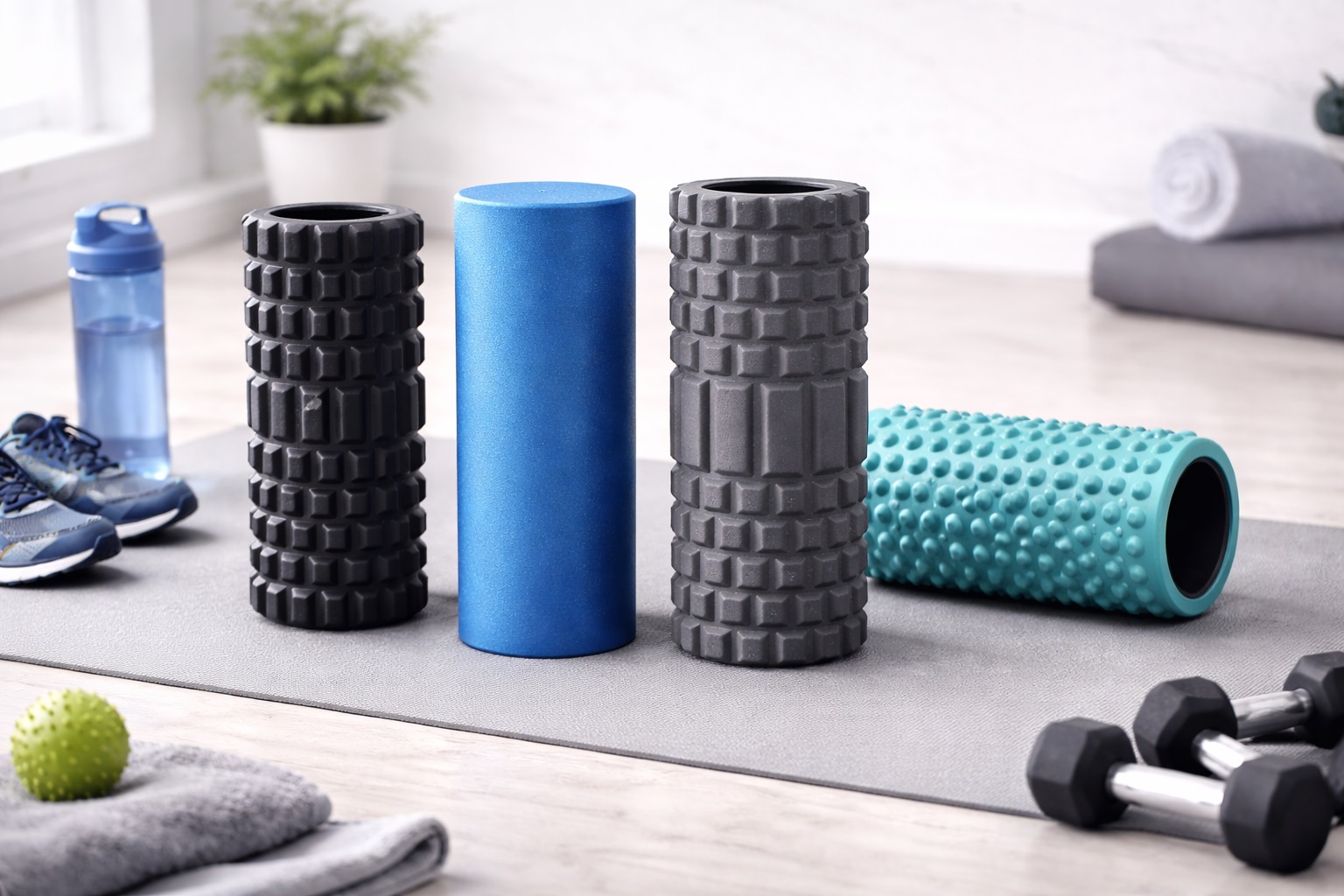
A smooth, low-density roller is the natural starting point for anyone new to self-myofascial release, and it remains one of the most versatile tools in this category even for experienced users on a recovery day. The uniform, unribbed surface spreads pressure evenly across the muscle rather than concentrating it in specific points, which makes the sensation more predictable and considerably easier to tolerate for someone rolling out a sore lower back or tight lats for the first time. Because the density is softer than a textured or high-density model, it compresses under body weight instead of digging in, giving a gentler introduction to a technique that can otherwise feel uncomfortably intense.
- Pros:
- Even, predictable pressure that suits sensitive areas like the lower back and neck
- Gentle enough for daily use without excessive soreness the next day
- Simple, no-frills design with nothing to break or wear out mechanically
- Cons:
- Softer foam compresses over time with heavy or frequent use
- May feel too mild for users who prefer deep, targeted pressure
Best For: First-time foam rollers, people with sensitive or easily irritated muscles, and anyone who wants a straightforward tool for general back and full-body relief.
Why We Recommend It: It removes the guesswork and discomfort that often causes beginners to give up on foam rolling in the first week, making it the most approachable entry point into a habit that pays off with consistency.
2. Textured Deep-Tissue Roller – Best for Targeted Muscle Release
Once the basics of rolling feel familiar, a textured roller — typically covered in raised ridges, bumps, or a grid pattern — gives more targeted relief to specific knots and adhesions that a smooth surface tends to glide past. The raised sections concentrate pressure onto smaller areas of tissue, mimicking the feel of a firmer thumb or elbow pressure that many people associate with a deep tissue massage. This makes it particularly effective on larger muscle groups like the glutes, quads, and the muscles running alongside the spine, where a broad, undifferentiated roller sometimes fails to reach the tightest spots.
- Pros:
- Textured surface targets specific knots more precisely than a smooth roller
- Effective on larger muscle groups where deeper pressure is welcome
- Durable construction that tends to hold its shape under repeated use
- Cons:
- Can feel too intense on sensitive areas like the lower back or ribs
- Not the ideal first roller for someone brand new to the technique
Best For: Athletes, gym-goers, and anyone managing chronic tightness in larger muscle groups who has already built some tolerance to rolling.
Why We Recommend It: The textured surface does more targeted work per session, which matters for people whose muscle tightness is localized rather than general and who need more than a smooth surface can deliver.
3. Vibrating Foam Roller – Best for Advanced Recovery
A vibrating roller adds a motor and adjustable vibration settings to the standard foam cylinder, layering a percussive-style element on top of traditional rolling pressure. The vibration is thought to help relax muscle tissue more quickly than static pressure alone, which can shorten the time needed to work through a tight area and make sessions feel less like an endurance test. This category tends to sit at a higher price point because of the battery, motor, and rechargeable components involved, and it usually requires periodic charging that a passive foam roller never does.
- Pros:
- Vibration settings can reduce the time and pressure needed for relief
- Multiple intensity levels adapt to different muscle groups and pain thresholds
- Feels like a hybrid between a foam roller and a massage gun
- Cons:
- Higher price point than passive rollers due to the motor and battery
- Requires charging and periodic maintenance that non-motorized rollers avoid
Best For: Athletes and active individuals with limited recovery time who want more intensity from shorter sessions, and anyone who already appreciates percussive massage devices.
Why We Recommend It: The added vibration genuinely changes how the muscle responds to pressure, and for people who train frequently, cutting recovery time without cutting effectiveness is a real practical benefit.
4. Grid Foam Roller – Best for Multi-Zone Muscle Work
A grid roller uses a patterned surface of varying bump heights and shapes across different zones of the cylinder, effectively packing several roller textures into one tool. One section might mimic a smooth roller, another a firmer textured surface, and another a narrower ridge designed for smaller muscle groups. This design suits people who work on multiple areas in a single session — lower back, IT band, calves — and would rather switch zones on one roller than own several single-purpose ones.
- Pros:
- Multiple texture zones cover a wider range of muscle groups on one tool
- Efficient for full-body routines that move between several areas
- Grid pattern generally holds up well against denting over time
- Cons:
- Some zones may be firmer or gentler than an individual's preference
- Pattern can take a session or two to get used to compared to a uniform surface
Best For: People who roll multiple muscle groups per session and want variety in pressure and texture without switching between separate rollers.
Why We Recommend It: Packing several textures onto one roller reduces the need to own multiple tools, which is a meaningful convenience for anyone building a consistent, multi-area recovery routine.
5. Half-Round Foam Roller – Best for Stability and Balance Training
A half-round roller — flat on one side, curved on the other — serves a different purpose than the traditional full cylinder. Instead of being used purely for rolling tissue, it doubles as a stability tool for balance drills, core activation exercises, and controlled mobility work, since the flat side sits securely on the floor without rolling away mid-exercise. This makes it a practical crossover product for anyone combining muscle recovery with rehab-style stability training, though it offers less classic rolling surface area than a full cylinder.
- Pros:
- Flat base allows use as a stable platform for balance and core exercises
- Doubles as both a recovery tool and a light training aid
- Stays in place better than a full cylinder during standing or seated work
- Cons:
- Less total rolling surface than a full cylinder for tissue work
- Not ideal as someone's only roller if deep tissue rolling is the main goal
Best For: People combining foam rolling with balance training, physical therapy exercises, or core stability drills that call for a stable, non-rolling surface.
Why We Recommend It: Its dual function as both a stability platform and a rolling tool makes it a smart addition for anyone whose routine goes beyond passive rolling into active mobility and balance work.
6. Budget Foam Roller – Best Value Pick
A budget roller strips the category down to its essentials: a solid foam cylinder with no texture variation, no motor, and no premium materials, sold at a lower price point than the specialized options above. For someone who wants to test whether foam rolling fits into their routine before investing more, or who simply needs a reliable basic tool for occasional use, this category delivers the core function without the added cost of features they may not use.
- Pros:
- Low price point makes it an easy, low-risk way to try foam rolling
- Straightforward design with no learning curve or settings to manage
- Compact and easy to store in a gym bag or small apartment
- Cons:
- Foam density and durability are generally lower than pricier options
- Lacks the targeted texture or vibration features of specialized rollers
Best For: First-time buyers, occasional users, and anyone who wants a reliable basic roller without paying for features they won't use regularly.
Why We Recommend It: It delivers the fundamental benefit of foam rolling — sustained pressure on tight tissue — at a price that makes it easy to justify, even for someone still deciding how often they'll actually use it.
Buying Guide: How to Choose the Best Foam Roller for Back Pain
Before adding a foam roller to your cart, it helps to think through a handful of practical factors that separate a roller you'll actually use from one that ends up forgotten in a closet. None of these considerations are complicated, but skipping them is exactly how people end up with a roller that's too firm, too small, or too specialized for how they actually plan to use it.
1. Density and Firmness
Density determines how much the roller compresses under body weight, and it's the single biggest factor in how a session actually feels. Softer, low-density foam is more forgiving and suits beginners, sensitive areas like the lower back, and anyone recovering from an injury. Firmer, high-density foam holds its shape under pressure and delivers a more intense release, which experienced users often prefer for larger muscle groups like the glutes and quads. Choosing based on your current tolerance — not the firmness a friend or trainer swears by — tends to produce a better long-term match.
2. Textured vs. Smooth Surface
Smooth rollers spread pressure evenly and are easier to tolerate, while textured rollers concentrate pressure on specific points to target knots more directly. Neither is objectively better; the right choice depends on whether you're rolling general tightness across a broad area or trying to release a specific, stubborn spot. Many people who roll consistently eventually own one of each, using smooth surfaces for sensitive areas and textured surfaces for the glutes, quads, and upper back.
3. Size: Diameter and Length
Roller diameter affects how deep the pressure goes and how stable the roller feels underneath you — a smaller diameter roller tends to sink deeper into tissue, while a larger diameter feels more supportive and less intense. Length matters for versatility: a full-length roller (around 36 inches) supports the whole back at once, which is useful for spinal alignment work, while shorter rollers (12–18 inches) are easier to travel with and better suited to targeting single limbs or smaller areas.
4. Durability Under Regular Use
A roller used daily needs to hold its shape under repeated body-weight pressure without developing permanent dents or losing its density. Lower-quality foam can flatten out or crack along the surface within months of regular use, at which point it stops delivering consistent pressure. Reading feedback on how a specific roller holds up after weeks or months of use is more useful than judging firmness from a product photo alone.
5. Ease of Use Across Different Muscle Groups
Some rollers are shaped and sized well for the back and glutes but awkward for calves, forearms, or smaller stabilizer muscles. If your routine touches multiple muscle groups, consider whether a single roller design accommodates all of them comfortably, or whether a grid-style roller with multiple zones — or a second, smaller roller — makes more sense for the areas a single design can't reach well.
6. Price and Long-Term Value
A foam roller is a low-cost tool compared to most recovery equipment, but price still varies meaningfully by category — a basic smooth roller costs a fraction of a motorized vibrating model. The right spend depends on how often you'll realistically use it and whether the added features of a premium option, like vibration or multi-zone texture, actually address a need you have rather than a feature that sounds appealing in a listing. It's also worth comparing the cost of a roller against what it replaces: even a mid-priced roller used consistently over a year works out to a fraction of the cost of a handful of professional massage sessions, which is part of why this category has such a favorable value proposition for people dealing with recurring tightness.
7. Weight Capacity and Build Quality
Foam rollers bear a portion of your body weight during use, so checking the manufacturer's stated weight capacity is worth doing, particularly for larger users or anyone planning to use the roller for standing exercises rather than just floor-based rolling. Build quality — how the foam is bonded to any internal core, and whether the outer surface shows signs of peeling or cracking in reviews — is a reasonable proxy for how long the roller will perform as intended. Rollers built around a hollow, rigid PVC core tend to hold their shape longer under heavy pressure than solid foam construction, though they can also feel firmer overall, so this is worth factoring in alongside your density preference rather than treating it as a separate decision.
8. Battery Life and Charging (Vibrating Models Only)
For vibrating rollers specifically, battery life determines how many sessions you get between charges, and this varies considerably between models. A roller that needs charging after every single use adds friction to a habit that should ideally require none. Checking the advertised battery life against how often you plan to use the device is a practical way to avoid a roller that ends up dead in a drawer.
9. Portability and Storage
A full-length roller offers more surface area but takes up more space and is harder to pack for travel or a gym bag. Shorter and half-round rollers sacrifice some surface area for a smaller footprint. If you plan to use your roller both at home and on the road, this trade-off between size and portability is worth weighing before committing to a full-length model.
10. Cleaning and Hygiene
Foam rollers come into direct contact with skin and, in a shared gym environment, potentially with other people's skin and sweat. A surface that can be wiped down easily without damaging the foam is a practical, if often overlooked, consideration — particularly for textured or grid-pattern rollers where grooves can trap moisture and require slightly more attention to keep clean.
Frequently Asked Questions
How often should I use a foam roller for back pain?
Most people see benefit from rolling a few times per week, though daily use is common and generally safe with a moderate-density roller. Listen to how your body responds — persistent soreness that doesn't ease within a day may be a sign to reduce frequency or intensity rather than push through it.
Can foam rolling make back pain worse?
Used incorrectly, or on an acute injury rather than general tightness, rolling can aggravate discomfort. Rolling directly over the spine itself is generally discouraged; instead, work the muscles alongside it. If pain is sharp, radiating, or worsening rather than a dull release-type discomfort, it's worth pausing and consulting a medical professional rather than continuing to roll through it.
Is a firmer roller always better for back pain?
Not necessarily. Firmness should match your tolerance and experience level, not an assumption that more intensity equals more benefit. Beginners and people with sensitive lower backs often get better, more consistent results from a softer roller used regularly than a firm roller used inconsistently because it's uncomfortable.
How long should I roll each muscle group?
Many people find 30 seconds to two minutes per muscle group sufficient, focusing on areas of noticeable tightness rather than rolling the entire body for an extended period every session. Quality of focus on tight spots tends to matter more than total time spent rolling.
Do vibrating foam rollers actually work better than standard ones?
They offer a different mechanism — vibration in addition to compression — which many users report speeds up the sense of muscle relaxation, but a standard roller used consistently still delivers real benefit. The vibrating option is more about convenience and intensity for time-limited routines than being a strictly superior category.
What size foam roller should I buy for back pain specifically?
A full-length roller (around 36 inches) is generally best for back work since it supports the whole spine area at once and is harder to lose balance on compared to a short roller. If space or portability is a bigger concern than back-specific use, a shorter roller can still address back tightness with a bit more careful positioning.
Can I use a foam roller if I have a herniated disc or other diagnosed back condition?
This depends entirely on your specific diagnosis, and it's a question worth directing to a physical therapist or physician rather than answering generically. Foam rolling is generally aimed at muscle tissue, not spinal structures, so its appropriateness with a diagnosed condition varies by individual case.
How do I clean a textured or grid foam roller?
A damp cloth with mild soap works for most closed-cell foam rollers; avoid submerging the roller or using harsh solvents that can degrade the foam surface. Textured and grid patterns benefit from slightly more attention to the grooves, where moisture and skin oils can accumulate over time.
Is it worth buying more than one type of foam roller?
For people who roll regularly and work multiple muscle groups, owning a smooth roller for sensitive areas and a textured or grid roller for deeper work is a common and reasonable approach. For occasional or general use, one versatile roller is usually enough.
How long does a foam roller typically last?
With regular use, a well-made foam roller commonly lasts one to several years before the foam noticeably softens or the surface begins to degrade. Cheaper, low-density rollers tend to show wear sooner than higher-density or better-constructed models.
Should I foam roll before or after exercise?
Both have a place: rolling before activity can help loosen tight areas ahead of movement, while rolling after activity is more commonly used to aid recovery and reduce post-workout soreness. Many people do a shorter session before training and a more thorough one afterward.
Can foam rolling replace stretching entirely?
They address tightness differently rather than being interchangeable. Foam rolling works on the muscle tissue itself, while stretching works on the muscle's length and range of motion. Most well-rounded routines use both, often rolling first to reduce tension and then stretching to work on flexibility once the tissue feels less restricted.
Do I need a mat or padded surface to use a foam roller?
A mat is not strictly necessary but makes rolling more comfortable on hard flooring, particularly for positions where knees or elbows also make contact with the floor. It also gives the roller a bit more grip than a slick hardwood or tile surface, which can otherwise cause it to slide unexpectedly.
Will foam rolling help with posture from sitting all day?
It can help indirectly by loosening the muscles that tend to tighten from prolonged sitting, such as the hip flexors, upper back, and chest, which often pull the body into a rounded posture over time. Foam rolling alone won't correct posture on its own, but paired with regular movement breaks and some targeted strengthening, it's a reasonable part of an office-worker's routine for reducing stiffness by the end of the day.
Final Verdict
There isn't a single foam roller that suits every back and every routine, and that's really the point of breaking this category down by use case rather than by a single ranked list. The right roller is the one that matches your current tolerance, the areas you actually need to target, and how consistently you're likely to use it.
- Best Overall for Beginners: The smooth low-density roller, for its gentle, predictable pressure and simple design.
- Best for Targeted Release: The textured deep-tissue roller, for concentrated pressure on stubborn knots.
- Best for Advanced Recovery: The vibrating foam roller, for added intensity in shorter sessions.
- Best Value: The budget foam roller, for a low-risk way to build the habit.
Whichever type you land on, consistency matters more than the specific model. A moderately good roller used several times a week will do more for chronic back tightness than a premium one that sits unused. Start with what matches your current comfort level, and let your own experience — not marketing claims — guide any upgrade from there.