Best Durable Vacuum Cleaner in 2026
A durable vacuum is one that keeps performing the same way years after purchase, not just the day it arrives. That distinction matters more than it might initially seem, since almost any vacuum can look and perform well during its first few months of ownership. Motor longevity, housing quality, and how well a machine tolerates years of bumps, drops, and daily use all matter more over time than any single spec sheet number, Buyers who have gone through several short-lived vacuums in a row often become the most careful shoppers precisely because they have already experienced firsthand how quickly a poorly built machine can disappoint.
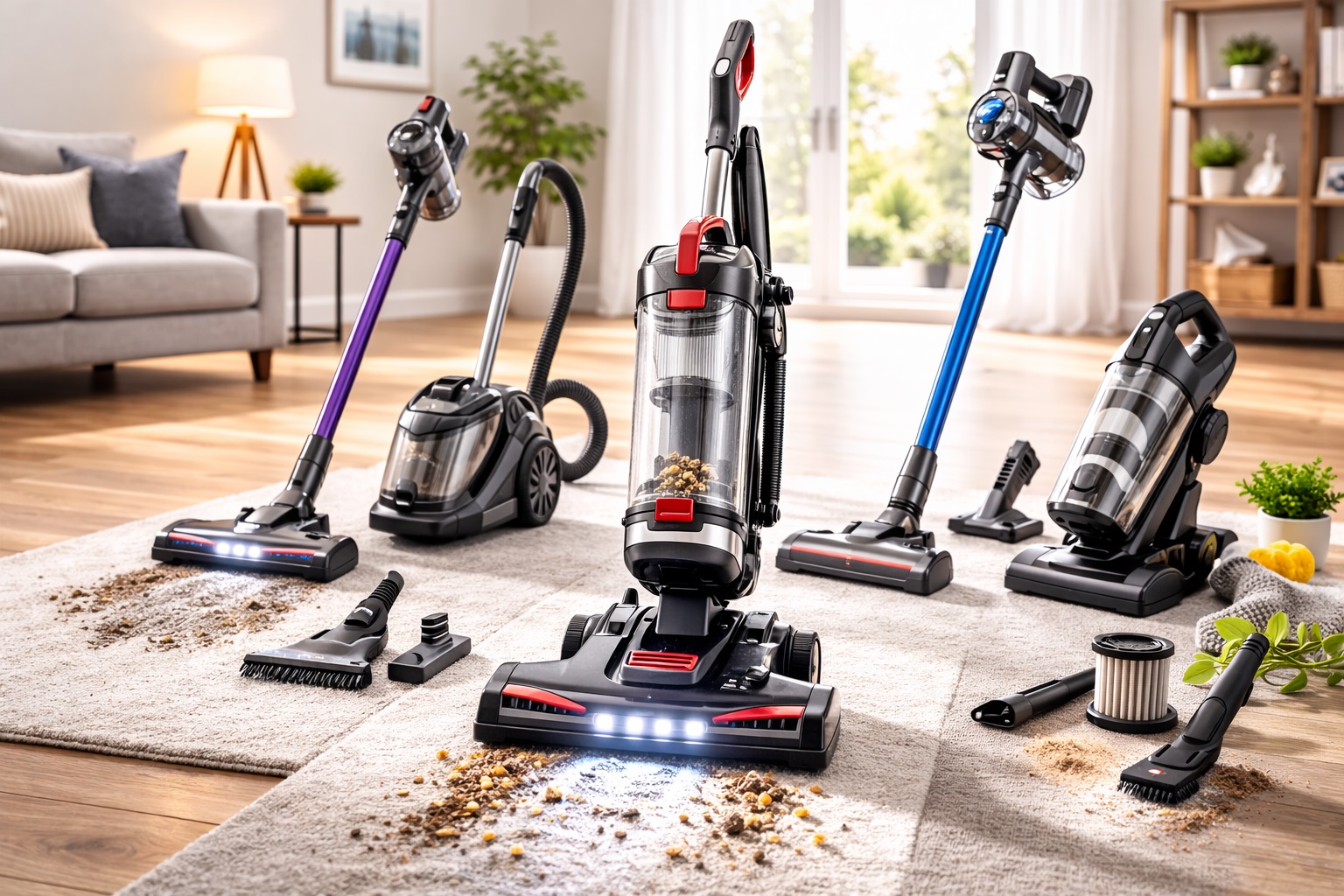
This guide compares eight vacuum cleaners commonly discussed in durability-focused searches for 2026, spanning cordless sticks, corded uprights, a canister, and a robot vacuum. Because durability means something different depending on format, a corded machine's longevity generally comes down to motor and housing quality, while a cordless model's real-world lifespan is also tied to how well its battery holds up over repeated charge cycles. This comparison treats both angles honestly rather than assuming one format is automatically more durable than another.
It is also worth separating two related ideas that often get blurred together: build quality, which is about how well a machine is physically constructed, and long-term reliability, which is about how consistently it performs over years of ownership. A vacuum can be well built but still develop performance issues if it is neglected, while a more modest machine cared for properly can sometimes outlast expectations. The reviews below consider both angles for each model rather than treating durability as a single, simple number.
Below you will find profiles of all eight models with a focus on build quality and long-term reliability, a buying guide covering the features and habits that most affect how long a vacuum actually lasts, and answers to the questions households ask most often when shopping specifically for longevity rather than short-term performance.
None of the figures in this comparison represent laboratory stress testing, since that kind of formal, independently verified data generally is not published for consumer vacuum cleaners. Instead, the durability observations here draw on brand reputation, product history, design choices like sealed filtration and replaceable batteries, and general engineering patterns, giving you a well-informed framework rather than a false sense of precision about how many years any specific unit will last.
Top 8 Best vacuum cleaner Picks (Detailed Reviews)
1. Shark Navigator Lift-Away – Best For Durable Everyday Versatility
The Shark Navigator Lift-Away, priced around $200, pairs a detachable canister pod with Anti-Allergen Complete Seal technology. Its lift-away mechanism sees frequent use in real households, moving between full upright mode and detached spot cleaning, and its hinge and latch components are built to withstand that repeated switching without loosening over time. For households that want durability specifically in a versatile, frequently reconfigured machine, its design has held up well across years of common use.
- Pros:
- Detachable pod mechanism built to withstand frequent use
- Anti-Allergen Complete Seal protects internal components from fine debris buildup
- Reputable brand with a long track record in upright vacuum durability
- Cons:
- More moving parts than a simple fixed-body upright, with more potential wear points
- Mid-range price means it is not the cheapest durable option here
Best For: Households that need a versatile machine and want confidence it will hold up to frequent switching between modes.
Why We Recommend It: Its detachable design has proven durable in everyday use despite having more mechanical components than a basic upright, which is a meaningful vote of confidence in its build quality. Households that use the lift-away function daily, such as for stairs or a car interior, are exactly the use case this design was built to withstand, and its continued reliability under that kind of repeated stress speaks well of its engineering.
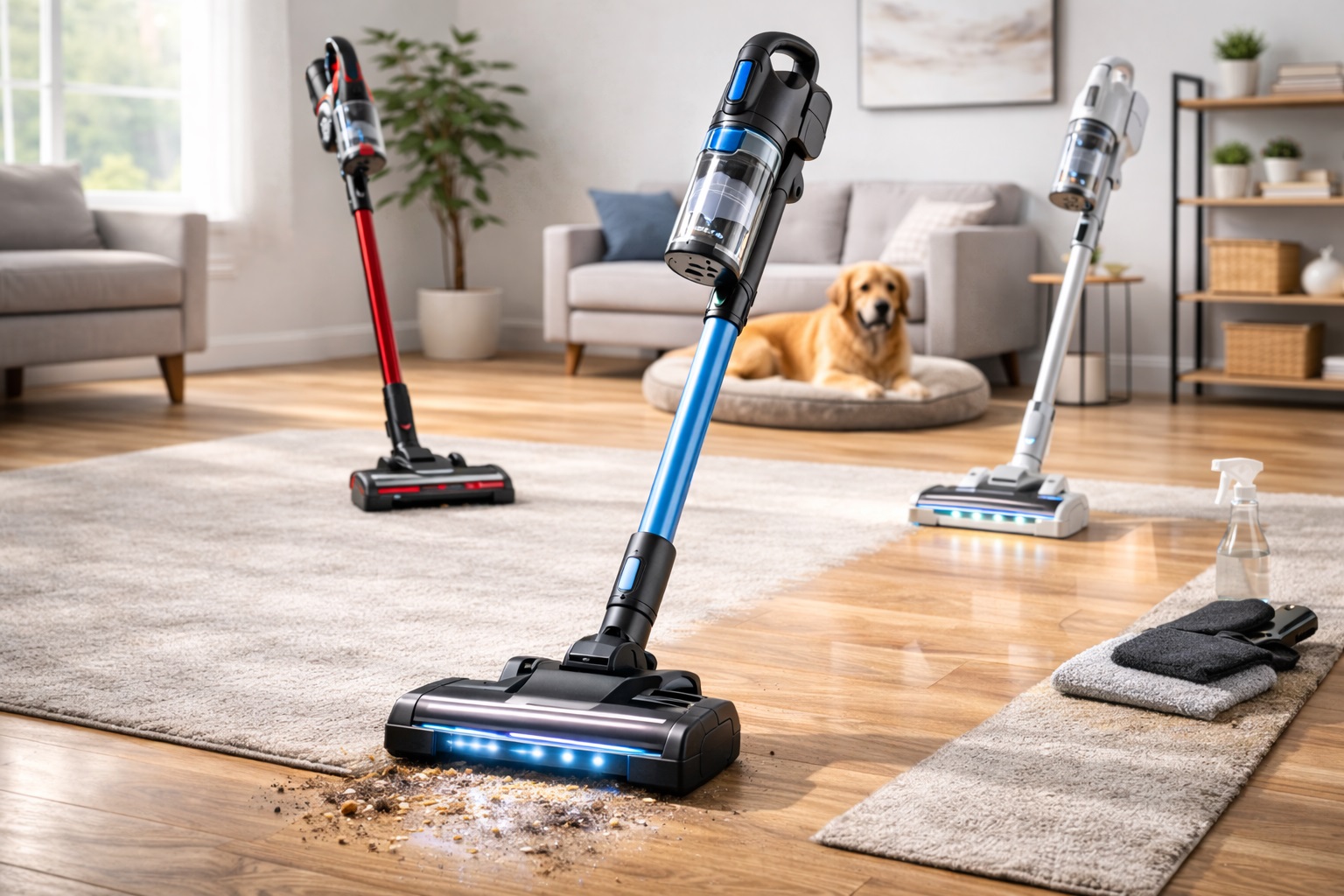
2. Dyson V15 Detect – Best For Durable Cordless Engineering
The Dyson V15 Detect, priced around $750, is widely regarded for premier build quality in the cordless category, an area where cheaper competitors often show wear far sooner. Its laser dust detection hardware and detachable handheld unit both add engineering complexity, but Dyson's reputation for cordless durability generally extends to how well these components hold up over years of regular charging and use. For buyers specifically worried about cordless vacuums degrading faster than corded ones, this is one of the stronger cordless picks for long-term confidence.
- Pros:
- Premier build quality widely regarded as class-leading in the cordless category
- Reputable brand known for engineering durability into cordless designs
- Detachable handheld unit built to withstand repeated attachment cycles
- Cons:
- Highest price point among the cordless options in this lineup
- Battery capacity naturally degrades over years of charge cycles, as with any cordless device
Best For: Buyers who want the most durable cordless option available and are willing to pay a premium for that confidence.
Why We Recommend It: Its reputation for build quality specifically addresses the durability concerns most commonly raised about cordless vacuums as a category. Buyers who have been burned by a cheaper cordless vacuum losing noticeable power within a year or two often cite this kind of engineering reputation as the main reason they are willing to pay more the second time around.
3. Bissell CleanView – Best For Simple, Long-Lasting Design
The Bissell CleanView, priced around $100, keeps its OnePass Technology housed in a straightforward upright body with fewer complex moving parts than a detachable or cordless design. Simplicity is itself a durability advantage: fewer components generally means fewer things that can fail over years of use. For budget-conscious households who want confidence in long-term reliability without paying for a more complex mechanism, its no-frills design has proven dependable.
- Pros:
- Simple fixed-body design with fewer potential failure points
- Accessible price point for a genuinely long-running product line
- Reputable brand with widely available replacement parts
- Cons:
- Fewer premium materials than higher-priced competitors
- Corded design limits use cases compared to cordless durability discussions
Best For: Budget-focused buyers who want a mechanically simple, dependable vacuum with a long track record.
Why We Recommend It: Its straightforward construction is a genuine durability advantage in its own right, proving that long-term reliability does not always require a premium price. A simpler design also tends to be easier and cheaper to repair when something eventually does wear out, since there are fewer specialized components involved in any given fix.
4. Eureka PowerSpeed – Best For Affordable Long-Term Value
The Eureka PowerSpeed, priced around $70, is the most affordable model in this lineup, and its five height adjustments are built into a simple corded upright body designed for years of routine use rather than heavy-duty commercial cleaning. While it does not carry the premium materials of pricier competitors, its long-running product line and wide parts availability mean it can generally be kept in service for years through basic maintenance and occasional replacement parts.
- Pros:
- Lowest price point while still offering a genuinely serviceable design
- Widely available replacement parts support long-term ownership
- Simple mechanics reduce the number of things that can break
- Cons:
- Build materials feel less substantial than pricier rivals
- Fewer premium features than higher-cost competitors
Best For: Budget-conscious households who want a serviceable, long-term-capable vacuum without a large upfront investment.
Why We Recommend It: Wide parts availability and simple mechanics mean this budget pick can realistically be kept running for years through basic upkeep alone. For households replacing an older vacuum on a budget, choosing a model from a brand with a long production history, like this one, reduces the risk of parts becoming hard to find a few years down the line.
5. Hoover WindTunnel – Best For Proven Long-Running Reliability
The Hoover WindTunnel, priced around $150, comes from one of the longest-running product lines in the vacuum industry, and its Multi-Cyclonic suction system is a mature, well-tested design rather than a newer, less-proven technology. Long production runs generally mean manufacturing issues have been identified and addressed over time, and its widely available replacement parts support keeping the machine in service well beyond its initial warranty period.
- Pros:
- Long-running, well-tested product line with a mature design
- Multi-Cyclonic suction system built on proven, established technology
- Widely available replacement parts for extended service life
- Cons:
- Bulkier body than lighter, more modern alternatives
- Corded design limits use cases compared to cordless options
Best For: Buyers who value a mature, well-proven design with a long track record over newer, less-tested technology.
Why We Recommend It: Its long production history and parts availability give it a durability advantage that newer, less established models cannot yet claim. A vacuum design that has been refined across many product generations has generally already had its early manufacturing issues identified and corrected, which is a real advantage over a brand-new release without that history.
6. Tineco Pure One S12 – Best For Durable Smart Cordless Technology
The Tineco Pure One S12, priced around $400, uses an iLoop smart sensor built into a lightweight cordless body. As a newer entrant relative to some of the longer-running brands in this lineup, its long-term durability track record is less extensive, though its smart suction management, which reduces unnecessary maximum-power draw during lighter cleaning, may help extend battery life over repeated charge cycles compared to a cordless vacuum that always runs at full power.
- Pros:
- Smart suction management may reduce unnecessary battery strain over time
- Lightweight cordless design reduces stress on handle and joint components
- Reputable brand focused specifically on cordless vacuum technology
- Cons:
- Shorter market track record than some longer-established competitors
- Smaller service network than long-established vacuum brands
Best For: Buyers interested in newer cordless technology who are comfortable with a shorter long-term track record than legacy brands offer.
Why We Recommend It: Its smart power management is a reasonable, forward-looking approach to extending cordless durability, even without decades of market history to confirm it. Buyers considering it should weigh the appeal of newer technology against the comfort of a longer track record, recognizing that both are reasonable priorities depending on individual risk tolerance.
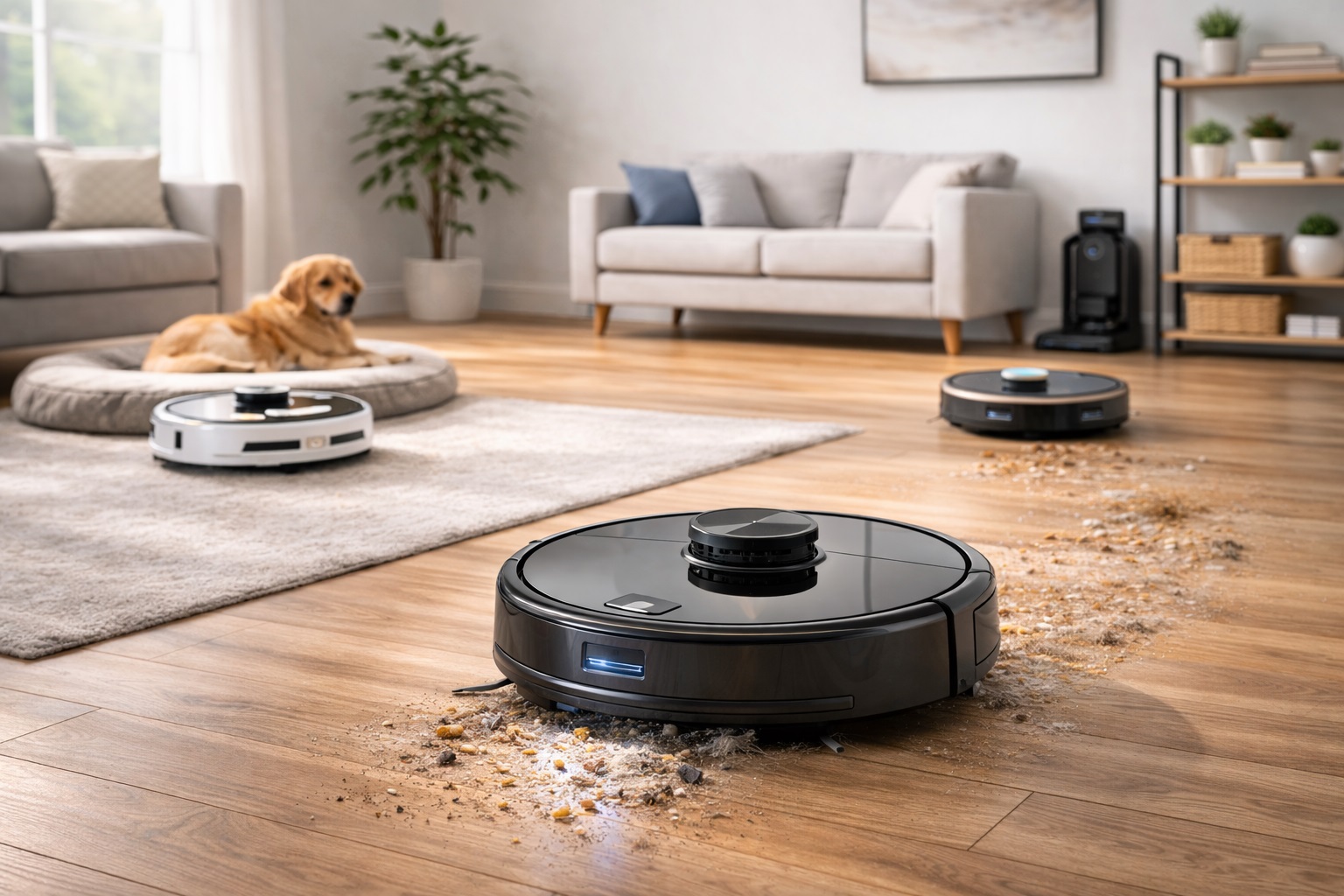
7. iRobot Roomba j7+ – Best For Durable Autonomous Operation
The iRobot Roomba j7+, priced around $800, is built to run autonomously on a near-daily schedule, which places different durability demands on it than a vacuum used for occasional manual sessions. Its obstacle avoidance AI is designed to reduce collisions with furniture and walls that could otherwise wear down its housing over thousands of cleaning cycles, and iRobot's long history in the robot vacuum category provides more real-world durability data than newer entrants to the space.
- Pros:
- Obstacle avoidance reduces physical wear from repeated collisions
- Established brand with extensive real-world durability data over many product generations
- Designed specifically for high-frequency, autonomous daily use
- Cons:
- Battery and brush components require periodic replacement over years of daily cycles
- Higher price point than any manual vacuum in this lineup
Best For: Households that want a robot vacuum specifically engineered for the wear and tear of daily autonomous operation.
Why We Recommend It: Its obstacle avoidance and iRobot's long track record in the category address durability concerns unique to a machine that runs largely unsupervised, every day, for years. Because it operates without direct supervision, its ability to avoid repeated physical impacts matters more for long-term durability than it would for a vacuum only used under someone's direct control for a short session.
8. Miele Complete C3 – Best For Long-Term Premium Durability
The Miele Complete C3, priced at roughly $1,000, is the most expensive model in this lineup and also carries one of the strongest reputations for long-term durability in the vacuum industry, with the brand widely known for engineering appliances meant to last many years of regular use. Its AirClean Sealed System also helps protect internal components from fine dust infiltration over time, an often-overlooked contributor to long-term motor health. For buyers treating a vacuum purchase as a long-term investment, its reputation for longevity is a central part of the appeal.
- Pros:
- Widely regarded as one of the most durable vacuum brands available
- AirClean Sealed System helps protect internal components from dust infiltration
- Corded design avoids battery degradation concerns entirely
- Cons:
- Highest price point in this entire lineup
- Corded design and canister body are less convenient for quick spot cleaning
Best For: Buyers specifically prioritizing maximum long-term durability and willing to pay a premium upfront for it.
Why We Recommend It: Its reputation for longevity is well established and directly relevant to any household treating durability as the single most important purchasing factor. Many owners specifically cite this brand's reputation for lasting well beyond a decade of regular use as the deciding factor over cheaper alternatives, even accounting for the significant price difference.
Buying Guide: How to Choose the Most Durable Vacuum Cleaner
Durability is harder to judge at the point of purchase than suction power or price, since it only reveals itself over years of use. The sections below cover the specific signals worth looking for before you buy.
1. Housing Material Quality
Thicker, higher-grade plastics and metal components generally withstand drops and daily bumps better than thin, lightweight materials, though this often comes with a corresponding increase in price and weight.
2. Motor Longevity in Corded Models
Corded vacuum motors that avoid overheating, often through better sealed filtration and airflow design, tend to last longer than motors that regularly run hot during extended sessions.
3. Battery Degradation in Cordless Models
Cordless vacuum batteries naturally lose capacity over hundreds of charge cycles, so checking whether a battery is user-replaceable significantly extends the practical lifespan of an otherwise durable machine.
4. Brand Track Record and Product History
Brands with decades of production history and widely documented long-term ownership experiences generally offer more real-world durability confidence than newer entrants without an established track record. Searching for owner forums or long-term review threads specific to a model, rather than relying only on recent product listings, often surfaces the most honest durability information available.
5. Warranty Length as a Durability Signal
Manufacturers who offer longer warranties are often more confident in their own product's long-term reliability, making warranty length a useful, if imperfect, proxy for expected durability. A one-year warranty on a premium-priced vacuum is worth noting as a potential red flag, just as a generous multi-year warranty on an affordable model is worth noting as a positive signal.
6. Replacement Parts Availability
A vacuum is only as durable as its ability to be repaired; models with widely available filters, belts, and brush rolls can often be kept running for years past when a less-supported model would need full replacement. Before buying, a quick search for the specific brand and model plus the word filter or belt can confirm whether parts are still being manufactured and sold.
7. Sealed Systems and Internal Component Protection
Sealed filtration systems that keep fine dust away from internal motor components can meaningfully extend a vacuum's functional lifespan by reducing the gradual wear caused by dust infiltration. This benefit compounds over years of use, since a motor protected from fine dust from day one tends to show far less internal wear at the five-year mark than one without equivalent sealing.
8. Mechanical Complexity vs Simplicity
Simpler designs with fewer moving parts, such as a fixed-body upright, generally have fewer potential failure points than more complex detachable or multi-mode machines, even if the latter offer more versatility. There is no universally correct answer here; the right balance depends on whether you value the added functionality enough to accept a somewhat higher theoretical risk of a component eventually needing repair.
9. Autonomous Use Wear Patterns for Robot Vacuums
Robot vacuums that run daily accumulate wear differently than manually operated machines, so obstacle avoidance technology that reduces collisions plays a more direct durability role for this format specifically. Over a year of daily runs, even small reductions in the frequency of physical impacts add up to meaningfully less cumulative stress on the housing and internal components.
10. Storage and Handling Habits
How a vacuum is stored, whether leaned carelessly in a closet or kept on a proper stand or dock, meaningfully affects long-term durability regardless of how well the machine itself is built.
11. Regular Maintenance as a Durability Factor
Even the most durable vacuum benefits from regular filter cleaning, brush roll maintenance, and avoiding an overfilled dust bin, since neglecting basic upkeep shortens the lifespan of any machine. Setting a recurring monthly reminder for filter checks and brush roll maintenance is a simple habit that noticeably extends the practical life of almost any vacuum, regardless of its original build quality.
12. Reading Long-Term Owner Reviews
Reviews written a year or more after purchase are far more useful for judging durability than first-impression reviews written in the initial excitement of unboxing a new vacuum.
13. Price as an Imperfect Durability Indicator
Higher price often correlates with better materials and engineering, but simpler, more affordable designs can sometimes outlast more complex premium machines specifically because they have fewer components that can fail.
Frequently Asked Questions
Is a premium vacuum cleaner worth it for durability?
Often yes, since premium models frequently use higher-grade materials and more established engineering, though some simpler budget models also prove durable through mechanical simplicity alone.
How do I maintain my vacuum cleaner for maximum longevity?
Clean or replace filters on schedule, clear the brush roll of tangled hair regularly, and avoid running the motor with an overfilled dust bin, since all three habits directly affect long-term durability.
Do cordless vacuums last as long as corded ones?
Corded vacuums generally avoid the battery degradation that eventually affects every cordless model, though a cordless vacuum with a replaceable battery can still offer a long overall lifespan.
How long should a well-built vacuum last?
With proper maintenance, many well-reviewed vacuums can provide five to ten years of reliable service, though cordless battery life and heavy daily use can shorten that range. Households vacuuming multiple times a week will naturally see components wear faster than a household vacuuming once every week or two, which is worth keeping in mind when reading general lifespan estimates.
Are robot vacuums as durable as manual vacuums?
Established robot vacuum brands with strong obstacle avoidance technology have built up a solid durability track record, though components like brushes and batteries still require periodic replacement over years of daily use. Checking a manufacturer's estimated replacement schedule for these consumable parts ahead of time helps set realistic expectations for the ongoing cost of long-term robot vacuum ownership.
What is the biggest cause of vacuum failure over time?
Motor overheating from clogged filters or overfilled bins is one of the most common causes of premature failure, making regular maintenance one of the biggest factors in overall durability. This single habit, emptying the bin before it is completely full and checking the filter regularly, likely prevents more premature vacuum failures than any single design or material choice.
Does a longer warranty mean a more durable vacuum?
It is a reasonable signal, since manufacturers generally calibrate warranty length to their own confidence in a product's reliability, though it is not a guarantee on its own. Reading the specific terms of a warranty, including what counts as normal wear versus a covered defect, gives a clearer picture than the length of coverage alone.
Can I replace the battery in a cordless vacuum to extend its life?
Some cordless vacuums use user-replaceable battery packs, which can significantly extend the machine's useful life once the original battery's capacity has noticeably declined. Buying an official replacement battery directly from the manufacturer, rather than an unverified third-party option, is generally the safer choice for both performance and long-term motor health.
Do simpler vacuums last longer than feature-rich ones?
Often yes, since fewer moving parts and electronic components generally mean fewer potential points of failure, even though feature-rich models can still be well-built and durable. The safest approach is judging a specific model on its own documented track record rather than assuming feature complexity automatically predicts durability in either direction.
Is it worth buying a vacuum specifically known for durability even at a higher price?
If you plan to keep the vacuum for many years, yes, since the higher upfront cost often works out to a lower cost per year of service compared to replacing a cheaper model more frequently. Doing this kind of long-term cost comparison, rather than focusing only on the initial purchase price, often changes which option looks like the better value.
How can I tell if a vacuum brand has a good durability reputation?
Look for long-term owner reviews, how long the brand has been producing vacuums, and whether replacement parts remain available for older models, since all three indicate real-world durability.
Does sealed filtration actually improve durability?
Yes, by keeping fine dust away from internal motor components, sealed filtration systems can reduce the gradual wear that shortens a motor's functional lifespan over years of use.
Should I prioritize durability over suction power when buying a vacuum?
For most households, a balance of both matters, since a highly durable vacuum with weak suction is just as frustrating over time as a powerful vacuum that fails within a couple of years.
Final Verdict
- Top Pick: Miele Complete C3 for buyers who prioritize long-term durability above all else and are willing to pay a premium for it.
- Budget Choice: Eureka PowerSpeed for a genuinely serviceable, long-term-capable design at the lowest price in this lineup.
- Premium Choice: Dyson V15 Detect for the most durable cordless option, backed by a strong reputation for cordless engineering quality.
True durability shows up over years, not in a first impression, and this lineup includes genuine options at every price point for households prioritizing long-term reliability. The Miele Complete C3 and Hoover WindTunnel represent proven, long-running designs on the corded side, while the Dyson V15 Detect stands out among cordless options specifically for its reputation for build quality. Whichever format you choose, pairing a well-built vacuum with consistent basic maintenance will do more for its actual lifespan than any single spec sheet number ever could.