Best Budget Air Purifier in 2026
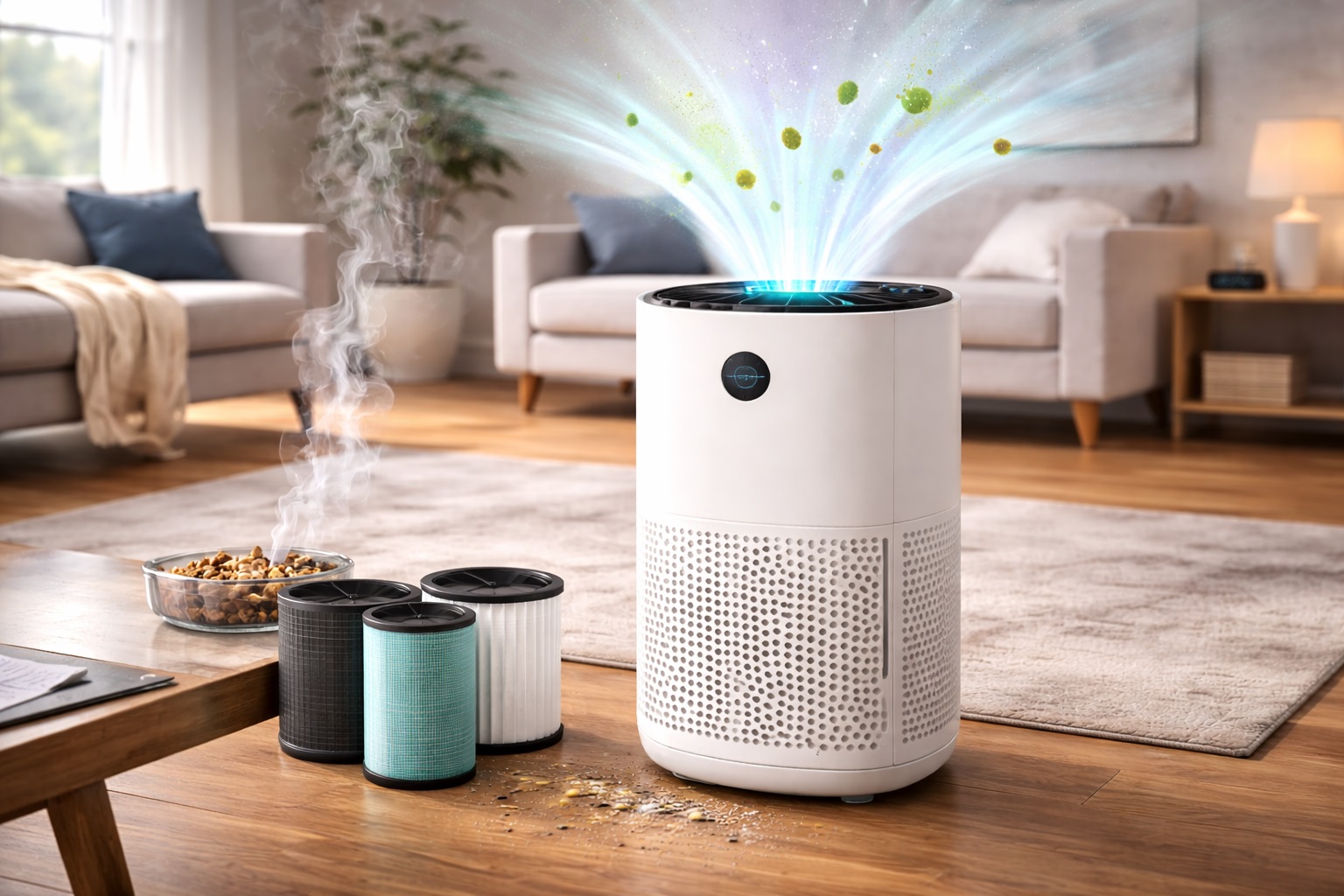
Finding a genuinely good air purifier for value doesn't have to mean settling for a flimsy unit with a weak filter. In 2026, several well-known models manage to combine real True HEPA filtration with a price tag that won't strain a household budget, though the gap between the cheapest and most expensive options in this comparison is significant. This guide compares eight established air purifiers on the actual value they deliver, not just their sticker price, so you can see where your money buys meaningful performance and where it mostly buys extra features.
Getting good value from an air purifier is about more than the upfront cost. Filter replacement frequency, energy use, and how well a unit actually performs at its rated coverage area all factor into what you'll really spend over a year or two of ownership. Below, we walk through eight models spanning the full price range covered in this guide, are honest about which ones are genuinely budget picks versus which ones sit at the premium end, and outline the criteria that matter most when stretching a dollar as far as possible.
It's also worth remembering that "budget" doesn't have to mean the single cheapest product on the shelf. In practice, the best value often sits a little above the absolute floor price, where a modest increase in cost buys a noticeably better filter, a larger coverage area, or a longer warranty. Treating this list as a spectrum from most affordable to most premium, rather than a single winner, makes it easier to find the specific point on that spectrum that fits your household and your room size.
Top 8 Best Air Purifier Picks for Value (Detailed Reviews)
1. Blueair Blue Pure 211+ – Best For Value-Driven Large Room Coverage
The Blueair Blue Pure 211+ uses a 3-stage filtration system and a washable fabric pre-filter, and at around $300 it's priced in the middle of this lineup rather than at the true budget end. What makes it worth including in a value-focused guide is how much coverage area and airflow you get relative to that price, since it competes with units costing considerably more. For anyone willing to spend a bit above the absolute minimum, it stretches further than most mid-priced purifiers, since its 360-degree intake design and washable pre-filter also reduce how often you need to buy a full replacement cartridge. Households that split the difference between a rock-bottom unit and a premium large-room purifier often land on something close to this model, and its washable pre-filter also cuts down on how much dust reaches the main HEPA filter, extending its usable life a bit further.
- Pros:
- Premier build quality
- 3-stage filtration with a washable fabric pre-filter
- Reputable brand with strong resale value
- Cons:
- Not the cheapest option in this comparison
- Limited availability of colored pre-filter covers in some regions
Best For: Buyers who can stretch slightly above entry-level pricing for meaningfully better coverage.
Why We Recommend It: Its airflow-to-price ratio makes the 211+ one of the better mid-tier value picks even though it isn't the cheapest unit here.
2. Levoit Core 400S – Best For Budget-Friendly Smart Features
The Levoit Core 400S brings Smart WiFi control, app scheduling, and voice assistant compatibility to a purifier priced around $220, which is relatively accessible for a unit with this level of connectivity. Compared to premium smart purifiers that can cost twice as much, the Core 400S offers a reasonable middle ground for anyone who wants app-based automation without paying a steep premium for it. Scheduling the unit to run harder during the day and quieter overnight is a simple way to get more value out of the automation instead of leaving it on one fixed speed.
- Pros:
- Premier build quality
- Smart WiFi control at a relatively accessible price
- Reputable, well-supported brand
- Cons:
- Still costs more than the most basic models in this guide
- Limited availability of specialty filters in some regions
Best For: Buyers who want smart features without paying premium-tier prices for them.
Why We Recommend It: It delivers app-based convenience at a price point most budget-conscious households can still justify.
3. GermGuardian AC4825 – Best For Absolute Lowest Upfront Cost
The GermGuardian AC4825 is the least expensive model in this comparison at around $100, making it the clearest choice for anyone whose top priority is minimizing upfront spending. It pairs a HEPA-type filter with a UV-C light sanitizer, giving it an added filtration layer that's uncommon at this price. It won't match the raw airflow of pricier units, but for a small to mid-sized room it delivers a lot of purifier for the money, and its compact tower footprint makes it easy to tuck into a bedroom, home office, or dorm room without taking up much floor space. For anyone furnishing multiple small rooms on a tight overall budget, buying two or three of these units can be more practical than one large, pricier purifier.
- Pros:
- Premier build quality
- UV-C light sanitizer as a bonus feature
- Reputable, widely available brand at the lowest price point here
- Cons:
- Lower fan power than larger, pricier units
- Limited availability of specialty filter refills in some stores
Best For: Shoppers who want the lowest possible entry price while still getting True HEPA-style filtration.
Why We Recommend It: At roughly a fifth of the price of the most expensive model here, it remains a genuinely capable purifier for smaller spaces.
4. Coway Airmega 400 – Best For Long-Term Value Despite a Higher Price
It's worth being upfront that the Coway Airmega 400 is not a budget purifier. At around $500, it's the second most expensive model in this guide, and it's included here mainly as a comparison point for shoppers who might stretch their budget for its dual filtration system and larger coverage area. If long-term durability and capacity matter more to you than the lowest possible price, it can still represent reasonable value over years of use, particularly for a household that would otherwise need to buy two smaller budget units to cover the same amount of space. Buyers deciding between one larger purifier and multiple cheaper ones should factor in the convenience of a single unit alongside the raw cost comparison.
- Pros:
- Premier build quality
- Dual filtration system
- Reputable brand known for higher-capacity units
- Cons:
- Among the most expensive options in this comparison
- Limited availability in smaller retail footprints
Best For: Buyers with more flexible budgets who want durability and capacity more than rock-bottom pricing.
Why We Recommend It: It isn't a true budget pick, but its capacity can justify the higher price for households that use it heavily for years.
5. Honeywell HPA300 – Best For Mid-Range Value
The Honeywell HPA300 sits at roughly $250, landing squarely in the middle of this comparison's price range. Its True HEPA filtration and dependable airflow make it a sensible pick for anyone who wants more capability than the cheapest models offer, without stepping all the way up to premium pricing. It's a practical middle-of-the-road choice for households that outgrew entry-level units, and its widely available filters mean the ongoing cost of ownership stays predictable even several years after purchase.
- Pros:
- Premier build quality
- True HEPA filtration
- Reputable brand with a long track record
- Cons:
- Costs more than entry-level towers
- Limited availability of turbo-speed replacement filters in some regions
Best For: Shoppers who want a step up from entry-level performance without reaching premium prices.
Why We Recommend It: It offers a solid balance of filtration quality and price for buyers who've outgrown the cheapest options.
6. Medify MA-40 – Best For Budget-Conscious HEPA Filtration
The Medify MA-40 uses a medical-grade H13 True HEPA filter and is priced around $300, putting it in the same tier as the Blueair 211+. For buyers who specifically want hospital-grade filtration without paying for a premium brand name, the MA-40 offers that filtration quality at a comparatively reasonable price relative to other H13-equipped purifiers on the market, making it an easy recommendation for households with allergy or asthma concerns who still want to stay mindful of cost. Its filtration tier is typically associated with pricier medical or clinical-grade purifiers, which is part of what makes its price point notable.
- Pros:
- Premier build quality
- H13 True HEPA filter for fine particle capture
- Reputable brand with a growing following
- Cons:
- Not the cheapest way to get True HEPA filtration
- Limited availability of the largest filter cartridges at some retailers
Best For: Buyers who prioritize H13-grade filtration but don't want to pay premium-brand prices for it.
Why We Recommend It: It delivers a filtration tier usually found on pricier units at a more moderate cost.
7. Winix 5500-2 – Best For Best Overall Value
The Winix 5500-2 pairs a True HEPA filter with PlasmaWave technology at a price of around $160, which is one of the more attractive combinations of filtration quality and cost in this entire comparison. It isn't the absolute cheapest unit here, but the gap in capability between it and pricier models is smaller than the price difference would suggest, which is exactly what value-focused shoppers should be looking for. Its combination of a proven filter type and a manageable price also makes it one of the easier purifiers to recommend without reservation, and its filter replacements remain widely stocked across most major retailers, keeping long-term maintenance simple.
- Pros:
- Premier build quality
- PlasmaWave technology for added odor control
- Reputable brand with widely available replacement filters
- Cons:
- Coverage area is more moderate than premium large-room models
- Limited availability of newer filter variants in some markets
Best For: Shoppers who want the strongest overall balance of price and performance in this lineup.
Why We Recommend It: True HEPA filtration at a genuinely affordable price makes the 5500-2 the standout value pick in this comparison.
8. Dyson Pure Cool TP04 – Best For Splurging on Extra Features
The Dyson Pure Cool TP04 is the most expensive model in this guide at around $550, and it's honestly not a budget-friendly choice by any measure. It's included here as the upper boundary of the price range, useful for understanding what you're paying extra for: a bladeless fan design with Air Multiplier technology that doubles as a cooling appliance. If your priority is genuinely the lowest total cost, this is the model to skip, since the price gap between it and the rest of this lineup isn't matched by a proportional jump in pure filtration performance.
- Pros:
- Premier build quality
- Air Multiplier technology that doubles as a cooling fan
- Reputable brand with strong app support
- Cons:
- By far the highest price point in this comparison
- Limited availability of certain color finishes
Best For: Buyers for whom budget isn't the primary constraint and who want a dual-purpose appliance.
Why We Recommend It: It's a legitimate splurge pick for those who value the cooling function, but it doesn't compete on value against the rest of this list.
Buying Guide: How to Choose the Best Budget Air Purifier
1. Set a Realistic Total Budget, Not Just a Purchase Price
The sticker price of a purifier is only part of what you'll spend. Factor in the cost of replacement filters over a year or two, since a cheaper unit with expensive proprietary filters can end up costing more than a pricier purifier with affordable, widely available filters. Looking at total cost of ownership rather than the initial number gives a clearer picture of real value. A simple way to compare models is to add up two years of expected filter costs to the purchase price before making a final decision. This total-cost view frequently changes which model looks like the better deal compared to judging on price alone.
2. Understand What You're Giving Up at Lower Price Points
Budget purifiers typically trade off smaller coverage areas, fewer fan speeds, or the absence of smart features compared to premium models. Knowing exactly which trade-offs matter to you, and which don't, helps you avoid paying for capabilities you won't use while still getting the filtration quality you need. Make a short list of must-have features versus nice-to-have ones before comparing prices, so marketing extras don't distract from your actual priorities. Filtration performance and correct room-size matching should almost always outrank cosmetic or convenience features on that list.
3. Find the CADR-to-Price Sweet Spot
Rather than chasing the single cheapest unit, compare Clean Air Delivery Rate against price across a handful of models. Often a purifier priced slightly above the absolute minimum offers a meaningfully better CADR, making it the smarter value choice even though it isn't technically the cheapest option available. Plotting a handful of candidate models on a simple price-versus-CADR comparison often makes this sweet spot obvious at a glance.
4. Watch Filter Replacement Costs Over Time
Some budget-friendly purifiers use proprietary filters that cost more to replace than the unit's low upfront price would suggest. Before buying, search for the going price of replacement filters and how often the manufacturer recommends changing them, since this ongoing cost can quietly erase the savings from a cheaper purchase price. Third-party compatible filters, when available and reputable, can sometimes lower this cost further without hurting performance.
5. Compare True HEPA vs Cheaper HEPA-Type Filters
True HEPA filters are held to a specific industry-tested standard for particle capture, while HEPA-type or HEPA-like filters are not always held to that same benchmark. Paying a small premium for verified True HEPA filtration is often one of the better upgrades you can make within a budget-conscious purchase, since it directly affects how well the unit performs at its core job.
6. Decide Which Smart Features You Can Skip
App control, voice assistant integration, and auto mode all add to a purifier's price. If you're comfortable manually adjusting fan speed and don't need remote monitoring, skipping these smart features is one of the easiest ways to bring the price down without sacrificing core filtration performance. Many manual-control models use the exact same filter media as their smart-enabled counterparts.
7. Consider Previous-Generation Models
When a manufacturer releases an updated version of a popular purifier, the previous generation often drops in price while still offering solid filtration performance. These older models can represent excellent value, especially if the updates in the newer version are mostly cosmetic or software-based rather than functional. Checking release notes or comparison charts between generations can reveal whether the newer model's premium is actually justified.
8. Watch for Seasonal Sales and Bundle Deals
Air purifier prices often dip around major shopping holidays, and many retailers bundle a spare filter or two with the unit during sales. Timing a purchase around these periods, or looking for a bundle that includes extra filters, can meaningfully lower your effective cost per year of ownership. Setting a price alert for a specific model is a simple way to catch these dips without constantly checking manually.
9. Factor In Energy Costs for Continuous Use
A budget purifier that draws more power than a similarly priced competitor can erode its price advantage if you run it continuously. Checking the wattage at typical operating speeds helps you estimate the real annual electricity cost, which matters more the longer you plan to keep the unit running. Even a small wattage difference can add up meaningfully if the purifier runs continuously for years.
10. Check Warranty Coverage Before Buying
Lower-priced purifiers don't always come with the same warranty length as premium models. A shorter warranty isn't necessarily a dealbreaker, but it's worth knowing upfront so you can weigh the risk of an early failure against the money you're saving on the purchase price. Registering your purifier with the manufacturer as soon as you buy it also makes any future warranty claim easier to process.
11. Don't Skip Certifications Just to Save Money
Even at the budget end of the market, look for AHAM Verifide ratings or similar third-party verification of performance claims. A certified budget unit is a safer bet than an uncertified one, regardless of how attractive the price looks on paper. Certification is often the clearest signal that a manufacturer's coverage-area and CADR claims have actually been checked by someone outside the company.
12. Recognize When Paying More Actually Saves Money
If a slightly pricier unit has meaningfully cheaper long-term filter costs, better energy efficiency, or a longer warranty, it can end up being the more economical choice over two or three years, even though it costs more upfront. Run the numbers over the expected ownership period rather than judging purely on the initial price tag. This is especially true for households that plan to keep a purifier running for five years or more.
13. Avoid Ultra-Cheap No-Name Purifiers
Extremely low-priced purifiers from unfamiliar brands often skip independent certification entirely and may not deliver the filtration performance they claim. Sticking with established brands that have a track record, even at the lower end of their own lineup, is generally a safer way to get real value for your money. Reading a spread of independent owner reviews, not just the retailer's featured ones, can also help separate genuine bargains from products that simply look cheap on the surface.
Frequently Asked Questions
What's a reasonable price for a decent air purifier?
Many capable True HEPA purifiers for small to mid-sized rooms are available in the $100 to $250 range, while larger-capacity or feature-rich models can run considerably higher. The right price depends heavily on your room size and which features actually matter to you, so it's worth resisting the urge to buy the cheapest or most expensive option without first checking coverage area.
Are cheap air purifiers actually effective?
A budget purifier with a genuine True HEPA filter can be quite effective for a correctly matched room size, even without premium extras. The key is checking that the filtration claims are backed by real specifications rather than vague marketing language. A True HEPA rating and a stated CADR figure are both good signs that a budget listing is being upfront about performance.
Do budget air purifiers need special filters?
Some do use proprietary filter shapes, which is worth checking before you buy, since replacement costs vary widely between brands. Purifiers that use more universal or widely available filter sizes tend to be cheaper to maintain long-term. Checking a few retailer listings for replacement filter prices before you buy the main unit is a quick way to avoid surprises later.
Is it worth paying more for True HEPA vs HEPA-type?
In most cases yes, since True HEPA filters are held to a tested, verifiable capture standard, while HEPA-type filters may fall short of that benchmark despite similar-sounding marketing. The price difference is often modest compared to the improvement in verified performance, which is why True HEPA is generally treated as a baseline requirement rather than a premium upgrade.
How can I save money on filter replacements?
Buying filters in multi-packs, subscribing to a manufacturer's auto-replenishment program where available, and choosing a purifier with widely available third-party-compatible filters can all reduce your ongoing costs. Setting a recurring reminder for filter checks also prevents you from running a clogged filter longer than necessary, which can strain the motor.
Do budget purifiers use more electricity?
Not necessarily. Energy use depends more on motor efficiency and fan speed than on price alone, so it's worth checking the wattage specification directly rather than assuming a cheaper unit is less efficient. Some budget purifiers are actually more efficient than premium models simply because they run a smaller motor.
Are smart features worth paying extra for?
They add genuine convenience, such as remote scheduling and automatic adjustment, but they aren't essential to effective air purification. If budget is tight, prioritizing filtration quality over app connectivity is usually the smarter trade-off, since the filter is what actually cleans the air rather than the app that controls it.
Can a budget air purifier still help with allergies?
Yes, as long as it has a genuine True HEPA filter and is sized appropriately for the room. Coverage area matters more than price when it comes to reducing airborne allergens effectively, so a correctly sized budget unit will typically outperform an undersized premium one.
How long do budget air purifiers typically last?
With regular filter replacement and basic maintenance, many budget purifiers can run reliably for several years, though build quality and motor durability can vary between brands and price tiers. Sticking to a consistent filter replacement schedule is one of the biggest factors in how long any unit ultimately lasts.
Should I buy a used or refurbished air purifier?
A refurbished unit from a reputable retailer with a warranty can be a reasonable way to save money, but be cautious about used filters, since they may already be near the end of their useful life and add hidden replacement costs. Always budget for a full filter replacement immediately after buying a used or refurbished unit.
Is bigger always better on a budget?
No. Buying more coverage area than your room needs wastes money on unnecessary capacity. It's more cost-effective to match the purifier's rated coverage closely to your actual room size, since oversized units also tend to cost more to run and to replace filters for.
What warranty should I look for on a budget purifier?
A warranty of at least one year is common even on budget models, and some brands offer two years or more. Checking warranty length before buying helps protect your investment if the unit fails early, and keeping your purchase receipt on hand makes any claim easier to process.
When should I consider spending more than a budget model?
If your room is unusually large, you have significant allergy or asthma concerns, or you want reliable smart-home integration, stepping up to a mid-range or premium model can be worth the added cost, especially if it means covering your space adequately with a single unit instead of needing two budget models.
Final Verdict
- Top Pick: Winix 5500-2 for the strongest overall balance of price and True HEPA performance.
- Budget Choice: GermGuardian AC4825 for the lowest possible upfront cost.
- Premium Choice: Dyson Pure Cool TP04 for buyers willing to pay significantly more for added cooling functionality.
Real value in an air purifier comes from matching filtration quality and coverage area to your actual needs, not from chasing the lowest number on the price tag. The Winix 5500-2 and GermGuardian AC4825 both prove that a modest budget can still buy genuine True HEPA-style filtration, while pricier options like the Coway Airmega 400 and Dyson Pure Cool TP04 make more sense for buyers with specific needs that justify the extra spending. Whichever price point you land on, checking filter costs and certifications will tell you more about long-term value than the sticker price alone. Take the time to measure your room, decide which features you genuinely need, and compare total ownership cost rather than the number on the box, and you'll likely end up with a purifier that outperforms its price tag for years to come.