Best Vacuums for Puppy Messes: Powerful Cleaning Built for Puppy Life
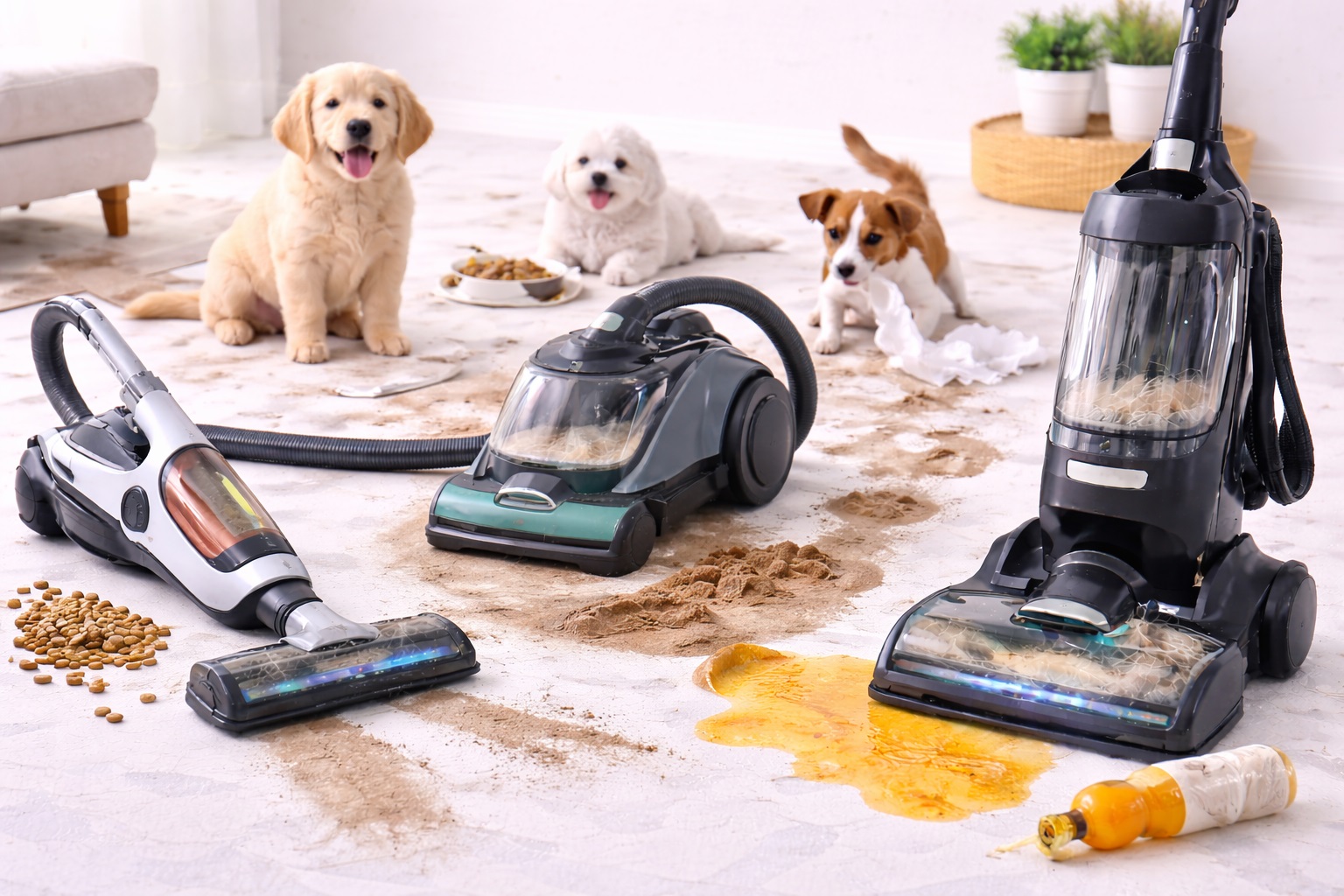
The first year with a puppy brings a specific kind of mess that differs from what an adult dog household typically deals with. Housetraining accidents on carpet and hard flooring, muddy paw prints tracked in from every yard trip, chewed-up bits of toys and cardboard, and the early wisps of a coat just beginning to shed all show up in the same few months. A vacuum chosen for a puppy household needs to handle wet and dry messes, coarse debris, and fine loose fur, often within the same cleaning session, which is a broader job than most standard pet vacuums are built around.
Many new puppy owners underestimate how often the vacuum will actually be needed during this stage. What might be a once-a-week task with a trained adult dog can become several sessions a week, or more, while a puppy is still learning where and when to go. That frequency changes what actually matters in a vacuum purchase — durability under near-daily use and easy cleanup after wet accidents becomes just as important as raw suction power or fur pickup.
This guide compares three practical vacuum categories suited to puppy households specifically, walks through the buying factors that matter most during this demanding early stage, and answers the questions new puppy owners ask most often when shopping for a vacuum that can keep up.
Top 3 Vacuums for Puppy Messes (Detailed Reviews)
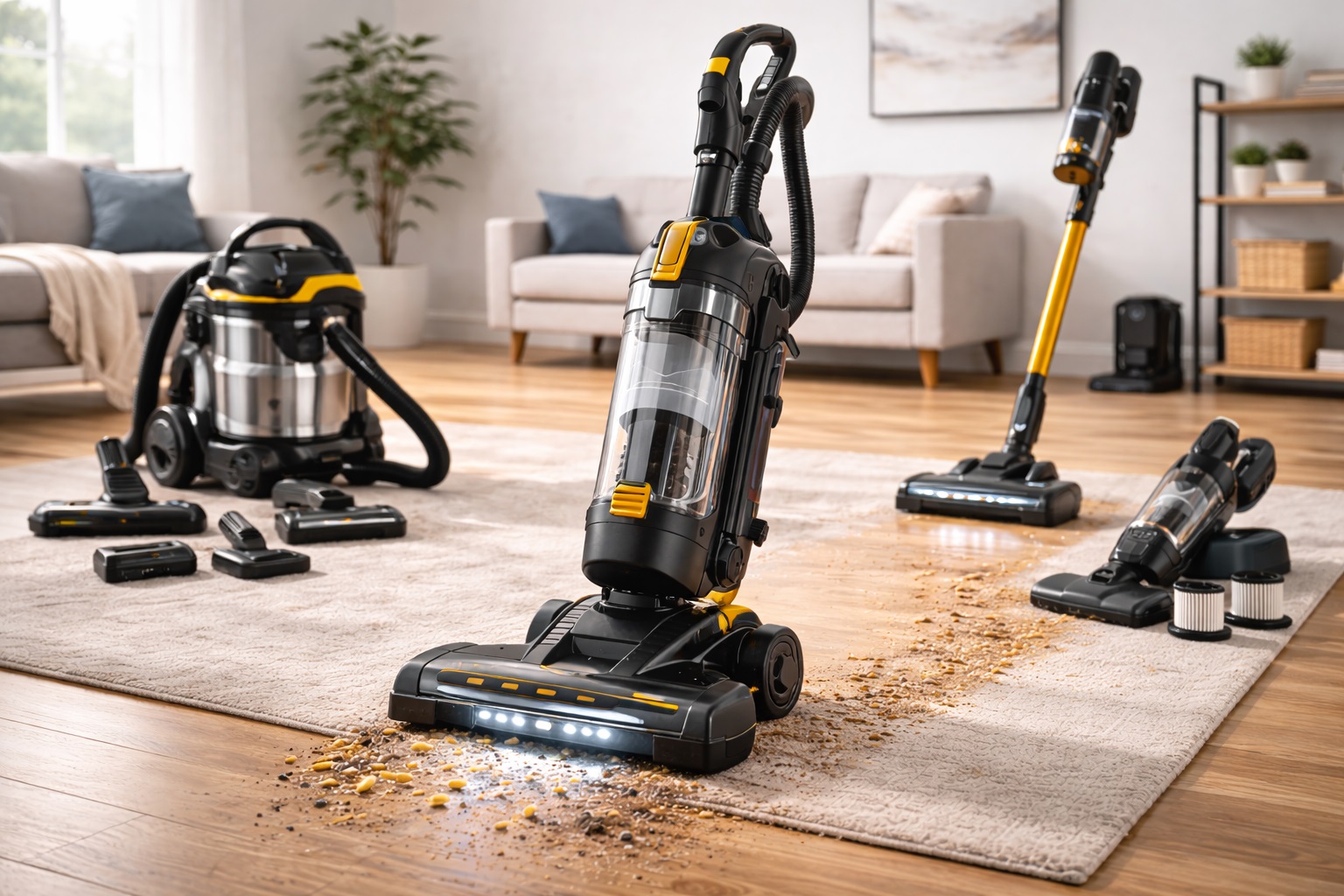
1. Wet-Dry Shop Vacuum with Pet Attachment – Best for Accident Cleanup
A wet-dry shop vacuum handles the specific challenge that standard vacuums cannot — safely picking up liquid accidents without damaging the motor. For puppy households still working through housetraining, this capability alone can justify the purchase, since a standard vacuum used on a wet mess risks permanent damage or an electrical hazard. Pet-specific attachments extend the same unit to handle dry fur and debris between accidents, making it a genuinely dual-purpose tool during the puppy stage.
- Pros:
- Safely handles wet accidents that would damage standard vacuums
- Powerful suction for both liquid and coarse dry debris
- Large tank capacity reduces mid-session emptying
- Durable construction suited to frequent, heavy-duty use
- Cons:
- Bulkier and heavier than dedicated dry-only pet vacuums
- Tank cleaning after wet pickups adds a maintenance step
Best For: Puppy owners actively housetraining who need a vacuum capable of safely handling both wet accidents and everyday dry debris.
Why We Recommend It: No other vacuum category addresses the wet-accident problem as directly or safely as a wet-dry shop vacuum. For the specific demands of the housetraining period, this capability outweighs the added bulk for most puppy households.
Keeping this vacuum in an easily accessible spot near frequently-accident-prone areas, rather than stored away in a garage, makes it far more likely to actually get used the moment an accident happens rather than left to soak into carpet padding while the owner searches for cleaning supplies.
Many households eventually keep this unit long after the puppy stage ends, since its versatility for workshop spills, seasonal cleanups, flooded basements, and other household wet messes gives it a useful second life well beyond its original housetraining purpose, often earning back its purchase price several times over in avoided emergency cleanup calls alone.
2. Cordless Stick Vacuum with Reinforced Brush Roll – Best for Daily Debris and Early Shedding
A cordless stick vacuum with a reinforced, tangle-resistant brush roll handles the daily grind of puppy life — tracked-in dirt, bits of chewed material, and the beginning of a shedding coat — without the bulk of a full-size machine. Puppies generate surprising amounts of small debris from chewing and play, and a lightweight vacuum that can be grabbed quickly encourages the frequent quick cleanups this stage actually requires.
- Pros:
- Lightweight and quick to deploy for frequent daily use
- Reinforced brush roll resists damage from coarser chewed debris
- Cordless design allows fast room-to-room cleanup after play sessions
- Converts to handheld for furniture and crate area cleaning
- Cons:
- Cannot safely handle wet accidents like a wet-dry vacuum can
- Battery runtime limits extended cleaning sessions
Best For: Owners who need a fast, frequent-use tool for the everyday dry mess of puppy life between deeper cleaning sessions.
Why We Recommend It: The reinforced brush roll and lightweight design make this the tool most puppy owners reach for multiple times a day. It handles the bulk of routine daily mess quickly, leaving the wet-dry vacuum for the specific accident scenarios it is built for.
Puppy chewing habits mean small hard debris — bits of plastic, cardboard, or toy stuffing — ends up on the floor more often than in an adult dog household, so a reinforced brush roll that resists jamming on this coarser material matters more here than in a typical pet vacuum comparison.
Keeping this tool charged and within easy reach of the main living area encourages the kind of frequent, low-effort tidying that actually keeps a puppy-heavy home presentable between the deeper weekly cleaning sessions handled by a larger machine.
3. Bagless Upright with HEPA Filtration and Large Capacity – Best for Deep Weekly Cleaning
A bagless upright with HEPA filtration and a generous dustbin covers the deep weekly clean that a puppy household needs on top of daily spot cleaning. Sustained suction pulls tracked-in dirt and early shedding fur out of carpet fiber more thoroughly than lighter tools, while HEPA filtration helps manage dander as the coat matures. The larger dustbin matters given how much combined debris a growing puppy generates across a full week.
- Pros:
- Strong sustained suction for embedded dirt and debris
- HEPA filtration manages dander as shedding increases with age
- Large dustbin handles a full week of combined puppy mess
- Durable build suited to frequent, heavy household use
- Cons:
- Not suitable for wet accident cleanup on its own
- Heavier and less convenient for quick spot cleaning
Best For: Households wanting one thorough weekly deep-clean tool to complement daily spot cleaning and occasional wet-accident cleanup.
Why We Recommend It: The upright's combination of strong suction and large capacity makes it the right tool for the thorough weekly reset a puppy household needs, catching everything the daily tools miss between sessions.
As puppies grow into their adult coat over the first year, this vacuum's role tends to shift naturally from handling debris and dirt toward more consistent fur management, making it a purchase that continues to earn its place well beyond the puppy stage itself, particularly for breeds that develop a heavier double coat once fully grown.
Households that invest in a durable, higher-capacity upright during the puppy stage specifically often find it becomes their primary long-term vacuum, since the demands of that first year effectively stress-test the machine well beyond what typical adult-dog ownership would require.
Buying Guide: How to Choose the Best Vacuum for Puppy Messes
Puppy households benefit from matching vacuum choice to the specific stage of mess a young dog produces, which shifts over the first year.
1. Wet Pickup Safety
Confirm explicitly whether a vacuum is rated safe for liquid pickup before using it on any accident. Standard vacuums used on wet messes risk motor damage or electrical hazard, making a dedicated wet-dry unit the safer choice during active housetraining.
Even models advertised as splash-resistant are not always rated for direct liquid vacuuming, so check the specific product documentation rather than assuming general moisture resistance covers a genuine puddle-sized accident.
A separate liquid collection tank, kept fully isolated from the motor and any electronics, is the design feature to look for specifically, since this isolation is what actually makes wet pickup safe rather than any general waterproofing claim alone.
2. Brush Roll Durability Against Chewed Debris
Puppies chew and scatter small hard fragments more than adult dogs typically do. A reinforced brush roll resists jamming and damage from this coarser debris better than a standard bristle design optimized purely for fur.
Checking whether the brush roll housing is easy to inspect and clear also matters here, since hard debris is more likely than fur to genuinely jam a brush roll rather than simply wrap around it.
Keeping a habit of a quick visual sweep of the floor before vacuuming, picking up any larger chewed fragments by hand first, also reduces wear on the brush roll and lowers the odds of a jam mid-session.
3. Suction Power Across Mixed Debris Types
Puppy mess mixes dirt, fur, and coarser debris in ways that call for versatile suction rather than a vacuum optimized purely for one debris type. Confirm the model performs reasonably well across all three rather than excelling narrowly at one.
Reviews mentioning puppies specifically, rather than general pet hair reviews, give the clearest picture of how a vacuum handles this particular mixed-debris situation.
A vacuum that performs adequately across all three debris types, even if not exceptional at any single one, is generally more useful during this stage than a specialist model that excels narrowly at fur pickup but struggles with coarser debris.
4. Dustbin or Tank Capacity for Frequent Use
Given how often a puppy vacuum gets used during this stage, a larger capacity reduces how frequently you need to stop and empty mid-session, which matters more here than in a household with a single settled adult dog.
A tank or bin that is simple to empty quickly also matters, since the frequency of use during this stage means a difficult emptying process compounds into real daily frustration faster than it would with occasional use.
Households with more than one puppy, or a puppy alongside an existing adult dog, should lean toward the larger end of the available capacity range, since combined debris volume scales up quickly with each additional animal in the home.
5. Durability Under Near-Daily Use
The puppy stage puts more cumulative wear on a vacuum in its first year than many adult-dog households see over several years. Prioritize build quality and consider a slightly more durable, higher-tier model than you might otherwise choose.
Warranty length is a useful proxy for build confidence here, since manufacturers rating a vacuum for heavier daily use typically back that claim with a longer warranty period than entry-level models.
Checking owner reviews specifically written by other puppy households, rather than general pet owner reviews, gives a more accurate picture of how a given model actually holds up under this particular pattern of frequent, sometimes rough, daily use.
6. Odor Control for Accident Cleanup
Wet-dry vacuums used on accidents benefit from tanks that are easy to fully rinse and dry, since residual odor left in a poorly designed tank can linger and eventually transfer back onto floors during future use.
A removable, dishwasher-safe tank insert, where available, simplifies this step considerably compared to a fixed tank that must be manually scrubbed and air-dried after every wet pickup.
A small amount of enzymatic cleaner or diluted vinegar solution rinsed through the tank periodically can help break down any residual odor-causing compounds that plain water alone does not fully remove after repeated accident cleanups.
7. Filter Maintenance for Growing Shedding
As a puppy matures into its adult coat, shedding volume increases, gradually shifting filter maintenance needs. A washable filter accommodates this transition more affordably than one requiring frequent paid replacement.
Setting a filter-check reminder that adjusts as the puppy ages — checking more frequently as shedding visibly increases — helps keep pace with a household's changing needs over the first year.
Breeds that shed minimally as puppies but develop a heavier double coat as adults can see filter maintenance needs increase substantially within the first year, so it is worth researching your specific breed's shedding trajectory when planning ahead.
8. Noise Level Around a Young, Impressionable Puppy
Puppies are still forming behavioral associations, and repeated exposure to a loud, startling vacuum can create lasting sound sensitivity. A quieter model, combined with gradual introduction, reduces the odds of the vacuum becoming a long-term source of anxiety.
Running the vacuum briefly and calmly during early weeks, paired with treats or praise, helps a puppy build a neutral or even positive association rather than a fearful one that persists into adulthood.
Allowing the puppy to investigate the vacuum while it is switched off, before ever hearing it run, can also reduce initial fear by letting them approach the unfamiliar object on their own terms first.
9. Attachment Versatility for Crate and Play Areas
Crate bedding, puppy play mats, and designated potty-training areas all need regular attention. Upholstery tools and crevice attachments extend a vacuum's usefulness to these puppy-specific zones beyond general floor cleaning.
A washable, motorized upholstery tool is particularly useful for crate bedding, which tends to collect fur, drool residue, and tracked-in debris more heavily than general household furniture.
Vacuuming the crate area regularly also helps keep a puppy's designated resting space smelling fresh, which some trainers suggest supports more consistent use of the crate as a comfortable, positive space rather than one associated with lingering odor.
10. Cord Length and Reach for Frequent Moves
Given how often a vacuum gets used across a whole house during the puppy stage, cord length or cordless runtime matters more than it might for a household vacuuming only once a week in a single area.
Cordless models should be checked for realistic runtime under frequent short-session use, since batteries subjected to many partial charge cycles during a busy puppy stage may not deliver their full rated runtime consistently.
Households in larger homes may find a corded option more practical during this stage specifically, since the ability to run an extended cleaning session without watching a battery indicator reduces one more thing to manage during an already demanding period.
11. Replacement Part Availability for Heavy Use
Given the increased wear during the puppy stage, confirm that brush rolls, filters, and hoses remain available and reasonably priced, since heavier use means these parts may need replacement sooner than in a lighter-use household.
Buying a spare brush roll or filter proactively, rather than waiting for a failure mid-use, avoids an inconvenient gap in cleaning capability during a stage when the vacuum is needed most consistently.
Checking whether the manufacturer sells a bundled maintenance kit covering the most commonly replaced parts together can also work out cheaper than purchasing each item separately as it wears out over the puppy's first year.
12. Transitioning Vacuum Needs Beyond the Puppy Stage
Consider how the vacuum's role will shift as the puppy matures — from handling wet accidents and coarse debris toward standard fur management. A versatile model that adapts to both stages avoids a second purchase within the first year or two.
Households planning to keep the vacuum long-term should weigh overall versatility more heavily than puppy-specific features alone, since most of the vacuum's working life will occur after the puppy stage has passed.
Thinking a year or two ahead when making this purchase — picturing the fully grown dog rather than only the current puppy — helps avoid choosing a vacuum so narrowly focused on wet accidents and chewed debris that it feels mismatched once those specific problems have naturally resolved themselves.
13. Flooring Type Compatibility
Puppy households often have a mix of hardwood, tile, and carpet, and each surface reacts differently to a wet accident and to vacuum settings. A model with adjustable suction or a floor-type sensor avoids scattering debris on hard flooring while still pulling embedded dirt out of carpet fiber.
Hard flooring in particular needs a brush roll that can be switched off or set to a soft-bristle mode, since a standard carpet-optimized brush roll can scatter light debris across tile or hardwood rather than collecting it.
Households with mostly hard flooring may lean toward a model with strong hose suction over brush roll power, while carpet-heavy homes should weight brush roll and embedded-dirt performance more heavily when comparing options.
14. Weight and Maneuverability on Stairs
Multi-level homes add a practical wrinkle, since puppy messes rarely confine themselves to a single floor. A vacuum that is awkward to carry up and down stairs discourages the frequent spot-cleaning this stage calls for.
Cordless stick vacuums with a lightweight handheld mode tend to handle stairs and upper-level spot cleaning more practically than a heavier upright or a bulky wet-dry shop vacuum, which is worth factoring in for homes without a dedicated unit on each level.
Some households find it worthwhile to keep a lightweight secondary vacuum upstairs specifically for quick puppy cleanups, reserving the larger, more capable machine for the main living areas where mess tends to concentrate.
15. Total Cost Beyond the Purchase Price
The sticker price of a vacuum is only part of the real cost during a demanding puppy year. Replacement filters, brush rolls, and enzymatic cleaning solutions for the wet-dry tank all add up over the first twelve months of frequent use.
Budgeting for at least one replacement filter and a spare brush roll within the first year gives a more realistic total cost picture than comparing sticker prices alone, particularly for households using the vacuum several times a week.
Comparing warranty coverage and included accessories across similar-priced models can also reveal meaningful differences in long-term value, since a slightly higher upfront price with a longer warranty and bundled attachments often works out cheaper over the puppy's first year than the lowest-priced option alone.
Frequently Asked Questions
1. What makes a vacuum specifically suited to puppy messes?
The ability to safely handle wet accidents, resist damage from chewed debris, and keep pace with frequent daily use distinguishes a puppy-suited vacuum from a standard pet hair vacuum built primarily around adult dog shedding. Households that already own a general pet vacuum often still add a small wet-dry unit specifically to cover this gap during the puppy stage.
2. Can I use a regular vacuum on puppy accidents?
Not safely. Standard vacuums are not designed for liquid pickup and can be damaged or create an electrical hazard if used on a wet accident, making a dedicated wet-dry vacuum the appropriate tool for this specific task. Attempting to dry a standard vacuum's filter or bin after accidental liquid exposure rarely restores full performance and can also introduce lingering odor.
3. How often will I need to vacuum during the puppy stage?
Many households find themselves vacuuming several times a week or more during active housetraining, considerably more often than a typical adult dog household, before settling into a lighter routine as the puppy matures. This frequency typically peaks in the first few months and gradually declines as house training progresses.
4. Do I need a wet-dry vacuum permanently, or just during housetraining?
Most households use the wet-dry capability primarily during the housetraining period, then rely more on standard dry cleaning tools afterward, though keeping the wet-dry vacuum available for occasional future accidents remains useful, particularly for households that also have older pets prone to occasional accidents.
5. Is the most expensive vacuum for puppy messes always the best?
Not always. Many mid-range wet-dry and reinforced-brush-roll models handle typical puppy mess effectively without the added cost of unrelated premium features better suited to other use cases. Focus your comparison on the specific wet-pickup and durability features rather than overall price ranking.
6. How long should a quality vacuum for puppy messes last?
Given the heavier use during the first year, prioritizing durability helps a well-built model last three to five years, spanning the demanding puppy stage and the calmer adult-dog years that follow. Models chosen specifically for their durability during this period often outlast expectations by a considerable margin.
7. Can I return a vacuum for puppy messes if it doesn't suit me?
Most retailers offer a 15 to 30 day return window. Test both wet and dry pickup capability specifically within that window rather than assuming performance based on dry debris alone, since the wet-pickup function is often the primary reason for the purchase in the first place.
8. What should I prioritize when buying a vacuum for puppy messes?
Prioritize wet-pickup safety and brush roll durability first, since these two factors most directly address the mixed mess types unique to the puppy stage. Capacity and noise level are worth comparing next, once those two baseline needs are confirmed.
9. Does brand name matter for vacuum for puppy messes?
Somewhat. Brands with established wet-dry or heavy-duty product lines tend to offer more reliable performance under frequent puppy-stage use than general-purpose lines not built for this level of demand. Checking a brand's specific wet-dry product history is more informative than its general reputation alone.
10. Will a puppy vacuum still be useful once my dog is fully grown?
Yes, particularly models with strong dry-debris suction and HEPA filtration, which continue to serve well for ongoing shedding management long after the accident-prone puppy stage has passed. The wet-dry capability in particular remains a useful backup for unexpected messes throughout a dog's life.
11. How do I introduce a new vacuum to a nervous puppy?
Run it briefly and calmly at first, pairing the sound with treats or praise, and gradually increase session length as the puppy shows comfort, rather than starting with a full-length cleaning session immediately. Consistency in timing and location during these early introductions helps build predictability the puppy can adjust to more easily.
12. What is the best way to handle a fresh accident before vacuuming?
Blotting excess liquid with a cloth or paper towel first reduces the volume the vacuum needs to handle and can shorten tank cleaning afterward, though a wet-dry vacuum can still handle a fresh puddle directly if needed. Addressing the accident promptly also reduces the odds of staining or odor setting into carpet fiber before cleanup begins.
13. Are bagged or bagless vacuums better for puppy messes?
Bagless models are generally more convenient for the frequent emptying that puppy households require, since there is no ongoing bag cost and the dustbin can be emptied and rinsed immediately after use. Bagged models can offer slightly better dust containment when emptying, which is worth weighing if household members have allergies.
14. Should I buy one all-in-one vacuum or separate tools for wet and dry mess?
Most puppy households do best with two dedicated tools — a wet-dry vacuum for accidents and a lightweight cordless stick vacuum for daily dry debris — rather than a single all-in-one unit, since combining both capabilities in one machine typically means compromising on either wet-pickup safety or everyday convenience. A larger upright can then round out the set for deep weekly cleaning.
15. How do I clean and maintain the vacuum itself after heavy puppy use?
Empty and rinse the dustbin or tank after every session involving an accident, wipe down the exterior where fur and debris accumulate, and check the brush roll weekly for tangled fur or lodged debris. Following the manufacturer's filter-cleaning schedule, rather than waiting for a visible performance drop, keeps suction consistent through the heaviest weeks of the puppy stage.
Final Verdict
- Best for Accident Cleanup: Wet-Dry Shop Vacuum with Pet Attachment — the only category that safely handles wet housetraining accidents directly.
- Best for Daily Debris and Early Shedding: Cordless Stick Vacuum with Reinforced Brush Roll — the quickest tool for frequent daily puppy mess.
- Best for Deep Weekly Cleaning: Bagless Upright with HEPA Filtration and Large Capacity — the most thorough option for a full week of combined puppy debris.
The demanding first year with a puppy calls for a vacuum strategy built around the specific mess types that stage produces — wet accidents, coarse chewed debris, tracked-in dirt, and gradually increasing shedding. Use the comparisons and buying factors above to assemble a combination that keeps pace with this busy period without leaving you scrambling during an urgent cleanup moment.
Most puppy owners find that investing a bit more upfront in durability and wet-pickup capability pays off within the first few months, since the alternative — a vacuum that cannot handle an accident safely or breaks down under frequent use — ends up costing more in frustration and eventual replacement than a well-chosen purchase from the start. The right setup makes this demanding stage considerably more manageable, and much of it continues to earn its keep long after your puppy has grown into a settled adult dog.
Talk to other owners of the same breed or a similar-sized dog about what actually surprised them most during the first year, since real experience often reveals practical needs that a spec sheet alone will not. Pairing that firsthand insight with the buying factors above should leave you well equipped to handle whatever mess the puppy stage brings.