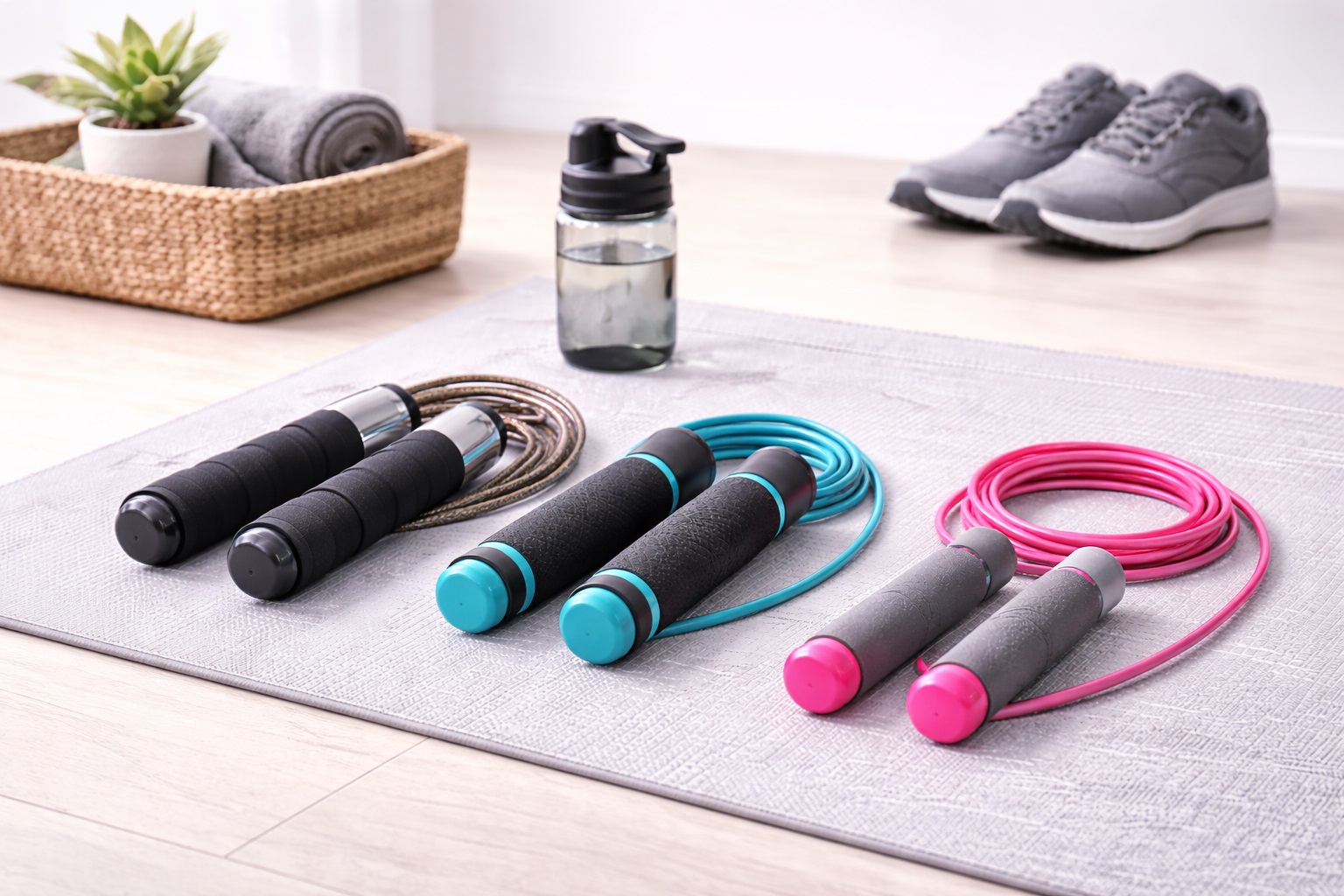
Best Jump Rope for Small Spaces in 2026
Not everyone training with a jump rope has access to a spacious gym floor. Studio apartments, dorm rooms, and cramped home offices are common training environments in 2026, and a jump rope remains one of the very few pieces of cardio equipment that genuinely works in a tight footprint, provided you choose one suited to the space you actually have.
Training in a small space introduces its own set of considerations that a wide-open gym does not. Ceiling height, cord length, and how much lateral clearance you have around you all affect which rope will feel comfortable rather than constantly at risk of clipping a wall, a lamp, or a low light fixture.
The good news is that a rope well suited to small spaces does not need to be a specialized or expensive product. In most cases, it comes down to choosing an adjustable-length cord and being thoughtful about your rotation technique rather than needing entirely different equipment.
It is also worth recognizing that plenty of successful home routines happen in spaces smaller than most people would guess are workable. A dedicated corner of a bedroom, a cleared section of a living room, or even a hallway with enough width can all support consistent jump rope training once you understand how to work within the boundaries your space actually offers.
Below, we compare eight jump ropes with small-space training in mind, followed by a complete buying guide and answers to the questions people ask most about jumping rope in tight indoor spaces.
Top 8 Best jump rope Picks (Detailed Reviews)
1. RX Smart Gear Original – Best For Adjusting to Tight Indoor Spaces
The RX Smart Gear Original's customizable length is particularly valuable in small spaces, where a rope that is even slightly too long can catch on low ceilings or nearby furniture. At around $45, it is priced toward the upper range for its precise adjustability and reputation for quality.
Being able to shorten the rope precisely to match a lower-than-average ceiling, without sacrificing rotation quality, is a real advantage for anyone training in a converted closet, a small bedroom, or an apartment with less overhead clearance than a typical gym.
- Pros:
- Precise length adjustment suits tight or unusual ceiling heights
- Trusted name within functional fitness training communities
- Consistent build quality suited to frequent indoor use
- Cons:
- Priced higher than most basic small-space ropes
- Adjustment process takes a small amount of setup time
Best For: Small apartments or rooms with lower-than-average ceiling clearance that need a precisely adjustable rope.
Why We Recommend It: Precise length control helps you avoid the ceiling and furniture clearance issues that come with tight indoor spaces, making it one of the more thoughtful picks for anyone training in a genuinely constrained room.
2. Amazon Basics Standard – Best For a Simple Indoor Starter Rope
The Amazon Basics Standard's adjustable vinyl cord and roughly $8 price make it an easy, low-commitment way to start training in a small indoor space. It is a common first purchase for anyone unsure how much room their space actually allows for rope work.
Because it is inexpensive and simple, it is also a low-risk way to experiment with your available space before investing more in specialized equipment, letting you figure out your comfortable rotation radius through a few trial sessions.
- Pros:
- Very affordable way to test jump rope in a small space
- Adjustable cord fits a range of ceiling heights and users
- Simple design with nothing to configure or calibrate
- Cons:
- Basic cord may wear faster under heavy daily use
- Lacks tracking features some users want for motivation
Best For: Anyone testing whether their small living space genuinely has room for a jump rope routine.
Why We Recommend It: It removes cost as a barrier while you figure out how jump rope fits into a compact training area, so you are not locked into a pricier setup before knowing your actual clearance requirements.
3. DEGOL Skipping Rope – Best For Quiet, Smooth Indoor Rotation
The DEGOL Skipping Rope's tangle-free ball bearings support smooth, predictable rotation, which matters more in a small space where an erratic cord is more likely to catch on nearby objects. At about $10, it remains an affordable choice.
Predictable rotation also tends to be quieter and gentler on nearby walls or furniture than a rope that whips unpredictably, a small but real consideration when your training area doubles as a living room or bedroom.
- Pros:
- Ball bearings keep rotation smooth and predictable indoors
- Reduces the chance of catching on nearby furniture or walls
- Affordable price for the mechanical upgrade it offers
- Cons:
- Bearings are a mechanical part that can eventually wear
- Basic handle design compared to premium ropes
Best For: Small training spaces where predictable, controlled rotation matters most for avoiding collisions.
Why We Recommend It: Fewer erratic swings mean fewer close calls with nearby furniture in a tight room.
4. Tangram Smart Rope – Best For Tracking Indoor Sessions
The Tangram Smart Rope's LED jump count display is useful for small-space training, where you are often working out alone without a class or trainer to keep you accountable. At around $80, it is a bigger investment for buyers who value built-in tracking.
Training in a small, private space can sometimes feel less structured than a gym environment, and having a visible, automatic rep count helps turn a solo indoor session into something that feels genuinely trackable and purposeful.
- Pros:
- Automatic rep tracking is ideal for solo indoor training
- Helps quantify progress in a small, private training space
- Removes the need for separate counting apps or devices
- Cons:
- Highest price point among the ropes on this list
- Added electronics are unnecessary if you prefer simplicity
Best For: Solo indoor jumpers who want structured, trackable data from every small-space session.
Why We Recommend It: Built-in tracking helps you stay accountable when training alone in a compact indoor setup.
5. EliteSRS Boxer Rope – Best For Durable Indoor Daily Use
The EliteSRS Boxer Rope's PVC cord durability makes it a solid choice for frequent indoor training, where a rope may see daily contact with flooring in a repeated, confined rotation pattern. At roughly $25, it costs more than basic ropes but is built to last.
Small indoor spaces often mean training on the same small patch of flooring repeatedly, which can accelerate cord wear compared to varied outdoor surfaces. A durable cord material helps the rope hold up to that repeated, concentrated use.
- Pros:
- Durable PVC cord withstands repeated indoor floor contact
- Proven design suited to frequent, demanding sessions
- Reasonable price for the durability it offers
- Cons:
- PVC cord feels stiffer than lighter cable ropes
- Slightly heavier than dedicated speed ropes
Best For: Jumpers training indoors daily who need a rope built to withstand repeated use on the same patch of floor.
Why We Recommend It: Its durability keeps up with the concentrated wear that small-space, high-frequency training creates.
6. WOD Nation Speed Rope – Best For Compact Speed Sessions Indoors
The WOD Nation Speed Rope's patent-pending four-bearing system supports fast, controlled rotations that can be managed within a smaller footprint than you might expect, provided your ceiling clearance allows it. At around $20, it is reasonably priced for its hardware.
Fast, compact rotations actually require less lateral swing radius than slower, looser jumping styles, which can make a well-controlled speed rope a surprisingly good fit for a tighter indoor training area once your technique is dialed in.
- Pros:
- Four-bearing system supports tight, controlled rotations
- Reasonably priced for its more advanced hardware
- Compact rotation style suits smaller training footprints
- Cons:
- Faster rotation has a steeper learning curve for newer jumpers
- Requires adequate ceiling clearance despite compact swing radius
Best For: Jumpers with decent ceiling clearance but limited floor space who want tight, controlled rotations.
Why We Recommend It: Its controlled, compact rotation style adapts well to a smaller indoor training footprint.
7. Crossrope Get Lean – Best For Indoor Strength-Cardio Combos
The Crossrope Get Lean's weighted rope system lets you add a strength-training dimension to a small-space cardio session without needing extra equipment like dumbbells. At around $100, it is the most expensive option here, built around an interchangeable weighted cable design.
For small apartments where storing additional equipment is not practical, a weighted rope system offers a way to diversify your workout without expanding your equipment footprint beyond a single compact tool.
- Pros:
- Weighted cables add training variety without extra equipment
- Interchangeable system fits a small equipment footprint
- Well suited to small apartments with limited storage space
- Cons:
- Highest price point among the ropes on this list
- Heavier cord requires more overhead clearance to swing safely
Best For: Small-space training setups that want added resistance without adding more equipment to store.
Why We Recommend It: It packs a strength-training element into a piece of equipment that already fits a small footprint.
8. XYLsports Jump Rope – Best For Comfortable Indoor Handling
The XYLsports Jump Rope's comfortable foam grip makes extended indoor sessions more manageable, which matters when your small-space routine relies on jump rope as a primary form of cardio. At about $15, it remains an affordable comfort upgrade.
Comfortable, controlled handling also indirectly supports safer indoor use, since a secure grip reduces the chances of an unexpected slip that could send the rope into a nearby wall or piece of furniture.
- Pros:
- Foam grip supports comfortable, controlled indoor sessions
- Affordable price for the comfort upgrade it offers
- Secure handling reduces risk of accidental collisions indoors
- Cons:
- Foam grip may compress or wear with heavy long-term use
- Still a fairly basic rope without advanced bearing systems
Best For: Small-space jumpers who want comfortable, controlled handling for regular indoor sessions.
Why We Recommend It: Comfortable, secure handling supports safer training in a tight indoor footprint.
Buying Guide: How to Choose the Best Jump Rope for Small Spaces
Training in a small space changes what actually matters in a jump rope. The sections below walk through the factors most relevant to apartments, dorm rooms, and other compact training areas.
1. Ceiling Height and Clearance
Measure your available overhead clearance, including any ceiling fans or light fixtures, and choose an adjustable-length rope that lets you shorten your setup to avoid clipping anything overhead.
2. Available Floor Space
A clear radius of a few feet in every direction is generally enough for controlled jump rope technique, so mapping out your available floor space before buying helps set realistic expectations.
3. Noise Considerations
Smooth cable or vinyl cords tend to be quieter against flooring than beaded or weighted ropes, which is worth prioritizing in shared living spaces like apartments with close neighbors.
4. Cord Length Adjustability
An adjustable-length rope is especially important in small spaces, letting you shorten the cord to reduce swing radius or avoid ceiling clearance issues without buying a different rope.
5. Rotation Technique for Tight Spaces
Keeping your rotations tight and close to your body, rather than using wide, sweeping arm movements, naturally reduces the lateral space a jump rope session requires.
6. Flooring Type
Hardwood, tile, or concrete flooring common in apartments can be harder on joints than gym flooring, so a rubber mat is worth considering for both comfort and floor protection.
7. Furniture and Obstacle Awareness
Clearing lamps, small tables, and other obstacles from your training area before starting a session helps prevent accidental collisions in a compact space.
8. Storage Between Sessions
Most jump ropes coil down small enough to store in a drawer or closet, making them one of the more space-efficient pieces of cardio equipment for a small home.
9. Weighted Ropes and Small Spaces
Weighted ropes require more caution in tight quarters due to their added momentum, so extra clearance is worth accounting for if you choose a resistance-based rope.
10. Bearing Quality for Controlled Rotation
Quality bearings support smoother, more predictable rotation, which reduces the chance of an erratic swing catching on nearby walls or furniture in a small room.
11. Handle Comfort for Frequent Small-Space Sessions
Since a small-space routine may rely heavily on jump rope as a primary cardio tool, a comfortable handle helps support the frequent use that an indoor-only routine often requires.
12. Considering Outdoor Alternatives When Possible
If you have occasional access to a balcony, courtyard, or nearby outdoor space, alternating between indoor and outdoor sessions can give you more room to work with on the days it is available.
13. Testing Your Space Before Buying
Using a broom handle or similar object to simulate rope swing radius in your intended training spot can help you confirm adequate clearance before committing to a purchase.
14. Adjusting Session Structure for Limited Space
Shorter, more frequent intervals can sometimes work better than long continuous sessions in a tight space, since brief breaks give you a moment to reposition if needed.
15. Ceiling Fan and Fixture Safety
If your space has a ceiling fan or hanging light fixture, an adjustable rope that lets you shorten the cord meaningfully is important to avoid an unwanted collision mid-session.
16. Balancing Compactness With Training Quality
A rope chosen purely for small-space convenience should still support proper technique and rotation quality, so avoid sacrificing core performance just to minimize space needs.
17. Renters and Shared Living Considerations
If you rent or share your space, being mindful of noise and floor impact through mat use and rope choice can help maintain a good relationship with neighbors or roommates.
18. When a Small Space Genuinely Is Not Enough
If after testing your space you find there is simply not enough room for safe rope rotation, alternative bodyweight cardio exercises can supplement your routine until more space becomes available.
19. Multi-Purpose Rooms and Scheduling
If your training space doubles as a bedroom, office, or living room, building a quick pre-session routine of clearing obstacles and confirming clearance helps make the transition into a jump rope workout smoother and reduces the chance of accidental collisions with furniture you use for other purposes throughout the day.
20. Ventilation in Small Rooms
Small, enclosed spaces can heat up quickly during an intense cardio session, so opening a window or running a fan during training helps keep the environment comfortable, particularly during longer or higher-intensity sessions.
21. Combining Jump Rope With Other Compact Exercises
Bodyweight movements like squats, push-ups, and lunges pair naturally with jump rope in a small-space routine, letting you build a complete workout without needing additional equipment or more floor space than a single rope already requires.
22. Building Confidence in a New Training Space
It is normal to feel slightly cautious swinging a rope in an unfamiliar small space at first. A few slower, lower-intensity sessions to get comfortable with your exact clearance can help build the confidence needed before pushing into faster or more demanding rotations.
Frequently Asked Questions
How much floor space do I need to jump rope indoors?
A clear radius of roughly three to four feet in every direction is generally sufficient for controlled jump rope technique in a small space.
What ceiling height is needed for jump rope training?
Most standard ceiling heights work fine, though an adjustable-length rope helps accommodate lower ceilings or rooms with ceiling fans and light fixtures.
Can I jump rope in a studio apartment?
Yes, many people successfully train in studio apartments by choosing an adjustable rope and keeping rotations tight and controlled to fit the available space.
Will jumping rope disturb neighbors in an apartment?
Using a quieter cord type, training on a rubber mat, and being mindful of session timing can all help reduce noise disturbance in shared buildings.
Is it safe to jump rope near furniture?
Clearing an adequate radius around your training spot before starting reduces the risk of accidentally catching the rope on nearby furniture or décor.
Can I use a weighted rope in a small space?
You can, though weighted ropes carry more momentum, so extra caution and clearance are worth considering compared to a standard lightweight rope.
What is the best jump rope length for a small room?
An adjustable-length rope is generally the best choice, letting you fine-tune the cord to your ceiling height and available space rather than relying on a fixed length.
How do I keep my rotations tight in a small space?
Focusing on small, controlled wrist movements rather than large arm swings naturally reduces the lateral space your rotations require.
Can I jump rope on carpet in a small apartment?
Carpet can work, though a firmer, more even surface generally provides better footing and rotation control than thick or uneven carpet padding.
What if my apartment has low ceilings?
An adjustable-length rope lets you shorten the cord to accommodate lower ceilings, and focusing on smaller jump height can also help avoid clearance issues.
Is a rope with a rep counter useful for small-space training?
It can be, especially for solo indoor training where a built-in counter helps you stay motivated and track progress without additional equipment.
How do I avoid hitting walls while jumping rope indoors?
Positioning yourself in the center of your available space and using controlled, compact rotations both help reduce the risk of contact with nearby walls.
Can two roommates share the same small training space for jump rope?
Yes, as long as sessions are scheduled separately, since jump rope generally requires a dedicated clear radius for one person at a time.
Is it better to jump rope indoors or find outdoor space instead?
Both work well; indoor training offers convenience and consistency, while outdoor space, when available, can offer more room and variety for your routine.
What should I do if my small space genuinely cannot fit jump rope training?
Bodyweight cardio exercises that require even less lateral space can supplement or substitute for jump rope until more room becomes available.
Can I jump rope in a hallway if my room is too small?
A hallway can work if it offers enough width and ceiling clearance, though narrow hallways may still restrict natural arm and wrist movement more than a small open room.
Do I need a specific type of flooring for small-space jump rope training?
A firm, even surface is ideal; a rubber mat over hardwood or tile can add cushioning without significantly changing the amount of space required.
How do I measure if my ceiling is high enough for jump rope?
Standing with your arm raised while holding a rope handle and checking the clearance above your highest point of motion gives a practical sense of whether your ceiling height is sufficient.
Can children safely jump rope in small indoor spaces?
With adult supervision and a cleared area free of breakables, children can jump rope indoors, though extra caution around furniture and fragile items is worth taking.
Is a shorter jump rope automatically better for small spaces?
Not necessarily; a rope adjusted to the correct length for your height matters more than simply choosing the shortest option, since an overly short rope can throw off your rotation and jump timing.
What is the biggest mistake people make training jump rope in small spaces?
Skipping a quick space check before starting is the most common mistake, since failing to clear a lamp, mirror, or low fixture beforehand is an easily avoidable cause of accidents.
Can I do interval training in a small indoor space?
Yes, short interval-based jump rope sessions work well in small spaces since they do not require sustained wide movement, and brief rest periods give you a moment to reassess your surroundings.
How do I train quietly if I live above another apartment?
Using a rubber mat, choosing a quieter cord type, and avoiding late-night sessions can all help minimize noise transfer to the unit below you.
Is it worth measuring my space precisely before buying a rope?
Yes, a quick measurement of both ceiling height and available floor radius helps you choose the right rope length and avoid returns or an uncomfortable training setup.
Can a small-space jump rope routine still be an effective full workout?
Yes, jump rope alone provides a demanding cardiovascular workout regardless of available space, and pairing it with bodyweight exercises can round out a complete small-space routine.
What if I have mirrors or glass in my small training area?
Repositioning or temporarily covering nearby mirrors and glass surfaces is a simple precaution worth taking, especially while you are still getting comfortable with your exact swing radius.
Does training in a small space limit how advanced my footwork can become?
Not significantly. Most footwork drills and even many advanced patterns can be practiced within a modest, well-cleared indoor space once your rotation technique is controlled and consistent.
Final Verdict
- Top Pick: RX Smart Gear Original for overall excellence.
- Budget Choice: Amazon Basics Standard for great value.
- Premium Choice: Tangram Smart Rope for high-end features.
A small living space does not have to mean a limited workout. With an adjustable-length rope, mindful technique, and a bit of awareness of your surroundings, jump rope remains one of the most space-efficient cardio tools available, delivering a serious workout without needing a dedicated home gym. Measure your space honestly, choose a rope you can fine-tune to fit it, and let controlled, compact technique do the rest.
Once you have a rope dialed in to your space, the rest comes down to routine. A quick pre-session check of your clearance takes only a few seconds and becomes second nature after your first couple of workouts, at which point jump rope stops feeling like a constrained substitute for a bigger gym and starts feeling like exactly the efficient, compact training tool it was always meant to be.