Best Air Purifier for Allergies in 2026
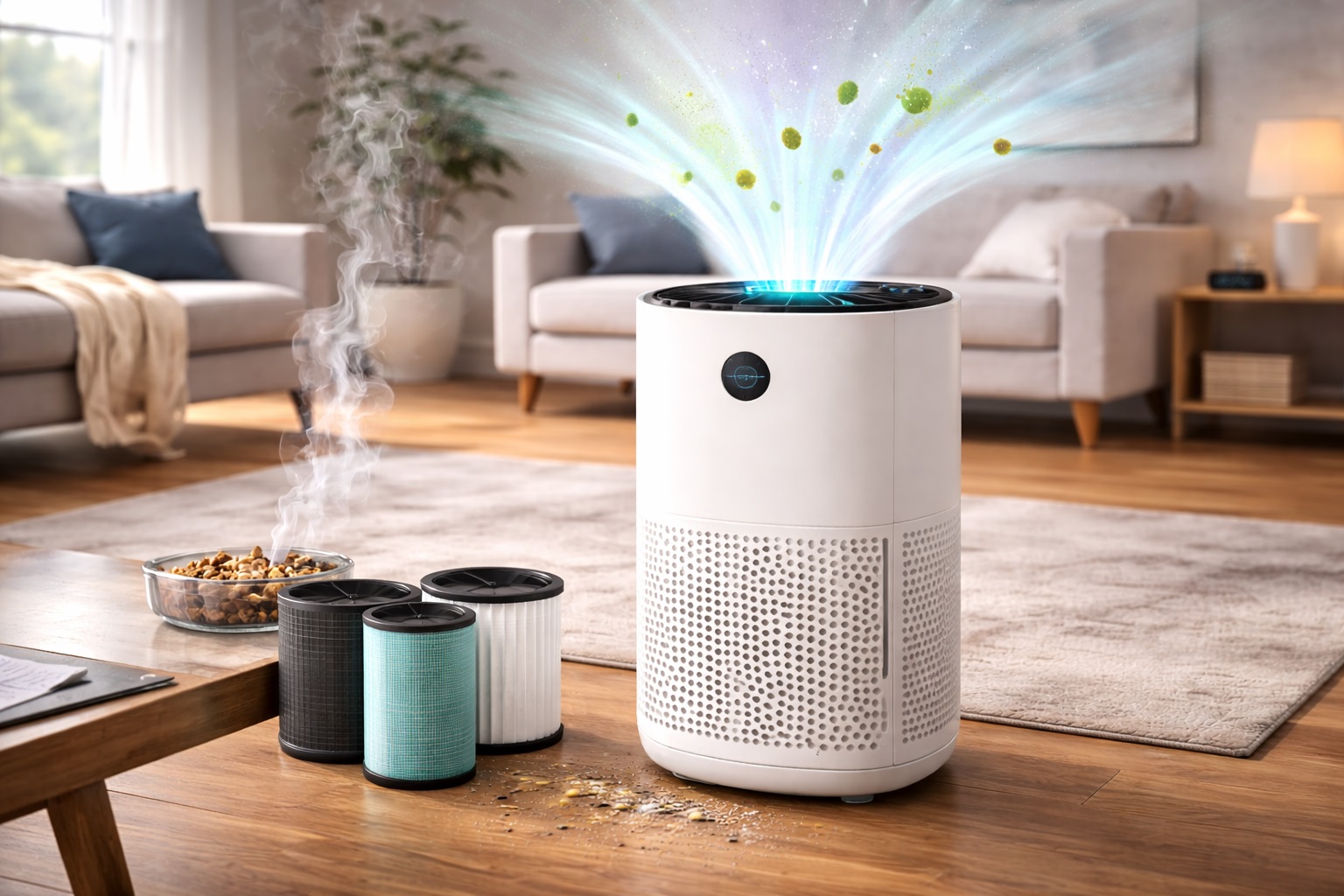
Allergy season does not stay outside once pollen, dust, and pet dander work their way into a home, and a well-chosen air purifier can meaningfully reduce the airborne particles that trigger sneezing, congestion, and itchy eyes indoors. Many allergy sufferers notice symptoms improving indoors well before they realize an air purifier, rather than a change in outdoor pollen counts, is the actual reason. The right machine for allergies generally comes down to true HEPA filtration, enough airflow to actually cycle the air in a room repeatedly, and a filter replacement routine you will realistically keep up with. Skipping any one of these three factors tends to undercut the other two, since even the best filter cannot help if it rarely gets replaced, and strong airflow cannot compensate for a filter that is not actually rated to capture fine particles.
This guide compares eight air purifiers that regularly appear in allergy-focused searches for 2026, from budget-friendly tower designs to premium multi-stage systems. That price range reflects genuinely different engineering priorities rather than one end of the market simply being an inferior version of the other. Each of these models uses genuinely different filtration approaches, some centered purely on HEPA media, others combining HEPA with activated carbon, ionizing technology, or UV-C light, and this comparison focuses on what each approach is actually designed to address rather than assuming every extra feature matters equally for allergy relief specifically. Understanding these differences upfront also helps explain why two purifiers at similar prices can feel very different in daily use, since one might prioritize raw filtration capacity while another spreads its budget across smart features and secondary technologies.
Below you will find profiles of all eight air purifiers, a practical buying guide covering the features that matter most for allergy sufferers, and answers to the questions households ask most often before choosing a purifier to manage indoor allergens. Because allergy triggers vary from pollen to dust mites to pet dander, the goal is to help you match a purifier's actual filtration approach to your specific triggers rather than assuming any single model works identically well for everyone.
It also helps to set realistic expectations before comparing specific models. An air purifier reduces airborne particles circulating through a room, but it cannot remove allergens already settled on carpet, bedding, or furniture, and it works best as part of a broader routine that still includes regular vacuuming and dusting. Understanding this upfront helps you judge each model below on what it can realistically deliver rather than expecting any single machine to eliminate allergy symptoms on its own.
Top 8 Best air purifier Picks (Detailed Reviews)
1. Winix 5500-2 – Best For Everyday Allergy Relief on a Reasonable Budget
The Winix 5500-2, priced around $160, pairs True HEPA filtration with PlasmaWave technology, which is designed to help neutralize certain airborne particles and odors alongside the physical HEPA filter. For allergy sufferers, the HEPA layer is doing the primary work of capturing pollen, dust, and dander, while the PlasmaWave feature offers an additional layer some households value for odor control. Its price positions it as one of the more accessible full-featured options in this lineup.
- Pros:
- True HEPA filtration for capturing common allergy triggers
- PlasmaWave technology adds an odor-neutralizing layer alongside filtration
- Reasonably priced relative to other full-featured models here
- Cons:
- Some users prefer the option to run PlasmaWave off, which the unit allows
- Filter replacement costs add up over time, as with any HEPA purifier
Best For: Households wanting reliable, everyday HEPA allergy filtration without paying premium pricing.
Why We Recommend It: Its combination of true HEPA filtration and a genuinely optional additional feature makes it a well-rounded, budget-conscious pick for common seasonal allergies. Households dealing primarily with seasonal pollen rather than year-round pet dander often find this level of filtration more than sufficient without needing to step up to a pricier, higher-capacity unit.
2. Blueair Blue Pure 211+ – Best For Large Rooms and Whole-Space Coverage
The Blueair Blue Pure 211+, priced around $300, uses a 3-stage filtration system built around a washable pre-filter, a particle filter, and activated carbon. Blueair's filtration technology is widely known for combining mechanical filtration with an electrostatic charge to help capture fine particles efficiently, and the unit's simple, minimalist design is built to move a large volume of air, making it a strong fit for bigger rooms or open living spaces where allergens need to be captured across a wider area.
- Pros:
- Well suited to larger rooms and open floor plans
- Washable pre-filter reduces some ongoing replacement costs
- Simple one-button operation with minimal settings to manage
- Cons:
- Fewer smart features than app-connected competitors
- Fabric pre-filter needs regular vacuuming to maintain airflow
Best For: Households with larger rooms or open-concept spaces who want strong whole-space coverage over smart features.
Why We Recommend It: Its straightforward, high-airflow design is well matched to allergy relief across larger spaces where a smaller purifier might struggle to keep up. An open-concept living and dining area, where allergens can drift freely between spaces, is exactly the kind of environment this higher-airflow design was built to handle more effectively than a compact bedroom unit.
3. Dyson Pure Cool TP04 – Best For Combined Air Purification and Cooling
The Dyson Pure Cool TP04, priced around $550, is the most expensive model in this lineup and the only one that also functions as a bladeless fan through Dyson's Air Multiplier technology. Its HEPA filtration handles allergen capture while the fan function provides year-round airflow, a genuine two-in-one appeal for households that want an air purifier they will use even outside of peak allergy season. App connectivity and air quality reporting add further convenience for tracking allergen levels over time.
- Pros:
- Combines HEPA air purification with genuine cooling fan functionality
- App connectivity provides real-time air quality reporting
- Bladeless design is easier to clean than traditional fan blades
- Cons:
- Highest price point in this entire lineup
- Premium price reflects the fan functionality as much as pure filtration power
Best For: Buyers who want a single machine that handles both allergy filtration and everyday air circulation.
Why We Recommend It: Its dual-purpose design means it gets used year-round rather than being packed away once allergy season ends, which can make the higher price easier to justify over time. Households that would otherwise store a seasonal air purifier in a closet for most of the year may find the added fan functionality is what ultimately makes the higher upfront cost worthwhile.
4. Medify MA-40 – Best For Medical-Grade HEPA Filtration on a Mid-Range Budget
The Medify MA-40, priced around $300, is built around an H13 True HEPA filter, a medical-grade filtration standard capable of capturing very fine particles, including many common allergens. For allergy sufferers specifically concerned about filtration grade rather than extra features, this focus on a high-grade HEPA filter without added technology like ionizers keeps the design straightforward and centered on the core job of particle capture.
- Pros:
- H13 True HEPA filter offers medical-grade particle capture
- Straightforward design focused specifically on filtration rather than added features
- Competitive pricing for its filtration grade
- Cons:
- Fewer smart or app-connected features than some competitors
- Replacement filters are a recurring cost like any HEPA-based purifier
Best For: Allergy sufferers who want to prioritize filtration grade above all other features.
Why We Recommend It: Its focus on a genuinely high-grade HEPA filter, without unnecessary added technology, keeps the core allergy-fighting function front and center. Buyers who have found themselves confused by competing marketing claims from other brands often appreciate this model's more straightforward approach to describing exactly what its filter does and does not do.
5. Levoit Core 400S – Best For Smart, App-Connected Allergy Monitoring
The Levoit Core 400S, priced around $220, combines HEPA filtration with smart WiFi control, letting users monitor air quality and adjust settings remotely through a connected app. For allergy sufferers who want to track how well a purifier is responding to changing pollen counts or indoor triggers throughout the day, this kind of real-time monitoring adds a layer of convenience that purely manual models do not offer.
- Pros:
- Smart WiFi control allows remote monitoring and adjustment
- HEPA filtration paired with real-time air quality feedback
- Compact design suited to bedrooms and smaller living spaces
- Cons:
- Smart features require a stable WiFi connection to function fully
- Better suited to smaller rooms than the larger-capacity models in this lineup
Best For: Tech-comfortable households who want to actively monitor and respond to changing indoor air quality.
Why We Recommend It: Its smart monitoring features give allergy sufferers useful visibility into when air quality is actually improving, rather than running the purifier blindly on a fixed setting. Being able to check air quality readings from a phone before deciding whether to open a window on a high-pollen day is a small but genuinely useful piece of information this kind of monitoring provides.
6. Coway Airmega 400 – Best For High-Capacity Multi-Stage Filtration
The Coway Airmega 400, priced around $500, uses a dual filtration system combining a pre-filter, HEPA filter, and activated carbon layer, designed to handle larger spaces with a higher volume of airflow. Coway has a strong reputation in the air purifier category specifically for combining multiple filtration stages without excessive noise, which matters for allergy sufferers who want a purifier running continuously, including overnight, without disrupting sleep.
- Pros:
- Multi-stage filtration combining pre-filter, HEPA, and activated carbon
- Designed for larger spaces with higher airflow capacity
- Reputation for relatively quiet operation despite strong filtration power
- Cons:
- Premium price point relative to single-stage HEPA competitors
- Larger physical footprint than compact bedroom-focused models
Best For: Households needing strong, multi-stage filtration for larger rooms who also want to run the unit overnight.
Why We Recommend It: Its combination of thorough multi-stage filtration and relatively quiet operation addresses two priorities that can otherwise be difficult to find together. Allergy sufferers who have previously given up on running a purifier overnight because of motor noise are often the ones who benefit most from specifically seeking out a quieter, higher-capacity model like this one.
7. Honeywell HPA300 – Best For Trusted, Long-Standing HEPA Performance
The Honeywell HPA300, priced around $250, uses True HEPA filtration from a brand with a long-standing reputation in the air purifier category. Its straightforward design focuses on capturing common allergens without added technology like ionizers, and Honeywell's extended market history in air purification gives allergy sufferers a well-established option with a long track record of documented HEPA performance.
- Pros:
- True HEPA filtration from a long-established, trusted brand
- Straightforward operation without unnecessary added features
- Widely available replacement filters given the brand's market presence
- Cons:
- Fewer smart features than app-connected competitors
- Larger unit size compared to some compact bedroom models
Best For: Allergy sufferers who want a trusted, well-established HEPA purifier without extra bells and whistles.
Why We Recommend It: Its long track record and focus on core HEPA performance make it a dependable, low-complexity choice for straightforward allergy relief. Buyers who simply want a purifier that works consistently without needing to learn an app or manage extra settings tend to appreciate this kind of no-frills reliability the most.
8. GermGuardian AC4825 – Best For Budget-Friendly Filtration Plus UV-C
The GermGuardian AC4825, priced around $100, is the most affordable model in this lineup, combining True HEPA filtration with a UV-C light sanitizer designed to target certain airborne microorganisms in addition to standard particle capture. Its compact tower design suits smaller rooms, and the lower price point makes it an accessible entry point for households wanting to add basic HEPA allergy filtration to a bedroom or office without a large investment.
- Pros:
- Lowest price point in this entire lineup
- True HEPA filtration for standard allergen capture
- UV-C light adds an additional layer beyond filtration alone
- Cons:
- Compact size is better suited to smaller rooms than large open spaces
- Fewer premium features than higher-priced competitors
Best For: Budget-conscious households who want basic, effective HEPA allergy filtration for a smaller room.
Why We Recommend It: It delivers genuine HEPA filtration at the most accessible price in this comparison, making it a sensible starting point for a first air purifier. For a child's bedroom, a home office, or any single room where a full-size unit feels unnecessary, this compact and affordable option covers the fundamentals without asking for a significant investment.
Buying Guide: How to Choose the Best Air Purifier for Allergies
Not every air purifier feature matters equally for allergy relief specifically. The sections below focus on what actually helps with pollen, dust, and dander, versus what is a nice-to-have extra.
1. True HEPA Filtration as the Core Requirement
A genuine True HEPA filter, rather than a HEPA-type or HEPA-like filter, is the single most important feature for allergy relief, since it is specifically rated to capture the vast majority of very fine airborne particles. Marketing terms can blur this distinction, so checking a product's specifications directly for the words True HEPA, rather than relying on a general HEPA-style label, is worth the extra minute before purchasing.
2. Room Size and Airflow Matching
A purifier needs enough airflow capacity to cycle the air in your specific room repeatedly throughout the day; an undersized unit in a large room will struggle to keep up regardless of its filtration quality. Manufacturers typically publish a recommended room size for each model, and choosing a unit rated for a somewhat larger space than you actually need generally provides more thorough, faster filtration.
3. Activated Carbon for Odor and Chemical Sensitivity
Activated carbon layers help address odors and certain airborne chemicals but are separate from particle filtration, so households focused purely on pollen and dust may not need to prioritize this feature as heavily. Households near busy roads or with a smoker in the home, however, may find the odor and chemical reduction from activated carbon a meaningful additional benefit worth seeking out.
4. Filter Replacement Cost and Frequency
Ongoing filter replacement is a real cost of owning any HEPA-based purifier, so checking replacement filter pricing and recommended replacement schedules before buying avoids surprises later. Multiplying the replacement filter price by how many times per year the manufacturer recommends changing it gives a more honest picture of total ownership cost than the sticker price alone.
5. Noise Levels for Overnight or Bedroom Use
Allergy sufferers who want to run a purifier overnight should specifically check noise levels at lower fan speeds, since running a loud unit continuously in a bedroom can disrupt sleep. Many manufacturers publish a decibel rating for their lowest fan speed specifically, which is the number most relevant to anyone planning to run a purifier overnight.
6. Smart Features and Air Quality Monitoring
App-connected purifiers with real-time air quality sensors can help you understand when indoor allergen levels are actually elevated, though this convenience comes at a price premium over simpler models. Consider whether you will actually check the app regularly, since the monitoring feature only adds value if it changes how or when you use the purifier.
7. Ionizers, PlasmaWave, and Similar Additional Technologies
Features like ionizing or plasma technology are generally marketed as a supplement to HEPA filtration rather than a replacement for it, and models that let you disable these features offer more flexibility for sensitive households. Some individuals report sensitivity to ionized air specifically, so having the option to turn this feature off while keeping HEPA filtration running is a genuinely useful flexibility to look for.
8. UV-C Light as a Supplementary Feature
UV-C light is typically marketed as targeting certain airborne microorganisms rather than allergens like pollen or dander directly, so it should be considered an addition to HEPA filtration rather than a primary allergy solution. Households specifically concerned about mold spores or bacteria alongside standard allergens may value this feature more than a household dealing purely with pollen and dust.
9. Washable vs Disposable Pre-Filters
A washable pre-filter can reduce ongoing replacement costs by extending the life of the more expensive HEPA filter behind it, though it does require regular manual cleaning to stay effective. Vacuuming a washable pre-filter roughly every two to four weeks, depending on household dust levels, keeps it from restricting airflow to the more expensive filtration stage behind it.
10. Multiple Units vs One Large Purifier
For homes with allergy triggers in several rooms, two smaller purifiers placed strategically can sometimes provide more consistent relief than one large unit running in a central hallway. This approach also allows you to run a smaller, quieter unit in a bedroom overnight while a larger unit handles a busier common area during the day.
11. Pet Dander Considerations
Households with pets should prioritize consistent, high airflow alongside HEPA filtration, since dander is continuously generated rather than a seasonal, one-time allergen source like pollen. Placing the unit closer to where pets spend the most time, such as a favorite resting spot, can help it capture dander closer to the source before it spreads throughout the room.
12. Placement Within a Room
Placing a purifier away from walls and furniture, ideally in a spot with decent airflow around the unit, helps it actually pull in and filter room air more effectively than a unit tucked into a corner. Avoid placing a purifier directly behind curtains or under a shelf, since restricted airflow around the intake can meaningfully reduce how much air the unit is actually able to process per hour.
13. Price vs Filtration Priorities
Higher price in this lineup often reflects added features like app connectivity or fan functionality rather than dramatically better core HEPA filtration, so allergy sufferers on a budget can often get genuine relief from a simpler, less expensive model.
Frequently Asked Questions
Is a premium air purifier worth it for allergies?
Sometimes, particularly if the premium reflects genuinely higher airflow capacity for a larger room, though many mid-range and budget models offer equally effective HEPA filtration for smaller spaces.
How do I maintain my air purifier?
Replace or clean filters on the manufacturer's recommended schedule, vacuum any washable pre-filters regularly, and keep the unit's air intake areas free of dust buildup.
Do air purifiers actually help with seasonal allergies?
Yes, a properly sized HEPA air purifier can meaningfully reduce indoor pollen and other airborne allergens that make their way inside during allergy season.
What is the difference between HEPA and True HEPA?
True HEPA refers to filters meeting a specific, defined particle-capture standard, while HEPA-type or HEPA-like filters may not meet that same standard, making the distinction meaningful when shopping specifically for allergy relief.
How often should I replace my air purifier's filter?
This varies by model and usage, so following the manufacturer's specific recommended schedule is more reliable than a general rule of thumb across different purifiers.
Can an air purifier help with pet allergies specifically?
Yes, HEPA filtration captures pet dander effectively, though because pets continuously shed dander, consistent daily operation matters more than it does for seasonal pollen alone.
Do I need activated carbon filtration for allergies?
Not necessarily; activated carbon primarily addresses odors and certain chemicals rather than particle allergens, so it is a nice addition rather than a core allergy requirement. If odor is not a specific concern in your home, skipping this feature can sometimes free up budget for a higher-capacity HEPA unit instead.
Are ionizing air purifiers safe and effective for allergies?
Many ionizing features are designed as a supplement to HEPA filtration rather than a replacement, and models that allow disabling this feature give sensitive households more control.
How big of a room can one air purifier handle?
This depends heavily on the specific model's airflow capacity, so checking a manufacturer's room size recommendation for your specific unit is more reliable than assuming one size fits all spaces.
Should I run my air purifier all the time?
For consistent allergy relief, particularly with pet dander or ongoing dust, running the unit continuously or on an automatic sensor-based setting tends to be more effective than turning it on only occasionally.
Can an air purifier replace regular cleaning for allergy control?
No, an air purifier addresses airborne particles specifically, while regular vacuuming and dusting remain necessary for allergens that settle on surfaces and floors.
Does UV-C light in an air purifier help with allergies?
UV-C is generally marketed toward certain airborne microorganisms rather than allergens like pollen or dander, so it should be viewed as a supplementary feature rather than the primary allergy-fighting mechanism. Households choosing between two otherwise similar purifiers can reasonably treat UV-C as a minor tiebreaker rather than a deciding factor on its own.
Is a smart, app-connected air purifier worth the extra cost?
If you want to actively monitor air quality data and adjust settings remotely, yes; if you simply want a purifier to run consistently in the background, a simpler model may serve just as well for less money. There is no wrong choice here, only a trade-off between paying for convenience features and paying purely for filtration capacity.
Final Verdict
- Top Pick: Winix 5500-2 for well-rounded True HEPA allergy filtration at a reasonable, accessible price.
- Budget Choice: GermGuardian AC4825 for genuine HEPA filtration in a smaller room at the lowest price in this lineup.
- Premium Choice: Dyson Pure Cool TP04 for buyers who want combined air purification and year-round fan functionality in one machine.
Effective allergy relief from an air purifier comes down to true HEPA filtration matched to your actual room size, run consistently enough to keep up with your specific triggers, whether that is seasonal pollen, year-round pet dander, or household dust. The Winix 5500-2 and Honeywell HPA300 both offer dependable, no-frills HEPA performance, while the Blueair Blue Pure 211+ and Coway Airmega 400 are worth the added cost specifically for larger spaces. Choosing based on your room size and specific allergy triggers, rather than the longest feature list, will generally deliver more noticeable relief than chasing the most expensive option available.