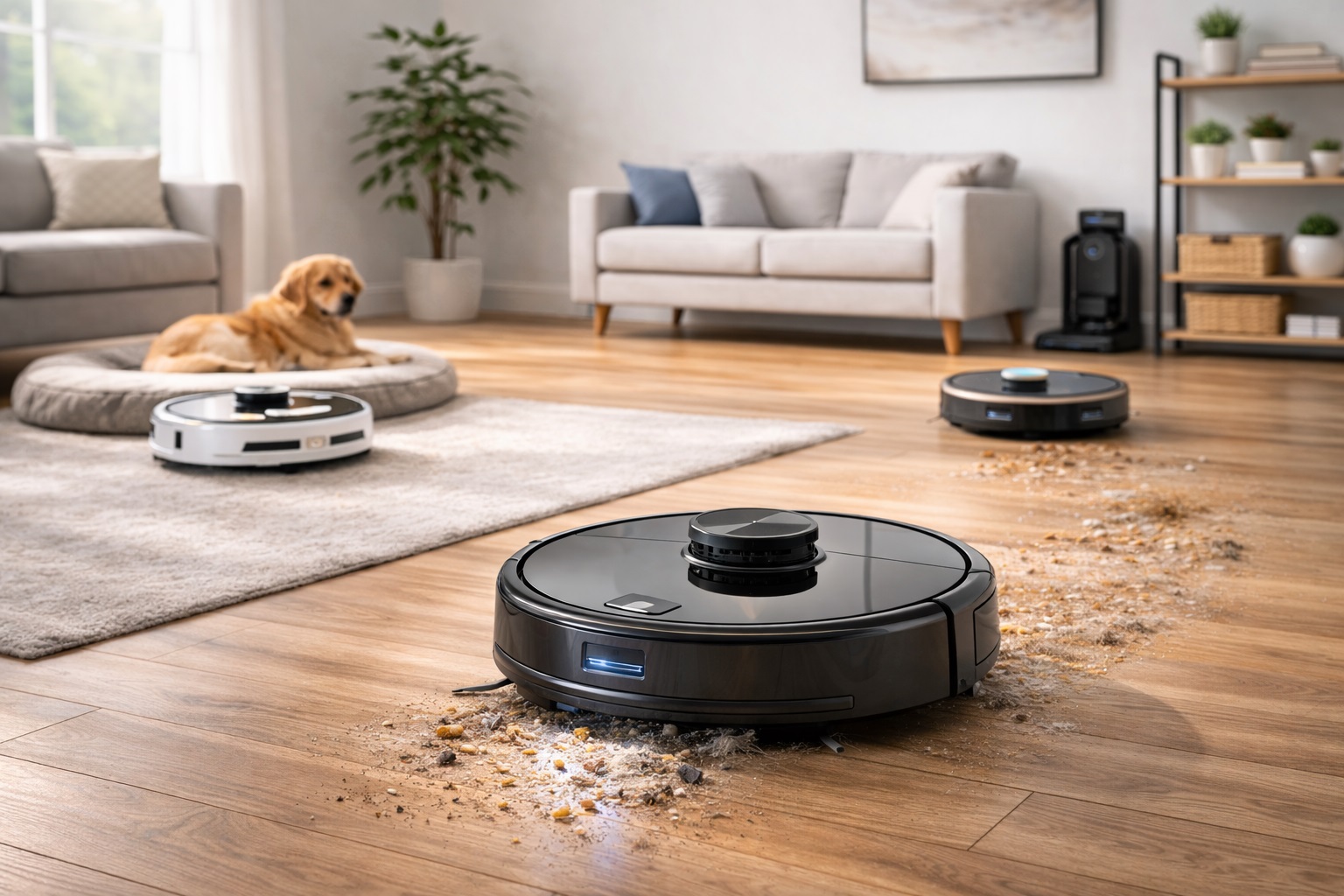
Best Robot Vacuum Cleaner in 2026
A robot vacuum promises something no manual machine can: cleaning that happens without anyone pushing, carrying, or even being home. It is a fundamentally different value proposition than simply buying a stronger or more feature-rich manual vacuum, since the entire appeal rests on removing a chore from your routine rather than making that chore faster or more thorough. That hands-free convenience is the entire appeal of the category, and for households that want floors maintained automatically between deeper cleaning sessions, it can genuinely change how often a home actually gets vacuumed.
This guide is built around an honest fact worth stating upfront: of the eight vacuum cleaners commonly compared in this space for 2026, only one, the iRobot Roomba j7+, is an actual robot vacuum. The other seven are cordless stick, corded upright, and canister vacuums that regularly appear in the same searches and comparison charts, either because shoppers are weighing a robot vacuum against a traditional manual machine, or because these models simply dominate general vacuum comparisons regardless of format. Rather than force a false equivalence, this guide treats the Roomba as the genuine robot vacuum pick and reviews the remaining seven honestly as the manual alternatives worth understanding before deciding whether automation is really what your home needs.
Below you will find a detailed review of the one true robot vacuum in this lineup, followed by profiles of the manual machines most often considered alongside it, a buying guide covering what actually matters when choosing between automated and manual cleaning, and answers to the questions households ask most often when comparing the two approaches.
It is worth being clear about why this mixed lineup exists at all: shoppers researching robot vacuums very often end up comparing prices and features against traditional stick, upright, and canister models before deciding which category actually fits their home. Rather than pretend every model here is an autonomous machine, this guide leans into that real-world comparison shopping process, reviewing the one true robot honestly on its own automation merits and reviewing the seven manual machines honestly as manual machines, so you can make an informed decision about which category, not just which product, is right for you.
Top 8 Best vacuum cleaner Picks (Detailed Reviews)
1. iRobot Roomba j7+ – Best For True Hands-Free Robot Cleaning
The iRobot Roomba j7+ is the only genuine robot vacuum in this comparison, and it earns its place through obstacle avoidance AI specifically designed to navigate around cords, pet waste, and furniture legs without direct supervision. At around $800, it commands a premium price relative to most manual vacuums here, but that price reflects real automation technology rather than simply a stronger motor. For households that want floors maintained on a schedule without anyone lifting a finger, it is the clear and only true pick in this entire lineup. Its price reflects the sensors, cameras, and onboard processing needed to make that automation trustworthy, rather than a simple premium markup on an otherwise ordinary vacuum.
- Pros:
- Genuine hands-free operation with no manual pushing or carrying required
- Obstacle avoidance AI designed to navigate around pets, cords, and furniture
- Scheduling allows cleaning to happen automatically while you are away
- Cons:
- Higher price point than every manual vacuum in this lineup except the priciest canister
- Still requires periodic manual maintenance such as bin emptying and brush cleaning
Best For: Households that specifically want automated, scheduled floor cleaning without manually operating a vacuum.
Why We Recommend It: As the only true robot vacuum in this comparison, it is the clear pick for anyone whose actual priority is hands-free cleaning rather than simply a well-reviewed vacuum in general. Pairing it with a compatible self-emptying dock further reduces the hands-on maintenance it does require, though most owners still keep a manual vacuum on hand for the areas a robot cannot reach.
2. Shark Navigator Lift-Away – Best Manual Alternative For Versatile Coverage
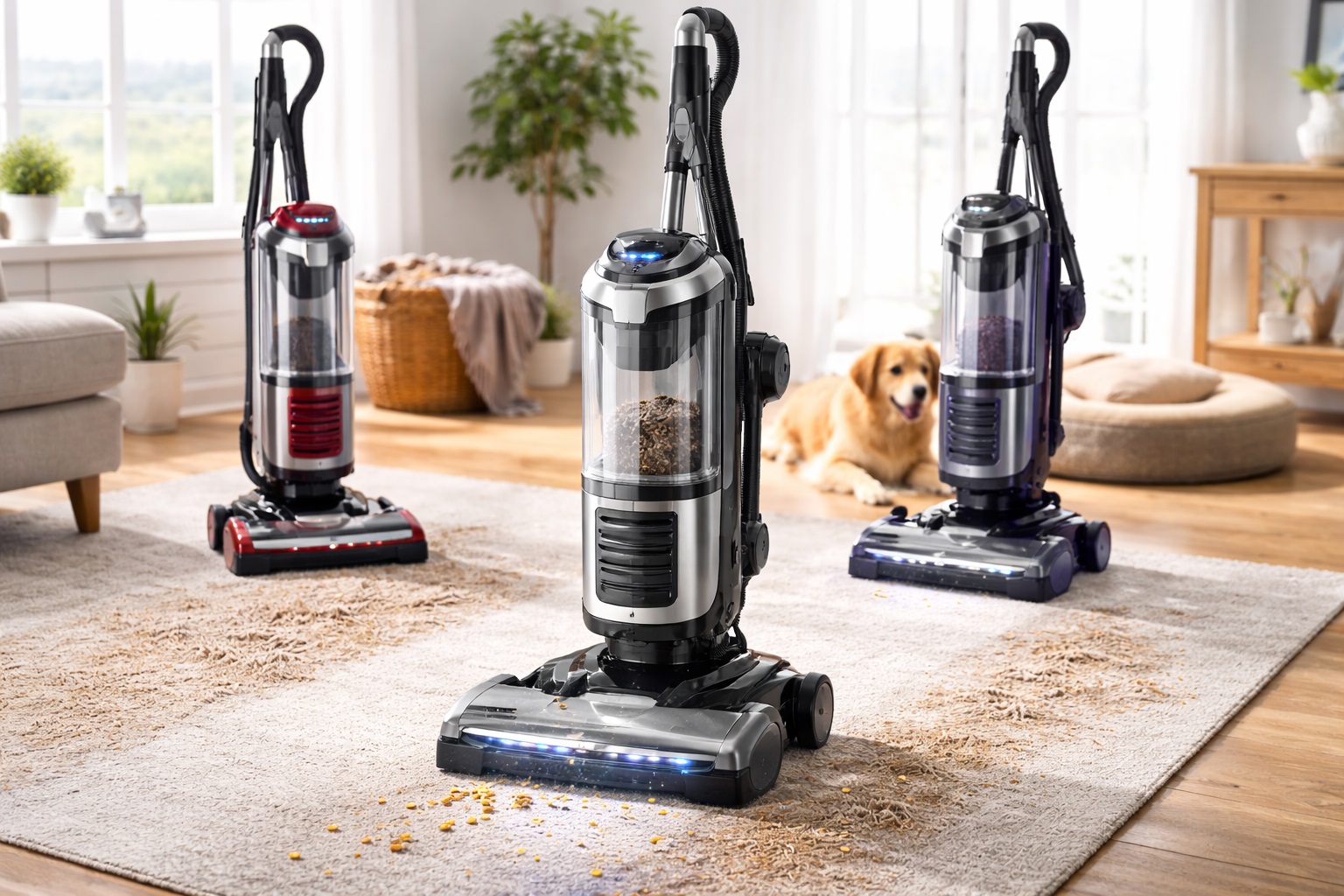
The Shark Navigator Lift-Away is a corded upright, not a robot vacuum, and it is included here as one of the manual machines most often cross-shopped against automated options. Its detachable canister pod lifts away for stairs and upholstery, areas a robot vacuum generally cannot reach at all, while its Anti-Allergen Complete Seal is designed to help trap dust during use. At around $200, it costs a fraction of the Roomba, making it a reasonable manual alternative for households not ready to commit to automation.
- Pros:
- Detachable pod covers stairs and furniture a robot vacuum cannot reach
- Significantly cheaper than the robot vacuum option in this lineup
- Anti-Allergen Complete Seal for reduced dust escape during use
- Cons:
- Requires manual pushing and supervision, unlike the Roomba
- Corded design limits range compared to cordless or robot options
Best For: Buyers who want manual control and stair or furniture access rather than automated floor-only cleaning.
Why We Recommend It: It covers ground a robot vacuum fundamentally cannot, making it a sensible manual complement rather than a true competitor to automated cleaning. Households that eventually add a robot vacuum to their routine often keep a model like this specifically for the weekly deep clean of stairs and upholstery that automation cannot address.
3. Eureka PowerSpeed – Best Manual Alternative For Budget-Conscious Buyers
The Eureka PowerSpeed is a corded upright with five height adjustments, priced at around $70, making it the most affordable model in this entire comparison by a wide margin. It has no automation features whatsoever and is included here purely as an honest budget contrast to the Roomba's premium automated pricing. For households weighing whether hands-free convenience is worth roughly eleven times the price of a basic manual upright, it clarifies exactly what that price gap represents.
- Pros:
- Lowest price point in this entire lineup
- Height adjustment handles multiple floor types manually
- Simple, reliable design with no automation to maintain or troubleshoot
- Cons:
- No automation or scheduling features of any kind
- Requires full manual operation for every cleaning session
Best For: Budget-focused buyers who are comfortable with manual vacuuming and do not need automated convenience.
Why We Recommend It: It demonstrates just how much of a premium genuine automation commands, helping budget-focused shoppers decide with clear eyes whether that premium is worth paying. For a first apartment or a household simply not interested in automation at all, it remains a perfectly capable everyday vacuum on its own terms, robot comparison aside.
4. Bissell CleanView – Best Manual Alternative For Efficient Quick Cleaning
The Bissell CleanView, priced around $100, is a corded upright built around OnePass Technology designed to lift dirt in a single forward pass. Like the other manual machines in this list, it requires someone to actually push it, but its efficiency reduces the time that manual investment takes. It is a reasonable middle-ground option for households who want faster manual cleaning without paying for automation they may not use consistently.
- Pros:
- OnePass Technology reduces the number of passes needed
- Still well under a quarter of the robot vacuum's price
- Compact upright body is easy to store and retrieve
- Cons:
- No automated or scheduled cleaning capability
- Corded design limits range during manual sessions
Best For: Buyers who want a quicker manual cleaning session without investing in automation.
Why We Recommend It: Its single-pass efficiency narrows the practical time gap between manual and automated cleaning, which matters for households on the fence about paying for a robot vacuum. Anyone unsure whether they would actually use a robot vacuum's scheduling features consistently might find a faster manual machine like this a more honest fit for their real cleaning habits.
5. Dyson V15 Detect – Best Manual Alternative For Targeted Deep Cleaning
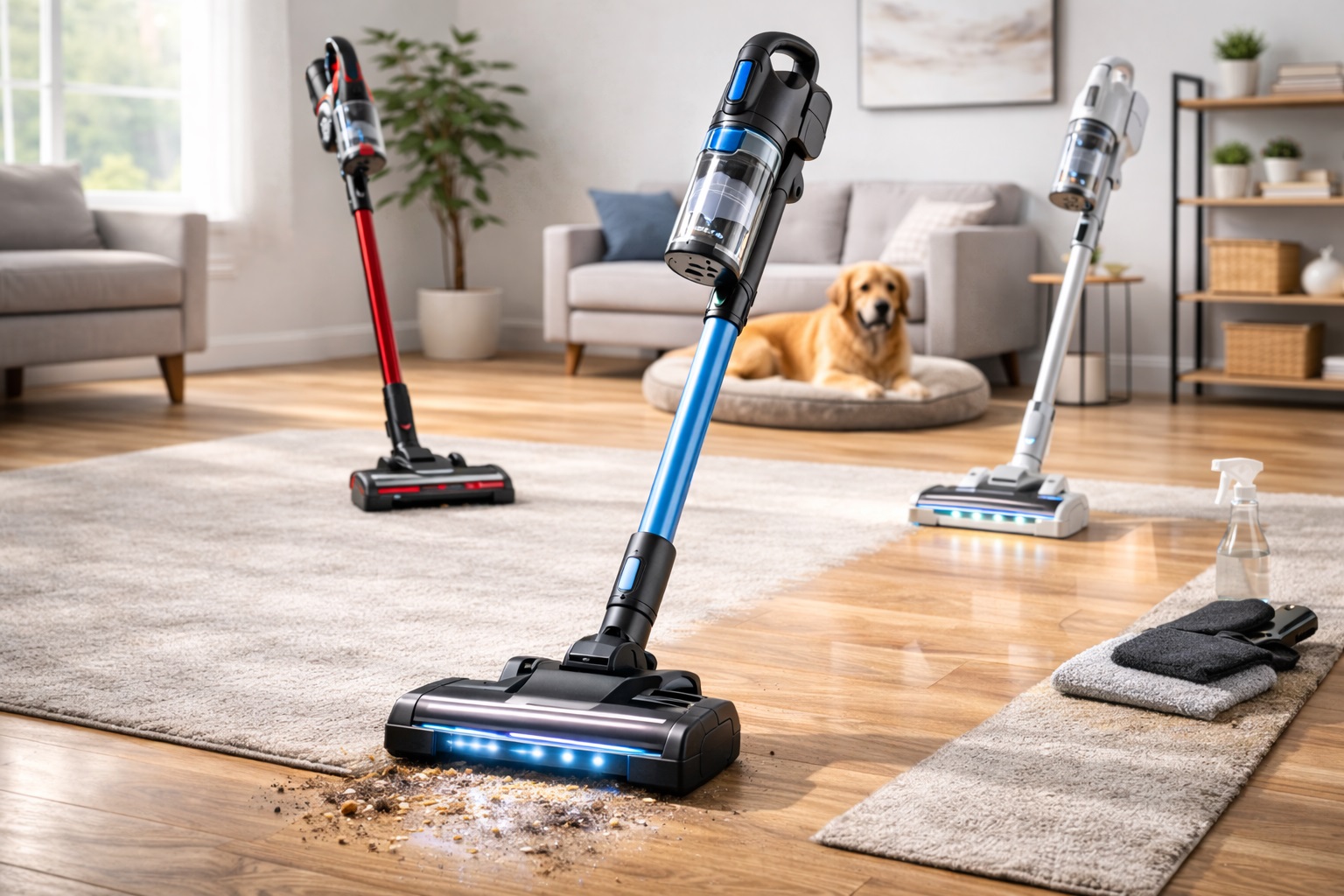
The Dyson V15 Detect is a genuine cordless stick vacuum, not a robot, priced at around $750, putting it close to the Roomba's price point despite requiring full manual operation. Its laser dust detection illuminates fine particles on hard floors, and its detachable handheld design converts for stairs and upholstery, areas where a robot vacuum cannot compete. For households that want manual, targeted deep cleaning power rather than passive daily maintenance, it represents the strongest non-robot option in this lineup.
- Pros:
- Laser dust detection highlights fine debris a robot vacuum would simply pass over
- Converts to handheld use for stairs and upholstery
- Strong, targeted suction for deep manual cleaning sessions
- Cons:
- Comparable price to the robot vacuum despite requiring full manual operation
- No automation or scheduling capability whatsoever
Best For: Buyers who want the strongest manual, targeted cleaning power rather than passive automated maintenance.
Why We Recommend It: It shows that spending robot-vacuum-level money does not have to mean going automated, if targeted manual cleaning power is what actually matters most to you. Its detection feature is also a useful gut check for anyone curious how much fine debris a robot vacuum's lighter daily pass might be leaving behind on hard floors.
6. Hoover WindTunnel – Best Manual Alternative For Sustained Suction
The Hoover WindTunnel is a corded upright priced around $150, built around Multi-Cyclonic suction designed to maintain consistent airflow as the dust bin fills. It has no automated features and is included here as a dependable, moderately priced manual option for households who have decided a robot vacuum's floor-only coverage and premium price are not worth it for their specific home. Its sustained suction over a full session is a genuine advantage over lighter automated cleaning passes.
- Pros:
- Multi-Cyclonic suction stays consistent throughout a session
- Moderately priced relative to the robot vacuum and premium cordless options
- Long-running product line with widely available parts
- Cons:
- Fully manual with no automation or scheduling
- Bulkier and less convenient to carry between floors than lighter options
Best For: Households that want dependable, sustained suction from a manual machine rather than lighter, automated daily passes.
Why We Recommend It: It offers a solid, moderately priced manual option for buyers who have specifically decided automation is not worth its price and floor-coverage limitations for their home. Its straightforward, non-automated design also means fewer components that can malfunction, which appeals to buyers who would rather troubleshoot a simple upright than a robot vacuum's sensors and navigation software.
7. Miele Complete C3 – Best Manual Alternative For Unlimited Runtime
The Miele Complete C3 is a corded canister vacuum priced at roughly $1,000, making it the single most expensive model in this entire comparison, robot vacuum included. Its AirClean Sealed System is designed to trap fine dust inside the machine, and its corded design means unlimited runtime for a single, thorough session, something no battery-powered robot vacuum can match. It is included here as the premium manual alternative for buyers who have decided sealed filtration and unlimited power matter more than any form of automation.
- Pros:
- AirClean Sealed System for thorough dust containment
- Unlimited corded runtime, unlike any battery-powered option here
- Widely regarded for premium build quality and longevity
- Cons:
- Highest price point in this entire lineup, including the robot vacuum
- Requires full manual operation with no automation whatsoever
Best For: Buyers who prioritize sealed filtration and unlimited manual runtime over any form of automated cleaning.
Why We Recommend It: It proves that the priciest option in a robot-vacuum comparison is not necessarily the robot itself, for buyers whose priorities lean toward manual filtration and power instead. Allergy-focused households in particular may find its sealed filtration addresses a concern that no robot vacuum's obstacle avoidance or scheduling feature can solve on its own.
8. Tineco Pure One S12 – Best Manual Alternative For Smart Suction Without Automation
The Tineco Pure One S12 is a cordless stick vacuum priced around $400, roughly half the Roomba's price, built around an iLoop smart sensor that automatically adjusts suction power based on detected dust levels. While it shares the word smart with automated technology, it is important to be clear that this is a manually operated vacuum with intelligent suction adjustment, not an autonomous cleaning robot. For buyers who want some smart technology without full automation, it occupies a reasonable middle ground.
- Pros:
- iLoop smart sensor automatically adjusts suction, unlike basic manual models
- Genuinely cordless and lightweight for manual maneuverability
- Roughly half the price of the true robot vacuum in this lineup
- Cons:
- Still requires full manual operation despite its smart sensor
- Battery runtime requires planning for larger homes
Best For: Buyers who want some smart technology in a vacuum without paying for or committing to full automation.
Why We Recommend It: It bridges the gap between a purely manual vacuum and a fully autonomous robot, for households who want a taste of smart technology at half the robot vacuum's price. Buyers drawn to the idea of a smart vacuum but hesitant about full automation often find this represents a reasonable first step before committing to a robot vacuum's higher price and more limited coverage.
Buying Guide: How to Choose Between a Robot Vacuum and a Manual Alternative
Deciding between a robot vacuum and a manual machine comes down to more than price, since the two categories solve genuinely different problems. The sections below walk through the specific trade-offs worth understanding before choosing either path.
1. What a Robot Vacuum Actually Covers
Robot vacuums clean open floor areas well but generally cannot climb stairs, clean upholstery, or reach tight corners the way a manual attachment can, so understanding this coverage gap upfront prevents disappointment after purchase. Walking through your own home room by room and noting which areas a robot could realistically reach is a more useful exercise than judging coverage from marketing photos alone.
2. Obstacle Avoidance Technology Quality
Not all robot vacuums handle obstacles equally well; models with dedicated AI-based obstacle avoidance, like detecting pet waste or cords, perform far more reliably than older bump-and-turn navigation systems. Reading recent owner reviews that specifically mention navigation around real household clutter tends to be more informative than a manufacturer's general description of its sensors.
3. Scheduling and the Value of Passive Cleaning
The core value of a robot vacuum is cleaning happening automatically on a schedule, so households that will not actually set up or use scheduling features may not see the full benefit relative to the price. Being honest with yourself about whether you will actually open an app and configure a schedule, rather than assuming you will get around to it, is worth doing before paying a premium for automation.
4. Manual Vacuums for Stairs and Upholstery
Every manual vacuum in this comparison, whether upright, canister, or cordless stick, can address stairs and furniture in ways a robot vacuum simply cannot, making a manual machine a near-necessity alongside any robot vacuum in a multi-level home. This is one of the clearest reasons a robot vacuum rarely functions as a household's only cleaning device, regardless of how capable its floor cleaning turns out to be.
5. Bin Capacity and Emptying Frequency
Robot vacuums generally have smaller bins than manual uprights or canisters and require more frequent emptying, though self-emptying docks can offset this at additional cost. Factor the cost of a self-emptying dock into your overall budget if bin capacity is a concern, since it is often sold separately from the base robot vacuum unit.
6. Suction Power Comparisons Across Formats
Manual corded vacuums generally offer stronger sustained suction than a robot vacuum's battery-powered motor, which matters most for deep, thorough cleaning rather than daily surface maintenance. This is why many households treat a robot vacuum as a maintenance tool between more thorough manual sessions rather than a full replacement for deep cleaning.
7. Home Layout and Robot Vacuum Suitability
Open floor plans with fewer obstacles and minimal clutter tend to suit robot vacuums far better than cluttered, multi-level homes with lots of furniture legs and cords to navigate. Taking a few minutes to tidy loose cords and small objects before a scheduled robot vacuum run can meaningfully improve how completely it covers a room.
8. Combining a Robot Vacuum With a Manual Machine
Many households find the most practical approach is pairing a robot vacuum for daily floor maintenance with a manual vacuum for weekly deep cleaning, stairs, and furniture, rather than relying on either format alone. This combined approach also tends to extend the life of both machines, since neither one is being asked to handle every single cleaning scenario on its own.
9. Maintenance Requirements for Robot Vacuums
Robot vacuums require periodic brush cleaning, sensor wiping, and bin emptying to keep obstacle avoidance and suction performing as intended, so budget some ongoing manual attention even with an automated machine. Setting a recurring reminder to check the brushes and sensors, roughly every week or two depending on household size, helps a robot vacuum keep performing as intended over the long run.
10. Price-to-Coverage Ratio
When comparing a robot vacuum's price against a manual machine, factor in that the robot only covers open floors, while a manual machine at a similar or lower price often covers floors, stairs, and furniture in one device. Doing this kind of honest, coverage-adjusted price comparison, rather than comparing sticker prices alone, gives a clearer picture of genuine value for your specific home.
11. Noise and Timing Considerations
Robot vacuums can be scheduled to run while no one is home, avoiding the noise disruption of manual vacuuming, which is a genuine lifestyle advantage separate from cleaning performance itself. For households with young children napping during the day or members working from home, this scheduling flexibility can matter as much as any cleaning performance metric.
12. Pet Households and Robot Vacuum Features
Households with pets should specifically look for obstacle avoidance designed around pet waste detection, since this is not a universal robot vacuum feature and matters significantly for that use case. Reading pet-owner-specific reviews of a robot vacuum's real-world obstacle avoidance is far more reliable than trusting a general product description alone.
13. Long-Term Cost of Ownership
Factor in replacement brushes, filters, and potential battery replacement for a robot vacuum over several years, since these ongoing costs can narrow the price gap with a well-maintained manual machine over time.
Frequently Asked Questions
Is a premium vacuum cleaner worth it?
It depends on whether the premium price reflects features you will actually use, such as genuine automation in a robot vacuum or sealed filtration in a manual model, rather than price alone.
How do I maintain my vacuum cleaner?
Keep the machine clean, follow the manufacturer's guidelines for filter replacement, and for robot vacuums specifically, regularly clean sensors and wheels to preserve navigation accuracy.
Can a robot vacuum fully replace a manual vacuum?
Not entirely; most households still need a manual vacuum or attachment for stairs, upholstery, and tight corners that a robot vacuum cannot reach on its own.
Are robot vacuums as powerful as manual vacuums?
Generally no; manual corded vacuums typically offer stronger sustained suction, while robot vacuums prioritize convenience and consistent light maintenance over raw power.
How does obstacle avoidance work on a robot vacuum?
Advanced models use AI-based cameras or sensors to identify and steer around objects like cords, pet waste, and furniture legs in real time, rather than simply bumping into them.
Is it worth buying both a robot vacuum and a manual vacuum?
For many households, yes; the two formats address different needs, with the robot handling daily floor maintenance and the manual vacuum covering deeper cleaning, stairs, and furniture.
How often does a robot vacuum need its bin emptied?
This varies by home size and debris levels, though smaller robot vacuum bins generally need emptying more often than a full-size manual upright or canister.
Do robot vacuums work well on carpet?
Many handle low-pile carpet reasonably well, though thick or plush carpet can be more effectively cleaned by a manual vacuum with a stronger, dedicated motorized brush roll.
What is the biggest limitation of a robot vacuum?
Its inability to climb stairs or thoroughly clean upholstery is generally the most significant limitation, which is why most households still keep a manual vacuum on hand.
How much more does a robot vacuum cost compared to a manual one?
In this comparison, the robot vacuum costs roughly eleven times more than the cheapest manual upright, though pricing varies significantly across the broader market. Watching for seasonal sales on either category can meaningfully narrow that price gap, so it is worth comparing current prices rather than relying on list price alone.
Can a robot vacuum handle a multi-level home?
It can clean each floor it is placed on, but it cannot move between floors on its own, so a multi-level home typically needs either multiple units or a manual vacuum to cover stairs and additional levels. Some households solve this by keeping a dedicated robot vacuum on the main living floor while relying on a lightweight manual machine for upstairs bedrooms.
Is a cordless stick vacuum a good middle ground between manual and robot cleaning?
Yes, a cordless stick vacuum still requires manual operation but offers lightweight, room-to-room flexibility that some households find a reasonable compromise before committing to full automation. It also tends to be the easiest upgrade path for someone moving away from a heavier corded upright without jumping straight to the price and complexity of full automation.
Do robot vacuums need Wi-Fi to work?
Basic cleaning cycles can often run without an app connection, though scheduling, mapping, and advanced obstacle avoidance features typically require a Wi-Fi connection to function fully. Checking whether basic spot cleaning is available offline can matter for households with an unreliable home network or privacy concerns about a constantly connected device.
Final Verdict
- Top Pick: iRobot Roomba j7+ as the only genuine robot vacuum in this comparison, best for households that specifically want automated, scheduled cleaning.
- Budget Choice: Eureka PowerSpeed for buyers comfortable with manual vacuuming who want the lowest realistic entry price.
- Premium Choice: Miele Complete C3 for buyers who prioritize sealed filtration and unlimited manual runtime over any form of automation.
If genuine hands-free cleaning is the priority, the iRobot Roomba j7+ remains the only real option in this lineup, and it delivers exactly that convenience within its floor-only limitations. The remaining seven vacuums here are honestly manual machines, each with its own strengths in suction, versatility, or price, and several households will find that pairing a robot vacuum with one of these manual options for stairs and deeper cleaning ultimately serves their home better than expecting automation alone to do everything.