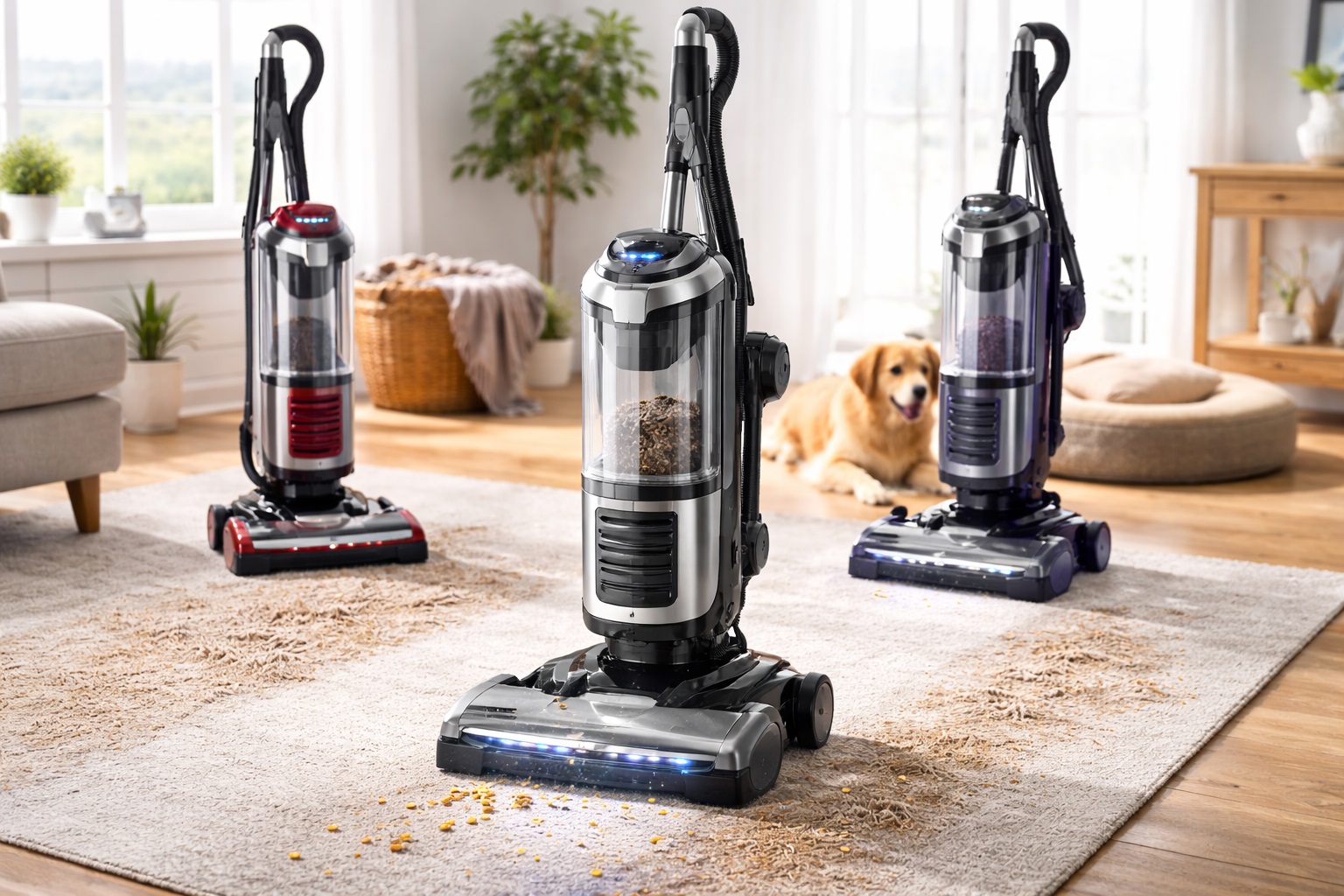
Best Upright Vacuum Cleaner in 2026
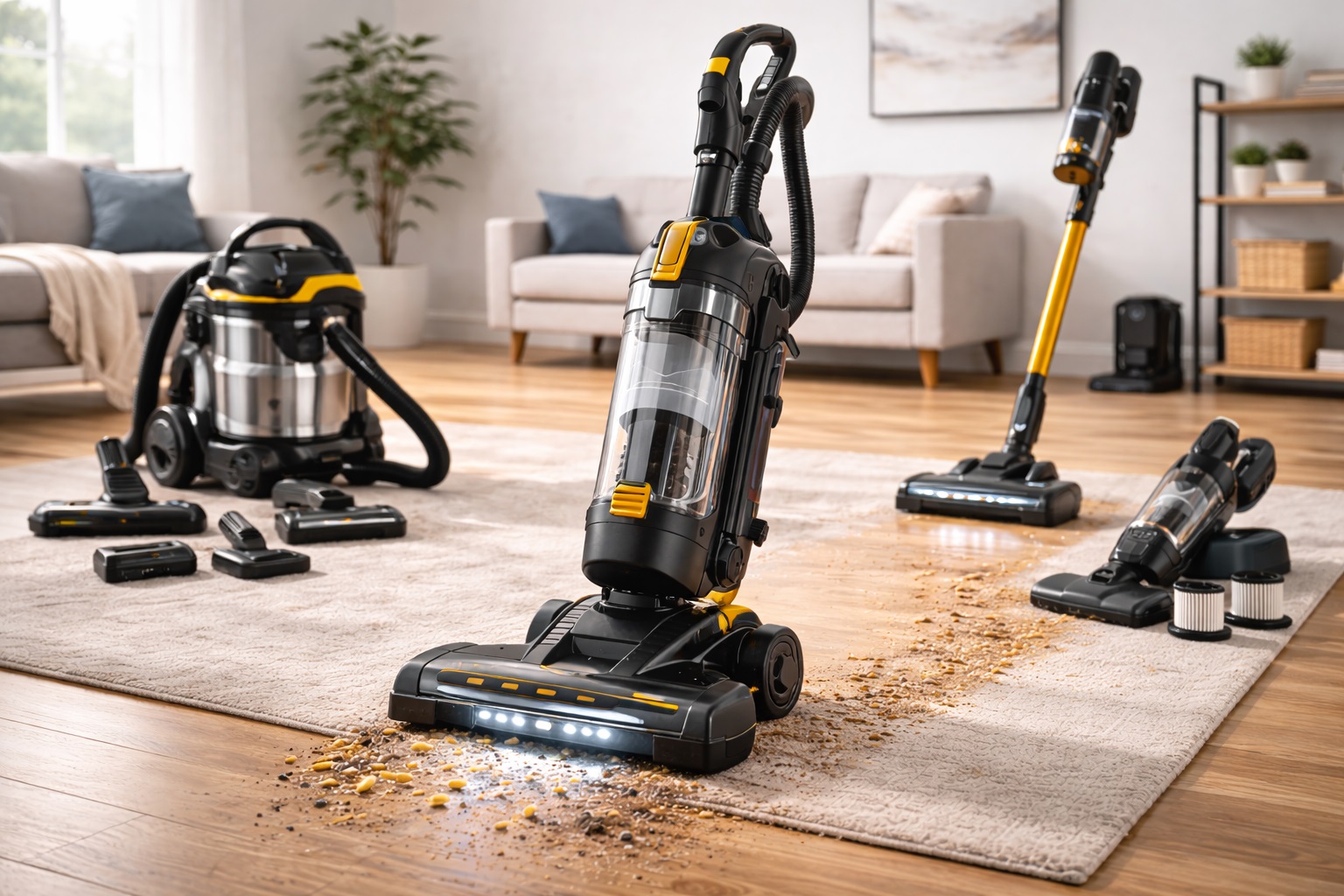
For whole-house carpet cleaning, the upright vacuum remains the format most households reach for first, thanks to its large dust capacity, wide cleaning path, and brush rolls built specifically to agitate and lift embedded dirt from carpet fibers. The best upright vacuum cleaner for 2026 needs strong airflow across the full width of its cleaning head, a brush roll suited to your carpet pile, and filtration that keeps dust from simply recirculating into the room.
This guide compares eight widely available vacuum cleaners relevant to carpet cleaning in 2026, using publicly known specifications such as suction technology, filtration systems, and format to frame how each one fits into a carpet-focused cleaning routine. Because shoppers researching carpet cleaning often compare formats side by side, this roundup includes true upright models alongside a few widely known canister, cordless stick, and robot vacuums that regularly come up in the same searches. Not every model here is a traditional upright, and this guide is upfront about which ones are and which are included purely as alternative formats worth knowing about.
Below are profiles of eight vacuum cleaners, a practical buying guide covering the features that matter most for carpet performance, and answers to the questions households ask most often before choosing a vacuum built around thorough carpet cleaning.
Carpet cleaning performance depends heavily on how well a vacuum's brush roll and airflow work together to lift dirt out of fibers rather than simply pushing it around the surface. A canister, stick, or robot vacuum can still contribute to a clean carpet, but each format makes different trade-offs in brush roll design, suction consistency, and reach that are worth understanding before deciding which one, or which combination, best suits a given home.
It is also worth acknowledging upfront why a mixed lineup like this one is common in vacuum comparisons at all. Shoppers rarely search for "upright vacuum" in isolation; they compare it against cordless sticks for convenience, canisters for above-floor versatility, and robots for hands-free upkeep before settling on what actually fits their home. Rather than pretending every model here is functionally the same type of machine, this guide calls out format differences directly so the comparison stays useful rather than misleading.
Households with mostly open-plan carpeted living areas tend to get the most value from a genuine upright, since its wide cleaning path covers more ground per pass than a narrower stick or a robot's incremental coverage. Homes with more stairs, area rugs, and upholstery scattered across multiple rooms often benefit from pairing an upright with a lighter secondary tool, which is part of why lift-away and canister designs remain popular even in carpet-heavy households.
Top 8 Best vacuum cleaner Picks (Detailed Reviews)
1. Bissell CleanView – Best For Everyday Upright Carpet Cleaning
The Bissell CleanView is a traditional upright vacuum, which makes it one of the most directly relevant picks in this lineup for households focused on carpet cleaning. Its OnePass Technology is designed to lift dirt and debris in a single forward pass rather than requiring repeated back-and-forth strokes over the same section of carpet. At around $100, it offers an accessible entry point into upright cleaning without a large upfront investment. Its wide cleaning path and dedicated brush roll make it well suited to regular maintenance cleaning across full rooms of carpet.
- Pros:
- Premier build quality in a genuine upright format
- OnePass Technology aimed at efficient single-pass carpet cleaning
- Reputable brand with a long history in upright vacuums
- Cons:
- Bulkier to store than cordless stick alternatives
- Limited availability of certain accessory kits
Best For: Households that want a true upright vacuum for efficient, everyday whole-room carpet cleaning.
Why We Recommend It: As one of the genuine uprights in this roundup, its single-pass design and dedicated brush roll make it a practical, no-nonsense choice for regular carpet maintenance.
2. Shark Navigator Lift-Away – Best For Carpet-to-Above-Floor Versatility
The Shark Navigator Lift-Away is another genuine upright vacuum, distinguished by a detachable canister pod that lifts away from the base for cleaning stairs, upholstery, and other above-floor surfaces without switching machines. Its Anti-Allergen Complete Seal technology is designed to help trap dust and allergens inside the machine rather than letting them escape back into the room during use. At around $200, it sits in the mid-price range and adds meaningful flexibility over a fixed-body upright. For households with mixed carpet and upholstery cleaning needs, this lift-away design extends the vacuum's usefulness well beyond flat carpet runs.
- Pros:
- Premier build quality with a versatile lift-away canister
- Anti-Allergen Complete Seal for reduced dust escape during use
- Reputable brand known for upright vacuum innovation
- Cons:
- Higher price point than basic single-body uprights
- Limited availability of the lift-away canister as a standalone replacement
Best For: Households that want a true upright vacuum with added flexibility for stairs and upholstery.
Why We Recommend It: Its detachable canister keeps the strengths of a genuine upright while adding practical versatility that basic upright models cannot match.
3. Dyson V15 Detect – Best For Cordless Convenience (Alternative Format)
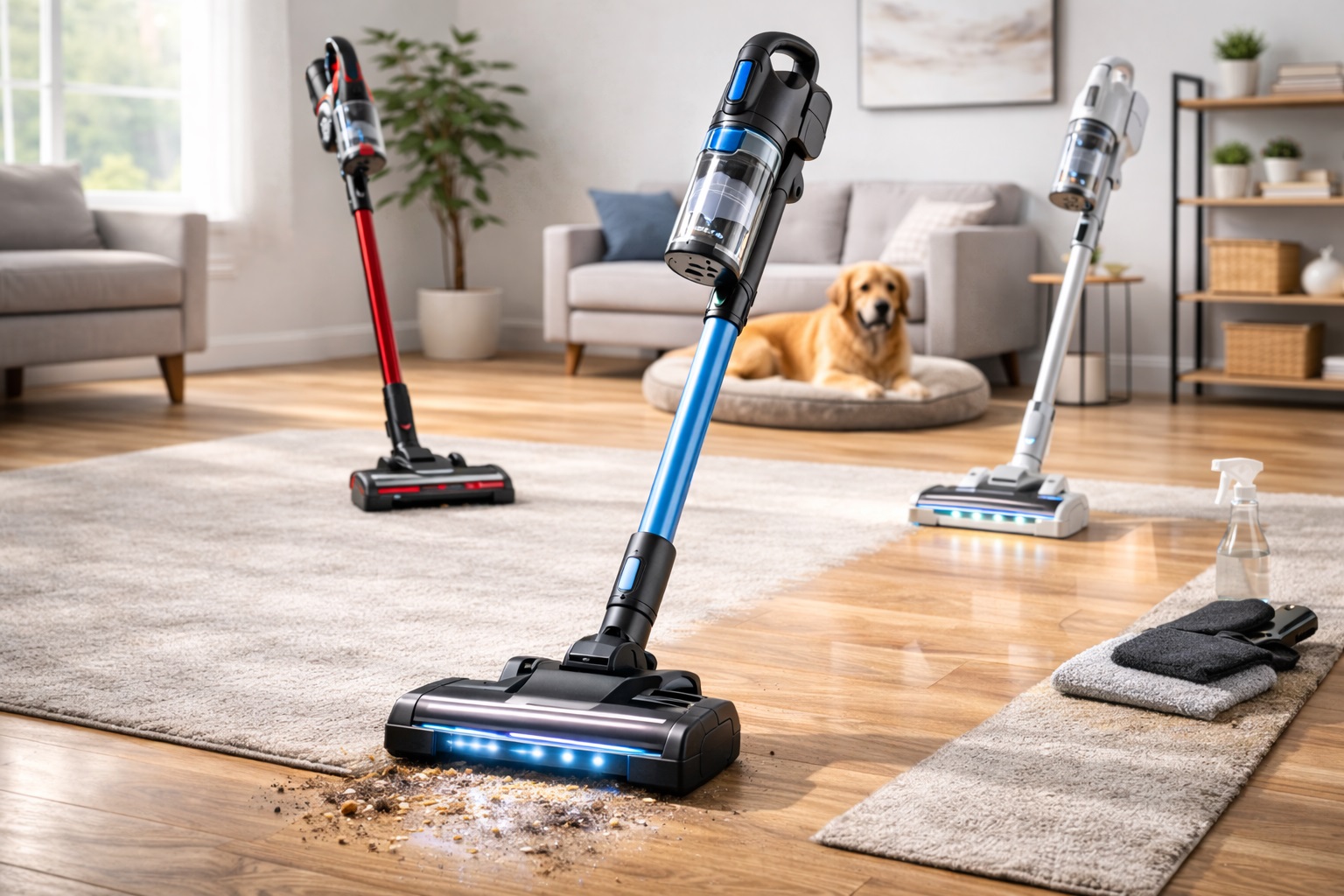
The Dyson V15 Detect is not a traditional upright; it is Dyson's flagship cordless stick vacuum, included here because it regularly appears in the same searches as carpet-focused uprights. Its laser dust detection feature illuminates fine particles on hard floors, though its relevance to carpet cleaning specifically comes down to its motorized brush bar and strong suction rather than the laser itself. At around $750, it commands a significant premium over the uprights in this list, reflecting its cordless convenience and detection technology rather than a carpet-specific advantage. Buyers considering it for carpet duty should understand they are trading upright-style dust capacity and unlimited runtime for portability.
- Pros:
- Premier build quality in a cordless stick format
- Laser dust detection highlights fine debris on hard floors
- Reputable brand known for cordless vacuum innovation
- Cons:
- Much higher price point than dedicated carpet uprights
- Battery runtime limits continuous whole-house carpet cleaning sessions
Best For: Shoppers who prioritize cordless convenience and are willing to pay a premium, even though it is not a traditional upright.
Why We Recommend It: It is a capable machine in its own right, but buyers focused specifically on upright-style carpet cleaning should weigh its cordless trade-offs honestly before choosing it over a dedicated upright.
4. Eureka PowerSpeed – Best For Budget-Friendly Upright Cleaning
The Eureka PowerSpeed is a genuine upright vacuum built around straightforward, affordable carpet cleaning. Its 5 height adjustments allow the cleaning head to be tuned to different carpet pile depths, from low-pile berber to thicker plush carpet, which helps maintain consistent brush roll contact across varied flooring. At around $70, it is the most affordable model in this lineup, making it an easy entry point for budget-conscious households who still want a dedicated carpet vacuum rather than a multi-purpose alternative. Its lighter body also makes it easier to carry between floors than heavier upright designs.
- Pros:
- Premier build quality at a genuinely affordable price
- 5 height adjustments for different carpet pile depths
- Reputable brand widely available at major retailers
- Cons:
- Fewer premium features than higher-priced uprights
- Limited availability of certain accessory attachments
Best For: Budget-focused households that want a genuine upright vacuum tuned for varied carpet pile depths.
Why We Recommend It: Its height adjustment range and low price make it one of the most practical genuine uprights in this lineup for everyday carpet cleaning.
5. Tineco Pure One S12 – Best For Smart Cordless Cleaning (Alternative Format)
The Tineco Pure One S12 is a cordless stick vacuum, not an upright, and is included here as an alternative format for households weighing cordless convenience against traditional carpet-focused designs. Its iLoop smart sensor is designed to detect dust levels in real time and automatically adjust suction power accordingly, which can help conserve battery life during lighter cleaning tasks. At around $400, it sits between the budget uprights and the premium cordless and robot options in this list. It is worth noting upfront that its carpet performance depends on brush roll design rather than the smart sensor, which primarily affects suction adjustment rather than agitation.
- Pros:
- Premier build quality in a lightweight cordless format
- iLoop smart sensor automatically adjusts suction to debris levels
- Reputable brand focused specifically on cordless vacuum technology
- Cons:
- Higher price point than comparable budget uprights
- Smaller dust bin capacity than full-size upright models
Best For: Shoppers who want smart suction adjustment in a cordless format as a supplement to, or replacement for, a traditional upright.
Why We Recommend It: Its adaptive suction technology is a genuine convenience feature, though households focused purely on deep carpet cleaning may still prefer a dedicated upright.
6. iRobot Roomba j7+ – Best For Hands-Free Maintenance Between Cleanings (Alternative Format)
The iRobot Roomba j7+ is a robot vacuum, a fundamentally different format from an upright, and it is included here because robot vacuums are frequently compared against uprights during carpet cleaning research. Its obstacle avoidance AI is designed to navigate around cords, pet waste, and furniture autonomously, which suits hands-free maintenance cleaning rather than deep, thorough carpet restoration. At around $800, it is one of the pricier options in this lineup, reflecting its autonomous navigation technology rather than raw carpet-cleaning power. Most households use a robot vacuum like this to supplement, rather than replace, a traditional upright for deeper periodic cleaning.
- Pros:
- Premier build quality with advanced autonomous navigation
- Obstacle avoidance AI reduces the need for daily supervision
- Reputable brand recognized as a robot vacuum pioneer
- Cons:
- Higher price point relative to its carpet-specific cleaning power
- Smaller dust bin requires more frequent emptying than an upright
Best For: Households that want automated daily maintenance cleaning alongside, rather than instead of, a dedicated upright vacuum.
Why We Recommend It: Its hands-free convenience is a genuine benefit for daily upkeep, though it is honestly a different tool from an upright rather than a direct substitute for deep carpet cleaning.
7. Miele Complete C3 – Best For Premium Canister Performance (Alternative Format)
The Miele Complete C3 is a canister vacuum, not an upright, built around a sealed filtration system rather than an upright's chassis design. Its AirClean Sealed System is engineered to trap fine dust inside the machine, which can be valuable for allergy-sensitive households regardless of vacuum format. At around $1,000, it is the most expensive model in this lineup, reflecting Miele's premium engineering and long product lifespan rather than a carpet-specific advantage over dedicated uprights. Buyers drawn to canister vacuums often cite maneuverability around furniture legs and a separate, often more powerful, motorized carpet head as reasons to choose this format over an upright.
- Pros:
- Premier build quality with a long-established reputation for durability
- AirClean Sealed System for thorough dust containment
- Reputable brand known for high-end vacuum engineering
- Cons:
- Significantly higher price point than any upright in this lineup
- Canister format requires pulling a separate body while cleaning
Best For: Buyers open to a canister format and willing to pay a premium for sealed filtration and long-term build quality.
Why We Recommend It: It is genuinely excellent within its own canister category, but shoppers who specifically want an upright should weigh its very different form factor before choosing it as a carpet solution.
8. Hoover WindTunnel – Best For Classic Upright Suction
The Hoover WindTunnel returns this list to genuine upright territory, built around Multi-Cyclonic suction designed to maintain consistent airflow as the dust bin fills, rather than losing suction the way some single-cyclone designs can over a cleaning session. At around $150, it sits comfortably in the mid-price range among the true uprights here. Its long-running WindTunnel product line has built a reputation for dependable, no-frills carpet cleaning, making it a familiar and trusted choice for households that want proven upright performance.
- Pros:
- Premier build quality in a proven upright design
- Multi-Cyclonic suction for more consistent airflow as the bin fills
- Reputable brand with a long-running upright product line
- Cons:
- Bulkier storage footprint than compact alternatives
- Limited availability of certain filter replacement parts
Best For: Households that want a dependable, classic upright with consistent suction across a full cleaning session.
Why We Recommend It: As one of the genuine uprights in this lineup, its multi-cyclonic design offers steady performance that holds up well through longer carpet cleaning sessions.
Buying Guide: How to Choose the Best Upright Vacuum Cleaner
Carpet cleaning performance comes down to how well a vacuum's format, brush roll, and airflow work together, and the sections below walk through the details that matter most when carpet is the primary concern.
Because this category spans several genuinely different machine types, it helps to read the following factors with your own home's layout in mind rather than assuming a single universally correct answer. A household with mostly flat, wall-to-wall carpet has different priorities than one with a mix of area rugs, stairs, and hard flooring, and the right combination of format and features can vary considerably between those two situations.
1. Upright vs Canister vs Stick vs Robot: Choosing the Right Format
An upright vacuum typically offers the widest cleaning path and largest dust capacity for whole-room carpet cleaning, while canister vacuums like the Miele Complete C3 trade some convenience for a separate, often powerful, motorized head. Cordless sticks such as the Dyson V15 Detect and Tineco Pure One S12 offer portability at the cost of runtime, and robot vacuums like the iRobot Roomba j7+ suit hands-free maintenance rather than deep periodic cleaning. Many households ultimately use more than one format together.
2. Brush Roll Type and Carpet Pile Compatibility
A motorized brush roll agitates carpet fibers to lift embedded dirt, and the right bristle stiffness depends on carpet pile height. Low-pile carpet generally benefits from a brush roll that can spin close to the surface, while thicker plush carpet needs enough clearance to avoid excessive friction, which is where height adjustment features become genuinely useful.
3. Suction Power and Consistent Airflow
Multi-cyclonic designs, like the one used in the Hoover WindTunnel, aim to maintain airflow as the dust bin fills, which helps sustain deep-cleaning performance throughout a session rather than tapering off partway through a room.
4. HEPA Filtration and Anti-Allergen Sealing
Sealed filtration systems, such as the Shark Navigator Lift-Away's Anti-Allergen Complete Seal or the Miele Complete C3's AirClean Sealed System, are designed to trap fine dust inside the machine rather than letting it recirculate into the air during use, which matters for allergy-sensitive households regardless of vacuum format.
5. Bagged vs Bagless Systems
Bagged uprights and canisters generally offer better dust containment when emptying, since the bag can simply be sealed and discarded, while bagless models require direct handling of the collected dust but avoid the ongoing cost of replacement bags.
6. Weight and Maneuverability on Stairs
A heavier upright can be harder to carry between floors, which is one reason lift-away designs like the Shark Navigator Lift-Away exist, allowing a lighter canister pod to detach for stairs and upholstery without moving the entire machine.
7. Cord Length vs Cordless Runtime Considerations
Corded uprights like the Bissell CleanView and Hoover WindTunnel offer unlimited runtime but require outlet access and cord management, while cordless models like the Dyson V15 Detect and Tineco Pure One S12 trade unlimited runtime for freedom of movement within a battery charge.
8. Height Adjustment for Different Carpet Depths
Adjustable cleaning head height, such as the five settings on the Eureka PowerSpeed, allows a single vacuum to maintain proper brush roll contact across carpets of varying thickness within the same home, rather than being optimized for only one type of flooring.
9. Dust Cup or Bag Capacity and Emptying Frequency
Larger dust capacity, typical of full-size uprights and canisters, means fewer interruptions during a whole-house cleaning session compared to the smaller bins found in cordless sticks and robot vacuums.
10. Attachments for Upholstery and Edge Cleaning
Crevice tools, upholstery brushes, and extension wands extend a vacuum's usefulness beyond flat carpet, which is particularly relevant for lift-away and canister designs that are built to detach or adapt for above-floor cleaning tasks.
11. Noise Level Considerations
Upright and canister vacuums with powerful motors can be louder than smaller cordless sticks, which is worth factoring in for households with young children, pets, or shared living spaces where noise matters during regular cleaning routines.
12. Maintenance: Filter Cleaning and Belt Replacement
Regular filter cleaning or replacement, along with periodic brush roll belt checks, keeps suction and agitation performance consistent over the life of the vacuum. Neglecting either can gradually reduce carpet cleaning effectiveness even on an otherwise well-built machine.
13. Price vs Long-Term Value
Price in this lineup ranges from roughly $70 for the Eureka PowerSpeed to around $1,000 for the Miele Complete C3, and the right choice depends on whether a household values dedicated carpet-cleaning power, cordless convenience, or premium engineering most, rather than assuming the most expensive option is automatically the best fit for carpet.
It is also worth resisting the assumption that spending more automatically buys better carpet performance specifically. A $1,000 canister vacuum may excel at filtration, quiet operation, and long-term durability, yet a $150 dedicated upright with the right brush roll can still outperform it on raw carpet agitation, simply because the two machines were engineered to solve different problems. Comparing price against the specific job a vacuum needs to do, rather than against its overall feature list, tends to produce better purchasing decisions.
Frequently Asked Questions
Is a premium vacuum cleaner worth it?
Yes, higher end models often offer better performance, longer warranties, and superior build quality compared to budget alternatives, though the added cost does not always translate into better carpet-specific cleaning if the format is not designed for that task.
How do I maintain my vacuum cleaner?
Keep your appliance clean and follow manufacturer guidelines for filter replacement and regular maintenance, including checking the brush roll for tangled hair and debris that can reduce agitation over time.
Are upright vacuums better than canister vacuums for carpet?
Uprights generally offer a wider cleaning path and larger capacity for whole-room carpet work, while canister vacuums can offer strong motorized heads and easier maneuverability around furniture, so the better choice depends on the specific home layout.
Do robot vacuums clean carpet as well as uprights?
Robot vacuums are convenient for frequent, low-effort maintenance but generally cannot match the suction power and brush roll agitation of a full-size upright, making them a better supplement than a full replacement for deep carpet cleaning.
What is a HEPA-style sealed filter and do I need one?
A sealed filtration system is designed to trap fine dust and allergens inside the vacuum rather than releasing them back into the room, which is particularly valuable for households with allergies or asthma concerns.
How often should I empty a bagless dust bin?
Emptying after every use, or once the bin reaches roughly two-thirds full, generally helps maintain consistent suction, since an overfilled bin can restrict airflow and reduce cleaning performance.
Can a cordless stick vacuum replace an upright for carpet cleaning?
It can for smaller homes or lighter maintenance needs, but battery runtime and smaller dust capacity typically make cordless sticks less suited to large whole-house carpet cleaning sessions than a dedicated upright.
What brush roll type works best for thick carpet?
A brush roll with adjustable height settings, allowing it to sit slightly higher off the surface, generally performs better on thick or plush carpet than a fixed-height brush roll designed primarily for low-pile flooring.
How do I know when to replace my vacuum's belt?
A burning rubber smell, a brush roll that spins slower than normal, or visibly reduced agitation on carpet are common signs that a belt has stretched or worn out and needs replacing.
Is higher suction wattage always better for carpet?
Not necessarily; how well a vacuum seals against the floor and how effectively its brush roll agitates the pile often matters as much as raw suction wattage for actual dirt removal from carpet fibers.
Do anti-allergen seals really reduce dust in the air?
Sealed systems are designed to prevent fine dust from escaping through gaps in the vacuum body, which can meaningfully reduce the amount of dust released back into a room compared to vacuums without this kind of sealing.
How much does a good carpet vacuum typically cost?
Dedicated carpet-focused uprights in this lineup range from around $70 to $200, while premium canister, cordless, and robot alternatives can run considerably higher, generally reflecting added technology rather than a proportional jump in raw carpet-cleaning power.
Should pet owners consider a different vacuum for carpet?
Pet owners often benefit from vacuums with sealed filtration and brush rolls designed to resist hair tangling, though the core carpet-cleaning fundamentals of strong airflow and proper brush roll contact remain the same regardless of pet ownership.
Can I use a canister vacuum instead of an upright for carpet?
Yes, a canister vacuum with a motorized carpet head can clean carpet effectively, though it involves pulling a separate body along the floor rather than the single unified chassis of an upright, which some users find less convenient for large rooms.
Do I need both an upright and a robot vacuum?
Many households find value in using a robot vacuum for frequent light maintenance between more thorough weekly or biweekly sessions with a full-size upright, rather than relying on either machine exclusively.
Final Verdict
- Top Pick: Shark Navigator Lift-Away for combining genuine upright carpet performance with practical above-floor versatility.
- Budget Choice: Eureka PowerSpeed for dependable, adjustable upright cleaning at the most accessible price point in this lineup.
- Premium Choice: Miele Complete C3 for buyers open to a canister format and willing to pay the most for sealed filtration and long-term engineering.
For carpet cleaning specifically, the true uprights in this lineup, the Bissell CleanView, Shark Navigator Lift-Away, Eureka PowerSpeed, and Hoover WindTunnel, remain the most directly relevant choices, since their format is purpose-built around wide brush rolls and strong, sustained airflow. The cordless stick, robot, and canister models included here are genuinely capable machines, but households focused specifically on deep, whole-room carpet cleaning should treat them as informed alternatives rather than assume they perform identically to a dedicated upright. Matching format to actual cleaning habits, rather than chasing the highest price tag or newest technology, remains the most reliable way to keep carpets looking their best year after year.
Before finalizing a purchase, it is worth measuring the carpeted square footage in your home and thinking honestly about how often you are willing to empty a dust bin, charge a battery, or carry a machine between floors. A large upright with generous capacity suits households that would rather vacuum less frequently but more thoroughly, while a lighter cordless option suits those who prefer quick, frequent touch-ups over one longer weekly session. Neither approach is objectively superior; the better fit simply depends on which routine a household is more likely to stick with over time, since even the best-built vacuum only delivers value when it actually gets used consistently.