Best Durable Travel Towel in 2026
Most travel towels are judged the moment they arrive: how soft they feel, how small they pack, how quickly they dry on the first try. Long term use tells a different story. A towel that looks great out of the box can start fraying at the hems, losing its absorbency, or picking up a permanent musty smell after a few dozen wash cycles, while a genuinely well-built one keeps performing the same way years later. This guide is built around that second question, because a towel you buy once and rely on for years is worth more than one you replace every season.
We compared eight established compact towels with a focus on the things that predict long-term performance: stitching quality at the seams, how the fabric responds to repeated machine washing, whether the material holds its shape after being packed and unpacked hundreds of times, and how consistent the brand's manufacturing quality has been over time. None of this shows up on a spec sheet, so we leaned on the practical, well-documented traits of each model instead. Below you will find full reviews of each towel, a buying guide focused specifically on longevity, and answers to the questions people ask most before committing to a towel meant to last.
If you are tired of replacing a travel towel every year or two, the picks below are meant to help you buy once and stop thinking about it. A slightly higher upfront price is easy to justify when a towel is still performing well three or four years down the line, and that is the standard we held each of these models to throughout this guide. We also paid attention to how each brand's reputation has held up over multiple product generations, since a single well-reviewed batch does not always guarantee the same consistency years later.
Top 8 Best Durable Travel Towels (Detailed Reviews)
1. OlimpiaFit 3 Size Set – Best For Long-Term Household Value
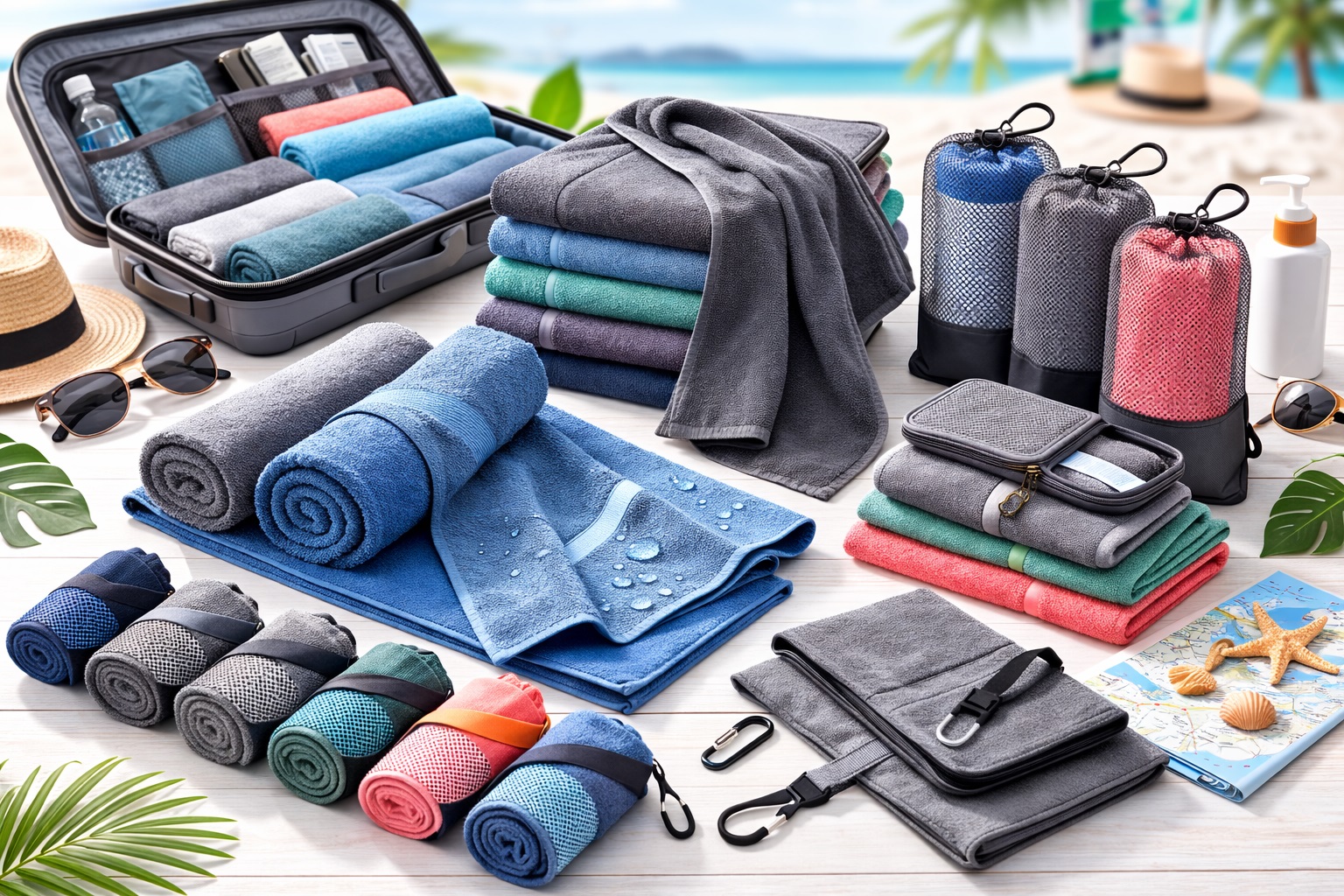
OlimpiaFit's 3 Size Set spreads its value across three towels rather than one, which means even if a single piece eventually wears out, you are not left without a backup. At around $28 for the set, it offers a lower effective cost per towel than buying three individual pieces from other brands, and the consistent build quality across all three sizes suggests a manufacturing process built for reliability rather than a single flagship product.
Because the set includes a range of sizes, households can rotate which piece gets the heaviest daily use, effectively spreading wear across three towels instead of concentrating it on one. Over several years, that rotation can meaningfully extend how long the full set stays useful, especially for families sharing gear between multiple people and multiple trips, since no single towel ends up shouldering the bulk of the household's total towel usage year after year.
- Pros:
- Premier build quality across all three sizes
- Multi-pack value that extends usable life through rotation
- Backed by a reputable, established brand
- Cons:
- Higher price point than a single basic towel
- Limited color options compared to some competitors
Best For: Households that want built-in redundancy so one worn towel does not mean starting over from scratch.
Why We Recommend It: Spreading regular use across three towels is a practical, low-effort way to extend the effective lifespan of the whole set.
2. Dock & Bay Beach – Best For Withstanding Frequent Beach and Pool Use
Dock & Bay Beach's sand-free technology weave is tightly constructed, which tends to correlate with better long-term durability since a tighter weave resists pilling and thinning better than a loose one. At around $22, it is a mid-range option with a fabric structure built to withstand frequent exposure to sun, chlorine, and salt water over many seasons.
Repeated exposure to sun and pool chemicals is one of the harder tests for any beach towel's colorfastness and fabric integrity, and this model's construction is specifically aimed at holding up under exactly those conditions rather than a single vacation's worth of use, which is exactly the kind of repeated environmental stress that separates a towel that lasts one summer from one that lasts several.
- Pros:
- Premier build quality with a tight, durable weave
- Sand-free technology that also resists long-term pilling
- Reputable brand known for beach-specific towels
- Cons:
- Higher price point than a plain microfiber towel
- Limited color options in some size variants
Best For: Frequent beach and pool visitors who need a towel that resists fading and thinning over repeated seasons.
Why We Recommend It: Its tighter weave is built to resist the specific wear patterns that sun, chlorine, and salt water cause over time.
3. PackTowl Personal – Best For Proven Long-Term Reliability
PackTowl Personal's polyester and nylon blend has built a reputation over many years as a dependable long-haul option, largely because the fabric holds its shape and absorbency through hundreds of wash cycles better than thinner single-material towels. At about $30, the price reflects a track record rather than a new, unproven design.
Long-time owners often report that this towel remains noticeably absorbent even after years of regular use, which is not always true of cheaper towels that start losing their water-pulling ability within the first year. That consistency is a large part of why it remains a recommended option across so many gear lists, and it is often the towel people mention specifically when asked which one they would buy again without hesitation.
- Pros:
- Premier build quality with consistent stitching
- Polyester and nylon blend proven over years of use
- Reputable brand with a long track record
- Cons:
- Higher price point relative to no-name alternatives
- Limited color options in some retail listings
Best For: Buyers who want a towel with a long, well-documented history of holding up over years of regular use.
Why We Recommend It: A long track record of maintained absorbency is one of the clearest signals of genuine long-term durability.
4. Matador NanoDry – Best For Protecting the Towel Between Uses
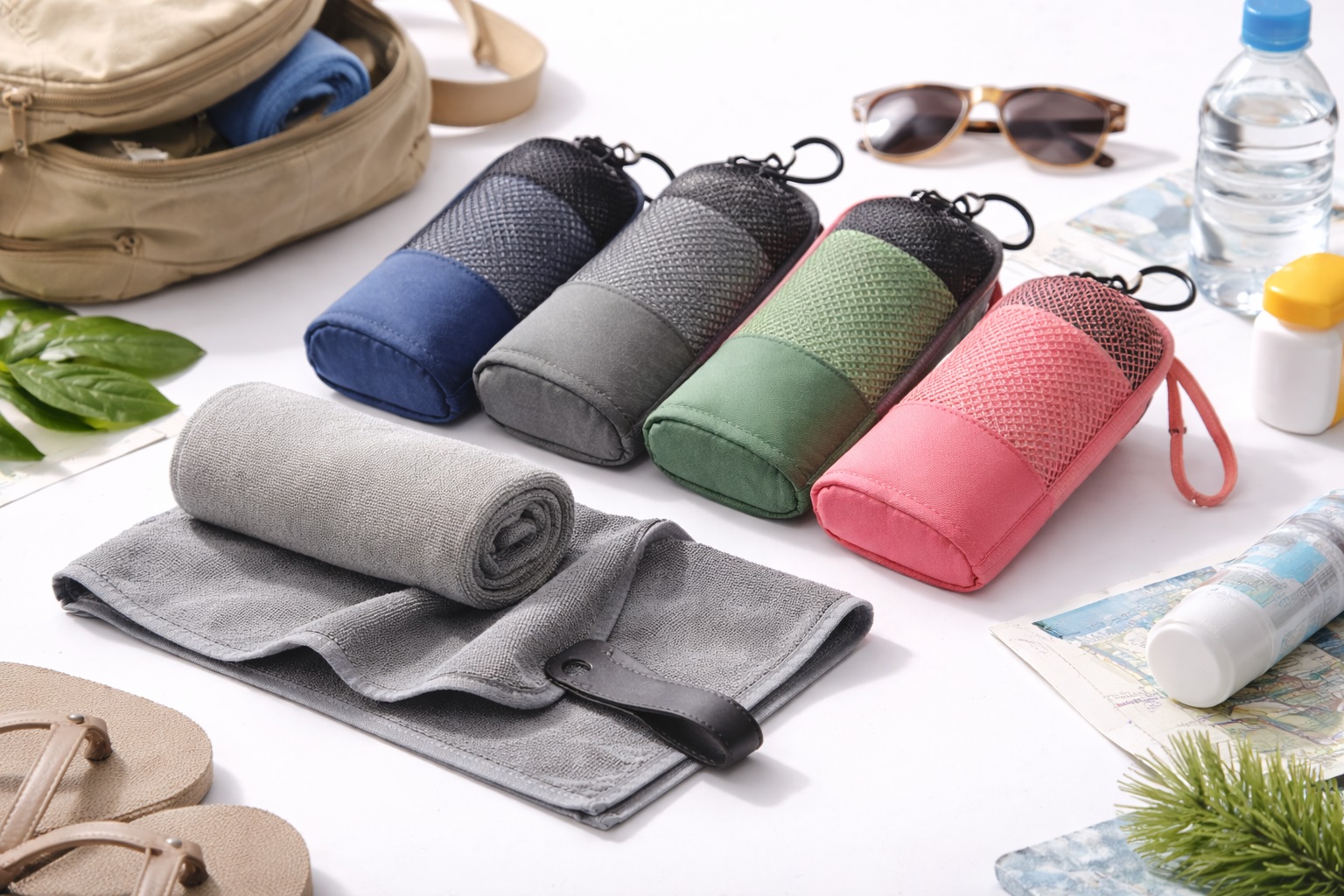
Matador NanoDry's silicone travel case does more than add convenience: keeping a towel contained and away from friction with other items in a bag reduces the incidental wear that shortens a towel's lifespan over time. At around $35, it is the most premium option here, reflecting both the fabric and this protective accessory.
A towel that spends less time rubbing against zippers, buckles, and other gear inside a packed bag tends to show less fraying at the edges after repeated trips. The case is a small design choice with a real cumulative effect on how the towel looks and performs several years down the line, particularly for travelers who pack and unpack their bag dozens of times a year.
- Pros:
- Premier build quality with thoughtful design details
- Silicone travel case that reduces incidental wear in transit
- Reputable brand known for travel-specific gear
- Cons:
- Higher price point than most towels in this list
- Limited color options for the case and towel combo
Best For: Travelers who want to actively protect their towel from wear during transport, not just during use.
Why We Recommend It: Reducing incidental damage in transit is an underrated way to extend a towel's usable life well beyond the fabric quality alone.
5. Wise Owl Outfitters – Best For Retaining Softness Over Time
Wise Owl Outfitters is known for an ultra-soft texture, and importantly, that softness tends to hold up better over repeated washing than many budget microfiber towels that stiffen noticeably after a year of regular use. At roughly $18, it remains one of the more accessible options in this durability-focused lineup.
A towel that turns scratchy after a year of washing often gets relegated to the back of a drawer even if it is still technically functional, so retaining a pleasant texture over time is itself a meaningful durability trait, not just a comfort one, since a towel people stop enjoying using tends to get replaced regardless of how technically functional it remains. This is particularly relevant for towels used against sensitive skin after sun exposure, where a stiff, scratchy fabric becomes a genuine discomfort rather than a minor annoyance.
- Pros:
- Premier build quality for the price bracket
- Ultra-soft texture that resists stiffening over repeated washing
- Reputable brand within the outdoor gear space
- Cons:
- Higher price point than the most basic generic towels
- Limited color options in the standard lineup
Best For: Buyers who want a towel that still feels pleasant to use years after the first wash.
Why We Recommend It: Retaining softness over time keeps a towel in active rotation rather than getting quietly replaced out of discomfort.
6. Rainleaf Microfiber – Best For Long-Term Odor Control
Rainleaf Microfiber's antibacterial treatment continues to provide value well beyond the first few uses, since odor resistance becomes more important, not less, as a towel accumulates years of washes and storage cycles. At around $15, it remains an affordable way to add a meaningful durability feature.
Towels without any antibacterial treatment can develop a persistent musty smell over time that no amount of washing fully removes, effectively ending their useful life even if the fabric itself is still intact. This treatment helps avoid that particular failure mode, which is otherwise one of the most common reasons people give up on an older towel that still absorbs water perfectly well. Because this kind of treatment is typically built into the fibers rather than applied as a surface coating, it tends to remain effective through far more wash cycles than a spray-on odor treatment applied after the fact.
- Pros:
- Premier build quality despite the lower price
- Antibacterial treatment that helps prevent long-term odor buildup
- Reputable brand with a strong value reputation
- Cons:
- Higher price point than the absolute cheapest generic towels
- Limited color options at this price tier
Best For: Budget-conscious buyers who still want long-term protection against musty odor.
Why We Recommend It: Persistent odor, not fabric wear, is often what actually ends a towel's useful life, and this model addresses that directly.
7. Sea to Summit DryLite – Best For Consistent Manufacturing Quality
Sea to Summit DryLite benefits from a brand with a long history of consistent manufacturing standards across its outdoor gear lineup, which tends to correlate with fewer early failures like loose stitching or uneven fabric. At around $25, it is a mid-range choice backed by that consistency.
Buyers who have owned multiple products from the same brand over the years often report that quality control feels dependable from one purchase to the next, which matters more for long-term satisfaction than any single standout feature, particularly for buyers who have been burned before by a promising towel that turned out to be an inconsistent batch.
- Pros:
- Premier build quality consistent with the brand's outdoor lineup
- Microfiber quick-dry fabric with dependable manufacturing quality
- Reputable brand with strong outdoor gear recognition
- Cons:
- Higher price point than unbranded microfiber towels
- Limited color options in smaller sizes
Best For: Buyers who value consistent manufacturing quality over flashy individual features.
Why We Recommend It: A dependable manufacturing track record reduces the odds of an early, disappointing failure.
8. Youphoria Outdoors – Best For Maintaining Absorbency Under Heavy Use
Youphoria Outdoors is built to be super absorbent from day one, and its thicker weave tends to lose that absorbency more slowly than thinner ultralight towels as it accumulates wear. At about $20, it offers a reasonable middle ground between price and long-term performance.
Thinner towels often show a noticeable drop in how much water they can pull off the skin within the first year of frequent use, while a thicker weave like this one tends to degrade more gradually, giving it a longer window of genuinely useful performance before the difference becomes noticeable enough to matter during actual use. That makes it a particularly practical choice for frequent gym or swim use, where a towel gets washed and wrung out far more often than the typical vacation towel and therefore accumulates wear much faster.
- Pros:
- Premier build quality with a thicker absorbent weave
- Super absorbent performance that degrades slowly over time
- Reputable brand within the fitness travel space
- Cons:
- Higher price point than the thinnest ultralight towels
- Limited color options across sizes
Best For: Frequent users who want absorbency that holds up well beyond the first year of ownership.
Why We Recommend It: A slower decline in absorbency means more years of genuinely useful performance before replacement becomes necessary.
Buying Guide: How to Choose the Most Durable Travel Towel
Durability is harder to judge at the point of purchase than softness or size, since it only reveals itself after months or years of use. The sections below cover the traits that tend to predict whether a towel will still perform well long after the return window has closed, and how to spot them before you buy.
1. Stitching Quality at the Seams
Loose or uneven stitching along the hems is usually the first place a travel towel begins to fail. Tight, even stitching with reinforced corners is a strong early indicator of a towel built to survive years of packing and washing rather than a single season. Running a finger along the edge before buying, if possible, or checking close-up product photos can reveal a surprising amount about how carefully a towel was constructed.
2. Fabric Weave Density
A tightly woven fabric generally resists pilling, thinning, and snagging better than a looser weave. Denser weaves tend to cost slightly more upfront but often last considerably longer under the same washing and packing routine.
3. Colorfastness Over Repeated Washing
Towels that fade quickly after a handful of washes are often using lower-grade dyes that can also indicate lower-grade fabric overall. A towel that holds its color well is frequently, though not always, built with more durable materials throughout.
4. Absorbency Retention Over Time
Some towels lose a noticeable amount of absorbency within the first year of regular use, while better-built ones decline much more gradually. Reading long-term owner reviews rather than first-impression reviews gives a clearer picture of this specific trait, since absorbency loss is rarely obvious until you directly compare a towel's current performance to how it felt when new.
5. Resistance to Odor Buildup Over Years of Use
Persistent musty odor that survives repeated washing is one of the most common reasons people replace a towel that is otherwise still structurally sound. Antibacterial or antimicrobial treatments help delay this failure mode considerably.
6. Brand Manufacturing Consistency
Brands with a long track record across multiple product lines tend to have more refined manufacturing processes, which generally reduces the odds of an early failure due to inconsistent quality control between individual units.
7. Protective Accessories That Reduce Incidental Wear
A travel case or dedicated pouch reduces friction and abrasion against zippers, buckles, and other gear during transport, which can meaningfully extend a towel's lifespan beyond what the fabric alone would suggest.
8. Warranty and Return Policies
A brand willing to stand behind its product with a solid warranty is implicitly expressing confidence in its own durability, which can be a useful signal when comparing two similarly priced options.
9. Proper Washing and Drying Habits
Even a well-built towel can wear out prematurely if washed in hot water or dried on high heat repeatedly. Following the care instructions, generally a gentle cycle and lower heat, is one of the simplest ways to extend any towel's lifespan.
10. Avoiding Fabric Softener
Fabric softener can coat microfiber fibers over time, reducing absorbency even if the towel otherwise looks undamaged. Skipping it, especially on towels marketed for long-term durability, helps preserve their core function for longer.
11. Multi-Piece Sets for Built-In Redundancy
Buying a set rather than a single towel means one piece wearing out does not leave you without a backup, effectively extending the useful life of your overall towel collection even if individual pieces eventually need replacing.
12. Price as a Long-Term Investment
A slightly higher upfront cost is often justified if it means several additional years of reliable use, since the effective cost per year of ownership can actually favor the more expensive option once you account for how long it lasts. Dividing the price by the number of years you realistically expect to use a towel is a simple way to compare options on a more equal footing.
13. Signs It Is Time to Replace a Towel
Noticeably reduced absorbency, persistent odor that survives washing, and visibly thinning or fraying fabric are the clearest signs that a towel has reached the end of its useful life, regardless of how long you have owned it.
14. Reading Long-Term Reviews Before Buying
Reviews written months or years after purchase, rather than immediately after unboxing, tend to reveal far more about a towel's true durability than early impressions ever can, since most quality issues only surface after extended use.
15. Weight Versus Pack Size for Long-Term Use
Ultralight towels pack down impressively small, but the thinner fabric that makes this possible is often more prone to thinning and tearing over years of repeated use than a slightly heavier towel. If you plan to keep a towel for the long haul rather than just a single lightweight trip, it can be worth accepting a marginally larger pack size in exchange for the extra durability a denser weave provides.
16. UV Exposure and Long-Term Fading
Towels used frequently outdoors, especially at the beach or poolside, face constant UV exposure that can degrade both color and fiber strength over time, independent of how often the towel is actually washed. Materials designed with sun exposure in mind tend to hold their color and structural integrity noticeably longer than towels that were built primarily for indoor or occasional outdoor use.
17. Microfiber Versus Blended Fabrics
Pure microfiber towels dry quickly and pack small, but blended fabrics that combine microfiber with nylon or polyester often show better long-term resilience against pilling and stretching. Neither option is universally better, but understanding which fabric family a towel belongs to can help set realistic expectations for how it will hold up several years down the line.
Frequently Asked Questions
What actually determines how long a travel towel lasts?
Fabric weave density, stitching quality, and how the towel is washed and dried over time are the biggest factors, generally mattering more than the initial softness or price point alone.
How many years should a good travel towel last?
A well-made travel towel used regularly can reasonably last three to five years or more with proper care, while lower-quality towels may start showing significant wear within the first year. Frequency of use naturally affects this range, so an occasional traveler can often expect a longer effective lifespan than someone using the same towel daily.
Does washing a travel towel in hot water damage it faster?
Yes, hot water and high-heat drying tend to break down microfiber more quickly than a gentle cycle with cooler water, so following the care label can meaningfully extend a towel's lifespan.
Is fabric softener bad for travel towels?
Generally yes, since fabric softener can coat microfiber fibers and reduce their absorbency over time, even though the towel may still look fine on the outside.
How can I tell if a travel towel is well made before buying it?
Checking the stitching at the hems, reading reviews that specifically discuss long-term use rather than first impressions, and considering the brand's overall reputation are the most reliable signals available before a purchase.
Do more expensive travel towels really last longer?
Often yes, since higher prices frequently reflect denser weaves, better stitching, or protective accessories, though price alone is not a guarantee and reviews remain a useful cross-check.
What is the most common reason travel towels wear out early?
Loose stitching at the seams and fabric thinning from frequent high-heat washing and drying are the two most common early failure points reported by long-term owners. Both are largely avoidable with gentler washing habits, which makes care routine just as important as the towel you choose in the first place.
Can a travel towel develop a permanent odor over time?
Yes, if it is repeatedly packed away damp without a proper wash, odor-causing bacteria can build up to the point where regular washing no longer fully removes the smell, especially on towels without antibacterial treatment.
Is it worth buying a multi-size set for durability reasons?
Yes, spreading regular use across multiple towels in a set can reduce wear on any single piece and provide a built-in backup if one towel wears out before the others.
Does a travel case help a towel last longer?
It can, since keeping a towel separated from zippers, buckles, and other gear during transport reduces the incidental friction and abrasion that contributes to fraying over time.
How should I store a travel towel between trips to maximize its lifespan?
Storing it completely dry, ideally folded loosely rather than tightly compressed for extended periods, helps preserve both the fabric and its resistance to musty odors.
What is the clearest sign that a travel towel needs to be replaced?
A noticeable and lasting drop in absorbency, combined with visible thinning or fraying at the seams, is the clearest sign that a towel has reached the end of its useful life.
Are brand reputation and long-term durability actually connected?
Generally yes, since brands with a longer track record tend to have more refined manufacturing processes, though individual product lines can still vary, which is why checking reviews for the specific model still matters.
Is it better to buy one expensive towel or two cheaper ones?
It depends on your priorities, but one well-made towel with proven longevity often ends up costing less over time than repeatedly replacing cheaper towels that wear out within a year or two.
Does a towel's country of manufacture affect its durability?
Not directly; manufacturing quality control matters far more than where a towel is made, so it is more useful to focus on brand reputation and specific product reviews than the country of origin alone.
Can repairing a fraying towel extend its life?
A simple re-stitch along a fraying hem can sometimes buy a towel extra time, though once the fabric itself has thinned significantly, replacement is usually the more practical option.
Does a heavier travel towel automatically last longer than a lightweight one?
Not automatically, but heavier towels with a denser weave often resist thinning and tearing better over time than the thinnest ultralight options, so weight can be a reasonable, though imperfect, proxy for durability.
Can sun exposure damage a travel towel even if it is never washed in hot water?
Yes, prolonged UV exposure can weaken fibers and fade color independently of washing habits, which is why towels used frequently outdoors benefit from materials specifically built to resist sun damage.
Final Verdict
- Top Pick: PackTowl Personal for its long, well-documented history of holding up over years of use.
- Budget Choice: Rainleaf Microfiber for dependable long-term odor control at a low price.
- Premium Choice: Matador NanoDry for reducing incidental wear with its included travel case.
Buying a travel towel built to last means looking past first impressions and focusing on the traits that actually predict long-term performance, from stitching quality to how well a fabric resists odor and thinning over repeated use. Any of the eight towels reviewed here are strong candidates for years of reliable service, so the right pick ultimately comes down to how much you are willing to spend upfront in exchange for fewer replacements down the road. Think about how a towel has performed for you in the past, whether that was disappointing fraying after a few months or a piece that is still going strong years later, and let that experience guide how much weight you put on durability this time around.