Best Memory Foam Travel Pillow in 2026
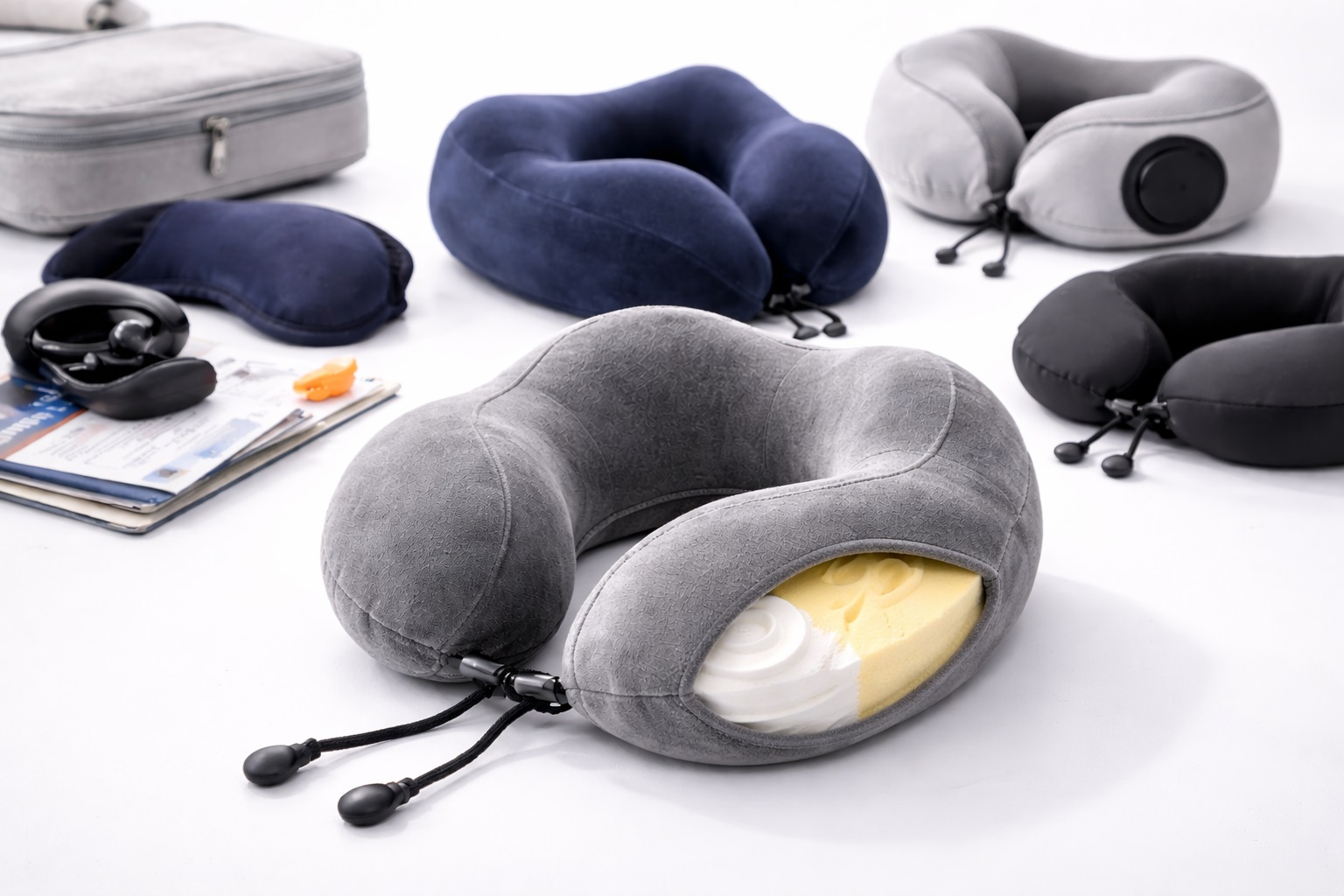
Memory foam earned its reputation in mattresses and bed pillows for one specific reason: it molds itself to the exact shape pressing against it and holds that support rather than springing back to a flat, uniform surface. That same quality is what makes memory foam the material of choice for travelers who want genuine support from a travel pillow, rather than a soft but structurally flimsy loop of polyester fiberfill that flattens the moment you lean your head against it.
Support matters most in the neck and shoulder area, where a plane seat offers essentially no help holding your head upright once you drift off, and the seat's own headrest wings only go so far before your neck is doing all the remaining work on its own. A memory foam travel pillow that's shaped well distributes that weight instead of concentrating it at one pressure point, which is the difference between waking up with a mild crick and waking up with real neck pain that lingers for the rest of the day, sometimes well into the first day of a trip you were supposed to arrive rested for. Not every memory foam pillow achieves this equally well — density, shape, and how the foam is contoured all affect how much genuine support you actually get. Two pillows can both carry a "memory foam" label on the packaging while performing very differently once you're several hours into a flight, which is exactly why it's worth looking past the marketing term itself and focusing on the specific construction details underneath it, from density to how the foam is shaped around the neck.
Below we review eight widely used travel pillows through the lens of support and structure, followed by a buying guide covering the material and design details that separate a genuinely supportive pillow from one that just looks like it should be, and a set of frequently asked questions covering common concerns about memory foam travel pillows specifically. Throughout, the focus stays on what "support" actually means in practice: not just a soft cushion, but a structure that keeps your head from drifting into an awkward, neck-straining position while you sleep.
Top 8 Best Travel Pillow Picks (Detailed Reviews)
Cabeau Evolution S3 – Best For Overall Support
The Cabeau Evolution S3 uses dense memory foam shaped specifically to support the neck from multiple angles, paired with a seat strap system that keeps the pillow anchored in position rather than sliding as you shift throughout a flight. At around $40, it's one of the pricier options in this lineup, and that price reflects both the foam density and the added strap hardware that keeps the support consistent for the entire flight rather than only the first hour. Frequent flyers who've experienced a pillow slip out of position mid-nap tend to appreciate this detail more than almost any other single feature, since even the densest foam does nothing for your neck once it's slid down around your shoulders.
- Pros:
- Seat strap system maintains consistent support all flight
- Premier build quality throughout
- Reputable, well-established travel pillow brand
- Cons:
- Premium pricing compared to simpler foam designs
- Bulkier than compact or inflatable alternatives
Best For: Travelers who want dense, consistent memory foam support that stays anchored in place for an entire flight without constant readjustment, particularly on genuine long-haul routes.
Why We Recommend It: The combination of quality foam and a strap system solves both halves of the support equation — the material itself and keeping it correctly positioned — which many competitors only address one at a time, leaving the other half of the problem unsolved.
Trtl Travel Pillow – Best For Structural Neck Support
The Trtl Travel Pillow takes a different approach to support, hiding an internal neck support structure inside a soft, scarf-like wrap rather than relying on foam bulk alone. At around $40, it matches the top price point here, and the internal structure does the actual supportive work while the outer fabric simply keeps things comfortable against the skin. This design appeals specifically to travelers who want genuine structural support without the traditional bulky look of a foam ring pillow, and it tends to draw far less attention in a crowded departure lounge than a conventional pillow shape would.
- Pros:
- Internal support structure holds the head stable without bulk
- Premier build quality throughout
- Reputable brand known for its innovative design
- Cons:
- Premium pricing compared to traditional foam pillows
- Fit may vary depending on neck size and shape
Best For: Travelers who want real structural support but dislike the appearance and bulk of a conventional memory foam ring, especially when packing light matters.
Why We Recommend It: Proving that support doesn't have to come from foam density alone, this design achieves genuine neck stabilization through structure rather than sheer material thickness, opening up an option for travelers who find bulky foam rings uncomfortable.
Aeris Travel Pillow – Best For Comfort-Focused Support
The Aeris Travel Pillow wraps its supportive foam core in a plush velour cover that keeps the support from feeling clinical or overly firm against the skin. At around $25, it's a reasonably priced option that balances genuine structural support with the kind of soft, comfortable feel that makes a pillow easier to actually fall asleep against in the first place. The velour surface also tends to feel less clammy against skin than a synthetic mesh cover might over several hours of continuous contact.
- Pros:
- Plush velour cover softens the feel of the supportive foam core
- Premier build quality for the price
- Reputable brand with consistent quality
- Cons:
- Premium pricing on certain color and style options
- Support level may feel gentler than firmer alternatives
Best For: Travelers who want meaningful support without the pillow feeling stiff or overly firm against the skin, particularly for hours of continuous contact.
Why We Recommend It: A soft outer layer over a supportive core strikes a balance that pure firm foam sometimes misses, since a pillow that's uncomfortable to touch is harder to actually fall asleep on regardless of how supportive it is structurally, no matter how good the underlying engineering is.
BCOZZY Chin Supporting – Best For Multi-Directional Support
The BCOZZY Chin Supporting pillow uses a soft wraparound design that supports the chin and both sides of the head simultaneously, addressing a support gap that simple U-shaped foam rings often leave open. At around $30, it's a mid-priced option built specifically around travelers who need support in more than one direction at once. The soft, padded exterior also means the support doesn't feel rigid or clinical, even though the underlying structure is doing real work holding the head steady.
- Pros:
- Wraparound design supports both sides of the head and chin
- Premier build quality for the price
- Reputable brand focused specifically on chin and neck support
- Cons:
- Premium pricing compared to basic U-shaped pillows
- Bulkier fit that some travelers find restrictive
Best For: Travelers who tend to lean or slump in more than one direction and need support that addresses the chin and both sides of the head at once, rather than just one.
Why We Recommend It: Most basic pillows only support the back of the neck, leaving the chin and sides unsupported; this design directly closes that gap, which is exactly the failure point that leads to sideways head-drop mid-flight.
Huzi Infinity Pillow – Best For Versatile Support Positions
The Huzi Infinity Pillow uses a looped, figure-eight shape wrapped in breathable bamboo fabric that can provide support in several different configurations — around the neck, hugged for lumbar support, or wrapped around an arm rest. At around $40, it's priced at the top of the field, and its adaptability means the same pillow can offer support in whatever position you actually end up resting in, which suits travelers who fall asleep unpredictably rather than settling into one fixed posture from takeoff.
- Pros:
- Breathable bamboo fabric stays comfortable over long periods
- Premier build quality throughout
- Reputable brand known for its versatile design
- Cons:
- Premium pricing compared to traditional pillow shapes
- Specific style may not suit every travel setup
Best For: Travelers who don't sleep in one fixed position and want a pillow that can provide support regardless of how they end up resting, whether upright, leaning, or curled toward a window.
Why We Recommend It: Rigid, single-purpose support only helps if you actually sleep in the one position it's designed for; this design offers useful support across several different postures instead, adapting as your body naturally shifts through a long flight.
Dot&Dot Twist Memory Foam – Best For Adjustable Support
The Dot&Dot Twist Memory Foam pillow features a bendable contour that can be twisted and reshaped to change exactly where the support is concentrated, rather than locking you into one fixed shape. At around $25, it's an affordable option for travelers who want to fine-tune their support on the fly depending on how they're sitting. Being able to physically bend the foam into a slightly different shape is a genuinely different experience from simply repositioning a rigid pillow against your neck.
- Pros:
- Bendable contour lets you adjust where support is concentrated
- Premier build quality for the price
- Reputable brand known for travel accessories
- Cons:
- Premium pricing on select color and style variants
- Specific shape preferences vary by traveler
Best For: Travelers who want to customize exactly where their pillow provides support rather than accepting a single fixed shape they can't adjust.
Why We Recommend It: The ability to bend and reshape the support structure means the same pillow can adapt as your position changes throughout a flight, rather than becoming less effective once you shift into a slightly different posture partway through.
J-Pillow Chin Support – Best For Chin And Jaw Support
The J-Pillow's distinctive unique J-shape forks into three support points that brace the chin, cushion the side of the head, and support the neck simultaneously, directly addressing the forward head-drop that undermines support in simpler designs. At around $35, it sits in the middle of the price range, and its unusual shape is specifically engineered around a support problem most other pillows only address partially. It takes a flight or two to get used to the unfamiliar silhouette, but travelers who stick with it often find they can't go back to a basic U-shaped ring afterward.
- Pros:
- Unique J-shape actively supports the chin against forward drop
- Premier build quality for the price
- Reputable brand well known among frequent flyers
- Cons:
- Premium pricing compared to simple U-shaped pillows
- Its distinctive style may not suit every sleeping position
Best For: Travelers whose heads tend to drop forward when they sleep and need active chin support rather than passive neck cushioning alone, particularly on upright long-haul flights.
Why We Recommend It: Few pillow shapes address chin support as directly as the J-Pillow's forked design, which targets the exact failure point that undermines sleep quality for upright sleepers night after night on long-haul routes.
MLVOC Travel Pillow – Best Budget Pick
The MLVOC Travel Pillow uses contoured memory foam shaped to cradle the neck from several angles, delivering genuine support at a lower price point than most competitors on this list. At around $22, it's the most affordable option here, making solid memory foam support accessible to travelers who don't want to pay premium prices for occasional use. It proves that meaningful contouring doesn't require the highest price tag on the list to actually deliver real support.
- Pros:
- Contoured memory foam adapts to different sleeping positions
- Premier build quality for the price
- Reputable brand with a solid reputation among travelers
- Cons:
- Premium pricing on higher-end versions with extra features
- Style may vary between different color and cover options
Best For: Budget-conscious travelers who still want genuine contoured memory foam support rather than a basic, unshaped foam ring at a similar price.
Why We Recommend It: Contoured foam at this price point offers a meaningful support upgrade over the cheapest generic alternatives without asking travelers to pay premium prices for it, making it an easy recommendation for first-time buyers.
Buying Guide: How to Choose the Best Memory Foam Travel Pillow
Not all memory foam is created equal, and a pillow labeled "memory foam" can still fail to deliver real support if the density, shape, or contouring is done poorly. The sections below cover what actually determines genuine support quality.
1. Foam Density
Higher-density memory foam holds its shape and provides more consistent support over hours of use than low-density foam, which can compress flat and stop providing meaningful support partway through a flight. Density is rarely advertised as a specific number, so relying on buyer reviews mentioning long-term firmness is often more useful than the listing alone, particularly reviews written months after purchase rather than immediately upon arrival.
2. Contouring and Shape
A pillow shaped to follow the natural curve of the neck distributes weight more evenly than a uniform, unshaped ring, which tends to concentrate pressure at just one or two points and creates soreness there over a long flight, even with dense foam.
3. Recovery Speed
Quality memory foam should slowly return to its original shape after each use rather than staying permanently compressed, which is a sign the material is losing its supportive properties and nearing the end of its useful life as a genuinely supportive pillow.
4. Firmness Level
A pillow that's too soft won't provide real structural support, while one that's too firm can create new pressure points. The right firmness holds its shape without feeling rigid or uncomfortable against the skin for hours at a time.
5. Anchoring Systems
A strap or clip that secures the pillow to the seat helps maintain consistent support throughout a flight, rather than relying entirely on your body weight to hold it in position through hours of shifting and turning while asleep.
6. Chin and Jaw Coverage
Basic U-shaped foam supports the back and sides of the neck but often leaves the chin unsupported. Designs that specifically address chin support close a gap that many simpler pillows leave open entirely, which matters most for upright sleepers.
7. Breathability of the Foam and Cover
Memory foam can retain heat, so a breathable outer cover or ventilated foam structure helps prevent the pillow from feeling uncomfortably warm during a long flight in a stuffy, poorly ventilated cabin.
8. Weight and Portability
Denser, more supportive foam is often heavier than lighter alternatives, so weigh the support benefit against how much bulk you're willing to carry through the airport on a long travel day with multiple bags already in hand.
9. Washable Cover
Since the outer cover has direct contact with skin for hours at a time, a removable, machine-washable cover keeps the pillow fresh without needing to clean the internal foam directly, which can be difficult to fully dry without damaging its structure.
10. Long-Term Shape Retention
Quality memory foam should maintain its supportive shape over months or years of regular use, while cheaper foam blends may flatten permanently much sooner, especially with repeated compression in luggage across many trips.
11. Fit for Your Neck Size and Shape
Wraparound and contoured designs in particular should match your neck size reasonably well, since a pillow that's too large or small won't provide support where you actually need it most on a long flight.
12. Price Versus Support Quality
Higher prices sometimes reflect genuinely better foam and construction, but it's worth checking specific density and shape details rather than assuming price alone guarantees better support in practice, since marketing and material quality don't always move together.
13. Brand Reputation for Memory Foam Specifically
Brands with a track record specifically in memory foam products, rather than general travel accessories, often bring more expertise to foam density and shape engineering than a newer, unproven competitor entering the category for the first time.
14. Odor and Off-Gassing
New memory foam sometimes carries a mild chemical smell that fades after airing out for a day or two. Quality manufacturers tend to minimize this more effectively than budget alternatives using lower-grade foam.
15. Compression Recovery After Packing
Since many memory foam pillows get compressed inside a suitcase or carry-on for travel, check how quickly the foam regains its full shape once unpacked, as slow recovery can mean reduced support right when you need it most, particularly if you're using the pillow shortly after arriving at the airport.
Frequently Asked Questions
What makes memory foam better than polyester fiberfill for a travel pillow?
Memory foam holds its shape and molds to pressure points, providing more consistent structural support than fiberfill, which tends to compress and flatten unevenly under weight over the course of a flight, especially by the later hours.
Does memory foam get uncomfortably hot during a flight?
It can, since foam naturally retains heat, which is why many quality memory foam travel pillows include a breathable outer cover or ventilated foam structure to help manage this over several hours of continuous use.
How long does memory foam in a travel pillow typically last?
Good quality memory foam can maintain its supportive properties for several years of regular use, though cheaper, lower-density foam may start losing its shape much sooner, sometimes within just a year of regular travel.
Is firmer memory foam always more supportive?
Not necessarily. Firmness and genuine support are related but distinct qualities, since a pillow can be firm without being properly contoured, and a well-shaped pillow can provide excellent support at a moderate firmness instead of relying on stiffness alone.
Can memory foam travel pillows be washed?
The foam itself typically shouldn't be submerged in water, but most quality pillows include a removable cover that can be machine washed separately to keep the pillow fresh between trips without damaging the core.
Do memory foam travel pillows help with neck pain from sleeping upright?
Yes, a well-contoured memory foam pillow that supports the neck in a more neutral position can meaningfully reduce the stiffness and soreness common after sleeping upright for hours in an airplane seat with no other support.
How do I know if a memory foam pillow has lost its supportive quality?
If the pillow no longer returns to its original shape after use, or if you notice new pressure points or discomfort that weren't there when it was new, it's likely time to replace it rather than continue using it and risk worsening neck strain.
Is more expensive memory foam always better quality?
Generally higher prices correlate with denser, better-engineered foam, but it's worth checking specific product details rather than assuming price alone determines support quality across every brand and category.
Can memory foam travel pillows be compressed for packing without damage?
Quality memory foam should recover its shape after being compressed in luggage, though repeated heavy compression over years of travel can gradually reduce this recovery ability over time, particularly for lower-density foam blends.
Are there memory foam travel pillows designed specifically for side sleepers?
Yes, wraparound and multi-point designs that support both sides of the head tend to work better for side-leaning sleepers than a basic U-shaped ring that only supports the back of the neck and leaves the sides unaddressed.
How does memory foam density affect travel pillow weight?
Higher-density foam is typically heavier than low-density alternatives, so travelers prioritizing minimal weight sometimes trade off some support for a lighter, less dense pillow instead, particularly for carry-on-only trips.
Do all memory foam travel pillows use the same type of foam?
No, foam density, cell structure, and additional materials like gel infusions vary between brands and models, which is why support quality can differ significantly even among pillows all labeled "memory foam" on their packaging.
Can a memory foam travel pillow be used for purposes besides flying?
Yes, many travelers also use their memory foam travel pillow for long car rides, train journeys, or even as extra lumbar support at a desk during long work sessions at home or the office, getting far more use out of the purchase than air travel alone would provide.
Does memory foam smell when it's brand new?
A mild odor is common with new foam products and typically fades within a day or two of being unpackaged and allowed to air out in a well-ventilated room away from direct sunlight or heat.
Can memory foam travel pillows trigger allergies?
Memory foam itself is generally hypoallergenic, though travelers with sensitivities to specific fabric covers or dust accumulation should check material details and wash covers regularly to keep any reaction risk to a minimum.
Should I choose gel-infused memory foam over standard memory foam?
Gel-infused foam is generally marketed as cooler and more breathable than standard memory foam, though the actual difference in temperature retention varies by manufacturer and specific product design, so it's worth reading reviews that specifically mention warmth rather than trusting the marketing copy alone.
How do I store a memory foam travel pillow between trips to preserve its support?
Store it uncompressed in a cool, dry place rather than tightly packed away for long stretches, since this helps the foam maintain its full supportive shape and recovery ability over time rather than developing a permanent compressed set that never fully bounces back.
Is a two-piece or split memory foam design better than a single solid piece?
Split designs can sometimes offer more targeted support for specific areas like the chin or jaw, while a single solid piece tends to distribute support more evenly across the whole neck, so the better choice really depends on where you personally need the most help.
Final Verdict
- Top Pick: Cabeau Evolution S3, for dense, well-anchored memory foam support throughout an entire flight.
- Budget Choice: MLVOC Travel Pillow, for genuine contoured support at an accessible price.
- Premium Choice: Trtl Travel Pillow, for structural support achieved without the bulk of traditional foam.
Genuine support comes down to a combination of foam density, thoughtful shaping, and a design that stays in position through hours of movement — not just the presence of the words "memory foam" on a product label. Any of the eight picks above deliver real structural support in their own way, whether through dense contoured foam, an internal structural frame, or a wraparound shape that closes the gaps a basic design leaves open. The right choice mostly comes down to how you naturally sleep and how much you're willing to spend for support that holds up hour after hour rather than just at the start of a flight. It's worth trying a pillow on a shorter trip before committing to it for a genuine long-haul flight, since a shape that feels fine sitting on your couch can behave differently once you're actually reclined at an angle in an economy seat with limited legroom and a stranger's elbow on the armrest beside you. Give any new pillow a fair trial across a couple of flights before deciding whether the support genuinely works for your particular sleeping habits, since first impressions in a store or living room rarely tell the whole story.