Best Travel Adapter for Europe in 2026: Top EU Picks
Packing for a European trip brings a plug-shape puzzle that catches a lot of first-time visitors off guard. Most of continental Europe uses the two-round-pin Europlug standard, but the United Kingdom and Ireland use an entirely different three-pin design, and Switzerland has its own variant again. A dependable travel adapter suited for EU travel needs to handle this patchwork gracefully, without you having to research every stop on a multi-country itinerary individually.
We reviewed eight adapters that travelers commonly rely on for European trips, looking specifically at how well each one handles the region's mix of plug standards, how they deal with grounded outlets common in many EU countries, and how practical they are for a multi-city itinerary that might span the continental Europlug zone and the UK in the same trip.
Below you'll find detailed reviews of all eight, a buying guide focused on Europe's specific plug and voltage landscape, and answers to the questions that come up most often when travelers are prepping for a European trip.
Top 8 Best Travel Adapter Picks (Detailed Reviews)
1. Ceptics World Travel Adapter – Best For Grounded European Outlets
Ceptics built its World Travel Adapter around a proper grounded connection, which matters more in Europe than in many other regions, since a large share of EU outlets are the grounded Schuko style common in Germany, France, and much of the rest of the continent. At around $30, it's priced for travelers who want that grounded safety margin covered from the start.
The grounded pin design also tends to seat more securely in recessed Schuko-style sockets than some ungrounded, two-pin-only adapters, which can be a genuine annoyance in older European buildings with deeper wall-mounted outlets.
For a trip that includes both continental Europe and any stop with a recessed or grounded outlet, this is one of the more dependable choices on the list precisely because it doesn't cut corners on the ground connection.
Travelers renting apartments through short-term rental platforms in Europe, rather than staying in hotels, often encounter a wider variety of outlet ages and conditions, and a grounded adapter provides an extra margin of confidence in those less predictable settings.
- Pros:
- Safe ground connection suited to Schuko-style EU outlets
- Premier build quality with a sturdy housing
- Reputable brand known for safety-focused design
- Cons:
- Slightly higher price than non-grounded alternatives
- Limited availability of grounded pin options for every regional plug variant
Best For: Travelers visiting countries with grounded, recessed Schuko-style outlets across continental Europe.
Why We Recommend It: Its grounded connection and secure fit are particularly well suited to the outlet style found across much of the EU.
2. BESTEK Voltage Converter – Best For Non-Dual-Voltage Appliances in Europe
Europe generally runs on 220-240V, which is different enough from North America's 120V that any single-voltage appliance brought from a 120V country needs real voltage conversion, not just a plug adapter. The BESTEK Voltage Converter, at around $40, handles that conversion directly rather than just reshaping the plug.
This matters specifically for hair tools and other single-voltage appliances that weren't designed with international travel in mind. Plugging one of these into a simple adapter in Europe without conversion can damage the appliance or, in some cases, create a safety hazard.
Most modern phone and laptop chargers are already dual-voltage and don't need this level of conversion for a European trip, so this pick earns its place specifically for travelers packing single-voltage personal care or small appliances.
Anyone unsure which category their appliance falls into should check the fine print on the device itself before departure, since guessing wrong in either direction either wastes money on an unnecessary converter or risks damaging the appliance.
- Pros:
- True voltage conversion for single-voltage appliances
- Premier build quality suited to higher-wattage loads
- Reputable brand within the power-conversion category
- Cons:
- Slightly higher price than a standard plug adapter
- Limited value if all your electronics are already dual-voltage
Best For: Travelers bringing single-voltage hair tools or small appliances into Europe's 220-240V outlets.
Why We Recommend It: It's the one pick on this list that solves Europe's higher standard voltage directly rather than just the plug shape.
3. Apple World Travel Kit – Best For Apple Devices Across the EU and UK
The Apple World Travel Kit includes plug heads for both the continental European Europlug standard and the UK's three-pin design, which is genuinely useful for itineraries that cross both zones in one trip. At around $30, it clicks directly onto Apple's own charging bricks for a precise, official fit.
Because it's built around Apple's charger ecosystem specifically, the actual charging speed and behavior stay identical to what you'd get at home — the kit only changes the plug shape, not any part of the charging electronics.
For Apple device owners hopping between, say, France and the UK on the same trip, having one kit that covers both plug standards without a separate purchase is a real convenience.
It's also a straightforward option for anyone who's less confident sorting through third-party electrical accessories, since sticking with Apple's own ecosystem removes any uncertainty about fit or compatibility with existing chargers.
- Pros:
- Covers both continental Europlug and UK three-pin standards
- Premier build quality consistent with Apple hardware
- Reputable brand backed by long-term support
- Cons:
- Slightly higher price than generic universal adapters
- Doesn't include a charging brick of its own
Best For: Apple device owners whose itinerary spans both continental Europe and the UK.
Why We Recommend It: It removes any guesswork about plug compatibility across two different European plug standards in one trip.
4. SublimeWare Power Adapter – Best For Charging Several Devices in a Shared Room
European hotel rooms, especially older ones, are notorious for having just one or two accessible outlets. The SublimeWare Power Adapter's 4-port USB charger layout helps offset that by letting several devices charge from a single occupied outlet. At about $25, it's a practical solution to a very common European travel annoyance.
Because all four ports draw from a shared internal power supply, expect each device to charge a bit slower when all four are in use simultaneously compared to using just one or two at a time.
For travelers sharing a room, or simply carrying a phone, tablet, and camera battery that all need topping up overnight, this is one of the more practical picks for the realities of European hotel wiring.
It also reduces the nightly hassle of unplugging a lamp or alarm clock just to free up an outlet for a charger, which is a small but genuinely common annoyance in older European accommodations.
- Pros:
- 4-port USB charger ideal for outlet-scarce European hotel rooms
- Premier build quality for the price
- Reputable brand with consistent availability
- Cons:
- Slightly higher price than basic single-port adapters
- Limited availability of USB-C-specific ports compared to USB-A
Best For: Travelers staying in older European hotels with limited accessible outlets.
Why We Recommend It: It directly addresses the outlet scarcity that's a common complaint in European accommodations.
5. OREI World Travel Adapter – Best Overall Simplicity for EU Travel
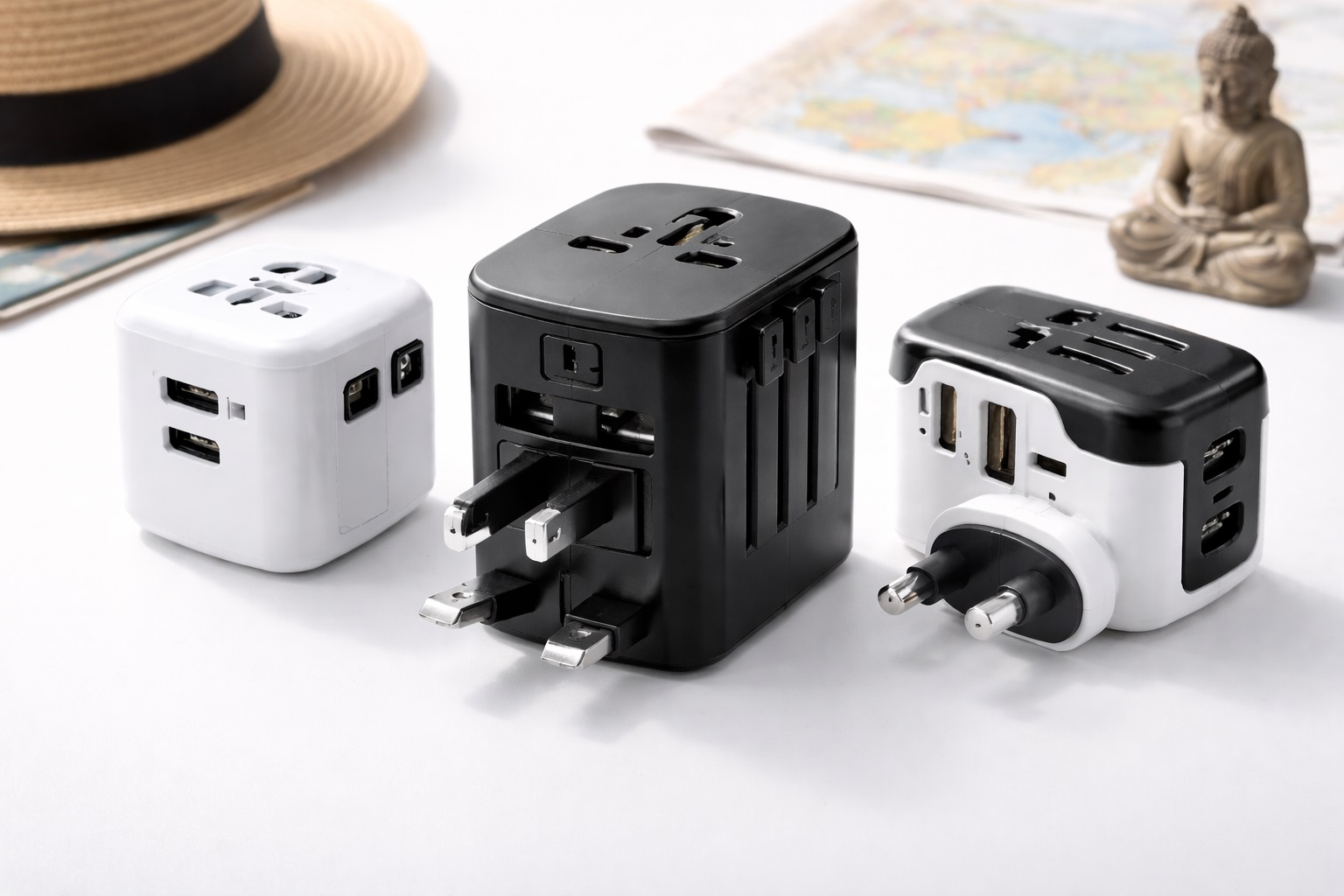
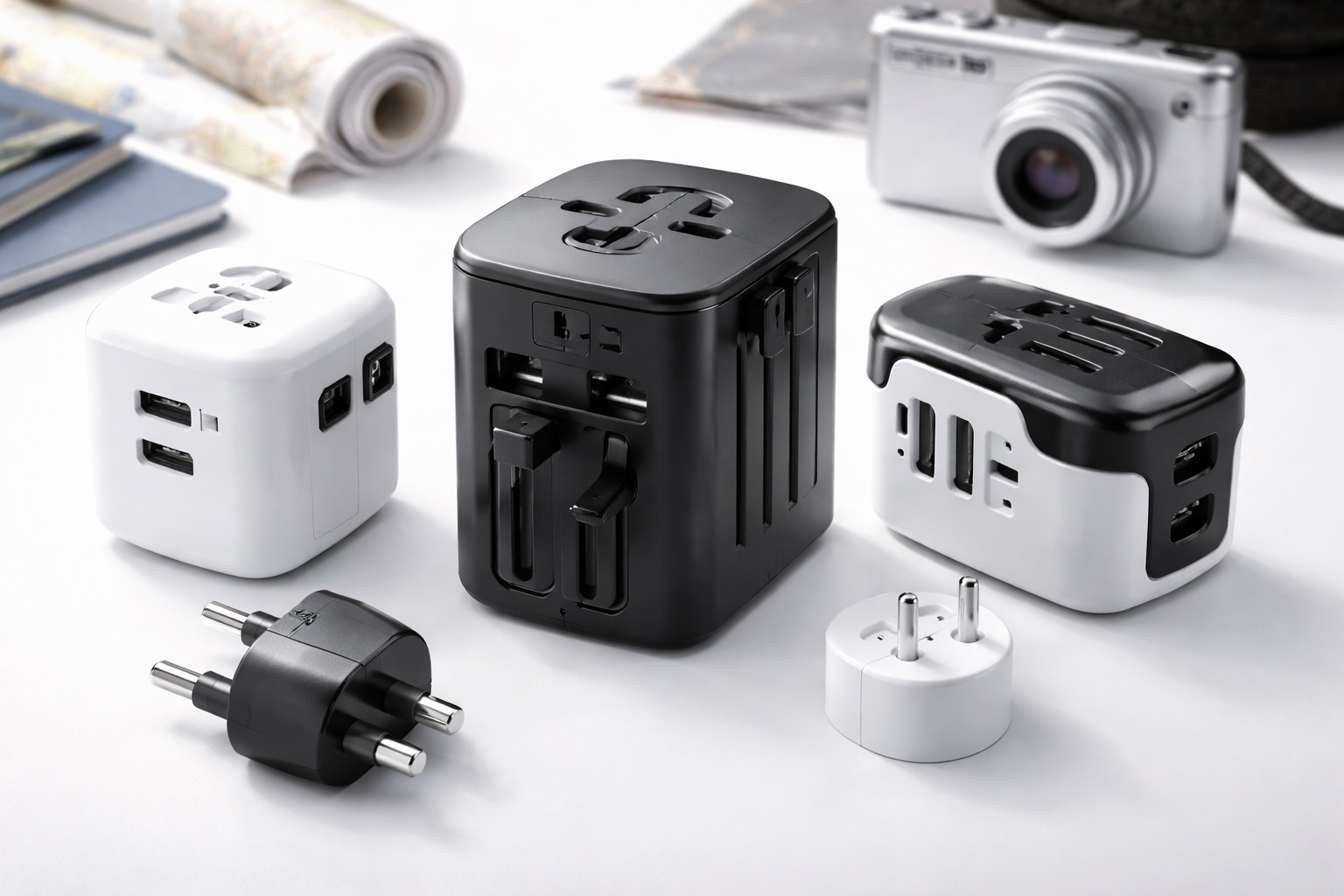
The OREI World Travel Adapter's interchangeable plug heads cover the continental Europlug standard, the UK's three-pin design, and Switzerland's variant, all in one compact unit. At about $15, it's an accessible way to cover a genuinely multi-country European itinerary without needing separate adapters for each stop.
OREI's straightforward approach favors dependable plug-swapping mechanics over an abundance of ports, which suits the common European travel pattern of moving between cities every few days and needing a plug solution that just works each time.
For travelers whose main concern is simply making sure their phone charger fits wherever they land next, this remains one of the most dependable and least complicated options for a European trip.
Its interchangeable-head system also means a lost or damaged piece doesn't necessarily end the trip, since the remaining heads typically still function for whichever countries you have left on the itinerary.
- Pros:
- Broad coverage of Europe's multiple plug standards in one unit
- Compact interchangeable-plug design that fits in a jacket pocket
- Budget-friendly price for the coverage it offers
- Cons:
- Slightly higher price than the most basic single-purpose adapters
- Limited availability of individual replacement plug heads if one goes missing
Best For: Travelers on a multi-country European itinerary who want one adapter that just keeps working.
Why We Recommend It: Its broad plug-head coverage matches the reality of hopping between several European countries on one trip.
6. TESSAN Universal Adapter – Best For Mixed USB-A and USB-C Devices in Europe
The TESSAN Universal Adapter's 3 USB + 1 Type C port layout is a practical fit for travelers whose gadget bag includes both older USB-A accessories and newer USB-C devices. At around $20, it covers European plug shapes while also handling device charging on the output side.
That combination is useful specifically for European trips because it reduces the number of separate items needed: one adapter handles both the plug-shape problem and a good share of your device-charging needs at once.
For travelers who don't want to carry a separate USB charging brick in addition to a plug adapter, this two-in-one approach is a sensible way to lighten the load.
The mixed port layout is also handy for travel groups where not everyone has upgraded to USB-C devices at the same time, letting everyone share the same adapter regardless of which cables they packed.
- Pros:
- 3 USB + 1 Type C ports covering both older and newer devices
- Premier build quality at an accessible price
- Reputable brand with wide retail availability
- Cons:
- Slightly higher price than single-port basic adapters
- Limited availability of higher-wattage USB-C output compared to dedicated PD chargers
Best For: Travelers who want one adapter to handle both the European plug shape and USB device charging.
Why We Recommend It: It combines plug conversion and multi-device charging in a single unit suited to a typical European packing list.
7. EPICKA Universal Adapter – Best For All-In-One European Coverage
EPICKA's Universal Adapter packs a 6-in-1 connectivity layout that covers a wide range of plug configurations, including the ones common across Europe, alongside multiple output ports. At roughly $23, it's a versatile mid-range option for travelers who want broad coverage without stepping up to premium pricing.
Having several plug configurations built into one unit is particularly useful on a European trip that might include an unplanned side trip to the UK or Switzerland, where a narrower single-region adapter would come up short.
The multiple output ports also mean it can double as a charging hub in a hotel room, reducing the need for extra chargers alongside the adapter itself.
That combination of range and flexibility makes it a reasonable single purchase for travelers who don't want to think too hard about the specific plug requirements of each country before departure.
- Pros:
- 6-in-1 connectivity covering multiple European plug variants
- Premier build quality for its price bracket
- Reputable brand recognized across the travel-gear space
- Cons:
- Slightly higher price than single-purpose adapters
- Limited availability of the exact configuration in some markets
Best For: Travelers whose European itinerary might extend beyond the continental Europlug zone.
Why We Recommend It: Its broad plug coverage hedges against unplanned detours to countries with different plug standards.
8. MOGICS Super Bagel – Best For a Tidy Hotel Desk Setup
The MOGICS Super Bagel's ultra compact circular design sits flat against a wall, which is a genuine advantage in European hotel rooms where outlets are sometimes placed behind furniture or in awkward corners. At around $45, it's priced at a premium reflecting its distinctive design.
The circular layout distributes cables outward rather than bunching them together, which helps keep a small European hotel desk tidy during a workation or an extended stay in one city.
It's not the first adapter most travelers reach for on a quick multi-city hop, but for a longer stay where the adapter effectively becomes a semi-permanent desk fixture, the design pays off.
Digital nomads spending a month or more in a single European city tend to appreciate this kind of small quality-of-life upgrade far more than someone passing through for a two-night stay.
- Pros:
- Ultra compact circular design that reduces cable clutter
- Premier build quality with a distinctive finish
- Reputable brand known for design-led travel accessories
- Cons:
- Slightly higher price than boxier competitors
- Limited availability compared to more mainstream brands
Best For: Travelers on an extended stay in one European city who want a tidy, semi-permanent charging setup.
Why We Recommend It: Its flat, cable-friendly design suits longer stays better than quick multi-city hops.
Buying Guide: How to Choose the Best Travel Adapter for Europe
Europe's plug landscape is more varied than many travelers expect, and getting it wrong can mean a dead phone on your first night abroad. The sections below walk through the specifics worth understanding before you buy.
1. Know the Europlug Standard (Type C/E/F)
Most of continental Europe, including France, Germany, Spain, Italy, and the Netherlands, uses variations of the two-round-pin Europlug design, often with an added grounding clip depending on the specific country. An adapter with Europlug-compatible heads covers the large majority of a typical continental itinerary. Even within this broad standard there are small regional differences, which is exactly why the interchangeable-head adapters on this list tend to be a safer bet than a single fixed-plug design.
2. The UK and Ireland Use a Different Standard Entirely
The United Kingdom and Ireland use the three-rectangular-pin Type G plug, which is completely different from continental Europe's design. If your trip includes London alongside stops in France or Germany, make sure your adapter explicitly covers both, since 'European' adapters don't always include the UK by default. This is one of the most common mistakes travelers make when assuming a single adapter labeled for 'Europe' automatically covers Britain as well.
3. Switzerland Has Its Own Variant Too
Switzerland and Liechtenstein use a distinct three-pin plug that's narrower than most other European standards, so a general Europlug adapter may not fit Swiss outlets. If Switzerland is on your itinerary, confirm the adapter's plug head list includes it specifically, since it's easy to overlook this detail when planning a broader continental trip.
4. Check the Voltage — Europe Runs Higher Than North America
Europe's standard voltage is around 220-240V, compared to roughly 120V in North America. Dual-voltage electronics like most modern phone and laptop chargers handle this automatically, but single-voltage appliances need an actual voltage converter, not just a plug adapter, to avoid damage. This voltage difference is one of the most consequential details for travelers coming from North America specifically.
5. Grounded vs. Non-Grounded Outlets
Many European outlets, especially the Schuko style common in Germany and much of the continent, are grounded. A grounded adapter seats more securely and safely in these outlets than a purely two-pin design, which matters most for laptops and other electronics with a three-prong plug. Even devices that don't strictly require grounding often benefit from the more secure physical fit a grounded adapter provides.
6. Plan for Multi-Country Itineraries
European trips often involve crossing several countries with different plug standards in a single visit. A universal adapter with interchangeable heads for the Europlug, UK, and Swiss standards avoids the need to buy or borrow a different adapter at each border, which can otherwise eat into precious time on a short multi-city trip.
7. Outlet Scarcity in Older Buildings
Older European hotels and apartments sometimes have fewer accessible outlets than modern accommodations, occasionally just one per room. A multi-port adapter helps you charge several devices from a single occupied outlet, which is a genuinely common frustration for travelers to Europe, particularly in historic city centers where buildings predate modern wiring standards.
8. Recessed Sockets Can Affect Fit
Some European wall sockets, particularly grounded Schuko outlets, are recessed into the wall. Bulkier adapters can sometimes struggle to seat fully in a recessed socket, so a slimmer plug profile is worth considering if you'll be relying on older-style outlets in older apartment buildings or guesthouses.
9. USB-C Power Delivery for Laptops
If you're bringing a laptop on a European work trip, confirm the adapter's USB-C port (if it has one) supports Power Delivery at a wattage that matches your laptop's charging needs, rather than assuming any USB-C-shaped port charges at full speed. This detail matters more for business travelers who need a laptop charged and ready each morning.
10. Carry-On Considerations for Air Travel Within Europe
Travel adapters are standard carry-on items with no special restrictions, which is useful to know if you're taking a budget European airline between cities and want to keep the adapter easily accessible in a personal item rather than checked luggage, especially given how strict some budget carriers are about cabin bag size.
11. Size and Weight for City-Hopping Itineraries
European trips often involve frequent train travel and packing light between cities. A compact, lightweight adapter is easier to keep track of during frequent repacking than a bulkier multi-port hub, even if it means slightly fewer simultaneous charging ports. Weigh this trade-off against how many devices you'll realistically need charged at once.
12. Build Quality for Repeated Daily Use
A European trip with multiple city stops means the adapter gets plugged in and unplugged daily, sometimes multiple times. Sturdy pin construction and a solid housing matter more on this kind of itinerary than on a single-destination beach vacation, where the adapter might only be used once or twice a day for a full week.
13. Certifications Worth Checking For
Look for CE marking specifically, since it's the standard safety certification recognized across the European Union and confirms a product meets EU health, safety, and environmental requirements. It's a reasonable baseline to check for before relying on an adapter throughout a European trip, particularly one lasting several weeks.
Frequently Asked Questions
Does the UK use the same plug as the rest of Europe?
No. The UK and Ireland use the three-pin Type G plug, which is different from the two-pin Europlug standard used across most of continental Europe. If your trip includes both, make sure your adapter covers both standards specifically, since this is one of the most frequent mix-ups travelers run into.
Do I need a voltage converter for Europe?
Only if you're bringing single-voltage appliances not rated for Europe's 220-240V standard. Most modern phone, tablet, and laptop chargers are dual-voltage and only need a plug adapter, not a full converter, so check your specific charger's label first.
Is Switzerland covered by a standard European adapter?
Not always. Switzerland uses its own narrower three-pin plug design, so confirm any adapter you buy specifically lists Swiss compatibility if that's part of your itinerary, since it's easy to assume a general Europlug adapter covers it when it doesn't.
Can one adapter cover a trip through France, Germany, and the UK?
Yes, as long as the adapter includes both Europlug-style heads for continental Europe and the separate three-pin head for the UK. Check the specific plug list before buying rather than assuming 'European' automatically means both.
Are European hotel outlets grounded?
Many are, particularly the Schuko-style outlets common in Germany and much of continental Europe. A grounded adapter is a sensible default choice for European travel, especially for laptops and other electronics with a three-prong plug, even in newer accommodations.
Will my hair dryer work in Europe with just an adapter?
Only if it's dual-voltage. Check the label on the appliance itself; if it lists a single voltage rather than a range like 100-240V, you'll need an actual voltage converter, not just a plug adapter, to use it safely without risking damage.
How many outlets should I expect in a European hotel room?
It varies widely, but older properties sometimes have just one or two accessible outlets. A multi-port adapter is a practical way to avoid running out of charging capacity in these situations, especially when traveling with a companion.
Are travel adapters restricted on European budget airlines?
No, standard plug adapters aren't restricted items and can be packed in carry-on or checked luggage without special handling, unlike spare lithium batteries or power banks, which do carry their own separate restrictions.
Do USB-C laptop chargers work the same in Europe?
Yes, as long as the charger itself is dual-voltage, which most USB-C laptop chargers are. You'll just need the correct plug adapter for whichever European country you're in, and the charging behavior itself won't change.
Is a universal adapter better than buying separate country-specific ones?
For a multi-country European itinerary, yes — a universal adapter with interchangeable heads is more practical than juggling several single-country adapters and figuring out which one you need at each stop along the way.
What plug type does Italy use?
Italy generally uses a three-round-pin variant alongside the standard two-pin Europlug, and most modern Italian outlets accept the standard Europlug design, so a typical continental European adapter usually works fine throughout the country.
Should I buy my adapter before I leave or when I arrive?
Buying before you leave is generally more reliable, since you can research exact plug compatibility for every stop on your itinerary rather than relying on limited options at an airport kiosk after landing, which often carries a price premium too.
Can I use a European adapter with a US power strip?
It's generally not recommended to combine a US power strip with a European plug adapter, since the strip itself is only rated for US voltage. It's safer to plug individual dual-voltage device chargers directly into the adapter instead of routing them through a mismatched strip.
Final Verdict
- Top Pick: Ceptics World Travel Adapter for grounded, EU-outlet-ready reliability.
- Budget Choice: Apple World Travel Kit for Apple owners crossing continental Europe and the UK.
- Premium Choice: BESTEK Voltage Converter for travelers who need genuine voltage conversion in Europe.
Europe's mix of plug standards, higher voltage, and sometimes outlet-scarce older buildings makes this one region where it genuinely pays to check the details before you travel rather than assuming any 'universal' adapter will do. Confirm your itinerary's specific countries against an adapter's listed plug coverage, and you'll avoid the first-night scramble that catches so many visitors off guard. A few minutes of research before you pack goes a long way toward a smoother first evening in a new city.