Best Budget Travel Adapter in 2026: Value Picks
Not every trip calls for the most feature-packed travel adapter on the shelf. For a lot of travelers, what matters most is value — a plug adapter that covers the outlets you'll actually encounter, survives a few trips in a backpack, and doesn't cost more than the phone charger it's plugging in. Overspending on a travel adapter is an easy mistake, since the category is full of premium multi-port hubs priced for power users who don't represent most trips.
We looked at eight adapters that regularly show up in budget-conscious packing lists, weighing price against the plug coverage, durability, and port selection each one actually delivers. None of these are the cheapest possible options you could find — they're the ones that hold up well enough to be worth the modest amount they cost.
Below are detailed reviews of each pick, a buying guide focused specifically on getting real value for money, and answers to the questions travelers ask most when they're trying to avoid overspending on travel gear.
Top 8 Best Travel Adapter Picks (Detailed Reviews)
1. BESTEK Voltage Converter – Best For Appliances That Need Real Voltage Conversion
At around $40, the BESTEK Voltage Converter is the priciest adapter on this list, and it earns that price by doing something the others don't: actually converting voltage rather than just reshaping a plug. For travelers packing a hair dryer, straightener, or other single-voltage appliance, this is the one purchase on the list that isn't optional — a plug adapter alone won't protect that kind of device.
Judged purely on value, it only makes sense to buy this if you actually need voltage conversion. If your electronics are all dual-voltage already, as most phone and laptop chargers are, this is money better spent elsewhere on this list.
For the specific traveler who does need it, though, the price reflects genuinely more complex internals than a basic adapter, and skimping on this particular item is one place where a cheaper knockoff is a real risk to your appliance.
It's also worth remembering that a converter is typically a one-time purchase tied to a specific appliance category rather than something you replace every trip, which softens the higher upfront cost when spread across years of use.
- Pros:
- True voltage conversion, not just plug-shape adaptation
- Premier build quality suited to higher-wattage loads
- Reputable brand within the power-conversion category
- Cons:
- Slightly higher price than every other adapter on this list
- Limited value for travelers who only own dual-voltage electronics
Best For: Travelers whose packing list includes a single-voltage appliance that needs true voltage conversion.
Why We Recommend It: It's the rare case on a budget list where paying more is the actual value play, since the alternative risks damaging an appliance.
2. Apple World Travel Kit – Best For Apple Owners Who Want a Sure Fit
At around $30, the Apple World Travel Kit isn't the cheapest option here, but it's worth including on a value-focused list because of what it saves you from: buying a cheap generic adapter that fits Apple's charging bricks loosely or not at all. For Apple device owners, a secure, official-fit adapter avoids the frustration of a plug head that pops loose overnight.
The kit relies on you already owning an Apple charging brick, so the actual cost of getting to a working USB-C setup is higher than the sticker price alone suggests if you're starting from scratch. For existing Apple owners, though, this is simply the missing piece.
Value here isn't about the lowest price — it's about not needing to solve the same problem twice. A loose-fitting generic plug head that stops working after a few trips ends up costing more than paying for the right fit once.
Owners who travel with multiple Apple devices also benefit from a single kit that reliably fits every charging brick in their bag, rather than testing generic adapters one at a time to see which ones actually seat properly.
- Pros:
- Official Apple compatibility with a precise, secure fit
- Premier build quality consistent with Apple hardware standards
- Reputable brand backed by long-term support
- Cons:
- Slightly higher price than generic universal adapters
- Limited availability, and it doesn't include a charging brick of its own
Best For: Apple device owners who want to avoid the ill-fitting plug heads that come with some cheap generic adapters.
Why We Recommend It: It prevents a false economy — a cheaper adapter that fits poorly and needs replacing isn't actually the better value.
3. OREI World Travel Adapter – Best Overall Value
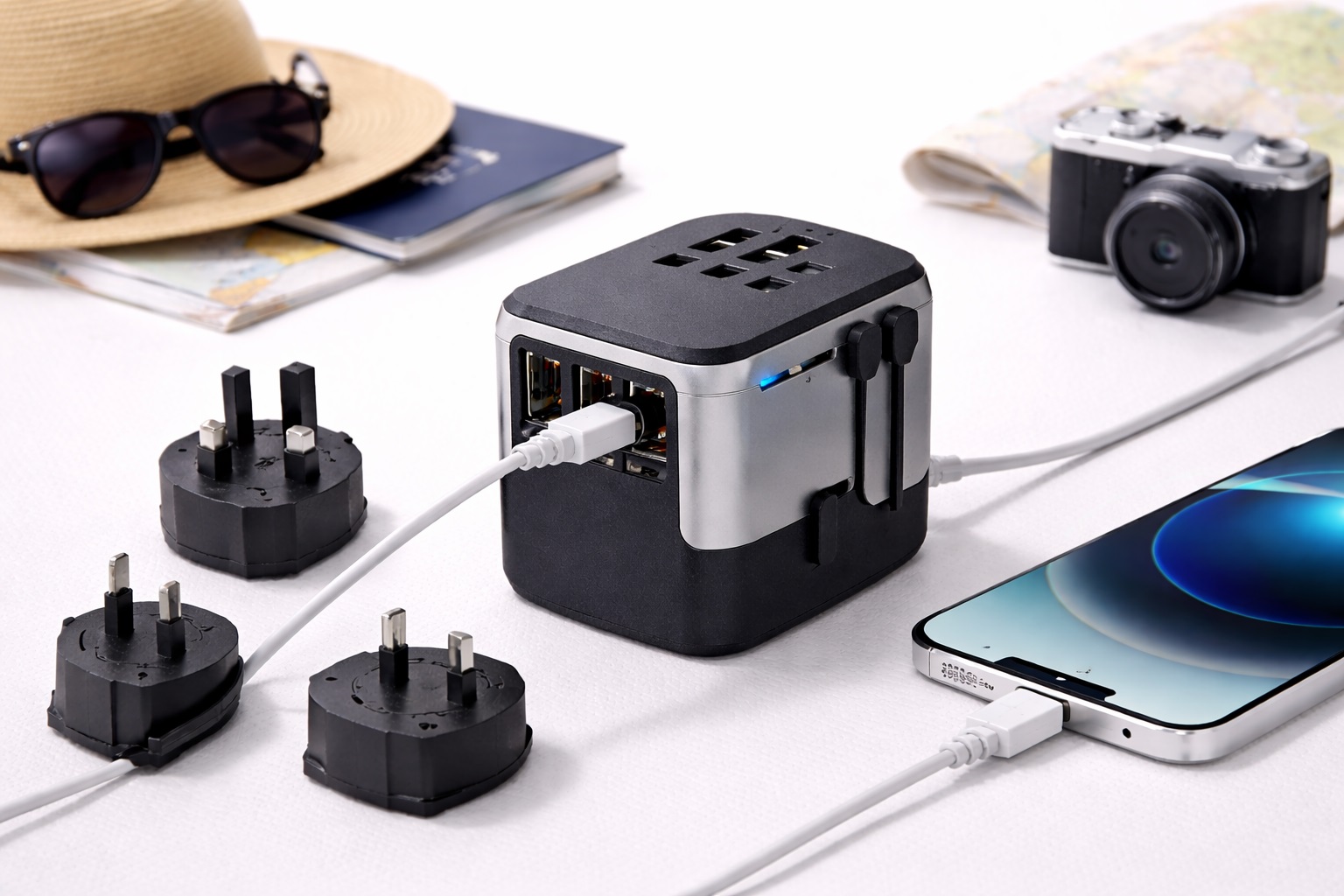
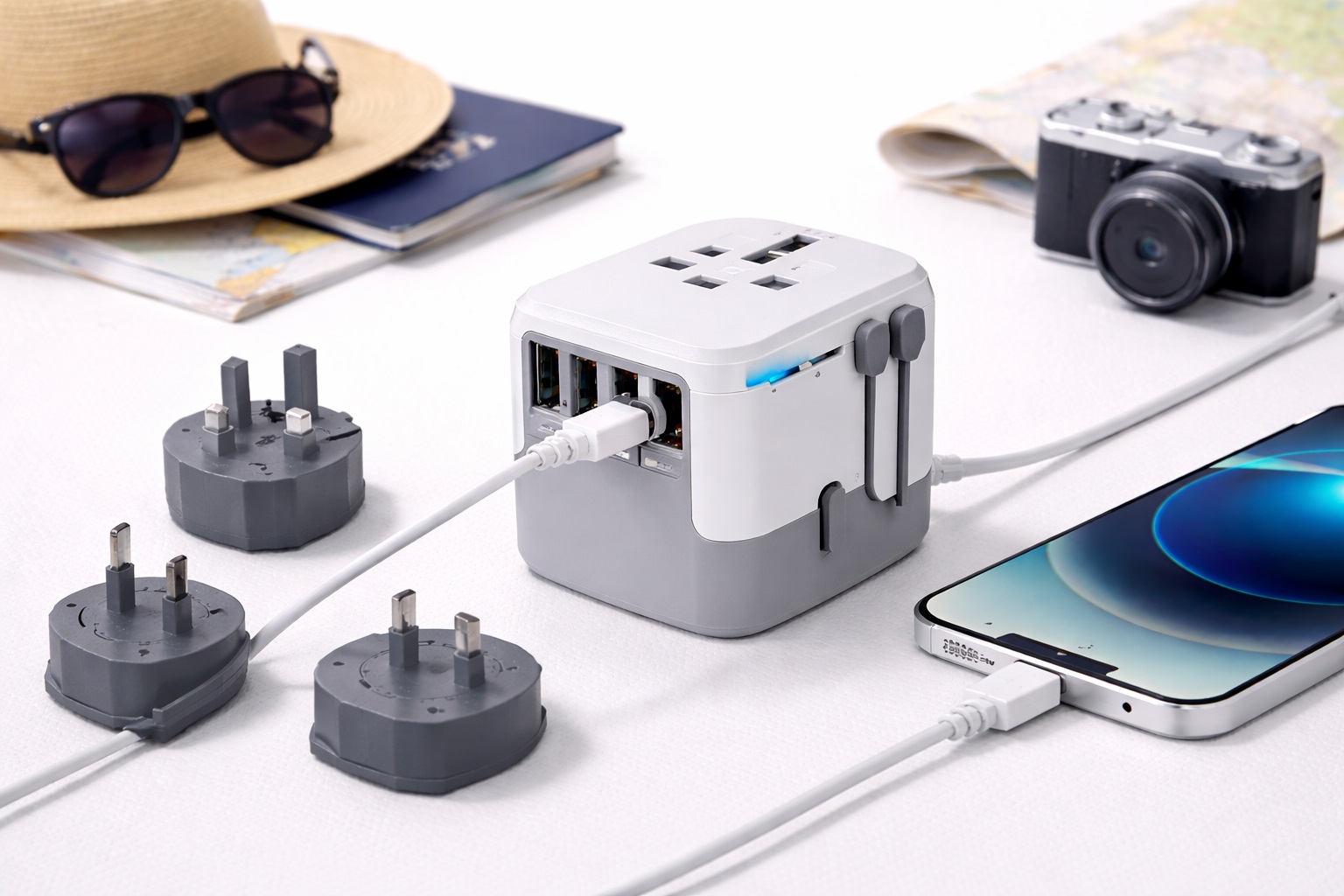
At about $15, the OREI World Travel Adapter is one of the most balanced value picks on this list — it isn't the absolute cheapest, but it covers a wide range of outlet types through interchangeable plug heads and has built a long track record for reliability. For most travelers, this is the adapter that solves the plug-compatibility problem without overspending.
Because it focuses on doing the plug-swapping job well rather than adding a long list of extra ports, there's less to go wrong mechanically, which matters for a budget purchase that still needs to survive repeated use.
Travelers weighing several options on price alone would do well to start here, since the combination of low cost and consistent performance is hard to beat elsewhere on this list.
It's also a common recommendation among travelers who've cycled through cheaper, less reliable adapters and landed here after a plug head failed on a previous trip, which says something about how it holds up over repeated use.
- Pros:
- Simple reliability that has earned repeat customers over the years
- Compact interchangeable-plug design that fits in a jacket pocket
- Broad global plug coverage at one of the lowest prices here
- Cons:
- Slightly higher price than the most basic single-purpose adapters
- Limited availability of individual replacement plug heads if one goes missing
Best For: Budget-conscious travelers who want broad plug coverage without paying for extra ports they won't use.
Why We Recommend It: It delivers the core function most travelers actually need at a price that's hard to beat.
4. SublimeWare Power Adapter – Best For Multi-Device Value
At about $25, the SublimeWare Power Adapter's 4-port USB charger layout gives you more simultaneous charging capacity per dollar than several pricier competitors. For travelers or families charging more than one or two devices overnight, this is where the value math starts to favor a multi-port design over buying several single-port adapters separately.
Because all four ports share a common power supply, the per-port speed drops as more devices are plugged in at once, which is worth knowing before assuming four ports means four devices charging at full speed simultaneously.
Still, compared to buying four individual single-port adapters, one 4-port unit is both cheaper and far less to carry, which is really the value proposition here.
The wide, flat footprint also plants itself securely against a wall outlet rather than tipping under the weight of several charging cables, which matters more once you're actually using all four ports at once.
- Pros:
- 4-port USB charger covering multiple devices at once
- Premier build quality for the price
- Reputable brand with consistent retail availability
- Cons:
- Slightly higher price than basic single-port adapters
- Limited availability of USB-C-specific ports compared to USB-A
Best For: Travelers who need to charge multiple devices and want to avoid buying several separate adapters.
Why We Recommend It: One multi-port unit works out cheaper and lighter than several single-port adapters bought separately.
5. EPICKA Universal Adapter – Best For Feature-Per-Dollar
At roughly $23, the EPICKA Universal Adapter packs a 6-in-1 connectivity layout into a mid-range price point, offering more plug configurations and ports than most adapters at this price. For travelers who want some of the flexibility of a premium adapter without paying premium prices, this is a reasonable middle ground.
The trade-off for packing in more functionality at a modest price is that build materials are typically a step below the priciest options, though that's a fair trade for most casual travelers who aren't putting the adapter through daily heavy use.
For anyone comparing adapters strictly on a features-per-dollar basis, this is one of the stronger showings on the list.
It also tends to appeal to travelers who like having options even if they don't use every port on every trip, since the flexibility of six configurations covers a wider range of unplanned situations than a narrower adapter would.
- Pros:
- 6-in-1 connectivity covering multiple plug types and output ports
- Premier build quality for its price bracket
- Reputable brand recognized across the travel-gear space
- Cons:
- Slightly higher price than the most basic single-plug adapters
- Limited availability of the exact port configuration in some markets
Best For: Travelers who want more plug and port variety without stepping up to premium pricing.
Why We Recommend It: It offers more functionality per dollar than most adapters in its price range.
6. TESSAN Universal Adapter – Best Budget Pick With a USB-C Port
At around $20, the TESSAN Universal Adapter includes a 3 USB + 1 Type C port layout, which is a meaningful value detail — plenty of budget adapters skip USB-C entirely and only offer USB-A ports. Getting a dedicated Type-C output at this price point is one of the better value trades on this list.
The mixed port layout also future-proofs the purchase somewhat, since it can serve both older USB-A accessories and newer USB-C devices without needing to be replaced as your gadget collection shifts over time.
For travelers trying to balance a tight budget against wanting at least one modern charging port, this is a sensible landing spot.
It's a reasonable pick for anyone gradually transitioning their gadget collection to USB-C, since it doesn't force a full switch before you're ready and lets older accessories keep working alongside newer ones.
- Pros:
- 3 USB + 1 Type C port mix for mixed device households
- Premier build quality at an accessible price
- Reputable brand with wide retail availability
- Cons:
- Slightly higher price than single-port basic adapters
- Limited availability of higher-wattage USB-C output compared to dedicated PD chargers
Best For: Budget shoppers who still want a USB-C port rather than USB-A ports only.
Why We Recommend It: It includes a genuinely useful modern port without pushing the price toward premium territory.
7. Ceptics World Travel Adapter – Best Value for Grounded Safety
At around $30, the Ceptics World Travel Adapter costs more than the cheapest options here, but the grounded, three-prong connection it includes is a safety feature that's genuinely worth paying for if you're traveling with grounded electronics like a laptop.
Skipping ground protection to save a few dollars is one area where cutting cost can be a false economy, since a poorly grounded connection is the kind of risk that's invisible until something goes wrong.
For travelers weighing safety against price, this is where it makes sense to spend slightly more than the absolute cheapest adapter on the list.
It's a particularly sensible pick for business travelers carrying a laptop bag full of grounded equipment, where the small extra cost is easy to justify against the value of the equipment being protected.
- Pros:
- Safe ground connection for three-prong devices
- Premier build quality with a sturdy housing
- Reputable brand known for safety-focused design choices
- Cons:
- Slightly higher price than non-grounded alternatives
- Limited availability of grounded pin options across every regional plug variant
Best For: Travelers who don't want to compromise on grounded safety just to save a few dollars.
Why We Recommend It: Grounded protection is worth the modest premium over cheaper, non-grounded alternatives.
8. MOGICS Super Bagel – Best Splurge if Design Matters to You
At around $45, the MOGICS Super Bagel is the most expensive adapter on this list, and it's included here mainly as a reality check: its ultra compact circular design is genuinely clever, but it's priced for travelers who value that design as much as raw function.
For a strictly budget-focused buyer, this isn't the pick — several other adapters on this list cover the same core charging needs for significantly less. It earns its spot only if a tidy, design-forward desk setup is worth the premium to you personally.
Comparing it against the rest of the list is a useful exercise in itself: it's a reminder that price differences in this category are often about design and port count rather than dramatic differences in core reliability.
If it's within budget and the design genuinely appeals to you, there's nothing wrong with treating a travel adapter as a small everyday-carry indulgence rather than a purely functional purchase.
- Pros:
- Ultra compact circular design that reduces cable clutter
- Premier build quality with a distinctive finish
- Reputable brand known for design-led travel accessories
- Cons:
- Highest price on this list relative to core functionality
- Limited availability compared to more mainstream, cheaper brands
Best For: Travelers for whom a tidy, design-forward setup is worth paying a premium over the cheaper alternatives.
Why We Recommend It: It shows what you're paying extra for in this category once basic plug coverage is no longer the differentiator.
Buying Guide: How to Choose the Best Budget Travel Adapter
Getting real value from a travel adapter isn't just about picking the lowest price tag. The sections below cover how to spend wisely in this category without ending up with an adapter that fails you mid-trip.
1. Define What "Budget" Actually Means for Your Trip
A budget adapter for a single weekend trip to one country looks different from a budget adapter meant to last years of frequent travel. Decide whether you're buying for one trip or building a long-term travel kit, since that changes which price point actually represents good value. A one-off purchase for a single vacation can justify a lower spend than an item you expect to pack for every future trip.
2. Avoid Paying for Ports You Won't Use
Multi-port adapters cost more than single-port ones, and that extra cost is only worth it if you actually charge multiple devices at once. Solo travelers with just a phone often overspend by buying a 6-port hub when a simple single or dual-port adapter would cover their real needs. Take an honest inventory of what you actually pack before deciding how many ports to pay for.
3. Don't Skip Grounding to Save a Few Dollars
Non-grounded, two-prong adapters are usually cheaper, but they aren't appropriate for devices that come with a three-prong plug. Cutting this particular corner is one of the few places in this category where the cheapest option can genuinely compromise safety rather than just convenience. It's worth checking your laptop charger's plug shape specifically before assuming a cheaper two-prong adapter will work.
4. Check Whether You Need a Converter, Not Just an Adapter
A voltage converter costs meaningfully more than a plug adapter, and buying one you don't need is wasted money. Check the input rating on your device chargers first — most modern electronics are dual-voltage and only need a basic adapter. This single check can save a genuinely significant amount on your total travel-gear spend.
5. Weigh Cost Against Expected Lifespan
The cheapest adapter available isn't the best value if it breaks after one trip and needs replacing. A slightly higher upfront cost from a reputable brand often works out cheaper per year of actual use for anyone who travels more than occasionally. Think of it as a cost-per-trip calculation rather than a one-time sticker price.
6. Compare Price Per Plug Standard Covered
Some budget adapters only cover two or three plug types well, while claiming broader compatibility on the box. If your travel spans several regions, compare how many plug standards an adapter genuinely covers well against its price, rather than trusting the word 'universal' at face value. Reading the specific list of included plug types is more reliable than the marketing headline.
7. Consider Buying Fewer, Better Items
It's often cheaper overall to buy one solid multi-port adapter than several cheap single-purpose ones scattered across different trips. Consolidating your charging needs into a single well-chosen purchase tends to be the better long-term value strategy, and it also means fewer items to lose track of while packing.
8. Look Past the Sticker Price to Build Quality
Two adapters priced within a few dollars of each other can have very different housing materials, fuse protection, and pin durability. A quick look at how a product is described — sturdy housing versus vague marketing language — is often a useful proxy for how it will hold up, even before reading a single customer review.
9. Factor In How Often You Actually Travel
Occasional travelers can reasonably prioritize the lowest price, since the adapter won't see heavy use. Frequent travelers get more value from spending a bit more upfront on something built to withstand regular packing, unpacking, and airport handling, since the cost per trip drops the longer the adapter lasts.
10. Don't Assume Bundled Extras Add Real Value
Some budget adapters are bundled with extra cables, pouches, or stickers to make the price feel like a better deal. Evaluate whether you'd actually use those extras, or whether you're paying slightly more for accessories that will sit unused in a drawer at home.
11. Read Reviews for Real-World Durability Feedback
Marketing copy tends to emphasize features, while user reviews are more likely to mention whether pins loosen over time or plastic housings crack after repeated use. For a budget purchase, durability feedback from other buyers is often more useful than the spec sheet.
12. Buy Once for Multi-Region Coverage If You Travel Broadly
If your travel regularly spans multiple continents, a slightly pricier universal adapter is usually better value than repeatedly buying cheaper single-country adapters for each new destination, since those individual costs add up over several trips.
13. Set a Realistic Price Ceiling Before You Shop
Deciding in advance what you're willing to spend helps avoid both overspending on unnecessary features and undershooting on a product too flimsy to trust. Most travelers find good value somewhere in the middle of this category's price range rather than at either extreme.
Frequently Asked Questions
What's a reasonable price range for a good travel adapter?
Most reliable universal adapters fall somewhere between $15 and $30. Prices below that range often cut corners on build quality or grounding, while prices well above it usually reflect extra ports or design features rather than dramatically better core performance. Anything far outside this range deserves a closer look before buying.
Is the cheapest adapter always the worst value?
Not necessarily, but it's worth checking whether a very low price has skipped grounding, uses flimsy plastic, or lacks fuse protection. Cheapest and best value aren't the same thing if the adapter needs replacing after one trip, so factor durability into the comparison rather than price alone.
Do I need to spend more for USB-C support?
Not dramatically — several budget-friendly adapters now include at least one USB-C port alongside USB-A ports, so you don't necessarily need to pay premium prices just to get Type-C output. It's worth checking the port list specifically rather than assuming USB-C is a premium-only feature.
Are multi-port adapters worth the extra cost?
They're worth it if you regularly charge more than one or two devices at once. If you typically only charge a single phone, a cheaper single or dual-port adapter is better value and there's no real benefit to paying for ports you won't use.
How do I know if a cheap adapter is actually safe?
Look for recognized safety certifications like CE, RoHS, or FCC, and check that the adapter includes proper grounding if your devices need it. A complete absence of any certification on an unusually cheap adapter is a reasonable reason for caution before trusting it with expensive electronics overnight.
Should I buy a voltage converter to save money on future trips?
Only if you actually own single-voltage appliances that need one. If your electronics are dual-voltage already, a converter is an unnecessary expense that adds cost and weight without any real benefit.
Is it cheaper to buy one universal adapter or several country-specific ones?
For travelers visiting multiple regions, one universal adapter is almost always cheaper in the long run than buying separate country-specific adapters for each destination.
Do budget adapters wear out faster than premium ones?
It varies by brand more than by price point alone. A well-reviewed budget adapter from a reputable brand can outlast a poorly made premium one, so brand track record matters as much as price.
Are bundled accessories worth paying extra for?
Only if you'll actually use them. Extra cables or pouches can add genuine value, but paying more purely for bundled extras you won't use isn't a good use of a limited travel-gear budget.
What should I prioritize if I can only buy one adapter?
Prioritize broad plug coverage and grounding first, then port count, then extra features. Getting the core function right matters more than any secondary feature for a single do-it-all purchase.
Can I get by with a non-grounded adapter to save money?
Only for devices that already use a two-prong plug. If any of your electronics have a three-prong plug, you need a grounded adapter regardless of price, since that's a safety requirement rather than a preference.
How much should I expect to spend for a family trip?
A single well-chosen multi-port adapter in the $20-30 range is usually enough to cover a family's charging needs, which works out cheaper than buying several separate single-port adapters.
Is it worth paying more for a well-known brand?
Generally yes, for the customer support and replacement policies that come with it. A reputable brand's slightly higher price often reflects real value in reliability and support rather than just marketing, and it's usually easier to get a replacement if something does go wrong.
Final Verdict
- Top Pick: BESTEK Voltage Converter for travelers who genuinely need voltage conversion.
- Budget Choice: OREI World Travel Adapter for the strongest overall value on this list.
- Premium Choice: Apple World Travel Kit for a guaranteed, official-fit solution.
Good value in this category rarely means the absolute cheapest price tag — it means matching what an adapter actually does to what you actually need, and not paying extra for ports, features, or conversion capability you'll never use. Most travelers will find the best balance of price and reliability somewhere in the middle of this list rather than at either extreme. Take a moment to check your own devices and travel habits against the guide above, and the right price point should be fairly easy to identify.