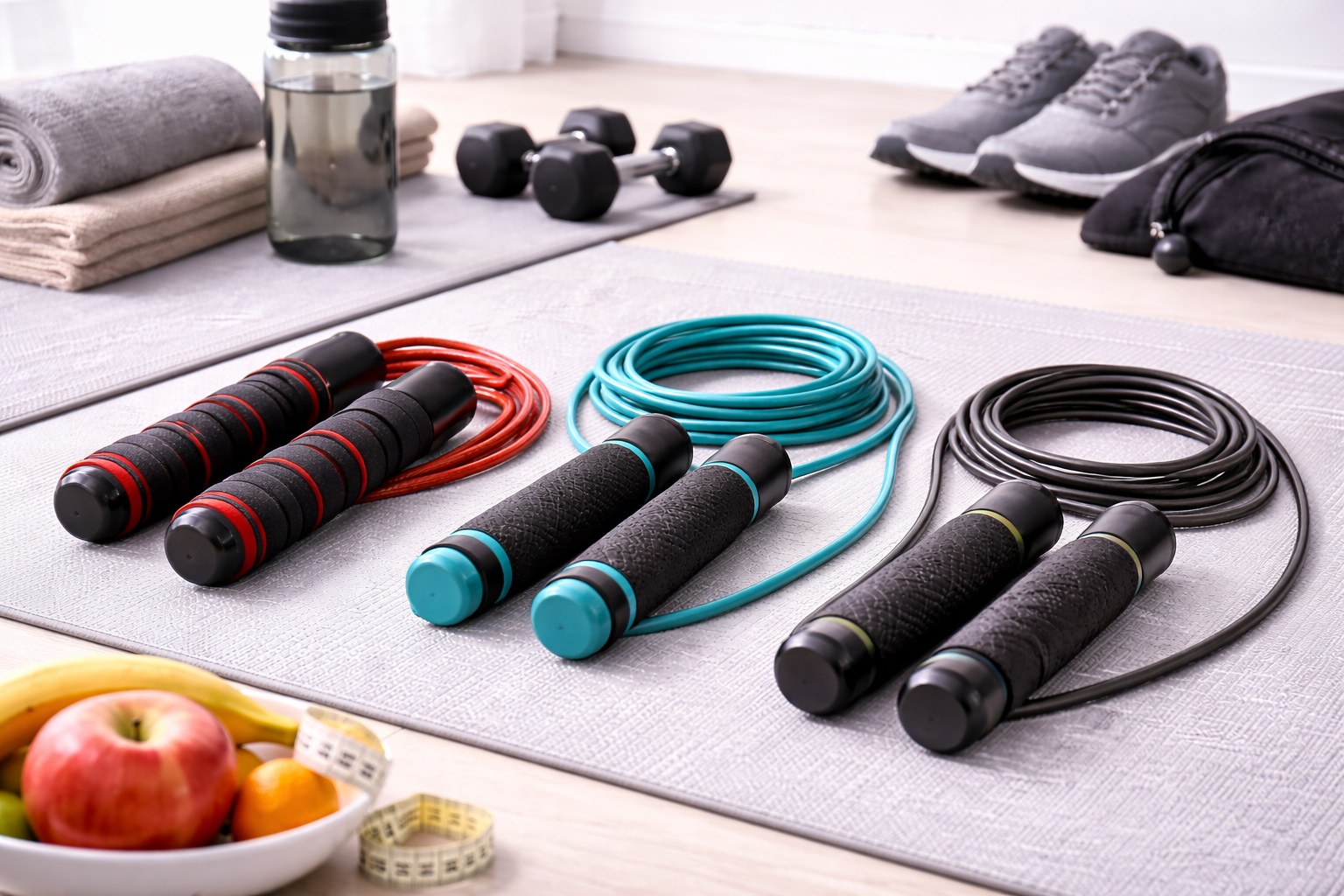
Best Jump Rope for Weight Loss in 2026
Jump rope has a well-earned reputation as one of the most calorie-intensive forms of cardio available, packing a demanding full-body workout into a piece of equipment that fits in a drawer. For anyone building a weight-loss routine around efficient, time-friendly workouts, few tools offer as much return on a small investment as a good jump rope.
What makes jump rope particularly effective for weight loss is the combination of continuous movement and full-body engagement. Unlike isolated exercises that work one muscle group at a time, jumping rope recruits your calves, shoulders, core, and cardiovascular system simultaneously, which tends to elevate heart rate quickly and keep it there through sustained intervals.
The rope you choose plays a real role in how sustainable that routine becomes. A rope that is uncomfortable, tangles constantly, or feels mismatched to your fitness level makes it harder to complete the longer, more consistent sessions that weight-loss progress actually depends on. Comfort and reliability translate directly into more total calories burned over weeks and months.
It is worth setting expectations honestly from the start. No single piece of equipment, jump rope included, guarantees weight loss on its own. What a good rope does is remove friction from the process, making it easier to complete the frequent, sustained cardio sessions that, combined with sound nutrition, actually drive results over time.
Below, we compare eight jump ropes with an eye toward sustained, high-volume cardio use, followed by a complete buying guide and answers to the questions people ask most when building a weight-loss routine around jump rope.
Top 8 Best jump rope Picks (Detailed Reviews)
1. WOD Nation Speed Rope – Best For High-Intensity Calorie Burn
The WOD Nation Speed Rope's patent-pending four-bearing system supports the fast, sustained rotations that high-intensity interval training relies on to maximize calorie burn in a short window of time. At around $20, it is priced reasonably for hardware built to handle demanding sessions.
HIIT-style jump rope intervals, alternating short bursts of maximum effort with brief recovery, are widely used specifically because they pack a significant metabolic demand into a compact timeframe, and this rope's smooth, fast rotation supports exactly that kind of training.
- Pros:
- Four-bearing system supports fast, calorie-intensive intervals
- Reasonably priced for its more advanced hardware
- Well suited to demanding HIIT-style weight-loss routines
- Cons:
- Faster rotation has a steeper learning curve for newer jumpers
- Thinner cable is less forgiving on missed swings
Best For: Jumpers building a HIIT-based weight-loss routine around short, intense rope intervals.
Why We Recommend It: Its speed-focused hardware supports the intensity that makes interval training so time-efficient for calorie burn, letting you accomplish a meaningful workout in twenty minutes or less.
2. Crossrope Get Lean – Best For Maximizing Calorie Burn With Resistance
The Crossrope Get Lean's weighted rope system adds resistance to every rotation, which increases the workload on your shoulders and core compared to a standard lightweight cord. At around $100, it is the most expensive option here, built around an interchangeable weighted cable system.
Adding resistance to a cardio movement is a well-established way to increase the demand of a given exercise without necessarily increasing duration, making a weighted rope a useful tool for anyone looking to intensify their sessions as their fitness improves.
- Pros:
- Weighted cables increase workload compared to standard ropes
- Interchangeable system allows progression as fitness improves
- Well suited to jumpers looking to intensify their routine
- Cons:
- Highest price point among the ropes on this list
- Heavier cord requires more shoulder and core stamina to sustain
Best For: Jumpers with solid fundamentals who want to intensify their calorie-burning sessions with added resistance.
Why We Recommend It: Added resistance is a straightforward way to raise the demand of a routine without needing more time, which makes it a smart choice once your current rope has stopped feeling challenging.
3. Tangram Smart Rope – Best For Tracking Calorie-Burning Progress
The Tangram Smart Rope's LED jump count display gives you a concrete, real-time number to track across sessions, which can be genuinely motivating during a weight-loss routine where consistency over weeks matters more than any single workout. At around $80, it is a bigger investment for buyers who value data.
Weight-loss progress often feels slow day to day, so having visible proof that your rep counts or session totals are climbing over time can help sustain motivation through the inevitable plateaus that come with any long-term fitness goal.
- Pros:
- Automatic rep tracking helps quantify progress over time
- Provides motivating, visible feedback during a long-term routine
- Removes the need for manual counting during intervals
- Cons:
- Highest price point among the ropes on this list
- Added electronics are unnecessary if you just want a simple rope
Best For: Jumpers who stay motivated by tracking measurable progress across a long-term weight-loss routine.
Why We Recommend It: Visible progress data can be the difference between sticking with a routine and losing motivation partway through.
4. Amazon Basics Standard – Best For an Affordable Cardio Starter
The Amazon Basics Standard's adjustable vinyl cord and roughly $8 price make it an easy, low-risk way to start a jump rope routine before committing more money to a specialized rope. For anyone just beginning a weight-loss journey, removing cost as a barrier matters.
Weight loss ultimately depends on consistency more than equipment, and a simple, functional rope removes any excuse related to cost while still supporting the basic cardio sessions that drive early progress.
- Pros:
- Very affordable way to start a cardio-focused routine
- Adjustable cord fits a range of heights
- Simple design with nothing to learn or configure
- Cons:
- Lacks tracking or resistance features some routines benefit from
- Basic cord may wear faster under heavy daily use
Best For: Anyone starting a weight-loss routine who wants a low-cost way to begin consistent cardio sessions.
Why We Recommend It: It removes financial hesitation as a reason to delay starting a new cardio habit.
5. DEGOL Skipping Rope – Best For Sustained Cardio Sessions
The DEGOL Skipping Rope's tangle-free ball bearings support the kind of smooth, uninterrupted rotation that longer, steady-state cardio sessions benefit from. At about $10, it remains an affordable choice for building sustained cardio volume.
For weight-loss routines that rely on longer, moderate-intensity sessions rather than short high-intensity bursts, a rope that will not tangle or interrupt your rhythm helps you accumulate more total minutes of continuous movement per session.
- Pros:
- Smooth bearing rotation supports longer, uninterrupted sessions
- Affordable price for the mechanical upgrade it offers
- Reduces tangling frustration during extended cardio work
- Cons:
- Bearings are a mechanical part that can eventually wear
- Basic handle design compared to premium ropes
Best For: Jumpers who prefer longer, steady-state cardio sessions over short high-intensity bursts.
Why We Recommend It: Fewer interruptions from tangling help you accumulate more continuous cardio volume per session.
6. RX Smart Gear Original – Best For Long Interval Training Sessions
The RX Smart Gear Original's customizable length ensures a precise fit that holds up comfortably through longer, more demanding interval sessions. At around $45, it is priced toward the upper range, reflecting its reputation for consistent quality.
A rope that fits precisely reduces unnecessary strain and awkward compensations over a long session, which matters more the longer and more frequently you train as part of a sustained weight-loss routine.
- Pros:
- Precise length fit supports comfort through long sessions
- Trusted name within functional fitness training communities
- Consistent build quality suited to frequent, demanding use
- Cons:
- Priced higher than most basic cardio-focused ropes
- Length adjustment takes a small amount of setup time
Best For: Jumpers doing frequent, longer interval sessions who want a precisely fitted, comfortable rope.
Why We Recommend It: A precise fit reduces strain that can otherwise limit how long or how often you are able to train.
7. XYLsports Jump Rope – Best For Comfortable Extended Cardio
The XYLsports Jump Rope's comfortable foam grip is especially valuable for weight-loss routines built around frequent, extended cardio sessions, where hand fatigue can otherwise become a limiting factor before your cardiovascular system is. At about $15, it remains an affordable comfort upgrade.
Grip comfort compounds over a long session and across a demanding weekly schedule, and a rope that does not leave your hands sore or fatigued makes it easier to show up consistently for your next scheduled workout.
- Pros:
- Foam grip reduces hand fatigue during extended sessions
- Affordable price for the comfort upgrade it offers
- Supports consistency across a demanding weekly routine
- Cons:
- Foam grip may compress or wear with heavy long-term use
- Still a fairly basic rope without advanced bearing systems
Best For: Jumpers training frequently who need a comfortable grip to sustain a demanding weekly schedule.
Why We Recommend It: Comfortable hands help you keep showing up for sessions, which matters more than any single workout.
8. EliteSRS Boxer Rope – Best For Durable Daily Calorie-Burning Use
The EliteSRS Boxer Rope's PVC cord durability makes it well suited to daily or near-daily use, which is common in weight-loss routines built around consistent, frequent cardio sessions. At roughly $25, it costs more than basic ropes but is built to hold up.
A weight-loss routine that relies on jump rope several times a week puts real cumulative wear on a cord, and a durable material choice like PVC helps ensure the rope keeps performing consistently throughout months of regular training.
- Pros:
- Durable PVC cord withstands frequent, high-volume use
- Proven design suited to demanding daily training
- Reasonable price for the durability it offers
- Cons:
- PVC cord feels stiffer than lighter cable ropes
- Slightly heavier than dedicated speed ropes
Best For: Jumpers committed to daily or near-daily cardio sessions who need a rope built to last.
Why We Recommend It: Its durability keeps up with the frequency that a genuine weight-loss routine typically demands.
Buying Guide: How to Choose the Best Jump Rope for Weight Loss
Choosing a jump rope for weight loss comes down to picking a tool you will actually use consistently, since consistency drives results far more than any single feature. The sections below cover what matters most.
1. Consistency Over Features
A comfortable, reliable rope you use four times a week will do more for weight-loss progress than a feature-packed rope that sits unused, so prioritize comfort and ease of use above all else.
2. Interval Training Versus Steady-State Cardio
Both high-intensity interval training and longer steady-state sessions can support weight loss; your rope choice may lean toward speed-focused hardware for intervals or smooth, tangle-free bearings for sustained sessions depending on your preferred style.
3. Handle Comfort for Frequent Sessions
Since weight-loss routines often involve several sessions per week, a comfortable, well-cushioned handle helps prevent hand fatigue from becoming a limiting factor before your cardiovascular effort is.
4. Durability for High-Frequency Use
Frequent training puts real cumulative wear on a rope, so a more durable cord material is a worthwhile investment if you plan to jump rope several times a week over months.
5. Adding Resistance as Fitness Improves
Weighted ropes can increase the calorie demand of a session without adding more time, making them a useful tool once basic footwork and endurance are comfortable.
6. Tracking Progress for Motivation
Whether through a smart rope's built-in counter or manual logging, tracking session length or rep counts over weeks helps sustain motivation through the inevitable plateaus of a weight-loss journey.
7. Bearing Quality and Session Flow
Quality bearings reduce tangling, which keeps your heart rate more consistently elevated by minimizing the stop-start interruptions that a tangled cord can cause.
8. Realistic Calorie Expectations
Jump rope is an efficient calorie-burning activity, but sustainable weight loss also depends on overall diet and total weekly activity, so a rope works best as part of a broader routine.
9. Building Volume Gradually
Increasing session length or intensity gradually over weeks reduces injury risk and helps build the endurance needed to sustain an effective weight-loss cardio routine long-term.
10. Combining Jump Rope With Other Training
Pairing jump rope intervals with strength training or other cardio can support weight loss more effectively than relying on jump rope alone, since maintaining muscle mass supports metabolic health.
11. Price Versus Long-Term Commitment
If you expect jump rope to be a core part of your routine for months or years, investing in comfort and durability tends to pay off compared to the cheapest available option.
12. Footwear and Joint Protection
Supportive athletic shoes reduce impact strain during frequent jump rope sessions, which matters more as session frequency and intensity increase for weight-loss goals.
13. Setting a Sustainable Weekly Schedule
A few consistent sessions per week over several months tends to produce better long-term weight-loss results than sporadic, intense sessions followed by long breaks.
14. Choosing Rope Weight Based on Fitness Level
Beginners generally benefit from a lighter, more forgiving rope, while more advanced jumpers may prefer added resistance to further intensify their calorie-burning sessions.
15. Recovery Between Sessions
Adequate rest between demanding jump rope sessions helps prevent overuse injuries and supports the consistency that weight-loss progress ultimately depends on.
16. Measuring Progress Beyond the Scale
Tracking endurance improvements, like longer sustained intervals or higher rep counts, can be a motivating measure of progress alongside or instead of weight alone.
17. Adjusting Intensity Over Time
As fitness improves, gradually increasing interval intensity or adding resistance helps prevent progress from plateauing due to your body adapting to a static routine.
18. Staying Motivated Long-Term
Choosing a rope that feels genuinely enjoyable to use, whether through comfort, tracking features, or simple reliability, supports the long-term consistency that weight-loss goals require.
19. Warming Up Before Calorie-Burning Sessions
A brief warm-up involving light movement and ankle or shoulder mobility work helps prepare your body for the repetitive impact and rotation of a jump rope session, reducing the risk of early fatigue or minor strain cutting a workout short.
20. Cooling Down and Recovery Habits
Following an intense session with a short cool-down and some light stretching supports recovery, which in turn supports the consistency that a sustainable weight-loss routine depends on over weeks and months.
21. Tracking Total Weekly Activity, Not Just Rope Time
Jump rope works best as part of a broader picture of weekly movement, so considering your total activity level, including walking, other workouts, and daily habits, gives a more complete view of progress than rope sessions alone.
22. Adjusting Your Routine as Fitness Improves
What felt like a challenging session in your first few weeks will eventually feel easier as your fitness improves, which is the natural cue to extend session length, increase intensity, or introduce a weighted rope to keep progressing.
23. Avoiding Burnout From Overtraining
More is not always better; jumping rope every single day at maximum intensity can lead to burnout or overuse injury, so balancing hard sessions with lighter or rest days supports long-term adherence.
Frequently Asked Questions
How many calories does jumping rope burn?
Calorie burn varies by intensity, duration, and individual factors, but jump rope is widely considered one of the more calorie-intensive forms of cardio per minute of activity.
How often should I jump rope for weight loss?
Many weight-loss routines include jump rope several times a week, combined with adequate rest and, often, additional strength or cardio training.
Is jump rope better than running for weight loss?
Both are effective cardio options; jump rope offers a more compact, joint-varied alternative to running, and many people find one more sustainable than the other based on personal preference.
Can jump rope alone lead to significant weight loss?
Jump rope can be an effective component of a weight-loss routine, though sustainable results typically depend on overall diet and total activity level as well.
How long should a weight-loss jump rope session last?
Sessions often range from ten to thirty minutes, using either sustained moderate-intensity rope work or shorter high-intensity intervals with rest periods.
Should beginners start with interval or steady-state jump rope training?
Beginners often start with shorter intervals combining jumping and rest, gradually building toward longer sustained sessions as endurance improves.
Does a weighted rope burn more calories than a standard one?
Weighted ropes generally increase the workload on your shoulders and core, which can increase calorie expenditure for a given duration compared to a standard lightweight rope.
Can jump rope help reduce belly fat specifically?
Jump rope supports overall calorie burn and cardiovascular fitness, but spot reduction of fat in a specific area is not something any single exercise can reliably target.
How long until I see weight-loss results from jump rope?
Results vary by individual and overall routine, but many people notice fitness and endurance improvements within a few weeks of consistent training.
Is it safe to jump rope every day for weight loss?
Many people jump rope daily without issue, though it is worth building up gradually and paying attention to how your joints respond, especially in the first few weeks.
What should I eat before a jump rope workout for weight loss?
A light, easily digestible snack an hour or so before training can provide energy without causing discomfort during a high-intensity session.
Can jump rope replace a gym membership for weight loss?
For many people, a jump rope combined with bodyweight exercises can support effective weight loss without needing a full gym membership.
Does jump rope tone muscles while burning fat?
Jump rope engages the calves, shoulders, and core repeatedly, which can support muscle tone alongside its cardiovascular calorie-burning benefits.
What is the best time of day to jump rope for weight loss?
There is no single best time; consistency in fitting sessions into your schedule matters more than the specific hour you choose to train.
How do I stay motivated with a jump rope weight-loss routine?
Tracking progress, varying interval structure, and choosing a comfortable rope you enjoy using are all practical ways to sustain motivation over a long-term routine.
Will jump rope alone build visible muscle definition while losing weight?
Jump rope primarily engages the calves, shoulders, and core, so it can contribute to noticeable tone in those areas alongside fat loss, though a broader strength routine typically produces more comprehensive muscle definition.
How does jump rope compare to cycling for weight loss?
Both are effective cardio options; jump rope tends to be more time-efficient per minute but more impactful on joints, while cycling is lower impact but often requires more equipment or space.
Can I combine jump rope with a calorie deficit diet safely?
Many people combine cardio like jump rope with a modest calorie deficit, though it is worth ensuring adequate nutrition to support recovery and energy for consistent training.
What is a realistic weekly jump rope volume for weight loss?
Many routines aim for three to five sessions per week, though the right volume depends on individual fitness level, recovery capacity, and overall training schedule.
Does jump rope help with cardiovascular health beyond weight loss?
Yes, regular jump rope training is a form of cardiovascular exercise that can support heart health and endurance alongside any weight-loss benefits.
How do I know if I am jumping rope at the right intensity for weight loss?
Monitoring how challenging a session feels, or tracking heart rate if you have a way to do so, can help you gauge whether your intensity aligns with your fitness and weight-loss goals.
Can older adults safely use jump rope for weight loss?
Many older adults can jump rope safely with appropriate footwear and gradual progression, though checking with a healthcare provider is wise for anyone with existing joint concerns.
What should I do if jump rope causes joint discomfort?
Reducing intensity, ensuring supportive footwear, training on a more forgiving surface, and building volume gradually can all help address joint discomfort during a weight-loss routine.
Can I lose weight jumping rope without changing my diet?
Exercise alone can contribute to weight loss, but most sustainable results come from combining regular cardio like jump rope with attention to overall nutrition and calorie balance.
How does jump rope intensity affect how many calories I burn?
Higher intensity generally increases calorie burn per minute, which is why many weight-loss routines incorporate interval-style jump rope training alongside steadier sessions.
Is it normal to plateau with a jump rope weight-loss routine?
Plateaus are common as your body adapts to a consistent routine, and gradually increasing intensity, duration, or adding resistance can help continue progress past a plateau.
Final Verdict
- Top Pick: WOD Nation Speed Rope for overall excellence.
- Budget Choice: Amazon Basics Standard for great value.
- Premium Choice: Crossrope Get Lean for high-end features.
Jump rope remains one of the most efficient tools available for a weight-loss routine, delivering a demanding cardiovascular workout in a fraction of the time and space that many other options require. The rope that will do the most for your progress is the one that fits comfortably into your hand and your schedule well enough that you keep coming back to it week after week. Start with consistency, layer in intensity or resistance as your fitness improves, and let steady, sustainable habits drive your results.
Pair whichever rope you choose with realistic goals and a bit of patience. Weight loss driven by cardio and healthy habits tends to unfold gradually rather than overnight, and the people who see the most lasting results are typically the ones who found a routine, and a rope, comfortable enough to stick with well past the first few motivated weeks.