Best Lightweight Dumbbells in 2026
Not every effective dumbbell workout involves maximal weight. High-repetition training, whether for toning, endurance, cardio-strength circuits, or rehabilitation, depends far more on a manageable, comfortable weight that you can control precisely through dozens of repetitions than on how much total resistance you can move for a single rep. Lightweight dumbbells serve this style of training in a way heavier equipment simply cannot.
In this guide, we look at eight dumbbell options well suited to lighter, high-repetition work, from adjustable systems that dial down to genuinely light settings to purpose-built lightweight bars designed specifically for toning and cardio-style circuits. Each option takes a slightly different approach to the lightweight training challenge, whether through fine weight increments, ergonomic comfort, or simply an accessible, affordable starting point.
We also cover the practical factors that matter most for high-repetition training specifically, including grip fatigue, weight increments, and how to choose a set that will not feel too light or too heavy as your endurance builds. These observations reflect published specifications and general product positioning rather than identical side-by-side lab testing. By the end, you should know exactly what to look for in a lightweight dumbbell built for repetition-focused training, whatever your specific goals happen to be.
Top 8 Best dumbbells Picks (Detailed Reviews)
1. Bowflex SelectTech 552 – Best For Dialing Down to Light Weight Fast
The Bowflex SelectTech 552 offers adjustable weight in a single dial-based unit, priced around $400, letting users dial all the way down to a genuinely light setting in seconds. For high-rep circuits that alternate between exercises requiring different resistance, that speed of adjustment is a real advantage.
- Pros:
- Adjustable weight dial allows instant light-weight settings
- Supports smooth transitions between high-rep exercises
- Well-known, established brand with a strong track record
- Covers both light and heavy resistance in one unit
- Cons:
- One of the higher price points in this lineup
- Dial mechanism has a distinct feel some users need to adjust to
- Bulkier per unit than a single lightweight fixed dumbbell
Best For: Circuit-style trainers who move quickly between light and heavier resistance and need instant, reliable weight changes without interrupting their pace.
Why We Recommend It: Few adjustable systems make dialing down to a genuinely light weight as fast and seamless as this one, which is exactly what high-repetition circuit training demands from start to finish.
For anyone running a mixed circuit that alternates between light toning moves and heavier compound lifts within the same session, the ability to reset the dial in seconds removes one of the biggest sources of downtime between exercises.
2. NordicTrack Select-A-Weight – Best For Hands-Free Light-Weight Switching
The NordicTrack Select-A-Weight system is voice control capable, priced around $350, letting users switch to a lighter weight setting without breaking stride mid-circuit. For fast-paced, high-repetition routines, not having to bend down or manually adjust weight is a genuine convenience.
- Pros:
- Voice control allows hands-free switching to lighter settings
- Fits naturally into fast-paced, high-rep circuit training
- Space-saving adjustable design suits smaller workout areas
- Backed by an established fitness technology brand
- Cons:
- Premium price reflects the added technology features
- Voice control is a convenience rather than a necessity
- Requires a stable connection for full smart functionality
Best For: High-rep circuit trainers who want to keep moving without interruption, even when switching between light and moderate resistance levels mid-workout.
Why We Recommend It: Maintaining pace during a high-repetition circuit matters for both cardio benefit and momentum, and hands-free weight switching genuinely supports that continuous flow rather than breaking it up with fiddly manual adjustments.
3. PowerBlock Elite – Best For a Wide Range Down to Very Light Settings
The PowerBlock Elite uses a compact square design, priced around $300, that adjusts down to genuinely light settings suitable for high-repetition toning work, while still scaling up for heavier days. That wide range in one unit is particularly useful for varied training weeks.
- Pros:
- Adjusts down to very light settings for high-rep training
- Compact square design saves storage space over time
- Scales up for heavier resistance on different training days
- Backed by a well-established, reputable brand
- Cons:
- Higher upfront price than fixed-weight starter sets
- Square shape feels different than traditional dumbbells at first
- Adjustment mechanism takes a short learning curve
Best For: Trainees who want one dumbbell system covering both light, high-repetition days and heavier strength-focused sessions without owning separate equipment.
Why We Recommend It: The genuinely low minimum weight setting here makes this a rare adjustable system that does not feel like overkill for lighter, high-repetition training days, while still scaling up when needed.
4. CAP Barbell Coated Hex – Best Simple Lightweight Fixed-Weight Option
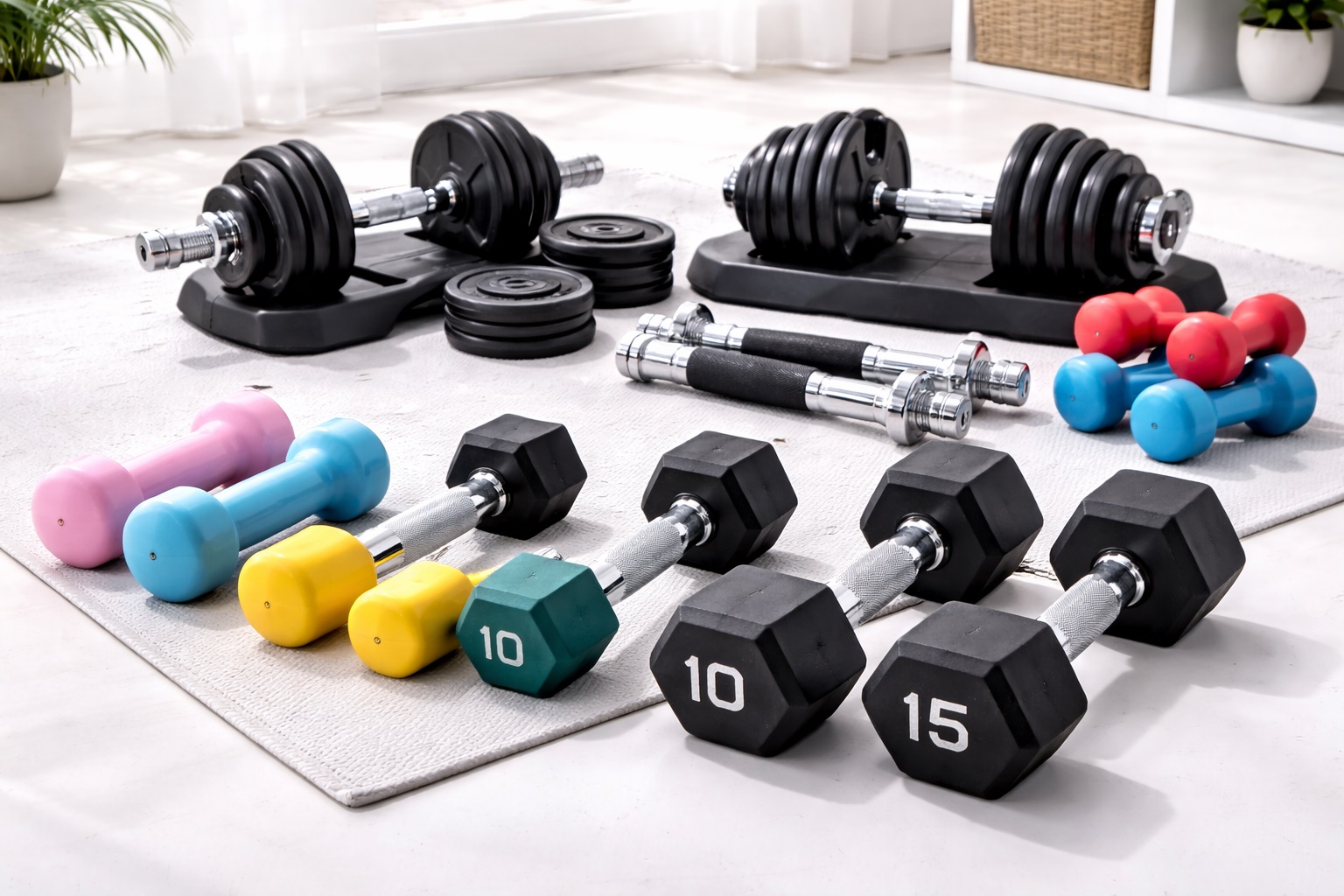
CAP Barbell's Coated Hex dumbbells feature anti-roll heads, priced around $30 per pair at lighter weights, offering a straightforward, no-frills option for anyone who simply wants a dedicated lightweight pair for high-repetition work without any adjustable complexity.
- Pros:
- Anti-roll hex heads keep dumbbells in place when set down
- Straightforward, no-assembly design for immediate use
- Affordable enough to buy a few different light pairs
- Coated finish protects floors and reduces noise
- Cons:
- Fixed weight means buying additional pairs to add variety
- Can require more storage space than an adjustable set
- Less flexible than adjustable systems for varied sessions
Best For: High-rep trainees who want a dedicated, no-fuss lightweight pair without navigating any adjustable mechanism during a fast-paced routine.
Why We Recommend It: Sometimes simplicity wins for high-repetition training, and this set lets you grab a consistent, reliable light weight without a single adjustment step slowing you down.
Because there is nothing to dial in or reconfigure, this is also a practical option for a shared household gym where more than one person trains at a different weight, since each pair stays permanently set at its labeled resistance.
5. Yes4All Adjustable – Best Budget Adjustable for Light Weight Circuits
Yes4All's adjustable set uses cast iron plates, priced around $50 for a base configuration, letting users configure a genuinely light weight for high-repetition circuits at a fraction of the cost of premium dial-based systems.
- Pros:
- Cast iron plates allow configuring a genuinely light weight
- Meaningfully more affordable than premium adjustable systems
- Adjustable format supports varied high-rep circuit intensities
- Plates can be added incrementally as budget allows
- Cons:
- Manual plate changes take longer than dial-based systems
- Cast iron plates add noticeable weight to store and move
- Requires occasional tightening to keep plates secure
Best For: Budget-conscious high-rep trainees who still want the flexibility of adjusting down to a lighter setting between different circuit exercises.
Why We Recommend It: It offers genuine adjustability for lighter training at a price point well below the premium systems, making it a smart choice for cost-conscious circuit trainers who still want real flexibility.
6. Amazon Basics Neoprene – Best Ultra-Light Starter Weight for High Reps
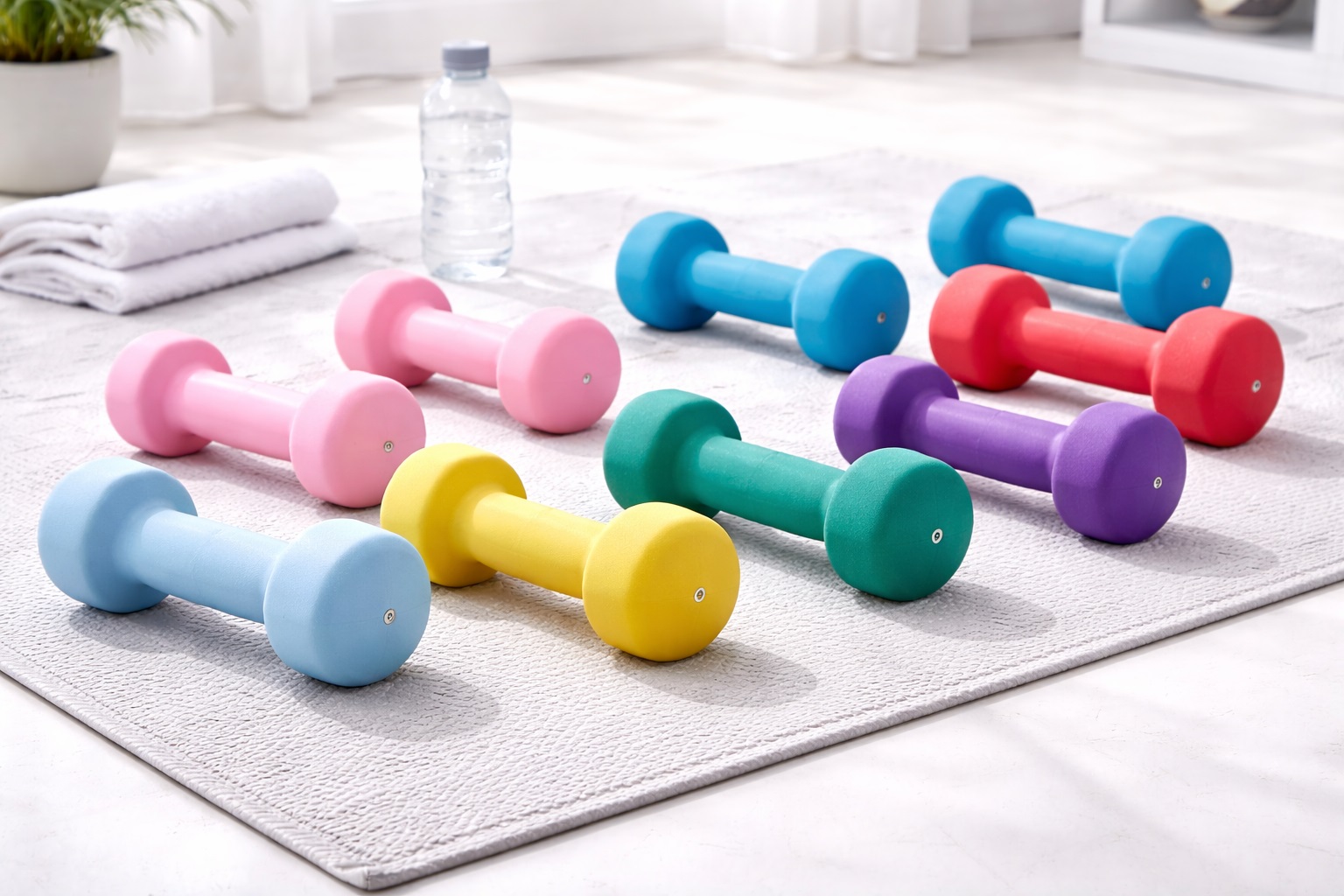
Amazon Basics Neoprene dumbbells feature a non-slip coating, priced around $20, available in genuinely light weights that suit high-repetition toning work right out of the box, making them one of the most accessible lightweight options available.
- Pros:
- Available in genuinely light weights suited to high-rep work
- Non-slip neoprene coating improves grip and comfort
- Very affordable, low-risk entry point for new lifters
- Bright color-coding makes weight identification simple
- Cons:
- Fixed weight requires buying additional pairs to progress
- Neoprene coating may show wear faster than coated hex options
- Not intended for heavy, advanced strength training
Best For: Anyone starting a high-repetition toning routine who wants an affordable, comfortable, genuinely lightweight pair to begin with.
Why We Recommend It: The combination of low price and genuinely light available weights makes this an easy, low-pressure starting point for high-repetition training routines you are just beginning to explore.
The low cost also makes it practical to buy two or three different weights at once, which is often more useful for a beginner circuit than owning just a single pair, since different movements call for different resistance.
7. Rogue Hex Dumbbells – Best Durable Light Dumbbells for Frequent Use
Rogue Fitness brings its heavy duty rubber construction to a straightforward hex dumbbell, priced around $40, offering commercial-grade durability even in lighter weight options for high-repetition training that sees frequent, regular use.
- Pros:
- Heavy duty rubber coating holds up to frequent high-rep use
- Commercial-grade durability even in lighter weight ranges
- Backed by a well-established, trusted fitness brand
- Comfortable, secure grip through repeated repetitions
- Cons:
- Fixed weight means buying additional pairs for variety
- Higher per-pound cost than basic neoprene options
- Takes up more storage space than an adjustable system
Best For: Frequent high-rep trainees who want a lightweight dumbbell built to withstand daily use without wearing down over time.
Why We Recommend It: High-repetition training means more total handling over time, and this set's durable construction holds up better to that frequent use than lighter-duty alternatives over the long run.
8. Bala Bars – Best Purpose-Built Light Dumbbell for High-Rep Toning
Bala Bars, priced around $55, use an ergonomic shape specifically designed around lighter, high-repetition training, making this the option in our lineup most purpose-built for exactly this use case rather than adapted from a heavier-weight design.
- Pros:
- Ergonomic shape purpose-built for high-repetition training
- Comfortable grip designed for extended high-rep sessions
- Attractive, modern design that fits well in shared living spaces
- Lightweight design specifically suited to toning circuits
- Cons:
- Higher price point relative to the weight range offered
- Not designed for heavy strength-focused training
- Limited weight range compared to traditional dumbbell sets
Best For: High-rep trainees whose entire routine centers on toning, cardio-strength circuits, or barre-style movement rather than occasional lighter-weight supplementation.
Why We Recommend It: Being purpose-built for this exact training style shows, and the ergonomic comfort here genuinely outperforms a general-purpose dumbbell adapted for lighter use rather than designed for it from the start.
Trainees coming from barre, dance-based cardio, or group toning classes often find the shape immediately familiar, since it closely mirrors the light hand weights already common in those formats.
Buying Guide: How to Choose the Best dumbbells
Choosing dumbbells specifically for lightweight, high-repetition training involves different priorities than choosing equipment for maximal strength work. Here is what matters most.
1. Minimum Available Weight
Not all adjustable systems dial down to a genuinely light setting, so check the minimum available weight before assuming an adjustable set will suit high-repetition, lighter-intensity training.
Some adjustable systems have a higher practical minimum than expected, which can make them less suitable for true light-weight, high-rep work despite their overall versatility.
Reading the full product specifications, rather than assuming based on the brand or general category, is the most reliable way to confirm a system truly reaches the light end of the range you need.
2. Grip Comfort Over Long Sets
High-repetition training means more total time holding a dumbbell, so grip comfort becomes especially important, since a poor grip can cause fatigue well before your target muscles are actually challenged.
Textured or coated handles, along with ergonomically shaped bars, tend to reduce hand fatigue over the longer holding periods typical of high-repetition circuits.
If a dumbbell starts to feel uncomfortable well before the target muscle group feels adequately worked, it is usually a sign the grip itself needs reconsidering rather than the weight.
3. Fine Weight Increments
Smaller weight increments allow more precise progression for high-rep training, letting you increase resistance gradually as endurance improves rather than jumping too far between available weights.
This matters especially for toning-focused routines, where subtle increases in resistance over time support steady progress without risking overuse strain from too large a jump.
A jump of just a pound or two can feel significant at the lighter end of the resistance spectrum, so fine increments matter proportionally more here than they do for heavier strength training.
4. Weight Consistency Across a Pair
For symmetrical training, both dumbbells in a pair should match closely in actual weight, since even small discrepancies become more noticeable across dozens of repetitions than they would in a single heavy lift.
Checking reviews for any mention of weight inconsistency between paired dumbbells is a reasonable step before purchasing, particularly for adjustable systems.
A simple household scale can be used to double-check pair consistency once your dumbbells arrive, giving peace of mind before you build an entire routine around them.
5. Noise Level
High-repetition circuits often involve frequently setting dumbbells down between exercises, so quieter coated options are generally more pleasant for home use than uncoated metal that clangs with each rep.
This matters even more in apartment or shared-space settings where repeated noise throughout a long circuit could become disruptive to others nearby.
A rubber mat under your training area can further reduce noise regardless of coating, which is a worthwhile addition for anyone doing frequent high-repetition sessions at home.
6. Durability for Frequent Handling
High-repetition training means significantly more total handling than occasional heavy lifting, so durable coatings and construction matter for equipment that will be picked up and set down many times per session.
Checking for reinforced seams or coatings specifically rated for frequent use helps you avoid a set that wears out faster than expected under high-volume training.
Over months of daily high-repetition use, the cumulative handling can add up to more total wear than a much heavier dumbbell used only occasionally.
7. Versatility Across Light Exercises
A good lightweight dumbbell set should support a wide range of toning and endurance exercises, from lateral raises to light presses, without feeling limited to a single movement pattern.
Considering the variety of exercises in your typical routine helps ensure your chosen weight and grip style will not feel restrictive as your circuit expands.
A versatile lightweight set also helps prevent boredom, since variety in movement patterns is often what keeps a high-repetition routine sustainable over the long term.
8. Portability for Varied Training Locations
Lightweight dumbbells are often used across different settings, from home to outdoor workouts to travel, so a compact, easy-to-carry option adds real value beyond the training itself.
A dedicated carrying bag or case makes it easier to bring a light dumbbell set along to a park session or while traveling without much extra planning.
Because lightweight sets are, by definition, easier to carry than heavier equipment, portability is often one of their strongest practical advantages over a heavier home gym setup.
9. Price for Multiple Light Weights
If you plan to own a few different light weights for varied exercises, compare the total cost of multiple fixed pairs against a single adjustable system covering the same range.
For high-repetition training specifically, an adjustable system's ability to fine-tune light resistance often justifies its higher upfront cost compared to buying several individual light pairs.
That said, a handful of inexpensive fixed-weight light pairs can still be the more economical choice for someone who only needs two or three specific light weights regularly.
10. Anti-Roll Design for Floor-Based Circuits
Many high-repetition circuits include floor-based exercises where dumbbells are repeatedly set down and picked back up, making a non-rolling hex or similarly stable shape particularly useful.
This feature reduces the small interruptions that come from chasing a rolling dumbbell mid-circuit, helping maintain your pace and rhythm.
A stable resting position also matters for safety, since a rolling dumbbell underfoot during a fast-paced circuit is a genuine tripping hazard.
11. Comfort During Cardio-Strength Combinations
Some high-repetition routines combine dumbbell work with cardio movements like squats or lunges, so consider how comfortable a given dumbbell feels to hold during dynamic, full-body movement rather than isolated exercises alone.
A secure, ergonomic grip becomes even more important when a dumbbell is being held through movement rather than a stationary lift.
Testing a dumbbell through a dynamic movement pattern, rather than just holding it still, gives a more accurate sense of how it will actually perform in a cardio-strength circuit.
12. Weight Range for Progression Over Time
Even lightweight-focused training benefits from a set that allows some room to progress, so consider a range wide enough to support gradual increases as your endurance and strength improve over months of training.
A set that maxes out too quickly at the light end may need supplementing sooner than expected as your capacity for higher repetitions grows.
Thinking a few months ahead when selecting your initial weight range can prevent an unplanned second purchase once your endurance surpasses your current equipment.
13. Matching Weight to Specific Exercises
Different high-repetition exercises call for different weights, with lateral raises typically requiring lighter resistance than squats or rows, so a versatile weight range or multiple light pairs supports a well-rounded routine.
Planning your typical circuit in advance can help you identify whether a single light weight will suffice or whether a small range of options better serves your routine.
Writing out a simple exercise list and noting the ideal weight for each movement is a practical exercise that clarifies exactly what range you actually need before buying.
14. Recovery Time Between High-Repetition Sessions
Lightweight, high-repetition training is generally easier to recover from than heavy lifting, which means it can often be programmed more frequently across a training week. Consider how a given dumbbell set fits into a schedule with shorter recovery windows between sessions, since equipment that is quick to set up and adjust supports that higher training frequency better than a system requiring more setup time.
Frequent short sessions also mean the equipment gets handled more often in total, which circles back to why durability and comfort matter as much as they do for this style of training.
15. Building a Routine Around Available Equipment
Rather than trying to match equipment perfectly to an idealized routine, it is often more practical to build your specific circuit around the weight range and features your chosen dumbbells actually offer. A set with a slightly narrower range than you initially wanted can still support an excellent high-repetition routine if the exercises are selected to fit what is available.
This approach also reduces the temptation to overspend on a system with far more range or features than your actual weekly training realistically requires.
Frequently Asked Questions
What weight counts as a lightweight dumbbell for high reps?
This varies by individual strength level, but many high-repetition routines use weights in the range of two to ten pounds, depending on the specific exercise and personal fitness level.
Can lightweight dumbbells still build muscle effectively?
Yes, especially when combined with high repetitions and proper progressive overload over time, lightweight dumbbells can effectively support muscle endurance and toning goals.
Are adjustable dumbbells suitable for high-repetition training?
Yes, provided the system dials down to a genuinely light setting, adjustable dumbbells can work well for high-repetition training and offer added flexibility for varied circuits.
How many repetitions are considered high-rep training?
High-repetition training typically involves fifteen to twenty-five or more repetitions per set, generally performed with lighter weight than lower-repetition strength training.
Do lightweight dumbbells wear out faster than heavier options?
Not inherently, though frequent handling during high-repetition training means durable coatings and construction still matter for long-term reliability regardless of the weight itself.
Is it better to use light dumbbells or resistance bands for toning?
Both can be effective for toning goals. Dumbbells offer more consistent, predictable resistance, while bands provide variable tension that changes throughout a movement.
Can lightweight dumbbells help with rehabilitation exercises?
Yes, lightweight dumbbells are commonly used in rehabilitation settings to build strength gradually without overloading recovering muscles or joints.
How do I know when to progress from lightweight to heavier dumbbells?
If you can complete all planned repetitions with good form and only mild fatigue by the final rep, it is generally a good time to consider a heavier weight.
Are lightweight dumbbells good for beginners?
Yes, lightweight dumbbells are often an ideal starting point for beginners, allowing them to focus on proper form before progressing to heavier resistance over time.
Can I use lightweight dumbbells for cardio-based workouts?
Yes, lightweight dumbbells are commonly incorporated into cardio-strength circuits, adding resistance to movements like lunges or squats without significantly slowing down the pace of the workout.
Do I need different lightweight dumbbells for different exercises?
Not necessarily, though some exercises like lateral raises typically require lighter weight than others like rows, so a small range of light weights can be helpful for a varied routine.
How do lightweight dumbbells compare to bodyweight exercises for toning?
Lightweight dumbbells add external resistance that can enhance toning results compared to bodyweight alone, particularly for muscle groups that are harder to isolate without added weight.
Can I combine lightweight dumbbells with resistance bands in the same workout?
Yes, many high-repetition circuits combine both, using dumbbells for consistent resistance and bands for variable tension, which can add variety and target muscles slightly differently within the same session.
How much should a beginner spend on lightweight dumbbells?
A basic pair or two of lightweight fixed dumbbells can often be found for well under fifty dollars, making it an accessible starting point before considering a larger adjustable system.
Do lightweight dumbbells come in different grip styles?
Yes, options range from simple round handles to ergonomic bars and hex-shaped grips, and trying a few styles can help you identify what feels most comfortable for extended high-repetition use.
Can lightweight dumbbells replace resistance training machines at the gym?
For many high-repetition, toning-focused goals, yes, lightweight dumbbells can effectively replace several machine exercises, offering similar muscle engagement with far more flexibility in a home setting.
How do I keep a high-repetition dumbbell routine from becoming boring?
Rotating exercises, adjusting tempo, and varying rest periods between sets can help keep a high-repetition routine engaging, along with occasionally changing the specific weight used for certain movements.
Is it normal for lightweight dumbbell workouts to feel easy at first?
Yes, especially early on, since high-repetition training relies on volume and time under tension rather than immediate heavy strain, and the challenge typically builds as repetitions and sets accumulate.
Can lightweight dumbbells be used effectively for upper body and lower body alike?
Yes, lightweight dumbbells can effectively target both upper and lower body muscle groups, though the ideal weight typically differs between smaller muscle groups and larger, stronger ones like the legs.
Do lightweight dumbbells need to be stored differently than heavier ones?
Not significantly, though coated or neoprene options benefit from being kept away from direct sunlight and extreme heat, which can degrade the coating over time. A simple rack or storage bin keeps lighter sets organized and prevents the rolling hazard mentioned earlier when dumbbells are left loose on the floor.
Is it worth buying a full adjustable system if I only ever use the lightest few settings?
Not necessarily. If your training consistently stays in a narrow, light weight range, a couple of well-chosen fixed-weight pairs are often more cost-effective and simpler to use than an adjustable system whose broader range you rarely touch. Adjustable systems earn their price mainly when you actually use a wide span of their available weights.
Final Verdict
- Top Pick: Bowflex SelectTech 552 for overall excellence.
- Budget Choice: PowerBlock Elite for great value.
- Premium Choice: NordicTrack Select-A-Weight for high-end features.
Lightweight, high-repetition training deserves the same thoughtful equipment choices as heavy lifting, even though the priorities shift toward comfort, fine weight increments, and grip endurance rather than raw resistance. The Bowflex SelectTech 552 and NordicTrack Select-A-Weight both offer excellent flexibility for varied circuit intensities, while the Amazon Basics Neoprene set remains a genuinely accessible starting point for anyone new to high-repetition training. Whichever option you choose, prioritizing comfort and consistency across dozens of repetitions will serve your results far better than chasing unnecessary extra resistance. Sustainable, comfortable training over the long run beats an impressive but short-lived attempt at lifting heavier than your routine actually calls for.