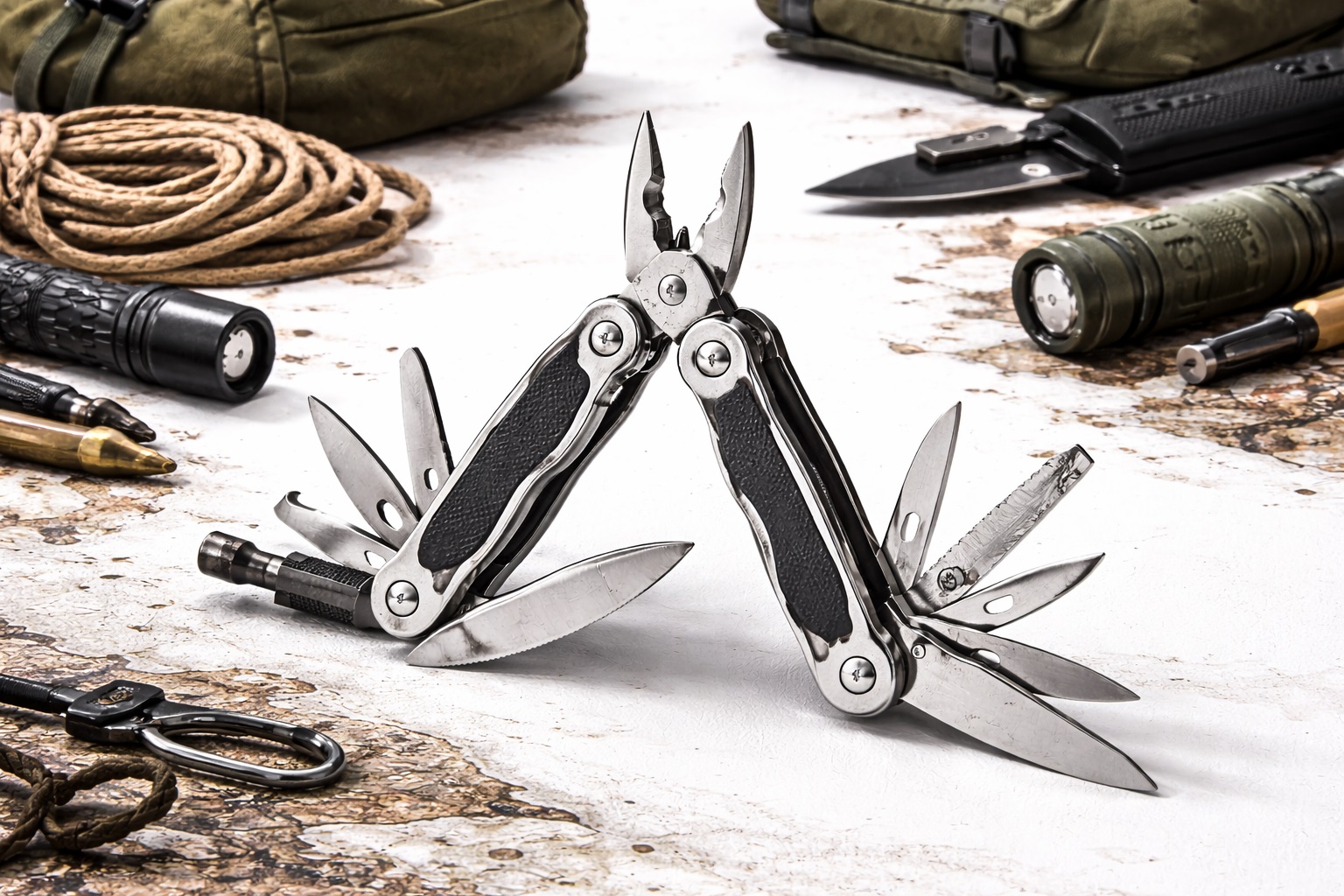
Best Heavy Duty Multi-Tool in 2026
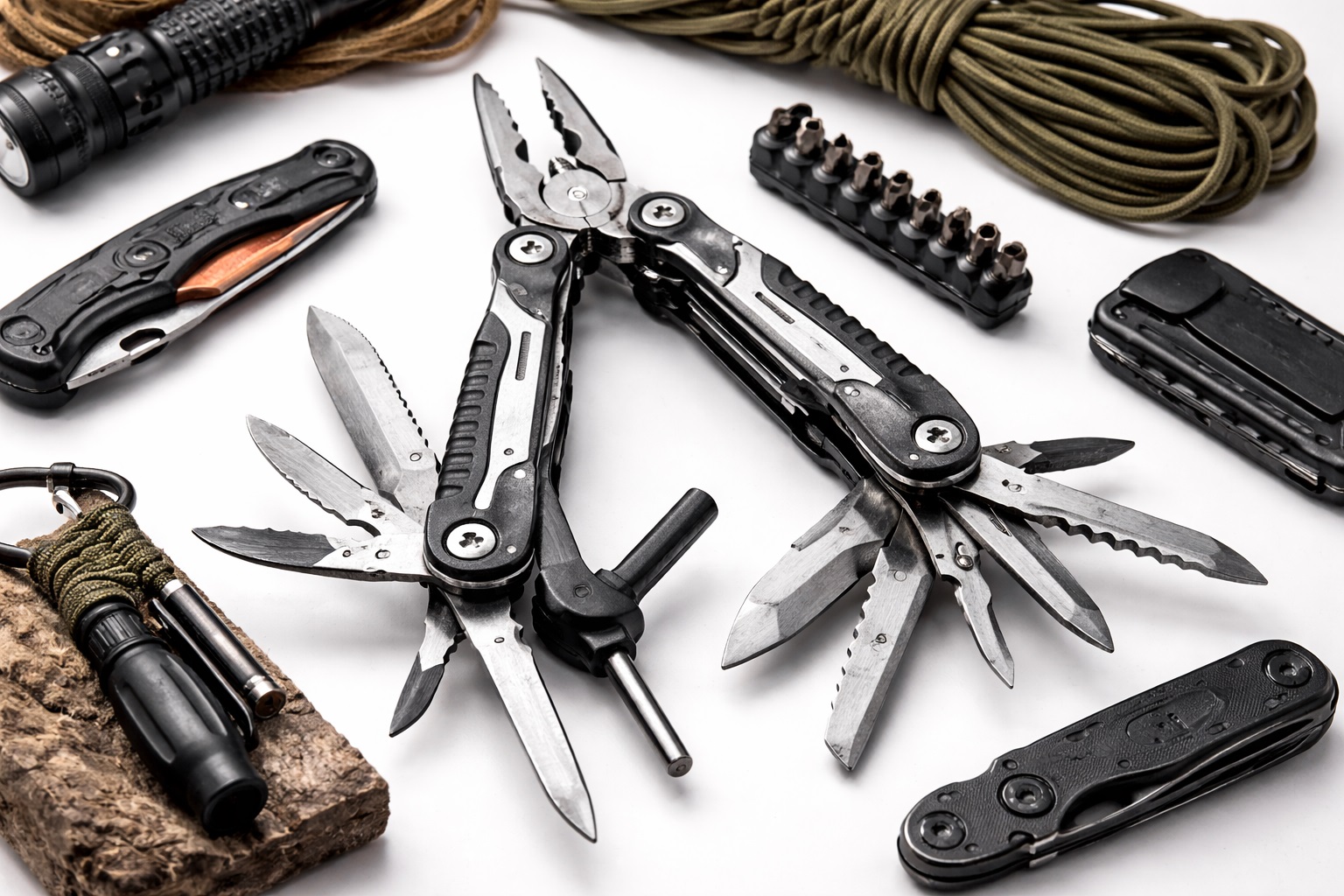
A heavy-duty multi-tool is one of the few pieces of gear that pulls double duty across job sites, campsites, and everyday emergencies. When a tool has to survive drops, mud, rain, and years of repeated use, the difference between a mediocre pick and a genuinely rugged one comes down to steel quality, pivot construction, and how well the locking mechanisms hold up over time. This guide compares the top heavy-duty multi-tools available in 2026, focusing on models that are consistently recognized for solid build quality and long-term reliability. Price alone rarely tells the whole story, since a mid-priced tool with the right steel and mechanism design can easily outlast a flashier, more expensive one that cuts corners on the parts you can't see.
Below, you will find detailed reviews of eight standout multi-tools, followed by a practical buying guide that breaks down the features that matter most for rugged, heavy-duty applications. Whether the tool is destined for a tradesman's belt, a truck glovebox, or a backcountry pack, it should feel like a natural extension of your hand rather than a compromise you have to work around. Each entry below highlights what the tool does particularly well, along with the trade-offs worth knowing before you buy, so you can match features to your own priorities rather than chasing the single tool with the longest spec sheet.
This guide also answers the most common questions buyers ask before committing to a purchase, from maintenance routines to how many tools are actually useful day to day. By the end, the goal is a clear sense of which model fits a given budget, use case, and expectation for durability, along with a realistic idea of how to keep whichever tool you choose working well for years rather than months.
Heavy-duty use also means thinking about the environment the tool will actually face. A multi-tool that lives in a kitchen drawer has very different demands than one that rides on a work belt in freezing temperatures or gets dropped in mud on a job site. Grip texture, cold-weather usability, and how the tool behaves when it's wet or gritty all matter more once you move past occasional light use into daily, hard-wearing conditions. The reviews below call out where each tool's strengths line up with those real-world demands, rather than judging purely on a spec sheet. Pay attention to how each tool handles moisture and grit, since those two factors quietly wear down cheaper pivots and springs faster than almost anything else.
Top 8 Best Multi-Tool Picks (Detailed Reviews)
Leatherman Free P4 – Best For Overall Everyday Carry
The Leatherman Free P4 sits at the top of the heavy-duty multi-tool category thanks to its magnetic opening system, which lets nearly every tool be accessed and closed one-handed, even with gloves on. At around $150, it commands a premium price, but the fit and finish reflect that investment: tight tolerances, smooth pivots, and blade steel that holds an edge through repeated field use. For anyone who wants a single multi-tool to handle everything from home repairs to trail maintenance, the Free P4 is difficult to beat. It also feels noticeably more refined in hand than budget alternatives, with detents and springs that stay consistent instead of loosening after a few months of regular use. Even the clip and body coating are designed to resist the scuffs that come from riding in a tool bag or truck console day after day.
- Pros:
- Magnetic opening system makes every tool fast to deploy
- Premium fit, finish, and pivot smoothness
- Backed by Leatherman's reputation for durability
- Cons:
- One of the pricier options in this roundup
- Limited color and finish choices
Best For: Users who want one premium multi-tool capable of replacing several standalone hand tools.
Why We Recommend It: The magnetic opening mechanism genuinely changes how quickly the tool can be deployed in the field, and the overall build quality suggests it will hold up for years of hard use without the pivots loosening or the springs weakening.
Leatherman Wave Plus – Best For All-Around Versatility
The Leatherman Wave Plus has long been a benchmark multi-tool thanks to its 17-in-1 functionality, packing a full range of pliers, drivers, and blades into one rugged frame. At roughly $120, it undercuts the Free P4 while still delivering the fit and finish Leatherman is known for. It's a strong middle-ground option for buyers who want broad capability without paying for the most premium mechanism on the market. The blade and pliers are large enough for real leverage on stubborn fasteners, and the tool has earned a long track record among tradespeople and outdoor users alike. Replacement parts and accessories are also widely available, which is a meaningful advantage for a tool meant to stay in service for years, and it means a worn part rarely means replacing the whole tool.
- Pros:
- 17-in-1 functionality covers nearly every common task
- Solid, reputable build quality
- More affordable than the top-tier Leatherman models
- Cons:
- Bulkier than minimalist designs
- Limited color options
Best For: Buyers who want a complete, do-it-all tool without stepping up to the most expensive tier.
Why We Recommend It: Few multi-tools balance tool count, durability, and price as effectively as the Wave Plus, making it a dependable everyday choice that has proven itself over many years on the market.
SOG PowerPint – Best For Budget-Conscious Buyers
The SOG PowerPint uses compound leverage technology to boost cutting and gripping power well beyond what its compact size suggests. At around $50, it's one of the most affordable rugged multi-tools available, making it an easy entry point for anyone testing the waters of multi-tool ownership without a large upfront commitment. Despite the lower price, the leverage system means it doesn't feel underpowered when tackling wire, cordage, or stiff hardware, and the compact body slips easily into a jacket pocket or small pack.
- Pros:
- Compound leverage adds real cutting power
- Very accessible price point
- Compact enough for daily carry
- Cons:
- Fewer premium materials than higher-end options
- Smaller tool selection than full-size models
Best For: First-time multi-tool buyers or anyone who wants strong performance on a modest budget.
Why We Recommend It: The leverage system punches above its price point, delivering genuine utility without the premium price tag, which makes it an easy recommendation for casual or occasional use.
Gerber Center-Drive – Best For One-Handed Driving Tasks
The Gerber Center-Drive's standout feature is its full-size driver axis, which lets the bit driver sit in line with the handle for better torque and control than tools where the driver is offset. At about $110, it's a strong mid-range pick for anyone who frequently uses screwdriver bits rather than just pliers. The in-line design also makes it easier to apply steady pressure without the tool twisting awkwardly in your hand, which reduces slipped screws and stripped fasteners on repetitive assembly tasks.
- Pros:
- In-line driver axis improves torque and accuracy
- Accepts standard bit sets
- Reputable Gerber build quality
- Cons:
- Pliers are secondary to the driver in this design
- Mid-range price for a specialized tool
Best For: Users who lean on screwdriver and bit-driven tasks more than pliers-based work.
Why We Recommend It: The in-line driver design solves a real annoyance found in many multi-tools, where off-axis bit drivers sacrifice control, and it holds up well to repeated use.
Victorinox SwissTool Spirit – Best For Premium Stainless Construction
The Victorinox SwissTool Spirit is built around ergonomic stainless steel construction that prioritizes comfort during extended use and long-term resistance to corrosion. At around $135, it sits near the top of this lineup on price, reflecting the quality of the materials and the precision of Swiss manufacturing. The rounded profile is noticeably kinder to the palm during long sessions of repetitive gripping compared to squarer, more angular designs, which matters if the tool gets used for hours at a stretch.
- Pros:
- Ergonomic stainless steel resists corrosion well
- Comfortable in the hand during extended use
- Reputable Victorinox engineering
- Cons:
- Premium price relative to similar tool counts
- Limited color options
Best For: Buyers who prioritize material quality and comfort over the lowest possible price.
Why We Recommend It: The stainless steel construction and ergonomic shape make it one of the more comfortable heavy-duty options for repeated, prolonged use, and it should age gracefully with basic care.
Gerber Suspension-NXT – Best For Tight Budgets
The Gerber Suspension-NXT relies on spring-loaded pliers to speed up one of the most common multi-tool actions, and at roughly $40 it is the most affordable model in this roundup. It's a practical choice for anyone who wants a dependable rugged tool without a significant financial commitment. The spring-assisted opening reduces the small but repetitive strain of manually opening the pliers dozens of times during a typical job, which adds up over a long day of use.
- Pros:
- Spring-loaded pliers speed up repetitive tasks
- The lowest price point in this lineup
- Lightweight and easy to carry
- Cons:
- Fewer premium materials than higher-priced models
- Smaller overall tool selection
Best For: Budget-conscious buyers who still want a reliable, functional multi-tool.
Why We Recommend It: Spring-loaded pliers are a genuinely useful convenience feature that's rare to find at this price point, and the overall package still feels solid rather than flimsy.
Victorinox Swiss Army Champ – Best For Maximum Tool Variety
The Victorinox Swiss Army Champ packs 33 tools in one compact frame, making it the most feature-dense option in this lineup. At around $100, it's a strong value for anyone who wants maximum versatility, even if a portion of those 33 tools will see only occasional use. It's the kind of tool that tends to have exactly the obscure implement you need buried somewhere in its layers, which is part of its long-running appeal, particularly for people who like being ready for unpredictable situations.
- Pros:
- 33 tools cover an unusually wide range of tasks
- Compact for the sheer number of functions included
- Reputable Victorinox construction
- Cons:
- Some included tools see only rare use
- Thicker profile than simpler designs
Best For: Buyers who want the widest possible tool selection in a single unit.
Why We Recommend It: Few multi-tools pack this much genuine capability into a frame this compact, making it a strong all-purpose backup or primary tool for people who like being prepared for almost anything.
Leatherman Skeletool – Best For Lightweight Everyday Carry
The Leatherman Skeletool takes the opposite approach from the Swiss Army Champ, using a minimalist lightweight design that strips the tool down to the essentials most people actually use. At around $75, it's a smart pick for anyone who finds bulkier multi-tools uncomfortable to carry daily. The skeletonized handles cut weight noticeably without compromising the strength of the pliers or the main blade, so it never feels like a downgrade despite being lighter.
- Pros:
- Minimalist design keeps weight and bulk low
- Focuses on the tools people use most often
- Comfortable for all-day carry
- Cons:
- Fewer specialized tools than full-size models
- Not ideal for users who want every possible function
Best For: Everyday carry users who prioritize a slim, lightweight profile over a large tool count.
Why We Recommend It: Stripping away rarely used tools results in a lighter, more pocket-friendly multi-tool that still covers the essentials well, which is exactly what most people need day to day.
Buying Guide: How to Choose the Best Heavy Duty Multi-Tool
Picking the right heavy-duty multi-tool means weighing steel quality, mechanism design, and how the tool will actually be carried day to day. The sections below cover the factors that separate a tool that survives years of rough use from one that loosens up and fails when you need it most.
1. Blade and Tool Steel Quality
The steel used in the knife blade and cutting tools determines how well the multi-tool holds an edge and resists corrosion. Higher-grade stainless steels generally cost more but stay sharp longer and shrug off rust in humid or wet environments, which matters most for anyone using the tool outdoors or on job sites. Cheaper steels may need touch-up sharpening far more often, which becomes a real hassle over time, especially for anyone relying on the blade for daily cutting tasks rather than occasional use.
2. Locking Mechanisms and Safety
A secure lock on the knife blade and other sharp implements prevents accidental closure during use. Look for tools with dedicated locking liners or frame locks on the blade, since a tool that folds unexpectedly under pressure is both frustrating and potentially dangerous, especially when working at odd angles or with wet hands. A firm, confident lock also builds trust in the tool during tasks where hesitation costs time.
3. Pliers Quality and Leverage
The pliers are often the most-used component on a heavy-duty multi-tool, so smooth pivot action and strong jaw alignment matter. Some designs add compound leverage or spring-loaded opening, which reduces hand fatigue during repetitive tasks like wire cutting or gripping, particularly during long work sessions. Loose or gritty pliers pivots are also one of the first signs that a cheaper tool is wearing out.
4. Tool Count Versus Practicality
More tools sound better on paper, but a tool with dozens of functions is only as useful as the ones you actually reach for. Consider which specific functions, such as screwdrivers, wire cutters, saws, or files, match your regular tasks rather than choosing based on tool count alone, since unused tools just add bulk and weight. It's usually smarter to buy fewer tools you'll use often than many you'll rarely touch.
5. Size and Weight for Everyday Carry
A multi-tool that is too bulky or heavy tends to stay in a drawer instead of on your belt. Compact, lightweight designs sacrifice a little capability for portability, which is often the right trade-off for anyone who wants to carry the tool daily rather than only on planned trips or specific jobs. A tool left at home because it felt too heavy provides zero value no matter how capable it is.
6. Screwdriver and Bit Compatibility
Some multi-tools accept standard bit sets, which massively expands what the tool can do without adding bulk to the housing itself. If you already own a bit driver set, look for a multi-tool with a compatible bit holder so you aren't buying duplicate accessories.
7. Corrosion Resistance and Coatings
Tools that will see rain, saltwater, or high humidity benefit from coated or higher-grade stainless components. A tool that rusts at the pivots will bind up and become difficult to open, so corrosion resistance is directly tied to long-term reliability and how smoothly the tool operates years down the line.
8. One-Handed Operation
Being able to deploy tools with one hand, especially while wearing gloves, is a meaningful convenience in the field. Magnetic or assisted-opening designs make a noticeable difference when your other hand is occupied holding a rope, a flashlight, or an injured limb, and this small detail matters more than it seems until you actually need it.
9. Sheath and Carry Options
A quality nylon or leather sheath protects both the tool and your gear bag from wear, while a pocket clip offers faster access for daily carry. Consider how and where you plan to carry the tool before choosing a model built around a bulkier belt sheath that may not suit a more casual lifestyle.
10. Warranty and Brand Support
Established brands typically back their heavy-duty multi-tools with long warranties, some covering defects for the tool's lifetime. A strong warranty is a reasonable proxy for how confident a manufacturer is in its own materials and assembly, and it can save real money if a defect surfaces after normal use. Reading the warranty terms closely also reveals how the manufacturer defines normal wear versus a covered defect.
11. Maintenance and Sharpening
Every multi-tool needs occasional cleaning and light lubrication at the pivots to keep the mechanisms smooth. Look for a design that is easy to disassemble, or at least easy to flush out with water and a drop of oil, since maintenance-friendly tools tend to last longer with less effort on your part. A five-minute cleaning routine every couple of months is usually all a well-made multi-tool needs.
12. Price Versus Long-Term Value
A cheaper multi-tool may need replacing within a year or two of hard use, while a premium option can last a decade or more with basic care. Factor in how often you will use the tool and how much downtime a failure would cost before deciding how much to spend upfront, since the cheapest option is not always the most economical one over time. Think in terms of cost per year of reliable service rather than sticker price alone.
13. Matching the Tool to Your Use Case
A tradesman, a backcountry hiker, and someone who just wants a reliable glovebox tool all have different priorities. Be honest about how the multi-tool will actually be used most often, then weigh the features above accordingly rather than chasing a single "best" tool on paper that may not fit your real routine.
Frequently Asked Questions
Is a premium heavy-duty multi-tool worth the extra cost?
In most cases, yes. Higher-end models generally use better steel, tighter tolerances, and stronger pivots, which translates into a tool that holds up to years of rugged use rather than loosening or corroding within months, saving money on replacements over time. The improved comfort and one-handed operation on premium models also makes daily use noticeably more pleasant.
How do I maintain a heavy-duty multi-tool?
Keep the tool clean and dry, rinse off dirt or salt after outdoor use, and apply a drop of light lubricant to the pivots periodically. Wipe the blade dry before storage to prevent surface rust, and inspect the locking mechanism occasionally to make sure it still engages firmly. A few drops of a lightweight machine oil on the pivots once every couple of months goes a long way.
What's the difference between a multi-tool and a basic pocketknife?
A multi-tool combines pliers, screwdrivers, a knife blade, and often several other implements into a single folding body, while a pocketknife is generally limited to one or two blades. Multi-tools trade some compactness for versatility, which suits people who need more than just a cutting edge.
Can heavy-duty multi-tools be carried through airport security?
No. Multi-tools that include a knife blade are not permitted in carry-on luggage under standard airport security rules and must be packed in checked baggage instead, so plan accordingly before flying. It's a good habit to double-check current security rules before any trip, since policies can be updated.
How many tools do I actually need on a multi-tool?
Most users regularly reach for the pliers, a screwdriver, the knife blade, and a wire cutter. Extra tools like saws or files are useful for specific tasks but are not essential for everyday carry, so don't feel pressured to buy the model with the most tools. Think about the last few times you needed a quick tool and work backward from those real situations.
Are multi-tools legal to carry in public?
Laws vary by location and by blade length, so it's worth checking local regulations before carrying a multi-tool with an exposed knife blade in public spaces or at work, since rules can differ significantly between regions, and workplaces may have their own additional restrictions.
What steel type offers the best durability?
Higher-grade stainless steels generally offer the best balance of edge retention and corrosion resistance for a multi-tool that will see outdoor or job-site use, though they usually come at a somewhat higher price. Mid-range steels are still perfectly serviceable for occasional or light-duty use, so the ideal steel really depends on how hard the tool will be worked.
How often should I lubricate the pliers and pivots?
A light lubrication every few months, or after exposure to water, dust, or sand, keeps the mechanisms moving smoothly and prevents premature wear on the pivots and springs.
Do heavy-duty multi-tools come with a warranty?
Most reputable brands back their multi-tools with a limited lifetime warranty against manufacturing defects, though normal wear and misuse are typically excluded from coverage.
Can worn-out bits or components be replaced?
Some multi-tools use replaceable bit sets or pliers heads, which extends the usable life of the tool considerably. Check whether a model supports replacement parts before buying if longevity is a priority for you, since this can turn a good tool into one that lasts effectively indefinitely.
Is stainless steel or titanium better for a multi-tool handle?
Stainless steel handles are more common, more affordable, and plenty durable for most users, while titanium options reduce weight at a higher price point without necessarily improving strength or longevity.
Should I choose a full-size or compact multi-tool?
Full-size tools generally offer better leverage and a more complete tool set, while compact models are easier to carry every day. The right choice depends on whether portability or capability matters more for your typical use, so consider your daily routine first. Some users even keep a compact tool for daily carry and a full-size model in a truck or pack for bigger jobs.
What's the best way to carry a multi-tool daily?
A belt sheath keeps the tool accessible for job-site use, while a pocket clip or small pouch works well for everyday carry in more casual settings. Choose based on how quickly you need to access the tool and how it fits with your usual clothing and daily activities.
Final Verdict
- Top Pick: Leatherman Free P4 for its magnetic opening system and premium overall build quality.
- Budget Choice: Gerber Suspension-NXT for spring-loaded pliers and dependable performance at the lowest price in this lineup.
- Premium Choice: Victorinox SwissTool Spirit for its ergonomic stainless steel construction and standout comfort during extended use.
Ultimately, the best heavy-duty multi-tool is the one that matches how and where it will actually be used. For buyers who want a single tool capable of handling almost anything, the Leatherman Free P4 remains the strongest all-around choice, while the Gerber Suspension-NXT proves that a tight budget doesn't have to mean sacrificing reliability. Buyers who split the difference and want a touch more comfort and material quality without reaching the very top of the price range should take a close look at the Victorinox SwissTool Spirit. Whichever model you choose, prioritizing steel quality and mechanism durability over sheer tool count will pay off the longest, and a few minutes of basic upkeep every few months will keep any of these tools working reliably for years. None of the eight tools reviewed here are a poor choice; the right one simply depends on how much you're willing to spend, how many tools you actually need on hand, and whether comfort or raw capability matters more for your day-to-day carry.