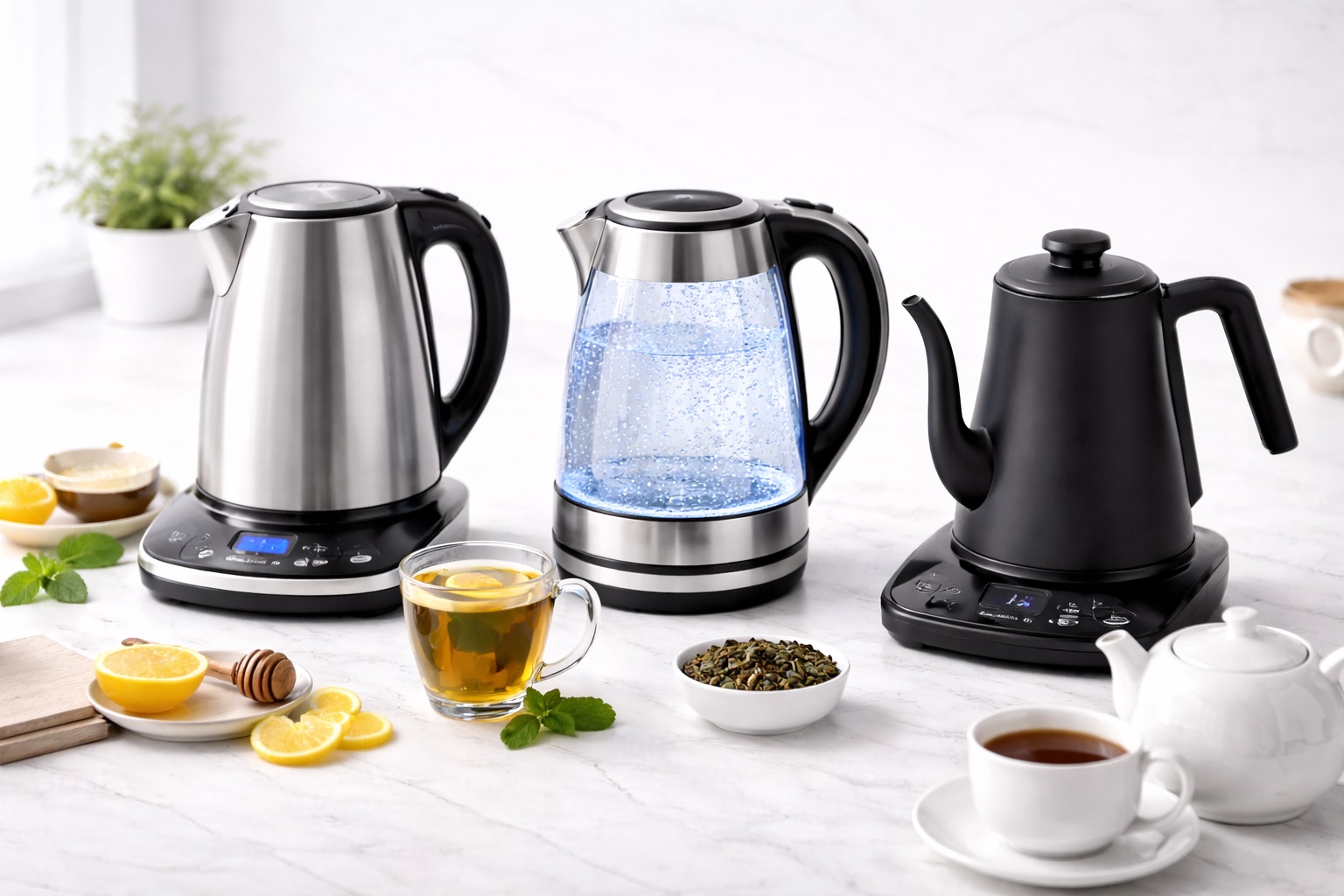
Best Electric Kettles for Fast, Precise Everyday Boiling
An electric kettle seems like a simple appliance until you actually start comparing models — some boil in barely over a minute, others let you dial in an exact temperature for green tea or a pour-over, and a few are built to survive being tossed in a suitcase. What counts as the "best" kettle changes completely depending on what you're brewing and how often you use it.
Someone brewing delicate green tea at 175°F every morning has very different needs from someone who just wants water boiling fast for instant coffee or oatmeal. The categories below cover the realistic range of electric kettles people search for, with an honest look at where each style earns its place on a counter and where it falls short.
Below you'll find a side-by-side comparison, detailed breakdowns of each kettle style, a buying guide covering the factors that actually affect daily use, and answers to the questions people ask most before buying.
It's also worth thinking about how a kettle fits into the rest of your kitchen routine rather than judging it purely on its own. A kettle that boils water in ninety seconds isn't much of an upgrade if it then sits next to a French press that takes four minutes to steep, and a beautifully designed gooseneck kettle adds little if your actual daily habit is instant coffee at your desk. The categories below are organized around real usage patterns rather than abstract feature comparisons, so it's worth reading with your own morning routine in mind.
It's worth remembering, too, that a kettle is one of the more frequently touched appliances in any kitchen, often used multiple times a day for years without a second thought. Small ergonomic details — how the lid opens, how the handle feels when full, how quickly it signals a finished boil — tend to matter more over time than any single standout feature does on day one.
Top Electric Kettle Styles, Reviewed
Each style below solves a different brewing problem. Read through the pros, cons, and best-fit notes to see which one matches your morning routine.
1. Variable Temperature Kettle – Best Overall
Variable temperature kettles let you select a specific boiling point, typically somewhere between 160°F and 212°F, rather than only offering a single full boil. This matters more than it might seem: green and white teas turn bitter when steeped in water that's too hot, while French press coffee and black tea generally want water at or near a full boil. A kettle that lets you choose the temperature and often hold it removes the guesswork of waiting for water to cool before pouring. Most models in this category also store a handful of preset temperatures tied to common beverage types, so you can select "green tea" or "coffee" directly rather than dialing in a specific number every time, which speeds up the process once you've settled into a routine.
- Pros:
- Precise temperature settings suit different teas and coffee brewing methods
- Keep-warm functions on many models hold water at temperature after boiling
- Versatile enough to replace a single-purpose kettle for most households
- Reduces the guesswork of manually cooling water before pouring
- Cons:
- Higher price point than a basic single-temperature kettle
- More buttons and settings than someone who only wants a full boil needs
- Digital displays and controls add another component that can eventually fail
Best For: Households that brew a variety of teas and coffee styles and want one kettle to handle all of them accurately.
Why We Recommend It: The ability to match water temperature to what you're actually brewing makes this the most broadly useful option for anyone who drinks more than one type of tea or coffee regularly.
2. Gooseneck Pour-Over Kettle – Best for Pour-Over Coffee
Gooseneck kettles feature a long, narrow, curved spout designed to give precise control over the flow rate and direction of poured water. This is essential for pour-over coffee methods, where an even, slow, controlled pour over the coffee grounds directly affects extraction and flavor. Many electric gooseneck kettles also include variable temperature settings, combining pour control with brewing precision in one unit. The narrow spout also makes it easier to pour in small, deliberate circles during the blooming stage of a pour-over, something a standard wide-spout kettle simply cannot replicate no matter how carefully you tilt it.
- Pros:
- Narrow spout allows precise, controlled pouring for pour-over methods
- Often paired with variable temperature settings for coffee-specific brewing
- Well suited to slow, deliberate pouring techniques that a standard spout can't replicate
- Attractive, minimalist designs that many buyers display rather than store away
- Cons:
- The narrow spout pours more slowly, which isn't ideal for simply filling a mug quickly
- Typically a smaller capacity than standard kettles
- Its specialized design offers little advantage if you don't make pour-over coffee
Best For: Pour-over coffee enthusiasts who need precise control over water flow and temperature during brewing.
Why We Recommend It: No other kettle style on this list offers the same level of pouring control, which makes it close to essential for anyone serious about manual pour-over brewing.
3. Fast-Boil Stainless Kettle – Best for Speed
Fast-boil kettles prioritize raw boiling speed above all else, typically using a higher-wattage heating element inside a stainless steel body. For anyone who just wants water boiling as quickly as possible for instant coffee, oatmeal, or a quick cup of tea, this is the most straightforward and least fussy option on the list. Stainless steel construction also tends to resist dents and scratches better than glass or plastic alternatives, which matters over years of daily handling in a busy kitchen where a kettle gets picked up, refilled, and set back down dozens of times a week. The tradeoff is that raw speed and durability come at the expense of any brewing finesse — if your habits shift toward more delicate teas down the line, this style offers no way to dial back the temperature, and you would likely end up buying a second kettle rather than adjusting how you use this one.
- Pros:
- Boils water noticeably faster than lower-wattage or glass alternatives
- Durable stainless steel body resists dents, scratches, and staining
- Simple single-button operation with no settings to configure
- Generally among the most affordable full-featured kettle styles
- Cons:
- Usually lacks variable temperature control for delicate teas
- Metal exterior can get hot to the touch during and after boiling
- Basic designs offer little in the way of styling or display appeal
Best For: Anyone who wants water boiling as quickly as possible without needing temperature precision or brewing-specific features.
Why We Recommend It: It solves the single most common kettle complaint — waiting too long for water to boil — better than any other style here, without adding complexity most people won't use.
4. Glass Electric Kettle – Best for Visual Boil Tracking
Glass electric kettles use a transparent body, usually paired with an internal LED light, so you can watch the water heat and boil in real time. Beyond the visual appeal, this transparency makes it easy to check water levels at a glance and confirm there's no mineral buildup or residue lingering inside, which is harder to spot in an opaque stainless or plastic kettle. For households sharing a kettle, being able to see at a glance whether it's already full or just been used also avoids the minor annoyance of lifting an opaque lid to check.
- Pros:
- Transparent body makes water level and cleanliness easy to check visually
- LED lighting during boiling adds a visual feature some buyers specifically want
- Glass doesn't retain or transfer odors from previous use the way some plastics can
- Attractive on a counter or table where the kettle stays visible
- Cons:
- Glass is more fragile than stainless steel if dropped or knocked over
- Mineral scale buildup is more visually obvious, even though it affects all kettle types
- Typically heavier than an equivalent plastic or thin-stainless model
Best For: Buyers who want to visually monitor water clarity and boiling progress, or who prefer the look of glass on their counter.
Why We Recommend It: The transparency offers a genuine practical benefit — spotting mineral buildup and confirming water levels — on top of its visual appeal, which sets it apart from purely stainless designs.
5. Budget Electric Kettle – Best Budget Pick
Budget electric kettles are typically simple plastic or basic stainless models offering a single boil setting and no extra features. They cover the fundamental job — heating water to a full boil reasonably quickly — without variable temperature control, gooseneck spouts, or premium materials. For anyone who just needs hot water occasionally, this is often all that's actually necessary, and it can serve as a low-risk way to figure out how often you'll actually use a kettle before spending more on a specialized model.
- Pros:
- Low upfront cost makes it accessible for any budget
- Simple one-button operation with nothing to configure
- Compact and lightweight, easy to store in a small kitchen
- Cons:
- Plastic construction may retain odors or affect taste over time
- No temperature control for delicate teas
- Heating elements in lower-cost models may wear out sooner with heavy daily use
Best For: Light or occasional kettle use, tight budgets, or as a backup kettle alongside a more specialized primary unit.
Why We Recommend It: It covers the core function — heating water reliably — at the lowest cost, making it a sensible starting point before upgrading if your brewing habits become more specific.
6. Travel Electric Kettle – Best for Small Spaces and Travel
Travel electric kettles are compact, lightweight units, often with a capacity of one to two cups, designed to be packed in a suitcase or tucked into a small dorm room or office. Many fold flat or nest their cord for easier packing, and they typically run on standard voltage compatible with most outlets, making them a practical choice for anyone without access to a full kitchen. Some also double as a small cooking vessel for instant noodles or oatmeal, which adds a bit of versatility beyond simply boiling water when counter and appliance space is limited. The people who benefit least from this category are those with full kitchen access at home, since the smaller capacity and stripped-down feature set make it a poor primary kettle once space and outlets are no longer a constraint.
- Pros:
- Compact size fits easily in luggage, a desk drawer, or a small room
- Lower capacity heats water faster for single servings
- Useful for hotel rooms, dorms, or small offices without kitchen access
- Generally inexpensive relative to full-size kettles
- Cons:
- Small capacity is impractical for households or multiple servings at once
- Fewer features than full-size kettles in the same price range
- Some compact designs sacrifice stability for portability
Best For: Frequent travelers, dorm residents, or anyone in a small space without room or need for a full-size kettle.
Why We Recommend It: It's the only style here built specifically around portability and small-space use, addressing a need that none of the full-size kettles are designed to meet.
Buying Guide: How to Choose the Best Electric Kettle
Before settling on a specific kettle, walk through the factors below to see which ones actually apply to how and what you brew.
1. Boiling speed
Higher-wattage kettles boil water noticeably faster, which matters most if you use the kettle multiple times a day or are frequently in a hurry during a morning routine. If speed is your top priority, look specifically at wattage rather than assuming all kettles perform similarly, since two kettles of the same size can differ meaningfully in how quickly they bring water to a boil.
2. Temperature control settings
If you regularly brew green tea, white tea, or delicate pour-over coffee, a kettle with adjustable temperature settings prevents over-extraction and bitterness that comes from water that's too hot. If you mainly drink black tea, coffee, or instant beverages that call for a full boil, this feature matters far less, and paying extra for it may not translate into any noticeable benefit in your daily cup.
3. Capacity
A larger capacity kettle suits households boiling water for multiple people or uses, such as filling a French press and a mug at the same time, while a smaller capacity heats faster and suits single servings. Match the capacity to how many cups you typically need in one sitting rather than defaulting to the largest option, since a large kettle boiled for a single cup wastes both time and energy.
4. Material: glass vs. stainless steel
Stainless steel generally offers better durability and heat retention, while glass allows visual monitoring of water clarity and boiling progress. Neither material is objectively better — the choice comes down to whether visual tracking or long-term durability matters more to you.
5. Automatic shutoff safety
An automatic shutoff feature turns the kettle off once water reaches boiling or a set temperature, preventing dry-boiling if the kettle is accidentally left on. This is a meaningful safety feature worth prioritizing in any household, particularly where the kettle might occasionally be forgotten mid-boil.
6. Spout design and pour control
A standard wide spout pours quickly but with less precision, while a narrow gooseneck spout offers controlled, slow pouring ideal for pour-over coffee. Consider how you actually pour water day to day — filling a mug quickly versus carefully controlling flow over coffee grounds — when comparing spout styles.
7. Price versus long-term value
A basic budget kettle that needs replacing every year or two due to a failing heating element can cost more over time than a single well-built kettle from an established brand. Weigh the upfront savings against how long you expect the kettle to perform reliably.
8. Ease of cleaning and descaling
Mineral scale builds up inside any kettle over time, regardless of material, and a wide opening makes it far easier to clean or descale than a narrow one. Removable filters, where included, also simplify keeping mineral deposits out of your cup.
9. Cord and base design
A cordless base that lets the kettle lift off for pouring is generally more convenient than a fixed cord, and a 360-degree rotating base allows the kettle to be placed and picked up from any angle without twisting the cord. This small design detail affects daily convenience more than it might seem.
10. Noise level during boiling
Kettles vary noticeably in how loud they are while boiling and how they signal completion, whether through a whistle, a beep, or simply going silent once the heating element shuts off. If you use the kettle early in the morning or in a shared space, a quieter model is worth prioritizing.
11. Counter space and storage
Larger kettles with wide bases and tall gooseneck spouts take up more vertical or horizontal counter space than compact stainless or budget models. Measure your available counter or storage space before buying, particularly for gooseneck or larger-capacity kettles.
12. Compatibility with your typical beverages
Someone who only drinks black coffee has fundamentally different needs from someone brewing loose-leaf green tea, pour-over coffee, and hot cocoa in the same week. Think through your actual weekly beverage habits rather than choosing based on features that sound impressive but won't get used.
13. Handle design and heat insulation
A well-insulated, ergonomically shaped handle stays cool to the touch even right after boiling and reduces strain when the kettle is full and heavy. Cheaper handles can transfer heat or feel awkward to grip one-handed, which becomes more noticeable with a larger-capacity kettle filled close to its maximum line.
14. Number of daily users and household size
A single person living alone has very different capacity and speed needs than a household of four people all wanting tea or coffee within the same short morning window. Larger households often benefit more from a higher-capacity, fast-boiling kettle than from a smaller specialty model, simply because volume and speed matter more than precision when several people are waiting.
15. Lid design and refill convenience
A lid that opens fully and stays propped open makes refilling under a faucet far easier than one that must be held open or removed entirely, a small detail that becomes noticeable every time you use the kettle rather than only during initial setup.
16. Warranty and manufacturer support
Warranty length is a reasonable signal of how confident a manufacturer is in the heating element and internal wiring holding up over daily use, and it's worth checking before buying a kettle you expect to use multiple times a day for years.
Frequently Asked Questions
1. What temperature should I use for different types of tea?
Green and white teas generally do best around 160–180°F, oolong around 185–205°F, and black tea or herbal infusions closer to a full boil at 212°F. A variable temperature kettle removes the need to estimate this manually, and many models let you save these as presets once you know your preferences.
2. Do I need a gooseneck kettle if I don't make pour-over coffee?
Not really. The narrow spout's main benefit is controlled, slow pouring for pour-over brewing, which offers little advantage if you're simply filling a mug or French press quickly. A standard wide-spout kettle will fill a cup faster in everyday use.
3. Is stainless steel or glass better for an electric kettle?
Stainless steel tends to be more durable and resistant to damage, while glass allows you to visually monitor water clarity and boiling. Neither is universally better — it depends on whether durability or visual tracking matters more to you, and both materials perform similarly in terms of actual heating speed.
4. How long does an electric kettle typically last?
This depends heavily on build quality, water hardness in your area, and how regularly it's descaled. Kettles from established manufacturers with proper maintenance typically last several years before the heating element wears out, while frequent use in a hard-water area without regular descaling can shorten that lifespan considerably.
5. Why does my kettle have white residue inside?
This is mineral scale from hard water and is common across all kettle types regardless of material. Regular descaling with a vinegar-water solution or a dedicated descaling product prevents buildup from affecting taste or kettle performance, and glass kettles simply make this buildup more visible sooner than opaque ones.
6. Can an electric kettle boil water faster than a stovetop kettle?
Generally, yes. Electric kettles use a dedicated heating element in direct contact with the water, which typically boils faster than heating a stovetop kettle over a burner, especially with higher-wattage electric models.
7. Is a variable temperature kettle worth the extra cost?
If you regularly brew more than one type of tea or use pour-over coffee methods, yes — the ability to hit a precise temperature meaningfully affects flavor. If you only ever boil water for a full boil, the extra cost buys features you won't use.
8. How do I know what capacity kettle to buy?
Think about how many cups you typically need in one sitting and whether you're serving just yourself or a household. A single-serving travel kettle is impractical for multiple people, while a large-capacity kettle takes longer to boil smaller amounts.
9. Are travel kettles safe to use with different voltage outlets?
Many travel kettles are designed for standard household voltage, but always check the specific voltage rating and any included adapters before using one internationally, since mismatched voltage can damage the unit or pose a safety risk.
10. What's the easiest kettle style to clean and descale?
Kettles with a wide-mouth opening and a removable limescale filter are generally the easiest to clean thoroughly, since you can reach inside directly rather than relying only on rinsing through a narrow spout.
11. Does kettle wattage really make a noticeable difference?
Yes. Higher-wattage kettles convert electricity to heat faster, which translates directly into shorter boiling times. If speed is a priority, compare wattage figures directly rather than assuming price alone indicates boiling speed, since a cheaper high-wattage model can outperform a pricier low-wattage one on raw speed.
12. Is it worth buying a kettle with a keep-warm function?
If you tend to boil water and then get distracted before pouring, a keep-warm setting prevents having to reboil cooled water. For anyone who pours immediately after boiling, this feature adds convenience but isn't essential, and it's worth checking how much it adds to the overall price before deciding it's a must-have.
13. Can I use an electric kettle to heat water for cooking, not just drinks?
Yes, many people use an electric kettle to quickly heat water for instant noodles, oatmeal, or speeding up a pot of pasta water on the stove. Just be mindful of capacity limits and avoid using it for anything beyond plain water unless the manufacturer specifically states otherwise.
14. Is it normal for a new electric kettle to smell or taste odd on first use?
Yes, a faint plastic or manufacturing smell during the first one or two boils is common and typically fades after discarding that water and running a fresh boil. Most manufacturers recommend an initial boil-and-discard cycle before first use.
15. Can I leave water sitting in the kettle between uses?
It's fine occasionally, but water left standing for several days can develop a stale taste and encourages mineral deposits to settle faster. Emptying the kettle after use and refilling with fresh water just before boiling gives the best-tasting results.
Final Verdict
- Best Overall: The variable temperature kettle, for its versatility across different teas and brewing methods.
- Best for Pour-Over Coffee: The gooseneck pour-over kettle, for its precise, controlled pouring.
- Best Budget Pick: The budget electric kettle, for anyone who just needs reliable boiling at low cost.
The right electric kettle comes down to matching the design to what you actually brew, not to which model has the most features listed on the box. Someone who drinks the same cup of black coffee every morning needs very little beyond fast, reliable boiling, while someone rotating through different teas and pour-over coffee benefits meaningfully from temperature control and a precise spout.
Think through your typical week of beverages before deciding, and don't feel obligated to pay for features tied to brewing methods you don't actually use. A kettle that matches your daily habits will get used every day; one bought for features you never touch usually ends up replaced by something simpler.
It's also worth accepting that a household's kettle needs can genuinely be covered by more than one unit. A fast-boil stainless kettle at the office paired with a variable temperature model at home is a common combination, since the two serve different moments in the day rather than competing for the same job. Buying based on where and how the kettle will actually be used tends to produce far better long-term satisfaction than chasing the single model with the longest feature list.