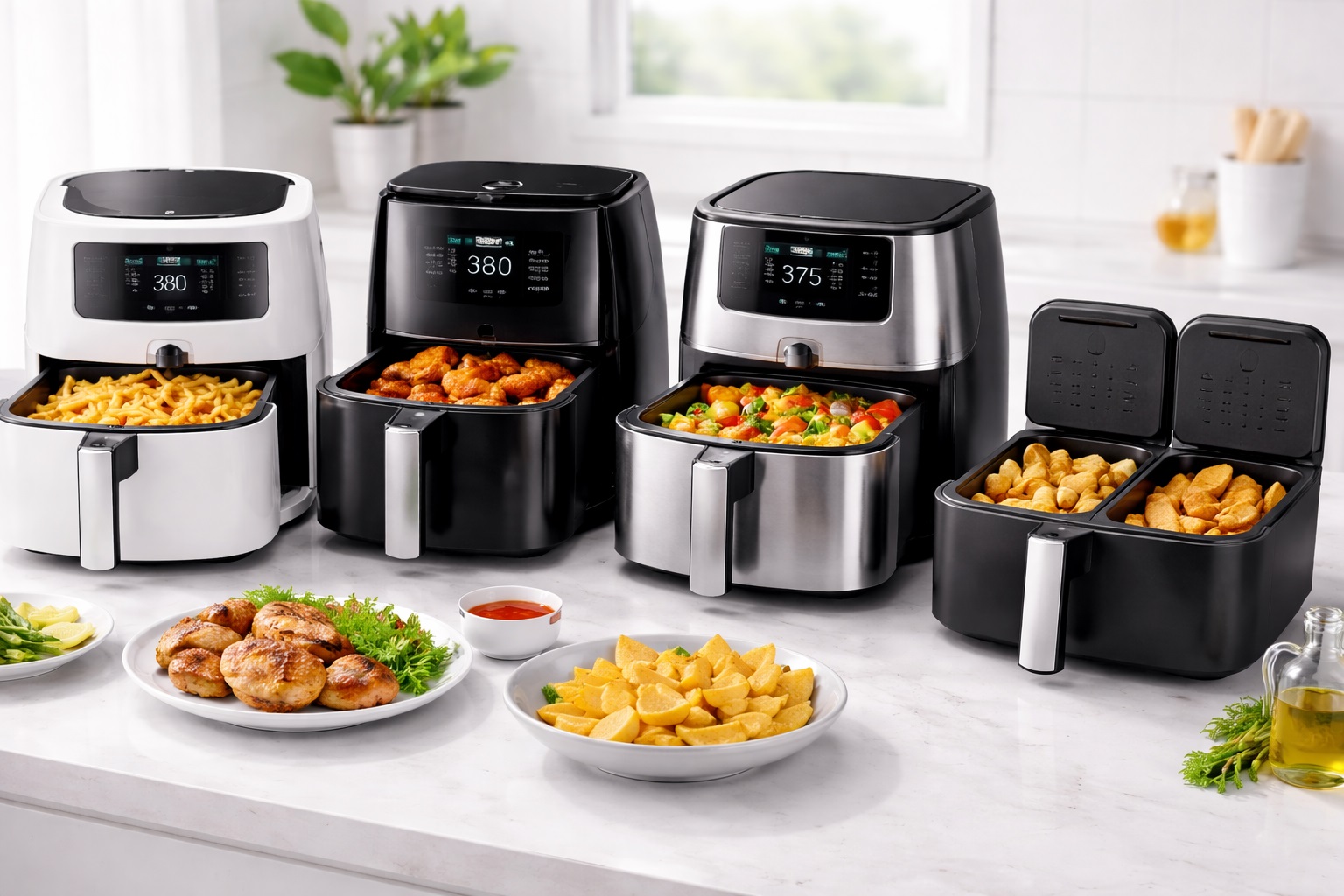
Best Air Fryers for Daily Use: Built for Consistent Performance Every Day
Most air fryers are marketed to casual cooks who might use the appliance three or four times a week. But if you're cooking daily — whether that's weekday breakfasts, lunch, dinner, or all three — the standards you need to apply when choosing a model are fundamentally different from a casual buyer's checklist.
Daily use reveals things that weekend cooking never exposes: how quickly the non-stick coating degrades under repeated high-heat cycles, whether the heating element maintains consistent temperature after months of use, how reliably the basket locks and unlocks after thousands of operations, and whether the fan motor maintains its airflow rate or gradually weakens.
This guide is specifically designed for daily users. Every factor we evaluate — from motor design to basket coating to control panel responsiveness — is assessed through the lens of sustainable, repeated daily operation rather than peak first-impression performance.
Quick Comparison: Top Picks at a Glance
| Product Type | Best For | Our Take |
|---|---|---|
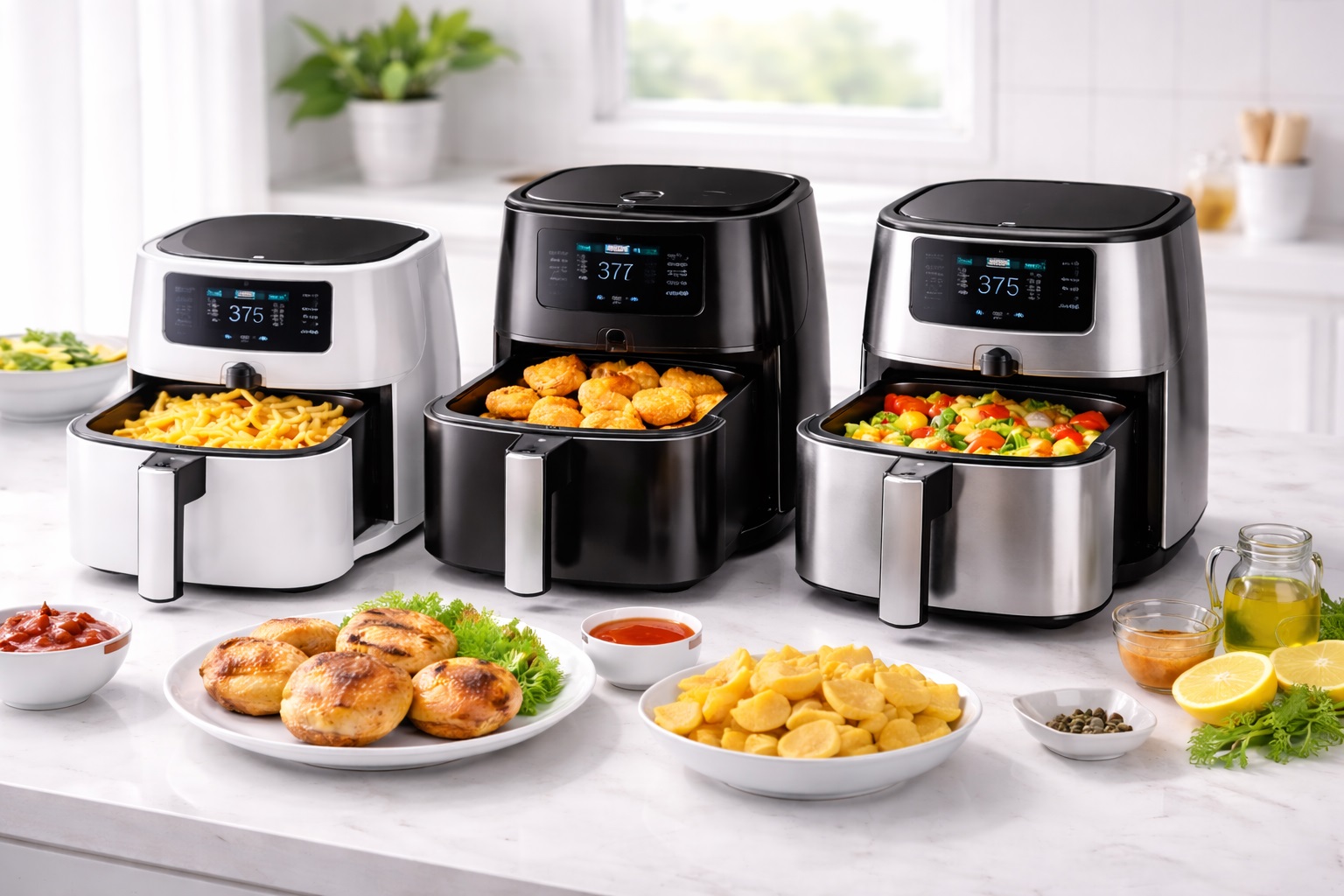
| Stainless Steel Interior Digital Air Fryer | Best for Long-Term Daily Use | Longest-lasting, safest daily cook surface. |
| Large Capacity Smart Air Fryer with Auto-Adjust | Best for Varied Daily Menus | Best intelligent assistance for diverse daily cooking menus. |
| Dual-Zone Air Fryer for Daily Efficiency | Best for Complete Daily Meal Prep | Best daily meal efficiency for structured home cooking. |
Top air fryer for daily use Picks — In-Depth Reviews
Each product type below has been evaluated based on real performance factors relevant to home cooks who use their air fryer at least once every day and need an appliance built for sustained, reliable performance. We've included detailed performance notes, value assessments, and clear guidance on who each option suits best.
1. Stainless Steel Interior Digital Air Fryer — Best for Long-Term Daily Use
The most significant durability differentiator in daily-use air fryers is the interior cooking surface material. Stainless steel interiors — in contrast to non-stick coated alternatives — do not degrade with repeated high-heat cooking cycles. The surface remains consistent after 500, 1,000, or 2,000 uses without the coating wear that affects the non-stick performance of alternatives.
Most digital air fryers in the 5–6 quart range with stainless steel interiors operate at temperatures between 180°F and 400°F and maintain heating element consistency throughout their operating lifespan. The digital interface allows precise temperature settings to the degree rather than approximate dial positions, which matters for consistent daily cooking results on recipes that require specific temperatures.
- Pros:
- Stainless steel interior maintains performance through thousands of cycles
- Digital precision for consistent daily cooking temperatures
- No coating degradation over time — safe at all cooking temperatures
- Typically includes multiple preset programs for daily convenience
- Cons:
- Higher initial cost than non-stick alternatives
- Some foods stick more readily without non-stick coating — requires light oil spray
Best For: Daily users who cook at least once per day and want an appliance that maintains its performance and safety standards over years of heavy use.
Performance Verdict: Stainless steel interiors perform consistently from the first use to the thousandth. There is no coating degradation phase, no developing hot spots from worn surfaces, and no concern about coating particles in food — the performance profile is stable and predictable for daily cooks.
Who Should Buy This: The committed daily cook who evaluates appliances over their full lifespan rather than initial performance alone.
Value Assessment: The higher upfront cost of a stainless interior model is recovered through extended useful lifespan. A coated model replaced every 2–3 years due to coating wear costs more over a 5-year period than a stainless alternative that maintains its integrity throughout. This calculation becomes even more favorable for a stainless model once you factor in the accumulated cost of replacement baskets over several years, plus the inconvenience of being without a working daily appliance during a mid-ownership replacement.
2. Large Capacity Smart Air Fryer with Auto-Adjust — Best for Varied Daily Menus
Daily cooking means preparing a wide variety of foods across different temperatures and textures. A smart air fryer with an auto-adjust function uses sensors to monitor internal temperature and automatically adjusts cooking time based on actual conditions rather than fixed program timings. This accounts for different food densities, starting temperatures (fresh vs frozen), and batch sizes.
Models with 6–7 quart capacity and built-in auto-adjustment typically include 12–15 preset programs covering most daily meal categories. The smart functionality uses thermal sensors and the companion app to notify you when food is ready and to suggest adjustments based on your historical cooking patterns. For daily users who cook multiple meal types, this adaptive intelligence reduces cooking failures significantly.
- Pros:
- Auto-adjustment adapts to different foods and portion sizes
- Large capacity handles full family daily meal prep in single batches
- Smart notifications remove guesswork from cooking timing
- Learns your preferences over time through usage data
- Cons:
- Smart features require initial app setup and Wi-Fi connection
- Larger footprint than standard models — requires more counter space
Best For: Households cooking varied daily meals for multiple people who want intelligent assistance that adapts to their specific daily routine.
Performance Verdict: The auto-adjustment feature is most valuable for daily users precisely because the variety of foods prepared changes daily. Fixed preset timings work for one standard serving of frozen fries but can't account for a denser batch, a fresh preparation, or a smaller portion. The adaptive approach handles this daily variation automatically.
Who Should Buy This: Busy families who cook different meals every day and want reduced monitoring without sacrificing cooking consistency.
Value Assessment: Smart air fryers cost more initially but reduce food waste from overcooked or undercooked meals — a real economic consideration for daily users who cook frequently. The time saved from reduced monitoring across 365 uses per year accumulates to significant practical value.
3. Dual-Zone Air Fryer for Daily Efficiency — Best for Complete Daily Meal Prep
For daily cooks preparing structured meals — protein plus side, or multiple components simultaneously — a dual-zone air fryer eliminates the sequential cooking that adds 15–20 minutes to every dinner preparation. Two fully independent baskets with separate temperature controls allow chicken breast at 375°F and roasted broccoli at 400°F to cook simultaneously and finish at exactly the same time.
The time efficiency of a dual-zone fryer compounds dramatically for daily users. A 15-minute daily time saving from simultaneous cooking adds up to over 90 hours per year — the equivalent of nearly four full days of recovered time. Beyond time, simultaneous cooking means complete hot meals rather than one component cooling while the other finishes, which directly improves daily meal quality.
- Pros:
- Simultaneous dual-temperature cooking for complete daily meals
- Sync function finishes both baskets together automatically
- Total 8-quart capacity handles family-size daily preparations
- Independent baskets allow completely different foods simultaneously
- Cons:
- Larger counter footprint than single-basket alternatives
- Higher power draw — verify circuit capacity with daily high-wattage use
Best For: Daily cooks who prepare structured meals with multiple components and want complete hot meals finished simultaneously every evening.
Performance Verdict: The dual-zone fryer's value is specifically proportional to cooking frequency. For a weekly user, the time saving is modest. For a daily user cooking 365 meals per year, the accumulated time efficiency is genuinely transformative — both in recovered time and in consistently better meal quality.
Who Should Buy This: Daily meal preparers for households of 3–5 people who cook complete structured meals every day.
Value Assessment: At its current price tier, the dual-zone fryer delivers better daily-use value than two single-basket fryers running sequentially. The electricity usage is comparable, the counter footprint is smaller, and the workflow integration is significantly better.
Complete Buying Guide: How to Choose the Best Best Air Fryers for Daily Use: Built for Consistent Performance Every Day
Knowing which product to buy is one challenge. Understanding why one product is better suited to your specific situation is the more useful skill. The following guide explains every important buying factor in plain, practical terms.
1. Motor and Fan Quality
The motor and fan are the components most likely to degrade with daily use. Higher-quality motors maintain consistent airflow rates over extended operational cycles. When evaluating daily-use air fryers, look specifically for models with brushless motors, which have longer operational lifespans than brush motors and maintain consistent fan speeds throughout their lifespan.
Pro Tip: Read user reviews from 12–18 months after purchase rather than first-impression reviews. Long-term reviews reveal motor consistency in ways initial reviews cannot.
2. Non-Stick Coating vs Stainless Interior
Non-stick coatings in air fryers use PTFE (Teflon) or ceramic formulations. PFOA-free PTFE is safe for cooking but degrades with daily high-heat use over 12–24 months. Ceramic coatings are more environmentally friendly but chip more readily under impact. Stainless steel interiors don't degrade but require light oil application to prevent sticking.
Pro Tip: If you choose a non-stick model for daily use, do not use metal utensils and hand-wash the basket rather than running it through the dishwasher — this significantly extends coating lifespan.
3. Basket Capacity vs Actual Cooking Volume
Manufacturers measure basket capacity at maximum physical volume. Practical cooking capacity for proper air circulation is 60–70% of stated capacity. A "6-quart" basket realistically holds 3.5–4 quarts of food for proper cooking results. Daily users should select capacity based on their typical batch size at 65% fill rather than stated maximum.
Pro Tip: Test your typical meal portions in the air fryer during the return period to verify adequate practical capacity before committing to the purchase.
4. Temperature Accuracy and Consistency
Daily cooking requires consistent temperature delivery. A fryer that runs 15°F hot or cold produces inconsistent results across different days even using the same recipe. Look for models that have been tested for temperature accuracy in user reviews or independent testing. A ±5°F tolerance is acceptable; ±15°F or more creates unpredictable daily cooking results.
Pro Tip: Use an oven thermometer placed inside the air fryer during the first week of use to verify your specific unit's temperature accuracy before building your daily cooking timings.
5. Cleaning Frequency and Ease
Daily use means daily cleaning — or at minimum cleaning every 2 uses. A basket that requires 10 minutes of soaking and scrubbing per cleaning session adds 60+ hours of annual maintenance time. Dishwasher-safe baskets and interior surfaces that wipe clean with a damp cloth are the most practical for daily use.
Pro Tip: The single most undervalued feature in a daily-use air fryer is a basket that cleans in under 2 minutes. This should be a primary selection criterion, not an afterthought.
6. Wattage and Preheat Time
Higher wattage (1700–1800W) reduces preheat time from 5 minutes to 2–3 minutes. For daily use, this small time saving accumulates meaningfully. Over 365 uses per year, a 2-minute preheat saving adds up to 12 hours of recovered time compared to a slower model.
Pro Tip: Many daily-use air fryer recipes can skip preheating entirely — particularly for shorter cooking times. Test your specific recipes with and without preheating during the first two weeks of use.
7. Control Panel Durability
Digital control panels are touched multiple times per daily session — hundreds of times per month. Capacitive touch controls are more responsive but can develop dead zones over time. Physical button controls are less sleek but more mechanically durable for high-frequency daily interaction.
Pro Tip: Dial controls are the most mechanically durable for daily use. Digital capacitive panels offer the best user experience when they work but are more likely to develop responsiveness issues over multi-year daily use.
8. Accessory Compatibility for Daily Variety
Daily use of a single appliance becomes tedious without variety. Accessory compatibility — baking pans, skewer racks, silicone liners, grill inserts — expands what you can prepare in the same appliance. A fryer with a wide accessory ecosystem supports a more varied daily cooking repertoire.
Pro Tip: Purchase 2–3 accessories you'll actually use daily alongside your fryer. The accessory purchase decision deserves as much thought as the fryer selection.
9. Noise Level for Daily Kitchen Integration
An air fryer used daily in a family kitchen during dinner preparation is present during household activity. Models that operate at 55–60 dB maintain normal conversation. Models at 70+ dB become intrusive. If the kitchen is open to living spaces, noise level becomes a meaningful daily quality of life factor.
Pro Tip: Air fryer operating noise is consistently reported in user reviews. Search specifically for noise comments from users in open-plan kitchen layouts similar to your home.
10. Warranty Coverage for Daily Use Intensity
A daily-use air fryer operates at 5–7x the frequency of a casual-use model. Standard 1-year warranties are designed for average usage frequency — a daily user may exceed the effective design cycle within the warranty period. Look for 2-year warranties or manufacturers who specifically support heavy-use scenarios.
Pro Tip: Register your appliance immediately after purchase and document usage frequency. This documentation supports warranty claims if the appliance fails within the warranty period from heavy but normal daily use.
11. Replacement Parts Availability
For a daily-use appliance you might keep five or more years, being able to buy a replacement basket, crisper plate, or door seal individually — rather than replacing the entire unit when one component wears out — meaningfully extends usable lifespan. Check whether the manufacturer sells individual replacement parts before buying, particularly for the basket and any silicone gaskets exposed to daily heat cycling.
Pro Tip: Search the manufacturer's site for a parts page before purchasing, not after a part fails. Some models offer readily available replacement baskets; others require buying an entirely new unit.
12. Grease and Drip Management for Frequent Cooking
Cooking fatty proteins daily produces more accumulated grease than occasional use, and a poorly designed drip tray or crumb catcher makes daily cleanup more tedious than it needs to be. Removable, dishwasher-safe drip trays positioned to catch grease before it reaches the heating element reduce both cleaning time and the smoke that built-up residue can cause during subsequent cooking sessions.
Pro Tip: Check whether the drip tray or crumb catcher is dishwasher-safe and sold separately as a replacement part, since this component tends to see more daily wear than the basket itself in households that cook a lot of protein.
Understanding air fryer for daily use: What the Specifications Actually Mean
Product listings for air fryer for daily use use technical language that can be difficult to evaluate without context. This section translates the most important specifications into plain terms so you can compare products accurately.
What "Rapid Air Technology" Actually Means
Most air fryers advertise "rapid air technology" or "turbo cyclonic air" as differentiating features. In practice, all air fryers use the same fundamental principle: a heating element at the top of the unit with a fan that circulates hot air around the food at high velocity. The differentiator is not the concept but the implementation — heating element power, fan design, air circulation pattern, and basket perforation design.
Premium implementations use more powerful fans with better blade geometry that maintain higher airflow rates. This produces more even browning across the food surface and reduces cooking time at the same temperature. The difference between a well-implemented and poorly implemented rapid air system is meaningful — typically 5–10% faster cooking times and noticeably more even browning.
Understanding Wattage vs Cooking Performance
An air fryer's wattage rating describes its maximum power draw, not its sustained operating power. A 1800W fryer doesn't continuously draw 1800W — it cycles power to maintain the set temperature. Higher wattage primarily affects how quickly the unit reaches set temperature and how fast it recovers after opening the basket.
For daily use, higher wattage (1700W+) is meaningfully beneficial in two ways: faster preheat (saving time across hundreds of daily uses) and better temperature recovery after opening the basket to add food. Lower-wattage models (1200–1400W) require more time and may produce inconsistent results when the basket is opened during cooking.
The Non-Stick Coating Science
Modern air fryer coatings are PTFE (polytetrafluoroethylene) or ceramic polymer formulations. PTFE-based coatings applied to aluminum baskets are safe to cook on at temperatures below 500°F — well within air fryer operating ranges. The concern with PTFE coatings is not toxicity during normal use but degradation of the coating's non-stick properties over time from repeated high-heat cycles, metal utensil abrasion, and dishwasher exposure.
Ceramic coatings (typically sol-gel ceramic formulations) are applied to aluminum substrates. They are PTFE-free and generally considered more environmentally friendly. However, ceramic coatings are less durable than PTFE under impact and more prone to chipping. For daily use at high frequency, a high-quality PTFE coating maintained carefully outlasts ceramic coatings on average. Stainless steel remains the most durable material choice across all use intensities.
Air Circulation Patterns and Even Cooking
The perforation pattern in the air fryer basket significantly affects how evenly food cooks. Larger, more numerous perforations allow better airflow around food but provide less contact surface for the basket itself. Premium basket designs optimize perforation density for maximum airflow while maintaining structural integrity.
Food placement within the basket also affects results: food placed in a single flat layer consistently cooks more evenly than food stacked or piled. For daily use with varied foods, understanding that thicker, denser items need flipping halfway through cooking — while thinner items like chips or thin fish may not — produces consistently better results than applying the same technique to every food type.
Frequently Asked Questions About air fryer for daily use
These are the questions buyers most commonly ask before purchasing a air fryer for daily use. Each answer reflects real-world usage rather than manufacturer marketing language.
1. How often do I need to clean a daily-use air fryer?
Ideally after every use — particularly if you cook proteins or foods with significant fat content. The basket should be cleaned to prevent oil and food residue buildup, which degrades non-stick performance and creates smoke during subsequent cooking sessions. A dishwasher-safe basket makes daily cleaning practical. At minimum, clean every second use even for drier foods like fries or vegetables.
2. Will daily air fryer use increase my electricity bill significantly?
A 1600W air fryer running for 20 minutes daily uses approximately 0.53 kWh per day. At the US average electricity cost of $0.12–0.16/kWh, this adds $0.06–0.08 per day, or approximately $22–29 per year. This is significantly less than the energy cost of a conventional oven for the same cooking sessions. Daily air fryer use is economically favorable compared to oven use for most common foods.
3. How long does an air fryer last with daily use?
With daily use, budget-tier air fryers typically last 1–3 years before non-stick coating degradation or motor issues require replacement. Mid-range quality models last 3–5 years. Premium models with stainless steel interiors and quality motors can last 7–10 years. The daily use intensity makes material quality selection substantially more important than for occasional users.
4. Can I leave an air fryer on the counter permanently?
Yes — a daily-use air fryer is most practical when stored on the counter rather than in a cupboard. Counter storage eliminates the friction of retrieval and encourages daily use. Ensure adequate ventilation clearance (5 inches on all sides) and position away from cabinetry above the exhaust vent. Counter storage also means your fryer is always at hand for spontaneous use throughout the day.
5. What foods can I cook in an air fryer every day?
Practically everything a conventional oven handles, plus many stovetop preparations: proteins (chicken, fish, beef, tofu), vegetables (every variety), eggs (frittata, hard-boiled), baked goods (muffins, cakes, brownies), sandwiches, reheating leftovers, frozen foods, and snacks. Daily variety across these categories prevents palate fatigue from a single-technique cooking approach.
6. Is it safe to run an air fryer multiple times per day?
Yes. Air fryers are designed for multiple daily sessions. Allow the unit to cool slightly (10–15 minutes) between sessions if you're cooking consecutive batches — not for safety reasons but to prevent the basket and food from entering an already-hot environment, which can cause uneven initial cooking results. Multiple daily sessions accelerate wear on lower-quality components — another reason to prioritize build quality for heavy daily use.
7. Should I preheat my air fryer every day?
Preheating (typically 3–5 minutes at cooking temperature) improves results for foods that benefit from immediate high heat contact — chicken, french fries, thick proteins. For foods that cook more gently or over longer periods (baked goods, reheating), preheating is less critical. Many daily air fryer users develop a habit of preheating automatically, which produces consistent results without needing to evaluate each recipe.
8. How do I prevent my air fryer basket from getting scratched with daily use?
Use silicone, wooden, or heat-resistant plastic utensils exclusively — never metal. Avoid scrubbing with abrasive pads. Hand-wash in warm soapy water rather than using the dishwasher if you want to maximize coating lifespan. Silicone basket liners prevent direct food contact with the coating and dramatically extend non-stick surface lifespan for daily users.
9. Does air fryer food quality degrade with repeated daily cooking?
The appliance's cooking quality doesn't inherently degrade from daily use — the physics of hot air circulation remains constant. What changes is the condition of the non-stick coating, which affects how food releases from the basket, and potential motor wear that reduces fan speed and airflow consistency over time. Selecting quality components from the start prevents these degradation effects during the product's useful lifespan.
10. What maintenance does a daily-use air fryer require?
Daily: clean basket and crisper plate after each use. Weekly: wipe interior walls and heating element cover with a damp cloth to remove grease buildup. Monthly: inspect the heating element for buildup, clean the drawer runners, and verify fan is operating normally. These simple maintenance steps extend the appliance's effective lifespan significantly for daily users.
11. Do I need to buy replacement parts for a daily-use air fryer eventually?
Most likely, yes, especially the basket or crisper plate after a few years of heavy daily cycling. Checking replacement part availability before purchase avoids being forced into buying an entirely new unit once a single worn component is the only real problem.
12. Does grease buildup affect daily air fryer performance?
Yes, over time. Accumulated grease around the heating element and drip tray can create smoke and uneven cooking results. Daily or near-daily cleaning of the drip tray and crisper plate prevents this buildup from affecting cooking consistency, especially in households that cook fatty proteins regularly.
Final Verdict — Which air fryer for daily use Should You Buy?
For daily users, the air fryer purchase decision is fundamentally different from a casual buyer's choice. The appliance will see 300–500 cooking sessions per year — a demand profile that exposes quality differences invisible in first-use reviews. The most important factors for daily use are interior material durability (stainless over non-stick for multi-year ownership), motor quality that maintains consistent airflow, cleaning convenience that makes daily maintenance sustainable, and capacity that handles your typical meal volume without requiring multiple batches.
- Best for Long-Term Daily Use: Stainless Steel Interior Digital Air Fryer — Longest-lasting, safest daily cook surface.
- Best for Varied Daily Menus: Large Capacity Smart Air Fryer with Auto-Adjust — Best intelligent assistance for diverse daily cooking menus.
- Best for Complete Daily Meal Prep: Dual-Zone Air Fryer for Daily Efficiency — Best daily meal efficiency for structured home cooking.
Choose based on your specific daily cooking pattern: if you cook varied meals for a family daily, the dual-zone model delivers the best efficiency. If you want maximum longevity, the stainless interior model is the right long-term investment. If you cook varied dishes and want intelligent assistance, the smart model provides the best adaptive experience. All three are genuinely strong choices — the right one depends on your daily cooking reality.