Best Budget Air Fryers: Crispy Results Under $60
Spending less money on an air fryer doesn't have to mean settling for a gadget that struggles with something as basic as frozen fries or a simple batch of chicken tenders. The budget category has earned a mixed reputation over the years, largely because plenty of genuinely disposable models flood the market at rock-bottom prices, cutting corners on the internal heating element, the fan motor's bearings, or the basket's non-stick coating in ways that only become obvious within weeks of ordinary use rather than lasting for years as a durable model would. That reputation makes it easy to assume every inexpensive air fryer belongs in the same pile, but there's a meaningful difference between a model that's cheap because it skips features nobody needed anyway, and one that's cheap because it compromises on the internal components that actually determine whether food comes out properly crisp.
This guide is built around telling those two categories apart before money changes hands. The honest, unglamorous starting point is that a budget air fryer will genuinely never fully match a premium model on fine temperature precision, preset variety, or long-term durability across many years of use — but for someone who simply wants reliable everyday cooking without paying extra for capability they'll rarely, if ever, actually use, that gap matters considerably less in practice than most marketing copy would have anyone believe.
The three options below were chosen specifically because they deliver genuinely crispy, consistent results without the corner-cutting that leads to early failure or disappointing food — a basket coating that begins visibly flaking within a few short months of regular use, a heating element that runs noticeably unevenly across the basket producing patchy or inconsistent results, or a fan motor that visibly struggles under normal, everyday daily use rather than heavy or unusual demands placed on it by a busy household. None of the three specific picks below are exotic or hard to find — they're widely available, commonly reviewed models that simply clear a slightly higher bar for the specific things that determine whether a cheap air fryer becomes a reliable everyday tool or an early, frustrating disappointment.
It's worth setting a realistic expectation from the outset: a budget air fryer, chosen carefully, can deliver results genuinely close to a premium model for the foods most people actually cook — fries, chicken, vegetables, reheated leftovers. Where budget models genuinely fall behind is in build quality consistency between individual units, preset sophistication and depth, and how gracefully they handle years of accumulated daily use rather than simply the first few months of enthusiastic ownership right after purchase. Understanding that specific distinction, learned once here rather than the hard way, is what separates a genuinely smart budget purchase from a false economy that quietly ends up costing more through an early, frustrating replacement.
It's also worth acknowledging why the budget air fryer category specifically has such a wide spread of quality compared to other kitchen appliances. Because the core mechanism — a heating element and a fan circulating hot air around a basket — is relatively simple and cheap to manufacture at scale, it's genuinely possible to build a decent one at a low price point. That same simplicity also makes it easy for less scrupulous manufacturers to cut corners invisibly, using a slightly weaker fan motor, a thinner basket coating, or cheaper internal wiring that all look completely identical in a glossy product photo but end up performing very differently after several months of genuinely regular, everyday use in an actual kitchen. The resulting gap between the genuinely best and the genuinely worst options at a similar price point ends up considerably wider here than it typically is in more complex, higher-engineered appliance categories, which is precisely why the specific signals covered throughout this guide — warranty, recent reviews, honest specifications — matter noticeably more than usual when narrowing down a final choice.
There's also a reasonable case for treating a first air fryer purchase as somewhat experimental regardless of budget. Not everyone ends up cooking with a new air fryer nearly as often as they initially, enthusiastically expected when it first arrived, and and a modest investment made upfront genuinely limits the financial downside if the appliance ends up used only occasionally, or ends up in a cupboard most weeks, rather than becoming the daily kitchen staple it was initially expected to be. For someone still genuinely discovering whether air frying actually fits their real, day-to-day cooking habits, a well-chosen budget model is very often the more sensible, lower-risk starting point compared to an expensive one purchased purely on optimistic assumption before any real experience with the method.
Top Picks Reviewed
1. Budget 3–4 Quart Digital Air Fryer – Best Budget Overall
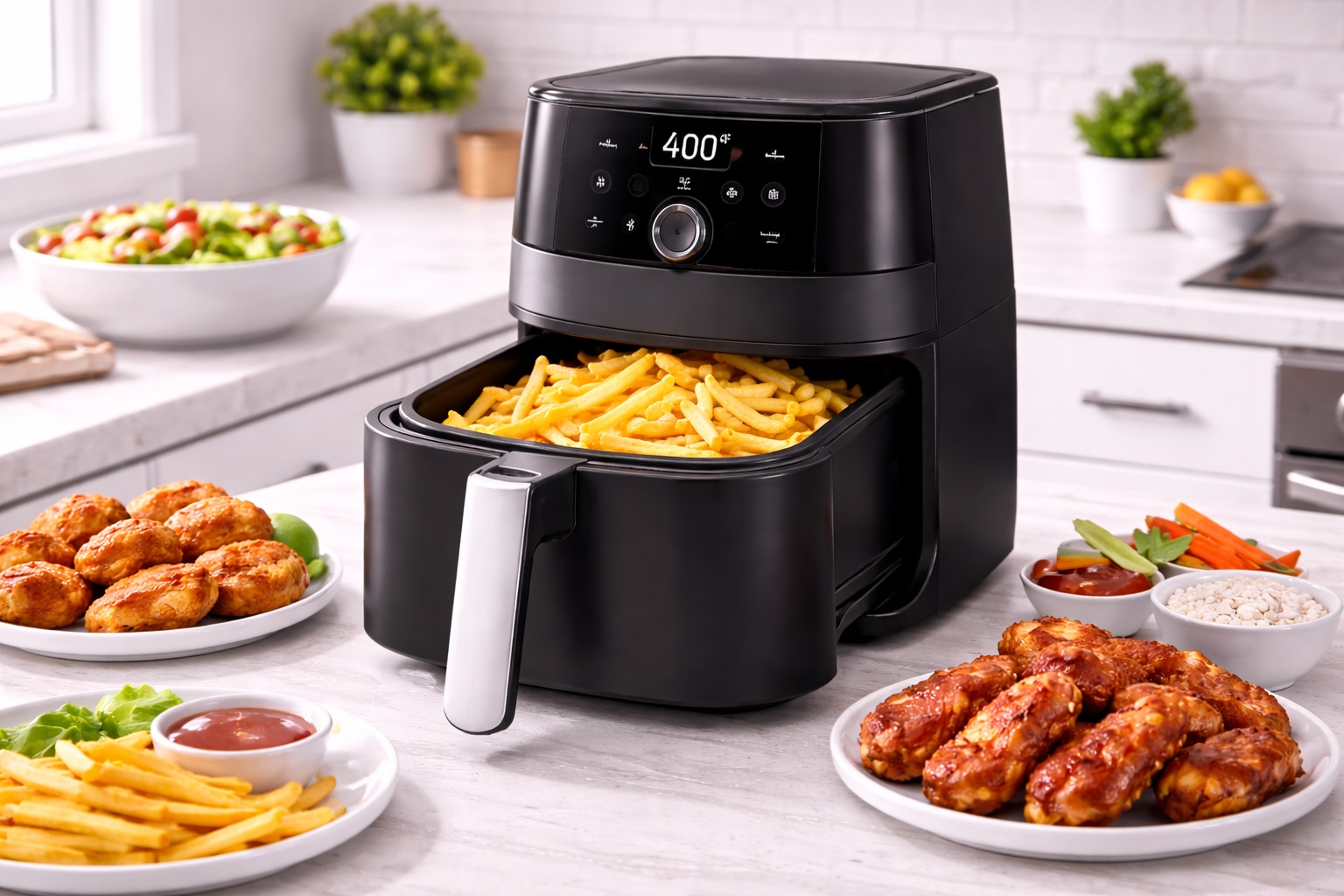
A 3 to 4 quart digital air fryer in the affordable range delivers genuine cooking performance for most everyday air frying tasks. At this genuinely affordable price, buyers still get precise digital temperature control across a reasonable working range, a basic countdown timer, and a non-stick, dishwasher-safe basket that simplifies daily cleanup considerably. For fries, chicken, vegetables, and reheated leftovers specifically, the actual cooking performance closely matches mid-range alternatives for the large majority of everyday users who aren't pushing the appliance toward specialized, unusual, or particularly demanding cooking tasks on a regular basis.
- Pros:
- Digital temperature precision available even at a genuinely budget-friendly overall price
- Dishwasher-safe basket that keeps daily cleaning straightforward and quick
- Adequate 3 to 4 quart capacity comfortably serving two to three people at once
- Fast preheat, typically three to five minutes before cooking begins
- Cons:
- Build quality is noticeably below premium, higher-priced alternatives on the market
- Limited preset programs available on most models sold at this specific price
- Fewer accessory options available compared to more premium, higher-priced alternatives
Best For: Budget-conscious home cooks who want reliable daily air frying capability for a two to three person household without overspending on unused features that would rarely, if ever, get touched in normal weekly cooking. This describes a genuinely large share of first-time air fryer buyers who are still testing the entire appliance category out for themselves before committing further household budget to anything more elaborate, premium, or feature-heavy down the road once real habits and preferences are better understood.
Why We Recommend It: The budget digital air fryer delivers on the core promise — genuinely crispy results with less oil — at a price accessible to nearly any household. The cooking performance gap versus premium models is minimal for the everyday foods most people actually cook night after night — fries, chicken, vegetables, reheated leftovers — which is exactly the population this specific type of model is genuinely built to serve well without unnecessary compromise.
2. Manual Dial Budget Air Fryer – Best Simple Mechanical Reliability
A manual dial air fryer uses physical timer and temperature dials rather than digital controls, which makes it mechanically simpler and often more reliable over the long term since there's no circuit board, digital display, or software layer of any kind to eventually fail, glitch, or become unresponsive after enough years of use. For anyone who genuinely wants basic, no-frills air frying without any presets to memorize or a digital interface to navigate through each time, manual dial models deliver dependable, consistent results at the lowest price points available anywhere in the entire category, without sacrificing the single core outcome that actually matters most at dinnertime — food that comes out genuinely crisp, evenly cooked, and ready to eat quickly without any real hassle along the way, night after night.
- Pros:
- Lowest price point available anywhere for genuine, functional air frying capability
- Simple mechanical controls with no underlying software of any kind that could malfunction
- Reliable long-term mechanical operation with fewer overall failure points
- No preset complexity whatsoever to learn or navigate before cooking your very first meal
- Cons:
- No precise digital temperature setting available on the dial itself
- Timer accuracy varies fairly noticeably between different individual manual models
- Fewer built-in automatic safety cutoffs compared to more modern digital designs
Best For: Budget buyers who want the simplest possible air fryer for everyday frying without any digital interface or unnecessary complexity standing between them and getting dinner on the table quickly. This also suits anyone who has personally grown frustrated with digital appliances failing prematurely due to a faulty circuit board or unresponsive touch display in the past, and who would rather trust a simple mechanical dial they can actually understand and, if needed, repair.
Why We Recommend It: The manual dial design prioritizes mechanical reliability over an extensive feature set. For users who find digital interfaces unnecessary or even slightly annoying, the lower price and genuinely simpler operation are real advantages rather than compromises to tolerate, and simply one less thing that can eventually go wrong over years of continued daily kitchen use in a busy household.
3. Budget Air Fryer with Multiple Presets – Best Budget for Beginner Cooks
Some budget air fryers surprisingly include seven to ten preset cooking programs despite their genuinely low price point, handling fries, chicken, fish, steak, and vegetables automatically at pre-calibrated settings, and meaningfully reducing the trial-and-error guesswork for brand-new air fryer users still learning the basics. Temperature consistency on these models is genuinely adequate for preset-based cooking, even if it doesn't quite match the finer precision of premium alternatives priced considerably higher.
- Pros:
- Multiple built-in presets significantly reduce everyday cooking guesswork for new users
- Well suited to brand-new air fryer users working within a tight household budget
- One-button cooking selection for the most common everyday household foods
- Digital display with clear preset icons for genuinely intuitive, quick daily use
- Cons:
- Preset temperatures may not always match individual personal taste preferences exactly
- Temperature accuracy is less precise than premium alternatives
- Preset library is noticeably more limited than higher-end multi-function models offer
Best For: New air fryer buyers on a budget who want preset-based cooking guidance without paying premium prices for that same guided-cooking convenience. This includes younger cooks moving into their very first apartment, students living away from home for the first time, and anyone who simply prefers a bit of gentle hand-holding while a new appliance and an unfamiliar cooking method are still being learned in the kitchen.
Why We Recommend It: Presets deliver the most value specifically for new users who don't yet know the correct air frying temperature and time for each food type. A budget model with genuinely functional presets provides that same guidance at an entry-level price, removing a real, tangible barrier to getting started with air frying confidently.
Buying Guide: How to Choose the Best Budget Air Fryer
These specific factors focus deliberately on finding genuine reliability within a limited budget, rather than simply chasing the absolute lowest price available anywhere on the market.
| Signal to Check | What It Suggests |
|---|---|
| Clearly stated wattage and temperature range | A manufacturer confident enough to disclose real specifications |
| Recent reviews mentioning months of use | Genuine reliability rather than only first-impression satisfaction |
| Stated warranty of at least 90 days | Manufacturer confidence in the product's actual build quality |
1. Performance Versus Price Reality
Budget air fryers priced modestly perform adequately for most everyday foods. The real differences from premium alternatives show up in temperature consistency, build quality, and long-term lifespan — not dramatically in day-to-day cooking results for fries, chicken, and vegetables that make up the bulk of typical air fryer use for the average household night after night.
2. Non-Stick Coating Safety
Verify carefully that the non-stick coating is genuinely PFOA-free, which is standard practice on legitimate brands but genuinely worth confirming on unfamiliar manufacturers selling through third-party marketplaces. Avoid deliberately overheating an empty non-stick basket with nothing inside it, since this damages the coating considerably faster than normal cooking with food inside it, shortening the basket's usable life unnecessarily and creating flaking or peeling that no amount of careful cleaning can reverse once it has already begun.
3. Return Policy Importance
Budget appliances purchased from less familiar or unrecognized brands carry a meaningfully higher risk of inconsistent quality control between individual units coming off the same production line. Purchasing from a retailer with a clear thirty-day return policy provides a genuine safety net if the specific unit that arrives is damaged or simply underperforms reasonable expectations for the modest price paid, without a lengthy dispute process standing in the way of a straightforward refund.
4. Realistic Lifespan Expectations
Budget air fryers typically last two to four years with regular use before motor or electronic failure becomes a real possibility. Premium models generally last somewhat longer. Factor this honestly into the value assessment — a modest unit replaced every three years can genuinely cost more over a full decade than a pricier one lasting eight or more years of genuinely continuous, reliable use across a decade of daily cooking. It's worth doing this rough math honestly before assuming the cheapest option is automatically the most economical one over time.
5. Cleaning Simplicity
Most budget baskets clean reasonably well with warm soapy water and a small amount of manual scrubbing effort, but dishwasher-safe baskets significantly reduce the ongoing cleaning burden day to day. Check specifically whether the basket is genuinely dishwasher safe before purchasing, since this single feature makes daily maintenance meaningfully more convenient over months and years of regular, repeated use without becoming a genuine chore each evening after dinner.
6. Capacity Honesty
Budget models sometimes advertise capacity at the maximum physical volume of the basket rather than the practical cooking volume that maintains proper air circulation around the food. A basket clearly labeled at four quarts may in practice realistically fit closer to only two and a half quarts of food that actually cooks properly and evenly with adequate air circulation. Reading reviews that discuss actual, real-world batch sizes cuts through this kind of common marketing inflation far more reliably than trusting the listed capacity number alone at face value.
7. Power Consumption Reality
Most budget air fryers on the market draw somewhere between 1,200 and 1,500 watts of power, which remains broadly comparable to premium alternatives in the same capacity range. The power draw difference between budget and premium models is typically minimal, since both heat to the same cooking temperatures using broadly similar heating elements and fan designs regardless of the price tag attached to the finished product.
8. Noise Level Variation
Budget models can be noticeably noisier than premium alternatives due to lower-quality fan bearings and less refined internal design work. In a quiet home, this difference becomes noticeable during operation, particularly for evening cooking sessions after dark. Reviews that specifically mention noise level are genuinely helpful for anyone especially sensitive to appliance sound in a shared living space, an apartment with thin walls, or a home where someone works or sleeps nearby during typical cooking hours.
9. Warranty at Budget Prices
Even genuinely budget-priced models should still include some form of warranty period, typically somewhere between ninety days and a full year of coverage. No warranty whatsoever from an unknown brand is a real red flag worth taking seriously — avoid purchasing electrical appliances from suppliers offering zero manufacturer backing whatsoever on a product that could reasonably fail at some point during normal daily use in the kitchen.
10. Cooking Guide Resources
Budget models from established brands have extensive recipe communities built up online over years of accumulated user experience. Off-brand budget models typically have far fewer user-generated resources available for troubleshooting problems or finding cooking inspiration for new meals. This recipe community size is a genuinely practical value factor for anyone entirely new to air frying as a cooking method, since a well-documented model shortens the learning curve considerably during those first few uneven weeks.
11. Checking for Consistent Recent Reviews
Since budget manufacturing quality can genuinely shift quite meaningfully between different production batches over time, reviews from the past few months are considerably more predictive of what you'll actually receive than older reviews from a different manufacturing run entirely. This particular distinction matters considerably more within the budget category specifically than almost anywhere else across small kitchen appliances generally, since production costs there are trimmed tightest and most likely to vary between runs.
12. Matching Features to Actual Use
Before paying any extra money for presets, a larger capacity than genuinely needed, or additional functions like dehydrate settings that sound appealing, honestly assess whether you'll actually use them regularly in daily cooking. A simpler, genuinely cheaper model that matches your real cooking habits delivers meaningfully better value than a feature-rich one where half the capability goes completely untouched and unused for years on end, quietly wasted from the day of purchase.
Frequently Asked Questions
1. Are cheap air fryers worth buying?
Yes, for everyday cooking needs. Budget air fryers in the affordable range cook fries, chicken, and vegetables with results genuinely comparable to premium alternatives. The trade-offs — build quality and long-term lifespan specifically — matter considerably more over a five-year period than in daily cooking performance for occasional or moderate use in a fairly typical household kitchen.
2. What is the minimum reasonable budget for a decent air fryer?
A modest budget from a recognizable brand provides reliable everyday air frying capability. Below that range from unknown brands, quality control becomes noticeably inconsistent between individual units. That reasonable minimum represents the practical floor for a genuinely usable, dependable air fryer that won't disappoint within a few short weeks of ordinary use.
3. Do budget air fryers cook as well as expensive ones?
For most everyday foods — frozen fries, chicken wings, vegetables — budget air fryers perform comparably to premium alternatives in terms of actual food quality. The real, meaningful differences are in temperature precision, build quality, and overall lifespan rather than the actual taste or texture of the finished food coming out of the basket on any given night at home.
4. Is the most expensive budget air fryer always the best?
Not always. Price reflects features and build quality, but many mid-range options genuinely outperform more expensive alternatives for everyday needs. Match the specific product to your actual use case rather than automatically defaulting to the highest price point available within the broadly defined budget category on any given retailer's shelf.
5. How long should a quality budget air fryer last?
A well-built budget air fryer from a reputable manufacturer typically lasts two to five years with reasonable care and regular cleaning. Warranty length remains a genuinely useful indicator of the manufacturer's own internal confidence in the product's durability under everyday, repeated household use over time.
6. Can I return a budget air fryer if it doesn't suit me?
Most retailers offer fifteen to thirty day return windows, even on genuinely budget purchases. Keep the original packaging carefully during your evaluation period and actually test the unit with real, everyday meals rather than a single demonstration batch before that window closes on you for good.
7. What should I prioritize when buying a budget air fryer?
Start with your primary use case, confirm the specifications are clearly and honestly stated in the listing, and read recent reviews specifically for reliability signals rather than relying purely on the overall aggregate star rating alone, which can hide a mix of genuinely good and genuinely bad experiences behind one misleading number.
8. Does brand name matter for a budget air fryer?
Established brands generally offer better warranty support and more consistent quality control, which matters meaningfully more within the budget category specifically, where manufacturing consistency varies the most between otherwise nearly identical-looking competing options on a comparison page.
9. Can a budget air fryer handle daily use reliably?
Yes, provided it's chosen carefully with attention to warranty, recent reviews, and honestly stated specifications. The budget models that fail early are typically ones skipping all three of those signals entirely — warranty, recent reviews, and honest specifications — rather than budget models as a whole category being inherently or fundamentally unreliable by nature.
10. Are manual dial budget air fryers less reliable than digital ones?
Generally the opposite tends to be true — manual dial models have fewer components that can fail, since there's no circuit board or digital display involved at all. What's genuinely sacrificed is fine-grained precision and a bit of convenience, not the underlying mechanical reliability of the appliance over years of continued use in a normal kitchen.
11. Is it worth paying slightly more within the budget category?
Often yes, particularly for a model with a clearly stated warranty and consistent recent reviews, over a genuinely cheaper alternative offering neither of those signals. That comparatively small extra price difference frequently buys real, genuinely measurable reliability improvement over the long run of daily use, which is often worth more than it initially appears at checkout.
12. How do I know if a budget air fryer listing is trustworthy?
Look specifically for clearly stated specifications printed on the listing itself, a genuinely real warranty period spelled out in plain terms, and recent reviews mentioning months of continued daily use rather than only unboxing impressions written during the first excited week after delivery arrives at the door.
Final Verdict
- Best Budget Overall: Budget 3–4 Quart Digital Air Fryer — genuinely reliable everyday cooking value at a low price.
- Best Simple Mechanical Reliability: Manual Dial Budget Air Fryer — the simplest, most dependable choice at the lowest price point.
- Best Budget for Beginner Cooks: Budget Air Fryer with Multiple Presets — cooking guidance for first-time buyers without a premium price tag.
A limited budget doesn't have to mean gambling on reliability or settling for disappointing food. The three picks above represent genuinely dependable choices within a modest price range, each suited to a slightly different everyday need. Checking the warranty, reading recent reviews, and matching features to actual use resolves the large majority of budget air fryer disappointments before they happen.
None of these checks require deep technical knowledge or a significant time investment — they're simply a matter of reading a little more carefully than a purely price-driven comparison encourages. That small amount of extra diligence, spent once at the point of purchase, is what separates a genuinely good budget decision from a false economy that quietly costs more over time through early failure, disappointing results, and an eventual, frustrating replacement purchase that could have been avoided entirely with a bit more care the first time around.