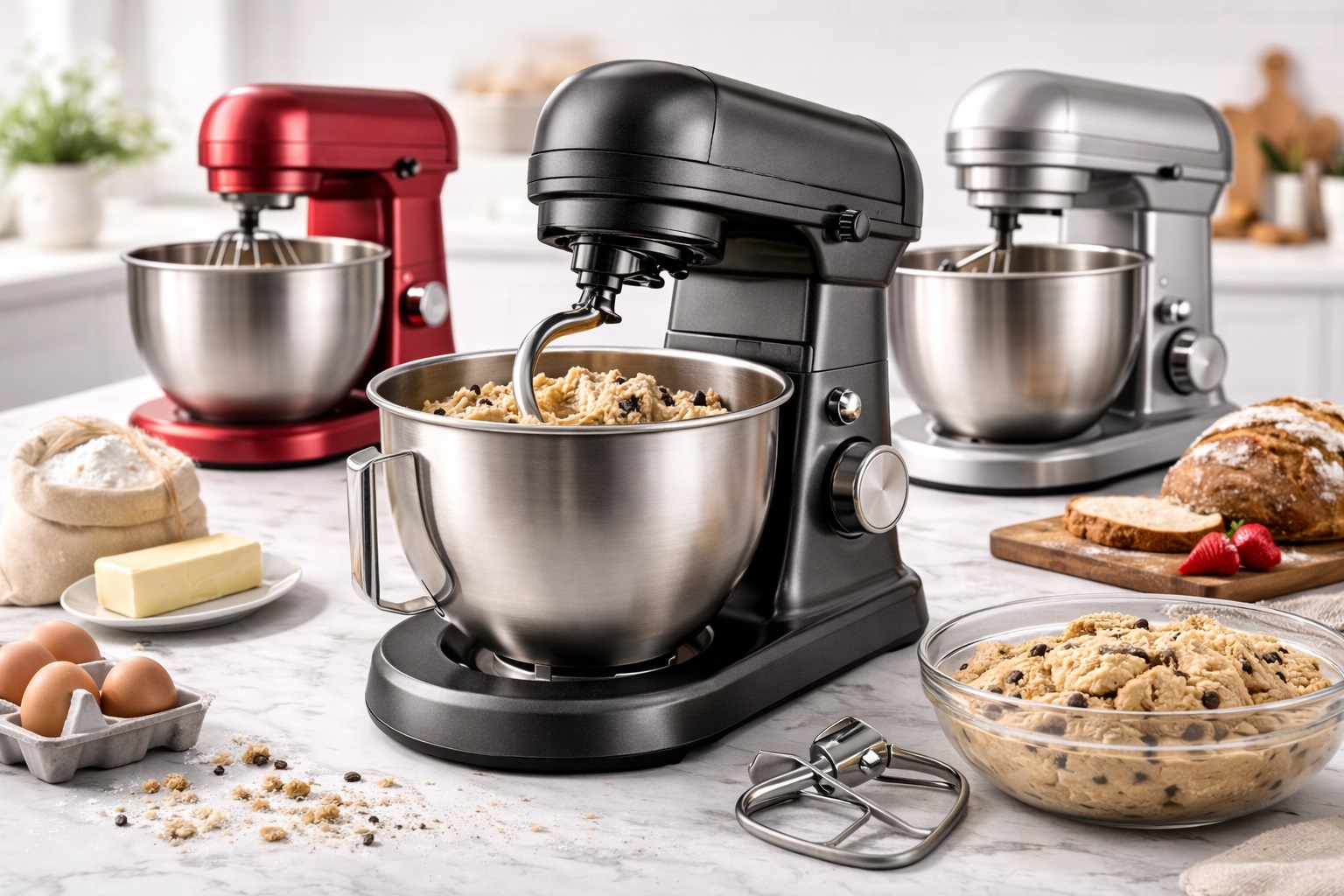
Best Durable Stand Mixer in 2026
A stand mixer is a long-term kitchen investment, which means durability often matters more than any single feature on the spec sheet. Buyers shopping for a durable stand mixer in 2026 are usually less interested in flashy extras and more focused on whether the motor, gears, and housing can hold up to years of regular mixing, kneading, and whipping without breaking down.
This guide compares the top stand mixer models built with long-term use in mind, drawing on publicly known specifications such as motor construction, housing material, and brand track record to frame how each one is likely to hold up over time. Rather than relying on marketing claims, the comparison focuses on what each design is generally known for and where its long-term durability tends to fall short of expectations.
Below are profiles of eight widely available stand mixers, a practical buying guide covering the features that most influence long-term reliability, and answers to the questions buyers ask most often before committing to a machine meant to last for years.
Durability in a stand mixer usually comes down to a combination of factors working together rather than any single spec: a strong motor paired with a flimsy housing can still wear out early, while a modest motor in a well-built body may outlast flashier competitors. Because of that, the profiles below weigh construction quality, brand reputation, and known failure points alongside raw power figures, since all of these combine to determine how a mixer performs after years of regular use rather than just on day one. Prices referenced throughout are approximate and reflect commonly cited retail figures rather than guaranteed current pricing.
Top 8 Durable Stand Mixers (Detailed Reviews)
1. Aucma Stand Mixer – Best For Everyday Reliability on a Budget
The Aucma Stand Mixer uses a tilt-head design at a considerably lower price point than most premium rivals, around $130, and has built a reputation among everyday households for holding up well under normal, non-commercial use. It is not marketed as a heavy-duty machine, but for typical weekly baking it has proven to be a dependable option that does not demand a large upfront investment. Its straightforward mechanical layout also means there are fewer complex parts that can wear out compared to mixers with more elaborate mechanisms. Many owners report years of trouble-free use as long as the machine is not routinely pushed beyond its intended capacity.
- Pros:
- Tilt-head design that is simple and easy to access
- Affordable price point relative to premium long-term picks
- Solid reputation for everyday household reliability
- Cons:
- Not built for heavy commercial-style daily use
- Build materials are more budget-oriented than metal-bodied rivals
- Shorter brand track record than legacy manufacturers
Best For: Households that bake regularly but not excessively, and want dependable performance without paying premium prices.
Why We Recommend It: It offers a strong balance of everyday reliability and affordability, making it a sensible long-term pick for typical home baking routines.
2. Hamilton Beach Electric – Best For Simple, Low-Maintenance Basics
The Hamilton Beach Electric is the most affordable model in this lineup at around $60, built around a planetary mixing action with a mechanically simple design that keeps moving parts to a minimum. Fewer complex components can mean fewer things to eventually wear out, which is part of why this model has remained a popular budget pick for households that want years of basic service without extensive upkeep. It is best suited to routine mixing tasks rather than heavy or continuous daily use. Because there is relatively little to go wrong mechanically, troubleshooting and basic repairs also tend to be simpler than with more feature-heavy machines.
- Pros:
- Simple mechanical design with fewer failure points
- Very low entry price for long-term budget planning
- Easy to operate and maintain for most households
- Cons:
- Not designed for heavy, continuous daily use
- More plastic components than metal-bodied competitors
- Fewer speed settings than premium alternatives
Best For: Budget-conscious buyers who want a low-maintenance mixer for routine, moderate baking over the years.
Why We Recommend It: Its mechanical simplicity reduces the number of parts that can fail, which supports a long service life for typical household use.
3. Breville Scraper Mixer Pro – Best For Premium Long-Term Engineering
The Breville Scraper Mixer Pro is built around a scraper beater mechanism and reflects a more specialized, premium engineering approach than most rivals in this lineup, at a price of around $450. Its higher-end construction is aimed at bakers who mix frequently enough that the durability of every component, from the scraper mechanism to the motor housing, becomes a meaningful long-term consideration rather than an afterthought. As the most expensive model in this comparison, it is positioned for buyers prioritizing engineering quality over price. The additional investment is generally aimed at households that expect to put the mixer through years of near-daily service rather than occasional weekend baking.
- Pros:
- Premium build quality throughout the machine
- Scraper beater mechanism engineered for frequent, repeated use
- Reputable brand known for durable kitchen appliance design
- Cons:
- Highest price point in this comparison
- More complex mechanism than simpler budget mixers
- May be more machine than occasional bakers require
Best For: Frequent bakers who want premium engineering built to withstand years of heavy, repeated use.
Why We Recommend It: Its premium construction and specialized mechanism are built for buyers who mix often enough to make long-term durability the top priority.
4. KitchenAid Artisan Series – Best For Proven, Long-Term Track Record
The KitchenAid Artisan Series is powered by a 325-watt motor and 10 speeds, and the line has built one of the longest and most well-documented durability track records in the stand mixer category. At around $430, it commands a premium price, but its reputation for remaining functional for a decade or more with basic care is a major part of its ongoing popularity. Replacement parts and service support are also widely available, which extends its practical usable lifespan. It is common to see these mixers still in active daily use well over a decade after purchase, a track record that is difficult for newer competitors to match.
- Pros:
- 325-watt motor and 10 speeds for consistent performance
- Long, well-documented track record of durability
- Widely available replacement parts and service support
- Cons:
- Higher price point than several rivals in this lineup
- Limited color options at some retailers
- Bowl capacity can feel modest for very large batches
Best For: Buyers who want a mixer with the longest documented history of holding up to years of regular use.
Why We Recommend It: Its proven longevity and widespread parts availability make it one of the safer long-term bets in this comparison.
5. Bosch Universal Plus – Best For Heavy-Duty, Large-Batch Durability
The Bosch Universal Plus uses a distinctive bottom-drive design that is often associated with handling heavy dough loads without straining the motor over time, at a price point of around $400. This engineering approach is built to withstand the mechanical stress of large, dense batches better than some lighter-duty top-drive mixers, making it a common recommendation for households that mix in bulk on a regular basis. Its robust construction reflects a design priority on long-term heavy-duty performance rather than compact convenience. Households that bake bread multiple times a week in particular tend to cite this durability as the main reason they chose it over lighter-duty alternatives.
- Pros:
- Unique bottom-drive design built for heavy, repeated loads
- Strong reputation for large-batch durability over time
- Reputable brand with a long history in dough-heavy kitchens
- Cons:
- Higher price point than mid-range competitors
- Bulkier footprint than tilt-head mixers
- Learning curve for the bottom-drive mechanism
Best For: Households that regularly mix large or heavy batches and need a mixer engineered to handle that strain long-term.
Why We Recommend It: Its bottom-drive engineering is specifically built to withstand the kind of heavy, repeated loads that can shorten the lifespan of lighter-duty mixers.
6. Kenwood kMix – Best For Rugged All-Metal Construction
The Kenwood kMix is known for its all-metal construction, which generally holds up to daily wear better than housings that rely more heavily on plastic components. Priced around $300, it sits in the middle of this lineup and is often chosen by buyers who specifically prioritize a sturdy, long-lasting build over the widest attachment ecosystem or the lowest price. The solid metal body also tends to resist the flexing and rattling that can develop in lighter-bodied mixers after years of use. That extra rigidity can also mean smoother, more consistent mixing results as the machine ages compared to housings that gradually loosen over time.
- Pros:
- All-metal construction for long-term structural durability
- Competitive mid-range price for a metal-bodied mixer
- Resists flexing and rattling better than lighter builds
- Cons:
- Higher price point than basic plastic-bodied mixers
- Limited color options in some markets
- Heavier overall weight due to the metal housing
Best For: Buyers who specifically want a rugged, metal-bodied mixer built to resist years of wear and tear.
Why We Recommend It: Its all-metal body is built to handle years of regular mixing without the flex or wear that plastic-bodied mixers can show over time.
7. Sunbeam Mixmaster – Best For Legacy Reliability
The Sunbeam Mixmaster is built around a 350-watt motor and represents one of the more historically established mixer lines in this category, with decades of production history behind its core design. At around $100, it undercuts most premium options while still carrying a long-running brand name associated with dependable, no-frills performance. Its straightforward mechanical design, largely unchanged in its fundamentals over the years, is part of why it has remained a trusted choice for buyers focused on long-term reliability rather than the latest features. Owners who inherited or bought secondhand Sunbeam mixers often report the machines still running reliably decades after original purchase.
- Pros:
- 350-watt motor suitable for regular, everyday mixing
- Long-running legacy brand name with a proven history
- Accessible price point among long-lasting options
- Cons:
- Fewer speed settings than some premium rivals
- Styling is more utilitarian than newer competitors
- Attachment ecosystem narrower than hub-focused premium brands
Best For: Buyers who want a dependable, no-frills mixer backed by a long-running brand history of reliable performance.
Why We Recommend It: Its long production history and straightforward mechanical design give it a proven reputation for lasting years with basic care.
8. Cuisinart SM-50 – Best For Durable Motor Performance
Cuisinart's SM-50 is built around a 500-watt motor, the strongest in this comparison, paired with a sturdy gear-driven transmission that is commonly associated with handling dense, demanding mixtures without excessive strain. At approximately $350, it sits in the middle of the price range and is often chosen by bakers who want assurance that the motor has enough reserve power to avoid being pushed to its limit during regular use, since motors that run at their maximum capacity consistently tend to wear out faster than those with headroom to spare. That reserve capacity is especially useful for households that occasionally mix larger batches than the mixer's advertised sweet spot.
- Pros:
- 500-watt motor power, the highest in this lineup
- Gear-driven transmission built for demanding mixtures
- Mid-range pricing relative to premium rivals
- Cons:
- Higher price than entry-level models
- Limited color options compared to some competitors
- Bowl and accessories add to the overall footprint
Best For: Bakers who want extra motor headroom to reduce long-term strain during regular, demanding mixing tasks.
Why We Recommend It: Its high motor output gives it reserve capacity that can translate into less strain, and potentially a longer service life, during everyday heavy use.
Buying Guide: How to Choose the Most Durable Stand Mixer
Durability is rarely a single spec you can read off a box; it usually comes from the combination of motor design, housing material, and brand track record working together over years of use. The considerations below focus on the factors most closely tied to how long a stand mixer is likely to remain fully functional.
1. Motor Build and Longevity
A motor with reserve power beyond what typical tasks demand tends to run cooler and under less strain, which generally supports a longer working life. Checking a model's wattage relative to the tasks you plan to use it for most often is a practical way to estimate how much headroom the motor actually has. A motor that is only just adequate for today's needs may struggle if your baking habits grow more ambitious later.
2. All-Metal vs Mixed-Material Housing
All-metal housings generally resist the flexing, cracking, and wear that mixed-material or largely plastic housings can show after years of regular use. Metal bodies add weight and often cost more, but that trade-off is frequently worthwhile for buyers who plan to use the mixer for many years. Inspecting the housing seams and joints for tight, solid construction is a useful way to compare build quality between models before buying.
3. Gear-Driven vs Belt-Driven Transmission
Gear-driven mixers transmit power directly and tend to handle heavy, dense mixtures without slipping, though they can be noisier than belt-driven alternatives. Belt-driven designs are often quieter and can absorb sudden strain more gently, but the belt itself is a wearable part that may eventually need replacement. Neither approach is inherently superior for durability; the deciding factor is usually how well the specific model is engineered and maintained.
4. Brand Track Record and Reputation
Manufacturers with decades of production history and a strong reputation for durability typically have a longer public track record to evaluate than newer entrants to the category. Looking at how long a brand's product lines have remained in service, and how available replacement parts are, can be a useful proxy for long-term reliability. Long-standing brands also tend to have a larger base of user feedback and repair experience to draw on when evaluating durability claims.
5. Warranty Length and Coverage
A longer warranty period is often a signal that the manufacturer has confidence in the product's build quality, though warranty terms vary widely in what they actually cover. Reviewing the specifics of what is included, such as motor coverage versus accessories, helps set realistic expectations before a purchase. Some manufacturers also offer extended warranty options at additional cost, which can be worth considering for a mixer expected to see heavy use.
6. Replacement Parts Availability
Even a well-built stand mixer will eventually need a replacement part, such as a beater, seal, or drive component, and how easily those parts can be sourced affects the mixer's practical lifespan. Established brands with a long production history generally have more robust parts availability than newer or less common models. Before buying, it can help to search for whether independent repair shops or manufacturer service centers commonly service the model you are considering.
7. Bowl Material and Attachment Durability
Stainless steel bowls generally hold up better over time than coated or plastic alternatives, resisting dents, staining, and wear from repeated use. The same logic applies to included attachments, where metal construction tends to outlast plastic equivalents under regular use. Checking whether a bowl and its accessories are dishwasher safe can also indicate how the manufacturer expects the components to hold up to repeated washing.
8. Overload and Overheat Protection
Some mixers include built-in protections that reduce power or shut off the motor if it is pushed beyond safe limits, which can prevent damage from accidental overloading. This kind of protection is particularly valuable for households that occasionally push a mixer to its maximum capacity with large or dense batches. Even a basic thermal cutoff can prevent the kind of motor damage that would otherwise require a full replacement.
9. Noise and Vibration as Wear Indicators
A sudden increase in noise, vibration, or rattling from a mixer that previously ran smoothly can be an early sign of developing wear in gears, bearings, or mounts. Paying attention to how a mixer sounds over time can help catch small issues before they become larger, more expensive repairs. Comparing the sound of routine operation against how it sounded when new is a simple, low-cost way to monitor a mixer's condition.
10. Maintenance Habits That Extend Lifespan
Simple habits, such as cleaning the mixer after each use, avoiding submerging the motor housing in water, and following the manufacturer's lubrication guidance where applicable, can meaningfully extend how long a mixer remains reliable. Neglecting basic maintenance is one of the most common reasons a durable mixer fails earlier than expected. Wiping down the base and hub after use also prevents built-up residue from interfering with moving parts over time.
11. Capacity Matching to Avoid Motor Strain
Regularly pushing a mixer's bowl and motor beyond its rated capacity puts unnecessary strain on internal components and can shorten its usable life considerably. Matching the mixer's rated capacity to your typical batch size, rather than occasionally overloading a smaller machine, supports long-term reliability. If your batches regularly approach or exceed the rated maximum, it is usually worth sizing up to the next bowl capacity.
12. Price vs Expected Lifespan
A higher purchase price is often, though not always, associated with sturdier construction and a longer expected service life, which can make it a reasonable long-term value even at a premium. Buyers should weigh the upfront cost against how many years of service they realistically expect from the machine. Dividing the purchase price by expected years of use can offer a clearer sense of long-term value than comparing sticker prices alone.
13. Storage and Handling Between Uses
Storing a stand mixer somewhere it will not be repeatedly bumped, dropped, or exposed to excess moisture helps preserve both its housing and internal components over time. Careful handling during storage and transport is a simple, often overlooked factor in a mixer's long-term durability. Using a fitted cover when the mixer is left out on the counter can also help keep dust and kitchen grease away from moving parts.
Frequently Asked Questions
How long should a durable stand mixer last?
With proper care, many well-built stand mixers remain functional for a decade or more, and some metal-bodied models from established brands have documented service lives well beyond that with basic maintenance. Occasional, light use typically extends that lifespan further compared to heavy daily commercial-style demands.
Does all-metal construction always mean more durable?
All-metal housings generally hold up better structurally than mixed-material builds, but overall durability also depends on the motor, gears, and how the mixer is used and maintained over time. A metal-bodied mixer with a weak motor can still fail sooner than a well-engineered plastic-bodied alternative.
What causes stand mixer motors to fail early?
Frequent overloading beyond the rated capacity, running the motor for extended periods without rest, and inadequate ventilation around the housing are among the most common causes of early motor failure. Allowing a motor to cool between long mixing sessions can also help prevent premature wear.
Are gear-driven mixers more durable than belt-driven ones?
Gear-driven designs generally handle heavy, dense mixtures with less slipping, while belt-driven designs distribute strain more gently but rely on a belt that may eventually wear out and need replacement. Both approaches can last many years when matched to appropriate workloads.
Does a longer warranty indicate better durability?
A longer warranty can reflect manufacturer confidence in the product, but it is worth checking exactly what the warranty covers, since some plans exclude wear parts like beaters and seals. Reading the fine print before purchase avoids surprises if a claim is ever needed.
Can I get replacement parts for an older stand mixer?
Availability varies by brand and model age, but established manufacturers with long production histories generally offer better long-term parts support than newer or less common brands. Checking whether a manufacturer still stocks parts for older model years is a useful step before assuming a machine is unrepairable.
How often should I service a stand mixer?
Most stand mixers do not require frequent professional servicing, but periodic checks of belts, gears, or seals as recommended by the manufacturer can catch small issues before they become larger problems. An annual inspection is usually sufficient for typical household use.
Does using attachments shorten a mixer's lifespan?
Attachments that match the mixer's rated power generally add minimal extra strain, but running demanding attachments like grinders on an underpowered motor can accelerate wear over time. Checking a mixer's rated attachment wattage before use is a simple safeguard against this.
Is a heavier stand mixer always more durable?
Heavier mixers are often built with more metal, which tends to correlate with durability, but weight alone is not a guarantee; internal components and brand reputation matter just as much. A lighter mixer from a reputable brand can still outlast a heavier one built with weaker internals.
Should I worry about a mixer overheating?
Occasional warmth during heavy use is normal, but a mixer that becomes very hot or shuts off frequently during typical tasks may be undersized for the work being asked of it. Letting it rest between demanding batches is a simple precaution.
Do cheaper stand mixers wear out faster?
Lower-priced mixers often use lighter materials and simpler motors, which can wear out sooner under heavy use, though they may still provide years of reliable service for lighter, occasional baking. Matching expectations to the price tier is usually more important than chasing the highest-rated model available.
How can I extend the life of my stand mixer?
Avoiding overloading, cleaning it after each use, storing it carefully, and following the manufacturer's maintenance guidance are the most effective ways to extend a stand mixer's working life. Keeping the original manual on hand for reference also helps with proper long-term care.
Is it worth repairing an older stand mixer instead of replacing it?
For well-built models from brands with good parts availability, repairing a mechanical issue is often more cost-effective than replacing the entire machine, especially if the housing and motor are otherwise sound. A local appliance repair shop can often give a quick, low-cost estimate before you decide either way.
Final Verdict
- Top Pick: KitchenAid Artisan Series for its long, well-documented track record and wide parts availability.
- Budget Choice: Hamilton Beach Electric for its low price and simple, low-maintenance design.
- Premium Choice: Breville Scraper Mixer Pro for its premium engineering built for frequent, heavy use.
Ultimately, durability in a stand mixer comes down to matching realistic usage patterns to a machine built to handle them over the long run. Buyers who mix often or in large batches are generally better served by a metal-bodied or high-wattage model with a strong brand track record, while those with lighter, more occasional baking needs can reasonably expect years of good service from a simpler, more affordable machine. Careful maintenance and avoiding regular overloading matter just as much as the mixer itself in determining how long it ultimately lasts. Reviewing warranty terms and parts availability before purchase adds one more layer of protection against an unexpectedly short lifespan, regardless of which model ultimately ends up on the counter.