Best Budget Stand Mixer in 2026
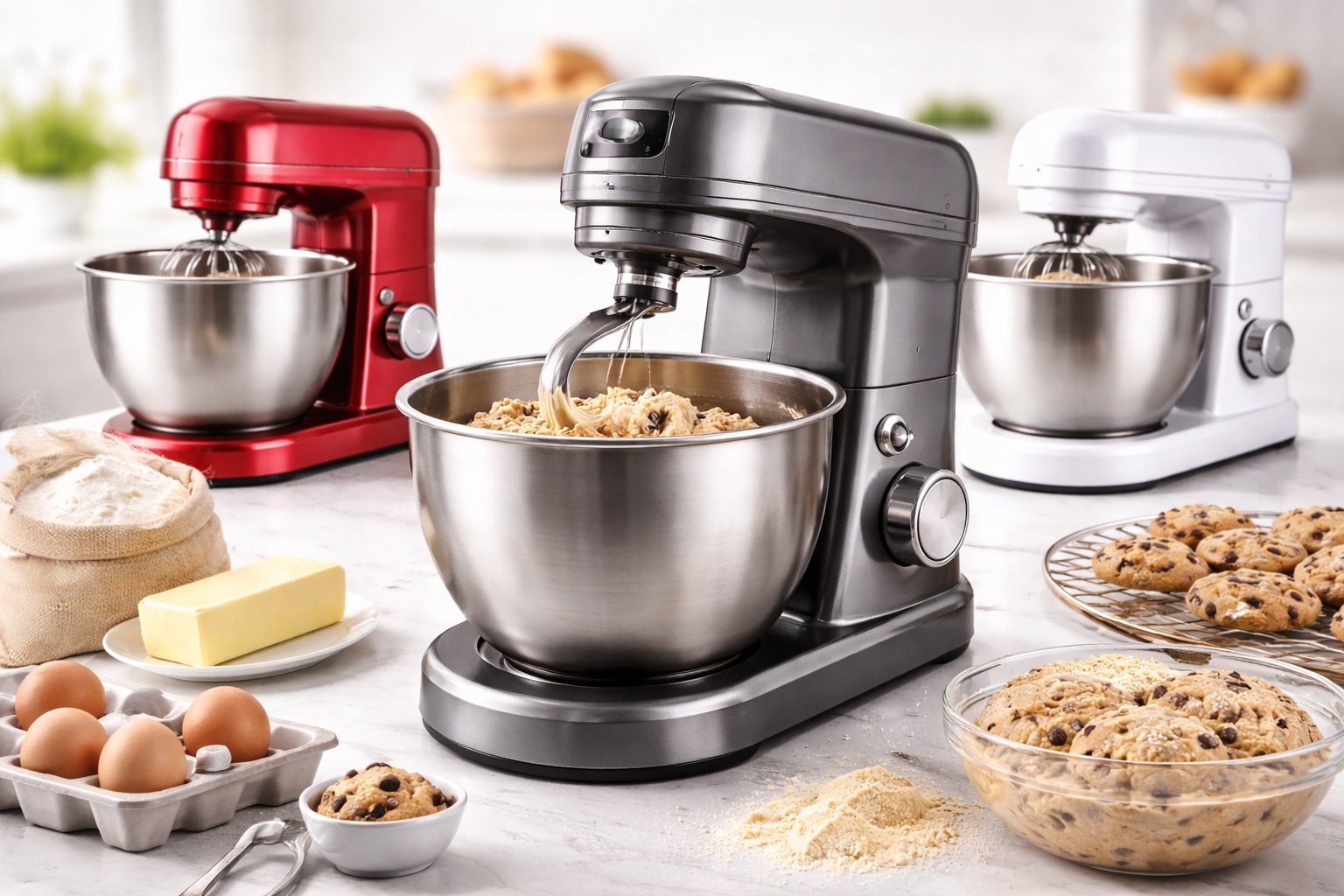
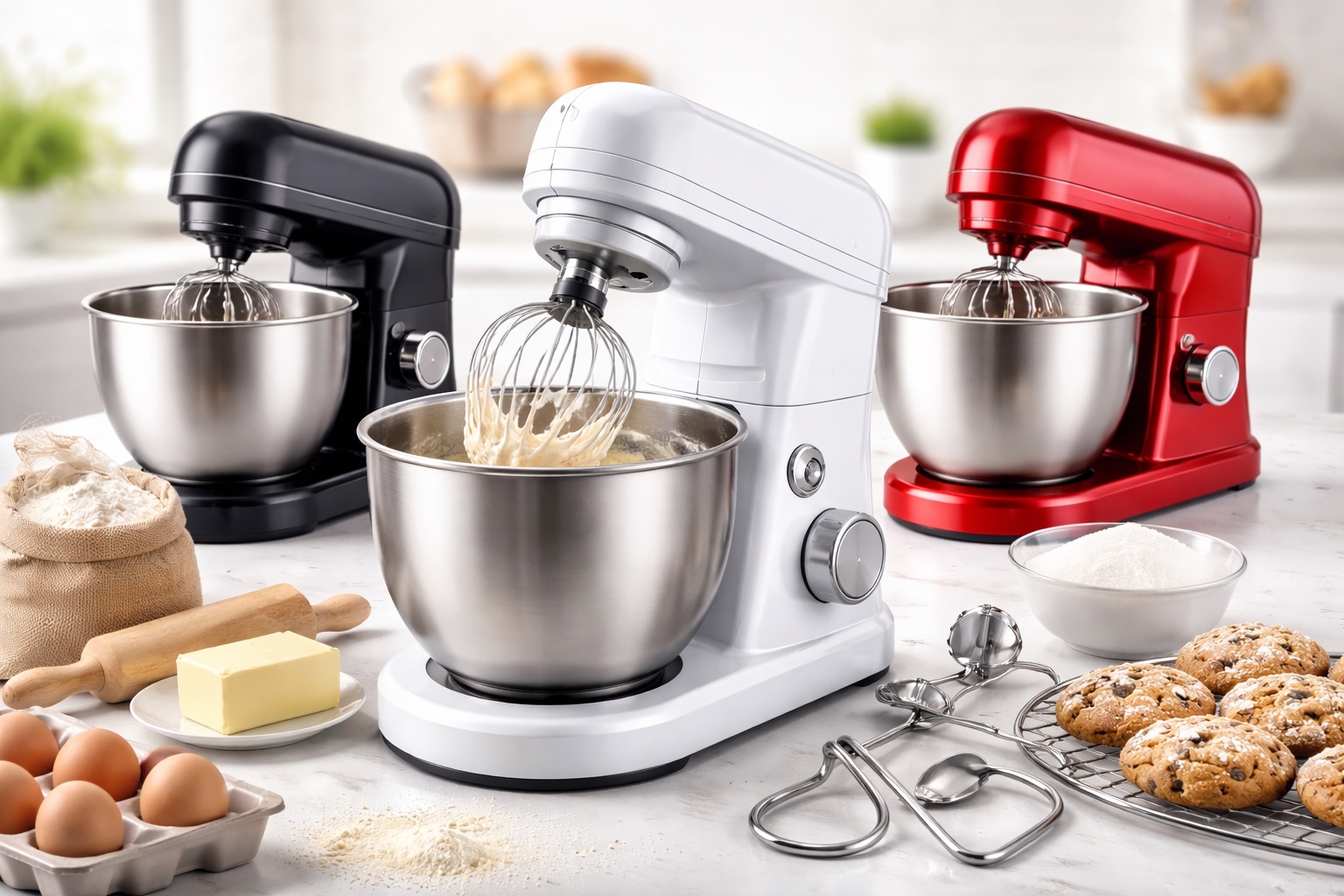
Finding a stand mixer that delivers genuine performance without draining your budget is one of the more common challenges home bakers face in 2026. Stand mixers span everything from sub-$100 entry models to $400-plus premium machines, and the price gap doesn't always translate into a proportional gap in everyday usefulness. This guide compares eight popular stand mixers side by side, focusing on what actually matters for value: motor performance, build quality, attachment support, and long-term durability relative to price.
Whether you bake a few batches of cookies a month or knead bread dough most weekends, the right budget-friendly stand mixer can handle the vast majority of home kitchen tasks without you needing to spend on a flagship machine. Below, we break down eight well-known models — from sub-$100 entry-level machines to mid-range options that edge toward premium pricing — so you can see exactly where each one fits and which delivers the strongest value for your specific baking habits.
It helps to think of "budget" as a range rather than a single price point. A shopper looking to spend under $100 has very different priorities than one willing to go up to $400 for extra durability or a bigger attachment ecosystem. Throughout this guide, we've grouped the eight models loosely by price tier so you can quickly identify which ones sit within your actual comfort zone, rather than comparing a $60 machine and a $450 machine as if they were competing for the same buyer. Understanding that distinction upfront makes the rest of the comparison far more useful.
Top 8 Budget Stand Mixer Picks (Detailed Reviews)
1. Aucma Stand Mixer – Best Overall Value
The Aucma Stand Mixer has earned a reputation as one of the most dependable choices for shoppers who want genuine stand mixer performance without paying flagship prices. Its defining feature is a tilt-head design, which lets you lift the motor head out of the way for easy access to the bowl when adding ingredients or swapping attachments. At a typical price of around $130, the Aucma sits comfortably in the affordable-but-capable tier, making it one of the more approachable entries in this roundup. Build quality is a step above what you'd expect at this price, and the tilt-head mechanism feels sturdy rather than flimsy, a common complaint with lower-tier competitors. For everyday mixing tasks such as cookie dough, cake batter, whipped cream, and light bread dough, it holds up well, and its compact footprint means it won't dominate a smaller kitchen counter. It also tends to be one of the quieter machines in this price bracket, which matters if you're mixing early in the morning or in an open-plan kitchen. Owners frequently mention that it feels more substantial in the hand than its price would suggest, which goes a long way toward justifying its position as an entry point into "real" stand mixer ownership rather than a novelty appliance.
- Pros:
- Genuinely capable tilt-head design at a low price point
- Compact footprint suits smaller kitchens
- Handles everyday baking tasks with ease
- Cons:
- Not built for frequent heavy-dough or commercial-level use
- Fewer attachment options than premium brands
Best For: Budget-conscious bakers who want reliable everyday performance without paying a premium price.
Why We Recommend It: It offers the best balance of price and functionality in this roundup, delivering dependable results for typical home baking without asking you to spend hundreds more.
2. Hamilton Beach Electric – Best True Budget Pick
The Hamilton Beach Electric is the most affordable model in this lineup, typically priced around $60, which makes it the entry point for anyone who simply wants a working stand mixer without any frills. It relies on a planetary mixing action, the same basic mechanism used in far pricier machines, where the beater spins on its own axis while also orbiting the bowl for thorough, even mixing. While it won't match the raw torque or attachment ecosystem of the premium brands on this list, it covers the basics competently: cake batter, cookie dough, mashed potatoes, and light bread dough are all well within its comfort zone. For first-time buyers or anyone mixing only occasionally, the low price makes it an easy, low-risk way to add a stand mixer to the kitchen. Because it's priced so far below most of the field, it's also a sensible choice for a second kitchen, a vacation home, or a gift for someone just starting to bake, where a bigger investment wouldn't make sense. It won't win any awards for styling or extra features, but it consistently gets basic mixing jobs done without drama.
- Pros:
- Lowest price point in this roundup
- Reliable planetary mixing action
- Simple to operate for beginners
- Cons:
- Less powerful motor than premium competitors
- Limited long-term durability under heavy daily use
Best For: First-time buyers and occasional bakers who want the lowest possible entry cost.
Why We Recommend It: At around $60, it's the most accessible way to own a genuine stand mixer, and it handles everyday tasks without complaint.
3. Kenwood kMix – Best All-Metal Build for the Price
The Kenwood kMix, priced around $300, occupies the upper-middle of this lineup, and its all-metal construction is the standout reason to consider stepping up from the true budget options. Metal gearing and a metal body tend to hold up better over years of regular use than mixers built primarily from plastic, and the kMix brings that durability advantage to a price point still well below the flagship models here. Its die-cast body also gives it a more substantial, planted feel on the counter during heavy mixing, reducing the wobble that can plague lighter machines when working with thick batters or dough. It's often the pick for buyers who have owned a plastic-bodied mixer before and grown frustrated with cracked housings or stripped gears after a few years of regular use. The extra cost buys peace of mind as much as raw performance, since the components underneath the finish are simply built to a higher standard.
- Pros:
- All-metal construction improves long-term durability
- Stable, planted feel during heavy mixing
- Reputable brand with established parts support
- Cons:
- Costs noticeably more than entry-level options
- Bulkier than compact tilt-head competitors
Best For: Buyers who want metal-body durability without stepping all the way up to the priciest models.
Why We Recommend It: It bridges the gap between disposable budget mixers and premium machines, offering genuine build-quality gains for a moderate price increase.
4. Bosch Universal Plus – Best for Occasional Heavy-Duty Baking
At around $400, the Bosch Universal Plus is one of the pricier machines in this roundup, and it earns that price with a unique bottom-drive design that's well regarded among bread bakers for handling large, heavy batches of dough. If your budget baking still occasionally stretches to weekend bread projects or large-batch cookie dough, this design difference is worth knowing about, even though it pushes past what most shoppers consider a strict budget price. We include it here as the ceiling of this roundup: a reasonable stretch purchase for anyone whose baking habits justify the extra cost, rather than a true budget pick. Bread bakers in particular tend to cite the bottom-drive mechanism's ability to keep working through dense, low-hydration doughs without bogging down, a scenario where several of the cheaper tilt-head machines on this list can start to strain. If your idea of "budget" simply means avoiding the very top-shelf boutique brands, this is where that line tends to fall.
- Pros:
- Bottom-drive design suited to large, heavy batches
- Well regarded for bread dough specifically
- Sturdy, established design
- Cons:
- Highest price point among the more accessible options here
- Bulkier footprint than tilt-head competitors
Best For: Budget-minded shoppers who bake heavy dough often enough to justify a bigger stretch purchase.
Why We Recommend It: It's the most capable machine here for demanding dough work, and worth the extra spend if that's a regular part of your baking routine.
5. Breville Scraper Mixer Pro – Best Splurge-Worthy Upgrade
The Breville Scraper Mixer Pro, priced around $450, is the most expensive model in this roundup, and it's included primarily as a benchmark for what premium buys you. Its signature scraper beater innovation continuously scrapes the sides of the bowl during mixing, reducing the need to stop and manually scrape down ingredients. For a genuinely budget-focused shopper, this is more of an aspirational pick than a practical one, but it's a useful reference point for understanding where the extra few hundred dollars actually goes: smarter engineering, quieter operation, and thoughtful details rather than just a bigger motor. Some buyers on a tight budget still choose to save toward a machine like this specifically because they bake frequently enough that the scraper feature saves real time on every single batch, turning what looks like an indulgence into a practical efficiency upgrade over months of use.
- Pros:
- Scraper beater reduces manual bowl-scraping
- Premium engineering and finish
- Strong overall performance across mixing tasks
- Cons:
- Highest price in this comparison
- Hard to justify on a strict budget
Best For: Shoppers who have outgrown budget constraints and want to see what a premium machine offers.
Why We Recommend It: It's the clearest illustration of premium engineering in this lineup, useful context even if it's not the pick for strict budget shoppers.
6. KitchenAid Artisan Series – Best Iconic Choice Worth Stretching For
The KitchenAid Artisan Series, typically around $430, brings a 325-watt motor and 10 speed settings, along with the brand recognition and attachment ecosystem that has made KitchenAid a kitchen staple for decades. It isn't a budget pick in the strict sense, but its resale value and the sheer breadth of compatible attachments — from pasta rollers to food grinders — mean it can function as a long-term kitchen investment rather than a single-purpose appliance. For shoppers willing to stretch their budget slightly, it's often cited as the machine that gets used for decades rather than replaced every few years. It's worth noting that its 325-watt motor is actually lower than a couple of cheaper machines on this list, which is a reminder that wattage alone doesn't tell the whole story — build quality, gear design, and long-term parts support matter just as much as the number printed on the box.
- Pros:
- 325-watt motor with 10 speed settings
- Extensive attachment ecosystem
- Strong resale value over time
- Cons:
- Priced above what most consider a strict budget
- Attachments sold separately add to total cost
Best For: Buyers who can stretch their budget slightly for a machine with strong long-term value.
Why We Recommend It: Its combination of brand reliability and attachment support means it often ends up costing less per year of ownership than cheaper machines replaced more frequently.
7. Cuisinart SM-50 – Best High-Wattage Mid-Range Pick
The Cuisinart SM-50 sits around $350 and brings a 500-watt motor, the highest rated wattage in this roundup, to a price point below the very top tier. For budget shoppers who prioritize raw mixing power over brand prestige, this combination is worth a close look: more wattage generally means less strain on the motor during thick batters and heavier mixes, which can translate into a longer service life. It's a sensible middle path for anyone who has decided the true entry-level machines won't cut it long-term but doesn't want to pay Breville or Bosch pricing. Its motor also runs noticeably cooler during extended mixing sessions than lower-wattage machines pushed to their limits, an underrated durability benefit that doesn't show up on a spec sheet but does show up in how long the mixer lasts.
- Pros:
- 500-watt motor, highest in this comparison
- Strong performance for the price
- Reputable, widely available brand
- Cons:
- Still a meaningful step up from true entry-level pricing
- Fewer signature design features than premium rivals
Best For: Shoppers who want maximum motor power without paying for the most expensive brand names.
Why We Recommend It: Its 500-watt motor delivers genuine mixing muscle at a price that still qualifies as mid-range rather than premium.
8. Sunbeam Mixmaster – Best Simple Entry-Level Option
The Sunbeam Mixmaster, priced around $100, pairs a 350-watt motor with a long-running brand legacy that dates back generations in home kitchens. It's a straightforward, no-fuss machine aimed at buyers who want dependable mixing without navigating a long list of features or attachments. For simple baking tasks, it performs admirably, and its lower price relative to its motor wattage makes it a reasonable alternative to the Hamilton Beach for shoppers who want slightly more power at a still-affordable price. Its long production history also means replacement parts and third-party accessories are generally easy to track down, which isn't always true for newer budget entrants that may discontinue certain attachments within a few product cycles.
- Pros:
- 350-watt motor at an affordable price
- Simple, beginner-friendly operation
- Long-established brand history
- Cons:
- Fewer modern conveniences than newer competitors
- Smaller attachment selection
Best For: Buyers who want dependable mixing power at a low price without extra frills.
Why We Recommend It: It offers a strong wattage-to-price ratio, making it one of the more efficient budget picks in this lineup.
Buying Guide: How to Choose the Best Budget Stand Mixer
Shopping for a stand mixer on a budget doesn't mean settling for a machine that can't keep up with your baking habits. It means understanding which features actually affect day-to-day performance and which are simply nice extras you can live without. The sections below walk through the factors that matter most when balancing price against genuine usefulness.
1. Set a Realistic Budget Range
Before comparing models, decide on a genuine price ceiling rather than shopping model-by-model. Stand mixers in this roundup range from around $60 to $450, and knowing whether you're shopping the true entry tier or the upper end of "budget" narrows your options considerably and prevents feature creep from pushing you toward machines you don't need. It also helps to separate a one-time purchase price from ongoing costs like replacement attachments, since a cheaper mixer with pricier add-ons can end up costing more over time than a slightly more expensive machine that includes everything you need in the box.
2. Motor Power & Wattage
Wattage is a useful, if imperfect, proxy for how much strain a mixer can handle before struggling. Entry-level machines often sit in the 250 to 350-watt range, which is plenty for batters and light dough, while models around 400 to 500 watts handle heavier mixes with less effort and less risk of motor burnout over time.
3. Bowl Capacity for Your Household
A larger bowl isn't automatically better if you're cooking for one or two people; it simply means more counter space used and more cleanup. Match bowl capacity to your typical batch sizes rather than buying the biggest bowl available on the assumption that bigger is always better.
4. Tilt-Head vs. Bowl-Lift Design
Tilt-head mixers, common among budget and mid-range models, let you flip the motor head back for easy bowl access and tend to have a smaller footprint. Bowl-lift designs, more common on heavier-duty machines, offer a more stable platform for dense mixtures but usually cost more and take up additional vertical space.
5. Mixing Action & Attachment Hub
Planetary mixing action, where the beater spins on its own axis while orbiting the bowl, is the standard across nearly every stand mixer on the market today, including budget models. Check whether the mixer includes a front power hub for additional attachments, since this determines whether you can expand its capabilities later.
6. Included Attachments & Accessories
Most budget stand mixers ship with a flat beater, a wire whisk, and a dough hook as standard equipment. Confirm exactly what's included before buying, since some listings show optional attachments in product photography that aren't actually part of the box.
7. Build Material & Long-Term Durability
All-metal gearing and metal housings generally outlast mixers built largely from plastic components, particularly under frequent or heavy use. If you plan to use your mixer several times a week for years, prioritizing build material over a slightly lower price can save money in the long run. Look closely at how the bowl connects to the base and how the beater locks into the head, since these connection points tend to wear out before the motor itself does on lower-quality machines.
8. Counter Space & Storage
Budget stand mixers vary meaningfully in footprint. If counter space or cabinet storage is tight, favor more compact tilt-head designs over bulkier bowl-lift or heavy-duty machines, even if the latter offer more raw power than you're likely to use regularly.
9. Noise Level During Operation
Lower-priced mixers can sometimes run louder at higher speeds due to simpler motor and gearing designs. If you bake early in the morning or late at night in a shared living space, it's worth checking user feedback specifically about noise before committing to a model.
10. Ease of Cleaning
Removable bowls, beaters, and whisks that are dishwasher-safe make day-to-day use far more convenient. Confirm which parts can go in the dishwasher and which require hand-washing, since this affects how much extra time you'll spend on cleanup after every use.
11. Warranty Coverage
Warranty length and terms vary significantly even among similarly priced budget mixers. A longer warranty is a reasonable signal of manufacturer confidence in the product's durability, and it protects your investment if a motor or gearing issue develops earlier than expected. Read the fine print on what the warranty actually covers, since some policies exclude attachments or require you to cover return shipping costs for repairs.
12. Brand Reputation & Parts Availability
Established brands with a long history in the stand mixer market tend to have better parts availability and more accessible customer support when something eventually needs replacing. This matters more over a multi-year ownership period than it might seem at the point of purchase.
13. Resale Value & Cost Per Use
A slightly pricier mixer that lasts a decade can end up cheaper per year of use than a bargain model replaced every two or three years. When comparing budget options, think about cost per use over the expected lifespan rather than sticker price alone.
Frequently Asked Questions
Is a premium stand mixer worth it, or can a budget model do the job?
For most home bakers, a well-built budget model handles everyday tasks like cookies, cakes, and light bread dough just fine. Premium models tend to add value through extra durability, more attachments, and better performance on heavy or frequent use rather than dramatically better results on typical recipes.
What's the minimum wattage I should look for in a budget stand mixer?
Look for at least 250 to 300 watts if you plan to make bread dough occasionally. Anything below that range is best suited to lighter tasks like whipping cream, mixing batter, or beating eggs rather than kneading.
Can a budget stand mixer knead bread dough?
Many budget mixers can handle light to moderate bread dough in smaller batches, though they may labor more and run hotter than higher-wattage machines. If bread is a frequent priority, consider stepping up to a model with a stronger motor and dough hook.
How do I maintain my stand mixer to make it last longer?
Wipe down the exterior and motor housing after each use, avoid submerging the motor unit in water, and check the manual for which bowl and attachment pieces are dishwasher-safe. Periodically inspect the power cord and beater attachments for wear.
What's the actual price difference between budget and premium models?
In this roundup, prices range from roughly $60 to $450. The gap generally reflects motor power, build materials, attachment ecosystems, and brand reputation rather than a proportional difference in basic mixing performance for light everyday tasks. In other words, you're often paying for durability and versatility rather than a dramatically better cookie batter.
Do cheaper stand mixers come with fewer attachments?
Typically, yes. Most budget models include a flat beater, whisk, and dough hook, while premium machines often support a wider range of optional attachments like pasta rollers, meat grinders, and ice cream makers sold separately.
Is a plastic-bodied stand mixer worth buying?
Plastic-bodied mixers can be a reasonable choice for light, occasional use and offer real savings on the purchase price. If you mix frequently or work with dense dough regularly, an all-metal or metal-geared model will generally hold up better over time.
How much bowl capacity do I need as a beginner?
A bowl in the 4.5 to 5.5-quart range comfortably handles most home recipes, including standard batches of cookie dough or cake batter, without requiring you to mix in multiple rounds.
Are budget stand mixers noisy?
Noise levels vary by model and speed setting rather than strictly by price. It's worth checking specific user reviews for noise complaints, since some budget machines run quieter than certain premium models at comparable speeds.
How long should a budget stand mixer last with regular use?
With reasonable care, a well-reviewed budget stand mixer can last several years of regular home use. Longevity depends heavily on build materials, how heavy your typical mixing tasks are, and how closely you follow the manufacturer's care instructions. Avoiding overloading the bowl beyond its rated capacity is one of the simplest ways to extend a budget motor's working life.
What's more important on a budget: wattage or attachments?
Wattage affects whether the machine can comfortably handle your typical recipes without straining, which matters more day-to-day. Attachments expand what the machine can do but aren't essential if you're only using it for standard mixing, whipping, and light dough work.
Can I upgrade a budget stand mixer with extra attachments later?
This depends on whether the model has a front power hub designed for attachments. Some budget mixers include one, allowing later additions like pasta rollers, while others are built purely for bowl-based mixing with no expansion path.
Is it better to buy a used premium mixer or a new budget one?
A used premium mixer in good condition can sometimes outperform a new budget model, but it carries more uncertainty about wear and remaining lifespan. A new budget mixer with a warranty offers more predictability, even if peak performance is somewhat lower.
Final Verdict
- Top Pick: Aucma Stand Mixer for the best overall balance of price and everyday performance.
- Budget Choice: Hamilton Beach Electric for the lowest entry cost at around $60.
- Premium Choice: Breville Scraper Mixer Pro for shoppers ready to stretch to roughly $450 for premium engineering.
None of these eight stand mixers is a bad choice, but they serve different budgets and baking habits. If you want the best all-around value, the Aucma Stand Mixer is hard to beat. If your budget is genuinely tight, the Hamilton Beach Electric gets the job done without complaint. And if you've decided that stand mixer performance matters enough to spend more, the Breville Scraper Mixer Pro and similarly priced options show exactly where that extra money goes. Whichever you choose, matching the machine to your actual baking frequency and typical recipes will serve you better than chasing the highest wattage or the longest feature list.