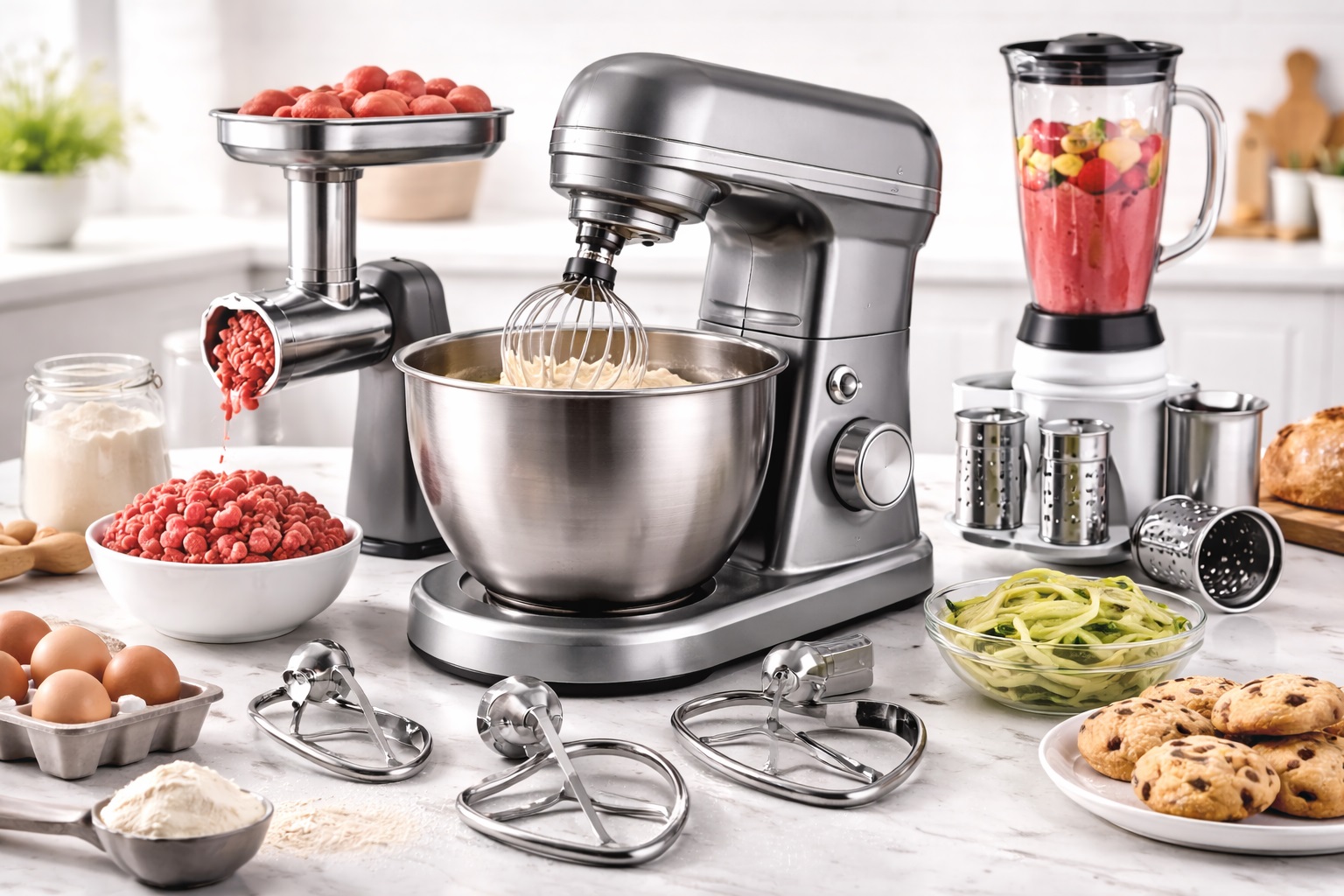
Best Tilt-Head Stand Mixer in 2026
Tilt-head stand mixers remain the most common design on the market for a good reason: lifting the motor head back and out of the way gives you easy access to the bowl for adding ingredients, scraping down the sides, or swapping attachments, all without needing to lift or lock a heavy bowl-lift arm. This guide compares eight popular stand mixers with a focus on how well each one delivers on that core tilt-head convenience, alongside the usual considerations of motor power, build quality, and price.
Most of the machines below use a genuine tilt-head mechanism, and we've been careful to call out the one exception in this lineup that doesn't, rather than stretch the truth to fit a tidy theme. Tilt-head design isn't the only valid approach to stand mixer engineering, but for everyday ease of access — reaching in to add flour a cup at a time, or scraping down a sticky batter without stopping the machine entirely — it remains the format most home bakers find the most convenient day to day.
Not all tilt-head mechanisms are created equal, though. The quality of the hinge, how securely it locks in place, and how much clearance it provides when raised all vary meaningfully between models and price points. Two machines can both technically be "tilt-head" and still feel completely different to use every day, which is why the reviews below go beyond simply confirming the mechanism exists and dig into how well each one actually executes it.
Top 8 Tilt-Head Stand Mixer Picks (Detailed Reviews)
1. Hamilton Beach Electric – Best Budget Tilt-Head Pick
The Hamilton Beach Electric, priced around $60, is a straightforward tilt-head machine that makes the format's core convenience accessible at the lowest price point in this roundup. Its planetary mixing action is standard fare, but the tilt-head mechanism itself works smoothly, letting you flip the head back for easy bowl access when adding ingredients or attaching the whisk, beater, or dough hook. For anyone who wants to experience the genuine ease-of-access benefit of a tilt-head design without spending much, this is one of the more accessible entry points available. It won't match the motor power or attachment ecosystem of pricier options, but the fundamental tilt-head mechanics work exactly as they should, which is really the point of this roundup. Owners consistently note that the hinge doesn't develop the wobble or looseness that sometimes appears on cheaper appliances after a year or two of regular use, which speaks well of the underlying engineering even at this price.
- Pros:
- Genuine tilt-head convenience at a low price
- Simple, smooth-operating hinge mechanism
- Easy to clean and access the bowl
- Cons:
- Lower motor power than pricier competitors
- Fewer attachments available
Best For: Budget-conscious bakers who want genuine tilt-head convenience without a large investment.
Why We Recommend It: It delivers the core tilt-head experience — easy bowl access and simple ingredient additions — at the most accessible price in this comparison.
2. Bosch Universal Plus – Best Alternative If You're Willing to Skip Tilt-Head
We want to be transparent here: the Bosch Universal Plus, priced around $400, does not use a tilt-head mechanism. Its unique bottom-drive design keeps the motor and mixing head fixed in place, with the bowl and attachments arranged around a stationary lower housing rather than a hinged upper head. It's included in this roundup as an honest alternative for shoppers who started out searching for tilt-head convenience but might actually be better served by a different ergonomic approach, particularly if heavy dough capacity matters more to them than a tilting head. If easy access via tilting is genuinely your priority, this isn't the right pick, but if you're open to a different way of accessing the bowl in exchange for excellent heavy-batch performance, it's worth considering as a deliberate trade-off. Its stationary head design does still allow reasonable access to the bowl from the top and sides during mixing, just without the pivoting motion that defines the rest of this list, so it isn't a difficult machine to work with, simply a different one.
- Pros:
- Excellent heavy-batch and dough performance
- Sturdy, well-regarded mechanical design
- Stable footprint during mixing
- Cons:
- Does not use a tilt-head mechanism at all
- Different, bulkier ergonomics than the rest of this list
Best For: Shoppers who are open to trading tilt-head convenience for stronger heavy-duty mixing performance.
Why We Recommend It: It's an honest inclusion for readers who may find that a non-tilt-head design actually suits their real priorities better once they understand the mechanical trade-offs.
3. KitchenAid Artisan Series – Best Classic Tilt-Head Design
The KitchenAid Artisan Series, around $430, is arguably the machine most responsible for popularizing the tilt-head format in home kitchens, and its 325-watt motor paired with 10 speed settings continues to represent the archetype most people picture when they think "stand mixer." The tilt-head hinge feels solid and deliberate, locking securely both up and down, and the wide bowl clearance when tilted back makes adding ingredients or scraping down batter genuinely effortless. Its broad attachment ecosystem, compatible with the same head design across generations of the product line, adds further versatility that's specific to how well-established this particular tilt-head mechanism has become. Decades of incremental refinement have gone into this specific hinge design, and it shows in how confidently it locks into place and how little effort it takes to tilt back even when the bowl is loaded with a heavier batch of dough or batter.
- Pros:
- Iconic, well-refined tilt-head mechanism
- Wide bowl clearance for easy ingredient access
- Extensive attachment ecosystem
- Cons:
- Premium price point
- Lower motor wattage than some competitors here
Best For: Bakers who want the most iconic, well-refined tilt-head experience available.
Why We Recommend It: Few machines demonstrate the tilt-head format's ease-of-access benefits as smoothly or as reliably as this one.
4. Aucma Stand Mixer – Best Value Tilt-Head Pick
The Aucma Stand Mixer, priced around $130, brings genuine tilt-head convenience to a more affordable price point, with a hinge mechanism that feels sturdier than its price might suggest. Lifting the head back for bowl access or attachment changes is smooth and requires minimal effort, and the locking mechanism holds the head securely in place during mixing, which is exactly what you want from a tilt-head design regardless of price. For everyday baking tasks, it provides essentially the same core ease-of-access experience as pricier machines, just without the extended attachment ecosystem or the highest motor wattage. The hinge also has a satisfying, positive click when it locks into the mixing position, a small detail that reassures you the head won't shift unexpectedly during a vigorous mix.
- Pros:
- Sturdy tilt-head mechanism for the price
- Smooth, easy bowl access
- Solid overall build quality
- Cons:
- Fewer attachments than premium brands
- Not intended for frequent heavy-duty use
Best For: Value-focused bakers who want genuine tilt-head convenience without paying premium prices.
Why We Recommend It: It delivers a surprisingly solid tilt-head experience for the price, without cutting corners on the mechanism that matters most for this roundup's focus.
5. Cuisinart SM-50 – Best High-Wattage Tilt-Head Pick
The Cuisinart SM-50, around $350, pairs a 500-watt motor — the strongest in this comparison — with a tilt-head design that provides the same easy-access convenience as the rest of this lineup, just with more raw power behind it. The tilt mechanism operates smoothly and provides ample clearance for adding ingredients, while the higher wattage means it handles thicker batters and moderate dough with less strain than lower-powered tilt-head competitors. For bakers who want the ease-of-access benefits of a tilt-head machine without sacrificing motor power, this is one of the stronger combinations in this roundup. The extra motor power also means the hinge and gearing aren't working as close to their limits during moderately heavy mixing, which can translate into a longer service life for the mechanism as a whole.
- Pros:
- 500-watt motor, the highest among tilt-head options here
- Smooth, easy-access tilt mechanism
- Strong value for the power on offer
- Cons:
- Priced above true entry-level options
- Fewer signature design details than premium rivals
Best For: Bakers who want strong motor power without giving up tilt-head convenience.
Why We Recommend It: It proves that a tilt-head design doesn't have to mean sacrificing motor power, delivering the highest wattage among genuine tilt-head machines in this comparison.
6. Breville Scraper Mixer Pro – Best Premium Tilt-Head Pick
The Breville Scraper Mixer Pro, priced around $450, is the most expensive machine in this roundup, and its tilt-head design is engineered with the same attention to detail as its signature scraper beater. The hinge mechanism feels refined and deliberate, and the head locks firmly in both the raised and lowered positions, avoiding the looseness that can develop in cheaper tilt-head machines over time. Combined with the scraper beater's continuous bowl-scraping action, the overall experience of adding ingredients and monitoring the mix is about as convenient as tilt-head design gets in this price category. The head also tilts back with noticeably less effort than several competitors, a small but genuinely noticeable difference if you're frequently pausing to check on a batch or add ingredients gradually.
- Pros:
- Refined, precisely engineered tilt-head hinge
- Scraper beater adds further convenience
- Premium build and finish throughout
- Cons:
- Highest price point in this comparison
- Harder to justify for occasional bakers
Best For: Bakers who want the most refined tilt-head experience available and are willing to pay for it.
Why We Recommend It: Its precisely engineered hinge and scraper beater combine to make ingredient additions and bowl access about as effortless as this format allows.
7. Sunbeam Mixmaster – Best Entry-Level Tilt-Head Pick
The Sunbeam Mixmaster, around $100, brings a 350-watt motor to a tilt-head design that's straightforward and reliable, if not particularly refined compared to premium competitors. The hinge mechanism does its job without fuss, giving you the easy bowl access that defines this category, and its long-standing brand history means the basic tilt-head format here has been refined over many product generations even if the finish doesn't match pricier machines. For entry-level buyers who specifically want tilt-head convenience without paying much, it's a reasonable, no-frills choice. It won't win points for styling or extra conveniences, but the core mechanism does its job dependably, batch after batch, without drama.
- Pros:
- Straightforward, functional tilt-head mechanism
- Respectable 350-watt motor for the price
- Long-established, familiar brand
- Cons:
- Less refined finish than premium tilt-head machines
- Fewer attachments and accessories
Best For: Entry-level buyers who want dependable tilt-head convenience without paying a premium.
Why We Recommend It: It offers a no-frills but genuinely functional tilt-head experience at one of the lower prices in this roundup.
8. Kenwood kMix – Best All-Metal Tilt-Head Pick
The Kenwood kMix, priced around $300, combines a tilt-head design with all-metal construction, a combination that's less common than you might expect, since many all-metal mixers lean toward bowl-lift designs instead. The die-cast body adds stability during mixing without compromising the tilt-head mechanism's ease of access, and the hinge itself feels notably solid thanks to the sturdier materials used throughout the machine. For bakers who want the convenience of a tilt-head design paired with the durability benefits of metal construction, this is one of the more distinctive combinations in this comparison. Over years of regular use, that metal hinge assembly is less prone to the slight play or wobble that can eventually develop in plastic tilt-head housings, which matters if you plan to keep the machine for the long haul.
- Pros:
- Rare combination of tilt-head design and all-metal build
- Stable during mixing thanks to die-cast construction
- Reputable brand with established durability
- Cons:
- Heavier than plastic-bodied tilt-head competitors
- Costs more than true entry-level options
Best For: Bakers who want tilt-head convenience combined with the durability of all-metal construction.
Why We Recommend It: It's one of the few machines here that pairs genuine tilt-head ease of access with the long-term durability of a metal body.
Buying Guide: How to Choose the Best Tilt-Head Stand Mixer
Tilt-head stand mixers share a basic mechanism, but the details of how well that mechanism is executed vary considerably between models and price points. The sections below cover what to look for when evaluating tilt-head design specifically, beyond just motor power and price.
1. Hinge Quality & Mechanism Feel
A well-built tilt-head hinge should move smoothly without excessive resistance or looseness, and it should lock securely in both the raised and lowered positions. Test this in person if possible, since hinge quality varies noticeably between budget and premium machines. If buying online, read reviews specifically mentioning long-term hinge performance rather than just first impressions out of the box.
2. Bowl Clearance When Tilted Back
The whole point of a tilt-head design is easy bowl access, so check how much clearance the design provides when the head is fully raised. Some machines offer more generous clearance than others, which matters when adding ingredients or attachments mid-mix. Larger hands or wider measuring cups can make cramped clearance especially noticeable, so consider your own typical baking habits when comparing models.
3. Locking Mechanism Security
The head should lock firmly in the lowered, mixing position to prevent any bouncing or shifting during operation. A loose or poorly designed lock can affect mixing consistency and, in rare cases, safety during use. Some machines use a simple latch while others use a more deliberate twist-lock action; neither is inherently better, but both should feel positive and secure when engaged.
4. Motor Power Within the Tilt-Head Format
Tilt-head designs range from modest 250-watt motors to 500-watt options, and higher wattage generally means better performance on thicker batters and moderate dough without giving up the format's core convenience. Don't assume a tilt-head machine is automatically underpowered; several models in this comparison rival or exceed the wattage of some bowl-lift alternatives.
5. Attachment Hub Compatibility
Check whether the tilt-head model includes a front power hub for additional attachments, since this varies by brand and affects how much the machine can be expanded to handle tasks beyond basic mixing. Some hubs support a wide range of third-party accessories, while others are limited to the manufacturer's own attachment line.
6. Build Material & Long-Term Durability
All-metal tilt-head machines are less common than plastic-bodied ones but generally offer better long-term durability for the hinge mechanism specifically, which experiences repeated mechanical stress over years of regular use. If you plan to tilt the head multiple times per session over many years, this durability difference compounds meaningfully.
7. Counter Space & Vertical Clearance
Remember that tilt-head designs need clearance above the machine for the head to pivot back fully. Measure the space under any cabinets before assuming a tilt-head mixer will fit in your kitchen layout. This clearance requirement is one of the few genuine downsides of the format compared to bowl-lift designs, which typically need less vertical room.
8. Ease of Cleaning Around the Hinge
Batter and flour can accumulate around the hinge mechanism over time, so check how easily this area can be wiped down and whether the design traps ingredients in hard-to-reach spots. A smooth, open hinge design without deep crevices tends to be easier to keep clean over years of regular baking.
9. Noise Level During Tilt and Operation
Some hinge mechanisms creak or rattle slightly when tilted, which isn't necessarily a functional problem but can be an annoyance. Motor noise during mixing is worth checking separately from hinge noise. A persistent or worsening creak over time, however, can be an early sign that a hinge needs lubrication or eventual servicing.
10. Weight & Stability While Tilted
A tilt-head machine should remain stable on the counter even with the head raised and unevenly weighted toward the back. Lighter machines can sometimes feel less planted in this position than heavier, well-balanced designs. Rubber feet and a wider base both help counteract this, so it's worth checking for both features specifically.
11. Warranty Coverage for the Hinge Mechanism
Since the hinge is a moving mechanical part subject to wear, check whether the warranty specifically covers it, rather than assuming general motor warranty coverage extends to every component. Some manufacturers separate coverage for mechanical parts from electrical components, so it's worth reading the specific terms rather than assuming full coverage.
12. Price vs. Tilt-Head Refinement
Higher prices often correlate with a smoother, more precisely engineered hinge mechanism, though several more affordable options in this roundup still deliver genuinely solid tilt-head performance. Paying more mainly buys refinement and longevity rather than a fundamentally different mechanism.
13. When a Non-Tilt-Head Design Might Suit You Better
If your priority is heavy-batch capacity or a different ergonomic approach to bowl access, a bowl-lift or alternative design like a bottom-drive mechanism may actually serve you better than forcing a tilt-head purchase based on category alone. Being honest with yourself about your actual baking habits, rather than defaulting to the most popular format, will lead to a more satisfying purchase either way.
Frequently Asked Questions
What is a tilt-head stand mixer?
A tilt-head stand mixer has a motor head that pivots back on a hinge, providing open access to the bowl for adding ingredients or changing attachments, as opposed to a bowl-lift design where the bowl itself raises and lowers. It's the more common design among home-kitchen stand mixers, particularly at budget and mid-range price points.
Is a tilt-head design better than a bowl-lift design?
Neither is universally better; tilt-head designs are generally more compact and convenient for everyday access, while bowl-lift designs often provide more stability for very heavy mixtures. The right choice depends on your typical baking tasks, how often you mix heavy dough, and how much counter and vertical clearance you have available.
Do tilt-head mixers have less motor power than bowl-lift mixers?
Not necessarily. Several tilt-head machines in this roundup offer substantial motor wattage, showing that the format doesn't inherently limit power, though very heavy-duty machines are more commonly bowl-lift or alternative designs. Manufacturers can and do build powerful motors into both formats, so check the specific model rather than assuming based on category.
Why does the tilt-head hinge feel loose on some machines?
Hinge quality varies by manufacturer and price point, and repeated use over years can also introduce some looseness. If a hinge feels loose when new, it's worth raising with the manufacturer under warranty. A hinge that develops looseness only after extended use is more typical and usually manageable with basic maintenance.
Can I add ingredients while the mixer is running with a tilt-head design?
Yes, tilt-head designs generally provide clear access to the bowl even without fully tilting the head back, which is one of the practical advantages of this format for gradually adding flour or other ingredients. Many models also include a small pour spout or shield on the beater guard specifically for this purpose.
Are tilt-head mixers easier to clean than bowl-lift mixers?
Many bakers find tilt-head designs easier to clean around, since there's no separate lift arm mechanism to navigate, though this can vary depending on the specific model and how the hinge area is designed. Wiping down the head and hinge area right after use, before batter or dough dries, makes cleanup considerably easier regardless of design.
Is the Bosch Universal Plus a tilt-head mixer?
No. It uses a unique bottom-drive design with a fixed head rather than a tilting mechanism, which is why we've noted it as an alternative rather than a true tilt-head pick in this comparison.
Do all tilt-head mixers support the same attachments?
No, attachment compatibility varies by brand and sometimes by specific model generation within a brand, so it's worth confirming compatibility before assuming any attachment will fit your particular machine. Checking the manufacturer's official accessory list before buying third-party attachments can save you a frustrating return.
How long does a tilt-head hinge typically last?
With reasonable care and normal use, a well-built tilt-head hinge can last many years without issue. Avoiding forceful slamming of the head and keeping the hinge area clean both help extend its working life. Periodically checking that mounting screws haven't loosened over time can also help prevent premature wear.
Can a tilt-head mixer handle heavy bread dough?
Many tilt-head mixers handle moderate bread dough reasonably well, though frequent, very heavy dough work is sometimes better suited to machines with bowl-lift or alternative gear-driven designs built specifically for that demand. Higher-wattage tilt-head models tend to manage moderate dough with noticeably less strain than lower-powered ones.
Is it normal for a tilt-head to require some force to lift?
A tilt-head should lift with reasonable, consistent effort rather than excessive force. If it feels unusually stiff or requires significant strength to operate, it's worth checking whether something is obstructing the hinge.
Do premium tilt-head mixers really feel different from budget ones?
Often yes. Premium tilt-head machines tend to have a smoother, more precisely engineered hinge action and a more secure lock, differences that become more noticeable with daily use over time. That said, several budget and mid-range options in this comparison still deliver a genuinely satisfying tilt-head experience without the premium price tag.
Final Verdict
- Top Pick: KitchenAid Artisan Series for the most refined, iconic tilt-head experience in this comparison.
- Budget Choice: Hamilton Beach Electric for genuine tilt-head convenience at the lowest price, around $60.
- Premium Choice: Breville Scraper Mixer Pro for shoppers willing to pay around $450 for the most refined tilt-head engineering here.
For most bakers specifically seeking the ease-of-access convenience of a tilt-head design, the KitchenAid Artisan Series remains the benchmark this format is measured against, thanks to its refined hinge and extensive attachment support. The Hamilton Beach Electric and Aucma Stand Mixer prove that genuine tilt-head convenience doesn't require a large budget, while the Cuisinart SM-50 and Breville Scraper Mixer Pro show that motor power and premium engineering can be paired with the format without compromise. The one exception in this lineup, the Bosch Universal Plus, is worth considering only if you've decided that heavy-batch capability matters more to you than tilting access itself — an honest trade-off rather than a true tilt-head alternative. Ultimately, the best tilt-head mixer for your kitchen comes down to how much you value hinge refinement and motor power relative to price, since the fundamental convenience of easy bowl access is something every genuine tilt-head machine on this list delivers reasonably well.