Best Large Slow Cooker for Families in 2026
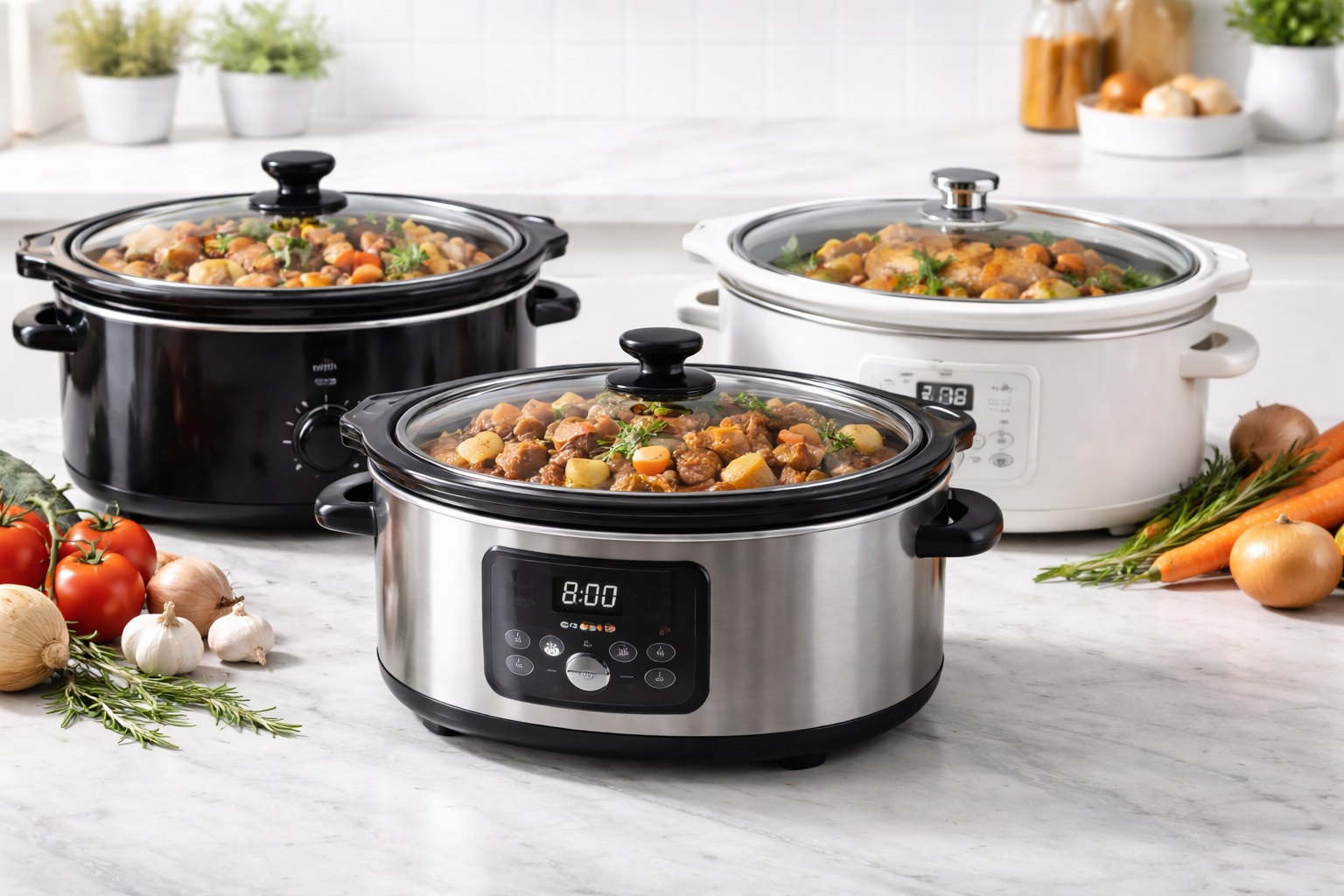
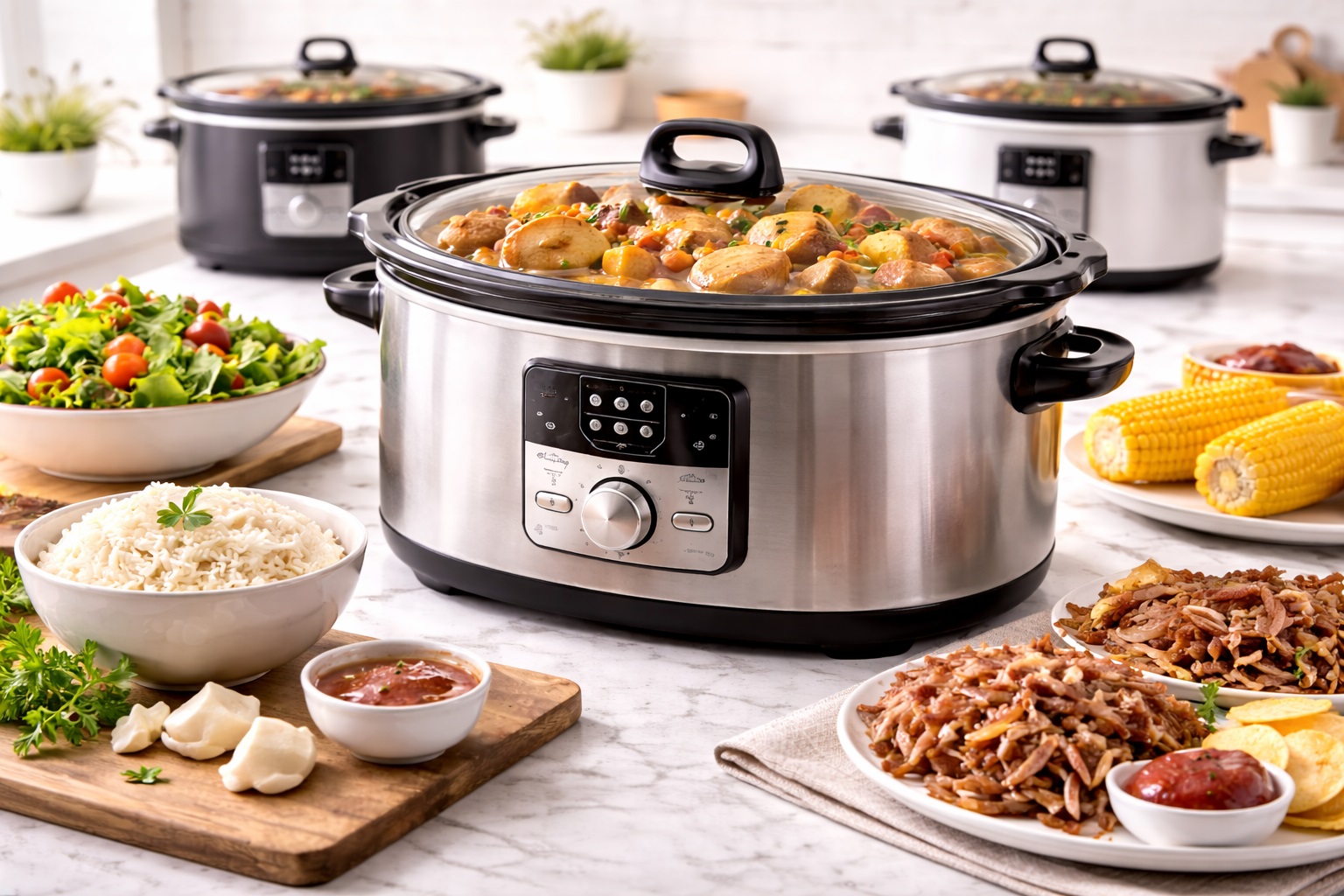
Feeding a full household night after night calls for a slow cooker that can keep pace with real portions, not a single-serving recipe scaled up awkwardly. A large-capacity slow cooker, typically in the 6 to 7 quart range, gives you room to braise a whole chicken, simmer a big batch of chili, or prep enough pulled pork for two nights of leftovers without babysitting multiple pots on the stove. This guide compares eight widely available large slow cookers so you can match capacity, features, and price to the way your family actually cooks, whether that means simmering a Sunday roast or keeping a pot of soup ready for a house full of hungry kids after school.
Choosing the right model isn't only about quart size. Lid design, insert material, and control type all affect how a slow cooker fits into a busy weeknight routine. A locking lid matters if you're hauling a dish to a potluck or a relative's house; a digital timer matters if you're out for eight hours and need the unit to switch to warm on its own. Below, we break down eight family-friendly options ranging from simple manual units to feature-rich multi-cookers, along with the tradeoffs that come with each price tier, so you can see exactly what you gain and give up at every step up the price ladder.
Whether you're replacing a cooker that has finally worn out or buying your first one for a growing family, the goal is the same: find a unit that holds enough food, cooks evenly, and doesn't demand constant attention. Use the detailed reviews and buying guide below to narrow down the right fit before you buy.
It also helps to think about how a slow cooker actually gets used in a family kitchen over the course of a year. It might braise a holiday roast one week and simmer a pot of weeknight chili the next, then get pulled out again for a batch of pulled pork sandwiches before a weekend game. That range of uses is exactly why capacity and construction matter more for a family cooker than for a single-serving unit, and it's why the eight models below span such a wide range of prices and feature sets, from simple $40 manual units to $200 premium multi-cookers built for daily use.
Top 8 Best Slow Cooker Picks (Detailed Reviews)
1. BLACK+DECKER 7-Quart – Best For Large Families on a Budget
The BLACK+DECKER 7-Quart is one of the simplest ways to get genuine large-family capacity without paying a premium. At around $40, it undercuts most of the field while still offering a full 7-quart insert, enough for a large roast, a double batch of soup, or plenty of pulled chicken for a crowd. The standout feature is its locking lid, which clips down over the rim so the unit can be carried to a potluck or a relative's house without spilling broth in the car. Controls are kept simple, which suits shoppers who want reliable slow cooking without learning a menu of digital settings. For a family stocking a kitchen on a tight budget, this is often the unit that makes the most sense as a first slow cooker, since it covers the fundamentals without asking you to pay for features you may never use.
- Pros:
- Affordable price for a full 7-quart capacity
- Sturdy locking lid makes transport easy
- Trusted, widely recognized household brand
- Cons:
- Manual dial control rather than a digital timer
- Fewer advanced cooking modes than pricier options
Best For: Large families who need genuine 7-quart capacity and portability without spending a lot upfront, especially first-time buyers building out a kitchen.
Why We Recommend It: It delivers the core things a family slow cooker needs, size, durability, and a secure lid, at the most accessible price point in this lineup, without asking you to pay extra for features you may rarely touch.
2. Crock-Pot 6-Quart – Best For Hands-Off Family Dinners
Crock-Pot built its reputation on exactly this kind of appliance, and the 6-Quart model continues that legacy with a programmable digital timer that automatically shifts to warm once cooking time elapses. For families juggling school runs, sports practice, and work schedules, that auto-warm function is the difference between a dinner that's ready when everyone walks in and one that's overcooked by the time you sit down. At roughly $50, it's a modest step up from entry-level manual units, and the price difference is easy to justify once you factor in how much less monitoring the unit needs on a typical weeknight.
- Pros:
- Programmable digital timer with auto-warm
- Well-known, dependable brand with wide parts availability
- Straightforward digital interface
- Cons:
- 6-quart capacity is slightly smaller than some large-family options
- Ceramic insert is heavy to lift and carry when full
Best For: Families who want a "set it in the morning, eat it at dinner" routine without watching the clock or racing home to switch it off.
Why We Recommend It: The programmable timer removes the guesswork from long cooking days, which matters most for households with unpredictable schedules and shifting dinner times.
3. Hamilton Beach Set & Forget – Best For Perfectly Cooked Roasts
Hamilton Beach's Set & Forget line adds a built-in temperature probe, letting the cooker monitor the internal temperature of a roast or whole bird and adjust automatically rather than relying purely on a timer. That's a genuine advantage for family cooks who want a large cut of meat done exactly right without opening the lid to check. At around $60, it sits in the middle of the pack on price, which makes it an approachable step up for families who cook roasts or whole birds often enough to want more certainty than a timer alone provides.
- Pros:
- Built-in temperature probe for doneness accuracy
- True "set and forget" convenience for roasts
- Mid-range price relative to its feature set
- Cons:
- Probe feature takes a little practice to use confidently
- Priced above the most basic entry-level models
Best For: Families who regularly cook roasts, whole chickens, or other large cuts where precise doneness matters more than speed.
Why We Recommend It: The temperature probe adds real accuracy for meat-heavy family meals, something a basic timer can't replicate, and it takes the guesswork out of cooking a large roast for the first time.
4. GreenPan Elite – Best For Easy Cleanup
GreenPan is best known for ceramic nonstick cookware, and the Elite slow cooker carries that expertise into a large-capacity format. The ceramic nonstick coating on the insert makes food release and cleanup noticeably easier after starchy dishes like chili or baked beans, and it's made without PTFE or PFOA. At about $120, it's a mid-to-upper price point that reflects the coating technology and finish, and for a family that cooks nearly every day, the time saved on scrubbing alone can make the higher price feel justified within the first few months of ownership.
- Pros:
- Ceramic nonstick coating simplifies cleanup
- PFOA-free materials for everyday family cooking
- Premium look and finish on the countertop
- Cons:
- Higher price than standard ceramic-insert cookers
- Nonstick coating needs gentler utensils and cleaning
Best For: Families who cook often and want an insert that doesn't turn cleanup into a chore after a long day.
Why We Recommend It: The nonstick surface pays for itself in saved scrubbing time over months of regular family cooking, while the PFOA-free construction appeals to health-conscious households.
5. All-Clad Gourmet – Best For Premium Build Quality
All-Clad's name carries weight in cookware circles, and the Gourmet slow cooker brings that same attention to construction, including an aluminum insert designed for more even heat distribution across the cooking surface. At around $200, it's the most expensive option here, aimed at families who already invest in higher-end kitchen equipment and want their slow cooker to match. It's the kind of purchase that makes the most sense for households that view kitchen appliances as long-term investments rather than replaceable commodities.
- Pros:
- Professional-grade construction and materials
- Aluminum insert supports even heat distribution
- Backed by a well-established premium cookware brand
- Cons:
- Highest price point in this comparison
- More capability than many casual family cooks need
Best For: Families who prioritize build quality and are willing to pay for it, and who see kitchen appliances as long-term purchases.
Why We Recommend It: If long-term durability and even cooking performance matter more to you than price, this is the most premium option on the list, and the construction quality is meant to hold up over years of daily use.
6. Cuisinart MSC-600 – Best For Even Heat Retention
Cuisinart's MSC-600 uses a cast aluminum pot rather than the more common ceramic insert, which changes how the unit holds and distributes heat during long cooking sessions. For dense family meals like pot roasts or thick stews, that can translate into more consistent results from edge to center. At approximately $90, it sits comfortably in the middle of this lineup, offering a practical balance between the budget manual units and the pricier multi-function models further down this list.
- Pros:
- Cast aluminum pot for durable heat retention
- Recognizable, established kitchen appliance brand
- Solid mid-range value for the construction quality
- Cons:
- Fewer smart or programmable features than higher-tier models
- Styling is plainer than some competitors at this price
Best For: Families who cook dense, heavy dishes and want consistent heat retention over flashy features or smart controls.
Why We Recommend It: The cast aluminum construction is a practical middle ground between basic ceramic units and premium multi-cookers, and it holds up well for everyday family meals.
7. KitchenAid 6-Quart – Best For Versatile Family Cooking
KitchenAid's 6-Quart slow cooker brings four cooking modes to the table, giving families more flexibility than a single-setting unit. That versatility is useful when your weekly menu bounces between soups, roasts, and casseroles. At around $100, it costs more than entry-level models but less than premium multi-cookers, while still carrying KitchenAid's recognizable countertop styling. Families who already own other KitchenAid appliances often appreciate having a matching design on the counter alongside the added functional flexibility.
- Pros:
- Four cooking modes add real flexibility
- Stylish design that matches other KitchenAid appliances
- Reasonable mid-range price for the feature set
- Cons:
- 6-quart capacity may be tight for very large families
- Premium styling adds to the cost versus basic models
Best For: Families who want one appliance that adapts to several different meal types across a busy week.
Why We Recommend It: The multiple cooking modes make it easier to justify counter space for a single, more capable appliance instead of several single-purpose gadgets.
8. Ninja Foodi Multi-Cooker – Best For Searing and Slow Cooking in One Pot
The Ninja Foodi Multi-Cooker's headline feature is its ability to sear and slow cook in the same pot, which means you can brown a roast or chicken thighs directly in the unit before switching it to a long, low simmer, no extra skillet required. That's genuinely useful for family meals built around browned meat. At about $180, it's priced near the top of this list, reflecting its multi-function design and the extra hardware needed to handle both high-heat searing and long, low-temperature cooking in one vessel.
- Pros:
- Sear-then-slow-cook function in a single pot
- Versatile multi-cooker functionality beyond basic slow cooking
- Strong reputation for durability
- Cons:
- Higher price point than most dedicated slow cookers
- Larger footprint takes up more counter and storage space
Best For: Families who want fewer pots and pans and are willing to pay for that convenience on busy cooking nights.
Why We Recommend It: Combining searing and slow cooking in one vessel cuts down on cleanup and cooking steps for meat-based family meals, which adds up to real time saved over a week of cooking.
Buying Guide: How to Choose the Best Large Slow Cooker for Families
A large slow cooker is a long-term kitchen investment for most families, so it's worth thinking through more than just price before you buy. The following factors cover the practical differences between the models above and what they mean for everyday family cooking, from the size of the insert to how much daily maintenance each design actually requires.
1. Capacity and Household Size
As a general guide, a 4 to 5 quart cooker suits one or two people, while families of four or more typically do better with 6 to 7 quarts. If you regularly cook for guests or want leftovers for the next day, err on the larger side rather than the smaller one.
It's also worth thinking about the shape of your typical recipes, not just the number. A household that mostly cooks soups and stews can get by with a slightly smaller insert than one that regularly roasts whole chickens or large cuts of meat, since bulky items need more clearance inside the pot.
2. Insert Material
Ceramic inserts are the traditional choice and retain heat well, ceramic nonstick coatings make cleanup easier, and cast aluminum or metal inserts can offer more even heat distribution. Each material has tradeoffs in weight, cleaning, and price.
Heavier ceramic inserts can also be more prone to cracking if exposed to sudden temperature swings, so it's worth letting a hot insert cool before rinsing it under cold water, regardless of which material you choose. Lighter aluminum inserts are generally more forgiving of quick temperature changes but can be more prone to scratching over time.
3. Lid Design and Portability
A locking lid is worth prioritizing if you ever transport the cooker to potlucks, holidays, or a relative's house. Glass lids let you check progress without releasing heat, which matters for long, slow braises.
If portability isn't a priority for your family, a simpler non-locking lid isn't a real drawback, but it's still worth confirming the lid fits snugly, since a poor seal can let heat and moisture escape during long cooks and slow down cooking times.
4. Manual Versus Digital Controls
Manual dial controls are simple and reliable but require you to be home to switch settings. Digital, programmable controls let you set a cook time in advance and often include an auto-warm feature for flexible schedules.
For families with predictable routines, that extra automation may not be essential, but for households where mealtimes shift from day to day, it can meaningfully reduce the risk of an overcooked dinner.
5. Temperature Probes and Smart Sensors
A built-in probe is especially useful for roasts and whole poultry, since it can track internal temperature rather than relying only on elapsed time, reducing the risk of undercooked or overdone meat.
This feature tends to matter most for families who cook large cuts of meat regularly; if your usual meals are soups, chilis, or shredded dishes, a probe is a nice extra rather than a necessity.
6. Additional Cooking Modes
Some slow cookers now double as multi-cookers with searing, sautéing, or steaming functions. This adds versatility but also cost, so weigh whether you'll actually use the extra modes regularly.
A family that already owns a separate skillet or multi-cooker may not need overlapping functionality, while a household trying to consolidate appliances could get real value from a single, more capable unit.
7. Heat Distribution and Cooking Evenness
Insert shape and material affect how evenly food cooks. Wider, shallower inserts tend to cook more evenly for large cuts of meat, while deeper inserts suit soups and stews.
If your family cooks a mix of both, look at the insert's proportions rather than capacity alone, since two 6-quart units can have noticeably different shapes and cooking behavior.
8. Cleaning and Maintenance
Check whether the insert and lid are dishwasher safe, since this significantly reduces daily cleanup time for busy families. Nonstick coatings usually need gentler utensils to preserve the surface.
Wooden or silicone utensils are generally the safest choice for nonstick inserts, and avoiding metal tools can meaningfully extend the coating's lifespan over years of family cooking.
9. Safety Features
Auto shut-off and automatic switch-to-warm functions add peace of mind for families who leave the cooker running while out of the house for work or errands.
It's still good practice to place the unit on a stable, heat-resistant surface away from curious hands, especially in households with young children.
10. Countertop Footprint and Storage
Larger-capacity units and multi-cookers take up more space both on the counter and in storage. Measure your available space before committing to the biggest model on the list.
Removable inserts and lids can also make storage easier in smaller kitchens, since some parts can be tucked away separately from the base unit.
11. Price Versus Long-Term Value
A higher price often reflects better materials, more even cooking, or added features like probes and multiple modes, but it isn't automatically the right choice for every family. Match the spend to how often you'll actually use those features.
A good rule of thumb is to buy for how you cook now rather than how you imagine you might cook someday, since unused features rarely justify their added cost.
12. Brand Reputation and Warranty
Established brands typically offer more accessible customer support, replacement parts, and clearer warranty terms, which matters over years of regular use.
Reading the warranty length and what it actually covers, rather than assuming all warranties are equal, can save frustration if a heating element or control panel ever fails.
13. Energy Use Over Long Cook Times
Slow cookers are generally efficient appliances since they use lower wattage over longer periods compared to an oven, but larger units and multi-cookers with extra functions may draw more power, worth factoring in if you cook daily.
Over a year of regular family cooking, the difference in running cost between models is usually modest, but it's still a reasonable factor to weigh alongside upfront price, especially if you plan to run the cooker several times a week year-round.
Frequently Asked Questions
What size slow cooker is best for a family of four or more?
Most families of four to six do well with a 6 to 7 quart slow cooker, which comfortably fits a whole chicken, a large roast, or a big batch of soup with room for leftovers. If you regularly host extended family or entertain guests, sizing up rather than down tends to be the safer choice.
Is a premium slow cooker worth it?
Higher-end models often offer sturdier construction, more even heat distribution, and additional features like temperature probes or multiple cooking modes, but a mid-range unit is plenty for most families' everyday needs. The right choice really comes down to how often you cook and whether the extra features fit how your household actually uses the appliance.
How do I maintain my slow cooker?
Clean the insert and lid after each use, check whether they're dishwasher safe, and avoid abrasive scrubbers on nonstick coatings. Always refer to the manufacturer's manual for specific care instructions, and let the insert cool before washing it to avoid thermal shock.
Is a programmable timer worth paying extra for?
If your family has an unpredictable schedule, a programmable timer with auto-warm is genuinely useful since it prevents overcooking while you're away from home. For households that are usually around to switch the unit off manually, the upgrade matters less.
Can I safely leave a slow cooker on while I'm at work?
Slow cookers are designed for long, low-temperature unattended cooking, but always follow the manufacturer's safety guidance, place the unit on a heat-safe surface, and keep it away from flammable materials. Models with auto shut-off or auto-warm functions add an extra layer of reassurance for a full workday away from home.
Ceramic, ceramic nonstick, or metal insert: which is better for families?
Ceramic is the traditional standard and retains heat well, ceramic nonstick trades a bit of heat retention for far easier cleanup, and metal inserts like cast aluminum can heat more evenly for large cuts of meat. None of the three is universally "best"; the right pick depends on what you cook most often.
How long will food stay warm after the cooking cycle ends?
Most programmable models automatically switch to a warm setting once cook time elapses, which can hold food at a safe serving temperature for a few hours, though it's still best not to leave it indefinitely. Checking your model's specific guidance is the safest approach.
Are slow cooker inserts dishwasher safe?
Many ceramic and ceramic nonstick inserts are dishwasher safe, but always check your specific model's manual, since some coatings or lids are recommended for hand washing only to preserve their finish over time.
Do I really need a locking lid?
A locking lid isn't essential for cooking at home, but it becomes valuable if you ever transport the cooker to gatherings, since it prevents spills during travel. Families who regularly bring dishes to potlucks or holidays tend to appreciate this feature the most.
Can a slow cooker sear meat before slow cooking?
Standard slow cookers cannot sear, but some multi-cooker style units include a searing or sauté function that lets you brown meat in the same pot before switching to slow cook mode, saving you from dirtying a separate skillet.
How much electricity does a large slow cooker use?
Slow cookers generally use less energy than an oven over the same cooking time, since they run at lower wattage, though larger capacities and multi-function units can use somewhat more power. Over a full year, the difference in household electricity cost is usually modest.
What's the difference between the low and high settings?
The high setting cooks food faster at a higher temperature, while low extends the cooking time at a gentler temperature, both are designed to reach similar safe end temperatures over different durations. Many family cooks start dishes on high in the morning and switch to low for a longer, gentler finish.
How long do family-size slow cookers typically last?
With regular care, a well-built slow cooker can last several years of routine family use, though heating elements and lids are usually the first components to show wear. Following the manufacturer's cleaning and storage guidance can meaningfully extend that lifespan.
Final Verdict
- Top Pick: KitchenAid 6-Quart for its versatile cooking modes and balanced price for family use.
- Budget Choice: BLACK+DECKER 7-Quart for the lowest price alongside genuine large-family capacity.
- Premium Choice: All-Clad Gourmet for buyers who want the most premium construction and are willing to pay for it.
There isn't a single "best" large slow cooker for every family, only the one that matches your capacity needs, cooking habits, and budget. If you want dependable capacity at a low price, the BLACK+DECKER is a sensible starting point and covers the basics well. If you'd rather have flexibility across different meal types, the KitchenAid earns its higher price with genuinely useful cooking modes. And if you're equipping a kitchen for the long haul and don't mind spending more upfront, the All-Clad Gourmet is built to match that intent with construction meant to outlast cheaper alternatives. Whichever tier you land on, matching capacity and features to how your family actually cooks will matter more than chasing the single "best" model on paper.