Best Coffee Maker with Thermal Carafe in 2026: Top Picks for Heat Retention
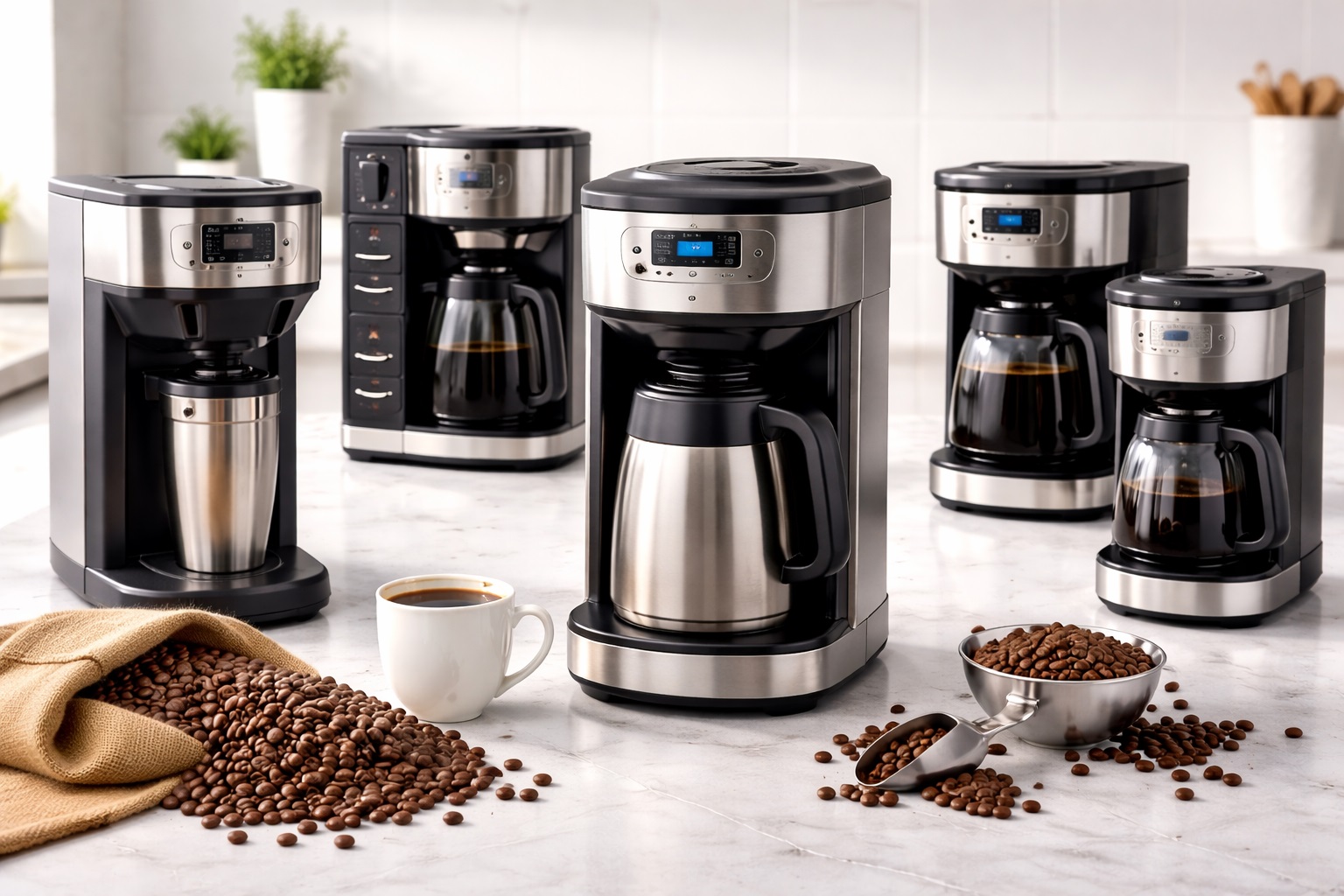
A coffee maker built around genuine heat retention solves one of the most common complaints about home brewing: coffee that goes from perfect to lukewarm within half an hour. This guide compares eight coffee makers relevant to that goal, from machines with a true insulated thermal carafe to glass-carafe models that rely on a warming plate instead, along with a couple of single-serve and espresso options where the whole question of "staying hot" works differently. Knowing which category a machine falls into matters just as much as its price.
Not every model here uses an actual thermal carafe, and we've been upfront about that throughout each review. Some rely on a warming plate under a glass carafe, which is a different, less effective approach to heat retention, while single-serve and espresso machines sidestep the issue entirely by brewing a cup fresh rather than holding a full pot for hours. Understanding these distinctions will help you pick a machine that actually solves the problem you're trying to fix, rather than one that simply advertises "keeps coffee hot" without explaining how.
Price is a useful signal here, but not a perfect one. A genuine insulated thermal carafe typically costs more to manufacture than a glass pot and warming plate, so budget machines are more likely to fall into the warming-plate category. That's not necessarily a dealbreaker, especially for smaller households that finish a pot quickly, but it's worth knowing upfront rather than assuming every coffee maker handles heat retention the same way.
Top 8 Best Coffee Makers for Heat Retention (Detailed Reviews)
1. Technivorm Moccamaster – Best For True Thermal Carafe Performance
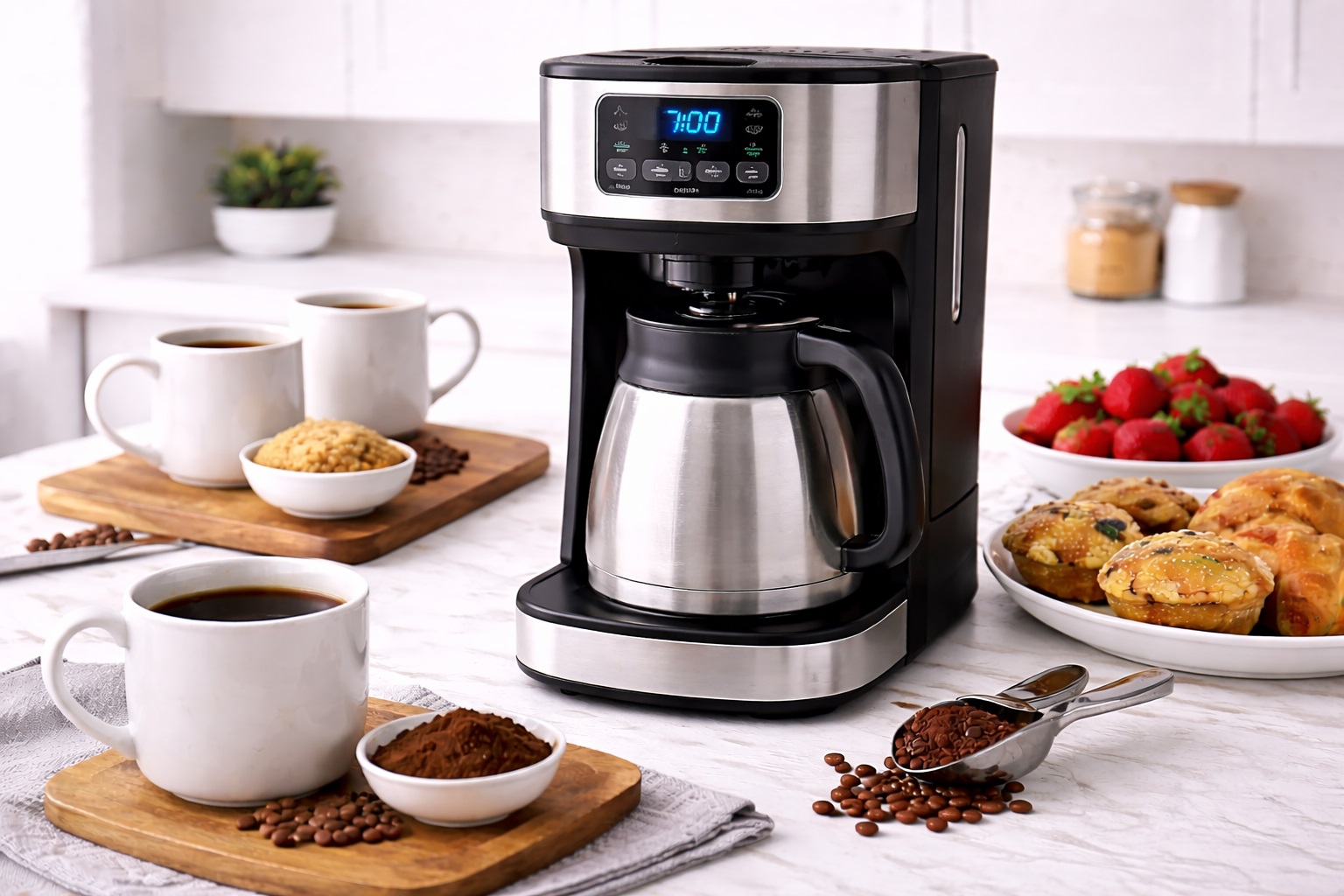
The Technivorm Moccamaster is available with an insulated thermal carafe, which keeps coffee hot for hours without relying on a warming plate that can slowly degrade flavor. Handmade in the Netherlands, the brewer pairs that thermal carafe with a fast, consistent brew cycle powered by a copper heating element, so the coffee going into the carafe starts out at the right temperature in the first place.
Because there's no hot plate constantly reheating the pot from below, coffee brewed into the thermal version tends to taste noticeably fresher hours later compared to a glass-carafe machine left sitting. The insulated design also means you can move the carafe to the table without worrying about a hot base or a cord in the way.
Its handmade construction has a well-documented reputation for durability, and replacement parts remain widely available even years after purchase, which matters for a machine you're likely to keep for a long time given its higher upfront cost.
- Pros:
- True insulated thermal carafe option available
- Fast, consistent brew cycle
- Handmade construction with a strong reliability track record
- Cons:
- Higher upfront cost than typical budget picks
- No built-in programmable timer on base models
Best For: Anyone who specifically wants a genuine thermal carafe rather than a glass pot on a warming plate.
Why We Recommend It: It's one of the more established options that pairs a true thermal carafe with a fast, well-regarded brewing process.
2. Keurig K-Elite – Best For Sidestepping the Heat-Retention Question Entirely
The Keurig K-Elite doesn't use a carafe at all, which means the usual heat-retention debate simply doesn't apply the same way. Each cup brews directly into your mug at the moment you want it, so there's no pot sitting around slowly cooling or turning bitter on a hot plate. Its iced coffee setting adjusts brew strength for cold drinks, covering the opposite end of the temperature spectrum entirely.
For people who mostly drink one or two cups spread out over a morning rather than a full pot all at once, this approach can actually solve the heat-retention problem more effectively than any carafe, thermal or otherwise, simply by brewing fresh each time instead of trying to preserve heat in a container.
The tradeoff is that this convenience comes with an ongoing cost, since pods are more expensive per cup than ground coffee. For single-serve households, though, that's often an acceptable exchange for never dealing with stale, lukewarm coffee again.
- Pros:
- No stale, cooling pot to worry about
- Iced coffee setting for cold brew drinks
- Quick, consistent brew times
- Cons:
- Ongoing pod costs add up over time
- Higher per-cup cost than ground coffee
Best For: Individuals or couples who drink coffee gradually throughout the morning rather than all at once from a shared pot.
Why We Recommend It: Brewing fresh, one cup at a time, is its own solution to the heat-retention problem, and a genuinely practical one for many households.
3. Ninja Hot and Cold Brewed – Best For Hot and Iced Versatility Without a Thermal Carafe Requirement
The Ninja Hot and Cold Brewed system offers six brew styles, and its versatility means you're not locked into one temperature approach across the whole household. For anyone whose interest in "heat retention" really comes down to wanting hot coffee available on demand alongside cold brew for later, this machine covers both ends without needing a dedicated thermal carafe.
Rather than relying purely on a carafe to hold heat, the system is built around brewing to order across its different settings, so a fresh hot cup is typically just a cycle away rather than something poured from a pot that's been sitting for an hour. The over-ice setting produces a stronger concentrate rather than diluted coffee, which holds up well even after ice starts to melt.
Controls are handled through a straightforward dial, keeping day-to-day use approachable despite the added functionality packed into one machine.
- Pros:
- Six brew styles covering hot and cold preferences
- Reduces reliance on a single carafe sitting out
- Reasonable price for the feature set
- Cons:
- More buttons and settings than a simple drip machine
- Larger footprint due to multiple brew functions
Best For: Households that want flexibility between hot and cold coffee without depending entirely on carafe-based heat retention.
Why We Recommend It: Its brew-to-order approach across six styles reduces how much you need to rely on a carafe to keep coffee at the right temperature.
4. Hamilton Beach 2-Way – Best For Budget Buyers Who Can Live With a Warming Plate
The Hamilton Beach 2-Way uses a standard glass carafe and warming plate rather than a thermal carafe, and it's worth being upfront about that: this is a budget-friendly warming-plate solution, not an insulated one. Its dual brewing modes let you brew a single serve or a full carafe, which at least limits how much coffee is sitting on the warming plate at any given time if you only need a cup or two.
For buyers on a tight budget who still want some measure of heat retention without paying for a thermal carafe, brewing smaller batches more frequently with the single-serve option is a practical workaround. The full-carafe side is best reserved for situations where the pot will be consumed relatively quickly.
Switching between the two brewing modes takes only a few seconds, so there's no real penalty for choosing single-serve on a quiet morning and saving the full carafe for when guests are over or the whole household needs a cup at once.
- Pros:
- Low upfront price
- Dual brewing modes limit how much coffee sits on the warming plate at once
- Compact enough for small kitchens
- Cons:
- Glass carafe and warming plate, not a true thermal carafe
- Build quality reflects its low price
Best For: Budget-conscious buyers who are comfortable with warming-plate heat retention rather than an insulated thermal carafe.
Why We Recommend It: Its single-serve option offers a practical way to limit how long coffee sits around, even without true thermal insulation.
5. Mr. Coffee 12-Cup – Best For Simple Warming-Plate Heat Retention on a Budget
The Mr. Coffee 12-Cup is another glass-carafe machine that relies on a warming plate rather than insulation to keep coffee hot, and at its price point that's an entirely reasonable tradeoff. Its Grab-a-Cup feature lets you pour mid-brew, which can actually help reduce how long the full pot sits finished on the plate before the first cup is poured.
This is a straightforward, no-frills machine, and buyers should go in expecting exactly that: a full pot kept warm the traditional way, without the added cost of an insulated carafe. For occasional coffee drinkers who finish a pot within an hour or so of brewing, the warming plate approach works fine in practice.
Because the mechanism is so simple, there's also very little to maintain beyond regular cleaning and occasional descaling. Replacement glass carafes are inexpensive and widely available if the original ever cracks, which keeps the total cost of ownership low even over several years of use.
- Pros:
- Among the lowest prices in the category
- Grab-a-Cup pause-and-serve function
- Simple to use with no learning curve
- Cons:
- No thermal carafe option
- Coffee can turn stale-tasting if left on the warming plate too long
Best For: Anyone who wants a reliable, affordable pot of coffee and typically finishes it within an hour of brewing.
Why We Recommend It: It's an honest, budget-friendly warming-plate option rather than a machine pretending to offer thermal-level heat retention.
6. Breville Precision Brewer – Best For Precision Brewing With a Thermal Carafe Option
The Breville Precision Brewer is available in configurations that pair its PID temperature control with an insulated thermal carafe, combining accurate extraction with genuine heat retention after the brew finishes. That combination addresses two separate problems at once: getting the water to the right temperature during brewing, and keeping the finished coffee at a good temperature afterward.
Multiple brew modes let you adjust for different batch sizes and strengths, and the more advanced basket options give you additional control over extraction that basic thermal-carafe machines typically skip. It's a pricier option, but the pairing of precise brewing and real heat retention is relatively uncommon.
As with other Breville equipment, parts and service support are generally solid, which matters given the higher investment involved in this model.
- Pros:
- Thermal carafe option paired with PID temperature control
- Multiple brew modes for different strengths and batch sizes
- Reputable brand with strong parts and service support
- Cons:
- Costs more than basic thermal-carafe machines
- Larger footprint than compact budget models
Best For: Detail-oriented coffee drinkers who want both precise extraction and a genuine thermal carafe rather than choosing one or the other.
Why We Recommend It: Combining PID accuracy with real thermal retention is a rare pairing at this price tier, making it a strong option for serious home brewers.
7. Cuisinart DCC-3200P1 – Best For Large-Batch Brewing on a Warming Plate
The Cuisinart DCC-3200P1 uses a 14-cup glass carafe on a warming plate, and its main appeal for heat-retention-minded buyers is simply volume: with more coffee in the pot, a large household drinking through it steadily can finish before the warming plate has much time to affect flavor. It also includes programmable settings, so the pot can be freshly brewed right around when people start pouring cups.
As with any warming-plate machine, coffee left sitting for a couple of hours will start to taste noticeably different than it did fresh out of the brew cycle. This model is best suited to households that go through a full carafe relatively quickly rather than nursing a pot across an entire day.
The larger reservoir that comes with the bigger carafe also means fewer refills throughout the day, which is a practical benefit for bigger households even if it doesn't change how the warming plate affects flavor over time.
- Pros:
- Large 14-cup glass carafe suits fast-moving households
- Affordable relative to its capacity
- Programmable settings for brew timing
- Cons:
- No thermal carafe option
- Flavor degrades if coffee sits too long on the warming plate
Best For: Larger households that go through a full pot within an hour or two of brewing, rather than sipping it slowly across the day.
Why We Recommend It: Its large capacity and programmable timing make it a practical warming-plate option for households that drink coffee quickly rather than gradually.
8. Breville Barista Express – Best For Drinking Coffee Fresh Rather Than Keeping It Warm
The Breville Barista Express doesn't involve a carafe at all, since it's an espresso machine built around pulling individual shots with its integrated conical burr grinder. The heat-retention question that applies to drip coffee simply doesn't come up here, because espresso is meant to be consumed immediately rather than kept warm for later.
For anyone who has struggled with a drip pot going stale on a warming plate, switching to espresso-based drinks sidesteps the whole problem by making coffee in single servings, on demand, rather than brewing a large batch upfront.
Ownership does involve more day-to-day maintenance than a simple carafe machine, including cleaning the grinder hopper and wiping the steam wand after milk drinks, but that routine is unrelated to heat retention and more about keeping the espresso mechanism working well.
- Pros:
- Coffee is brewed fresh per serving rather than held for hours
- Built-in conical burr grinder
- Produces café-style espresso and milk drinks at home
- Cons:
- Highest upfront cost on this list
- Not a solution for anyone who specifically wants a full hot pot on hand
Best For: Coffee drinkers who'd rather brew fresh, single servings than solve the heat-retention problem with a carafe at all.
Why We Recommend It: It reframes the problem entirely by making a stale, cooling pot a non-issue in the first place.
Buying Guide: How to Choose the Best Coffee Maker for Heat Retention
Not every machine marketed around "keeping coffee hot" solves the problem the same way. The sections below break down what actually affects heat retention, so you can tell the difference between genuine insulation and a warming plate doing most of the work, and so you can match the right approach to how quickly your household actually drinks coffee.
1. Thermal Carafe vs. Glass Carafe
A true thermal carafe uses double-walled insulation to hold heat without any direct heating element, which generally preserves flavor far better over several hours than a glass carafe sitting on a hot plate. Manufacturer listings usually specify which type a machine uses, so it's worth confirming before assuming a model includes real insulation.
2. How Warming Plates Affect Flavor
A warming plate keeps coffee hot by continuing to apply heat from below, which can slowly degrade taste the longer the pot sits, often producing a bitter or stale flavor after an hour or two. This happens because sustained heat continues to break down flavor compounds well past the point where the coffee was originally brewed correctly.
3. Carafe Material and Build Quality
Stainless steel thermal carafes tend to be more durable and better at retaining heat than glass, though they can be heavier and harder to see the remaining coffee level in.
4. How Quickly the Household Finishes a Pot
If your household typically finishes a pot within 30 to 45 minutes, a glass carafe on a warming plate may be perfectly adequate. Slower-drinking households, or anyone who only manages a cup or two before getting pulled away, benefit more from genuine thermal insulation that doesn't rely on continuous heating.
5. Brew Temperature Going Into the Carafe
Heat retention starts with the brewing process itself. A machine with consistent brew temperature gives the carafe, thermal or otherwise, a better starting point to hold onto.
6. Single-Serve as an Alternative to Heat Retention
If freshness matters more than convenience, a single-serve machine that brews on demand sidesteps the heat-retention question by never holding a large batch in the first place.
7. Carafe Capacity Relative to Household Size
A carafe that's too large for your household means coffee sits longer before it's finished, which matters more with a warming plate than with true thermal insulation.
8. Pour Spout Design and Drip Control
A well-designed spout reduces mess and dripping, which matters for both thermal and glass carafes but is worth checking regardless of how the machine handles heat retention.
9. Weight and Portability of the Carafe
Insulated thermal carafes are typically heavier than glass, which is worth considering if you plan to carry the carafe to a table or another room regularly.
10. Cleaning a Thermal Carafe
Thermal carafes often have a narrower opening than glass carafes, which can make thorough cleaning slightly more involved, particularly for removing coffee oil buildup over time.
11. Auto-Shutoff and Warming Plate Safety
For glass-carafe machines, an auto-shutoff feature reduces the risk of coffee sitting on a hot plate for hours unattended, which helps limit both flavor loss and unnecessary energy use.
12. Price Difference Between Thermal and Glass Models
Thermal carafe machines typically cost more than comparable glass-carafe models, so it's worth deciding how much you value all-day heat retention against the added upfront cost. For many households, the price gap is modest enough to be worth paying if a full pot regularly sits for more than an hour.
13. Long-Term Durability of the Carafe
Thermal carafes generally hold up well over time if cared for properly, while glass carafes are more prone to cracking or breaking, which is a separate consideration from heat retention itself. Replacement glass carafes are usually easy to source, while a damaged thermal carafe may be harder to replace independently of the whole machine.
Frequently Asked Questions
Is a premium coffee maker worth it?
It depends on how much you value heat retention and build quality. Premium models with a true thermal carafe often keep coffee tasting fresh for much longer than budget warming-plate machines, but a well-chosen budget option can still work for households that finish a pot quickly.
How do I maintain my coffee maker?
Regular cleaning of removable parts after each use and periodic descaling every one to three months, depending on your local water hardness, will keep most machines running well for years. Thermal carafes may need occasional deeper cleaning to remove oil buildup.
How long does coffee stay hot in a thermal carafe?
Many insulated thermal carafes can keep coffee notably hot for several hours, though the exact duration depends on the specific carafe's insulation quality and how often the lid is opened. Opening the lid to pour releases some heat each time, so a carafe that's opened frequently will cool faster than one left sealed between pours.
How long does coffee stay hot on a warming plate?
Coffee on a warming plate generally stays hot for around 30 to 60 minutes before flavor starts to noticeably decline, since the continuous heat gradually alters the taste.
Does a thermal carafe actually improve coffee flavor?
It doesn't change how the coffee tastes the moment it's brewed, but it helps preserve that original flavor for longer by avoiding the continuous heat exposure that a warming plate causes.
Are thermal carafe coffee makers more expensive?
Generally yes. Insulated thermal carafes add to the manufacturing cost, so machines with this feature tend to sit at a higher price point than comparable glass-carafe models.
Can I use a thermal carafe with any drip coffee maker?
Not always. Thermal carafes are typically designed to fit a specific machine's brew basket and dimensions, so a standalone thermal carafe isn't guaranteed to work with a machine that wasn't designed for one. If heat retention is a priority, it's generally simpler to choose a machine that already offers a thermal carafe as an included or optional accessory.
Do single-serve machines have a heat-retention problem?
Not in the traditional sense, since each cup is brewed fresh rather than held in a carafe. The tradeoff is a higher per-cup cost and no large batch ready for multiple people at once.
Why does coffee taste bitter after sitting on a warming plate?
Continuous heat exposure causes chemical changes in brewed coffee over time, breaking down some of the flavor compounds and often leaving a more bitter or stale taste the longer the pot sits.
Is stainless steel or glass better for a carafe?
Stainless steel thermal carafes generally retain heat far better and resist breaking, while glass carafes let you see the coffee level at a glance but offer no insulation once removed from a warming plate.
How often should I clean a thermal carafe?
A light rinse after each use and a deeper clean with a carafe-safe cleaning solution every few weeks helps prevent oil buildup and any lingering odors inside the insulated carafe.
Does an auto-shutoff feature help with heat retention?
Indirectly. Auto-shutoff won't make coffee stay hotter, but it prevents a warming plate from continuing to cook a nearly empty pot for hours, which can otherwise leave a burnt taste behind.
Is it worth paying extra for a thermal carafe if I live alone?
It depends on your habits. If you tend to drink coffee slowly across a few hours, a thermal carafe can be worthwhile, since it keeps the remaining coffee tasting closer to fresh than a warming plate would. If you finish a cup or two quickly, a smaller warming-plate machine or single-serve option may suit you better and cost less upfront.
Final Verdict
- Top Pick: Technivorm Moccamaster for the best combination of a genuine thermal carafe and a fast, reliable brew cycle.
- Budget Choice: Hamilton Beach 2-Way for buyers who accept warming-plate heat retention at a low price.
- Premium Choice: Breville Precision Brewer for buyers who want a thermal carafe paired with precise, PID-controlled brewing.
If keeping coffee genuinely hot for hours is your top priority, the Technivorm Moccamaster's thermal carafe option is hard to beat, especially combined with its fast, dependable brewing and long track record of durability. Buyers on a tighter budget can still get reasonable results from a warming-plate machine like the Hamilton Beach 2-Way, as long as they're realistic about finishing the pot within an hour or so of brewing rather than expecting all-day heat retention. And for anyone who wants both precise extraction and true thermal retention in one machine, the Breville Precision Brewer's insulated carafe option justifies its higher price with a level of control that basic warming-plate machines simply can't match. Whichever you choose, understanding the real difference between genuine insulation and a warming plate is the single most useful thing you can know before buying a coffee maker specifically for heat retention.