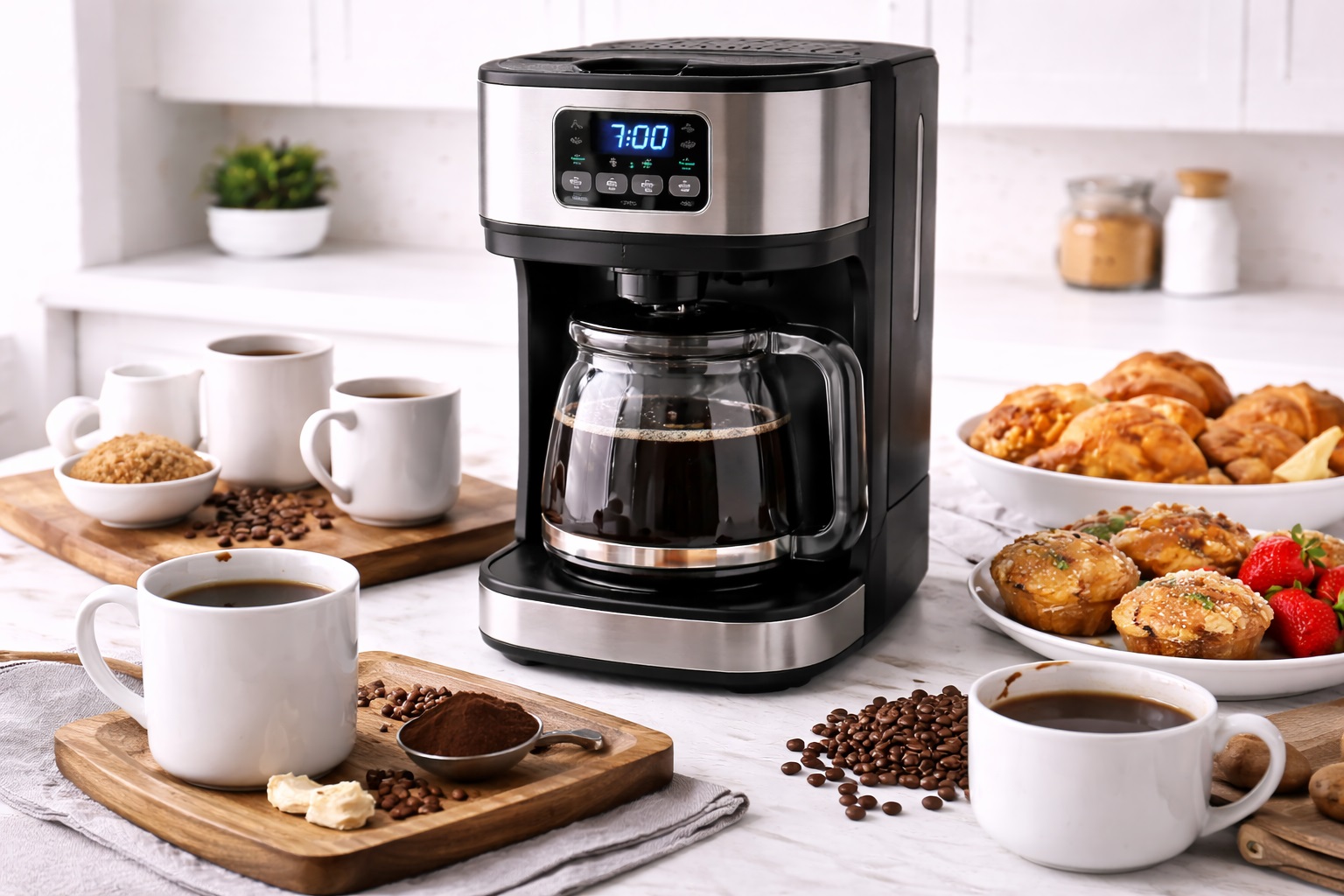
Best Drip Coffee Maker in 2026
For all the attention single-serve pods and countertop espresso machines get, the drip coffee maker remains the workhorse of most kitchens, and for good reason. A well-built drip machine brews a full carafe with minimal fuss, holds a consistent temperature throughout the cycle, and scales easily from a single cup to a pot big enough for the whole household. For anyone who values classic brewing over gadgetry, a drip coffee maker still delivers some of the most reliably good coffee per dollar of any brewing method available.
Not all drip machines are created equal, though. Water temperature consistency, carafe material, and the number of adjustable settings vary widely between models, and those differences show up directly in the cup. A machine that can't maintain the right brewing temperature throughout the cycle will underextract the grounds, leaving coffee that tastes weak or flat no matter how good the beans are.
Price also isn't a perfectly reliable guide on its own. A handful of budget-friendly machines on this list handle the fundamentals of drip brewing quite well, while a few pricier options spend part of their budget on features, like a built-in grinder or specialty brew modes, that go beyond classic drip brewing entirely. Reading each review with your own priorities in mind, rather than assuming higher price always means better classic drip performance, will help you land on the right pick.
This guide compares eight widely available drip coffee makers, from budget-friendly basics to higher-end machines built around precise temperature control and specialty features. Alongside the reviews, you'll find a detailed buying guide covering the features that actually affect brew quality, plus answers to the questions people ask most often before choosing a new machine. A couple of the picks below stretch the definition of "classic brewing" slightly, included specifically as useful points of comparison against traditional drip machines rather than as direct substitutes.
It's worth setting expectations early: the price gap between the most affordable and most expensive drip makers on this list is substantial, and that gap doesn't always translate into a proportionally better cup of coffee. Some of the extra cost goes toward genuine brewing improvements, like tighter temperature control, while some goes toward conveniences that matter more to specific routines, like a built-in grinder or specialty brew settings.
It also helps to separate the machine from the method. Drip brewing itself is a fairly forgiving process once the fundamentals, water temperature and contact time, are handled correctly, which is part of why even inexpensive machines can produce a genuinely satisfying cup. The picks below are organized to reflect that reality: some earn their spot through outright brewing precision, while others earn it through everyday value, capacity, or flexibility for households with mixed coffee habits.
Throughout this guide, "classic brewing" refers to the traditional drip method: hot water passed evenly over ground coffee in a filter basket, collecting in a carafe below. It's a deliberately different category from single-serve pod systems or espresso-focused machines, though a couple of the picks below add some of that flexibility on top of a solid drip foundation.
Top 8 Drip Coffee Maker Picks (Detailed Reviews)
1. Breville Precision Brewer – Best For Consistent Brewing Temperature
The Breville Precision Brewer is built around PID temperature control, a feature that keeps water temperature steady throughout the brew cycle rather than letting it drift the way many basic machines do. At around $300, it's priced for coffee enthusiasts who care more about extraction quality than any single convenience feature, and the payoff shows up directly in a more consistent, full-bodied cup. It also includes multiple brew profiles designed for different roast styles, which is a level of customization most machines at this price simply don't offer.
- Pros:
- PID temperature control maintains consistent brewing temperature
- Multiple brew settings for different roast styles and strengths
- Backed by a brand respected among coffee enthusiasts
- Cons:
- Higher price than most standard drip machines
- More settings to learn than a simple one-button brewer
- Larger footprint than compact basic models
Best For: Coffee enthusiasts who want precise control over brewing temperature and extraction.
Why We Recommend It: Temperature consistency is one of the biggest factors separating good drip coffee from great drip coffee, and this machine is built specifically to nail that variable rather than treating it as an afterthought the way many basic machines do.
2. Technivorm Moccamaster – Best For Handcrafted Build Quality
The Technivorm Moccamaster is handmade in the Netherlands, and that manufacturing approach shows up in a machine built with fewer, sturdier components than most mass-produced competitors. Priced around $320, it sits at the top of this list, appealing to buyers who value long-term mechanical reliability as much as brew quality. Its brewing process is also engineered to hit proper extraction temperature quickly, avoiding the slow ramp-up that can hurt flavor in cheaper machines.
- Pros:
- Handmade construction with a strong reputation for longevity
- Fast brew cycle that maintains solid extraction temperature
- Simple, minimal-parts design with fewer failure points
- Cons:
- Among the priciest options in this roundup
- Fewer digital programming features than tech-forward rivals
- Minimalist design won't appeal to buyers who want more presets
Best For: Buyers who prioritize mechanical build quality and long-term reliability over digital extras.
Why We Recommend It: Its simple, well-built design reflects a philosophy that fewer moving parts often means a longer-lasting, more consistent brewer, and its reputation among coffee enthusiasts has held up over many years on the market.
3. Cuisinart DCC-3200P1 – Best For Large Households
The Cuisinart DCC-3200P1 centers on its 14-cup glass carafe, making it one of the larger-capacity options here for households or offices that go through coffee quickly. At roughly $70, it delivers that larger batch size at a genuinely accessible price point, without asking buyers to compromise much on programmable convenience.
- Pros:
- Large 14-cup capacity suits bigger households or gatherings
- Affordable price relative to its brewing capacity
- Programmable settings for scheduled brewing
- Cons:
- Glass carafe can let coffee cool faster than a thermal one
- Fewer specialty brew settings than pricier rivals
- Basic plastic housing feels less premium than metal-bodied machines
Best For: Larger households or offices that need to brew a big batch without a large price tag.
Why We Recommend It: The generous carafe size and low price make it one of the most practical picks for anyone brewing for more than just themselves, especially in offices or larger family households.
4. Ninja Hot and Cold Brewed – Best For Brew Style Variety
The Ninja Hot and Cold Brewed system offers six brew styles, giving it more flexibility than a typical single-purpose drip machine, including options for iced coffee and different strength levels. At around $180, it sits in the middle of this list on price while covering more brewing scenarios than most direct competitors, which can reduce the need for a separate cold brew setup during warmer months.
- Pros:
- Six distinct brew styles cover hot, iced, and specialty options
- Reasonably priced relative to its versatility
- Backed by a widely recognized kitchen appliance brand
- Cons:
- More settings to navigate than a simple drip machine
- Larger unit than basic single-purpose brewers
- Some brew styles take noticeably longer than a standard cycle
Best For: Households where different people prefer different coffee styles throughout the week.
Why We Recommend It: Few machines at this price point cover as many brewing scenarios in one countertop footprint, which helps justify its size for households that actually use the variety on offer.
5. Keurig K-Elite – Best For Fast, Single-Cup Convenience
The Keurig K-Elite trades full-carafe brewing for speed and convenience, and its iced coffee setting extends that convenience to cold brew without a separate machine. Priced around $170, it appeals most to those who value quick single cups over classic full-pot brewing, and it remains a useful reference point for anyone deciding between pod-based and traditional drip brewing.
- Pros:
- Fast single-cup brewing with minimal setup each time
- Dedicated iced coffee setting adds year-round versatility
- Compact footprint compared to full-carafe machines
- Cons:
- Relies on pods rather than classic bulk-ground brewing
- Ongoing pod cost adds up compared to bulk coffee grounds
- Not ideal for brewing a full carafe for multiple people
Best For: Single-cup drinkers who prioritize speed and convenience over traditional carafe brewing.
Why We Recommend It: It's a useful contrast to classic drip brewing for households that sometimes want speed over a full pot, particularly on mornings when only one person actually wants coffee.
6. Breville Barista Express – Best For Espresso-Curious Coffee Lovers
The Breville Barista Express is built around an integrated conical burr grinder, letting owners grind beans fresh immediately before brewing espresso-style shots rather than working with pre-ground coffee. At around $700, it's by far the priciest option here, reflecting its position as more of an espresso machine than a traditional drip brewer, and it's included in this roundup mainly as a reference point for buyers weighing classic drip against espresso-style brewing.
- Pros:
- Integrated burr grinder delivers fresher grounds than pre-ground coffee
- Produces espresso-style shots rather than standard drip coffee
- Backed by a brand respected among serious home baristas
- Cons:
- Significantly more expensive than every other option on this list
- Steeper learning curve than a standard drip machine
- Not a direct substitute for classic full-carafe drip brewing
Best For: Buyers who want espresso-quality shots at home and are willing to pay a significant premium for it.
Why We Recommend It: For anyone willing to spend well beyond typical drip-maker prices, the integrated grinder delivers a noticeably fresher result than pre-ground alternatives, making it worth the premium for genuine espresso enthusiasts.
7. Mr. Coffee 12-Cup – Best For Budget-Friendly Simplicity
The Mr. Coffee 12-Cup keeps things simple with its Grab-a-Cup feature, which lets you pour a cup mid-brew without spilling grounds and hot water everywhere. At around $30, it's the most affordable machine on this list by a wide margin, appealing to anyone who just wants dependable classic brewing without extra frills or a steep learning curve.
- Pros:
- Lowest price point among all the machines compared here
- Grab-a-Cup feature adds everyday convenience
- Simple, easy-to-learn controls suit any skill level
- Cons:
- Fewer brew customization settings than pricier machines
- Basic plastic construction feels less premium
- Glass carafe doesn't retain heat as long as a thermal one
Best For: Budget-conscious buyers who want dependable classic drip brewing without paying for extras.
Why We Recommend It: It proves that a satisfying pot of classic drip coffee doesn't require a large investment, making it an easy entry point for anyone new to brewing at home.
8. Hamilton Beach 2-Way – Best For Mixed Household Flexibility
The Hamilton Beach 2-Way offers dual brewing options, letting one machine handle both a full carafe and a single cup depending on who's making coffee and how much they need. At roughly $60, it's an affordable way to cover both brewing styles without buying two separate machines or dedicating counter space to each one.
- Pros:
- Dual brewing modes cover both single-cup and full-carafe needs
- Affordable price for the flexibility it offers
- Compact enough for smaller kitchens
- Cons:
- Neither brewing mode is as refined as a dedicated single-purpose machine
- Fewer premium features than higher-end competitors
- Basic plastic housing feels less durable long-term
Best For: Households where some mornings call for a single cup and others call for a full pot.
Why We Recommend It: The dual-mode design is a practical solution for mixed households without the cost or counter space of two separate machines, covering most everyday brewing needs at a genuinely affordable price.
Buying Guide: How to Choose the Best Drip Coffee Maker
Drip coffee makers look simple from the outside, but small engineering differences make a real difference in the cup. The thirteen factors below cover what actually separates a mediocre drip machine from one that consistently produces a great pot, starting with the variables that affect flavor most directly and moving toward convenience and long-term ownership considerations.
1. Water Temperature Consistency
Coffee generally extracts best when brewed between roughly 195 and 205 degrees Fahrenheit. Machines that maintain a stable temperature throughout the cycle, rather than letting it drift, tend to produce noticeably better-tasting coffee regardless of bean quality, since even excellent beans can taste flat if the water is too cool.
2. Carafe Capacity and Household Size
Drip makers commonly range from single-cup brewers up to 12- or 14-cup carafes. Matching capacity to how much coffee your household actually drinks avoids either constant refilling or coffee sitting too long on a warming plate, both of which affect how enjoyable the last cup from a pot ends up tasting.
3. Glass vs. Thermal Carafe
Glass carafes are simple and let you see how much coffee remains, but they rely on a warming plate that can slowly overcook coffee left sitting. Thermal carafes keep coffee hot without a heating element, which better preserves flavor over time and is generally the better choice for anyone who doesn't finish a pot right away.
4. Brew Strength Settings
Adjustable strength settings let you dial in a bolder or milder cup without changing your coffee-to-water ratio manually. This matters more for households where preferences vary from person to person, since not everyone wants the same intensity from the same pot.
5. Programmable Timers and Auto Shut-Off
A programmable timer that starts brewing automatically before you wake up is a popular convenience feature, and an auto shut-off function adds peace of mind if you tend to leave the house in a hurry without double-checking the kitchen.
6. Built-In Grinder vs. Pre-Ground Convenience
A built-in grinder produces fresher coffee by grinding beans immediately before brewing, but it adds cost and another component that needs regular cleaning. Pre-ground convenience remains simpler for those who don't want to manage whole beans or an extra cleaning step each morning.
7. Brew Speed
Faster isn't always better, since rushing the brew cycle can lead to underextraction. Look for a machine that balances reasonable brew time with proper contact time between water and grounds, rather than one that advertises speed as its primary selling point.
8. Water Filtration and Reservoir Design
Some machines include built-in water filters that can improve taste, particularly with hard or heavily chlorinated tap water. A reservoir that's easy to fill and see through also simplifies daily use and helps you avoid running the machine on too little water.
9. Footprint and Countertop Space
Larger machines with grinders or multiple brew modes take up considerably more counter space than a basic drip maker. Measuring your available space before buying avoids an awkward fit later, especially under low cabinets.
10. Ease of Cleaning and Descaling
Mineral buildup from tap water affects every drip machine eventually, so look for models with a straightforward descaling process and dishwasher-safe removable parts to keep maintenance simple and keep flavor consistent over the machine's lifespan.
11. Noise Level During Brewing
Most drip machines are relatively quiet, but grinder-equipped models can be noticeably louder during the grinding cycle. This is worth considering if you brew early in the morning in a shared household with people still asleep.
12. Build Quality and Long-Term Reliability
Simpler machines with fewer electronic components sometimes prove more reliable over years of daily use than feature-heavy models with more parts that can eventually fail, so factor expected lifespan into the overall value equation.
13. Balancing Price Against Genuine Brewing Improvements
Not every added dollar goes toward better-tasting coffee. Decide whether you're paying for genuine brew-quality improvements like temperature control, or for conveniences like grinders and specialty settings that matter more to specific routines than to the coffee itself.
Frequently Asked Questions
The questions below cover what shoppers want to know most often when comparing drip coffee makers against pod machines and other brewing methods, from ideal water temperature to how long a good machine should last.
Is a premium coffee maker worth it?
Often, yes, particularly when the premium goes toward genuine brewing improvements like consistent temperature control rather than just extra digital displays or presets. Someone who brews multiple pots a day will get more value from that upgrade than an occasional drinker.
How do I maintain my coffee maker?
Clean the carafe and basket after each use, descale the machine periodically according to the manufacturer's instructions, and replace any water filters on the recommended schedule to keep the coffee tasting fresh and the machine running smoothly.
What's the ideal brewing temperature for coffee?
Most coffee extracts best between roughly 195 and 205 degrees Fahrenheit. Water that's too cool under-extracts and tastes weak, while water that's too hot can extract bitter compounds that overwhelm the coffee's natural sweetness.
Is a glass or thermal carafe better?
Thermal carafes generally preserve flavor better since they don't rely on a warming plate that can slowly overcook the coffee. Glass carafes are simpler and let you see how much coffee remains at a glance, which some people still prefer for that reason alone.
How is drip coffee different from pour-over?
Drip machines automate the same basic process a manual pour-over uses, running heated water over grounds in a filter, but with less manual control over pour speed and pattern than a hands-on pour-over method offers to more hands-on brewers.
Do single-serve pod machines make as good coffee as drip makers?
Pod machines prioritize speed and convenience over the fuller extraction control a good drip machine can offer, so quality varies more by pod brand than by the machine itself, and results can be inconsistent across different pod types.
How often should I descale my coffee maker?
Most manufacturers recommend descaling every one to three months depending on water hardness and how often the machine is used, since mineral buildup affects both temperature and flow rate over time and can eventually shorten the heating element's lifespan.
Does a built-in grinder really improve the taste?
Yes, generally. Coffee grounds lose freshness quickly after grinding, so brewing immediately after grinding tends to produce a noticeably better cup than coffee ground days or weeks earlier and left exposed to air.
How much coffee should I use per cup?
A common starting ratio is roughly one to two tablespoons of ground coffee per six ounces of water, though this can be adjusted up or down based on personal taste and roast strength.
What size drip coffee maker should I buy?
A single-serve or small-carafe model suits individuals, while a 10- to 14-cup model fits larger households, offices, or anyone who regularly entertains guests over coffee and doesn't want to brew multiple batches back to back.
How long does a drip coffee maker typically last?
With regular descaling and proper cleaning, a well-built drip machine can last several years, though heating elements and pumps in feature-heavy machines may wear out sooner than simpler designs with fewer components.
Can I use my drip coffee maker for tea or other beverages?
Some models support this, though residual coffee oils can affect the taste of more delicate beverages unless the machine is thoroughly cleaned beforehand, so a dedicated kettle is usually a better choice for tea drinkers.
Is filtered water necessary for good coffee?
Filtered water can noticeably improve taste, particularly if your tap water has strong mineral content or chlorine, since water quality directly affects the final flavor of the brewed coffee more than most people expect.
Why does my coffee taste different from one brew to the next?
Small variations in grind size, water temperature, and coffee-to-water ratio can all shift the taste noticeably from one brew to the next, even using the same beans and the same machine.
Should I buy whole beans or pre-ground coffee?
Whole beans generally stay fresher longer and let you control grind size for your specific machine, while pre-ground coffee offers convenience at some cost to freshness, especially once the bag has been opened for more than a couple of weeks.
Why does grind size matter for drip brewing?
Grind size affects how quickly water extracts flavor from the coffee. Too fine a grind for a drip machine can lead to over-extraction and bitterness, while too coarse a grind can leave the coffee tasting weak and underdeveloped, since the water passes through too quickly.
Can a coffee maker affect how long my beans stay fresh?
The machine itself doesn't affect bean freshness directly, but models with a built-in grinder encourage buying whole beans and grinding only what you need, which tends to preserve freshness better than pre-grinding a large batch in advance.
Final Verdict
- Top Pick: Breville Precision Brewer, for the most consistent brewing temperature and overall extraction quality on this list.
- Budget Choice: Mr. Coffee 12-Cup, for dependable classic drip brewing at the lowest price point available.
- Premium Choice: Breville Barista Express, for buyers who want espresso-quality shots and are willing to pay a significant premium for a built-in grinder.
Classic drip brewing has stayed relevant precisely because it does one thing well: producing a full pot of consistent, good coffee with minimal fuss. Whether you land on a budget-friendly basic or a precision-focused machine with PID temperature control, the picks above should cover most household brewing needs without unnecessary complexity. Even as pod machines and espresso systems continue to gain popularity, a reliable drip maker remains one of the simplest ways to serve a full pot of good coffee to multiple people at once.
If you're mainly brewing for yourself most mornings, a smaller-capacity or single-serve option may suit your routine better than a full 12-cup carafe. For households or offices that go through coffee quickly, prioritizing carafe size and brew speed over specialty features will likely deliver more everyday satisfaction than a machine loaded with settings you rarely use.
It's also worth remembering that the coffee itself matters as much as the machine brewing it. Fresh, well-roasted beans ground to an appropriate size will outperform stale, pre-ground coffee in even the most expensive drip maker, while a modest budget machine paired with quality beans and clean, filtered water can still produce a genuinely satisfying cup. Treat the machine as one part of the equation, not the whole solution, and any of the picks above should serve you well for years of daily brewing.