Best Durable Coffee Maker in 2026
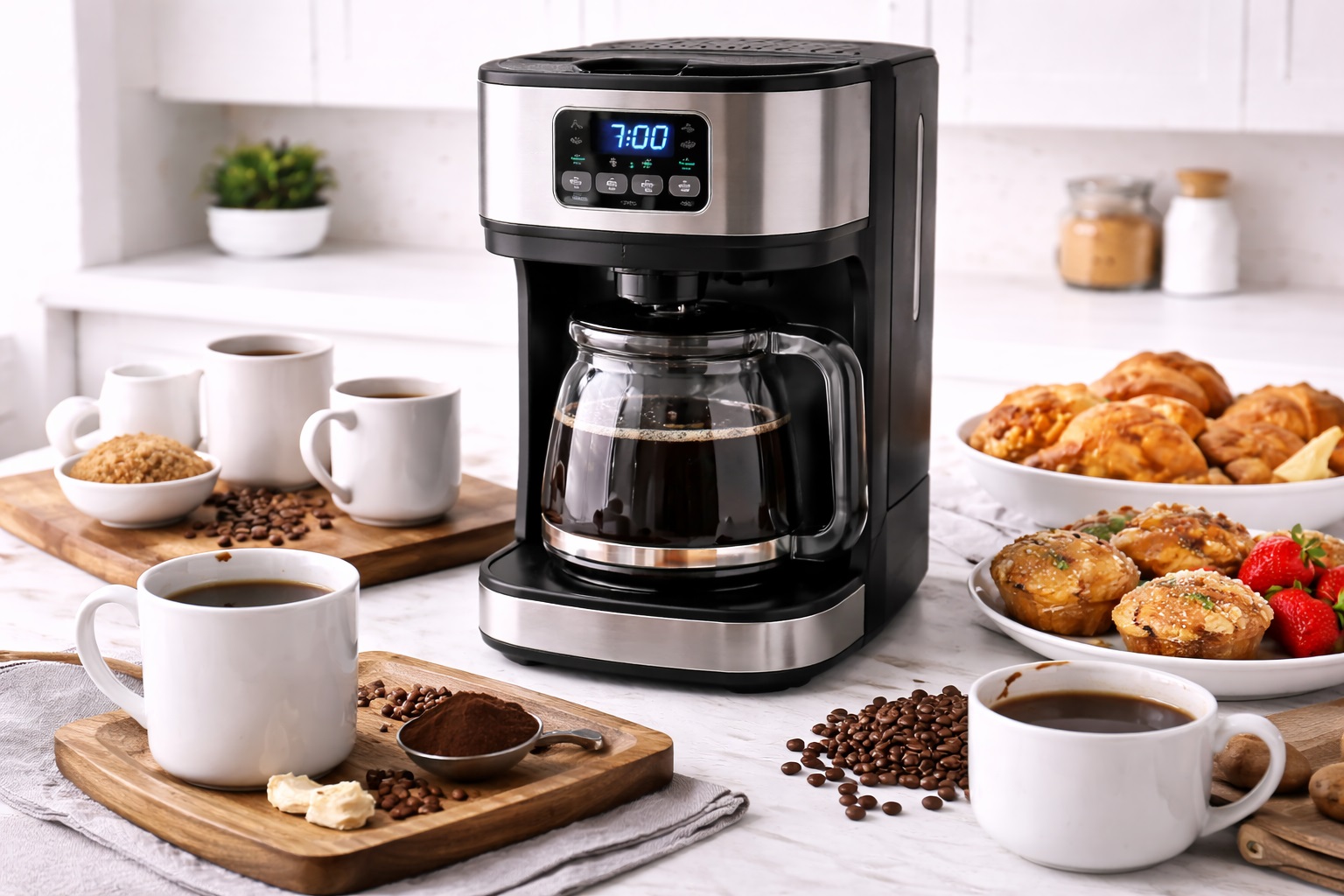
A coffee maker earns its spot on the counter through daily use, and daily use is exactly where cheaply built machines start to fail. Carafes crack, warming plates stop heating evenly, and internal components wear out long before the appliance has paid for itself. This guide focuses on coffee maker models built for reliability, comparing the construction, brewing consistency, and long-term track record of eight well-known machines so you can choose one that will still be brewing strong years from now.
Durability in a coffee maker is not just about thick plastic or a heavy base. It comes down to the quality of the heating element, the seals and valves that control water flow, the motor or pump (in machines that use one), and how well the brand supports its products with parts and warranty coverage. A machine that looks premium on the shelf can still underperform if its internal components are cheaply sourced, while a simple, no-frills design can outlast far more expensive competitors simply because there is less to go wrong.
This guide compares the top-rated coffee makers of 2026 across a range of prices and brewing styles, from simple single-serve pod machines to hand-assembled drip brewers built for decades of service. Whether you want the least expensive dependable option or you are ready to invest in a machine designed to be repaired rather than replaced, there is a model here suited to your kitchen and your morning routine.
Top 8 Best coffee maker Picks (Detailed Reviews)
1. Hamilton Beach 2-Way – Best For Dual Brew Flexibility
The Hamilton Beach 2-Way earns its place on this list by covering two common brewing needs in a single, affordably priced unit. Its dual brewing options let it switch between a full carafe for the household and a single cup for someone heading out the door, which reduces the temptation to run two separate appliances. Hamilton Beach has built a long-standing reputation for producing simple, serviceable kitchen appliances, and this model continues that tradition with a straightforward design that keeps failure points to a minimum. That kind of simplicity tends to pay off years down the road, since there is simply less inside the machine that can wear out or need replacing over time.
- Pros:
- Dual brewing options cover both carafe and single-serve needs
- Straightforward design with fewer parts prone to failure
- Backed by a well-established, widely serviced brand
- Cons:
- Plastic housing feels less premium than metal-bodied competitors
- Warming plate can over-extract coffee if left on too long
Best For: Households that want one machine to handle both a full pot and a quick single cup without paying for a premium brand name.
Why We Recommend It: It delivers genuine dual-brew versatility at a price that makes it easy to replace individual parts, such as the carafe, without a major financial hit if something eventually wears out.
2. Keurig K-Elite – Best For Single-Serve Convenience
The Keurig K-Elite is built around pod-based brewing, which sidesteps many of the mechanical wear points found in traditional drip machines, such as drip baskets, permanent filters, and carafes that can chip or crack. Its iced coffee setting adds a dedicated cold-brew mode, extending its usefulness beyond hot mornings into year-round service. Keurig's single-serve platform has become a kitchen staple precisely because the pod system is simple, consistent, and easy for the brand to support with replacement parts and troubleshooting. Because there is no carafe, drip basket, or exposed heating plate, several of the most common wear-and-tear failure points found on traditional machines simply do not exist on this design.
- Pros:
- Iced coffee setting adds year-round versatility
- Simple pod-based mechanism with fewer moving parts than drip carafes
- Backed by a widely recognized, well-supported brand
- Cons:
- Higher ongoing cost from proprietary pods compared to ground coffee
- Internal water lines require periodic descaling to stay reliable
Best For: Coffee drinkers who prioritize consistency and convenience over the lower per-cup cost of ground coffee.
Why We Recommend It: Its pod-based mechanism has fewer parts that can fail compared to a full drip system, and the brand's scale means troubleshooting help and replacement units are easy to find.
3. Mr. Coffee 12-Cup – Best For Budget Reliability
The Mr. Coffee 12-Cup proves that a dependable coffee maker does not need a high price tag. Its Grab-a-Cup feature, which pauses the brew cycle so you can pour a cup before the pot finishes, is a small but genuinely useful convenience that has kept this model line popular for years. As the most affordable option in this lineup, it is a sensible entry point for anyone who wants a reliable pot of coffee without committing significant money to an untested machine. Even if it does not last quite as long as pricier competitors, its low cost means that replacing it every few years still works out to reasonable long-term value.
- Pros:
- Grab-a-Cup feature adds everyday convenience
- Lowest price point in this comparison, easing the cost of eventual replacement
- Long production history with widely available replacement carafes
- Cons:
- Basic plastic construction shows wear faster than metal-bodied machines
- Fewer advanced features than pricier competitors
Best For: Budget-conscious buyers who want a no-fuss drip coffee maker that has proven itself over many years on the market.
Why We Recommend It: It is the most affordable machine here, making it an easy, low-risk way to get dependable daily coffee while keeping replacement costs manageable if it eventually needs to be swapped out.
4. Technivorm Moccamaster – Best For Long-Term Durability
The Technivorm Moccamaster is widely regarded as one of the most durable drip coffee makers available, and its handmade construction in the Netherlands is central to that reputation. Rather than mass-produced plastic assemblies, the Moccamaster relies on a copper heating element and hand-wired components that are designed to be repaired rather than discarded when something goes wrong. This machine is the clearest example in the lineup of a coffee maker built specifically around the idea of reliability as a long-term investment. Many owners keep the same unit running for over a decade, and its straightforward, repair-friendly internals mean a worn part can often be swapped rather than forcing a full replacement.
- Pros:
- Handmade in the Netherlands with premium internal components
- Copper heating element known for consistent, repeatable brew temperatures
- Long track record of parts availability and repairability
- Cons:
- Significant upfront cost compared to mass-market machines
- No advanced digital programming or app connectivity
Best For: Buyers who want the most durable, repair-friendly drip coffee maker in this lineup and are willing to pay more upfront for it.
Why We Recommend It: Its hand-assembled build and reputation for being serviced rather than replaced make it the standout choice for anyone whose top priority is genuine long-term reliability.
5. Ninja Hot and Cold Brewed – Best For Iced Coffee Variety
The Ninja Hot and Cold Brewed system stands out for its six brew styles, which let one machine handle everything from a classic hot cup to a full pitcher of cold brew. That versatility means fewer specialized appliances cluttering the counter, and Ninja's broader small-appliance lineup gives this model solid brand backing when it comes to parts and support. For households that want variety without sacrificing dependability, it strikes a practical middle ground. Households that entertain often or drink coffee different ways throughout the day tend to get the most value out of this kind of flexibility.
- Pros:
- Six brew styles cover hot, iced, and concentrated coffee
- Reduces the need for separate cold brew equipment
- Backed by a large, well-known appliance brand
- Cons:
- More complex internals than a basic drip machine, with more that can wear out
- Larger footprint than simpler single-purpose brewers
Best For: Coffee drinkers who want one dependable machine that can also produce cold brew and iced coffee without buying separate equipment.
Why We Recommend It: It combines genuine versatility with the backing of an established brand, so you are not sacrificing long-term support just to get more brewing options.
6. Breville Barista Express – Best For At-Home Espresso
The Breville Barista Express is the premium pick in this lineup, built around an integrated conical burr grinder that lets you go from whole beans to espresso in one machine. Breville has built its reputation on solidly engineered semi-professional appliances, and this model reflects that with metal construction and components designed for frequent daily use rather than occasional brewing. It is the most expensive option here, but that price reflects genuine build quality and a broader feature set than any drip machine on this list. For anyone who already spends money on café-bought espresso drinks, the higher upfront cost can pay for itself over time while also delivering a machine built to handle daily grinding and brewing cycles for years.
- Pros:
- Integrated conical burr grinder for fresh, on-demand grinding
- Metal housing and components built for frequent daily use
- Reputable brand known for semi-professional home espresso machines
- Cons:
- Highest price point in this comparison
- Steeper learning curve than a simple drip coffee maker
Best For: Espresso enthusiasts who want grinder and brewer combined in one durable, well-engineered machine and are prepared to pay a premium for it.
Why We Recommend It: Its integrated grinder and metal build quality justify the highest price on this list for anyone serious about espresso-based drinks at home.
7. Breville Precision Brewer – Best For Precision Temperature Control
The Breville Precision Brewer takes a more traditional drip format and adds PID temperature control, a feature usually reserved for higher-end espresso machines, to keep water temperature consistent throughout the brew cycle. That consistency matters for reliability because uneven heating is one of the most common reasons drip coffee makers under-extract or over-extract coffee over time. Breville's engineering focus shows through here in a machine designed to behave the same way on day one thousand as it did on day one. That focus on consistency also tends to reduce the thermal stress that causes many cheaper heating elements to degrade faster than expected.
- Pros:
- PID temperature control for consistent brew temperature over time
- Multiple brew settings for different roast and grind types
- Backed by a reputable, engineering-focused appliance brand
- Cons:
- Premium price relative to basic drip machines
- Larger unit that requires more counter space
Best For: Drip coffee purists who want the consistency of professional-grade temperature control without switching to a pod or espresso system.
Why We Recommend It: Its PID temperature system is specifically engineered to maintain brewing consistency over the long haul, which is one of the clearest markers of a reliably built machine.
8. Cuisinart DCC-3200P1 – Best For Everyday Family Brewing
The Cuisinart DCC-3200P1 rounds out this list as a dependable, full-featured drip machine built around a 14-cup glass carafe, making it well suited to larger households or anyone who regularly serves multiple cups at once. Cuisinart has a long history in kitchen appliances, and this model benefits from that experience with programmable settings and a design intended for daily, repeated use rather than occasional brewing. It sits in the middle of this lineup on price, offering a practical balance between cost and dependable performance. Its programmable features are simple enough to operate intuitively, which reduces the odds of user error contributing to premature wear.
- Pros:
- 14-cup glass carafe suited to larger households
- Programmable settings for consistent daily brewing
- Long-established brand with wide parts availability
- Cons:
- Glass carafe is more breakable than stainless steel alternatives
- Bulkier footprint than smaller single-serve machines
Best For: Larger households that need a high-capacity, programmable drip machine at a mid-range price.
Why We Recommend It: It balances generous brewing capacity with the kind of long production history that makes replacement carafes and parts easy to find years down the line.
Buying Guide: How to Choose the Best Durable Coffee Maker
1. Build Materials Matter More Than Looks
Stainless steel and metal-reinforced housings generally outlast all-plastic bodies, especially around hinges, lids, and warming plates that see repeated daily contact. When comparing two similarly priced machines, favor the one with metal components in high-wear areas even if the plastic model looks slightly sleeker on the shelf. Pay particular attention to the lid latch and carafe handle, since these small parts see repeated stress every single day and are often the first to crack.
2. Carafe Type Affects Long-Term Cost
Glass carafes are common and inexpensive to replace, but they are also the single most frequently broken part of any drip coffee maker. Stainless steel carafes cost more upfront but eliminate breakage as a failure point entirely, which can matter if you are optimizing for years of trouble-free service. Double-walled stainless carafes also tend to keep coffee hotter for longer without a warming plate, which removes another common source of scorched, over-extracted flavor.
3. Simpler Mechanisms Tend to Last Longer
Every added feature, from digital displays to grind-and-brew functions, introduces another component that can eventually fail. If reliability is the top priority, a machine with a simple, well-tested mechanism will often outlast a feature-packed competitor, even if it does less. This is why some of the longest-serving coffee makers on the market are also among the plainest looking.
4. Check the Warranty Length and What It Covers
A longer warranty period is one of the more honest signals a manufacturer can give about how long it expects a product to last. Read the fine print, since some warranties only cover the motor or heating element and exclude carafes, seals, or plastic housings. It also helps to check whether the warranty requires the original owner and receipt, since some coverage does not transfer if you buy secondhand.
5. Consider How Easy the Machine Is to Descale
Mineral buildup from hard water is one of the leading causes of coffee maker failure over time. Machines with accessible water reservoirs and clear descaling instructions tend to stay reliable longer than models where scale can silently accumulate in hidden lines. If you live in an area with hard water, prioritizing a machine with a simple, visible reservoir will make routine maintenance far less of a chore.
6. Match Capacity to Your Actual Household Needs
An oversized machine brewed at a fraction of its capacity every day can develop uneven wear on its heating element, while an undersized machine run back-to-back multiple times a day wears out faster than one sized correctly. Choose a capacity that matches your typical daily use. If your household size or coffee habits change over time, it is worth revisiting whether your current machine's capacity still makes sense rather than continuing to over- or under-brew it.
7. Weigh Pod Systems Against Long-Term Cost
Single-serve pod machines often have simpler internals and fewer failure points than drip machines, but the ongoing cost of proprietary pods adds up over years of use. Factor that recurring cost into your overall reliability and value calculation. Over several years, the pod expense on a heavily used single-serve machine can easily exceed the original purchase price of the appliance itself.
8. Look at the Brand's Track Record for Parts Availability
A coffee maker is only as durable as the parts you can get for it once something wears out. Established brands with long production histories tend to keep replacement carafes, filters, and seals available for years after a model's release. Before buying, it is worth a quick search to confirm that spare parts for a specific model are still being sold, not just the machine itself.
9. Prioritize Consistent Temperature Control
Coffee makers that maintain a steady brewing temperature, whether through a PID system or a well-designed heating element, tend to produce more consistent results and put less thermal stress on internal components over time. Fluctuating temperatures not only affect flavor but can also accelerate wear on heating elements that constantly cycle on and off to compensate.
10. Don't Ignore the Power Cord and Base Design
Frayed cords and wobbly bases are common, overlooked failure points. A wide, stable base and a well-insulated cord are small details that make a noticeable difference in a machine's real-world lifespan. It is also worth checking that the cord is long enough to reach a nearby outlet without stretching, since strain at the connection point is a quiet but common cause of eventual failure.
11. Read Long-Term Owner Feedback, Not Just Initial Impressions
A coffee maker can perform flawlessly for the first few months before problems appear. Whenever possible, weigh feedback from owners who have used a model for a year or more over feedback based on the first few brews. Reviews that specifically mention how a machine performs after heavy, repeated use are far more useful for judging durability than a first impression written the day it arrived.
12. Decide Whether Repairability Matters to You
Some machines, like hand-assembled models, are explicitly designed to be opened and repaired. Others are sealed units meant to be replaced when they fail. If sustainability and long-term value matter to you, favor brands that support repairs. Machines designed with accessible screws and modular parts, rather than fully sealed housings, are usually the ones that can actually be serviced when something eventually breaks.
13. Balance Upfront Price Against Expected Lifespan
A more expensive machine that lasts a decade can be cheaper per year of use than a budget model replaced every eighteen months. When comparing durability claims, think in terms of cost per year of service rather than sticker price alone. A simple way to do this is dividing the purchase price by the number of years you realistically expect the machine to last, then comparing that figure across the models you are considering.
Frequently Asked Questions
What makes a coffee maker genuinely durable?
Durability generally comes down to quality components in the heating element and water lines, a sturdy housing, and a manufacturer that supports the product with parts and a meaningful warranty, rather than any single standout feature. A machine that checks all of these boxes will typically outperform one that simply looks premium but skimps on the components you cannot see.
Are more expensive coffee makers always more reliable?
Not necessarily. Price often reflects added features rather than build quality, and some simple, affordable machines have long track records of dependable service specifically because they have fewer parts that can fail. It is more useful to compare specific components and warranty terms than to assume price alone predicts longevity.
How often should I descale my coffee maker?
Most manufacturers recommend descaling every one to three months depending on your water hardness. Regular descaling is one of the simplest ways to extend the working life of any coffee maker. Skipping this step for a year or more is one of the most common reasons an otherwise well-built machine starts brewing slower or tasting off.
Do stainless steel carafes really last longer than glass?
Yes, in the sense that they cannot crack or shatter the way glass carafes can. Glass remains popular because it lets you see the coffee level and is inexpensive to replace when it does break. Stainless steel is the better choice if you have ever had a glass carafe slip out of your hands or crack from a sudden temperature change.
Is a single-serve pod machine less reliable than a drip machine?
Not inherently. Pod machines have fewer moving parts than many drip systems, though they do require periodic descaling of internal lines just like any other coffee maker. The absence of a carafe and drip basket also removes two of the most commonly replaced parts on traditional machines.
How long should a well-built coffee maker last?
A well-maintained mid-range machine commonly lasts five to seven years, while premium, hand-assembled models are often designed and supported for a decade or more with proper care.
Does a longer warranty always mean a more durable machine?
A longer warranty is a reasonable signal of manufacturer confidence, but always check what components are actually covered, since some warranties exclude carafes, filters, or cosmetic parts.
Can hard water shorten a coffee maker's lifespan?
Yes. Mineral deposits from hard water are one of the most common causes of reduced performance and eventual failure in coffee makers, which is why regular descaling matters so much.
Is it worth paying more for a machine with an integrated grinder?
If you want fresh-ground coffee and are willing to maintain an additional mechanical component, an integrated grinder can be worthwhile. If simplicity and reliability are your main goals, a separate grinder and a basic brewer may be easier to maintain individually.
Should I buy a coffee maker based on brand reputation alone?
Brand reputation is a useful signal, especially for parts availability and support, but it should be weighed alongside build materials, warranty terms, and how the specific model fits your daily brewing habits.
What is the most common reason coffee makers fail early?
Mineral scale buildup and worn seals or valves are among the most frequent causes of early failure, both of which are made worse by skipping regular cleaning and descaling.
Are programmable features worth the added complexity?
Programmable timers and settings add convenience, but they also add electronic components that can eventually fail. If you rarely use programming features, a simpler manual machine may serve you just as reliably for longer. Before paying extra for a digital display or app connectivity, honestly consider how often you would actually use those features day to day.
Can I extend the life of any coffee maker with basic maintenance?
Yes. Regular descaling, using filtered water where possible, cleaning the carafe and basket after each use, and avoiding leaving the machine on a warming plate for hours at a time can meaningfully extend almost any coffee maker's working life. These habits cost nothing and take only a few extra minutes a week, yet they are often the difference between a machine that lasts three years and one that lasts eight.
Final Verdict
- Top Pick: Technivorm Moccamaster for its hand-assembled construction and reputation as the most repair-friendly, long-lasting option in this lineup.
- Budget Choice: Mr. Coffee 12-Cup for dependable daily brewing at the lowest price point in this comparison.
- Premium Choice: Breville Barista Express for buyers who want an integrated grinder and semi-professional build quality and are willing to pay the highest price here for it.
There is no single coffee maker that suits every household, but reliability is rarely about spending the most money. It comes down to matching build quality, brewing style, and maintenance habits to how you actually use your machine every morning. Whether you choose the budget-friendly Mr. Coffee, the hand-built Moccamaster, or one of the feature-rich Breville models in between, prioritizing genuine build quality over flashy extras will pay off in fewer replacements and more consistent coffee for years to come. Take the time to weigh how you actually brew and drink your coffee each day against the strengths of each machine above, and the right long-term match will be easier to spot.