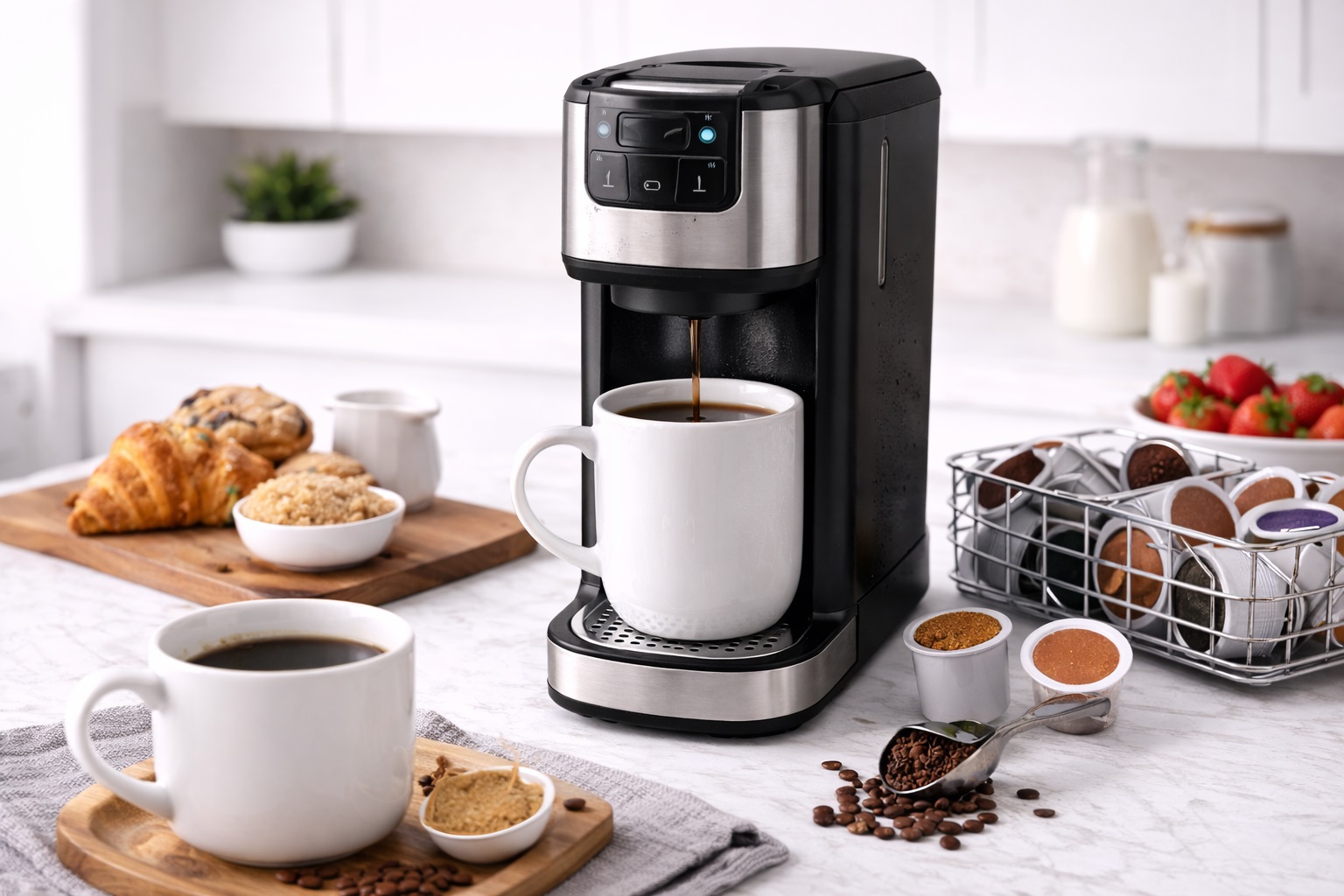
Best Single Serve Coffee Maker in 2026
Mornings rarely wait for a full pot of coffee to brew, which is exactly why single-serve machines have become such a fixture in modern kitchens. Whether the household drinks one cup a day or six different orders before everyone leaves for work, a good single-serve coffee maker delivers a fresh cup in minutes with no wasted coffee sitting on a warming plate. For anyone prioritizing pod compatibility, the right machine also opens the door to a huge range of roasts, flavors, and specialty drinks without needing to buy and store bags of ground coffee.
The category has also grown well beyond the simple "insert pod, press button" machines of a decade ago. Many current models add iced coffee modes, adjustable cup sizes, and even compatibility with reusable filters, blurring the line between dedicated pod machines and more flexible multi-mode brewers. That range of options is good news for shoppers, but it also means comparing models on their specific features matters more than ever.
Pod compatibility varies more than shoppers often expect. Some machines are built around a single proprietary pod system, while others accept a wider range of pod brands or even reusable filters that let you brew your own ground coffee. That difference affects both the ongoing cost of ownership and how much flexibility you have to switch brands down the line without replacing the machine itself.
It's also worth thinking about pod compatibility as an investment decision rather than a one-time purchase choice. Committing to a machine with a narrow, proprietary pod system can leave you at the mercy of that single brand's pricing and availability for as long as you own the appliance, while a more open ecosystem gives you room to switch suppliers if prices rise or a preferred roast gets discontinued.
This guide compares eight widely available coffee makers, focusing on how well each one serves single-cup and pod-based brewing, alongside a few flexible drip machines included for useful contrast. You'll also find a detailed buying guide covering the features that matter most for single-serve brewing, plus answers to the questions people ask most often before choosing a machine. Each review notes not just the brewing experience itself, but how the machine fits into the broader question of pod compatibility, ongoing cost, and long-term flexibility.
It's worth setting expectations early: single-serve convenience usually comes with a trade-off in per-cup cost compared to bulk-ground coffee, since pods carry a packaging premium that scoops of ground coffee don't. That trade-off is often worth it for the speed and lack of cleanup, but it's a real cost difference worth factoring into the decision alongside the machine's upfront price.
It also helps to think of "single-serve" as a spectrum rather than a single category. On one end are dedicated pod machines built entirely around brewing one cup at a time; on the other are flexible drip machines that happen to offer a single-cup mode alongside full-carafe brewing. Both approaches can serve a household well depending on how many people drink coffee and how their schedules line up each morning.
Because pod compatibility specifically is the focus of this guide, several of the picks below are evaluated as much on their ecosystem of compatible pods and accessories as on raw brewing performance. A couple of non-pod machines are included as useful points of comparison for anyone still deciding whether single-serve pods are the right fit for their kitchen at all.
Top 8 Single Serve Coffee Maker Picks (Detailed Reviews)
1. Keurig K-Elite – Best For Pod Variety and Compatibility
The Keurig K-Elite sits at the center of the pod-based brewing world, and its iced coffee setting extends its versatility to cold drinks alongside standard hot brewing. Priced around $170, it benefits from one of the largest pod ecosystems available, giving owners access to an enormous range of roasts, flavors, and brands without switching machines. That scale also means replacement parts and third-party pod options remain easy to find years after purchase.
- Pros:
- Compatible with one of the widest pod ecosystems available
- Dedicated iced coffee setting adds year-round versatility
- Fast brewing with minimal setup for each cup
- Cons:
- Ongoing pod cost is higher per cup than bulk ground coffee
- Not designed for brewing a full carafe for multiple people
- Reliant on proprietary pod compatibility for best results
Best For: Shoppers who want the widest possible selection of coffee pods and brands to choose from.
Why We Recommend It: Pod ecosystem size and variety matter enormously for single-serve buyers, and this model offers more compatible options than most direct competitors, which helps keep long-term costs more manageable too.
2. Ninja Hot and Cold Brewed – Best For Hot and Iced Single Servings
The Ninja Hot and Cold Brewed system offers six brew styles, giving single-cup drinkers meaningful flexibility between hot, iced, and specialty options without switching appliances. At around $180, it competes directly with dedicated pod machines while adding brewing modes most single-serve systems don't offer, all without locking owners into a proprietary pod ecosystem.
- Pros:
- Six distinct brew styles cover hot, iced, and specialty single servings
- Not dependent on proprietary pods for every cup
- Backed by a widely recognized kitchen appliance brand
- Cons:
- Larger footprint than a dedicated single-serve pod machine
- More settings to learn than a simple one-button brewer
- Some brew styles take noticeably longer than a quick pod cycle
Best For: Single-serve drinkers who want variety between hot and iced options without relying on pods.
Why We Recommend It: It covers more single-serving brewing scenarios than a typical pod machine, appealing to households with varied coffee preferences and no interest in ongoing pod costs.
3. Breville Precision Brewer – Best For Single-Serve Precision Brewing
The Breville Precision Brewer's PID temperature control extends to its single-serve mode, giving pod-free single-cup brewing a level of temperature accuracy most dedicated pod machines don't offer. At around $300, it's priced for buyers who want precise, consistent single servings without relying on proprietary pods, appealing especially to those who already care about extraction quality in full-carafe brewing.
- Pros:
- PID temperature control applies even to single-serve brewing
- No dependency on proprietary pods for single cups
- Backed by a brand respected among coffee enthusiasts
- Cons:
- Higher price than most dedicated single-serve pod machines
- Larger footprint than a compact pod-based brewer
- More settings to learn than a simple pod machine
Best For: Buyers who want precise single-cup brewing without being locked into a specific pod ecosystem.
Why We Recommend It: It brings genuine brewing precision to single-serve coffee, a level of control most pod-based machines simply don't offer, while also skipping the ongoing per-pod expense entirely.
4. Breville Barista Express – Best For Espresso-Style Single Servings
The Breville Barista Express uses an integrated conical burr grinder to produce fresh, espresso-style single servings rather than working from pre-ground coffee or pods. At around $700, it's by far the priciest option here, appealing to buyers who want café-quality single servings at home and are willing to learn a steeper set of controls to get there.
- Pros:
- Integrated grinder delivers fresher single servings than pods or pre-ground coffee
- Produces espresso-style shots rather than standard drip coffee
- Backed by a brand respected among serious home baristas
- Cons:
- Significantly more expensive than every other option on this list
- Steeper learning curve than a simple pod-based machine
- No pod compatibility at all, which won't suit pod-focused buyers
Best For: Buyers who want espresso-quality single servings and are willing to skip pod convenience entirely.
Why We Recommend It: For espresso lovers who want the freshest possible single serving, freshly ground beans typically outperform any pod-based alternative, justifying the steep price for the right buyer.
5. Technivorm Moccamaster – Best For Small-Batch, Handcrafted Brewing
The Technivorm Moccamaster is handmade in the Netherlands, and while it's built primarily as a carafe brewer, its fast brew cycle and small-batch capability make it a solid option for single or double servings without pods. Priced around $320, it appeals to buyers who want handcrafted build quality even for smaller pours, treating single servings as a byproduct of an already excellent brewing design rather than the main selling point.
- Pros:
- Handmade construction with a strong reputation for longevity
- Fast brew cycle suits smaller single or double servings well
- No pod dependency or ongoing per-cup packaging cost
- Cons:
- Not designed specifically as a single-serve machine
- Among the priciest options in this roundup
- Fewer digital programming features than tech-forward rivals
Best For: Buyers who want handcrafted build quality and don't mind brewing small batches instead of using pods.
Why We Recommend It: It's a strong alternative for single-serve drinkers who would rather avoid pods entirely while still getting a quick, well-made cup from a machine built to last for years.
6. Hamilton Beach 2-Way – Best For Budget Dual-Brew Households
The Hamilton Beach 2-Way's dual brewing options let it handle single cups directly alongside full-carafe brewing, without requiring pods at all. At roughly $60, it's one of the most affordable ways to get dedicated single-serve convenience alongside traditional carafe brewing in one unit, without paying an ongoing premium for pods over time.
- Pros:
- Dual brewing modes cover single-cup and full-carafe needs
- Affordable price for the flexibility it offers
- No pod dependency, reducing ongoing per-cup cost
- Cons:
- Neither brewing mode is as refined as a dedicated single-purpose machine
- Fewer premium features than higher-end competitors
- Basic plastic housing feels less durable long-term
Best For: Budget-conscious households that want single-cup convenience without ongoing pod costs.
Why We Recommend It: It offers genuine single-serve convenience at one of the lowest total costs of ownership on this list, since it skips pods entirely and covers full-carafe needs too.
7. Cuisinart DCC-3200P1 – Best For Programmable Carafe Brewing
The Cuisinart DCC-3200P1 centers on its 14-cup glass carafe, making it less of a dedicated single-serve machine and more of a useful contrast for households debating between carafe and single-cup brewing. At roughly $70, it remains one of the more affordable ways to brew larger batches when a single-serve approach doesn't fit everyone's needs, particularly in households where several people drink coffee at the same time each morning.
- Pros:
- Large 14-cup capacity for when single servings aren't enough
- Affordable price relative to its brewing capacity
- Programmable settings for scheduled brewing
- Cons:
- Not a dedicated single-serve or pod-compatible machine
- Glass carafe can let coffee cool faster than a thermal one
- Basic plastic housing feels less premium than metal-bodied machines
Best For: Households where single-serve convenience matters less than having a full pot ready for multiple people.
Why We Recommend It: It's a useful point of comparison for anyone deciding whether their household truly needs single-serve convenience or would be better served by a full carafe at a lower ongoing cost.
8. Mr. Coffee 12-Cup – Best For Occasional Single-Cup Brewing on a Budget
The Mr. Coffee 12-Cup's Grab-a-Cup feature lets you pour a single cup mid-brew without waiting for the full cycle to finish, offering a budget-friendly middle ground for occasional single servings. At around $30, it's the most affordable machine on this list by a wide margin, making it an easy low-commitment option for anyone unsure whether they even want a dedicated single-serve machine.
- Pros:
- Lowest price point among all the machines compared here
- Grab-a-Cup feature allows single servings mid-brew
- Simple, easy-to-learn controls suit any skill level
- Cons:
- Not a true dedicated single-serve or pod-based machine
- Fewer brew customization settings than pricier machines
- Basic plastic construction feels less premium
Best For: Budget-conscious buyers who occasionally want a single cup without investing in a dedicated pod machine.
Why We Recommend It: It proves that occasional single-cup convenience doesn't require a dedicated pod system or a large investment, making it a smart choice for light or infrequent drinkers.
Buying Guide: How to Choose the Best Single Serve Coffee Maker
Single-serve coffee makers vary widely in how they handle pod compatibility, brewing speed, and ongoing cost. The thirteen factors below cover what actually matters when narrowing down the right machine for your routine, starting with pod ecosystem considerations and moving toward everyday convenience and long-term ownership.
1. Pod Compatibility and Brand Ecosystem
Some machines work with a wide range of third-party pod brands, while others are more restrictive about compatible pods. A larger compatible ecosystem generally means more variety and more competitive pricing over time, since more brands competing for your business tends to keep costs down.
2. Reusable Filter Options
Many single-serve machines offer a reusable filter accessory that lets you brew your own ground coffee instead of pods. This can significantly reduce ongoing costs for anyone who brews single cups daily, while still keeping the speed and simplicity of single-serve brewing.
3. Brewing Speed
One of the biggest appeals of single-serve brewing is speed, and most dedicated pod machines brew a cup in under two minutes. If speed is a priority, compare cycle times across models rather than assuming they're all similar, since some specialty brew modes can take noticeably longer.
4. Cup Size Flexibility
Look for machines that let you adjust the brewed volume, since a fixed single serving size can be inconvenient if you sometimes want a larger mug or a smaller espresso-style shot depending on the time of day.
5. Ongoing Per-Cup Cost
Pods generally cost more per cup than bulk ground coffee, and that difference adds up significantly over months of daily use. Factor this ongoing cost into your decision alongside the machine's upfront price, especially if more than one person in the household drinks coffee daily.
6. Water Reservoir Size
A larger reservoir means less frequent refilling, which matters more for households where several people use the same machine throughout the day without wanting to stop and refill between cups.
7. Iced and Cold Brew Settings
Some single-serve machines include dedicated cold brew or iced coffee settings that adjust water temperature and volume specifically for iced drinks, which can be a meaningful convenience during warmer months compared to simply pouring a hot brew over ice.
8. Footprint and Countertop Space
Dedicated single-serve machines are generally more compact than full carafe brewers, which matters in smaller kitchens or apartments with limited counter space and fewer cabinets to spare.
9. Ease of Cleaning and Descaling
Pod machines still need periodic descaling to remove mineral buildup, and models with easily accessible, dishwasher-safe parts make that maintenance considerably simpler and less likely to be skipped.
10. Noise Level During Brewing
Most single-serve machines are relatively quiet, though pump-driven models can produce a brief burst of noise during the brewing cycle that's worth checking user reviews for if you brew early in a shared household with others still asleep.
11. Build Quality and Long-Term Reliability
Simpler pod machines with fewer moving parts often prove more reliable over years of daily use than more feature-heavy models with more components that can eventually fail, so weigh expected longevity alongside upfront features.
12. Environmental Considerations of Pod Waste
Single-use pods generate more packaging waste than bulk ground coffee, though many brands now offer recyclable or compostable pod options if that's a priority for your household and worth researching before committing to one ecosystem.
13. Balancing Convenience Against Long-Term Cost
Single-serve convenience is genuinely valuable for busy mornings, but it's worth weighing that convenience against the higher ongoing cost per cup compared to bulk-ground alternatives, especially for heavy daily drinkers who might save meaningfully with a reusable filter instead.
Frequently Asked Questions
The questions below address what shoppers most want to know about single-serve and pod-based coffee makers compared with traditional drip brewing, from ongoing cost to how much pod compatibility really matters.
Is a premium coffee maker worth it?
Often, yes, particularly when the premium goes toward genuine brewing improvements like consistent temperature control or a wider pod ecosystem rather than just extra digital displays. Daily drinkers tend to see more value from that investment than occasional ones.
How do I maintain my coffee maker?
Clean the removable parts after each use, descale the machine periodically according to the manufacturer's instructions, and replace any water filters on the recommended schedule to keep the coffee tasting fresh and the internal components running smoothly.
Do single-serve pod machines make good coffee compared to drip?
Quality varies more by pod brand than by the machine itself, and a good pod can produce a genuinely satisfying cup, though a well-tuned drip machine generally offers more control over extraction and consistency across brews.
Are reusable pod filters worth buying?
Yes, for anyone who brews single cups daily, since a reusable filter lets you use your own ground coffee instead of pods, meaningfully reducing the ongoing cost per cup over time while keeping the same brewing speed.
How much does pod compatibility actually matter?
It matters quite a bit for long-term cost and variety. Machines compatible with a wider range of third-party pod brands generally offer more competitive pricing and flavor variety than those locked into a single proprietary system.
How often should I descale my single-serve coffee maker?
Most manufacturers recommend descaling every one to three months depending on water hardness and usage frequency, since mineral buildup affects both brewing temperature and flow rate over time and can shorten the machine's lifespan.
Are pods more expensive than ground coffee in the long run?
Generally, yes. Pods carry a packaging and convenience premium that adds up over months of daily use, though the convenience and reduced cleanup are worth it for many households who value their time in the morning.
What size water reservoir should I look for?
A larger reservoir reduces how often you need to refill, which is more convenient for households where multiple people use the same machine throughout the day without wanting to pause and top it off.
Can I brew a larger cup instead of a small single serving?
Many single-serve machines offer adjustable cup size settings, so check whether a specific model supports larger mugs if a small single serving typically isn't enough for you throughout a longer morning.
Do single-serve machines work well for iced coffee?
Some models include dedicated iced coffee or cold brew settings that adjust water volume and temperature specifically for cold drinks, which produce better results than simply pouring a hot brew over ice and diluting it.
How long do single-serve coffee makers typically last?
With regular descaling and proper cleaning, a well-built single-serve machine can last several years, though the internal pump and heating element are common points of eventual wear that may need service.
Are there eco-friendlier alternatives to disposable pods?
Yes, reusable filter pods and recyclable or compostable pod options from various brands can reduce the environmental impact of single-serve brewing for those concerned about packaging waste piling up over time.
Is filtered water necessary for single-serve brewing?
Filtered water can noticeably improve taste, particularly if your tap water has strong mineral content or chlorine, since water quality directly affects the final flavor of the brewed coffee regardless of the machine used.
Can I use my own ground coffee in a pod machine?
Only if the machine supports a reusable filter accessory, which many pod-based brewers offer either included or as an optional add-on. Without one, most pod machines are designed to work exclusively with their compatible pods.
Why do some pods cost more than others from the same brand?
Pricing often reflects roast type, specialty flavoring, or limited-edition blends, similar to how bagged coffee varies in price by origin and roast complexity, so comparing per-cup cost across similar roast types is the fairer comparison.
Can I switch pod brands after buying a machine?
It depends on the machine's compatibility. Some are designed to work with a wide range of third-party pods right out of the box, while others are more restrictive and may require an adapter or reusable filter to use non-proprietary pods.
Is it cheaper to switch to a reusable filter after buying a pod machine?
Often, yes, if you drink coffee daily. The upfront cost of a reusable filter is typically modest, and the savings on bulk ground coffee versus individual pods can offset that cost within just a few weeks of regular use.
Final Verdict
- Top Pick: Keurig K-Elite, for the widest pod compatibility and the most well-rounded single-serve experience on this list.
- Budget Choice: Mr. Coffee 12-Cup, for the lowest price point and dependable single-cup convenience via its Grab-a-Cup feature.
- Premium Choice: Breville Barista Express, for buyers who want espresso-quality single servings and are willing to pay a significant premium for a built-in grinder.
Single-serve brewing has earned its place in modern kitchens by solving a real problem: getting a fresh, good cup of coffee quickly without wasting a full pot on days when only one person wants it. Whether pod compatibility, brewing speed, or long-term cost matters most to your routine, the picks above should help narrow down a machine that fits your household's actual coffee habits. None of the picks above are wrong choices; they simply serve different priorities, from maximum pod variety to complete independence from pods altogether.
If you drink coffee daily and care about ongoing cost, it's worth strongly considering a reusable filter option or a machine that doesn't depend on proprietary pods at all. For households that mostly want fast, fuss-free mornings and don't mind the added per-cup cost, a well-supported pod ecosystem remains one of the most convenient ways to get a consistently good cup without any extra effort.
It's also worth reassessing your choice periodically rather than assuming your first pick will suit your habits forever. A household that starts out drinking one cup a day may find itself brewing several by the time everyone's schedules shift, at which point a full-carafe or dual-mode machine might make more financial sense than continuing to buy pods one at a time. Revisiting the buying-guide criteria above every year or two is a reasonable way to make sure your setup still matches how your household actually drinks coffee.