Best Food Processor for Beginners in 2026
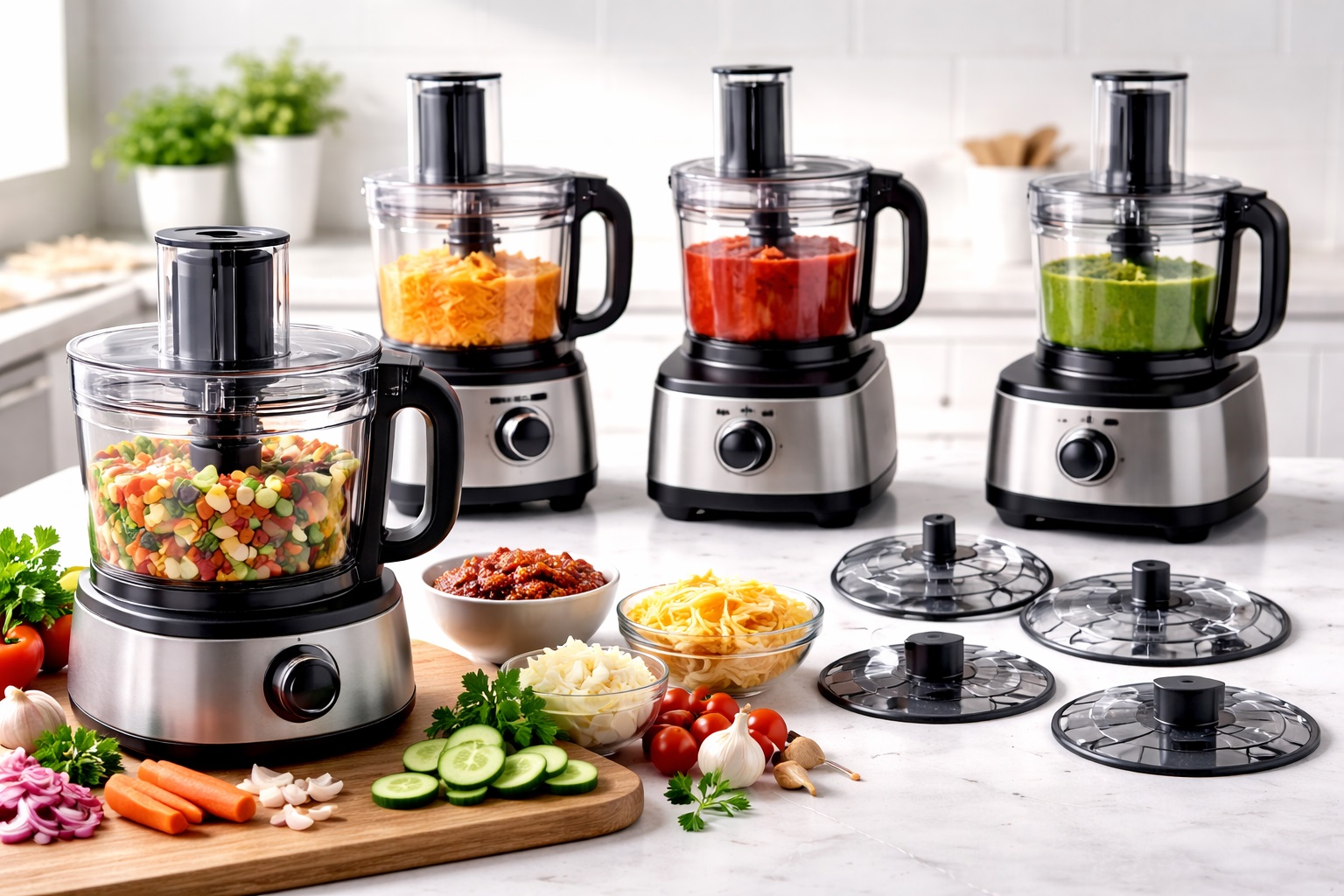
Buying your first food processor can feel more complicated than it should be, with attachments, speed settings, and bowl sizes that seem designed for someone who already knows what they are doing. This guide focuses squarely on easy to use models, comparing eight well-known food processors to help first-time buyers find a machine that feels intuitive from the very first time it comes out of the box.
An easy-to-use food processor generally means simple, clearly labeled controls, a small number of attachments that cover the basics well, and a bowl and blade assembly that is straightforward to lock, unlock, and clean. Beginners rarely need every specialty disc or a dozen speed settings; what actually matters is a machine that does the essentials, such as chopping, slicing, and pureeing, without a steep learning curve or a manual you need to keep referring back to.
This guide compares the top-rated food processors of 2026 across a range of prices and complexity levels, from compact, no-frills models to larger machines with guided automatic programs. Whether you are outfitting your first kitchen or upgrading from a basic hand chopper, there is a model here that will get you comfortable with food processing quickly rather than intimidating you into leaving it in the cupboard.
Top 8 Best food processor Picks (Detailed Reviews)
1. Hamilton Beach 10-Cup – Best For First-Time Buyers On a Budget
The Hamilton Beach 10-Cup is a sensible entry point for anyone who has never owned a food processor before. Its Stack & Snap design lets the bowl, lid, and blade assemble in a single, obvious stack without lining up multiple locking tabs, which removes one of the more confusing parts of using a food processor for the first time. Hamilton Beach has built its reputation on approachable, no-nonsense kitchen appliances, and this model continues that pattern by keeping the control panel simple and the assembly process nearly foolproof. New owners typically get through the included instructions in just a few minutes and are chopping vegetables on the first try, without needing to consult the manual again.
- Pros:
- Stack & Snap design simplifies assembly for first-time users
- Straightforward, beginner-friendly control layout
- Affordable price reduces the risk of an expensive learning mistake
- Cons:
- Fewer specialty attachments than higher-end models
- Plastic housing feels less substantial than premium competitors
Best For: Someone buying their very first food processor who wants to avoid a confusing assembly process and a high price tag.
Why We Recommend It: The Stack & Snap design specifically targets the most common beginner frustration, misaligned parts, making it one of the least intimidating machines on this list to learn.
2. Magimix 14-Cup – Best For Beginners Who Want a Lifetime Investment
The Magimix 14-Cup is a less obvious beginner pick at first glance, given its higher price, but its 30-year motor warranty tells beginners something important: this is a machine designed to be learned once and used for decades. Magimix has built its name on commercial-grade reliability scaled down for home kitchens, and the control layout, while premium, is not overly complicated once you understand the basic chop, slice, and puree functions that cover most beginner tasks. A beginner who takes the time to learn this one machine well is unlikely to ever need to shop for a replacement, which simplifies the decision considerably.
- Pros:
- 30-year motor warranty reflects exceptional long-term confidence
- Commercial-grade motor handles beginner mistakes, like overloading the bowl, gracefully
- Simple core functions despite premium positioning
- Cons:
- Highest price point in this comparison
- Larger size may be more machine than an absolute beginner initially needs
Best For: Beginners who are confident they will keep using a food processor long-term and would rather learn on one machine for good.
Why We Recommend It: Its extraordinary warranty length means a beginner's early mistakes, like running the motor too hard while getting used to the controls, are far less likely to end in an expensive repair or replacement.
3. Ninja BN601 – Best For Beginners Who Want Guided Presets
The Ninja BN601 stands out for beginners because of its Auto-iQ technology, which offers pre-programmed processing sequences instead of requiring you to guess the right speed and timing for a given task. That kind of guided automation removes much of the trial and error that usually comes with a first food processor, letting new users get consistent, usable results before they fully understand how blade speed and pulse timing affect texture. Ninja's broader small-appliance lineup also means plenty of recipe support and troubleshooting resources are easy to find online. Because the presets handle the timing decisions, a new user can focus entirely on learning how to load ingredients correctly and read the results, rather than juggling several variables at once.
- Pros:
- Auto-iQ presets take the guesswork out of common tasks
- Consistent results even before you fully understand manual settings
- Widely available recipes and beginner guidance from the brand
- Cons:
- Preset programs offer less manual control for advanced techniques
- Mid-range price is higher than the most basic beginner models
Best For: Beginners who want reliable results without first mastering manual speed and timing decisions.
Why We Recommend It: Its guided Auto-iQ programs are effectively a built-in tutorial, helping new users build confidence and consistent technique before they ever need to touch a manual setting.
4. Cuisinart DFP-14BCNY – Best For Learning Proper Prep Techniques
The Cuisinart DFP-14BCNY pairs a generous 14-cup work bowl with the kind of clear, well-labeled controls that make it easy for a beginner to understand exactly what each setting does. Cuisinart essentially popularized the modern home food processor, and this model reflects decades of refinement aimed at making the appliance approachable rather than intimidating. Its accompanying manual and recipe booklet are commonly praised for walking new users through proper prep techniques step by step. Because the brand essentially defined what a modern home food processor looks like, its interface conventions have also become the default that many other manufacturers imitate, which can make later machines feel familiar too.
- Pros:
- Clear, well-labeled controls suited to first-time users
- Large 14-cup bowl accommodates common beginner recipes without overfilling
- Long-established brand with widely available tutorials and support
- Cons:
- Mid-range price is more than the most basic entry-level models
- Larger bowl size may feel like more machine than needed for very small households
Best For: Beginners who want to learn proper food processor technique on a machine with clear instructions and strong brand support.
Why We Recommend It: Its combination of simple controls and decades of beginner-focused documentation makes it one of the easiest machines here to actually learn from, not just operate.
5. Black+Decker 8-Cup – Best For Absolute Beginners & Small Households
The Black+Decker 8-Cup keeps things about as simple as a food processor can get, and its easy assembly is exactly what makes it a strong pick for someone who has never used one before. With fewer parts to manage and a smaller, lighter bowl, this is a low-pressure way to get comfortable with basic chopping and pureeing before deciding whether you need a larger or more feature-rich machine down the line. It is also easy to lift, fill, and clean one-handed, which matters more than it sounds when you are still getting a feel for how the whole appliance fits together.
- Pros:
- Easy assembly reduces beginner confusion from the first use
- Lightweight, compact design that is simple to store
- Low price point, ideal as a first, low-risk purchase
- Cons:
- Smaller 8-cup bowl limits batch size for larger recipes
- Fewer advanced functions than larger, pricier machines
Best For: Absolute beginners, students, or small households who want the simplest possible introduction to food processing.
Why We Recommend It: Its straightforward assembly and small footprint make it one of the least overwhelming machines here, ideal for someone still deciding how much they will actually use a food processor.
6. Braun FP3020 – Best For Beginners Who Want Simple Controls
The Braun FP3020 leans on its UltraSharp blade system to deliver clean cuts without requiring the user to fuss over multiple blade attachments, which is a common source of beginner confusion. Braun's design philosophy tends toward clean, minimal control panels, and this model follows that pattern with an interface that avoids overwhelming a first-time user with unnecessary options while still handling everyday chopping, shredding, and slicing tasks capably. Beginners often mention that they stopped thinking about which blade to use fairly quickly, since the sharp, simple system tends to produce good results across most common tasks without much fine-tuning.
- Pros:
- UltraSharp blade system delivers clean results with minimal technique
- Minimalist control panel avoids beginner overwhelm
- Mid-range price balances capability and simplicity
- Cons:
- Fewer guided or automatic programs than the Ninja BN601
- Attachment storage can be less intuitive for first-time owners
Best For: Beginners who want dependable, clean results without a long list of settings to learn.
Why We Recommend It: Its sharp, efficient blade design means even imprecise beginner technique still produces usable, evenly cut results.
7. Breville Sous Chef – Best For Beginners Ready to Grow Their Skills
The Breville Sous Chef is positioned for beginners who expect to grow into more advanced food processing techniques fairly quickly. Its 1200-watt motor provides enough power to handle denser doughs and larger batches that might stall a more basic machine, and while it has more attachments than the simplest models on this list, Breville is known for organizing controls in a logical, learnable way rather than overwhelming new users with unlabeled options. That extra headroom means a beginner is unlikely to outgrow this machine quickly, even as their recipes and confidence become more ambitious over time.
- Pros:
- Powerful 1200-watt motor handles a wider range of beginner and intermediate tasks
- Logically organized controls despite a larger attachment set
- Reputable, engineering-focused brand with strong build quality
- Cons:
- Higher price point than more basic beginner machines
- More attachments to learn compared to simpler models
Best For: Beginners who are fairly confident they will want more advanced capability soon and would rather not upgrade twice.
Why We Recommend It: It gives new users room to grow into more advanced techniques without needing to replace the machine once basic skills are mastered.
8. KitchenAid 7-Cup – Best For Beginners Who Already Own KitchenAid Gear
The KitchenAid 7-Cup is a natural fit for beginners who already own other KitchenAid appliances and appreciate the brand's familiar design language. Its ExactSlice system uses a simple external dial to adjust slice thickness, which is an intuitive way for a first-time user to understand a function that can otherwise feel abstract. The compact 7-cup bowl also keeps the learning curve manageable by limiting how much food you can process at once while you build confidence. Owners who already trust KitchenAid's stand mixers or blenders often find the transition to this food processor requires almost no relearning at all.
- Pros:
- ExactSlice dial makes slice thickness intuitive to control
- Compact 7-cup bowl keeps early batches manageable
- Familiar, consistent design across the broader KitchenAid lineup
- Cons:
- Smaller capacity than the largest machines in this comparison
- Mid-range price for a relatively modest feature set
Best For: Beginners already invested in KitchenAid's ecosystem who want a food processor that feels immediately familiar.
Why We Recommend It: Its external slicing dial is one of the more intuitive beginner-facing controls in this lineup, turning an abstract setting into something you can see and understand at a glance.
Buying Guide: How to Choose the Best Food Processor for Beginners
1. Start With Fewer Attachments, Not More
It is tempting to assume more attachments mean more value, but for a first-time user, a smaller set of well-designed discs and blades that you will actually use is far more useful than a drawer full of specialty parts you never touch. Focus on models that cover chopping, slicing, and pureeing well before worrying about niche extras. You can always add specialty discs or attachments later once you know from real experience which tasks you actually perform often enough to justify them.
2. Prioritize Simple, Clearly Labeled Controls
Look for a control panel with clearly marked speeds and functions rather than unlabeled dials or symbols you have to memorize. A machine that is self-explanatory from the first use will get used far more often than one that requires constantly checking the manual. If possible, look at photos of the control panel before buying so you know roughly what to expect once it arrives.
3. Consider Bowl Size Relative to Your Actual Cooking Habits
Beginners often overestimate how much capacity they need. A smaller bowl is easier to fill, clean, and manage while you are still learning proper technique, and you can always graduate to a larger machine once you understand your real cooking patterns. Many beginners discover after a few months of use that a mid-size bowl covers nearly everything they cook day to day.
4. Look for an Intuitive Assembly and Locking Mechanism
How a food processor locks together matters more than most beginners expect. Models with a single, obvious stacking order are far less frustrating than ones requiring you to align multiple tabs correctly before the machine will even turn on. If you can, try assembling and disassembling a display model in-store before buying, since this quickly reveals how intuitive the process really is.
5. Value Safety Interlocks That Prevent Common Mistakes
Most food processors will not operate unless the bowl and lid are properly locked, which is a helpful safeguard for beginners still learning correct assembly. Confirm that a model's safety mechanism is easy to understand rather than a frequent source of turn-it-on frustration. This single safeguard prevents the vast majority of accidental injuries associated with food processors and is worth understanding thoroughly before your first use.
6. Choose Dishwasher-Safe Parts Whenever Possible
Cleaning is one of the most common reasons beginners stop using a food processor altogether. Removable, dishwasher-safe bowls, lids, and blades make the appliance far less of a chore to maintain, which keeps new users engaged with it long enough to build real skill. A machine that sits half-clean in the sink for a day tends to get used less the next time, simply because of the extra friction involved.
7. Consider Guided or Preset Programs If You Want a Shortcut
Machines with automatic presets can help beginners get usable results before they fully understand manual speed and timing. This is not cheating, it is a legitimate way to build confidence quickly while you learn what different settings actually do to texture and consistency. Think of presets as training wheels rather than a permanent crutch, useful for building intuition until manual control feels natural.
8. Don't Overlook Noise Level and Counter Footprint
A food processor that is unpleasantly loud or too bulky for your counter is one that tends to get used less often. For beginners still forming the habit of using the appliance regularly, convenience factors like these matter more than they might initially seem to. A machine you have to drag out from a deep cabinet every time is one you will reach for far less often, no matter how capable it is.
9. Read the Included Recipe Booklet Before You Buy
Many beginner-friendly models come with a recipe booklet or guide specifically designed to teach new users proper technique. A well-written included guide can shorten the learning curve significantly compared to figuring everything out through trial and error. Set aside a few minutes to skim it before your first use rather than saving it for later, since it often answers questions before they even come up.
10. Balance Motor Power Against What You'll Actually Process
Very high wattage is mainly useful for dense doughs or large batches. If you are mainly chopping vegetables and making simple sauces as a beginner, a moderate motor is perfectly capable and often easier to get comfortable with than an overpowered one. There is little benefit to buying more power than you actually need this early on, and a moderate motor is often quieter as well.
11. Think About Long-Term Growth, Not Just Day One
Consider whether a machine still makes sense once you are no longer a beginner. Some models scale well from simple tasks to more advanced techniques, while others are best treated as a stepping stone you may eventually replace. Being honest with yourself about how serious your interest in cooking is likely to become can help you avoid both overspending and underbuying.
12. Check Whether Replacement Parts Are Easy to Find
Beginners occasionally misplace or damage a small part while learning, such as a pusher or disc. Choosing a brand with widely available replacement parts means one small mistake does not require replacing the entire machine. It is worth checking part availability before you buy, rather than discovering after the fact that a specific disc or pusher is no longer sold.
13. Don't Discount Brand Familiarity
If you already own other appliances from a particular brand, choosing a food processor from that same brand can shorten the learning curve simply because the control philosophy and design language will already feel familiar to you. That familiarity can shave real time off the learning process, especially in the first few weeks of ownership.
Frequently Asked Questions
What should a complete beginner look for in a first food processor?
Focus on simple, clearly labeled controls, an intuitive locking mechanism, and a moderate bowl size that matches your actual cooking habits rather than the largest capacity available. It also helps to pick a model with dishwasher-safe parts, since easy cleanup is one of the biggest factors in whether a food processor actually gets used regularly.
Do beginners need every attachment that comes with a food processor?
No. Most beginners only regularly use the standard chopping blade and one or two discs. Extra specialty attachments are nice to have but rarely essential for learning the basics. You can always purchase additional discs separately once you know your specific cooking style calls for them.
Is a more expensive food processor easier to learn on?
Not always. Price often reflects power and attachment count more than ease of use. Some of the simplest, most beginner-friendly machines are also among the more affordable options. It is more useful to judge a specific model's controls and assembly directly than to assume a higher price automatically means an easier learning curve.
How long does it typically take to get comfortable using a food processor?
Most new users feel reasonably confident within a few uses, especially with a model that has clear controls and a straightforward assembly process. Guided preset programs can shorten this adjustment period further. By the end of the first week of regular use, most people report feeling noticeably more confident about which settings to reach for.
Should beginners start with a smaller or larger bowl?
A smaller or mid-size bowl is generally easier to manage while learning, since it is simpler to fill, clean, and control. You can always move up to a larger machine once your habits and needs become clear.
What is the most common mistake beginners make with a new food processor?
Overfilling the bowl is one of the most frequent early mistakes, which can lead to uneven chopping or strain on the motor. Starting with smaller batches while learning helps avoid this. Processing food in a couple of shorter batches instead of one large one is a simple habit that prevents most beginner frustration with uneven results.
Are automatic preset programs a crutch for beginners?
Not at all. Presets are simply a faster way to get consistent, usable results while you build an understanding of how speed and timing affect texture, which you can then apply manually later. Many experienced home cooks still use presets for routine tasks simply because they are reliable, not just because they are easy.
How important is the recipe booklet that comes with a food processor?
It can be surprisingly helpful. A well-written included guide often walks new users through proper technique step by step, shortening the learning curve considerably compared to guesswork alone.
Is it normal to feel unsure about blade safety as a beginner?
Yes, and that caution is healthy. Most modern food processors include safety interlocks that prevent operation unless the bowl and lid are correctly assembled, which helps new users avoid common mishandling mistakes.
Can a beginner-friendly food processor still handle more advanced recipes later?
Many can, particularly mid-range and premium models with strong motors and versatile attachments. It is worth considering your longer-term cooking goals rather than choosing based solely on your current skill level. If you already enjoy cooking and expect that interest to deepen, a slightly more capable machine now can save you the cost and hassle of upgrading later.
Should beginners prioritize brand reputation when choosing a first food processor?
Brand reputation is a reasonable factor, especially for finding tutorials, replacement parts, and community support, but it should be weighed alongside how genuinely simple a specific model's controls and assembly actually are. Reading reviews written specifically by other first-time owners, rather than experienced cooks, can give a more realistic picture of how steep the learning curve really is.
What is the easiest way to start learning food processor techniques?
Begin with simple tasks like chopping vegetables or making a basic sauce before moving on to more advanced techniques like dough mixing or fine slicing, gradually building comfort with the controls along the way. Repeating a handful of simple recipes in the first couple of weeks is one of the fastest ways to internalize how your specific machine behaves.
Do beginners need to worry about motor wattage?
Not excessively. A moderate motor is sufficient for most everyday beginner tasks. Very high wattage mainly benefits dense doughs or large batch processing that most new users are not yet attempting.
Final Verdict
- Top Pick: Ninja BN601 for its Auto-iQ presets that guide beginners toward consistent results without requiring manual mastery from day one.
- Budget Choice: Black+Decker 8-Cup for the simplest, lowest-cost way to get comfortable with basic food processing.
- Premium Choice: Magimix 14-Cup for beginners confident they want a single machine, backed by an exceptional warranty, to learn on for life.
Learning to use a food processor should not feel like an obstacle course, and the right first machine makes the difference between an appliance you reach for daily and one that ends up forgotten in a cabinet. Whether you start with the budget-friendly Black+Decker, the guided Ninja BN601, or invest early in the long-lasting Magimix, prioritizing simplicity and clear controls over sheer feature count will help you build real confidence in the kitchen far faster.