Best Compact Food Processor in 2026
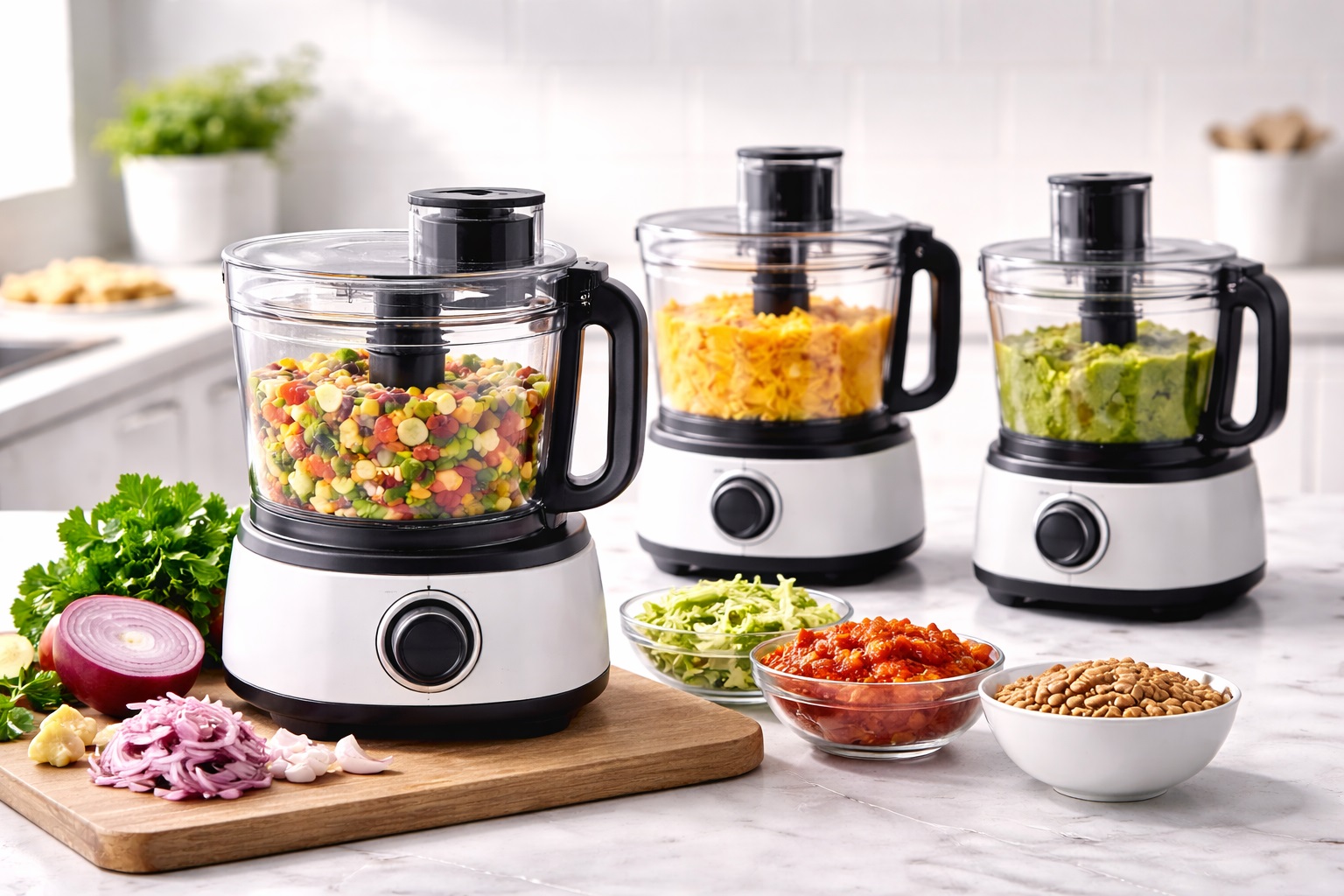
A small kitchen changes the calculation for almost every appliance purchase, and a food processor is no exception. Counter space is limited, cabinet storage is often tighter still, and a bulky machine that rarely gets used ends up being more of a burden than a convenience. This guide focuses on small kitchen needs, comparing eight well-known food processors to identify which ones genuinely fit a compact space and which are included as reasonable, if less space-efficient, alternatives.
It is worth being upfront from the start: not every machine in a typical food processor lineup is actually compact. Some of the most capable models on the market prioritize large bowls and powerful motors over a small footprint, and pretending otherwise would do small-kitchen shoppers a disservice. This guide points out clearly which models are genuinely space-saving and which ones are larger machines that may still make sense for a small kitchen under specific circumstances, such as cooking frequently enough to justify the extra counter space.
Whether you live in an apartment with minimal counter space, a galley kitchen, or simply prefer to keep your countertop clear, this comparison spans machines built specifically with compactness in mind alongside a few larger options that some small-kitchen cooks may still find worthwhile.
Top 8 Best food processor Picks (Detailed Reviews)
1. Cuisinart DFP-14BCNY – Best For Small Kitchens Needing Extra Capacity
The Cuisinart DFP-14BCNY deserves an honest caveat right away: its 14-cup bowl is on the larger end of this comparison and is not a space-saving choice in the traditional sense. It earns a place here for a different reason, since its versatility can reduce the need for additional single-purpose gadgets cluttering an already tight kitchen. For small-kitchen cooks who process large batches occasionally and are willing to dedicate storage space to one capable machine instead of several smaller ones, it remains a reasonable option. It is worth pairing this choice with a clear plan for exactly where the machine will live between uses, since its size can become a genuine source of frustration without one.
- Pros:
- Large 14-cup bowl reduces the need for multiple smaller appliances
- Well-established brand with strong parts and accessory support
- Versatile enough to replace several single-purpose tools
- Cons:
- Large footprint is genuinely difficult to justify in a truly small kitchen
- Requires dedicated storage space that compact kitchens may lack
Best For: Small-kitchen cooks who are willing to trade some counter space for one versatile, large-capacity machine instead of several smaller appliances.
Why We Recommend It: For those who genuinely need large-batch capability despite limited space, its versatility can offset the footprint by eliminating the need for other bulky single-purpose tools.
2. Breville Sous Chef – Best For Small Kitchens Wanting One Do-It-All Machine
The Breville Sous Chef is another honest inclusion rather than a genuinely compact pick. Its powerful 1200-watt motor and wide accessory set make it a large machine by any measure, but for small-kitchen cooks who cook often and want a single appliance that replaces several specialty tools, its versatility can be worth the counter space it demands. This is a machine best suited to someone who has already decided to dedicate real space to one serious appliance rather than several smaller ones. If your small kitchen already has a designated spot for one larger appliance, this trade-off may make more sense than it first appears.
- Pros:
- Wide accessory set covers many tasks in one machine
- Powerful motor handles demanding tasks that smaller machines cannot
- Reputable, durability-focused brand
- Cons:
- Large footprint is a genuine drawback in truly small kitchens
- Numerous attachments require significant storage space
Best For: Small-kitchen cooks who prioritize doing everything with one powerful machine over minimizing counter and storage space.
Why We Recommend It: It is not a space-saving pick, but for frequent cooks willing to dedicate space to one versatile machine instead of several smaller gadgets, it can genuinely simplify a compact kitchen overall.
3. KitchenAid 7-Cup – Best Compact Pick for Everyday Tasks
The KitchenAid 7-Cup is one of the genuinely compact machines in this lineup, with a smaller bowl and overall footprint that suits limited counter and cabinet space without sacrificing core functionality. Its ExactSlice system adds real everyday usefulness in a small package, and the broader KitchenAid brand name means reliable parts support even for a smaller model. For most small-kitchen households handling everyday chopping, slicing, and pureeing tasks, this size strikes a practical balance. It sits comfortably in a standard cabinet without requiring the kind of dedicated shelf or cart that larger machines sometimes need.
- Pros:
- Genuinely compact footprint suited to small kitchens
- ExactSlice system adds functional value despite the smaller size
- Reputable brand with reliable parts and accessory support
- Cons:
- Smaller bowl limits batch size for larger cooking sessions
- Mid-range price for a relatively modest capacity
Best For: Small-kitchen cooks who want a genuinely space-saving machine without giving up brand reliability or everyday functionality.
Why We Recommend It: It is one of the few machines here that is both truly compact and genuinely capable, making it a strong default recommendation for most small-kitchen households.
4. Ninja BN601 – Best For Small Kitchens Needing Multi-Function Storage-Friendly Design
The Ninja BN601 offers a reasonable middle ground for small kitchens that want more capability than the most basic compact machines without committing to a full-size unit. Its Auto-iQ technology adds functional value without necessarily requiring a large number of separate physical attachments, since several tasks are handled through programmed sequences rather than swapping between many discs and blades that would otherwise need storage space. This approach essentially trades physical clutter for a slightly larger main unit, which can be a smart swap in a kitchen with more drawer space than counter space.
- Pros:
- Auto-iQ programs reduce the need for numerous separate attachments
- Reasonably sized footprint compared to the largest machines in this lineup
- Strong brand support and recipe ecosystem
- Cons:
- Larger than the most compact dedicated small-kitchen machines
- Preset programs offer less manual control than simpler machines
Best For: Small-kitchen cooks who want automated versatility without storing a large collection of separate attachments.
Why We Recommend It: Its programmed functions reduce the number of physical attachments you need to store, which is a genuine space-saving advantage even though the main unit itself is mid-size.
5. Braun FP3020 – Best Space-Saving Pick for Quick Prep
The Braun FP3020 is another genuinely compact option, built around a simple, efficient design rather than a large bowl or an extensive accessory collection. Its UltraSharp blade system delivers clean, fast results without requiring a bulky housing, making it a practical fit for small kitchens that want quick everyday chopping and slicing without dedicating much space to the appliance itself. It is easy to picture tucked into a single cabinet shelf alongside other everyday kitchen tools without crowding anything else out.
- Pros:
- Compact, efficient design suited to small kitchens
- UltraSharp blade system delivers fast, clean everyday results
- Simple accessory set requires minimal storage space
- Cons:
- Fewer automated programs than larger, more feature-rich machines
- Smaller capacity limits batch size for bigger recipes
Best For: Small-kitchen cooks who prioritize fast, no-fuss everyday prep over large batch capacity or extensive attachments.
Why We Recommend It: Its compact, efficient design genuinely respects limited kitchen space while still delivering dependable everyday cutting performance.
6. Hamilton Beach 10-Cup – Best Budget Compact Option
The Hamilton Beach 10-Cup sits in a reasonable middle ground for small kitchens, offering more capacity than the smallest machines here while still remaining more manageable than the largest units in this lineup. Its Stack & Snap design keeps assembly and storage simple, and its affordable price makes it an accessible option for small-kitchen cooks who want a bit more capacity without paying a premium or committing to a genuinely large footprint. It is a sensible upgrade path for small-kitchen cooks who have outgrown the very smallest machines but still are not ready to commit real counter space to a full-size unit.
- Pros:
- Reasonable middle-ground size between the smallest and largest machines
- Stack & Snap design simplifies assembly and storage
- Affordable price relative to its capacity
- Cons:
- Larger than the most genuinely compact machines in this comparison
- Plastic construction feels less substantial than pricier options
Best For: Budget-conscious small-kitchen cooks who want a bit more capacity than the smallest machines without a large footprint or high price tag.
Why We Recommend It: It offers a sensible size-to-price balance for small kitchens that need slightly more capacity than the most compact options without going all the way up to a full-size machine.
7. Magimix 14-Cup – Best For Small Kitchens Who Cook Often & Want Long-Term Durability
The Magimix 14-Cup is honestly one of the larger machines in this comparison, and it is not the space-saving pick for a small kitchen on its footprint alone. It earns a place here specifically for cooks in small kitchens who use a food processor often enough that avoiding repeat purchases matters more than saving counter space, since its 30-year motor warranty means you are unlikely to need to store or replace a second machine down the line. In a small kitchen, avoiding the need to shop for, unbox, and find room for a replacement machine every few years is a real, if less obvious, space-saving benefit.
- Pros:
- Exceptional 30-year motor warranty reduces the likelihood of needing a replacement
- Commercial-grade build quality suited to frequent, heavy use
- One large-capacity machine can replace several smaller appliances
- Cons:
- Largest footprint in this comparison, a genuine drawback for small kitchens
- Highest price point among the machines compared here
Best For: Small-kitchen cooks who use a food processor frequently and would rather commit counter space to one long-lasting machine than replace a smaller one repeatedly.
Why We Recommend It: For frequent cooks in small kitchens, its exceptional durability can mean never having to find storage space for a second or third replacement machine over the years.
8. Black+Decker 8-Cup – Best Truly Compact & Lightweight Pick
The Black+Decker 8-Cup is the most genuinely compact and lightweight machine in this entire comparison, making it an easy fit for small kitchens with minimal counter and cabinet space. Its easy assembly and simple design mean there is little bulk to store, and its low price makes it an accessible choice for small-kitchen cooks who want basic food processing capability without dedicating much space or money to the appliance. It is the kind of machine you can tuck into a corner cabinet or a single shelf without a second thought.
- Pros:
- Smallest, lightest footprint in this entire comparison
- Lowest price point, ideal for tight budgets and tight kitchens alike
- Easy assembly and simple storage requirements
- Cons:
- Smaller 8-cup bowl limits batch size for larger recipes
- Fewer advanced features than larger, pricier machines
Best For: Small-kitchen cooks with the tightest space constraints who want the most genuinely compact option available at a low price.
Why We Recommend It: Nothing else in this comparison matches its combination of small footprint, light weight, and low price, making it the clearest choice for the most space-constrained kitchens.
Buying Guide: How to Choose the Best Compact Food Processor
1. Measure Your Actual Counter and Cabinet Space Before Shopping
It is easy to underestimate how much space an appliance and its accessories actually require until you measure your available counter and cabinet space directly. Do this before comparing specific machines rather than after, so you can immediately rule out anything that will not realistically fit. Bring a tape measure or a printed template of the machine's footprint if you are shopping in person, since photos alone can be misleading about actual scale.
2. Distinguish Between a Small Footprint and a Small Bowl
Some machines have a compact base but a tall lid and feed tube that add significant height, while others are wide but low profile. Consider your specific storage situation, since a low, wide machine may fit under a cabinet where a tall one will not. Always check the height with the lid and feed tube attached, since this is often the true limiting dimension rather than the base alone.
3. Count the Total Number of Attachments You Will Need to Store
A compact main unit paired with a dozen attachments can still take up considerable drawer space. Look at the full accessory set, not just the base machine, when judging how space-efficient a food processor really is. A drawer full of rarely used discs defeats the purpose of choosing a small main unit in the first place.
4. Consider Whether You Can Live With a Smaller Bowl Capacity
Compact machines generally trade some batch capacity for a smaller footprint. Be honest about whether occasional double-batching is an acceptable trade-off for the counter and storage space you will save every single day. Most households find that a slightly smaller bowl becomes a non-issue within the first few weeks of adjusting their usual portion sizes.
5. Look for Nesting or Stackable Storage Designs
Some compact food processors are designed so their bowl, lid, and blades nest together for storage, significantly reducing their footprint when not in use. This feature can matter as much as the machine's overall size on the counter. It is worth asking specifically about nesting storage when comparing otherwise similar compact machines, since it is not always obvious from product photos alone.
6. Weigh Whether a Larger, Do-It-All Machine Could Reduce Total Clutter
Sometimes one larger, versatile machine can eliminate the need for several smaller single-purpose gadgets, which may actually reduce total kitchen clutter despite taking up more space itself. Consider your full countertop, not just the food processor in isolation. Tallying up every gadget a larger machine could realistically replace often reveals that the true space trade-off is smaller than it first appears.
7. Prioritize Lightweight Construction If You Store the Machine Away Between Uses
If you plan to store your food processor in a cabinet rather than leaving it on the counter, its weight matters as much as its size. A heavier machine becomes more of a hassle to lift in and out regularly. Over time, that extra effort can be exactly what discourages regular use, even of an otherwise capable appliance.
8. Check Cord Length and Storage for Compact Kitchens
A short cord can be inconvenient in a small kitchen with limited nearby outlets, while a long cord needs somewhere to be neatly stored. Both factors matter more in tight kitchens where every inch and outlet counts. A cord that neatly wraps around the base for storage is a small detail that makes a genuine difference in daily use.
9. Don't Sacrifice Motor Power Entirely for Size
A compact machine with an underpowered motor can struggle with everyday tasks just as much as an oversized one can waste space. Look for a reasonable balance rather than choosing the absolute smallest option regardless of performance. A machine that constantly stalls on basic tasks will get used less often, which defeats the purpose of buying a space-saving appliance in the first place.
10. Consider Vertical Storage Solutions for Larger Machines
If you are drawn to a larger, more capable machine despite limited space, consider whether a shelf, cart, or vertical storage solution could make it work without permanently occupying counter space. A rolling cart in particular can let a larger machine be wheeled out only when needed and tucked away completely otherwise.
11. Think About How Often You Will Actually Use It
A compact machine used daily delivers more real value in a small kitchen than a larger one that only comes out occasionally. Match the machine's size to your realistic frequency of use, not just your best-case cooking ambitions. Being honest about this now can save you from an appliance that ends up as expensive, space-consuming clutter.
12. Compare Cleanup Effort for Smaller Versus Larger Bowls
Smaller bowls and components are generally quicker to hand-wash in kitchens where dishwasher space is also limited. This is a meaningful, if easy to overlook, advantage of genuinely compact machines. In a small kitchen with limited sink space, this small convenience can noticeably reduce the friction of everyday cleanup.
13. Be Honest About Whether Compactness or Capability Matters More
Some small-kitchen cooks are better served by a larger, more capable machine they use constantly, while others are better served by the smallest possible footprint. There is no universally correct answer, only the one that fits your specific space and cooking habits. Working through the questions in this guide honestly, rather than defaulting to whichever machine looks most impressive, will point you toward the right answer for your kitchen.
Frequently Asked Questions
What actually makes a food processor compact?
A genuinely compact food processor combines a smaller bowl capacity with a lower profile base and a minimal accessory set, all of which reduce its footprint on the counter and in storage. The most genuinely compact designs also tend to keep the number of separate parts as low as possible, since every extra piece adds to what you need to find room for.
Is a smaller food processor always better for a small kitchen?
Not necessarily. Some small-kitchen cooks are better served by one larger, versatile machine that replaces several smaller appliances, even though it takes up more individual space. This is precisely the trade-off worth weighing honestly rather than assuming smaller is automatically the smarter choice in every situation.
Do compact food processors sacrifice performance for size?
Not inherently, though very small machines often have less powerful motors and smaller bowls, which can matter for denser or larger batches. For everyday tasks, many compact machines perform perfectly well. It is really only at the extremes, like very dense dough or oversized batches, that a smaller motor starts to show its limits.
How much counter space does a typical food processor need?
This varies significantly by model and bowl size, which is why measuring your specific available counter space before shopping is more useful than relying on general assumptions. Two machines with similar bowl capacities can still have noticeably different physical footprints.
Should I store my food processor on the counter or in a cabinet?
This depends on your available space and how often you use the machine. Frequent users often benefit from counter storage, while occasional users may prefer a lighter, easily stored machine in a cabinet. There is no wrong answer here, only the option that matches how your specific kitchen actually gets used day to day.
Are large-capacity food processors ever a good choice for small kitchens?
Yes, particularly for cooks who use the appliance often enough that its versatility offsets the extra space it requires, or for those willing to dedicate specific storage space to a single capable machine. The key is being clear-eyed about which category describes you before making the purchase, rather than after.
What is the biggest space-related mistake people make when buying a food processor?
Failing to measure available counter and cabinet space in advance, and underestimating how much room the full set of attachments requires beyond the main unit itself, are both common mistakes. It is worth doing this legwork before buying rather than discovering the problem once the box is already open.
Do compact food processors come with fewer attachments?
Often, yes, though this is not always a downside. Fewer attachments mean less to store, which is precisely the trade-off that makes a machine genuinely space-efficient in the first place. If you find yourself never reaching for most of the included discs anyway, a simpler machine with fewer parts may suit you just as well.
Can a compact food processor still handle family-size cooking?
It depends on your household size and cooking habits. Smaller households often find compact machines entirely sufficient, while larger families may need to run multiple batches more frequently. Consider your typical portion sizes over a recent few weeks rather than an occasional larger gathering when making this judgment.
Is it worth paying more for a smaller, more compact machine?
If space is genuinely limited, the convenience of a compact machine can be worth a modest price premium, though it is still worth comparing core performance rather than paying for size reduction alone. A compact machine that also happens to underperform on basic tasks is not a good value regardless of how well it fits your shelf.
How do I know if a food processor will fit under my kitchen cabinets?
Measure the vertical clearance under your cabinets and compare it to the machine's total height with the lid and feed tube attached, since this is often taller than the base unit alone suggests. Manufacturer spec sheets usually list this dimension, though it is sometimes worth double-checking with customer reviews or photos taken from the side.
What is a reasonable bowl size for a small kitchen?
Around 7 to 8 cups is generally considered compact and suits smaller households well, while anything above 10 cups starts to move into mid-size or large-capacity territory. Anything in the 14-cup range, as seen in a couple of the larger machines in this comparison, should be considered a genuinely large-capacity choice rather than a compact one.
Should small-kitchen cooks prioritize weight as well as size?
Yes, particularly if the machine will be stored away between uses. A lighter machine is considerably easier to lift in and out of a cabinet on a regular basis.
Final Verdict
- Top Pick: KitchenAid 7-Cup for genuinely combining a compact footprint with reliable everyday performance, making it the strongest all-around choice for small kitchens.
- Budget Choice: Black+Decker 8-Cup as the smallest, lightest, and most affordable machine in this comparison for the tightest kitchens and budgets.
- Premium Choice: Magimix 14-Cup for small-kitchen cooks who use a food processor often enough to justify its larger footprint in exchange for exceptional long-term durability.
Choosing a food processor for a small kitchen ultimately comes down to being honest about your available space and how often you will actually use the machine. Whether that means the genuinely compact Black+Decker for the tightest kitchens, the well-balanced KitchenAid for everyday reliability, or committing counter space to the long-lasting Magimix because you cook often enough to justify it, the right choice is the one that matches your real kitchen and real habits rather than the machine with the most impressive feature list.