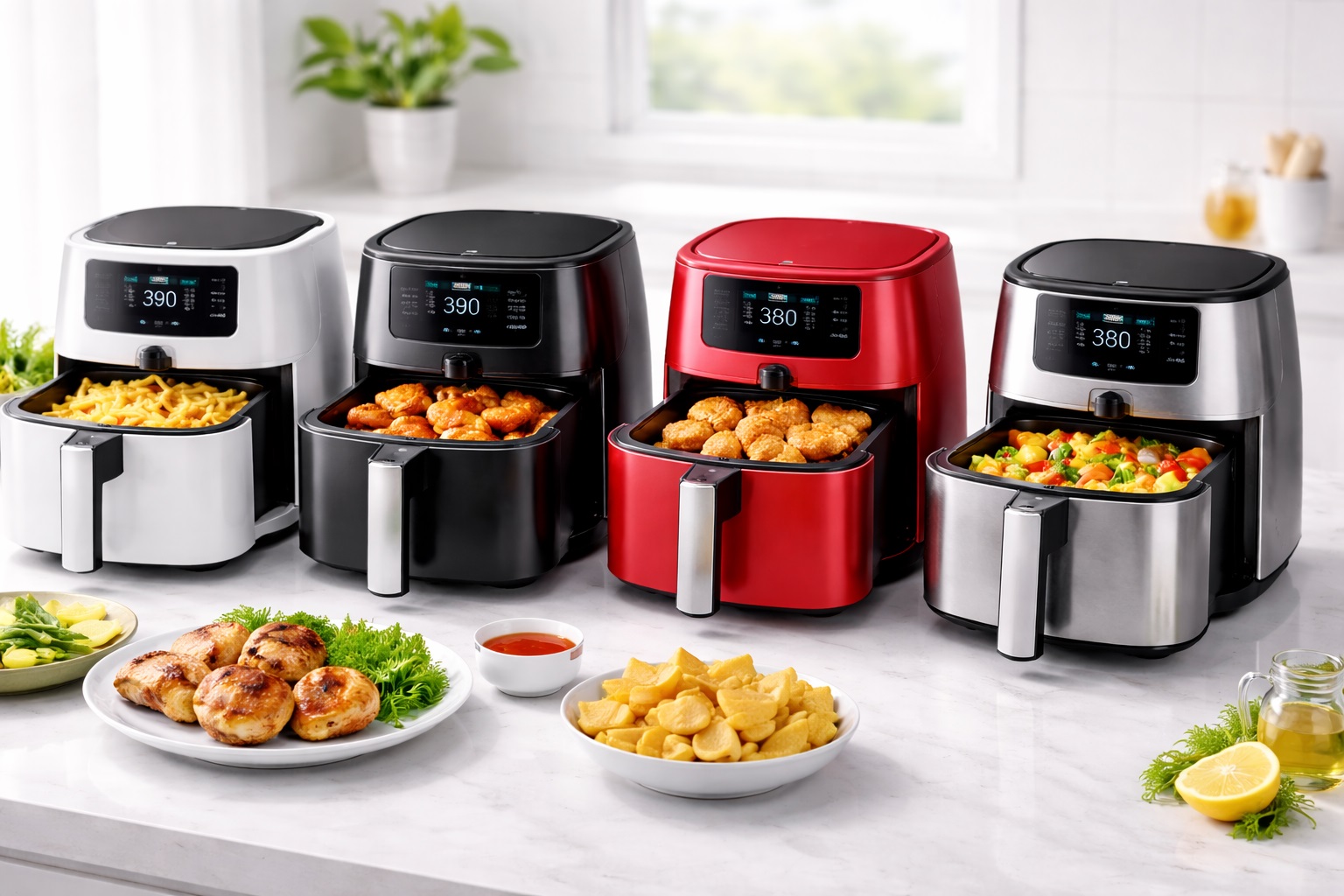
Best Compact Air Fryers: Full Cooking Performance in a Minimal Footprint
Counter space is a finite and often contentious resource in any kitchen. For apartment dwellers, studio residents, and anyone managing a kitchen with limited worktop area, every inch of permanent counter space allocation requires justification against competing appliances.
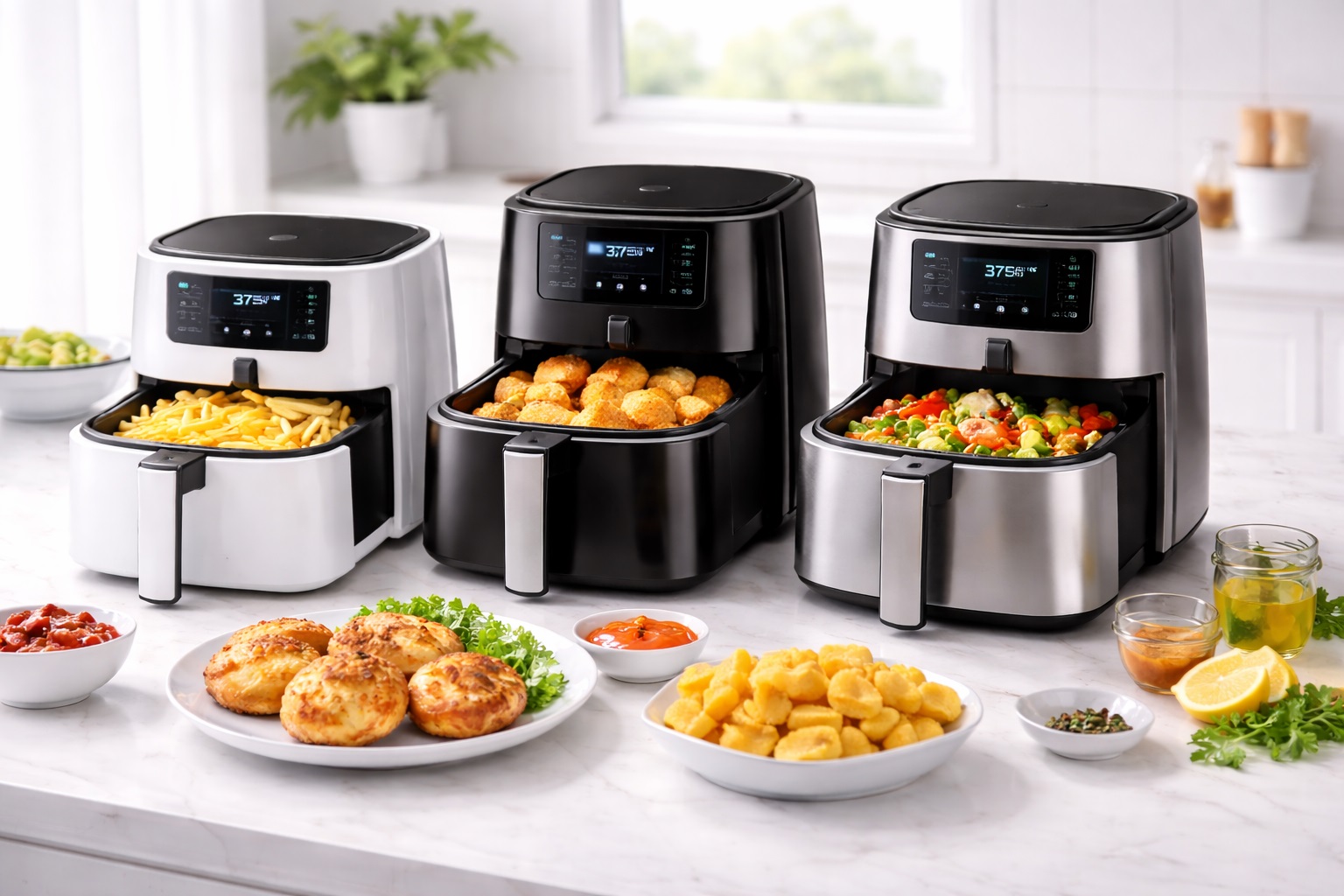
A compact air fryer occupies roughly the same counter footprint as a large toaster — approximately 9–12 inches wide and 10–12 inches deep. Despite this modest footprint, it performs genuine air frying with results comparable to full-size models for 1–3 person cooking volumes. The trade-off for compactness is reduced capacity, not meaningfully reduced cooking quality.
This guide evaluates compact air fryers specifically on metrics relevant to small-kitchen users: actual footprint dimensions, cooking performance per square inch of counter space occupied, cleaning convenience in confined spaces, and storage options for users who can't keep the appliance permanently on the counter.
Quick Comparison: Top Picks at a Glance
| Product Type | Best For | Our Take |
|---|---|---|
| 2.5-Quart Digital Compact Air Fryer | Best Ultra-Compact Single-Serve Option | Best footprint-efficient air frying for single-serve cooking. |
| 3-4 Quart Compact Basket Air Fryer | Best Balance: Compact but Practical | Best practical compact choice for 1-2 person households. |
| Compact Air Fryer Toaster Oven Combo | Best for Small Kitchens with Multiple Appliance Needs | Best multi-function space consolidation for small kitchens. |
Top compact air fryer Picks — In-Depth Reviews
Each product type below has been evaluated based on real performance factors relevant to apartment dwellers, small kitchen users, and those who want air frying capability without dedicating significant counter space. We've included detailed performance notes, value assessments, and clear guidance on who each option suits best.
1. 2.5-Quart Digital Compact Air Fryer — Best Ultra-Compact Single-Serve Option
A 2.5-quart compact air fryer occupies roughly 9 x 9 inches of counter space — less than a standard sheet of paper. This footprint suits kitchens where counter space is genuinely scarce, such as studio apartments, dormitory cooking areas, and galley kitchens where every inch is spoken for. Despite the compact dimensions, the 2.5-quart capacity handles single portions of fries, 2-3 chicken thighs, or a full serving of vegetables for one or two people.
Digital controls on this format allow precise temperature settings from 180°F to 400°F with a clear LED display. Most compact digital models include 6–8 preset programs covering the most common single-serve cooking tasks. The small capacity preheats in under 3 minutes — meaningfully faster than larger models — which suits quick single-serve meals that characterize small-household daily cooking.
- Pros:
- Smallest practical cooking footprint — fits any counter
- Cons:
- Capacity limits to 1-2 servings — not suitable for meal prepping
Best For: Single occupants and couples in studio apartments or tight kitchen spaces who want genuine air frying results without counter space commitment.
Performance Verdict: Compact models produce the same quality of browning and crisping as full-size alternatives — the physics of hot air circulation is the same. The only difference is the batch size. For cooking volumes this format suits, the results are equivalent to a 5-quart model.
Who Should Buy This: Studio apartment residents, dormitory cooks, single-person households, and anyone who needs quick single-serve air frying without permanent counter space dedication.
Value Assessment: The 2.5-quart compact fryer costs less than larger alternatives while occupying significantly less counter space. For the use case it serves — single-serve daily cooking — it delivers full value at a fraction of the footprint cost of a larger model. Buyers who later find the capacity limiting can typically resell a lightly used compact unit easily, since demand for entry-level single-serve fryers remains steady among first-time buyers testing whether air frying suits their cooking habits.
2. 3-4 Quart Compact Basket Air Fryer — Best Balance: Compact but Practical
A 3–4 quart compact basket air fryer adds meaningful capacity over the smallest models while maintaining a genuinely compact footprint of approximately 11 x 11 inches. This size handles 2–3 person portions of most common foods — enough for a couple\'s dinner or a small family\'s side dish — without requiring the larger counter footprint of a 5-quart model.
At this size, compact air fryers include all the features of full-size alternatives: digital temperature control, multiple presets, dishwasher-safe baskets, and accessories compatibility. The capacity is adequate for whole chicken pieces, a full bag of frozen vegetables, or a 1-lb protein portion. For households of two who cook regularly, this is often the most practical size choice.
- Pros:
- Serves 2-3 people in single batches
- Full feature set despite compact dimensions
- More preheat efficient than large models
- Wide accessory compatibility
- Cons:
- Not suitable for family-size batch cooking
Best For: Couples and small families in kitchens with limited counter space who want enough capacity for complete 2-person meals without a full-size appliance footprint.
Performance Verdict: The 3–4 quart range hits the sweet spot between compactness and practicality. For two people eating dinner together, this capacity eliminates the need for sequential batches while maintaining a genuinely smaller footprint than a 5-quart equivalent.
Who Should Buy This: Couples in compact kitchens who cook complete meals regularly and want a footprint-efficient appliance without sacrificing practical cooking capacity.
Value Assessment: At its price point, the 3–4 quart compact fryer offers better value than a full-size alternative for households of two — lower cost, smaller footprint, equivalent quality, and appropriately sized capacity for the actual cooking volume needed. It also tends to hold its resale value better than ultra-compact models, since the capacity suits a broader range of households, from young couples to roommates splitting cooking duties.
3. Compact Air Fryer Toaster Oven Combo — Best for Small Kitchens with Multiple Appliance Needs
A compact air fryer toaster oven combination consolidates two frequently used appliances — air fryer and toaster oven — into a single unit. The combined footprint is larger than a basket-only air fryer but significantly smaller than two separate appliances. Models in this category typically offer toast, bagel, bake, broil, and air fry functions at rack sizes accommodating 9-inch pizzas or 6–8 slices of toast.
For small kitchen users who currently use both a toaster and an air fryer, replacing both with a single combination unit recovers meaningful counter space. The air fry performance in combination units is slightly less even than in dedicated basket models because the rack-based cooking surface allows less air circulation around food. For most casual cooking tasks, however, this difference is not practically significant.
- Pros:
- Replaces two appliances — significant net counter space saving
- Handles toast, baking, roasting, and air frying
- Rack size accommodates larger flat items like pizza and flatbreads
- Typically includes multiple rack positions for different cooking modes
- Cons:
- Air fry performance slightly below dedicated basket models
- Front-opening door requires door clearance space in front of the unit
Best For: Small kitchen users who currently own both a toaster and wish to add air frying without adding another appliance to the counter.
Performance Verdict: Combination units perform each function adequately rather than optimally. The air fry results are good — genuinely crispy and browned — but not as evenly distributed as a basket fryer. For users consolidating appliances rather than optimizing for single-function performance, the combination unit delivers its value proposition clearly.
Who Should Buy This: Minimalist kitchen users who want maximum cooking versatility from minimum appliance count.
Value Assessment: The combination unit costs more than a standalone compact basket fryer but less than two separate appliances. The net cost and net counter space for a user who needs both toasting and air frying functions is lower with the combination unit than with two dedicated appliances.
Complete Buying Guide: How to Choose the Best Best Compact Air Fryers: Full Cooking Performance in a Minimal Footprint
Knowing which product to buy is one challenge. Understanding why one product is better suited to your specific situation is the more useful skill. The following guide explains every important buying factor in plain, practical terms.
1. Measuring Your Available Counter Space
Before purchasing, measure your available counter space accurately — including the ventilation clearance required. Compact air fryers need 5 inches of clearance on all sides for hot air exhaust. A fryer footprint of 11 x 11 inches requires 21 x 21 inches of total counter space including clearance. Verify this fits your available space before ordering.
Pro Tip: Use tape to mark the required footprint on your counter before purchasing. This visualization prevents the common disappointment of receiving an appliance that doesn't fit as expected.
2. Capacity vs Household Size Matching
Match capacity to your actual daily cooking batch size, not your maximum theoretical cooking volume. A couple cooking dinner needs 2.5–3.5 quarts for a full meal. A single person needs 1.5–2 quarts. Oversize capacity wastes counter space and energy on every use. The goal is a fryer that handles your typical meal volume at 70% fill — not your maximum possible cooking need.
Pro Tip: Think of the last five meals you would have air fried. Estimate the volume. That's your target capacity, not the maximum you'll ever cook.
3. Storage Options for Non-Counter Users
Not all compact air fryer users want permanent counter placement. If you plan to store the unit in a cabinet between uses, verify it fits your specific cabinet dimensions with adequate shelving clearance. Compact models are easier to retrieve and store than full-size alternatives, but shelf dimensions still need checking before purchase.
Pro Tip: Keep the original box if you plan to store the fryer long-term between seasonal uses. Proper storage prevents dust accumulation in the heating element and fan.
4. Power Efficiency at Compact Scale
Compact air fryers typically draw 900–1400W versus the 1600–1800W of full-size models. The lower wattage means lower per-session electricity cost, but also slightly slower preheat times and lower temperature recovery speed after opening the basket. For single-serve portions that cook quickly, the lower wattage is adequate.
Pro Tip: Run a trial session on your most frequently cooked food during the return window. If preheat time and cooking performance meet your expectations at the compact model's wattage, you've made the right choice.
5. Cleaning in Compact Kitchen Conditions
Cleaning a compact air fryer in a small kitchen requires specific consideration. Small-kitchen sinks may not comfortably accommodate a 5-quart basket for soaking, but compact baskets fit easily. Compact models' smaller surfaces also clean faster. If your kitchen has a small sink, compact fryer baskets are meaningfully more practical for daily washing.
Pro Tip: Pair the compact fryer with a dedicated silicone liner that prevents direct food contact with the basket. This reduces cleaning to a 30-second liner rinse rather than a full basket wash after every use.
6. Noise in Small Living Spaces
Compact air fryers in studio apartments and small homes operate in closer proximity to living spaces than fryers in larger kitchens. In an open-plan studio, the operating noise of a 60–65 dB fryer is more present than in a separate kitchen. If you watch television or work from home while cooking, verify noise level is acceptable through user reviews from similar living arrangements.
Pro Tip: No air fryer is silent. The fan operates throughout the cooking cycle. If noise is a primary concern, models with quieter fan designs (typically noted in reviews) are worth specifically seeking out.
7. Accessories for Compact Models
Compact fryers have smaller accessory dimensions than full-size alternatives. Verify accessory compatibility before purchasing separately — a 4-inch cake pan suitable for a 5-quart fryer may not fit a 3-quart model. Manufacturer-provided accessories are sized for the specific model and are the safest starting point.
Pro Tip: Many compact air fryer users find that silicone muffin cups, small ramekins, and 6-inch baking pans that are commonly available at kitchenware stores fit most 3-quart models. These improvised accessories expand cooking variety significantly at minimal cost.
8. Safety in Small Kitchen Environments
Compact kitchens often have closer proximity between appliances and combustibles — hanging towels, wooden utensil holders, paper towel rolls near the counter. The hot air exhaust from an air fryer can ignite nearby materials. Verify the exhaust vent direction of any model you're considering and ensure there are no combustibles within 12 inches of the exhaust path.
Pro Tip: Position the compact fryer at the end of the counter run where the exhaust vent directs air toward open space rather than cabinetry above or adjacent appliances.
9. Return Period Testing for Compact Models
The most important step after receiving any compact air fryer is testing it during the return window with your actual typical meals. Cook the three foods you expect to prepare most frequently and evaluate: capacity adequacy, cooking quality, noise level, cleaning ease, and physical fit on your counter. This real-world evaluation reveals fit-to-use-case in ways specifications cannot.
Pro Tip: Don't test with just fries on day one. Test with your actual meal repertoire across the first two weeks before deciding whether to keep the unit.
10. Compact vs Full-Size Value Comparison
A compact fryer costs 30–50% less than a full-size equivalent. For single or two-person households, the capacity difference is inconsequential — you're paying less for exactly the cooking volume you need. For households of four or more who cook family-size batches, the compact fryer requires multiple batches for family meals — adding back time that a larger model saves. Verify your household cooking volume before defaulting to either extreme.
Pro Tip: The correct fryer size is the one that handles your typical meal volume in a single batch. That's the definition of "right-sized" for any kitchen appliance.
11. Warranty Coverage and Long-Term Reliability
Compact air fryers typically carry 1–2 year manufacturer warranties covering the heating element, fan motor, and control board. Because compact models run fewer watts and cycle through shorter cooking sessions on average — single-serve meals cook faster than family-size batches — the heating element and fan generally experience less cumulative thermal stress over the appliance's life than in a heavily used full-size unit. Register the product after purchase so warranty claims process without needing to locate a receipt months later.
Pro Tip: Photograph the serial number sticker on the underside of the unit immediately after unboxing. If the label fades or the box is discarded, you'll still have the information needed for a warranty claim.
12. Choosing Between Basket and Rack-Style Compact Designs
Compact models split into two structural designs: basket-style, where food sits in a perforated pull-out basket, and rack-style (used in toaster-oven combos), where food sits on a tray or rack inside a small oven cavity. Basket designs circulate air more evenly around food from all sides, producing more consistent browning. Rack designs trade some evenness for the ability to cook flat or oddly shaped items — like a whole flatbread or a tray of cookies — that wouldn't fit a basket's confined shape.
Pro Tip: If your cooking repertoire leans toward proteins and vegetables, a basket design will serve you better. If you regularly reheat pizza slices or bake small trays of items, a rack-style compact unit is the more versatile pick.
Understanding compact air fryer: What the Specifications Actually Mean
Product listings for compact air fryer use technical language that can be difficult to evaluate without context. This section translates the most important specifications into plain terms so you can compare products accurately.
Understanding Compact vs Mini vs Portable Air Fryers
The terms "compact," "mini," and "portable" are used inconsistently across the market. In practical terms: portable usually means battery-powered or car-compatible (rare and limited in performance). Mini typically describes models under 2 quarts — single-serve only. Compact usually describes 2–4 quart models that deliver full cooking performance in a smaller form than the 5-quart mainstream standard.
For home kitchen use, "compact" in the 2.5–4 quart range is the most practically useful category. Battery-powered or car-portable models exist for specific use cases (camping, overlanding) but have performance limitations that make them unsuitable as primary kitchen appliances.
The Counter Space Economics of Kitchen Appliances
Counter space in a kitchen should be evaluated economically: how much useful cooking function does each square inch of permanent counter real estate deliver? A standard toaster occupies 6 x 10 inches and performs one function. A compact air fryer occupies 10 x 10 inches and performs 12–15 cooking functions. The cooking function per square inch ratio favors the air fryer significantly.
The second consideration is usage frequency. A permanent counter placement is most justified for appliances used at least three times per week. If you'd use an air fryer five times per week, the counter real estate cost is divided across those sessions. An appliance used once a week may not justify permanent counter placement over cabinet storage.
How Air Frying Compares to Oven Cooking in Small Kitchens
A standard kitchen oven preheats in 10–15 minutes and requires the kitchen to be near cooking temperature for the duration of the session. In a small apartment, this significantly raises room temperature. A compact air fryer preheats in 3 minutes, cooks in an enclosed space that directs heat specifically at the food, and adds negligible ambient heat to the room. For apartment dwellers in warm climates, this temperature management benefit is a meaningful quality of life advantage beyond time savings.
Energy efficiency further favors the compact air fryer for small-batch cooking. Heating a full oven for a single chicken breast uses 5–8x more energy than heating a compact fryer basket for the same result. The energy cost difference adds up across hundreds of cooking sessions per year.
Ventilation Requirements for Compact Air Fryers
All air fryers require clear ventilation space around the unit during operation. The exhaust vent — typically at the rear or side of the unit — releases hot air at temperatures of 150–200°F during cooking. Blocking this exhaust with cabinetry or other appliances causes heat buildup inside the unit, which activates thermal protection shutoff and can accelerate component wear.
Compact kitchens sometimes have unavoidable constraints around ventilation clearance. In these cases, positioning the fryer to maximize clearance on the exhaust vent side is more important than the other three sides. A 5-inch clearance on the primary exhaust side with 2–3 inches on other sides is a reasonable compromise for tight counter configurations.
Frequently Asked Questions About compact air fryer
These are the questions buyers most commonly ask before purchasing a compact air fryer. Each answer reflects real-world usage rather than manufacturer marketing language.
1. Is a compact air fryer worth it for one person?
Yes — for one person, a compact air fryer is arguably the ideal size. You get full air frying performance sized exactly to single-serve portions, at a lower cost, in a smaller footprint, with faster preheat, and simpler cleaning than a full-size model. There is no meaningful performance disadvantage to compact models for single-serve cooking volumes.
2. Can a compact air fryer cook a full chicken?
A whole chicken typically requires a minimum 5-quart basket fryer. A compact 3–4 quart model can handle cut chicken pieces (thighs, drumsticks, bone-in breasts) for 2–3 people but not a whole bird. If whole chicken is a frequent cooking priority, a larger model is more appropriate regardless of kitchen space constraints.
3. Do compact air fryers cook as well as full-size ones?
Yes, for equivalent cooking volumes. The cooking physics are identical — hot circulating air at the same temperatures from the same type of heating element. The only limitation is batch size. If you're cooking one or two portions, a compact fryer produces results indistinguishable from a 5-quart model cooking the same portion.
4. Can I store a compact air fryer in a cabinet when not in use?
Yes. Most compact air fryers weigh 5–9 lbs and fit in standard kitchen cabinets. Allow the unit to cool completely before storage — typically 30 minutes after use. Store in a dry location away from moisture. If you store it regularly, the retrieval effort becomes part of your cooking workflow — worth factoring into your decision between counter storage and cabinet storage.
5. What is the smallest air fryer that actually works well?
2-quart models from established brands (Ninja, Cosori, Instant) perform adequately for single-serve portions. Below 1.5 quarts, the cooking volume is too limited for practical daily use. The 2–2.5 quart range is the practical minimum for a genuinely useful small air fryer for one person.
6. How do compact air fryers perform compared to full-size at the same temperature?
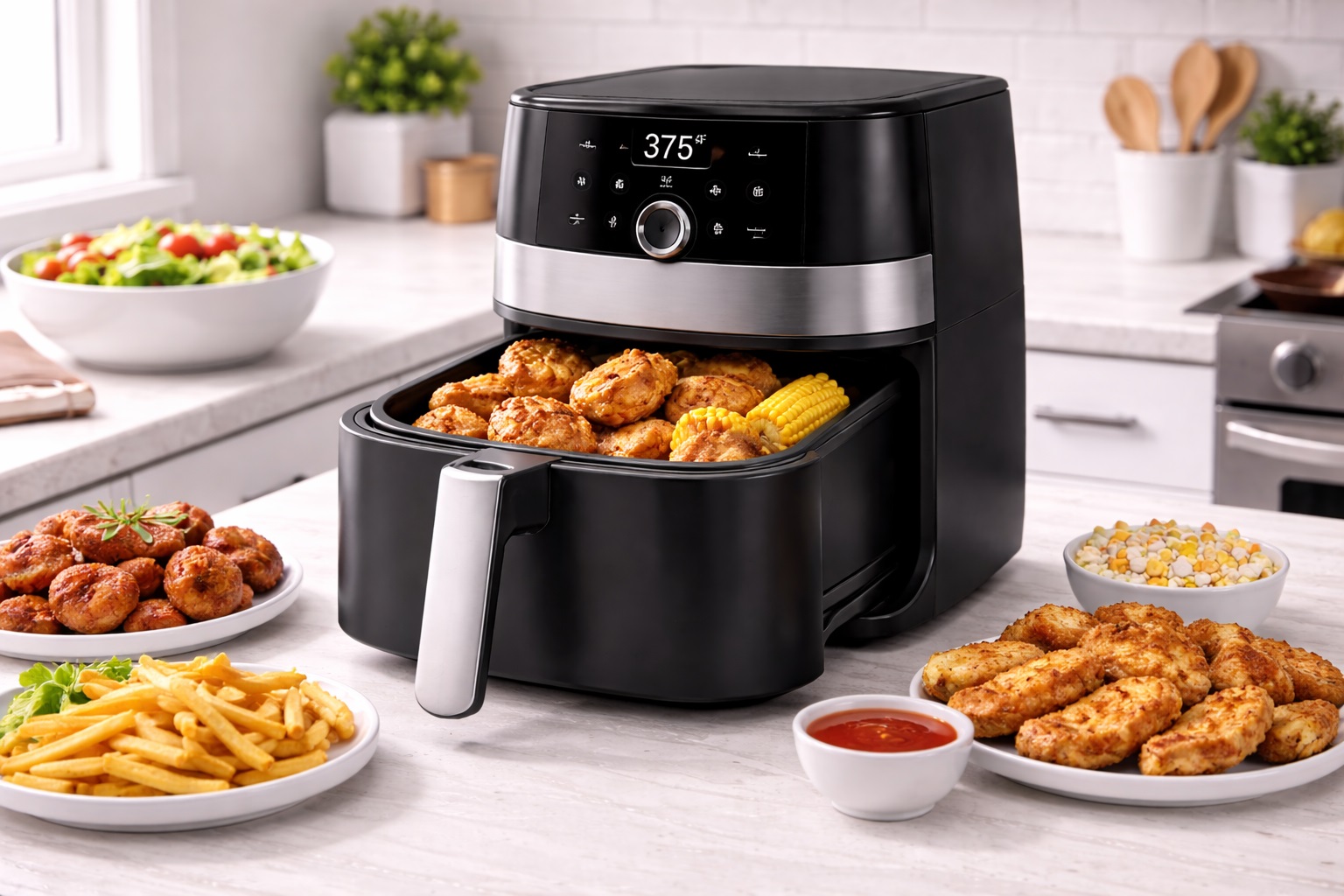
Identically for equivalent loads. Temperature is set and maintained by the thermostat regardless of basket size. A chicken thigh cooked at 375°F for 20 minutes in a 2.5-quart fryer produces the same result as the same chicken thigh in a 6-quart fryer at the same settings. Size only affects how many items you can cook simultaneously, not the quality of any individual item.
7. Is a compact air fryer good for meal prepping?
For a single person prepping one week's meals, yes — though it requires more batches than a full-size model. A 3-quart compact model can prep adequate single-person meal quantities across 2–3 batch sessions. For family-size meal prepping, a compact model is impractical. Match the model's capacity to your actual prep volume needs.
8. Do compact air fryers come with the same accessories as full-size?
Same types, different sizes. Baking pans, rack inserts, skewer kits, and silicone liners are all available for compact models from most manufacturers, but sized for the smaller basket. Verify dimensions carefully before purchasing third-party accessories — a pan sized for a 5-quart fryer won't fit a 3-quart basket.
9. How does a compact air fryer's electricity use compare to a microwave?
A compact air fryer (1000–1400W) uses more power per minute than a microwave (700–1000W), but typically runs for longer per session. A 15-minute air fry session at 1200W uses 0.3 kWh. The energy cost per session is approximately $0.04–0.05 at average electricity rates — negligible for most household budgets.
10. What compact air fryer brands are most reliable?
Ninja, Cosori, and Instant are consistently reviewed positively for quality control and after-sales support in the compact category. These brands have established replacement parts and accessory availability, which matters for long-term ownership. Avoid compact models from completely unrecognized brands — quality control inconsistency is higher, and replacement parts are typically unavailable.
11. Do compact air fryers need a dedicated electrical outlet or circuit?
No. Compact air fryers draw 900–1400W, well within the capacity of a standard 15-amp household outlet, and can share a circuit with other small appliances as long as total simultaneous draw stays reasonable. This is another advantage over some full-size air fryers, which can approach 1800W and occasionally trip breakers when run alongside a microwave or kettle on the same circuit.
12. How long do compact air fryers typically last?
With regular home use, a well-maintained compact air fryer typically lasts 3–5 years before the heating element or fan motor shows meaningful performance decline. Lighter, less frequent use can extend this further. Regularly cleaning the heating coil of grease buildup and avoiding overfilling the basket both meaningfully extend service life, since grease residue on the coil is the most common cause of premature element failure.
Final Verdict — Which compact air fryer Should You Buy?
Compact air fryers deliver full cooking performance in a genuinely minimal footprint. For single-person and two-person households in small kitchens, they are often the better choice over full-size models — not just a compromise. The cooking quality is equivalent for appropriate batch sizes, the cost is lower, and the counter space requirement is substantially reduced.
- Best Ultra-Compact Single-Serve Option: 2.5-Quart Digital Compact Air Fryer — Best footprint-efficient air frying for single-serve cooking.
- Best Balance: Compact but Practical: 3-4 Quart Compact Basket Air Fryer — Best practical compact choice for 1-2 person households.
- Best for Small Kitchens with Multiple Appliance Needs: Compact Air Fryer Toaster Oven Combo — Best multi-function space consolidation for small kitchens.
Choose the 2.5-quart model if you live alone and space is the primary constraint. Choose the 3–4 quart model if you cook for two regularly and want practical meal-sized batches. Choose the combination oven-fryer if you want to eliminate your toaster and add air frying in a single appliance footprint. All three are strong choices for the right user — the decision point is your household size and how you value versatility versus compactness.