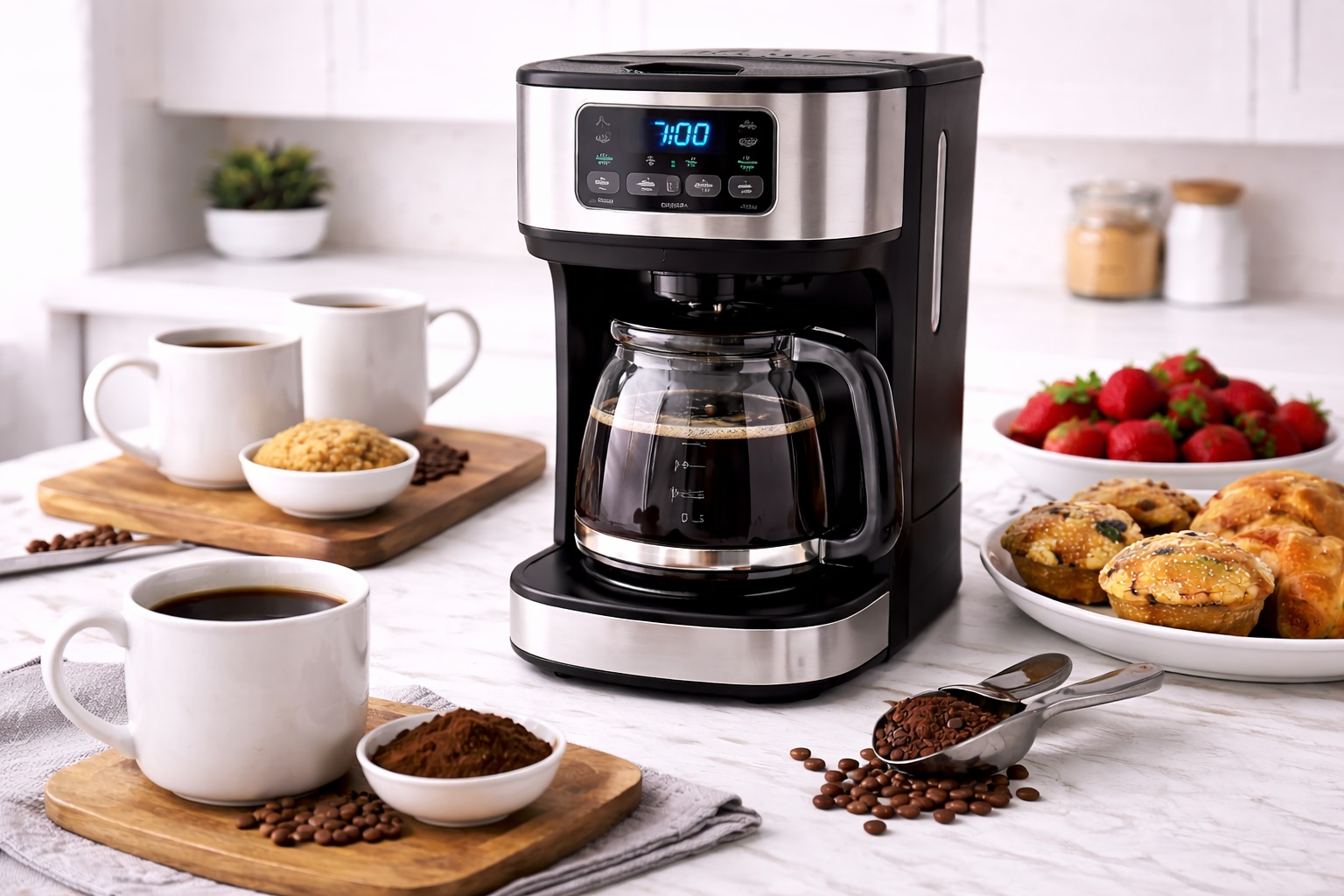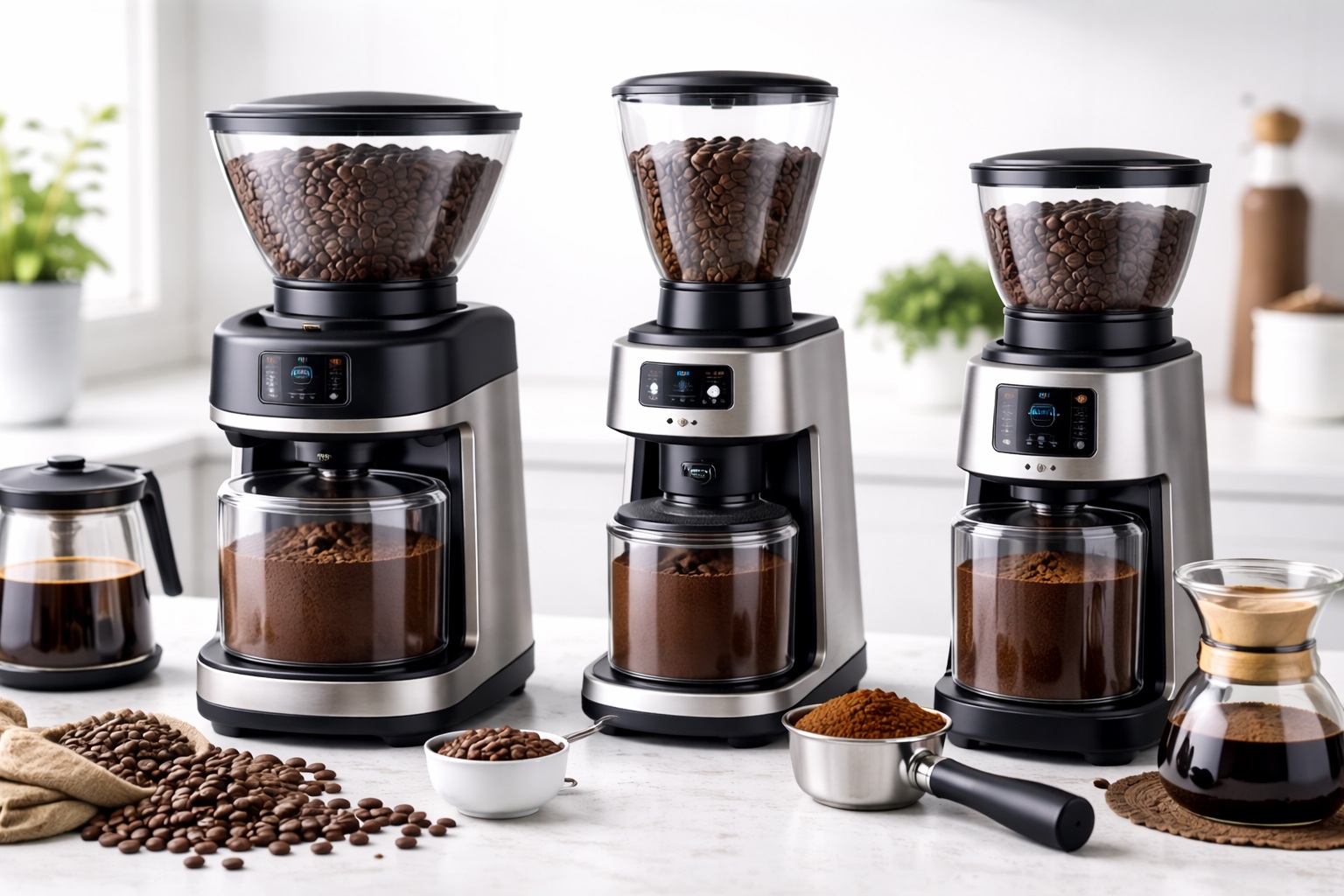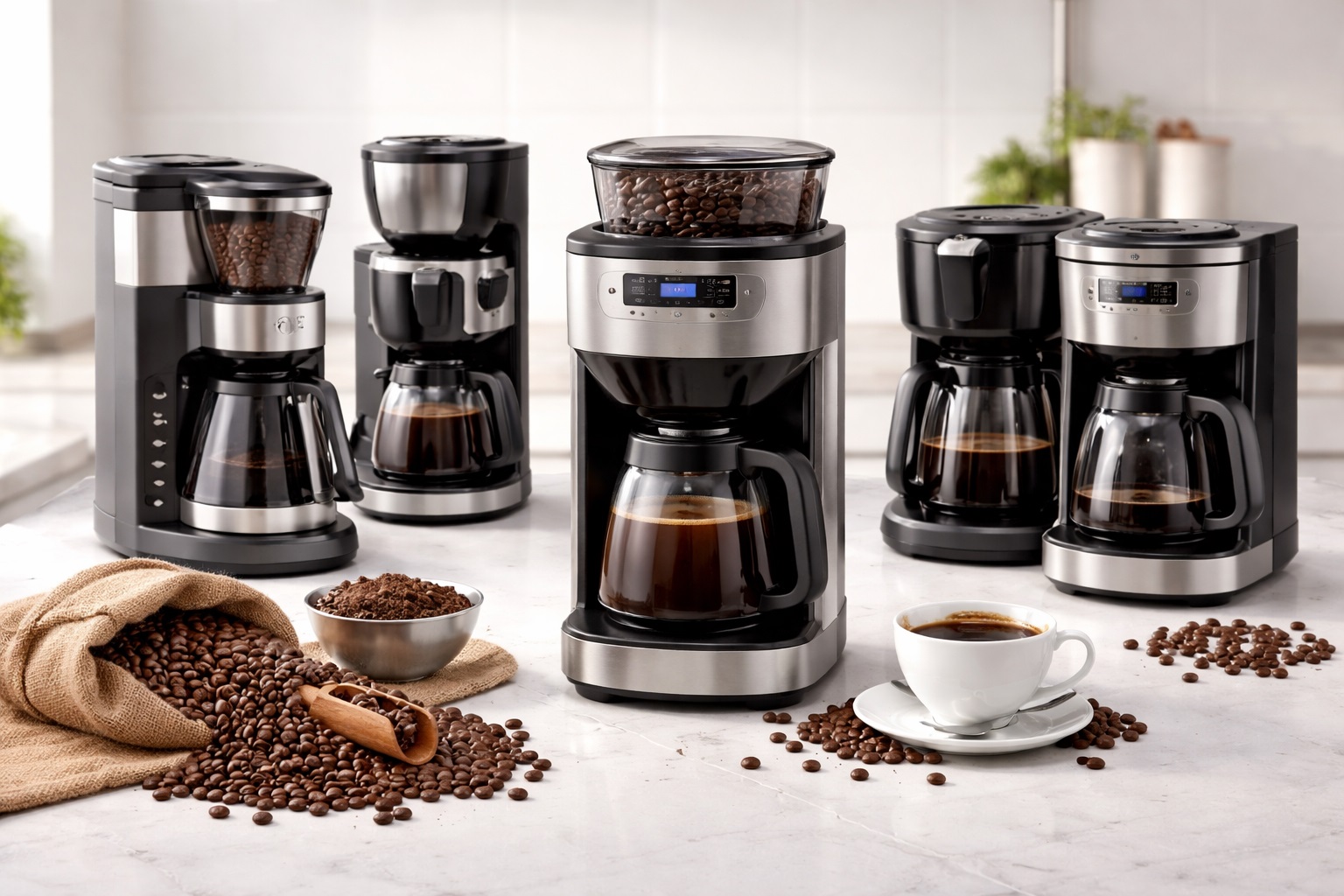
Best Grind and Brew Coffee Maker in 2026: Built-In Grinder Picks
A true grind and brew coffee maker handles whole beans and a finished cup in one continuous process, skipping the extra step and extra appliance of a standalone grinder. This guide compares eight coffee makers relevant to that goal, from a genuine built-in grinder machine to strong alternatives that handle the grinding question differently, whether that means pairing with a separate grinder, using pre-ground coffee, or skipping grounds entirely with pods. Knowing which category each machine falls into will help you choose the right one for how you actually want to brew.
Only one machine on this list actually grinds whole beans as part of its brewing cycle. The rest are included because "grind and brew" convenience means different things to different people: some want fresh-ground flavor without buying two separate appliances, while others have already made peace with pre-ground coffee or pods in exchange for simplicity. Being upfront about which category each machine belongs to will help you avoid buying something that doesn't actually solve the problem you have.
Price tends to track fairly closely with how much of the process a machine actually automates. A true grind-and-brew machine with a built-in grinder and espresso capability costs meaningfully more than a basic drip machine that expects you to supply pre-ground coffee, which reflects the added mechanical complexity involved. That doesn't make the simpler machines worse, just better suited to a different kind of coffee routine.
Top 8 Best Coffee Makers for Grind and Brew Convenience (Detailed Reviews)
1. Keurig K-Elite – Best For Skipping Grinding Altogether With Pods
The Keurig K-Elite doesn't grind anything, and it doesn't pretend to. Instead, it sidesteps the whole question of grinding by using sealed pods, which means there are no beans to store, measure, or grind at all. For anyone whose real goal is simply avoiding the hassle of dealing with whole beans, this approach solves that problem completely, just not in the way a true grind-and-brew machine does.
Its iced coffee setting adjusts brew strength for cold drinks, adding some versatility beyond a basic hot cup. Each pod is designed to produce a consistent result every time, which is its own kind of convenience even without any grinding involved.
The tradeoff is an ongoing cost per pod that's higher than buying and grinding whole beans yourself, and coffee purists will note that pod-based coffee generally can't match the flavor of freshly ground beans brewed immediately. For many casual drinkers, though, that tradeoff is worth the convenience.
The larger water reservoir also reduces how often you need to refill between cups, which is a practical benefit in households where several people brew their own mug at different times rather than sharing a single scheduled pot of freshly ground coffee.
- Pros:
- No grinding, measuring, or bean storage required
- Iced coffee setting for cold brew drinks
- Highly consistent results cup after cup
- Cons:
- No built-in grinder or fresh-bean brewing
- Ongoing pod costs add up over time
Best For: Coffee drinkers who want to avoid the whole grinding process entirely rather than automate it.
Why We Recommend It: It solves the underlying convenience problem in a completely different way, which is worth considering if grinding itself is what you're trying to avoid.
2. Breville Barista Express – Best For True Built-In Grind and Brew
The Breville Barista Express is the one machine on this list that genuinely grinds whole beans as part of its process, using an integrated conical burr grinder to move straight from beans to a finished espresso shot. This is what most people actually picture when they hear "grind and brew," and it's the only option here that delivers it in a single, continuous machine.
Beyond the grinder itself, the machine includes a steam wand for milk-based drinks, rounding out a setup that would otherwise require a grinder, an espresso machine, and a milk frother purchased separately. Bringing all of that into one unit is a meaningful part of its value, even at a higher price point.
There's a real learning curve involved in dialing in grind size, tamp pressure, and extraction time, and new owners should expect a period of adjustment before results feel consistent. Regular maintenance, including cleaning the grinder hopper and wiping the steam wand, is part of ongoing ownership.
For anyone weighing the cost against buying a grinder, an espresso machine, and a milk frother separately, the combined price of the Barista Express often compares favorably, especially once you factor in the counter space saved by consolidating three appliances into one.
- Pros:
- Built-in conical burr grinder
- Produces genuine espresso and milk-based drinks from whole beans
- Sturdy stainless steel construction
- Cons:
- Highest upfront cost on this list
- Real learning curve before results are consistent
Best For: Coffee drinkers who specifically want a true grind-and-brew machine that handles whole beans from start to finish.
Why We Recommend It: It's the only machine on this list that actually grinds beans as part of the brewing process, making it the clear pick for anyone who wants genuine grind-and-brew functionality.
3. Technivorm Moccamaster – Best For Buyers Who Pair Fresh-Ground Beans With a Separate Grinder
The Technivorm Moccamaster doesn't include a built-in grinder, but it's a strong choice for anyone willing to grind beans separately before brewing. Handmade in the Netherlands, it uses a copper heating element to reach proper brewing temperature quickly, and its reputation for consistent, high-quality drip coffee makes it a popular pairing with a quality standalone burr grinder.
Buying a grinder and brewer separately does mean an extra appliance and an extra step each morning, but it also means you can upgrade or replace either piece independently, and dedicated grinders often offer more precise control over grind size than a built-in unit.
Its handmade construction has a well-documented reputation for durability, and replacement parts remain widely available even years after purchase, which matters given its higher upfront cost relative to basic drip machines.
- Pros:
- Excellent pairing with a separate burr grinder
- Fast, consistent brew cycle
- Handmade construction with a strong reliability track record
- Cons:
- No built-in grinder
- Higher upfront cost than typical budget picks
Best For: Buyers who already own or plan to buy a separate grinder and want a well-regarded brewer to pair with it.
Why We Recommend It: Its reputation for brewing quality makes it a favorite pairing for enthusiasts who prefer choosing their grinder and brewer independently.
4. Ninja Hot and Cold Brewed – Best For Pre-Ground Convenience Across Multiple Brew Styles
The Ninja Hot and Cold Brewed system doesn't include a grinder, relying on pre-ground coffee across its six available brew styles. Its appeal for grind-and-brew-minded buyers is less about the grinding process itself and more about flexibility, letting different people in a household get their preferred style without needing separate machines.
The over-ice setting produces a genuinely stronger concentrate rather than diluted coffee, and the controls are handled through a simple dial rather than a complicated digital menu, keeping day-to-day use approachable despite the added functionality.
For buyers who've decided that grinding their own beans isn't a priority, but who still want variety and reasonably fresh results from quality pre-ground coffee, this machine offers more versatility than most drip machines at a similar price.
Its larger reservoir and carafe are sized generously enough to handle a full household's coffee needs across different brew styles, which helps offset the lack of a built-in grinder for buyers who value variety over fresh grinding.
- Pros:
- Six brew styles in one machine
- Handles both hot and cold coffee well
- Reasonable price for the feature set
- Cons:
- No built-in grinder
- More buttons and settings than a simple drip machine
Best For: Households that want brewing variety without dealing with a grinder as part of the process.
Why We Recommend It: Getting six brew styles from a single machine is good value for buyers who prioritize variety over grinding their own beans.
5. Breville Precision Brewer – Best For Serious Drip Brewers Who Grind Separately
The Breville Precision Brewer doesn't include a built-in grinder, but its PID temperature control and multiple brew modes make it a strong choice for anyone who wants to grind their own beans separately and then brew with precision. Keeping water within the range specialty coffee professionals recommend for proper extraction is a meaningful step up from basic drip machines.
Multiple brew modes and basket configurations let you fine-tune the drip rate for whatever roast and grind you're working with, giving serious home brewers real control over the final result, provided they're comfortable handling the grinding step on their own.
As with other Breville equipment, parts and service support are generally solid, which is worth factoring into the higher price relative to basic drip machines without this level of control.
Multiple basket configurations also let you match the drip rate to whatever grind size your separate grinder produces, giving you meaningful control over extraction even without a grinder built into the brewer itself.
- Pros:
- PID temperature control for consistent extraction
- Multiple brew modes for different strengths and batch sizes
- Reputable brand with strong parts and service support
- Cons:
- No built-in grinder
- Costs more than basic drip machines
Best For: Detail-oriented coffee drinkers who grind separately and want precise control over the brewing side of the process.
Why We Recommend It: Precise temperature control is normally reserved for pricier equipment, making this a strong pick for anyone pairing it with quality freshly ground beans.
6. Cuisinart DCC-3200P1 – Best For Large-Batch Brewing With Pre-Ground Coffee
The Cuisinart DCC-3200P1 doesn't include a grinder, but its 14-cup glass carafe and programmable settings make it a practical choice for households that want a large batch of good coffee without the added step of grinding beans for every pot. It's a sensible option for buyers who've decided that pre-ground coffee, whether bought that way or ground in bulk ahead of time, fits their routine better than grinding fresh each morning.
Programmable timing means the pot can be ready without babysitting the brew cycle, and the larger carafe suits households or gatherings where a single-serve or grind-per-cup approach would be too slow.
The auto-shutoff feature adds convenience and safety, automatically turning off the warming plate after a set period rather than requiring you to remember it each morning. Its larger reservoir also means fewer refills throughout the day for bigger households.
- Pros:
- Large 14-cup glass carafe
- Programmable settings for brew timing
- Affordable relative to its capacity
- Cons:
- No built-in grinder
- Glass carafe can affect taste if coffee sits too long
Best For: Larger households that want a big batch of coffee without a grinding step built into the routine.
Why We Recommend It: Its large capacity and programmable timing make it a practical option for households that prioritize volume over grinding fresh beans each morning.
7. Mr. Coffee 12-Cup – Best For Simple, No-Grinder Budget Brewing
The Mr. Coffee 12-Cup keeps things about as simple as possible: no grinder, no advanced settings, just a reliable drip brewer at a low price. Its Grab-a-Cup feature lets you pour mid-brew, a small convenience that suits busy mornings when you can't wait for the full cycle to finish.
For buyers who've decided that grinding their own beans isn't worth the extra step, this machine offers a straightforward way to get a decent cup using pre-ground coffee, without paying for equipment they won't use.
Because there's so little to it mechanically, there's also very little that can go wrong. Replacement carafes are inexpensive and widely available, keeping the total cost of ownership low over the years.
- Pros:
- Among the lowest prices in the category
- Grab-a-Cup pause-and-serve function
- Simple to use with no learning curve
- Cons:
- No built-in grinder
- No advanced brew-strength or temperature settings
Best For: Budget-conscious buyers who are content using pre-ground coffee and don't need a built-in grinder.
Why We Recommend It: It's an honest, affordable option for anyone who has already decided that grinding their own beans isn't a priority.
8. Hamilton Beach 2-Way – Best For Budget Buyers Who Don't Need a Built-In Grinder
The Hamilton Beach 2-Way is a straightforward drip machine without a grinder, offering dual brewing modes, a single serve or a full carafe, at one of the lowest price points in this roundup. It's a sensible pick for buyers who want flexibility in batch size without paying extra for grinding capability they won't use.
Switching between the two brewing modes takes only a few seconds, which is a genuinely useful feature for households where coffee needs vary from day to day, even without any grinding functionality built in.
Because there's so little to it mechanically, there's also very little that can go wrong over years of regular use. Replacement carafes are inexpensive and easy to find, keeping the total cost of ownership low even without a built-in grinder to justify a higher price.
- Pros:
- Low upfront price
- Dual brewing modes for flexibility
- Compact enough for small kitchens
- Cons:
- No built-in grinder
- Build quality reflects its low price
Best For: Budget-conscious buyers who want brewing flexibility without paying for a built-in grinder they won't use.
Why We Recommend It: Few machines at this price point offer two brewing modes, making it one of the more flexible truly budget options available.
Buying Guide: How to Choose the Best Grind and Brew Coffee Maker
"Grind and brew" can mean a machine that genuinely grinds whole beans as part of its cycle, or it can simply describe wanting fresh-tasting coffee without much hassle. The sections below help you figure out which approach actually fits your routine, rather than assuming every machine marketed around freshness works the same way.
1. Built-In Grinder vs. Separate Grinder
A true grind-and-brew machine handles both steps in one unit, which saves counter space and simplifies the routine, while a separate grinder paired with any brewer often allows more precise control over grind size.
2. Why Fresh-Ground Coffee Tastes Different
Coffee begins losing aromatic compounds shortly after grinding, so beans ground immediately before brewing generally produce a noticeably fresher cup than pre-ground coffee that's been sitting for days or weeks.
3. Grind Size and Brew Method Compatibility
Different brewing methods require different grind consistencies, from coarse for cold brew to fine for espresso. A built-in grinder needs to match the grind size to whatever brewing method the machine uses.
4. Bean Hopper Capacity and Freshness
A larger bean hopper means less frequent refilling, but beans sitting in a hopper for too long can lose freshness. Look for a hopper size that matches how quickly you actually go through beans.
5. Noise During Grinding
Built-in grinders add noticeable noise to the brewing process compared to a simple drip machine using pre-ground coffee, which is worth considering if you brew early while others are asleep.
6. Cleaning a Built-In Grinder
Grinders require periodic cleaning to prevent stale coffee oils from building up, which adds a maintenance step that pre-ground or pod-based machines don't require.
7. Cost of Whole Beans vs. Pre-Ground Coffee
Whole beans are often only slightly more expensive than pre-ground coffee, and buying a bag whole rather than ground can help preserve freshness for longer between uses.
8. Counter Space for Grind-and-Brew Machines
Machines with a built-in grinder tend to be bulkier than simple drip machines, so measure available counter space carefully before assuming a compact fit.
9. Learning Curve of Combined Grinder-Brewer Machines
All-in-one machines with a grinder often have more settings to learn than a basic drip machine, including grind size and dose amount, alongside standard brew settings.
10. Standalone Grinder Quality If Buying Separately
If you choose a brewer without a built-in grinder, a quality burr grinder is worth the investment over a basic blade grinder, since it produces a far more consistent grind size.
11. Pod-Based Alternatives to Grinding
Pod machines skip grinding entirely, trading fresh-ground flavor for consistency and convenience, which may be the better fit if grinding itself feels like an unnecessary chore.
12. Long-Term Maintenance of Grinding Mechanisms
Built-in grinder components can wear down over years of daily use, just like any mechanical part, so it's worth considering how easily replacement parts are available for a given machine.
13. Matching the Machine to Your Actual Morning Routine
The best grind-and-brew setup is the one you'll actually use consistently. A machine that takes too long or feels like a chore each morning often gets abandoned in favor of something simpler, no matter how good the coffee tastes on paper. Being honest about your own patience for extra steps will steer you toward the right kind of machine faster than any spec sheet.
Frequently Asked Questions
Is a premium coffee maker worth it?
It depends on how much you value fresh-ground flavor and built-in convenience. A premium grind-and-brew machine can simplify your routine considerably, but a budget machine paired with a quality separate grinder can achieve similar results for less money.
How do I maintain my coffee maker?
Regular cleaning of removable parts after each use and periodic descaling every one to three months, depending on your local water hardness, will keep most machines running well. Built-in grinders need occasional cleaning to prevent stale oil buildup.
Does grinding beans right before brewing really make a difference?
Yes, noticeably. Ground coffee begins losing flavor compounds within minutes, so grinding immediately before brewing generally produces a fresher, more aromatic cup than coffee ground well in advance. This is one reason enthusiasts often prioritize a built-in or high-quality separate grinder over other features.
Is a built-in grinder better than a separate one?
Not necessarily better, just more convenient. A quality standalone grinder often offers more precise control over grind size, while a built-in grinder saves counter space and simplifies the morning routine.
How often should I clean a built-in coffee grinder?
Wiping out the hopper and grinding chamber every couple of weeks helps prevent stale oil buildup, with a deeper clean recommended every few months depending on how often the machine is used.
Can I use pre-ground coffee in a grind-and-brew machine?
Some machines allow bypassing the grinder to use pre-ground coffee, but this varies by model, so it's worth checking whether a specific machine supports that option before assuming it does.
What's the difference between a blade grinder and a burr grinder?
A blade grinder chops beans unevenly, producing an inconsistent grind, while a burr grinder crushes beans between two surfaces for a much more uniform result, which generally leads to better extraction. Most quality grind-and-brew machines and standalone grinders worth buying use a burr mechanism rather than blades.
Do pod machines save money compared to grinding your own beans?
Usually not. Pods typically cost more per cup than whole beans ground at home, though they save time and eliminate the need for grinding or measuring equipment.
How long do whole beans stay fresh before grinding?
Whole beans generally stay fresher for longer than pre-ground coffee, often retaining good flavor for a few weeks after roasting if stored properly in an airtight container away from light and heat. Ground coffee, by comparison, tends to lose noticeable freshness within days rather than weeks.
Is it worth buying a coffee maker with a built-in grinder?
If you value convenience and don't mind a higher upfront cost, yes. If you already enjoy the process of grinding separately or want more control over grind settings, a standalone grinder may suit you better.
Do built-in grinders wear out over time?
Like any mechanical component, built-in grinders can wear down with years of regular use. Checking replacement part availability for a specific model is worth doing before buying, especially for pricier machines where a full replacement would be a significant expense.
What grind size should I use for drip coffee?
A medium grind is typically recommended for standard drip coffee makers, though the exact ideal size can vary slightly depending on the specific machine and brew time.
Can grinding my own beans save money over time?
Often yes, since whole beans are frequently cheaper per cup than pre-ground coffee or pods, especially when bought in bulk from a roaster rather than smaller pre-packaged bags. Over months of daily brewing, that difference can add up to a meaningful amount of savings.
Final Verdict
- Top Pick: Breville Barista Express for anyone who wants a true built-in grinder and complete grind-and-brew process in one machine.
- Budget Choice: Mr. Coffee 12-Cup for buyers who are comfortable using pre-ground coffee at the lowest possible price.
- Premium Choice: Technivorm Moccamaster for buyers who prefer pairing a separate quality grinder with a well-regarded brewer.
If a genuine built-in grinder is what you're after, the Breville Barista Express is the clear choice here, since it's the only machine on this list that actually handles whole beans from grinding through to a finished cup, even though it asks for a real learning curve and a higher upfront investment. If you'd rather keep things simple and inexpensive using pre-ground coffee, the Mr. Coffee 12-Cup gets the basics right without asking you to pay for grinding capability you won't use, making it a sensible pick for casual coffee drinkers. And for coffee enthusiasts who prefer choosing their grinder and brewer independently, the Technivorm Moccamaster remains one of the most respected brewing partners for a quality standalone grinder, offering excellent consistency once beans are ground. The right pick ultimately depends on whether you want the convenience of one all-in-one machine or the flexibility of choosing each component separately based on your own preferences.