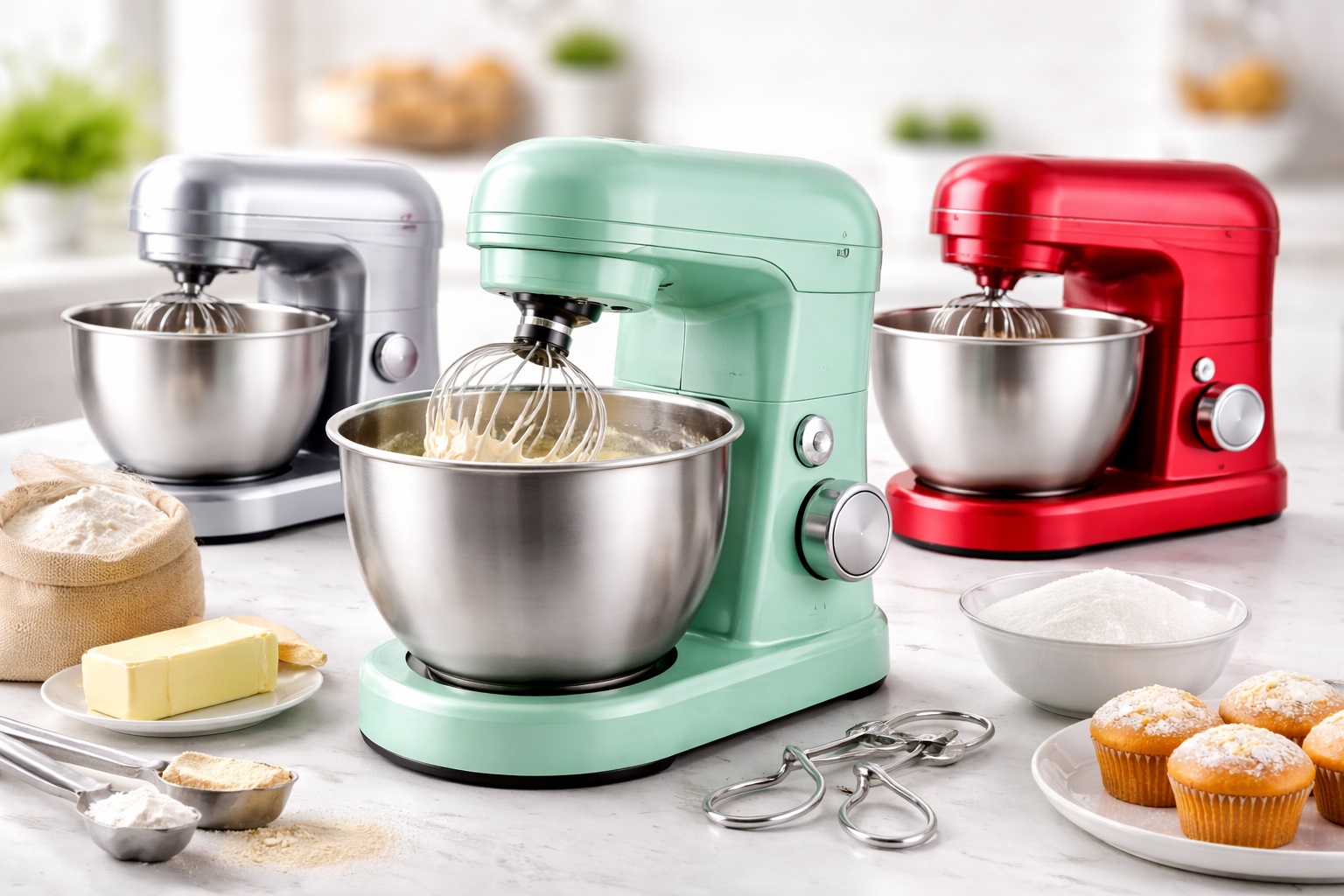
Best Compact Stand Mixer in 2026
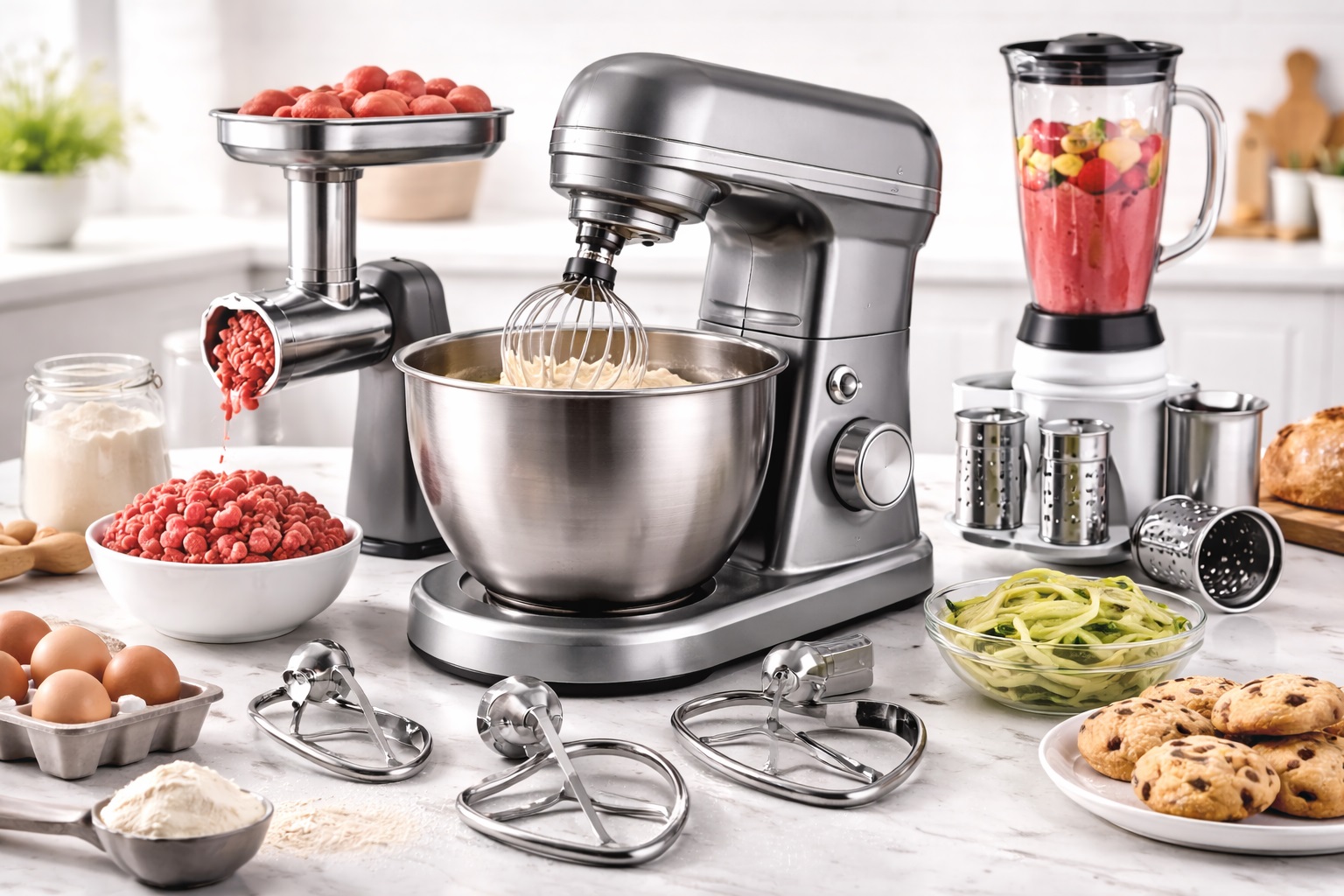
Not every kitchen has room for a full-size, bowl-lift stand mixer parked permanently on the counter. For apartments, galley kitchens, and anyone working with limited cabinet space, finding a stand mixer that doesn't dominate the countertop while still handling real baking tasks is the priority. This guide compares eight popular stand mixers with an eye toward footprint, storage-friendliness, and everyday usefulness for a small kitchen, rather than focusing purely on raw motor specs.
Compact doesn't have to mean underpowered. Several of the models below use tilt-head designs specifically because they take up less vertical and horizontal space than bowl-lift machines, while still delivering enough motor power for cookies, cakes, and moderate bread dough. A couple of the larger, more powerful machines are included too, since some small-kitchen shoppers are willing to trade a bit of counter space for extra mixing capability — we've noted honestly where that trade-off applies so you can decide what matters most for your own setup.
Footprint alone isn't the whole story, either. How a mixer stores, how heavy it is to lift in and out of a cabinet, and whether its cord and attachments tuck away neatly all factor into how "small-kitchen friendly" a machine really feels day to day. Two mixers with nearly identical counter dimensions can feel completely different to live with depending on these details, which is why the reviews below go beyond a simple width-and-depth comparison.
Top 8 Compact Stand Mixer Picks (Detailed Reviews)
1. Sunbeam Mixmaster – Best Compact Value Pick
The Sunbeam Mixmaster pairs a 350-watt motor with a relatively modest footprint, priced around $100, making it one of the easier machines on this list to tuck into a cabinet or a corner of a small counter when not in use. Its long production history as a household name means it's a familiar, no-surprises option for anyone downsizing from a larger kitchen or furnishing a first apartment. It doesn't dominate counter space the way bulkier bowl-lift machines do, and its lighter overall weight makes it easier to move in and out of storage between baking sessions, which matters more than most spec sheets suggest when your kitchen simply doesn't have room to leave an appliance out permanently. The bowl and attachments also nest reasonably compactly for storage, so you're not left juggling several oddly shaped pieces every time you tuck it away in a lower cabinet.
- Pros:
- Compact, easy-to-store design
- 350-watt motor handles everyday mixing well
- Lightweight relative to bowl-lift alternatives
- Cons:
- Smaller attachment ecosystem than premium brands
- Not intended for frequent heavy dough work
Best For: Small-kitchen bakers who want a familiar, easy-to-store machine at an approachable price.
Why We Recommend It: Its manageable size and weight make it genuinely easier to live with in a tight kitchen than several bulkier competitors on this list.
2. Cuisinart SM-50 – Best High-Power Compact Choice
The Cuisinart SM-50 manages to pack a 500-watt motor, the strongest in this roundup, into a housing that's still noticeably more compact than the bulkiest bowl-lift machines, at a typical price around $350. For small-kitchen bakers who don't want to sacrifice mixing power just because counter space is limited, this combination is a compelling middle ground. It still requires a reasonable amount of clearance for its head to tilt back, so measure your available space before assuming any tilt-head machine will fit, but among higher-wattage options it remains one of the more space-conscious choices. Owners who've upgraded from lower-wattage compact machines often note that the extra motor power reduces the number of passes needed for stiff doughs, which indirectly saves time and counter clutter during a baking session.
- Pros:
- 500-watt motor, the highest in this comparison
- More compact than most bowl-lift alternatives
- Strong overall mixing performance
- Cons:
- Still needs tilt-back clearance above the unit
- Priced above the true entry-level tier
Best For: Small-kitchen bakers who refuse to compromise on motor power despite tight counter space.
Why We Recommend It: It delivers the strongest motor in this lineup without the bulk of the heaviest bowl-lift machines.
3. Hamilton Beach Electric – Best Budget-Friendly Small-Kitchen Pick
At around $60, the Hamilton Beach Electric is both the least expensive and one of the more compact machines in this roundup, relying on a standard planetary mixing action in a lightweight housing that's easy to lift onto and off a counter. For small-kitchen bakers who mix only occasionally, storing a heavier premium mixer permanently on display often isn't practical, and this model's lighter build makes it far easier to stash in a cabinet between uses. It won't out-mix the pricier machines here, but for everyday cookies, cakes, and light dough, it does the job in a footprint that fits almost anywhere. Its lower price also makes it a sensible choice if you're not entirely sure how often you'll actually use a stand mixer yet and don't want to commit significant cabinet space to a machine you might rarely reach for.
- Pros:
- Lightweight and easy to store
- Lowest price point in this roundup
- Simple operation suited to occasional use
- Cons:
- Less motor power than higher-wattage competitors
- Shorter expected lifespan under heavy use
Best For: Occasional bakers in small kitchens who prioritize easy storage and a low price.
Why We Recommend It: Its light weight and small footprint make it one of the easiest machines here to store away when counter space is at a premium.
4. Bosch Universal Plus – Best for Small Kitchens That Still Want Serious Power
We'll be upfront: the Bosch Universal Plus, priced around $400, is not the most compact machine on this list. Its unique bottom-drive design gives it a wider, lower-profile footprint than tilt-head competitors, and it's genuinely one of the bulkier options here. It earns its place in a compact-focused roundup only because some small-kitchen bakers specifically want to bake bread or handle large batches despite limited space, and this design remains well regarded for exactly that kind of heavy-duty work. If your small kitchen still needs to produce large batches of dough regularly, it may be worth the extra counter footprint; if genuine compactness is your top priority, one of the tilt-head options here will likely suit you better. Some small-kitchen owners choose to dedicate a single deep drawer or a rolling cart specifically to this machine given its size, treating it as a semi-permanent fixture rather than something stashed away between uses.
- Pros:
- Handles large, heavy batches unusually well
- Sturdy, well-regarded mechanical design
- Stable footprint reduces wobble during heavy mixing
- Cons:
- Bulkier and wider than tilt-head alternatives
- Not the best fit for the tightest kitchens
Best For: Small-kitchen bakers who bake heavy dough often enough to justify a larger footprint.
Why We Recommend It: It's included honestly as the power-focused option here, not the space-saving one — a worthwhile trade for the right baker.
5. Aucma Stand Mixer – Best Compact All-Rounder
The Aucma Stand Mixer's tilt-head design, at around $130, keeps its footprint relatively small while still offering enough capability for the majority of everyday baking tasks. Tilt-head mixers generally need less clearance than bowl-lift designs since the head pivots rather than sliding vertically, and the Aucma's build feels sturdier than its price suggests. For a small kitchen that still wants a genuinely capable all-rounder rather than a bare-minimum entry machine, this is one of the stronger balances of size, price, and performance in this roundup. Its tilt-head mechanism also locks securely in the upright position during mixing, which reduces any wobble that could otherwise nudge the machine toward the edge of a smaller counter over a long mixing session.
- Pros:
- Tilt-head design needs less clearance than bowl-lift machines
- Solid build quality for the price
- Handles everyday baking tasks well
- Cons:
- Not designed for frequent heavy-duty use
- Fewer attachments than premium competitors
Best For: Small-kitchen bakers who want a genuinely capable all-around mixer without a large footprint.
Why We Recommend It: It balances compact tilt-head convenience with dependable everyday performance better than most machines at its price.
6. Kenwood kMix – Best Compact All-Metal Build
The Kenwood kMix, priced around $300, uses an all-metal construction that adds some weight compared to plastic-bodied competitors, but its overall footprint remains reasonable for a small kitchen thanks to its tilt-head design. The die-cast body means it won't be the lightest machine to shuffle in and out of a cabinet, but it rewards that trade-off with noticeably better long-term durability than lighter alternatives. For small-kitchen bakers who plan to keep their mixer for many years rather than replace it every couple of seasons, the extra weight is a reasonable price to pay. Its die-cast body also tends to sit more solidly on smaller countertops, resisting the creeping and vibration that lighter machines can exhibit during vigorous mixing near a counter edge.
- Pros:
- All-metal construction built to last
- Reasonable footprint for a metal-bodied machine
- Stable during heavier mixing tasks
- Cons:
- Heavier than plastic-bodied alternatives
- Costs more than true entry-level options
Best For: Small-kitchen bakers who value long-term durability over the absolute lightest footprint.
Why We Recommend It: It offers meaningfully better build quality than lighter competitors while still fitting comfortably in most small kitchens.
7. KitchenAid Artisan Series – Best Compact Premium Pick
The KitchenAid Artisan Series, around $430, uses a tilt-head design with a 325-watt motor and 10 speeds, and its relatively compact footprint compared to bowl-lift machines has made it a popular choice in smaller kitchens for decades. Its broad attachment ecosystem also means a single machine can replace several single-purpose small appliances, which is a real space-saving benefit in a tight kitchen even beyond the mixer's own footprint. It's priced at the premium end of this roundup, but its enduring popularity in small kitchens specifically speaks to how well its size-to-capability ratio has held up over time. Many small-kitchen owners treat it as a permanent counter fixture precisely because its footprint is manageable enough to justify never putting it away, which sidesteps the storage question entirely for those with even a modest amount of spare counter space.
- Pros:
- Compact tilt-head footprint relative to capability
- Extensive attachment ecosystem replaces other appliances
- Strong resale value and long-term reliability
- Cons:
- Premium price point
- Attachments sold separately add further cost
Best For: Small-kitchen bakers willing to pay a premium for a compact machine that can replace multiple appliances.
Why We Recommend It: Few machines in this roundup pack as much versatility into as manageable a footprint.
8. Breville Scraper Mixer Pro – Best Compact Splurge
The Breville Scraper Mixer Pro, priced around $450, is the most expensive machine here, but its tilt-head design keeps its footprint reasonable for a small kitchen despite the premium price tag. Its scraper beater innovation reduces the need to stop and manually scrape the bowl, which is a genuine convenience when counter space is tight and you don't want ingredients splashed beyond the bowl's edge. For small-kitchen bakers who bake often enough to justify the cost, it's a compact machine that punches above its footprint in terms of features. Its finish and detailing also tend to hold up visually over years of use, which matters more in a small kitchen where the mixer is more likely to stay visible on the counter rather than hidden away in a pantry.
- Pros:
- Scraper beater reduces mess and manual scraping
- Compact tilt-head footprint despite premium positioning
- Strong overall build and finish
- Cons:
- Highest price point in this roundup
- Harder to justify for occasional bakers
Best For: Frequent small-kitchen bakers who want premium features in a manageable footprint.
Why We Recommend It: It proves that a compact footprint and premium features aren't mutually exclusive, provided you're willing to pay for it.
Buying Guide: How to Choose the Best Compact Stand Mixer
Choosing a stand mixer for a small kitchen involves a different set of priorities than shopping purely on power or price. The sections below cover the practical factors that determine whether a mixer will genuinely fit your space and routine, not just your recipes.
1. Measure Your Available Space First
Before comparing any specs, measure both the counter footprint you can dedicate to the mixer and the vertical clearance above it, especially for tilt-head models that need room for the head to pivot back. Many space-related disappointments come from skipping this simple step. It's also worth measuring your cabinet or pantry shelf if you plan to store the mixer between uses, since the width of a mixer's base is sometimes wider than its footprint on the counter would suggest once the bowl and beater are attached.
2. Tilt-Head vs. Bowl-Lift Footprint
Tilt-head mixers generally have a smaller overall footprint and don't require the vertical clearance that bowl-lift machines need to raise the bowl into position, making them the more common choice for small kitchens. Bowl-lift machines, by contrast, often need clearance both above and to the side for the locking arm to swing the bowl up, which can make them awkward to place under low cabinets or in a corner.
3. Weight & Portability
If you plan to store your mixer in a cabinet rather than leaving it on the counter permanently, its weight matters as much as its footprint. Lighter plastic-bodied machines are easier to lift in and out daily than heavier all-metal designs. Consider where you'll be lifting it from and to, as well; a machine stored on a high shelf presents a different challenge than one tucked into a low drawer near the counter.
4. Motor Power vs. Footprint Trade-Offs
Higher-wattage motors sometimes come in larger housings, though several compact machines manage to balance strong performance with a smaller footprint. Decide how much power you actually need before assuming bigger is always necessary. If your baking rarely goes beyond standard batters and light dough, a modest motor in a smaller housing is often the more sensible choice than paying extra for capability you won't regularly use.
5. Bowl Capacity for Smaller Households
Small kitchens often serve smaller households, and a more modest bowl capacity can be an advantage rather than a limitation, since it also means less counter space used and an easier mixer to lift and clean. A smaller bowl also fits more easily into a standard dishwasher rack or a compact sink, which matters more in kitchens where sink space itself is limited.
6. Storage-Friendly Design Details
Look for features like a flat top, a tucked-in cord, and no protruding attachments when the mixer is idle, all of which make a real difference when sliding a mixer into a cabinet or onto a shelf. A built-in cord wrap on the base is a small detail that prevents a dangling cord from catching on other items in a crowded cabinet.
7. Attachment Hub Versatility
A stand mixer with a front power hub can replace several other small appliances, which is a genuine space-saving benefit in a small kitchen even if the mixer itself takes up some counter room. Think about which specific attachments you'd actually use before paying extra for a wide ecosystem you may never fully take advantage of.
8. Noise Considerations in Open Layouts
Small kitchens are often part of an open living space, so noise during operation matters more than in a separate, closed-off kitchen. Check user feedback specifically for noise complaints before committing to a model. If you frequently bake while others are working, studying, or sleeping nearby, this factor deserves more weight than it typically gets in general buying guides.
9. Cord Length & Outlet Placement
Compact kitchens sometimes have limited outlet access near the counter space where you'd want to use a mixer. Confirm the cord length is sufficient for your layout before assuming any model will work where you need it to. An extension cord is a workaround, but a mixer with a naturally longer cord avoids the extra clutter and tripping hazard on an already tight counter.
10. Ease of Cleaning in Tight Spaces
Dishwasher-safe bowls and attachments matter even more in a small kitchen, where hand-washing large bowls in a cramped sink can be more of a hassle than in a larger kitchen with more counter space. A bowl that fits in a standard dishwasher's lower rack without hogging the entire cycle is a genuine convenience worth checking before you buy.
11. Build Material & Long-Term Value
All-metal construction adds durability but also weight, which affects how easily you can store the mixer day to day. Weigh long-term durability against daily convenience based on how often you'll be moving the machine. If it will live permanently on the counter, the weight trade-off matters far less than it would for a mixer moved in and out of storage constantly.
12. Price vs. Footprint Efficiency
Some premium machines justify their price partly through space efficiency, replacing multiple appliances via attachments. Consider whether a higher price buys you genuine footprint savings elsewhere in your kitchen, such as retiring a separate pasta maker or food grinder you'd otherwise need to store as well.
13. Brand Support & Long-Term Reliability
Established brands tend to have better parts availability, which matters over years of ownership regardless of the machine's size. A compact machine that's hard to repair isn't actually saving you space or money in the long run, since a mixer you have to replace after a couple of years costs more in the end than one that's serviced and kept running.
Frequently Asked Questions
What makes a stand mixer "compact"?
Generally, tilt-head designs with a smaller base footprint and less required clearance qualify as compact, especially compared to larger bowl-lift machines that need more vertical space to raise and lower the bowl. Weight and how easily the mixer stores away also factor into how compact a machine feels in daily use, beyond its raw measurements.
Are tilt-head mixers always more compact than bowl-lift mixers?
Tilt-head mixers are typically smaller and lighter than bowl-lift machines, though there's some variation between brands and models, so it's still worth checking specific dimensions for the exact machine you're considering. Some heavy-duty tilt-head machines, like certain bottom-drive designs, can actually be bulkier than a compact bowl-lift model, so don't assume the category alone guarantees a smaller footprint.
Can a compact stand mixer still handle bread dough?
Many compact tilt-head mixers can handle light to moderate bread dough, though very heavy or frequent dough work is generally better suited to bulkier, higher-torque machines designed specifically for that purpose. If bread is only an occasional project rather than a weekly habit, a compact machine is usually still a reasonable choice.
Is it better to store a stand mixer in a cabinet or leave it on the counter?
This depends entirely on your available counter space and how often you use it. Frequent bakers often prefer leaving it accessible on the counter, while occasional bakers with limited space may prefer cabinet storage.
How much counter space does a typical stand mixer need?
Most stand mixers need roughly a one to two foot square footprint, plus additional clearance above for tilt-head models to pivot back fully when adding ingredients or attachments. Bowl-lift machines can require a bit more depth to accommodate the locking arm mechanism at the back.
Do compact stand mixers sacrifice motor power?
Not necessarily. Several compact tilt-head models in this roundup offer strong motor wattage, proving that a smaller footprint doesn't automatically mean weaker mixing performance.
What attachments should I look for in a small-kitchen mixer?
A front power hub that supports optional attachments can let a single compact mixer replace several other small appliances, which is a genuine space-saving advantage in a small kitchen.
Is a lighter stand mixer better for a small kitchen?
If you plan to store it away between uses, a lighter machine is easier to move daily. If you'll leave it out permanently, weight matters less than overall footprint and stability.
How do I know if a stand mixer will fit under my cabinets?
Measure the height from your counter to the underside of any upper cabinets, and compare it against the mixer's height with the head fully tilted back, not just its resting height. If clearance is tight, a bowl-lift design that raises vertically rather than tilting back may actually need less overhead room.
Are compact stand mixers noisier than larger models?
Noise generally correlates more with motor design and speed setting than with overall size, so a compact mixer isn't inherently louder or quieter than a larger one.
Can I use a compact stand mixer for large batches occasionally?
Most compact mixers can handle occasional larger batches within their rated bowl capacity, though working right at the upper limit of the bowl repeatedly may shorten the motor's lifespan over time. For genuinely large, frequent batches, a higher-capacity or higher-wattage machine will hold up better in the long run.
What's the tradeoff between a compact mixer and a bowl-lift mixer?
Compact tilt-head mixers generally save space and weight, while bowl-lift mixers often provide a more stable platform for very heavy or dense mixtures at the cost of a larger footprint.
Do all compact stand mixers cost less than bowl-lift models?
Not always. Several compact tilt-head machines in this roundup are priced at the premium end, showing that footprint and price don't always move together. Price tends to track motor power, build materials, and attachment support more closely than it tracks size alone.
Final Verdict
- Top Pick: Sunbeam Mixmaster for the best overall balance of compact size, price, and everyday performance.
- Budget Choice: Hamilton Beach Electric for the lowest price at around $60 in a lightweight, easy-to-store design.
- Premium Choice: Breville Scraper Mixer Pro for shoppers willing to pay around $450 for premium features in a manageable footprint.
For a genuinely small kitchen, the right stand mixer is as much about footprint and storage as it is about motor power or price. The Sunbeam Mixmaster offers the easiest overall balance for most small-kitchen bakers, while the Hamilton Beach Electric remains the simplest, lowest-cost entry point if space and budget are both tight. If you've decided that premium features matter enough to invest more, the Breville Scraper Mixer Pro and KitchenAid Artisan Series prove that compact and capable aren't mutually exclusive. And if your baking habits genuinely call for heavier-duty performance, the bulkier Bosch Universal Plus remains a reasonable trade of counter space for capability, as long as you go in with realistic expectations about its size. Ultimately, the best compact stand mixer for your kitchen depends less on any single spec and more on how honestly you assess your available space, your typical batch sizes, and how much you're willing to trade footprint for extra motor power. Measuring your counter and cabinet space before you shop will save you far more disappointment than comparing wattage figures alone ever will.