Best Smart Air Fryer with App Control in 2026
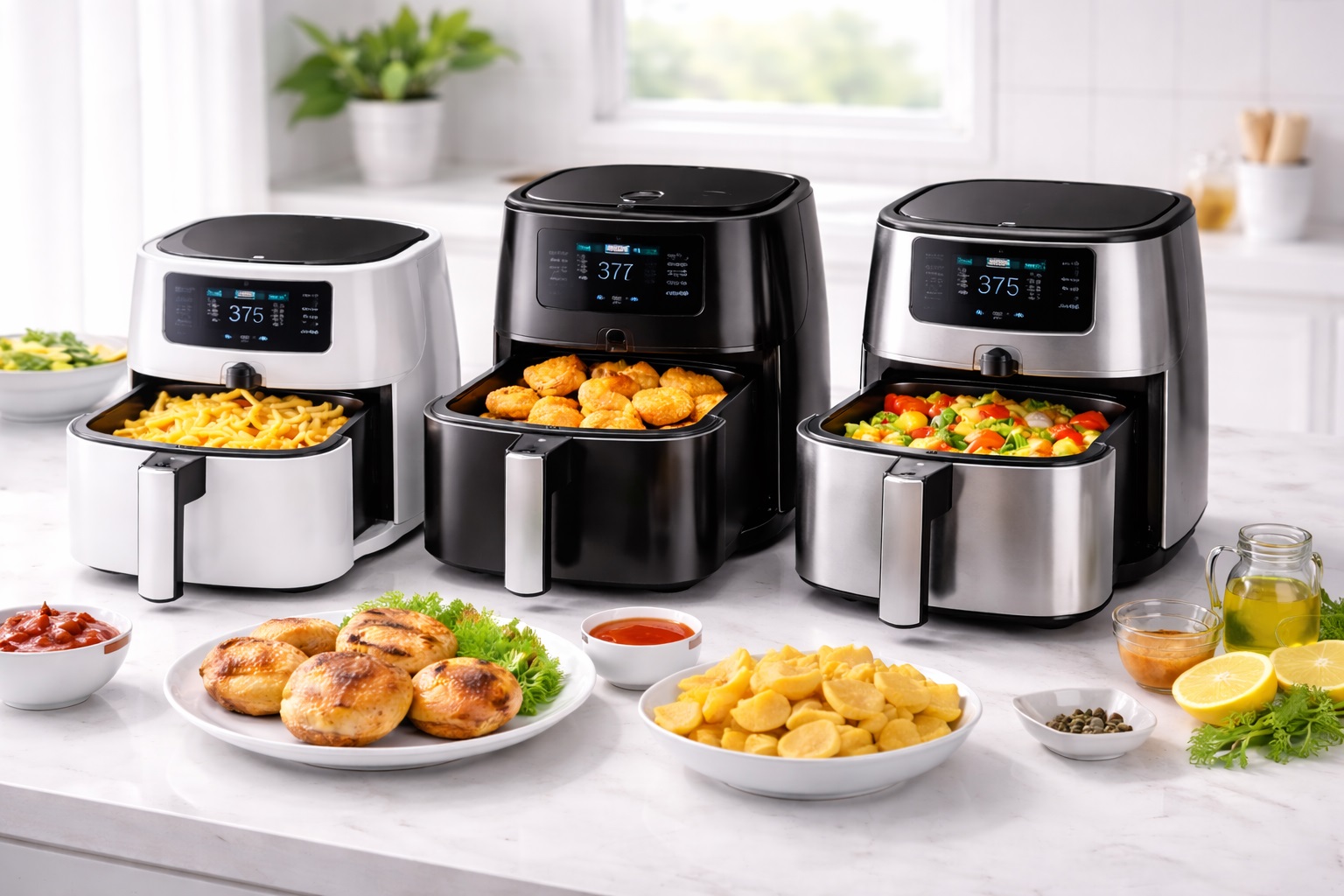
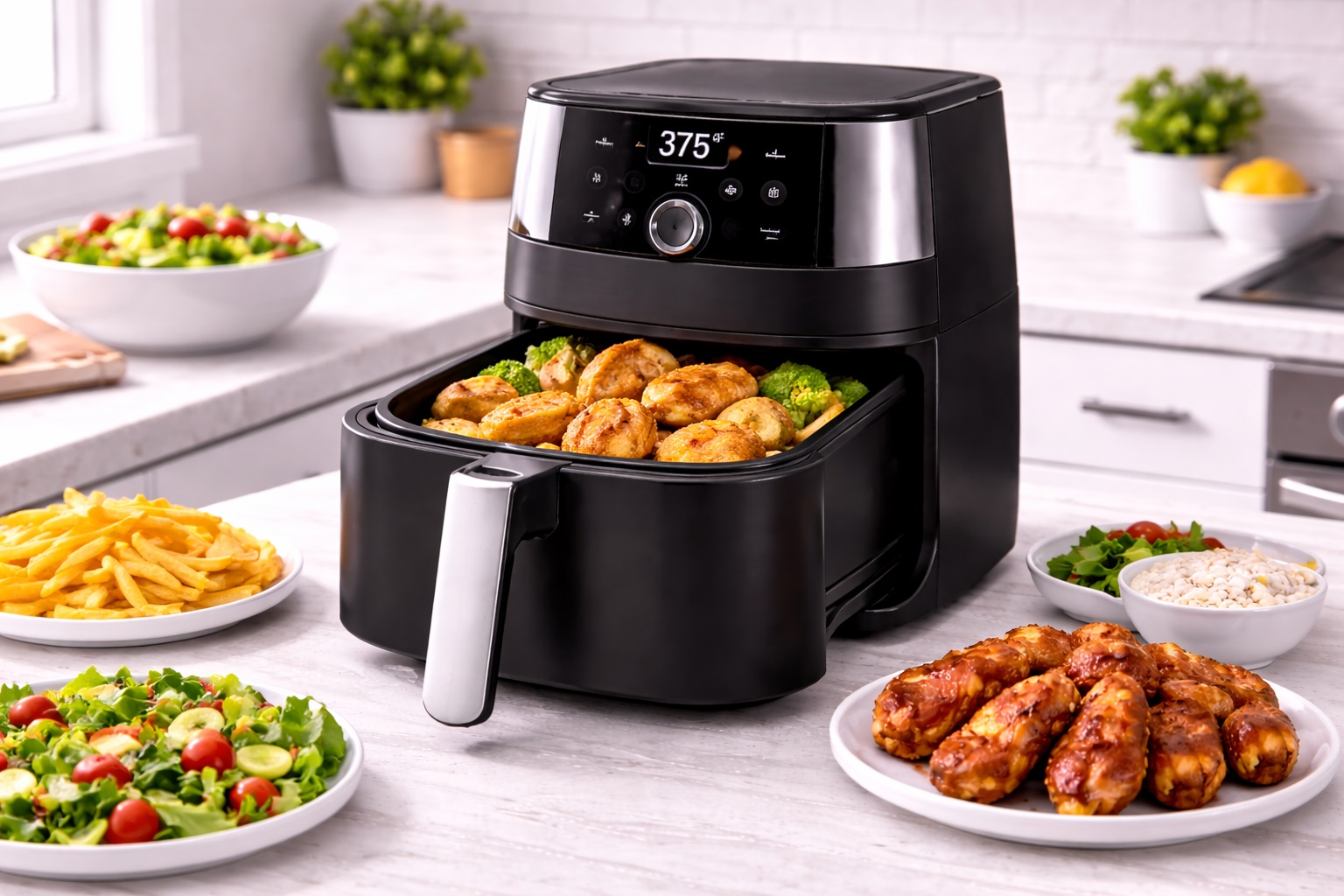
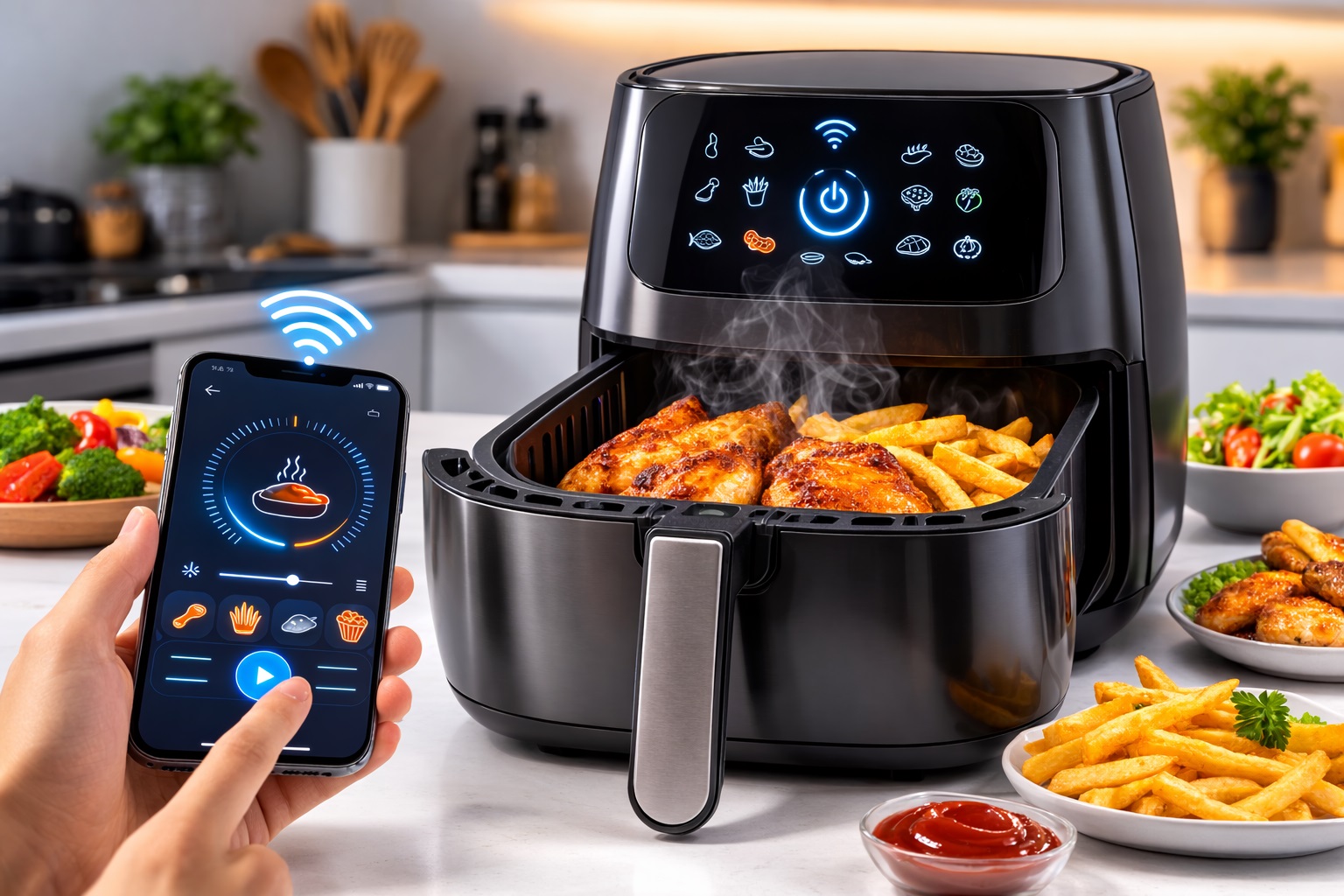
App-controlled air fryers have moved from a novelty feature to a genuinely useful convenience for many home kitchens. Being able to start preheating from another room, check on a cooking cycle remotely, or pull up guided recipes on a phone screen instead of squinting at a small control panel makes everyday cooking noticeably smoother, especially for households that cook frequently or juggle multiple dishes at once.
This guide compares the top smart air fryers with app control available in 2026, focused on how well each model pairs wifi connectivity with the everyday basics that matter most: capacity, even cooking performance, and ease of cleaning. A smart feature set is only valuable if the appliance underneath it is also reliable, so the picks below weigh connectivity alongside core cooking performance rather than treating the app as the whole story.
Not every smart air fryer implements app control the same way. Some models offer full recipe libraries and step-by-step guided cooking through their companion app, while others use the app mainly for basic remote start, stop, and monitoring functions. Knowing which type of smart features actually matter to your cooking habits will help you avoid paying for connectivity you will rarely use, or settling for a model whose app support turns out to be more limited than you expected. It is also worth keeping in mind that software support can change over the life of an appliance in ways hardware specifications cannot. A brand with a track record of maintaining its app, pushing firmware updates, and supporting older models tends to offer a better long-term smart cooking experience than one that treats connectivity as an afterthought bolted onto an existing product line. Reading recent reviews rather than only the initial launch reviews can reveal whether a given app has held up well over time.
Top 8 Smart Air Fryers with App Control in 2026 (Detailed Reviews)
1. Instant Vortex Plus – Best For All-Around Smart Versatility
The Instant Vortex Plus pairs wifi connectivity with genuine 6-in-1 versatility, letting it handle air frying, roasting, baking, and reheating through the same connected control system. Priced around $130, it sits comfortably in the middle of this lineup, and its broad function set means the app control adds real value across a wide range of cooking tasks rather than being limited to a single mode. Home cooks who want one connected appliance that can realistically replace several countertop tools tend to appreciate how much this model can do without needing to swap in specialized attachments. The app itself typically walks through preset selection clearly, so even first-time users can move between roasting a tray of vegetables and reheating leftovers without hunting through a manual for the right temperature and time combination.
- Pros:
- Genuine 6-in-1 versatility beyond basic air frying
- Wifi connectivity useful across multiple cooking modes
- Backed by a well-established, reputable brand
- Cons:
- Higher price point than single-function models
- Limited color options
Best For: Home cooks who want one connected appliance capable of handling several different cooking tasks.
Why We Recommend It: Its combination of broad functionality and reliable app connectivity makes it a practical all-around pick for kitchens that value versatility.
2. GoWISE USA 7-Quart – Best For Large-Batch Smart Cooking
The GoWISE USA 7-Quart brings a generously sized basket and a digital touchscreen interface together with app connectivity, priced around $90. Its larger capacity makes it a strong option for families or anyone who regularly cooks bigger batches, while the touchscreen keeps everyday operation simple even when you are not using the connected app. At this price point, getting both meaningful capacity and smart features is a notable value proposition. The larger basket also means less batch-cooking in stages for bigger families, which is often the more practical benefit day-to-day compared to any single smart feature on its own.
- Pros:
- Spacious 7-quart basket for larger batches
- Digital touchscreen for straightforward manual use
- Reasonable price for its capacity and features
- Cons:
- Larger footprint takes up more counter space
- App feature depth varies by firmware version
Best For: Families and larger households who need substantial batch capacity alongside smart connectivity.
Why We Recommend It: Few models in this category combine this much cooking capacity with app control at such an accessible price.
3. Chefman TurboFry – Best For Compact Smart Kitchens
The Chefman TurboFry keeps its footprint compact while still offering wifi-enabled control, priced around $60, making it one of the more affordable ways to bring smart features into a smaller kitchen. Its compact design suits apartments, dorms, or secondary kitchens where counter space is limited, without giving up the convenience of app-based monitoring and basic remote control. Its smaller footprint also means it tucks away easily into a cabinet between uses, which matters in kitchens where every inch of counter space is already spoken for.
- Pros:
- Compact design ideal for smaller kitchens
- Affordable entry point for smart air frying
- Straightforward setup and everyday operation
- Cons:
- Smaller capacity than larger family-sized models
- Fewer advanced cooking presets
Best For: Buyers with limited counter space who still want the convenience of app-connected cooking.
Why We Recommend It: It proves that smart features do not require a large appliance or a high price tag, making connected cooking accessible in tighter kitchens.
4. Cuisinart Air Fryer Toaster Oven – Best For Multi-Function Smart Cooking
The Cuisinart Air Fryer Toaster Oven combines dual functionality, working as both a toaster oven and an air fryer, with app-based controls, priced around $230. Its higher price reflects the added oven-style capacity and the range of functions it covers, from toasting and baking to air frying, all manageable through a connected interface. For households that want to consolidate multiple countertop appliances into one connected unit, this is one of the more capable options available. Its larger interior cavity also handles whole trays of food more naturally than a basket-style unit, which matters for households that regularly cook for more than two or three people at a time.
- Pros:
- Dual toaster oven and air fryer functionality
- Larger internal capacity than basket-style models
- Reputable brand with strong build quality
- Cons:
- Highest price point among these picks
- Larger countertop footprint
Best For: Households that want to replace multiple countertop appliances with one connected multi-function unit.
Why We Recommend It: Its dual functionality delivers genuine everyday versatility that a basket-only air fryer cannot match, justifying the higher investment for many kitchens.
5. Dash Compact Air Fryer – Best For Budget-Friendly Smart Basics
The Dash Compact Air Fryer keeps things simple with a space-saving size and an accessible price of around $50, making it one of the most affordable ways to try app-connected air frying without a significant investment. It is well suited to buyers who mostly want the basic convenience of remote monitoring rather than an extensive recipe library or advanced preset system. For students, small households, or anyone testing whether app-connected cooking fits their routine before committing to a pricier model, this is a low-risk way to find out.
- Pros:
- Space-saving size for small kitchens
- One of the most affordable smart options available
- Simple, approachable operation
- Cons:
- Smaller capacity limits batch cooking
- Fewer advanced smart features than pricier models
Best For: Budget-conscious buyers who want basic smart connectivity without paying for extensive extra features.
Why We Recommend It: It offers an accessible entry point into app-connected cooking, making the category approachable for buyers who are trying it for the first time.
6. Philips Premium Airfryer XXL – Best For Premium Smart Performance
The Philips Premium Airfryer XXL sits at the top of this lineup at around $350, combining a large XXL capacity with Fat Removal Technology and full app connectivity. Its premium pricing reflects both its size and its more advanced cooking technology, appealing to buyers who want a flagship-level smart air fryer rather than an entry-level connected model. The Fat Removal Technology is a distinctive selling point beyond connectivity alone, aimed at buyers who specifically want a cooking approach oriented around reducing excess fat during the cooking process rather than just standard hot-air circulation.
- Pros:
- Large XXL capacity for bigger households
- Fat Removal Technology for a distinct cooking approach
- Full-featured app connectivity and controls
- Cons:
- Highest price point among these picks
- Larger size requires more storage or counter space
Best For: Buyers who want a premium, full-capacity smart air fryer and are willing to pay for top-tier features.
Why We Recommend It: Its combination of capacity, distinctive cooking technology, and thorough app integration makes it the clear premium choice in this category.
7. Cosori Pro II – Best For Feature-Rich Smart Presets
The Cosori Pro II offers 13 distinct cooking functions alongside app connectivity, priced around $110, giving users an unusually wide range of preset options to control remotely or through the unit itself. For buyers who like having a dedicated preset for nearly every type of food they cook, this level of function variety paired with smart control is a strong combination. Rather than manually adjusting temperature and time for every dish, users can lean on a dedicated preset for foods ranging from frozen snacks to fresh vegetables, which tends to produce more consistent results for less experienced cooks.
- Pros:
- 13 cooking functions for broad recipe flexibility
- Solid mid-range pricing for the feature set
- Reputable brand with strong app support
- Cons:
- Higher price than basic single-function models
- Learning all the presets takes some initial time
Best For: Cooks who want a wide variety of dedicated presets alongside reliable smart connectivity.
Why We Recommend It: Its extensive function list gives it more everyday flexibility than most competitors at a similar price point.
8. Ninja Air Fryer Max XL – Best For Consistent Smart Crisping
The Ninja Air Fryer Max XL combines Max Crisp Technology with app connectivity, priced around $120, aiming to deliver consistently crisp results across a range of foods while still offering remote monitoring and control. It is a strong choice for buyers who prioritize cooking performance first and treat smart features as a valuable but secondary consideration.
- Pros:
- Max Crisp Technology for consistent texture
- Reliable app connectivity and monitoring
- Reputable brand with strong customer support
- Cons:
- Mid-range price higher than basic compact models
- Limited color options
Best For: Buyers who want dependable crisping performance with smart features as a meaningful bonus rather than the main selling point.
Why We Recommend It: Its focus on consistent cooking results, backed by solid app support, makes it a well-rounded choice for everyday use. Buyers who have been disappointed by air fryers that produce soggy or unevenly cooked results in the past often notice a clear improvement in crisping consistency with this model, regardless of whether they use the app regularly.
Buying Guide: How to Choose the Best Smart Air Fryer with App Control
Smart features can genuinely improve everyday cooking, but only if the app is reliable and the appliance underneath performs well on its own. The following factors will help you evaluate smart air fryers beyond the marketing around connectivity.
1. Check What the App Actually Controls
Some apps allow full remote control over temperature, time, and cooking mode, while others are limited to notifications and basic start or stop functions. Read reviews or product documentation carefully to understand exactly what the app offers before assuming full remote control is included. It is easy to assume every connected appliance behaves the same way, but the actual range of app functions varies significantly between brands and even between different models from the same manufacturer.
2. Consider Capacity Alongside Connectivity
A smart air fryer that is too small for your household will be frustrating regardless of how good its app is. Match the basket or oven capacity to how many people you typically cook for, and remember that larger capacities generally take up more counter space. As a rough guide, a smaller basket around 2 to 4 quarts suits one or two people, while anything above 5 or 6 quarts is more comfortable for families or anyone who regularly cooks in batches.
3. Evaluate Wifi Reliability and Setup Process
Some smart appliances are notoriously fussy to connect to home networks, requiring multiple setup attempts or firmware updates before working reliably. Checking user reviews specifically about setup experience can save considerable frustration after purchase. A model that requires frequent re-pairing or loses its connection often is more of a nuisance than a convenience, no matter how impressive its feature list looks on paper.
4. Look at Preset Cooking Programs
Built-in presets for common foods like fries, chicken, or vegetables simplify everyday cooking, whether accessed through the app or the unit's physical controls. More presets generally mean less guesswork on temperature and time for common dishes. This matters even for experienced cooks, since air fryers vary enough between brands that a setting that works well on one model can overcook or undercook food on another.
5. Think About Whether You Will Actually Use the App Daily
Some buyers use their air fryer's app every time they cook, while others check it a handful of times before defaulting to the physical controls. Being honest about your own habits helps you decide how much extra you should pay for advanced app features. If you know yourself to be someone who tends to abandon smart-home apps after the novelty wears off, it may be smarter to prioritize a model with strong physical controls and treat any app support as a nice-to-have rather than a core requirement.
6. Check Basket Material and Nonstick Coating Quality
A durable, well-applied nonstick coating makes cleanup significantly easier and extends the useful life of the basket. Lower-quality coatings can wear down faster, especially with frequent use or abrasive cleaning tools. Using silicone or wooden utensils rather than metal tongs also helps preserve the coating over the life of the appliance.
7. Consider Noise Level During Operation
Air fryers vary noticeably in how loud their fans are during operation, which matters if you plan to run one during video calls, while children are sleeping, or in an open-concept living space. Reviews that mention noise level directly are worth seeking out. A model that sounds fine in a showroom demo can be noticeably more noticeable in a quiet home kitchen, so real-world feedback tends to be more reliable than a manufacturer's own description.
8. Assess Ease of Cleaning
Dishwasher-safe baskets and trays save considerable time compared to models that require careful hand-washing. Check manufacturer guidance closely, since not every part of every smart air fryer is dishwasher safe despite similar appearances. Removable crisper plates and trays generally clean up faster than models with fixed internal components that require more careful wiping.
9. Factor In Footprint and Storage
Larger-capacity smart air fryers, especially toaster-oven-style models, take up considerably more counter and storage space than basket-style units. Measure your available space before assuming a larger, more feature-rich model will fit comfortably. It is also worth checking clearance above the appliance, since some models vent hot air upward and need extra room under cabinets.
10. Review Safety Features
Automatic shutoff, cool-touch handles, and overheat protection are valuable safety features, particularly in households with children. Confirm these are present rather than assuming all models include them by default. Basic safety features like these add real peace of mind during unattended cooking cycles, which is common with app-controlled models that are specifically designed to run while you are in another room.
11. Check Warranty and Brand Support
Smart appliances rely on both hardware and software working correctly, so a brand with responsive customer support and a reasonable warranty period offers real peace of mind if either the connectivity or the appliance itself develops an issue. Checking whether replacement parts, such as baskets or crisper trays, are sold separately is also worth doing before you buy, since it extends the useful life of the appliance if a single component wears out.
12. Weigh Price Against How Much Smart Functionality You Need
The most expensive smart air fryer is not automatically the best fit for every kitchen. Buyers who mainly want basic remote monitoring may be better served by a mid-range model, while those who want extensive recipe integration may find the added cost of a premium model worthwhile. It is generally more useful to buy for the household size and cooking habits you actually have today rather than a hypothetical future use case that may never materialize.
Frequently Asked Questions
Do smart air fryers need a stable wifi connection to work at all?
No, most models still function normally using their physical controls even without an active wifi connection. The app simply adds optional remote monitoring and control on top of standard operation. If your wifi network goes down or you simply prefer not to connect the appliance at all, the physical buttons or dial still handle everyday cooking without any loss of core functionality.
Is app-controlled air frying actually useful, or just a gimmick?
For many households it is genuinely useful, particularly for checking on food remotely or starting a preheat cycle before entering the kitchen. Whether it is worth paying extra for depends on how often you expect to use those features. Households that cook multiple times a day, or that like to multitask around the house while food is cooking, tend to get the most consistent value from these features.
Do I need to preheat a smart air fryer before cooking?
Many models do not strictly require preheating, though some recipes and presets perform better with it. Check your specific model's guidance, since this varies between brands and even between cooking modes. A brief preheat can help delicate foods cook more evenly, while heartier items like frozen vegetables usually do fine without it.
Can I bake in a smart air fryer?
Many air fryers, especially multi-function models, can handle basic baking tasks like small cakes or baked goods, though results can vary compared to a full-sized oven. Toaster-oven-style combination units tend to perform more consistently for baking. If baking is a regular priority rather than an occasional use, a combination unit is generally a better fit than a basket-only air fryer.
How do I clean the basket on a smart air fryer?
Most modern baskets are either dishwasher safe or easy to hand wash with warm soapy water, especially with a well-applied nonstick coating. Always check the manufacturer's specific care instructions, since not every model is fully dishwasher safe. Wiping down the interior heating element area with a damp cloth after it cools is also worth doing periodically, since built-up residue there can eventually affect cooking performance.
What size smart air fryer do I need for a family of four?
A capacity of around 6 quarts or more is generally comfortable for a family of four, though needs vary depending on how often you cook large batches versus smaller meals. Households that frequently cook for guests or meal-prep in bulk may prefer sizing up even further to avoid running multiple cooking cycles back to back.
Are smart air fryers more energy efficient than a conventional oven?
Air fryers generally heat up faster and use less energy for smaller portions compared to a full-sized oven, since they heat a much smaller cooking chamber. For very large meals, a conventional oven may still be more practical. Running several smaller air fryer batches back to back can sometimes offset those energy savings, so consider your typical portion sizes when weighing efficiency claims.
Can a smart air fryer replace a toaster oven entirely?
Multi-function models designed as combination toaster oven and air fryer units can reasonably replace both appliances. Basket-style air fryers are more limited and typically cannot toast bread the same way a toaster oven can.
How long do smart air fryers typically last?
With regular care, including proper cleaning and avoiding abrasive tools on nonstick surfaces, many air fryers remain reliable for several years of everyday use. Component quality and usage frequency both affect long-term lifespan. Heavy daily use will naturally wear down heating elements and coatings faster than occasional weekend cooking, so factor your expected usage into how much you are willing to spend upfront.
Is the nonstick coating in air fryer baskets safe?
Reputable brands use nonstick coatings designed for food-safe use, though like any nonstick surface it is best to avoid metal utensils that could scratch the coating over time.
Can I use foil or parchment paper in a smart air fryer?
Many models allow it as long as airflow is not blocked and the material does not touch the heating element directly. Check your specific model's manual for guidance, since restrictions can vary between brands.
What is the difference between basket-style and oven-style smart air fryers?
Basket-style models are generally more compact and focused purely on air frying, while oven-style units offer more capacity and additional functions like toasting and baking, usually at a higher price and larger footprint.
Final Verdict
- Top Pick: Instant Vortex Plus for its balance of genuine versatility, reliable app connectivity, and reasonable pricing.
- Budget Choice: Chefman TurboFry for buyers who want smart features in a compact, affordable package.
- Premium Choice: Philips Premium Airfryer XXL for households that want top-tier capacity and cooking technology alongside full app support.
Choosing the right smart air fryer comes down to being honest about how much you will actually use the connected features versus the physical controls. For many households, a mid-range model that pairs solid cooking performance with dependable basic connectivity will feel like the sweet spot, while dedicated home cooks who want extensive recipe integration and larger capacity may find the premium options worth the added investment.
Whichever model you choose, prioritize core cooking performance, capacity, and ease of cleaning first, then treat app connectivity as a meaningful bonus rather than the deciding factor. A smart air fryer that cooks food well but has a limited app is still a good appliance, while one with impressive connectivity but mediocre cooking results will likely disappoint over time regardless of how convenient the app feels at first.