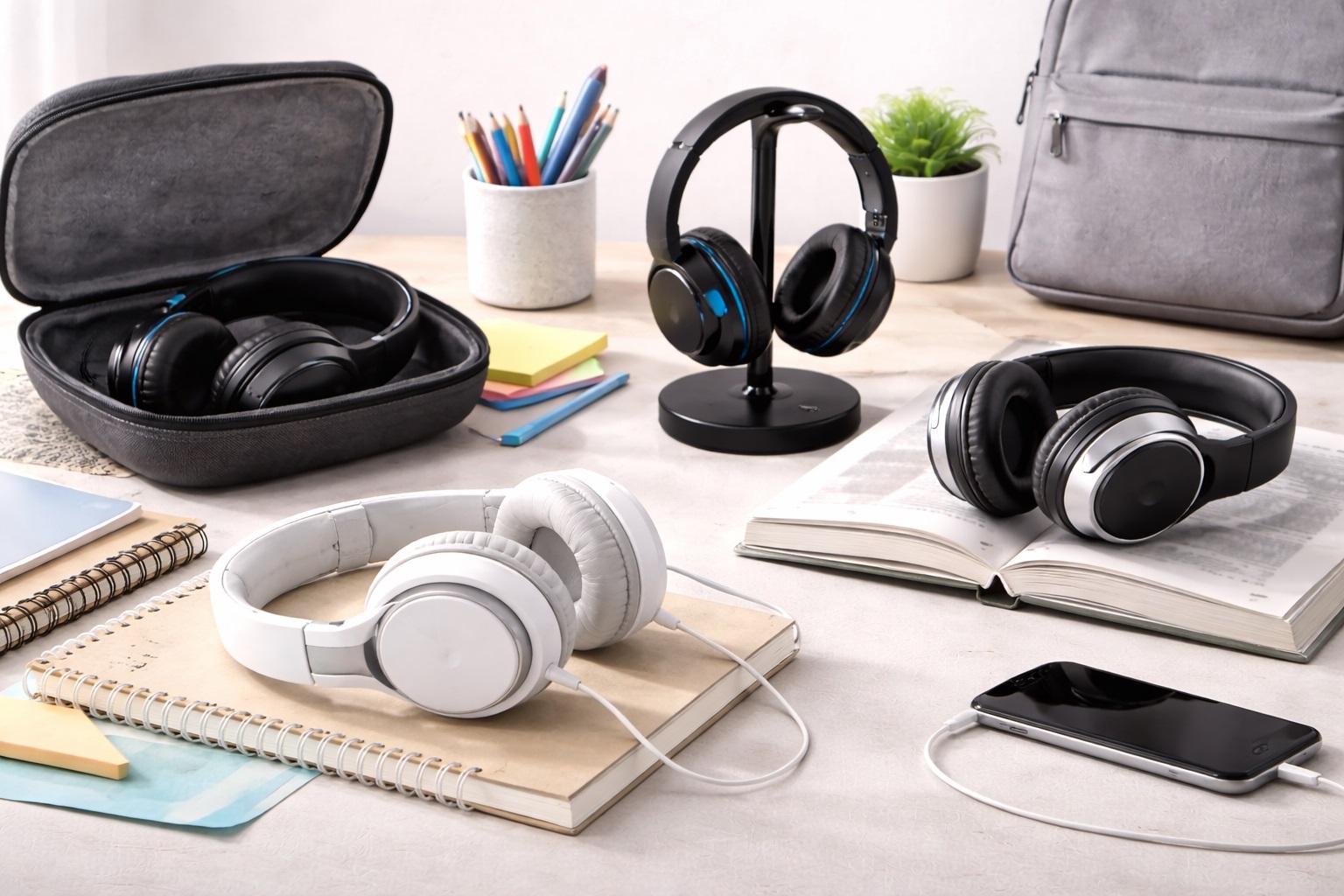
Best Headphones for Students: Durable, Comfortable, Affordable
Student life puts headphones through a different kind of stress test than an office desk ever will. A pair gets stuffed into a backpack between classes, dropped on a library floor, borrowed by a roommate, and used for everything from online lectures to commuting on a bus with a broken heater. Durability and everyday practicality end up mattering just as much as sound quality, and budget is almost always a real constraint rather than a footnote.
This guide compares the three most practical headphone categories for students who study in libraries, attend online classes, and commute regularly, weighing them against the priorities that actually matter for student life: how well they survive daily handling, how comfortable they are during long study sessions, and how much focus they help you maintain in noisy shared spaces like dorms and libraries.
Budget matters more here than in most buying guides, and it's worth being honest about it upfront, since overspending on headphones early in a semester can mean tighter margins later for books, supplies, or everything else a student needs to cover. A student doesn't need the most expensive option on the market to get genuinely good sound and reliable comfort — the categories below are chosen specifically because they perform well without requiring a premium price tag, and the differences between them come down to real trade-offs rather than one being simply better than the others.
It also helps to think about where you'll actually use your headphones most. Someone who studies primarily in a quiet dorm room has different priorities than someone who does most of their reading on a noisy train or in a bustling student union. Match the category to your actual routine rather than to whichever option a classmate happens to recommend.
Finally, consider how many hours a day you realistically wear headphones during a typical semester. Between lecture recordings, study playlists, and commuting, many students end up wearing headphones for several hours daily, which makes comfort and durability considerably more important than they might be for an occasional listener.
It's also worth thinking about how your needs might shift across a semester. During exam periods, long uninterrupted study sessions become more common, while during a typical week you might be switching between short commutes, group work calls, and quick breaks between classes. A pair that flexes reasonably well across both scenarios will serve you better over four years than one optimized narrowly for a single use case. It's worth thinking past your first year too — the study habits and living situation you have as a freshman often look different by junior year, whether that means moving off campus, taking more group-project-heavy courses, or simply spending more time commuting than you originally expected, so a flexible pair tends to age better than one chosen for a very specific first-semester routine.
Top 3 (Detailed Reviews)
1. Over-Ear Wireless Headphones – Best For Long Study Sessions
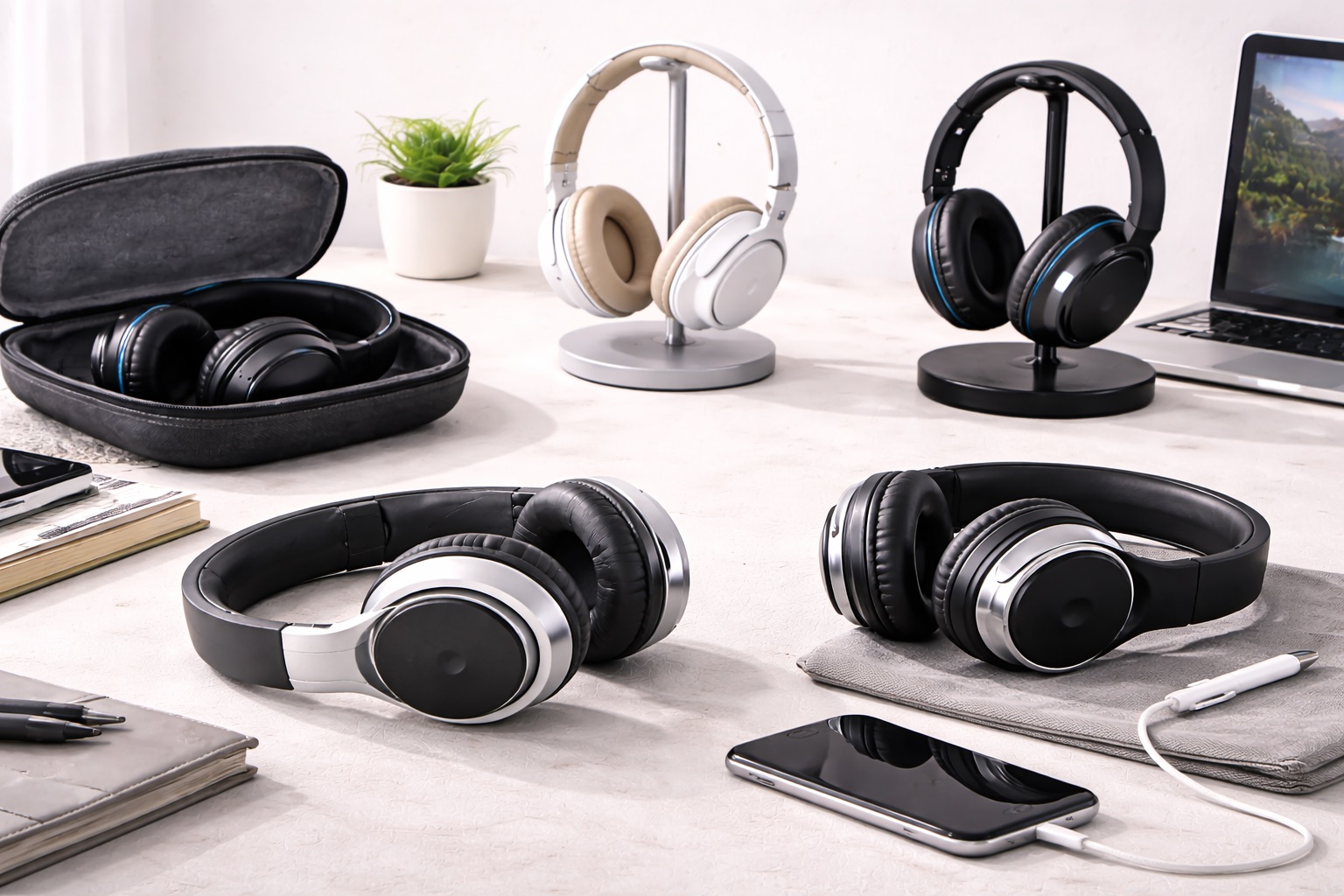
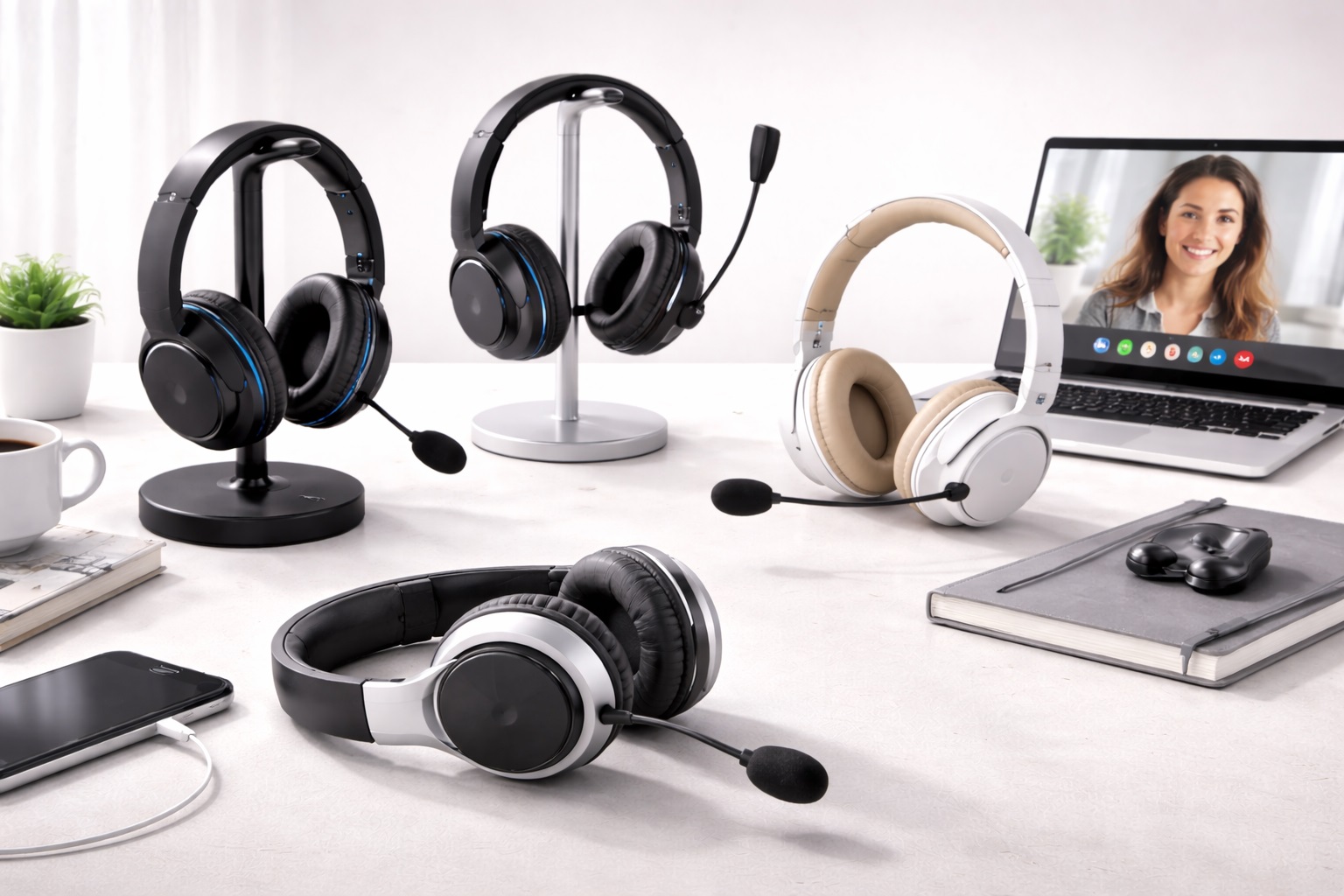
Over-ear wireless headphones are built around comfort during extended wear, which matters directly to anyone spending hours at a time reading, writing papers, or sitting through recorded lectures. The full ear cups distribute pressure more evenly than smaller formats, reducing the fatigue that builds up during a long library session. Most models run Bluetooth 5.0 or newer, support pairing across a laptop and phone, and offer 20 to 40 hours of battery life, which for a student juggling multiple devices between classes is a real practical advantage. The ear cup seal also provides solid passive isolation, useful for tuning out the ambient noise of a busy study space without needing to rely on active noise cancellation. Students who spend entire afternoons in the library tend to notice the comfort difference most, since smaller formats start creating pressure points well before an over-ear pair does. That difference becomes especially clear during exam season, when a single study block can easily stretch past three or four continuous hours and even a small amount of discomfort compounds into a genuine distraction from the material itself.
- Pros:
- Most comfortable option for multi-hour study and lecture sessions
- Strong passive isolation helps you focus in busy libraries and common areas
- Long battery life covers a full day of classes without a mid-day charge
- Multi-device pairing supports switching between laptop lectures and phone calls
- Fuller sound makes recorded lectures and study playlists easier to follow
- Cons:
- Bulkier to carry in an already-full backpack alongside textbooks
- Can feel warm during long sessions in an overcrowded, poorly ventilated study room
- Higher price point than the most budget on-ear options
Best For: Students who spend multiple hours a day studying, attending lectures, or reading and need consistent comfort above all else.
Why We Recommend It: For anyone whose daily routine involves several hours of continuous wear, the even comfort of an over-ear design pays off far more than any other single feature, making the extra bulk in a backpack a reasonable trade-off.
2. On-Ear Wireless Headphones – Best For Commuting Between Classes
On-ear headphones are lighter, fold flatter, and take up meaningfully less backpack space than full over-ear designs, which matters for students moving between buildings, catching a bus, or squeezing a pair into an already-crowded bag. They deliver a real step up in sound quality over basic earbuds while remaining easy to put on and take off quickly between short walks across campus. The trade-off is a slightly less complete seal and marginally less bass depth compared to over-ear alternatives, though most students find the difference minor in daily use. For anyone constantly on the move between buildings, the ability to quickly pull the headphones off and fold them into a bag pocket in seconds is a genuinely useful everyday convenience. Students juggling a tight schedule between back-to-back classes often don't have time to carefully pack away a bulkier pair, and a format that tolerates being tossed into a bag without a dedicated case removes one more small source of daily friction.
- Pros:
- Lightweight and compact enough to fit easily in a crowded backpack
- Quick to put on and take off between short walks across campus
- Generally the most affordable of the three categories, which matters on a student budget
- Still delivers a clear improvement over stock earbuds for lectures and music
- Folds flat, reducing wear and tear from being tossed in a bag repeatedly
- Cons:
- Less isolation than over-ear designs in loud shared spaces like a dorm common room
- Extended multi-hour wear can create mild pressure on the outer ear
- Smaller ear cups can feel less immersive during music listening
Best For: Students who move frequently between classes, dorms, and part-time work and need a compact pair that survives daily handling without much fuss.
Why We Recommend It: The lighter, more affordable on-ear format matches the reality of student life better than bulkier alternatives, fitting into a backpack routine without adding much weight or requiring careful handling.
3. Noise Canceling Headphones – Best For Focus in Noisy Dorms and Libraries
Shared living spaces and busy libraries are a near-universal student experience, and active noise cancellation directly addresses the background noise that makes focused studying difficult in those environments. By electronically canceling consistent sound like roommate conversations, HVAC hum, or nearby chatter, ANC headphones create a genuinely quieter space to concentrate without needing total physical isolation. Most current models also include a transparency mode, useful for quickly hearing a roommate or announcement without removing the headphones entirely. For students who can't control their living situation or study environment, this category effectively creates the quiet, private space that a shared dorm or busy library can't provide on its own. Roommate schedules rarely line up perfectly with your own study needs, and ANC offers a practical workaround that doesn't depend on negotiating quiet hours or hoping a shared space happens to be empty when you need to focus.
- Pros:
- Meaningfully reduces the background noise common in dorms, libraries, and shared study spaces
- Transparency mode lets you respond to a roommate or classmate without interrupting your session
- Often paired with above-average sound tuning even at accessible student-friendly prices
- USB-C charging keeps things simple alongside other daily electronics
- Genuinely improves focus in environments where physical separation from noise isn't possible
- Cons:
- Costs more upfront than a basic wireless pair, which matters on a tight student budget
- Battery drains faster with ANC running continuously through long study sessions
- Lower-cost ANC implementations can introduce a faint hiss some students notice in silent rooms
Best For: Students living in dorms, shared apartments, or studying primarily in busy libraries who need a genuine escape from background noise to concentrate.
Why We Recommend It: When your environment is simply loud and you can't change that, ANC solves the actual problem directly, and the productivity gain from real focus is usually worth the added cost for students in shared living situations.
Buying Guide: How to Choose the Best Headphones for Students
These twelve factors are weighted toward what actually matters for student life — durability, budget, and focus in shared spaces — rather than specifications that matter more to dedicated audio enthusiasts.
1. Durability for Daily Backpack Life
Headphones carried in a backpack alongside textbooks and laptop chargers take more physical abuse than those kept carefully at a desk. Reinforced hinges, sturdy headbands, and a basic protective pouch all extend practical lifespan meaningfully for a student's daily routine, where drops and rough handling are simply part of the deal. Reading reviews that specifically mention long-term daily use, rather than just an initial unboxing impression, gives a much better sense of how a pair actually holds up.
2. Budget vs. Feature Trade-Offs
Set a realistic budget before comparing options, and don't assume the most expensive pair is automatically the right choice. Many mid-range and even budget-friendly headphones now include features like ANC and multi-device pairing that used to be reserved for premium models, narrowing the practical gap considerably. Spend the time you'd otherwise put toward chasing flagship specifications on comparing genuine reviews within your actual price range instead. A useful exercise is listing the two or three features that actually matter for your routine — comfort, ANC, or microphone quality, for example — and using those to filter options before price becomes the deciding factor between otherwise similar pairs.
3. Noise Isolation for Shared Living Spaces
Passive isolation from a sealed ear cup handles everyday chatter reasonably well. Active noise cancellation performs considerably better against constant background noise like roommates, traffic, or HVAC systems, which matters more for students living in dorms or shared apartments than for those with a quiet, private study space. Be honest with yourself about how much control you actually have over your living environment before deciding whether the added ANC cost is worth it.
4. Battery Life Matched to a Full Class Schedule
Between morning lectures, afternoon study sessions, and evening commutes, a student's headphone use can add up to many hours in a single day. Match battery life to your actual schedule, and remember that ANC modes draw noticeably more power than standard playback. A pair that needs charging by mid-afternoon becomes a real inconvenience on exam days packed with back-to-back study blocks.
5. Comfort During Long Lecture and Study Sessions
Comfort during a quick fifteen-minute podcast says little about how a headphone feels after three hours of continuous lecture recordings. Look specifically for reviews mentioning extended wear comfort and clamping force rather than relying on a brief first impression. If your school offers a return period, testing the headphones during an actual multi-hour study session is the most reliable way to know for sure.
6. Portability and Backpack Space
A headphone that folds flat and includes at least a basic pouch takes up meaningfully less space in an already-crowded backpack. This matters more for students carrying laptops, textbooks, and other daily essentials than it might for someone with a dedicated desk setup at home. A model that survives being squeezed between books without damage is worth more than one that merely looks compact on a store shelf.
7. Microphone Quality for Online Classes and Group Projects
If your headphones double as a headset for online classes or group project calls, check reviews specifically addressing microphone clarity rather than just music playback quality. Clear communication during a group presentation or breakout room discussion depends heavily on this detail, and a muffled microphone can genuinely affect how your contributions come across to classmates and instructors.
8. Multi-Device Pairing Across a Student's Devices
Many students juggle a laptop for classes, a phone for everything else, and sometimes a tablet for reading. Multi-device pairing lets your headphones switch between them without manually re-pairing each time, which adds up in convenience across a busy semester full of switching contexts throughout the day.
9. Warranty and Return Policy on a Student Budget
A generous return window and solid warranty matter more when spending money is a genuine constraint. A 15 to 30 day return period gives you time to confirm the headphones suit your routine before you're stuck with a purchase you can't easily replace, which matters more when every dollar of a semester budget is already accounted for.
10. Touch Controls vs. Physical Buttons in a Busy Environment
Physical buttons are easier to operate reliably while walking between classes or adjusting volume quickly during a lecture. Touch controls look sleek but can be harder to use accurately on the move, which matters more for a student's active daily routine than for someone sitting still at a desk juggling several other tasks at once.
11. Replacement Parts and Repairability
Ear cushions and cables wear out faster under the daily stress of student use. Check whether replacement ear pads and cables are available for your chosen model, since being able to replace a worn part extends the life of the whole headphone considerably and saves money over a full replacement partway through your degree.
12. Resale and Hand-Me-Down Value
Students often buy and sell used electronics between semesters or pass items down to younger siblings. Established, well-known brands tend to hold resale value better and are easier to sell secondhand if your needs change before your next headphone purchase, which can meaningfully offset the original cost.
13. Sharing and Group Study Considerations
Group projects and study sessions sometimes call for sharing audio, whether that's playing a lecture recording aloud for two people to review together or handing a pair over briefly to a study partner. Headphones with a standard 3.5mm auxiliary input, even alongside Bluetooth, give you the option to use a simple splitter for shared listening without needing separate equipment. It's a small feature that rarely shows up on a spec sheet but is genuinely useful during exam season when group review sessions become more common.
14. Storage Between Semesters and Breaks
Headphones that sit unused over a long winter or summer break benefit from being stored with at least a partial charge rather than fully depleted, since lithium-ion batteries degrade faster when left completely empty for extended periods. A simple case that keeps dust out and protects the ear cushions during months of storage also helps a pair come back in good condition for the next semester rather than needing repairs or a replacement right when a new term starts.
15. Protecting Your Hearing During Marathon Study Sessions
Long study sessions with headphones on for hours at a stretch make it easy to gradually increase volume without noticing, especially in a noisy environment where you're subconsciously compensating for background sound. Taking short breaks every hour or so, and keeping volume at a level where you could still comfortably hear someone speak to you, helps protect your hearing over the years of near-daily use a typical degree program involves.
Frequently Asked Questions
1. What matters most when choosing headphones as a student?
Durability, comfort during long sessions, and value for the price matter more than chasing the highest-end audio specifications. A mid-range pair that survives daily backpack life and stays comfortable through a long lecture will serve you better than an expensive pair that doesn't fit your actual routine, no matter how impressive its spec sheet looks.
2. Do I need noise-canceling headphones for studying?
If you study mainly in a quiet space, passive isolation is often enough. If you live in a dorm, shared apartment, or study primarily in a busy library, active noise cancellation genuinely improves your ability to concentrate and is worth the added cost over a standard wireless pair.
3. How much should a student expect to spend on a good pair of headphones?
Mid-range pricing tiers typically offer the best balance of comfort, durability, and features for student budgets. Spending significantly more usually buys refinements that matter more to dedicated audio enthusiasts than to a typical student's daily routine of classes, commutes, and study sessions.
4. Are on-ear or over-ear headphones better for commuting to campus?
On-ear headphones are generally lighter and more compact for frequent commuting and quick transitions between classes, while over-ear designs offer more comfort and isolation for long, uninterrupted study sessions once you're settled somewhere, so the right pick depends on your daily balance between the two.
5. Can headphones survive being tossed in a backpack every day?
Many models are built to handle this kind of daily handling reasonably well, especially those with reinforced hinges and a basic protective pouch. Check reviews specifically mentioning durability under regular daily use rather than assuming all headphones hold up equally under the same conditions.
6. Do I need good headphones for online classes specifically?
Clear audio and a decent microphone make a real difference in following lectures and participating in discussions or group work. It doesn't need to be an expensive pair, but basic call clarity is worth prioritizing over pure music sound quality if online classes are a big part of your weekly routine.
7. How long should a student's headphones last?
A well-built pair typically lasts two to five years with reasonable care, even accounting for the wear and tear of daily student use. Checking warranty length and the availability of replacement parts gives a good sense of expected durability across a typical degree program.
8. Can I return headphones if they don't work well for my study habits?
Most retailers offer a 15 to 30 day return window. Use this time to actually study with the headphones in your typical environment before deciding whether they suit your routine, rather than judging based on a quick first impression at home.
9. Is it worth buying used or secondhand headphones as a student?
It can be, particularly for established brands with a track record of durability, but check the battery health and overall condition carefully first, since wireless headphone batteries do degrade over time with regular charging cycles and may not last as long as a new purchase.
10. Does brand name matter when choosing headphones for college?
Established brands tend to offer more consistent quality control, better customer support, and stronger resale value, which matters if you plan to sell or hand down the headphones later. Newer brands can still offer good value, but research them a bit more carefully first before committing your budget.
11. What's the best headphone type for a student living in a noisy dorm?
Noise-canceling headphones tend to make the biggest practical difference for anyone in a shared living situation where physical separation from noise simply isn't an option most of the time, regardless of how considerate roommates try to be.
12. Should I prioritize battery life or sound quality on a student budget?
Battery life that comfortably covers your longest typical day without a mid-day charge is usually more valuable day to day than marginal improvements in sound quality, especially during exam periods when charging opportunities can be unpredictable and study sessions run long.
13. What should I look for if I'll use the same headphones for gym trips and studying?
A secure, stable fit matters more if headphones do double duty for exercise, since a design that shifts during movement will be far more noticeable during a workout than at a desk. Sweat resistance is also worth checking if this dual use is part of your routine.
14. Are headphones allowed during exams or in testing environments?
This varies by institution and by the specific exam, so check your school's testing policy rather than assuming. Some proctored exams prohibit headphones entirely to prevent unauthorized audio assistance, while others allow simple earplugs or noise-blocking headphones without playback for focus. Confirm the rules ahead of time rather than discovering a restriction on exam day.
15. What's the best way to avoid losing headphones on a busy campus?
A bright or distinctive color makes a pair easier to spot if left behind in a lecture hall or library, and some models support Bluetooth tracking through a companion app that helps locate them if misplaced nearby. Developing a habit of always returning them to the same backpack pocket after use also prevents a surprising number of the "where did I leave my headphones" moments common to student life.
Final Verdict
- Best Overall for Students: Over-Ear Wireless Headphones — the most comfortable option for long study sessions and back-to-back lecture recordings.
- Best for Commuting and Portability: On-Ear Wireless Headphones — lightweight, affordable, and easy to fit into a busy daily class schedule.
- Best for Noisy Dorms and Libraries: Noise Canceling Headphones — the clearest solution when shared living space makes quiet, focused study impossible otherwise.
There's no single right answer for every student — the best choice depends on your living situation, your class schedule, and how much of your day genuinely involves wearing headphones. Use the comparisons and buying guide above to match your purchase to your actual routine rather than a generic recommendation, and you'll get more consistent, reliable use out of whichever pair you choose across the semesters ahead. Whatever you pick, prioritize durability and comfort over chasing marginal audio upgrades, since those two factors are what will actually determine whether your headphones are still working well by the time finals roll around next year. A well-chosen pair bought early in your first year can realistically last through graduation with basic care, which makes the time spent comparing these categories now a reasonable investment rather than a purchase you'll likely need to repeat every year.