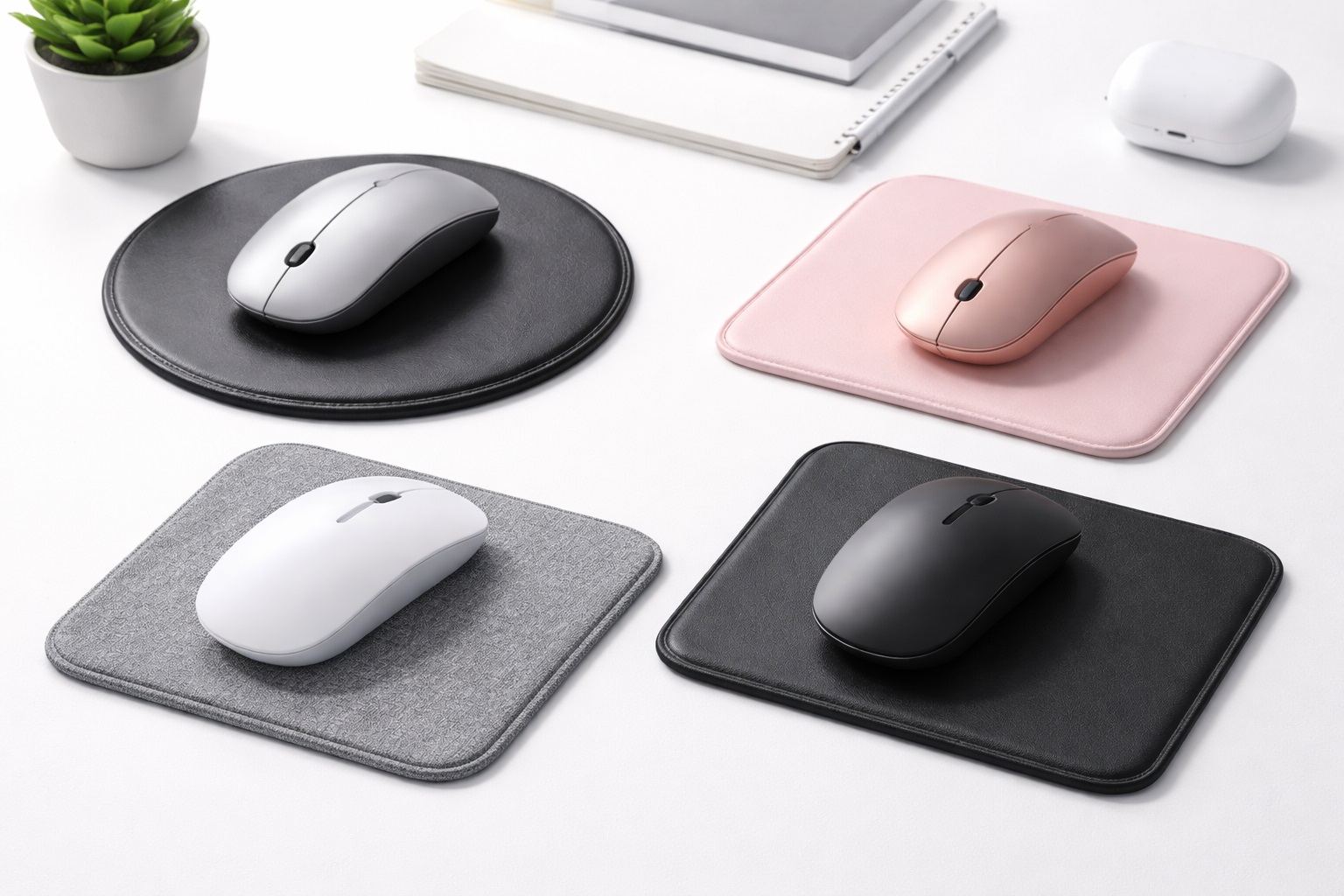
Best Compact Mouse Pads: Precision for Small Desks
Not every desk has room for a sprawling extended mat, and that's fine — a compact mouse pad can deliver the same tracking accuracy and surface quality as a larger one, just scaled to fit a smaller footprint. The challenge with compact pads isn't finding one that tracks well, since surface material and quality matter far more than sheer size for accuracy. The real challenge is choosing a size and style that still gives your hand enough room to move naturally without constantly running off the edge. That's a very different problem from finding a pad that tracks accurately, and it's the one most compact-pad shoppers actually need help solving.
This guide narrows in on the three mouse pad styles that adapt best to a small-footprint desk, what tends to get sacrificed when a design shrinks down, and how to judge whether a given compact pad will actually fit your specific workspace and mouse movement habits before you commit to a purchase.
It's worth separating two things that often get conflated when shopping for a compact pad: tracking performance and physical footprint. A smaller pad doesn't inherently track worse, since the sensor reads the surface texture directly beneath it regardless of how much total surface area surrounds that point. What changes with size is how much room your hand has to roam before running off the edge, and that's the variable worth focusing on when comparing options.
3 Best Compact Mouse Pads (Detailed Reviews)
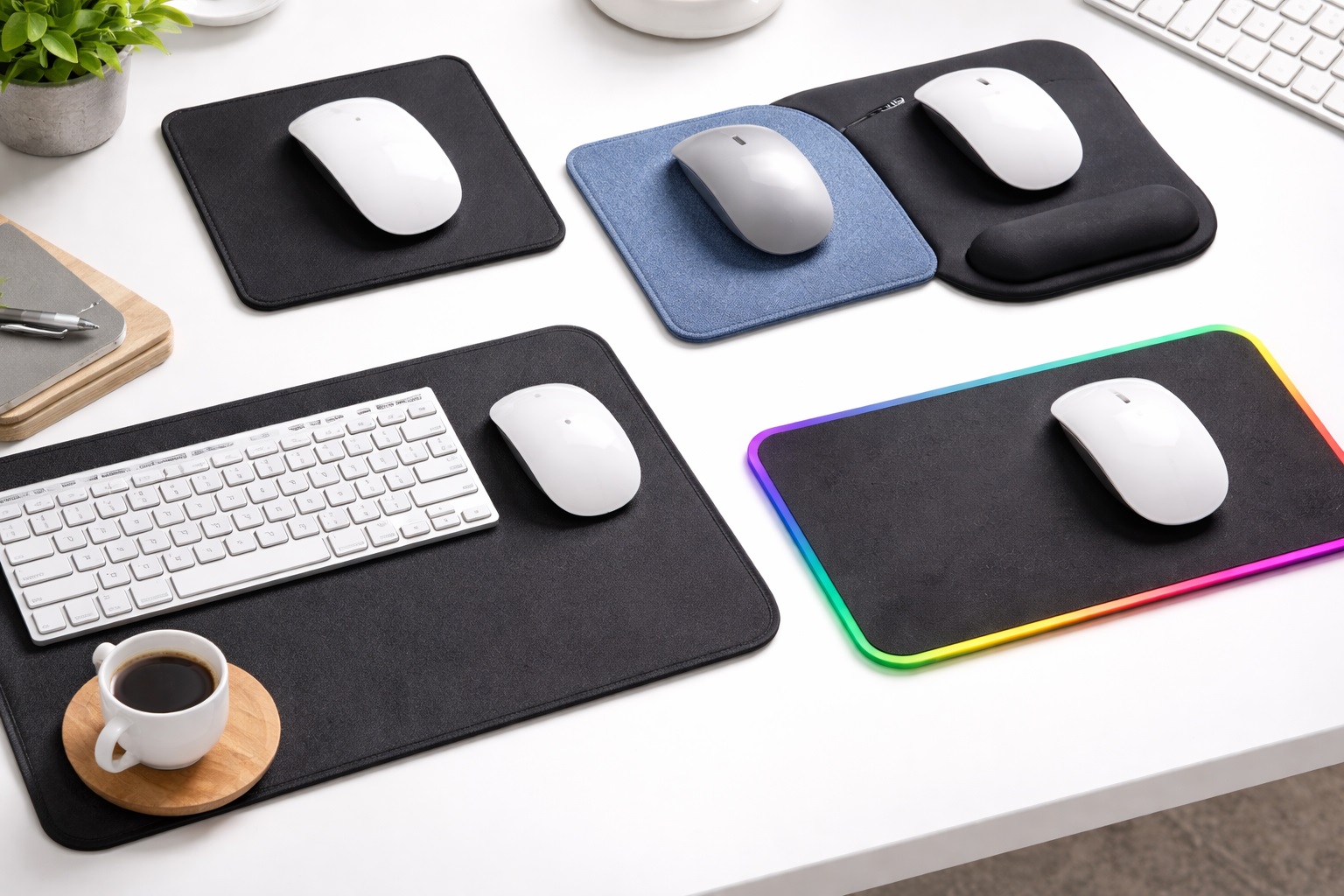
Compact Cloth Desk Mat – Best For Tight Desk Layouts
A compact cloth mat trades the desk-spanning coverage of an extended mat for a smaller, more manageable footprint that still gives the mouse a proper cloth surface instead of bare desk. On a shallow desk or one that's shared with a laptop, monitor stand, and other accessories, freeing up the extra square footage that an extended mat would otherwise occupy is often the deciding factor. Dorm rooms, small home offices, and standing desk converters with limited surface area are all common situations where this tradeoff makes more practical sense than an extended mat. Cloth surfaces here offer the same balanced control and glide as their larger counterparts, so shrinking the size doesn't mean shrinking the tracking quality. Anyone switching from a bare desk or an ill-fitting hand-me-down mat to a properly sized compact mat usually notices the improvement in tracking consistency within the first few minutes of use, well before the size difference from a larger mat even registers.
Because a compact mat has less material overall, it also tends to be easier to keep clean and easier to store away entirely if the desk needs to be cleared — a useful trait for anyone who works from more than one location or shares a desk with someone else during different parts of the day. Stitched edges remain just as important at this size as at any other — a smaller mat still gets picked up, shifted, and repositioned regularly, and unstitched edges fray just as readily on a small pad as a large one.
- Pros:
- Fits comfortably on shallow or shared desks
- Same cloth tracking quality as larger mats, just scaled down
- Easier to store, wash, and reposition than an extended mat
- Stitched edges hold up despite the smaller size
- Cons:
- Less desk-wide coverage — keyboard sits directly on the desk
- Can feel restrictive for very wide mouse swings
Best For: Anyone working on a small desk, a shared surface, or a setup where a large mat simply won't fit without crowding other essentials.
Why We Recommend It: A compact cloth mat proves that tracking quality and desk footprint are two separate decisions — you don't have to accept an inferior surface just because your desk is small. It solves the space problem directly while keeping the tactile experience close to what a full-size cloth pad offers.
For anyone who has previously assumed a small desk meant settling for a lower-quality pad, this style is usually the easiest way to discover that isn't the case. The tactile feel under the hand is close enough to a full-size cloth mat that most users stop thinking about the size difference within the first few days of use.
Compact Hard Surface Pad – Best For Speed in a Small Footprint
A compact hard surface pad concentrates all the benefits of a rigid, low-friction tracking surface into a small rectangle that takes up minimal desk space. The reduced friction still delivers faster, more fluid cursor movement than cloth, and because the surface is rigid rather than cushioned, even a small pad feels stable and doesn't shift or bunch the way a small cloth pad occasionally can. For anyone working in a genuinely tight space, this is often the style that delivers the most performance per square inch. It's a particularly good match for anyone who prioritizes function over comfort features and simply wants the best possible tracking within whatever few inches of desk space remain available.
The hard surface also resists the grime that accumulates faster on a small pad simply because it sits closer to keyboard crumbs, desk clutter, and drink rings in a compact setup, where everything is packed more tightly together than on a spacious desk with room to spare. A quick wipe keeps it looking new regardless of how tightly packed the surrounding desk area is.
- Pros:
- Low-friction glide even in a minimal footprint
- Rigid surface stays put without bunching or shifting
- Wipes clean instantly — useful in a cluttered small desk area
- Precise, predictable cursor stopping point
- Cons:
- Firmer under the wrist than a cushioned cloth pad
- Small size still limits total range of motion
Best For: Users in tight desk spaces who still want maximum cursor speed and precision without the footprint of a larger pad.
Why We Recommend It: This style proves that a small footprint doesn't have to mean a compromise on performance. The rigid surface delivers the same speed and precision benefits as a full-size hard pad, just concentrated into the space a compact desk can actually spare.
Because there's no cushioning to compress or wear unevenly, a compact hard pad also tends to feel identical on day one and day five hundred, which is a reassuring quality for anyone who has been frustrated by a small cloth pad developing an uneven worn patch right where the mouse spends most of its time.
Compact Ergonomic Pad with Wrist Rest – Best For Comfort in Limited Space
This style packs a gel or memory foam wrist rest into a smaller overall footprint, giving compact-desk users the same wrist support benefit as a full-size ergonomic pad without demanding as much desk real estate. The wrist rest portion supports the hand during pauses between mouse movements, which matters just as much on a small desk as a large one, since wrist strain doesn't care how much space you have available, and a compact desk is no less demanding on the hands than a spacious one over a full day of use.
Because the tracking surface itself is smaller here, the proportion of the pad dedicated to wrist support is often slightly larger relative to the whole, which some users find gives even better wrist contact than a full-size version, since the hand naturally rests closer to the support edge when the overall pad is smaller. The non-slip base keeps the compact unit anchored despite its reduced footprint, and because the whole unit is lighter than a full-size version, it's also easier to relocate between a home desk and a laptop bag for anyone splitting time between two workspaces.
- Pros:
- Wrist support fits into a genuinely small desk footprint
- Combines tracking surface and wrist rest without extra space
- Gel or memory foam contours to the hand over time
- Non-slip base holds position despite the smaller size
- Cons:
- Tracking area is smaller than a dedicated compact pad
- Fixed wrist rest height may not suit every chair and desk combination
Best For: Small-desk users who experience wrist discomfort and don't want to sacrifice desk space to address it, including anyone working from a laptop on a shallow desk where every extra inch of surface is already claimed by something else.
Why We Recommend It: Wrist strain is just as real a problem on a tiny desk as a large one, and this style solves it without asking for space you may not have. It's a practical, space-conscious answer to a genuinely common discomfort.
It's an especially good fit for laptop-based setups on small desks, where the keyboard is already built into the laptop and the only accessory that needs to fit alongside it is the mouse pad itself — leaving that pad to do double duty as both tracking surface and wrist support makes efficient use of very limited space.
Buying Guide: How to Choose the Best Compact Mouse Pad
Shrinking the footprint introduces a few extra considerations beyond the ones that matter for a full-size pad, mainly because a small margin for error in size or base grip has an outsized effect when there isn't much surface area to begin with. Work through these ten factors with your actual desk dimensions and mouse habits in mind.
1. Surface Material: Cloth vs Hard
Cloth surfaces provide finer control at slower speeds and remain the more common choice for detailed office work, while hard surfaces reduce friction for faster cursor travel — and this tradeoff holds true regardless of pad size. A small hard pad is a particularly good option where every inch of the surface needs to earn its keep through consistent, predictable performance. If your work mixes precise clicking tasks with occasional fast cursor movement, a moderate cloth texture is usually more forgiving in a small format than committing fully to one extreme.
2. Size Selection
Compact pads typically run from around 200x250mm down to smaller mini formats meant to sit under just the mouse itself. Measure your actual available desk space before ordering, accounting for keyboard placement, monitor stand footprint, and any other accessories competing for the same real estate, since it's the total remaining space after those items that actually determines whether a given compact pad will fit comfortably. A pad that's a centimeter too large defeats the purpose of choosing compact in the first place. Keep a tape measure handy and check clearance against your keyboard, monitor arm base, and any drawers or ledges that might overlap the space you're planning to use.
3. Thickness
Thicker pads in the 4–5mm range cushion the wrist more but can feel bulky relative to a small footprint. Thinner pads at 1–2mm keep a low profile that suits tight spaces and blends more seamlessly with a slim keyboard tray or laptop stand setup. For most compact use cases, a thinner profile complements the smaller footprint better than a thick one, since a low profile lets the pad tuck neatly under a laptop riser or slide easily beneath a monitor arm base without creating an awkward step in height. If wrist comfort is your priority despite the small size, look specifically for a compact ergonomic model rather than trying to compensate with extra thickness on a standard pad.
4. Edge Stitching Durability
A compact pad's smaller edge perimeter might suggest less wear exposure, but in practice it still gets picked up and repositioned often, especially on desks where things get shuffled around frequently. Stitched edges remain the clearest indicator of how well a small cloth pad will hold up over regular handling. Checking product photos closely for a visible reinforced seam is a more reliable signal than a generic durability claim in the listing text.
5. Non-Slip Base Quality
A smaller pad has less surface area for its rubber base to grip the desk, which makes base quality even more important than on a full-size pad. Look specifically for reviews confirming the pad stays anchored during fast mouse swipes rather than sliding, since a small pad has less mass working in its favor to resist movement. A base that grips well on a hard laminate desk may still slip on a glass or highly polished surface, so it's worth matching base material to your specific desk finish rather than assuming any rubber base will perform the same everywhere.
6. Speed vs Control Balance
The same control-versus-speed spectrum that applies to full-size cloth pads applies here, but a compact pad's limited surface area means you'll notice the effects of an overly slow or overly fast texture more quickly, since there's less room to compensate with a wider mouse arc. A balanced middle texture is generally the safer choice in a small footprint. If you can, try to test a sample swatch or read reviews that specifically mention the surface feel rather than relying only on the product description.
7. Cleaning and Maintenance
Smaller pads are proportionally easier to hand-wash and dry quickly given their reduced surface area, which is a genuine advantage of the compact format. Hard compact pads wipe clean just as easily as their larger counterparts, and the smaller surface means less area to clean overall. On a genuinely crowded desk, this ease of maintenance is more than a nice-to-have — it's often the difference between a pad that gets cleaned regularly and one that gets ignored simply because the process feels like a chore, and a pad that's easy to maintain tends to stay in better condition over the long run purely because upkeep is less of a hurdle.
8. Pattern and Aesthetic
On a small desk, a compact pad occupies a proportionally larger share of the visible surface relative to everything else, so its color and pattern have an outsized visual impact. A neutral tone tends to keep a small, busy desk feeling calmer than a bold or heavily patterned option. This becomes especially noticeable on desks already crowded with cables, a laptop stand, or a monitor arm, where one more visually loud element can push the whole setup toward feeling cluttered rather than organized, even if every individual item on the desk is otherwise perfectly functional.
9. RGB and LED Options
RGB lighting is less common in compact formats since the lighting elements need edge space the smaller footprint doesn't always provide. Where available, it adds a cable to manage in an already tight space, so most compact-desk users are better served by a non-illuminated option. If ambient light matters to your setup, a small clip-on desk lamp or LED strip elsewhere on the desk is usually more effective and doesn't add clutter directly around your mouse, freeing up the small amount of available cable routing space for something more essential.
10. Brand and Quality Consistency
Compact pads sell in smaller volumes than standard sizes, which means fewer established brands offer a dedicated compact line. Reading reviews carefully for the specific compact model — not just the brand's reputation overall — helps confirm the smaller version holds up to the same quality standard as its full-size counterpart, since manufacturing shortcuts sometimes appear specifically in the smaller, lower-volume version of a product line. Don't assume a trusted full-size product automatically means the compact version from the same listing family shares identical materials — check reviews for that specific size before assuming quality carries over.
11. Mouse Movement Style and DPI Settings
How much physical space a compact pad needs to feel comfortable depends heavily on your mouse sensitivity. Lower DPI settings require wider arm movements to cover the same on-screen distance, which can make a compact pad feel cramped quickly. Higher DPI settings translate small wrist movements into larger cursor travel, which suits a compact footprint far better. If you're set on a small pad, raising your DPI slightly is often a simpler fix than buying a larger pad.
12. Portability for Multi-Location Work
One underrated advantage of a compact pad is how easily it travels — it fits in a laptop bag or backpack pocket without adding meaningful bulk, which matters for anyone splitting time between a home desk, an office, and coffee shops or co-working spaces. A lightweight compact hard pad in particular survives being tossed in a bag repeatedly far better than a bulkier extended mat would.
13. Matching Pad Shape to Available Corner or Edge Space
Not every compact desk has a clean rectangular gap available — some setups only have an L-shaped corner or a narrow strip beside a monitor stand. Rectangular compact pads suit most layouts, but a few brands offer square or slightly irregular shapes designed specifically for corner placement. Measuring the actual usable shape of your remaining space, not just its total area, avoids ordering a pad that technically fits by area but doesn't sit flat in the space available.
Frequently Asked Questions
1. How often should I replace a compact mouse pad?
Cloth compact pads typically need replacing every one to two years under regular use, once fraying edges, glazed patches, or a slipping base become noticeable. Hard compact pads last considerably longer, often three to five years, since there's no fabric to wear down. Pay particular attention to the small central zone right under the mouse, since a compact pad concentrates wear into a smaller area than a larger mat would.
2. Can I wash a compact cloth mouse pad?
Yes — the smaller size actually makes hand washing and quick air drying more convenient than with a full-size pad. Use mild soap and cool water, and avoid heat when drying to protect the backing and stitched edges. Because compact pads dry faster given the smaller surface area, they're a more practical choice than a full-size mat if you like to wash your pad frequently.
3. Does a compact mouse pad limit gaming performance?
It can, specifically for users with low DPI settings who need wide physical mouse movements. High DPI users making small, precise movements typically find a compact pad more than sufficient. Match your sensitivity settings to the available space before assuming a compact pad will feel restrictive. A quick test is to raise your DPI slightly and see whether the smaller pad suddenly feels like plenty of room — often the pad was never the real constraint.
4. What's the best compact mouse pad for optical vs laser mice?
Optical sensors track well on cloth and most textured hard surfaces regardless of pad size, but can struggle on glossy or reflective materials. Laser sensors are generally more forgiving. Pad size doesn't change this relationship — it comes down entirely to surface material and finish. If you're unsure which sensor type your mouse uses, a quick check of the product page or manual will settle the question in under a minute.
5. Can a compact mouse pad still improve tracking accuracy?
Yes, just as much as a full-size pad. A consistent, purpose-built surface eliminates the tracking irregularities of bare desk, fabric, or glass, regardless of how much total surface area the pad covers. Accuracy comes from surface consistency, not overall size. Even a small dedicated pad noticeably outperforms bare desk or an inconsistent fabric surface, so the accuracy gain from adding any pad at all is often larger than the difference between pad sizes, and that gain shows up immediately rather than requiring an adjustment period.
6. Is the most expensive compact mouse pad always the best?
Not necessarily. As with full-size pads, price often reflects branding rather than a meaningful jump in everyday performance. A well-reviewed mid-range compact option frequently performs just as well as a pricier alternative for typical daily use. Reading the specific complaints in negative reviews often reveals more than the overall rating about whether the extra cost is buying anything you'd actually notice.
7. How long should a quality compact mouse pad last?
With reasonable care, a well-built compact pad should last three to five years or more, similar to a full-size equivalent. The manufacturer's warranty length remains a useful signal of expected durability. Keeping a compact cloth pad clean and out of direct sunlight helps it hold its color and surface texture for the full length of that expected lifespan.
8. Can I return a compact mouse pad if the size doesn't work for my desk?
Most retailers allow returns within fifteen to thirty days. Since size expectations are the most common reason a compact pad disappoints, measuring your available space carefully before ordering reduces the odds you'll need to use that window. Keep the original packaging on hand during the first week or two of use just in case the fit isn't quite right once it's actually on your desk.
9. What should I prioritize when choosing a compact mouse pad?
Start with your actual available desk space and how far your hand travels during typical use, then choose surface material based on whether you prioritize control or speed. Matching size and material to your real setup matters more than chasing the highest-rated product overall. Measure twice before ordering — the single most common regret with compact pads is a size that looked fine in photos but feels cramped once it's actually in place.
10. Does brand name matter when buying a compact mouse pad?
It matters, though somewhat less predictably than with full-size pads, since fewer brands offer dedicated compact lines with the same manufacturing consistency as their flagship products. Reading reviews specific to the compact model is the safest way to confirm quality.
11. Will a compact mouse pad work well with a trackball or vertical mouse?
Yes, generally even better than with a standard mouse, since trackballs and many vertical mice require less physical travel across the pad surface to begin with. A compact footprint rarely feels limiting with these input devices, making it a particularly good pairing for anyone using ergonomic pointing devices on a small desk.
12. How do I know if I should raise my DPI instead of buying a larger pad?
If your cursor regularly runs out of pad before reaching the edge of the screen, or your hand consistently bumps the pad's border during normal use, try raising your DPI by a few hundred points before assuming you need more desk space. It's a free adjustment worth testing before spending on a larger pad.
13. Is a compact pad a good fit for a standing desk converter?
Yes — standing desk converters typically offer less surface area than a full desk, which makes a compact pad's smaller footprint a natural match. It also reduces the chance of items sliding around during height adjustments, since there's simply less loose surface area for anything to shift on.
Final Verdict
- Best for Tight Desk Layouts: Compact Cloth Desk Mat — full cloth tracking quality in a footprint that fits shared or shallow desks.
- Best for Speed in a Small Footprint: Compact Hard Surface Pad — maximum cursor performance without demanding extra desk space.
- Best for Comfort in Limited Space: Compact Ergonomic Pad with Wrist Rest — wrist support that doesn't require giving up desk real estate.
A small desk doesn't have to mean a compromise on tracking quality or comfort — it just narrows the field to pads specifically designed to make the most of limited space. Measure your desk, think honestly about how far your hand actually moves during normal use, and any of the three styles above will deliver full-size performance in a footprint built for tighter quarters. Give the pad a genuine week of normal use before deciding whether the size fits your habits, since a footprint that feels slightly tight on day one often stops registering at all once your hand adjusts to the smaller working area.