Best Mouse Pads for Gaming and Work in 2026: Top Picks
Most people who game in the evening and work at the same desk during the day never stop to think about their mouse pad as a piece of dual-purpose equipment, but it genuinely is one. A surface tuned purely for competitive gaming can feel too fast or too rough for hours of spreadsheet work, while a plush office-style pad can feel sluggish or imprecise the moment you load up a fast-paced game. Finding a pad that handles both roles well, rather than compromising badly at each one, makes a bigger day-to-day difference than most people expect.
The good news is that you rarely have to choose between "gaming pad" and "work pad" as separate categories anymore. Several mainstream pad styles are built specifically to perform well across both use cases, and understanding what separates them makes it much easier to pick one that will not leave you wishing for a second pad six months later.
This guide breaks down the three styles that consistently satisfy both sides of a mixed gaming-and-work routine, walks through their real strengths and weaknesses, and then covers the specific factors worth checking before you commit to one.
It also helps to separate performance from comfort right at the outset, since these two ideas pull in slightly different directions and a good dual-purpose pad has to balance both rather than chase one at the expense of the other. A pad that feels incredible during a five-minute demo in a store can feel very different after eight straight hours of mixed gaming and typing, so the practical factors below matter just as much as first impressions.
It also pays to think about how your routine might shift over time. Someone who games casually a couple of evenings a week has very different priorities from someone who competes seriously and also works a full eight-hour day at the same desk. Being honest about where you currently sit on that spectrum, rather than buying for the routine you imagine you might have someday, tends to produce a far better long-term match between you and your mouse pad.
Price also tends to scale less predictably in this category than people assume. A premium hard surface pad made from tempered glass can cost more than a large extended cloth mat, while a simple mid-range cloth pad can outperform both for everyday comfort. Rather than anchoring your search around a specific budget tier, it is usually more useful to shortlist a style first based on your actual habits, and then compare prices within that style. This approach also protects you from paying a premium for gaming-specific branding on features that ultimately have little bearing on your day-to-day work performance.
Top 3 (Detailed Reviews)
Extended Cloth Desk Mat – Best For Desk Coverage And Versatility
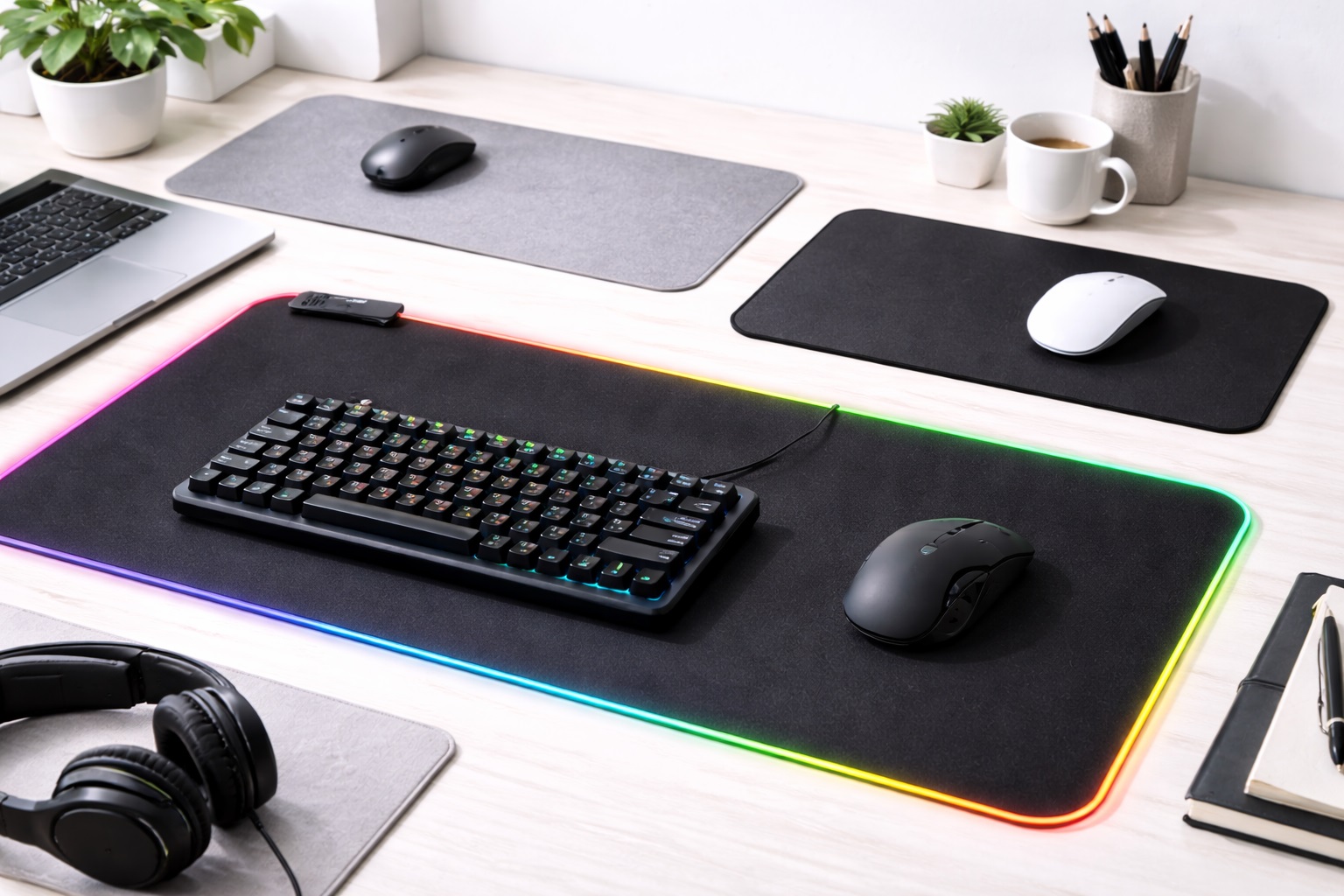
An extended cloth desk mat stretches across the entire desk surface, giving the mouse and keyboard a single, continuous tracking surface instead of two separate accessories competing for space. The cloth weave strikes a workable middle ground between glide and grip, which matters when the same surface needs to handle a quick flick during a game and a precise cursor drag while formatting a document an hour later. Stitched edges keep the fabric from fraying at the border, and a non-slip rubber backing keeps the whole mat anchored during fast movement.
Because the surface spans the full desk, it also tends to hide the visual clutter of cables, coasters, and stray desk items sitting just off to the side, giving a mixed-use setup a cleaner, more intentional look whether you are mid-match or mid-meeting.
- Pros:
- Covers the full desk for a single, unified tracking surface
- Balanced cloth texture works reasonably well for both gaming and precision tasks
- Non-slip rubber base keeps the mat from shifting during fast play
- Stitched edges resist fraying over years of daily use
- Cons:
- Large size makes rolling it up for washing more of a chore
- Cloth surfaces eventually show glazing in high-traffic zones with very heavy daily use
Best For: Anyone who wants one surface to handle their entire desk, rather than switching mental gears between a gaming pad and a separate work mat.
Why We Recommend It: The extended cloth mat is the closest thing to a true all-rounder in this category. It will not out-glide a dedicated speed pad in a ranked match, and it will not out-cushion a dedicated ergonomic pad during a long data-entry session, but it performs solidly at both jobs without asking you to own two separate products. Because it also covers the keyboard area, it tends to reduce the small amount of desk clutter that builds up around crumbs, dust, and loose cable ends, which matters more than people expect on a desk that gets heavy daily use from both work and play. Many buyers who upgrade to an extended mat from separate smaller accessories describe the change as making their whole setup feel more deliberate, even before accounting for any tracking performance difference at all.
Hard Surface Mouse Pad – Best For Speed And Precision
A hard surface mouse pad swaps cloth for a smooth, rigid material, cutting friction dramatically compared to fabric. That lower friction translates into faster cursor travel with less physical effort, which gaming-focused users notice immediately during quick flicks and fast-paced aiming. The same rigidity also makes hard pads simple to keep clean, since spilled coffee or crumbs wipe away in seconds rather than soaking into a fabric weave the way they would on a cloth mat.
For the work side of a dual-purpose routine, the trade-off is a slightly less forgiving feel for very fine cursor placement compared to a textured cloth surface, though most users adapt within a session or two and come to appreciate the consistency a hard surface offers regardless of humidity or desk condition.
- Pros:
- Noticeably lower friction for fast, fluid cursor movement
- Wipes clean in seconds with a damp cloth
- Consistent glide regardless of humidity or desk surface texture
- Precise, predictable stopping point during controlled movement
- Cons:
- Less cushioned feel against the wrist than a cloth surface
- Mouse clicks and movement can sound louder on a hard surface
Best For: Players who prioritize fast, low-friction tracking during games and don't mind trading a little wrist comfort for speed and easy cleanup during work hours.
Why We Recommend It: If gaming performance is the priority and work use is secondary, the hard surface pad delivers the biggest gaming-side benefit of the three options here, while still functioning perfectly well for day-to-day office tasks. The easy cleanup is a genuine bonus for a desk that sees both snacks during gaming sessions and coffee during work hours. Many hard surface pads also come in smaller, more affordable sizes than a full extended mat, which makes them an easy option to try first before committing to a larger, pricier setup. Some hard surface pads are made from tempered glass or coated aluminum rather than plastic, which adds a bit more weight and a distinct feel that some users prefer over a standard plastic hard pad.
Ergonomic Mouse Pad With Wrist Rest – Best For Extended Comfortable Use
An ergonomic mouse pad pairs a standard tracking surface with a built-in gel or memory foam wrist rest, supporting the wrist at a more neutral angle during the pauses between mouse movements. For anyone stacking long work sessions on top of long gaming sessions, cumulative wrist strain becomes a real concern, and this style directly addresses it rather than treating comfort as an afterthought.
The wrist rest is designed to support the wrist during breaks in movement rather than while actively moving the mouse, so it works best paired with a mousing style that rests periodically rather than one involving constant large arm swings, which matters more for certain competitive gaming genres than for general use.
- Pros:
- Built-in wrist support meaningfully reduces strain across long combined sessions
- One-piece design eliminates the need for a separate wrist rest accessory
- Gel or memory foam conforms to the wrist over time
- Non-slip base keeps the pad anchored during use
- Cons:
- Larger footprint than a standard flat mouse pad
- Fixed wrist rest height may not suit every desk and chair combination
Best For: Home office workers and heavy daily mouse users who also game and want to protect their wrists across a long combined day of screen time.
Why We Recommend It: Comfort compounds over time in a way that pure performance numbers do not capture. For someone splitting eight or more hours between work and gaming on the same desk, the wrist support built into this style pays off in a way a purely performance-oriented pad cannot match. Many users who switch to this style report that the biggest benefit shows up not during any single session, but in how their wrists feel at the end of a long week, once the small, repeated strain of hours of unsupported mousing stops accumulating day after day. Pairing this style with a chair and desk set up at the correct height amplifies the benefit further, since wrist support alone cannot fully compensate for poor overall posture.
Buying Guide: How to Choose the Best Mouse Pad for Gaming and Work
Once you understand the three main styles built for dual-purpose use, matching one to your actual habits comes down to weighing these ten factors honestly.
1. Decide Whether Speed Or Control Matters More To You
Cloth surfaces generally favor control, since their texture adds a small amount of friction that helps with precise placement. Hard surfaces favor speed, since their low friction lets the cursor travel further with less effort. If your games lean toward fast-paced shooters, you may lean toward speed; if you do detailed work like design or spreadsheets for most of the day, control may matter more to you. Many players settle this by testing both surface types in person when possible, since the difference is immediately noticeable in a way that specifications alone rarely convey. If you cannot test in person, reviews from people who describe both a gaming and a work use case tend to be more reliable than reviews written from a single-purpose perspective, since they have actually lived with the pad across the same split you are trying to plan for. Pay particular attention to any mention of long-term wear, since a short-term first impression rarely tells you how a surface behaves after months of genuinely heavy daily use.
2. Match The Pad Size To Your Desk And Play Style
Extended desk mats work well for players who use large arm movements or low mouse sensitivity, since they need the extra room to travel. Standard-sized pads suit most everyday setups, while smaller pads work for high-sensitivity players and very tight desks. Measure your desk and consider your typical mouse sensitivity before choosing a size. If you frequently switch between a controller and mouse for different games, keep in mind that pad size matters far less on the days you are not using a mouse at all. On the work side, a larger pad rarely hurts, since it simply gives you more surface than you strictly need, whereas a pad that is too small for your gaming style can genuinely limit your movement mid-match.
3. Consider The Pad's Thickness
Thicker pads, generally in the four to five millimeter range, cushion the wrist better and absorb more vibration from fast movement or aggressive clicking. Thinner pads sit flatter and can feel more stable on already-smooth desks. Most dual-purpose users find something in the middle to be the most comfortable all-around choice, especially once you factor in hours of both gaming and typing stacked back to back on the same surface.
4. Check Edge Stitching On Cloth Options
If you are leaning toward a cloth-based pad, stitched edges are a strong signal of durability. Unstitched cloth edges tend to fray and curl within a matter of months under daily use, while stitched borders hold their shape for years, which matters more on a pad seeing double duty from both work and gaming hours. Checking a handful of recent owner reviews for complaints about fraying is one of the quickest ways to gauge real-world stitching quality before you buy.
5. Evaluate The Non-Slip Base Quality
A pad that slides during a fast in-game flick or shifts during precise cursor work at your desk undermines the entire point of buying a dedicated surface. Textured rubber bases tend to hold their grip longer than smooth rubber, especially on glass or laminate desks, so this is worth checking in reviews before buying. A pad that starts sliding after a few months of use is one of the more common and avoidable frustrations reported by people who mix fast gaming movements with everyday desk work.
6. Weigh Cleaning And Maintenance Needs
A pad used for both gaming snacks and daily coffee needs to be easy to clean. Cloth pads can typically be hand washed or machine washed on a gentle cycle, while hard surfaces just need a quick wipe. If spills are a regular risk at your desk, factor cleaning convenience into your decision rather than treating it as an afterthought. A pad that is a hassle to clean tends to get cleaned less often in practice, which quietly shortens its useful life regardless of how durable the surface material actually is.
7. Think About Noise If You Share Your Space
Hard surfaces tend to produce a louder sound during fast mouse movement and clicking than cloth does. If you share a room, a thin apartment wall, or a home office with someone else nearby, this is worth testing or reading about before you commit to a hard surface pad for both day and night use. Late-night gaming sessions in particular are where a noisy surface tends to draw the most attention from anyone nearby trying to sleep.
8. Look At Overall Aesthetic Fit
A mouse pad sits in plain view all day, whether you are gaming or working, so choose a color and pattern that fits both contexts. A busy RGB gaming aesthetic may feel out of place during a work video call, while a neutral tone tends to blend seamlessly into either setting without drawing unwanted attention. If your desk doubles as a backdrop for video calls, this small detail matters more than it might initially seem.
9. Consider Whether You Want RGB Lighting
Edge-lit RGB pads exist mainly for gaming aesthetics and require a USB connection to power the lighting. For a genuinely dual-purpose desk, a non-illuminated pad is usually the more practical and less distracting choice during work hours, while still performing identically during gaming sessions. If aesthetics matter to you, a subtle, tasteful design tends to age better over years of use than a flashier one that stands out for the wrong reasons after the novelty fades.
10. Buy From A Brand With A Track Record In Both Categories
Peripheral brands that make products for both gamers and office workers tend to design dual-purpose pads more thoughtfully than brands focused purely on one audience. Established names in this space generally offer more consistent quality control and better warranty support across their mouse pad lineup. Reading reviews from people who specifically mention mixed gaming and work use, rather than only gaming reviews, will usually give you the most relevant picture.
Frequently Asked Questions
The following questions come up often from people trying to settle on a single mouse pad that can handle both a gaming setup and a full workday without compromise.
1. Can one mouse pad really work well for both gaming and office use?
Yes. Extended cloth mats, hard surface pads, and ergonomic wrist-rest pads are all commonly used across both contexts, and most users find that one well-chosen pad handles a mixed routine without needing a second, purely gaming-focused surface. The key is matching the pad to whichever activity takes up more of your actual time.
2. Should I choose a cloth or hard surface for a mixed gaming and work routine?
It depends on your priorities. Cloth generally offers a better balance for people who spend more time on detailed work tasks, while a hard surface tends to favor players who prioritize fast cursor speed above all else during gaming sessions. Neither choice is wrong, since both surfaces work fine for basic office tasks day to day.
3. How often should I clean a mouse pad used for both gaming and work?
Regular cleaning, roughly every few weeks with normal daily use, keeps oils and dust from building up and affecting tracking. Cloth pads can usually be hand washed, while hard surfaces just need a quick wipe with a damp cloth. Air drying cloth pads fully before use again avoids any lingering dampness affecting tracking.
4. Does mouse pad size actually affect gaming performance?
Yes, particularly for players using lower mouse sensitivity settings that require larger physical movements. An extended mat gives that movement more room, while a smaller pad suits players using higher sensitivity and smaller wrist motions. Work tasks are generally far less sensitive to pad size than gaming is, so let your gaming habits guide this choice.
5. Will an ergonomic wrist rest pad hurt my gaming performance?
Not meaningfully for most genres, since the wrist rest is meant to support the wrist during pauses rather than during active movement. Players relying on very large, fast arm sweeps may prefer a flat pad without a built-in rest instead, since resting the wrist mid-swing can occasionally interrupt a very fast motion.
6. Is the most expensive mouse pad for gaming and work always the best?
Not necessarily. Higher price often reflects premium materials or additional features rather than a guarantee of better daily performance. Matching the pad to your actual mix of gaming and work habits usually matters more than the price tag. A moderately priced pad that fits your routine will typically outperform an expensive one built for a different use case entirely.
7. How long should a quality dual-purpose mouse pad last?
A well-built pad from a reputable brand typically holds up for several years of regular daily use before surface wear or fraying becomes noticeable, particularly with occasional cleaning and reasonable care. Heavier daily use from both gaming and work naturally shortens that window somewhat compared to lighter, single-purpose use.
8. Can I return a mouse pad if it doesn't suit my mixed use case?
Most retailers offer a standard return window, often between fifteen and thirty days. Keep the original packaging during your trial period so a return stays simple if the surface does not end up suiting both sides of your routine. Testing it for at least a week across both a gaming session and a full workday gives the most honest read on fit.
9. What should I prioritize first when shopping for a dual-purpose mouse pad?
Start by being honest about how you split your time between gaming and work, then weigh speed against control and comfort against performance based on that real split, rather than choosing based on marketing aimed at one audience only. Ranking your own priorities before browsing listings tends to produce a much better final choice than browsing first and deciding what matters afterward.
10. Does brand reputation matter for mouse pads specifically?
Yes, to a degree. Established gaming and office peripheral brands tend to offer more consistent surface quality and backing durability, though plenty of newer brands make solid dual-purpose pads worth considering after reading recent verified reviews. Warranty length is often a useful, quick signal of how confident a manufacturer is in its own product.
Final Verdict
- Best for Desk Coverage and Versatility: Extended Cloth Desk Mat — the most balanced all-around choice for a genuinely mixed routine.
- Best for Speed and Precision: Hard Surface Mouse Pad — the strongest pick when gaming performance takes priority.
- Best for Extended Comfortable Use: Ergonomic Mouse Pad with Wrist Rest — the smartest choice for anyone logging long combined hours at the same desk.
Whichever style you lean toward, remember that the comparison table and specifications above are a starting point, not a final answer. Your own desk size, your typical mouse sensitivity, and the actual proportion of your day spent gaming versus working will always matter more than any single spec sheet. Taking a few extra minutes to think through these details before you buy is the single best way to avoid ending up with a pad that only really satisfies one half of your routine.
There isn't a single objectively correct mouse pad for a gaming-and-work desk — there is only the one that matches how your day is actually split between the two. Weigh how much of your time goes to fast-paced play versus focused work, factor in your desk size and cleaning habits, and choose the surface that will still feel right during both a late-night match and an early-morning meeting. Think of it less as buying a gaming accessory or an office accessory and more as buying one piece of everyday equipment that happens to serve two different parts of your life equally well. A well-matched pad quietly disappears into the background of your routine, which is exactly the point. Take the time to be honest about how your hours actually split between the two activities, test whatever you buy for a full week rather than a few minutes, and lean on the return window if the fit isn't quite right the first time around.