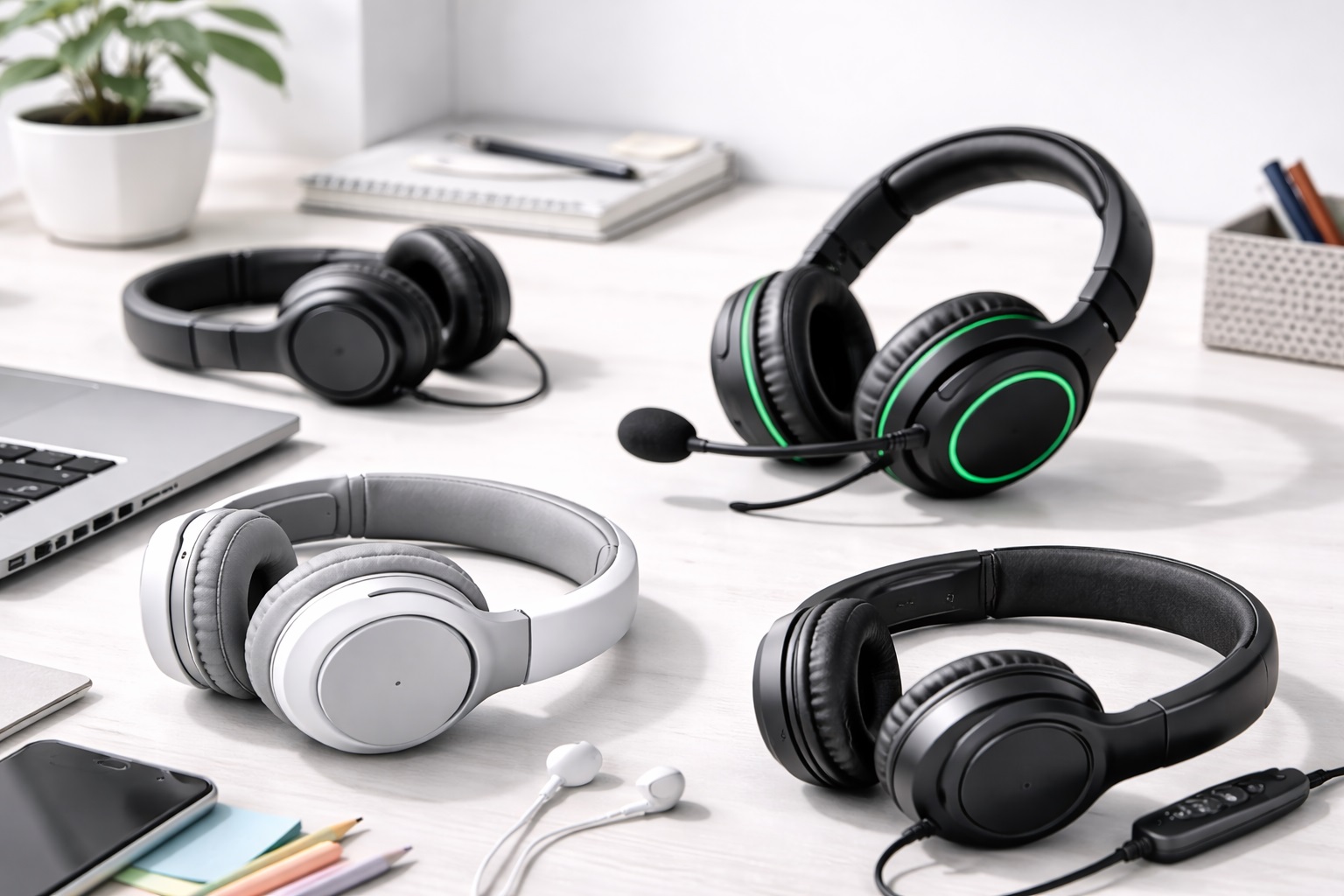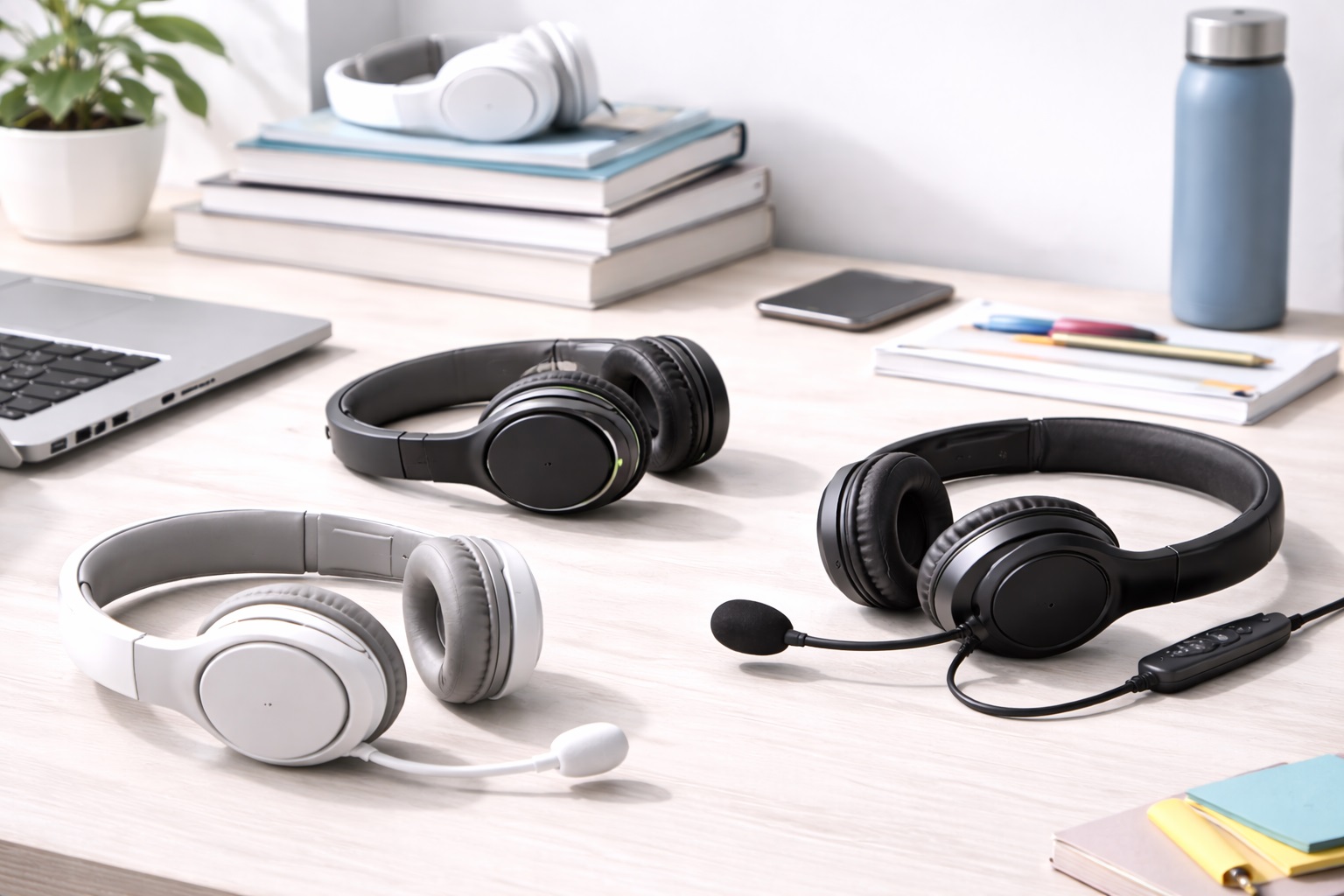
Best Headsets for Students: Comfortable Audio for Classes and Study Sessions
Between back-to-back lectures, group project calls, and late-night study playlists, a student's headset gets more daily wear than almost anything else in a backpack. Yet most buying advice treats every headset the same way, comparing specs without asking the more useful question: what will actually get worn for six or eight hours without leaving a headache behind, and what will still sound clear when a professor calls on you unexpectedly during a seminar?
This guide breaks down the headset styles that show up most often in student setups, from clip-on lecture-hall earbuds to full over-ear designs built for marathon study blocks. Rather than chasing the single "best" product, it walks through how each style handles comfort, microphone clarity on video calls, and durability inside a bag that also carries textbooks, a water bottle, and a laptop charger. It also covers the practical trade-offs that rarely show up in a spec sheet, like how a headset behaves after a semester of daily use, and what to check before assuming a product will fit your particular routine.
Whether your biggest concern is surviving a three-hour lab lecture, sounding professional during a scholarship interview, or simply not losing an earbud between classes, there's a category below built around that specific problem. Read through the comparison table first for a quick side-by-side, then use the detailed reviews and buying guide to narrow down the right fit for your schedule and budget. Most students end up choosing between two or three finalists rather than one obvious winner, so pay closest attention to whichever section below matches the part of your week that currently feels most frustrating.
Top 6 Headsets for Students (Detailed Reviews)
1. Wireless Over-Ear Headset with Boom Mic – Best Overall for All-Day Classes
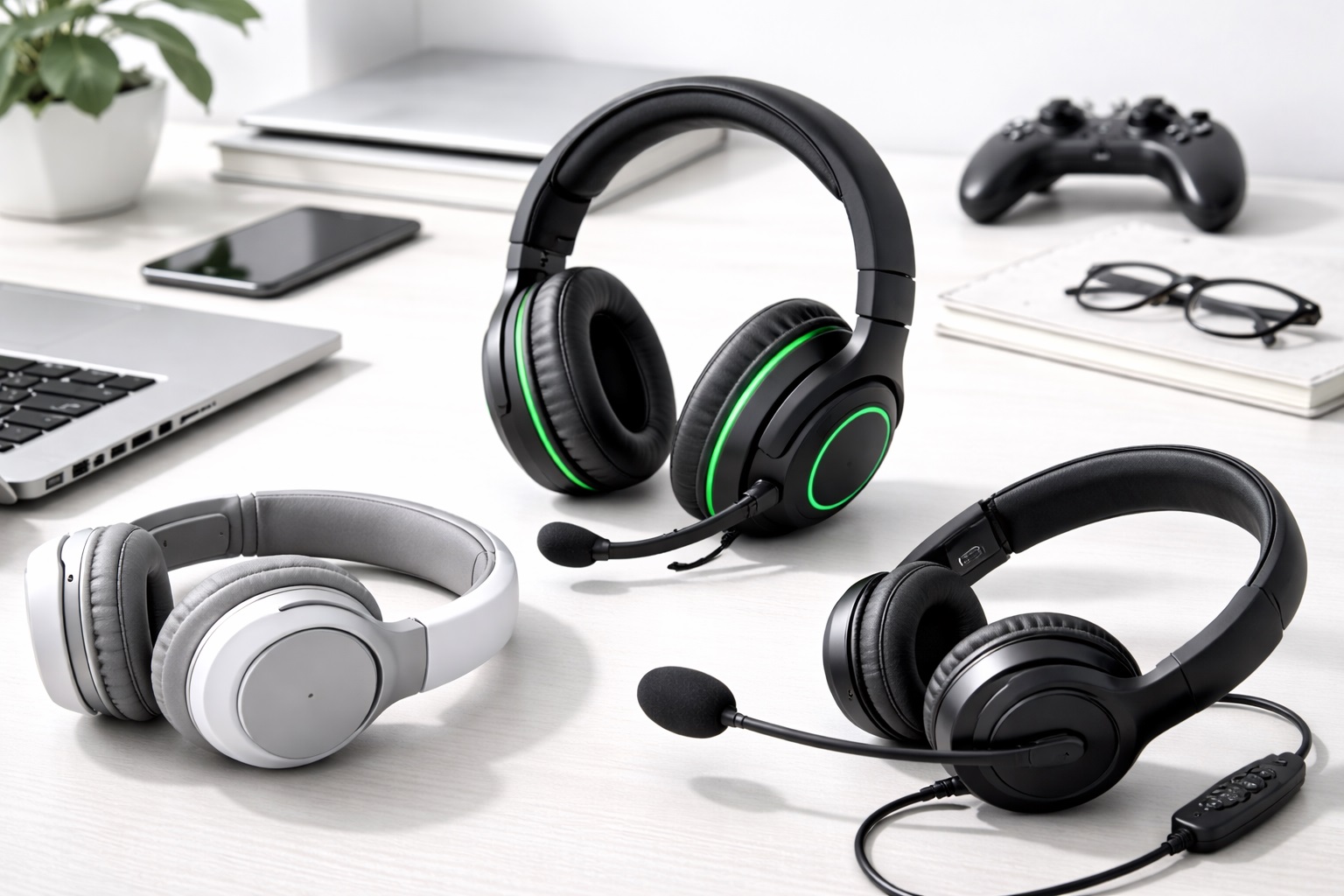
A wireless over-ear design is the closest thing to a one-headset solution for a student who has lectures in the morning, a study group call at noon, and a solo review session at night. The full ear cup blocks out dorm hallway noise or a roommate's video game, while a flip-down or detachable boom microphone keeps voice pickup clear even in a shared living space. Battery life in this category typically covers a full academic day without needing a midday top-up, and most models recharge fully overnight, so the routine becomes as simple as plugging it in before bed.
- Pros:
- Cups seal out ambient noise for focused listening
- Boom mic gives clearer voice pickup than earbud microphones
- Battery life comfortably covers a full day of classes
- Padded headband distributes weight for longer wear
- Cons:
- Takes up more backpack space than compact alternatives
- Ears can feel warm during extended summer study sessions
Best For: Students whose day mixes recorded lectures, live video seminars, and quiet solo study, all under one headset.
Why We Recommend It: It removes the need to switch devices between listening tasks and speaking tasks, which matters most on days packed with back-to-back academic obligations and leaves one less thing to think about between classes.
2. On-Ear Bluetooth Headset – Best for Portability Between Classes
An on-ear headset trades a little noise isolation for a noticeably lighter, flatter design that folds down and slips into a side pocket without a bulky carrying case. For students who move between buildings throughout the day, this is often the more realistic option than a full over-ear headset that gets left in a dorm room out of sheer bulk. Most on-ear models still include a usable microphone for quick calls between classes, and the lighter clamping force means less pressure on the head during a long afternoon of back-to-back sessions.
- Pros:
- Noticeably lighter and flatter for daily carry
- Folds compactly for a backpack side pocket
- Good ventilation reduces heat buildup
- Quick to put on and remove between classes
- Cons:
- Less passive noise blocking than over-ear cups
- Can press uncomfortably on ears during multi-hour sessions
Best For: Students who walk across campus between classes and want something they'll actually carry every day rather than leave behind.
Why We Recommend It: The reduced size and weight solve the real-world problem of a headset that's too inconvenient to bring along, which beats a "better" headset that stays in a drawer because it never makes it into the backpack.
3. USB Wired Headset with Noise-Cancelling Mic – Best for Reliable Online Exams and Calls
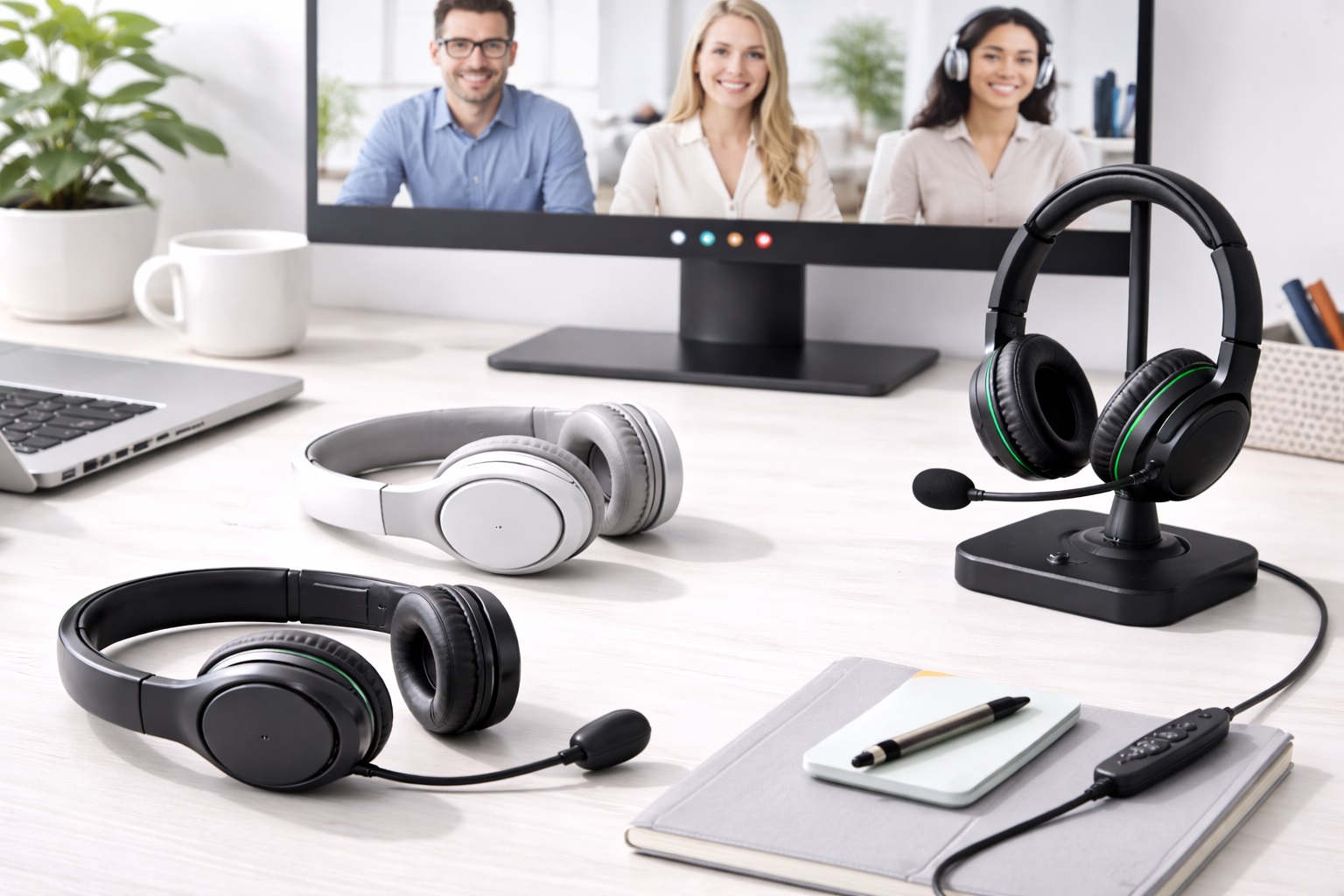
When a graded discussion, an oral exam, or a scholarship interview is on the line, a wired USB headset removes an entire category of risk: no Bluetooth dropout, no battery dying mid-sentence, no pairing menu to fight with five minutes before the call starts. The plug-and-play USB connection is recognized instantly by nearly every laptop, and a noise-cancelling microphone keeps a noisy apartment or dorm hallway from bleeding into the call. For students who record presentations or submit voice-graded assignments, the consistency of a wired signal also avoids the compression artifacts that occasionally show up over Bluetooth.
- Pros:
- Stable connection with zero wireless dropout risk
- No battery to monitor or charge before an important call
- Noise-cancelling mic filters out background chatter
- Plug-and-play setup on nearly any laptop
- Cons:
- The cable limits how far you can move from your laptop
- Needs an open USB-A or USB-C port, which some ultrabooks lack
Best For: Students facing graded video exams, interviews, or presentations where a dropped connection isn't an option.
Why We Recommend It: Removing variables on the days that matter most is worth more than the convenience of wireless freedom, and this style is built exactly for that trade-off.
4. True Wireless Earbuds with Mic – Best for Compact Carry and Quick Study Breaks
True wireless earbuds fit in a jacket pocket, survive a walk to the library, and still handle a short video call without fuss. They're not built for the same all-day comfort as a full headset, but for students juggling a gym session, a coffee run, and a quick call between errands, the sheer convenience of a case that fits in one hand wins out. Voice pickup on newer models has improved enough for casual calls and quick check-ins with study partners, and touch controls on the buds make it easy to skip a track or answer a call without pulling out a phone.
- Pros:
- Small enough to carry in a pocket at all times
- Charging case extends listening time across a full day
- No cable or headband to manage while active
- Convenient for quick calls between errands
- Cons:
- Microphone clarity trails behind boom-mic headsets in noisy rooms
- Easier to misplace one earbud than a full headset
Best For: Students who want one small accessory that covers workouts, commutes, and short calls without carrying a separate headset.
Why We Recommend It: For a schedule built around movement rather than sitting at a desk, the compact form factor solves more problems than a slightly clearer microphone would.
5. Active Noise-Cancelling Headset – Best for Silent Focus in Noisy Environments
Not every student has a quiet place to study, and a headset with active noise cancellation is built specifically for that reality. Whether it's a busy library reading room, a shared apartment with roommates on calls of their own, or a noisy commute on public transit, ANC electronically filters out constant background sounds like HVAC hum, chatter, and engine noise so recorded lectures and reading playlists come through clearly without needing the volume turned up. Many models also include a transparency mode for quickly hearing someone speak without removing the headset entirely, which is useful for a quick exchange with a roommate or a barista without breaking focus for long.
- Pros:
- Actively filters constant background noise for deep focus
- Reduces the need to raise volume in loud environments
- Transparency mode allows quick conversations without removal
- Especially useful for shared living spaces and commutes
- Cons:
- Typically costs more than headsets without ANC
- Some users notice a faint pressure sensation when ANC is active
Best For: Students studying in consistently noisy environments, like shared apartments, busy libraries, or daily commutes.
Why We Recommend It: When a quiet study space simply isn't available, active noise cancellation does the work of creating one, which can matter more for focus than any other single feature.
6. Budget Foldable Headset – Best for Tight Student Budgets
Not every student needs premium materials or wireless features, and a simple foldable headset with a fixed cable or basic Bluetooth chip covers the essentials of listening to a lecture and speaking on a group call without the higher price tag of feature-heavy models. These are a sensible starting point for a first dorm setup, a backup headset, or a shared family purchase across several students, and the lower cost also makes replacement far less painful if it gets lost or damaged during a move between semesters, which happens more often than most students expect once a headset is traveling in and out of a busy backpack every day.
- Pros:
- Lower price makes it accessible on a tight budget
- Simple design with fewer parts to fail
- Foldable hinge keeps it compact for storage
- Good enough audio and mic quality for everyday class use
- Cons:
- Build materials feel less premium than pricier alternatives
- Fewer comfort adjustments than higher-tier headsets
Best For: Students furnishing a first dorm setup or looking for a reliable backup without a large upfront cost.
Why We Recommend It: It covers the core requirements, clear audio and a usable microphone, without asking a student to pay for features they may never use.
Buying Guide: How to Choose the Best Headset for Students
Once the basic style is decided, a handful of practical factors separate a headset that gets used every day from one that ends up back in its box within a month. Here's what actually matters when comparing options, based on how students realistically use these products across a semester.
1. Comfort for Multi-Hour Study Sessions
Weight and clamping force matter more than most spec sheets suggest. A headset under roughly 250 grams with a well-padded headband will feel noticeably lighter after three hours than a heavier model, even if the audio specs look similar on paper. Clamping force, how tightly the ear cups press against your head, is rarely listed anywhere, so it helps to try before you buy when possible. Try to check user reviews specifically mentioning long wear before purchasing, since comfort is one of the hardest things to judge from a product photo or spec chart alone. If you can, visit a store and wear a candidate model for a few minutes before ordering the same one online at a better price, since even a rough in-person test tells you more than another round of reading specifications.
2. Microphone Quality for Online Classes
A boom microphone positioned near the mouth consistently outperforms an in-line or earbud microphone for clarity during video calls, group projects, and recorded presentations. If your coursework includes frequent live discussion sections, group presentations, or recorded oral assignments, prioritize mic quality over marginal gains in music playback, since a muffled or echoing voice can affect how a presentation or discussion contribution is received by a professor or classmates who are already trying to parse a lecture recording over a shaky connection.
3. Wired vs Wireless Connectivity
Wireless offers freedom to get up and move during a call, but wired connections remove battery anxiety and connection dropouts entirely. Many students benefit from owning one of each: a wireless option for daily convenience and a wired backup for exams or interviews where reliability outweighs comfort. Think of the wired option as insurance for the handful of days each semester when a dropped connection would actually cost you something, whether that's a grade, a first impression with a recruiter, or simply the frustration of restarting a group call from scratch.
4. Battery Life and Charging Habits
Match battery capacity to your actual schedule rather than chasing the highest number available. A headset that lasts through a full day of classes without a midday charge is sufficient for most students; extra battery beyond that mostly adds weight rather than practical benefit, unless you frequently forget to charge overnight or travel for multiple days without easy access to an outlet, such as during a weekend trip home or a research field visit away from your usual dorm setup.
5. Noise Isolation vs Active Noise Cancellation
Passive isolation from padded ear cups blocks a meaningful amount of dorm or library noise on its own, at no extra cost. Active noise cancellation adds electronic filtering for consistent background sounds like HVAC hum or distant traffic, which helps focus during silent study blocks but isn't essential for occasional lecture listening in an already-quiet space. Decide based on how consistently noisy your usual study environment actually is, since paying extra for ANC brings little benefit if your dorm room or study spot is already reasonably quiet most of the time.
6. Multi-Device Pairing for Laptop and Phone
If you regularly switch between a laptop for classes and a phone for calls or music, look for a headset that supports pairing with two devices at once. Constantly re-pairing a single-device headset is a small but genuinely annoying friction point during a busy day, especially when a call comes in on your phone while you're mid-lecture on your laptop and don't want to fumble through a settings menu to switch devices mid-class.
7. Durability for Dorm and Backpack Life
Headsets that travel in a backpack alongside textbooks and chargers take more physical abuse than a headset that stays on a desk. Reinforced hinges, a sturdy headband, and a hard or semi-rigid carrying case all extend usable life in a student's day-to-day environment, particularly across a full academic year of daily transport between dorm, library, and classroom, when the same headset gets tossed into a bag alongside sharp textbook corners and a heavy laptop dozens of times a week.
8. Sound Signature for Studying with Music
A flatter, more balanced sound signature works better for long study sessions than a heavily bass-boosted tuning, which can become fatiguing over hours of background music. Save the bass-forward tuning for casual listening and prioritize a neutral profile for focus-oriented use, especially if you tend to keep music or ambient sound playing for hours at a time while reading or writing, since ear fatigue from an overly aggressive bass response tends to build slowly and is easy to miss until a session already feels uncomfortable.
9. Compatibility with School Video Platforms
Most modern headsets work fine with Zoom, Microsoft Teams, and Google Meet, but it's still worth confirming before buying, especially for USB models that rely on driver recognition rather than standard audio protocols. A quick search for the specific model plus your school's required platform can save an unnecessary return trip to the store later, and it's worth doing before the first week of classes rather than discovering an issue during a live session.
10. Budget and Value Considerations
Set a realistic budget based on how central the headset is to your daily routine rather than defaulting to the most expensive option available. A student on daily video calls or presentations justifies spending more than a student who mostly listens to recorded lectures without ever speaking, so let actual usage guide the spend rather than marketing claims about features that sound impressive but rarely factor into a typical school week.
11. Warranty and Replacement Parts
Ear cushions wear out well before the internal electronics fail, often within the first year or two of regular use. Check whether replacement pads are sold separately for the model you're considering, since a headset with available replacement parts can outlast one that requires a full repurchase once the cushions degrade or the foam starts to flake, since paying a small amount for a fresh set of cushions is far cheaper than replacing an entire headset that otherwise still works fine.
Frequently Asked Questions
1. What's the real difference between a headset and regular headphones?
A headset includes a built-in microphone designed for two-way communication, while headphones are audio-only devices meant purely for listening. If your coursework involves video calls, group discussions, or recorded presentations, a headset is the more practical choice over standalone headphones, since you won't need a separate microphone accessory or a second device cluttering your desk.
2. Will a student headset work with my phone as well as my laptop?
Most Bluetooth headsets pair with both a phone and a laptop, sometimes at the same time on models with multi-device support built in. Wired USB headsets are laptop-focused by design and may need an adapter to connect to a phone with a different port type, so check compatibility before assuming it'll work across both devices.
3. How can I sound clearer on video calls from a shared dorm room?
Position a boom microphone close to the corner of your mouth, use the headset's built-in noise reduction feature if it has one, and reduce background noise at the source when possible, such as closing a door or pausing a fan during the call. Software-based noise suppression tools built into many calling platforms can help further if hardware alone isn't enough, and a quick test call with a friend before an important session can catch problems while there's still time to fix them.
4. Should I get a wireless or wired headset for online exams?
Wired is generally the safer choice for anything graded or time-sensitive, since it removes the possibility of a Bluetooth disconnect or a dead battery mid-exam when you can least afford it. Save wireless for everyday lectures and casual calls where a brief hiccup isn't costly to your grade or reputation, and always have a backup plan, like a phone hotspot or a second device, ready before anything graded begins.
5. How long do the ear cushions on a headset typically last?
With daily use, cushions commonly last a year or two before the foam compresses or the outer material starts to peel and flake. Look for a model with replaceable cushions if you plan to use it as your main headset throughout your studies, since this alone can extend the usable life by several semesters without any other part of the headset needing to change.
6. Do I need to spend a lot to get a decent student headset?
Not necessarily. Mid-range and budget-friendly models cover the core needs of clear audio and usable microphone quality for most coursework without issue. Reserve extra spending for features you'll genuinely use often, like active noise cancellation or multi-device pairing, rather than paying for specs you won't notice day to day or use more than a handful of times per semester.
7. How long should a good headset last with regular use?
A reasonably well-built headset from a known brand typically holds up for two to four years of regular student use, assuming basic care and eventual cushion replacement along the way. Warranty length is often a decent indicator of how confident a manufacturer is in the build quality of a given model.
8. What if the headset I buy turns out to be uncomfortable?
Check the retailer's return policy before purchasing, since most offer a return window of two to four weeks for unopened or lightly used items. Keep the original packaging until you're confident about comfort and fit, particularly if you're buying without trying it on first, such as through an online order.
9. What should I prioritize first when narrowing down options?
Start with how you'll actually use it, mostly listening, mostly speaking, or an even mix of both, and how many hours a day it will realistically be on your head. Fit those answers to a style first, over-ear, on-ear, wired, or true wireless, then compare specific models within that style rather than jumping straight to a list of top-rated products that may not match how you actually spend your day.
10. Does a well-known brand actually matter for a student headset?
Established brands tend to offer more consistent build quality and easier warranty claims when something goes wrong. Lesser-known brands can still offer solid value if you check verified reviews first, so don't rule out a newer name purely on unfamiliarity if the reviews hold up across a reasonable number of independent buyers rather than a handful of enthusiastic ones.
11. Can one headset really cover classes, calls, and casual listening?
For most students, yes, a well-chosen wireless over-ear or on-ear headset comfortably covers all three uses without much compromise. Students with more specialized needs, like frequent graded exams or studying in consistently loud environments, may still benefit from keeping a simple wired backup or an ANC model on hand for those specific situations, rather than trying to force a single all-purpose headset to handle everything perfectly.
Final Verdict
- Best Overall: Wireless Over-Ear Headset with Boom Mic – the most complete option for a day that mixes lectures, calls, and quiet study.
- Best for Portability: On-Ear Bluetooth Headset – the lightest practical choice for students moving between buildings all day.
- Best for Reliability: USB Wired Headset with Noise-Cancelling Mic – the safest pick for graded calls and exams where a dropout isn't an option.
- Best for Compact Carry: True Wireless Earbuds with Mic – ideal for students who value pocket-sized convenience over all-day comfort.
- Best for Noisy Environments: Active Noise-Cancelling Headset – the strongest choice for studying without a quiet room to rely on.
- Best on a Budget: Budget Foldable Headset – a sensible starting point that covers the essentials without overspending.
There isn't a single headset that fits every student's schedule, and that's fine, the right pick comes down to matching the style to how your day actually runs, where you tend to study, and how often you're speaking rather than just listening. Weigh comfort, microphone clarity, and reliability against your budget, and the options above should make that decision considerably easier heading into a new semester. If nothing else, prioritize the factor tied to your biggest daily frustration first, whether that's discomfort after long wear, unclear audio on calls, or simply forgetting to charge a device overnight, and let the rest of the decision follow from there.