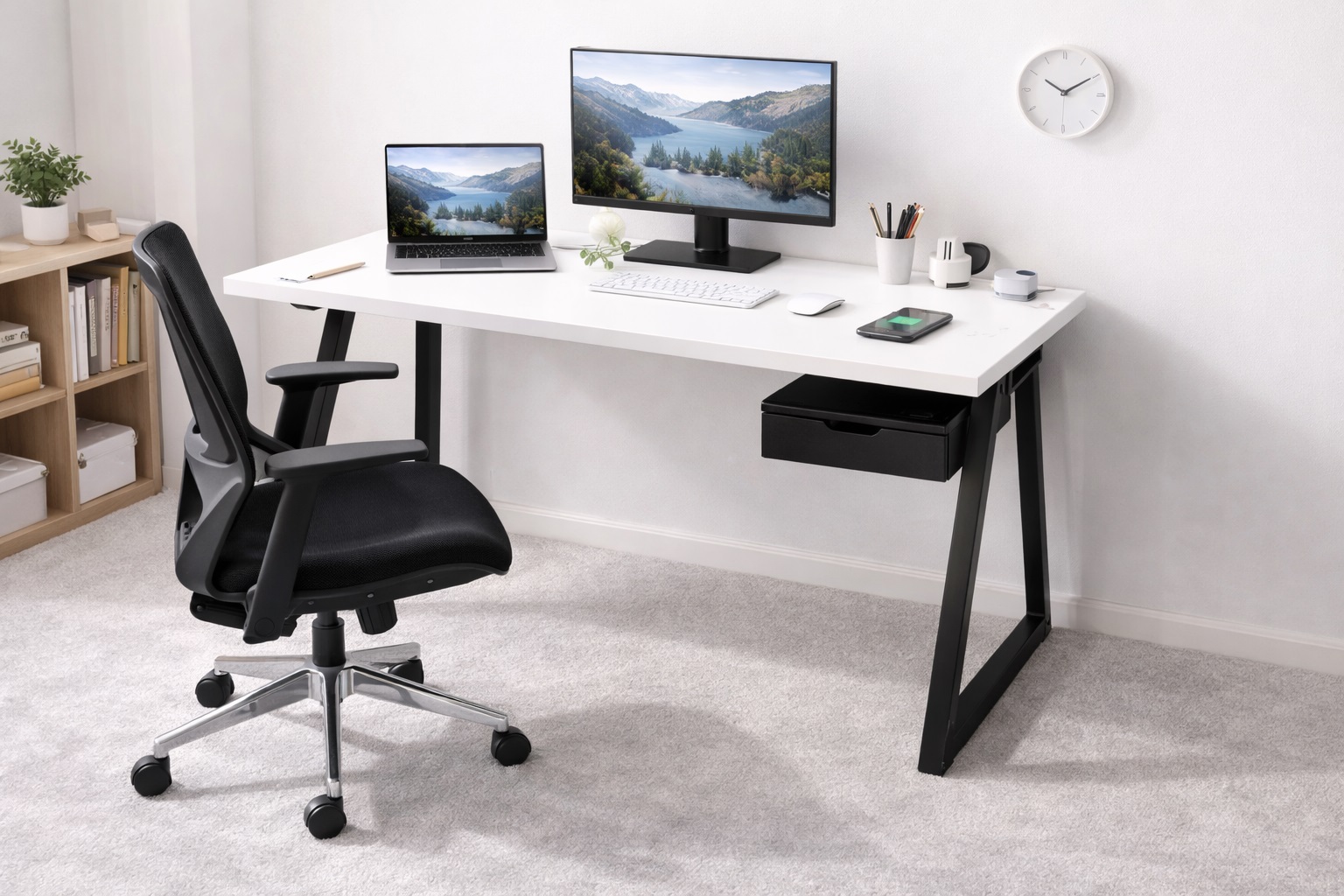
Best Budget Desks for Home Offices and Small Spaces
A desk is one of the few pieces of furniture that has to earn its keep every single day, which makes the budget category a genuinely tricky one to shop in. Spend too little and you risk a wobbly surface that undermines everything from typing comfort to how steady your monitor feels. Spend more than necessary and you may simply be paying for a look or a brand name that has little to do with how the desk performs once it is assembled and loaded with your actual work setup. Getting this decision right matters more than it might seem, since a desk is one of the few purchases you interact with physically for hours every single day.
This guide is built around that middle ground — real, everyday usefulness at a price that does not require a major furniture budget. It is written for home office users, students, and apartment dwellers who need a working surface that holds up to daily use without demanding the space or cost of a premium office setup. None of the picks below assume a dedicated home office room; most assume a corner, an alcove, or a shared living space that has to double as a workspace.
The categories covered range from simple writing desks to L-shaped and floating designs, each solving the budget-desk problem from a different angle. Some prioritize minimal footprint, some prioritize surface area, and some are built specifically around getting a desk into a room without permanent legs taking up floor space. The right one depends less on which looks best in a photo and more on how your room is shaped and how you actually intend to use the surface once it is in place.
It is worth measuring your actual room before comparing any specific desk. A shape that photographs well in a showroom setting can behave very differently once it is squeezed between a bed and a closet door, or set against a wall with a window that limits how far a desk can extend. Bringing a tape measure to the decision, rather than relying on a general sense of the room, tends to prevent the single most common budget-desk mistake: buying a desk that simply does not fit the space it was intended for.
It also helps to separate two things that are easy to conflate when shopping on a budget: low price and low quality. A genuinely well-designed budget desk can outperform a mediocre mid-range one if it uses its materials sensibly and avoids over-promising on size or capacity. The goal here is not to find the cheapest possible option, but to find the one that delivers the most reliable, stable, everyday usefulness for the money, which is a different question entirely from simply sorting by price.
Think, too, about how long you expect to keep the desk in its current spot. A desk bought as a short-term solution for a single semester has different priorities than one meant to anchor a home office for several years. The former can reasonably lean toward the cheapest adequate option, while the latter benefits from paying slightly more for a sturdier frame and a finish that holds up under years of daily contact. Being honest about that timeline before shopping tends to prevent both overspending on a temporary setup and underspending on a long-term one.
Top Picks Reviewed
Each of the categories below approaches the budget-desk problem differently, from simple compact writing surfaces to wall-mounted designs that skip legs entirely. Matching the shape and size to your actual room, rather than to whichever option seems most versatile in the abstract, tends to produce the better long-term outcome. Reading through the trade-offs of each style with your specific room in mind, rather than picking whichever sounds most complete, is the fastest way to land on a desk you will still be happy with a year from now.
1. Writing Desk Under $100 – Best For Simple, Compact Workspaces
This style covers the most basic desk need: a stable flat surface at the right height, without drawers, extensions, or added mechanisms. It is aimed at buyers who want a straightforward desk rather than a furniture centerpiece, and it tends to be the easiest option to fit into a small room without much planning. Its simplicity is also its biggest advantage during a move or a room rearrangement, since there is little to disassemble or reconfigure beyond the basic frame.
- Pros:
- Lower cost than desks with added storage or mechanical features
- Simple shape fits into a wider range of room layouts
- Fewer moving parts means fewer things that can go wrong over time
- Cons:
- No built-in storage, so organization has to come from separate furniture
- Basic surface area may feel tight for multi-monitor or paperwork-heavy work
Best For: Anyone who needs a dependable, no-frills desk and would rather add storage separately than pay for it built in.
Why We Recommend It: When the core need is simply a stable surface to work on, a straightforward writing desk delivers that without the added cost or complexity of features you may never use.
2. Computer Desk Under $150 – Best For Balanced Everyday Use
Positioned a step up from the most basic writing desks, this style typically adds a bit more surface area, sometimes a keyboard tray or small shelf, and slightly more robust construction. It suits buyers who want a genuine daily workstation without moving into premium pricing. For someone spending several hours a day at the desk, the added surface area and small conveniences tend to justify the modest price increase over the most basic option.
- Pros:
- More surface area and features than the most basic writing desks
- Often includes small conveniences like a keyboard tray or cable cutout
- A reasonable middle ground between bare-bones and premium desks
- Cons:
- Costs more than the simplest writing desk options
- Added features mean more assembly steps and more parts that could loosen over time
Best For: A primary home office or study desk used for several hours a day where a bit of extra surface area and convenience genuinely matters.
Why We Recommend It: It covers the gap between a minimal desk and a premium one, adding real daily convenience without asking for a large jump in price.
3. L-Shaped Budget Desk – Best For Maximizing Corner Space
Built to fit into a room corner, this style trades a larger physical footprint for significantly more usable surface area than a straight desk of similar cost. It is a practical answer for anyone with an awkward corner that would otherwise go unused. Because the surface wraps around a corner rather than running in a single straight line, it also tends to create a natural separation between different tasks happening at the same desk.
- Pros:
- Turns an otherwise wasted corner into genuinely usable desk space
- Provides substantially more surface area than a straight desk at a similar price
- Can separate a computer setup from a paperwork or reading area on the same desk
- Cons:
- Requires a corner with enough clearance on both sides to be useful
- Larger overall footprint than a straight desk, even if it uses otherwise unused space
Best For: A room with an underused corner where a straight desk would leave significant floor space unused.
Why We Recommend It: For the right room layout, an L-shaped desk delivers more usable surface per dollar than almost any straight-desk alternative in the same price range.
4. Floating Wall Desk – Best For Small or Shared Rooms
Mounted directly to the wall without legs, this style is built specifically for rooms where floor space is the scarcest resource, such as a studio apartment, a shared bedroom, or a narrow hallway nook repurposed as a workspace. Removing the legs from the equation entirely also makes the space beneath the desk usable for storage, a small chair tuck, or simply an open floor that makes a cramped room feel less crowded.
- Pros:
- Frees up floor space completely since there are no legs to work around
- Makes cleaning and rearranging the room underneath the desk much easier
- Well suited to rooms too narrow for a traditional desk with legs
- Cons:
- Requires secure wall mounting, which depends on wall type and may not suit rental restrictions
- Weight capacity is typically lower than a desk supported by legs on the floor
Best For: Small or shared rooms where every square foot of floor space matters and a traditional desk footprint is not practical.
Why We Recommend It: When floor space is the binding constraint, removing the legs entirely solves the problem more completely than any compact leg-based design could.
5. Budget Standing Desk – Best For Movement Throughout the Day
Bringing height adjustability to the budget category, this style lets you alternate between sitting and standing without paying premium prices for a full-featured electric standing desk. Mechanisms and stability vary more here than in fixed-height budget desks, so it is worth reading reviews specifically about how smoothly and reliably the height adjustment holds up after repeated daily use.
- Pros:
- Allows alternating between sitting and standing without a major price jump
- Can reduce the physical strain of sitting for extended stretches of the day
- Brings a feature once limited to premium desks into the budget range
- Cons:
- Adjustment mechanisms at this price point can feel less smooth than premium electric versions
- Stability at full height varies more than with fixed-height budget desks
Best For: Anyone who wants the flexibility of a standing desk but is not ready to pay premium prices for a fully electric, whisper-smooth version.
Why We Recommend It: It brings a genuinely useful ergonomic feature within reach of a budget shopper, even if the mechanism is simpler than what a premium desk offers.
6. Compact Budget Home Office Desk – Best For Minimal Footprint Setups
Designed specifically around small dimensions, this style prioritizes fitting into a tight room over maximizing surface area, making it a natural fit for a small home office, a dorm room, or a narrow apartment nook. Its reduced size also tends to make it easier to combine with other compact furniture without the room feeling crowded.
- Pros:
- Smallest overall footprint among the styles covered here
- Fits into rooms where a full-size desk simply would not work
- Generally lighter and easier to move or rearrange than larger desks
- Cons:
- Limited surface area compared to L-shaped or full-size computer desks
- May feel cramped for setups involving multiple monitors or significant paperwork
Best For: A small home office, dorm room, or apartment corner where footprint is the primary constraint on furniture choice.
Why We Recommend It: For the smallest available rooms, a desk built specifically around a minimal footprint fits where a general-purpose desk simply would not.
Buying Guide: How to Choose the Best Budget Desk
Before making a purchase decision, weigh these factors against your specific room and daily work habits rather than a generic feature checklist. A budget desk done well should feel like a deliberate choice, not a compromise you tolerate. Working through the following factors with a real sense of how your day actually unfolds at the desk, rather than an idealized version of it, tends to surface the details that matter most for your situation.
1. Desktop Surface Area for the Price
Compare the actual usable surface dimensions against what your daily setup requires — monitor, keyboard, notebook, and anything else that regularly sits on the desk — rather than judging by price alone. A desk that looks spacious in a product photo can feel tight the moment a monitor stand and a notebook are both competing for the same surface.
2. Frame Stability and Wobble
A desk that wobbles during typing or shifts slightly when you lean on it undermines daily comfort more than almost any other factor. Check reviews specifically for stability feedback before buying, since this is one issue that a product photo can never reveal on its own.
3. Weight Capacity
Confirm the desk's rated weight capacity covers your actual equipment, including monitors, a printer, or any additional gear, since exceeding it can affect both stability and long-term durability. It is easy to underestimate the combined weight of a full setup once every accessory is added together.
4. Assembly Difficulty
Budget desks typically require self-assembly. Check reviews for how straightforward the process is and whether the included hardware and instructions are genuinely adequate, since a confusing assembly process can undermine an otherwise solid frame if pieces end up misaligned.
5. Storage Options (Drawers, Shelves)
Decide whether built-in storage is worth the added cost and complexity, or whether separate storage furniture better suits your space and organizational habits. Built-in drawers add convenience but also add weight and assembly steps that a simpler desk avoids entirely.
6. Material and Surface Finish
Laminate, particleboard, and solid wood veneer all behave differently under daily wear, spills, and sun exposure. Match the finish to how carefully the desk will actually be used day to day, since a household with pets, drinks near the keyboard, or heavy daily use benefits from a more resilient surface.
7. Cable Management Features
A grommet hole, cable tray, or rear channel keeps power strips and charging cables from becoming a visible tangle, which matters more once a desk is fully loaded with daily equipment, particularly in a small room where clutter is more noticeable than in a spacious office.
8. Fit for Your Room's Layout
Measure your available space, including clearance for a chair and any nearby doors or walkways, before assuming a desk's listed dimensions will work comfortably in your specific room. A desk that fits along one wall on paper can still feel wrong once a chair needs room to slide back.
9. Price and Value
Compare the total cost against the specific features you actually need, rather than assuming the cheapest option is automatically the best value or the most expensive is automatically superior. The best value is usually the option that matches your actual requirements most closely, not the one at either end of the price range.
10. Brand Reliability
Established furniture brands tend to offer steadier quality control and more predictable long-term durability, which matters for a piece of furniture used every day for years rather than replaced after a single season.
11. Warranty and Support
A longer warranty is a reasonable signal of how confident the manufacturer is in the desk's frame and hardware holding up over time under regular daily use, particularly for moving parts like drawers or height-adjustment mechanisms.
12. User Reviews and Real-World Feedback
Reviews from other buyers often reveal how a desk performs after months of use, including whether stability, drawer alignment, or surface finish hold up as well as the listing suggests, details that rarely show up in the initial product description.
Frequently Asked Questions
The questions below cover the practical concerns that come up most often when shopping for a desk on a limited furniture budget, from stability and assembly to storage and long-term durability.
1. What should I look for when buying a budget desk?
Prioritize frame stability and surface area matched to your actual setup first, then weigh extras like storage or cable management against how much you are willing to spend beyond the basics. Those two fundamentals affect daily comfort more than almost any other feature on the listing.
2. Is spending more always better for a budget desk?
Not necessarily. Many budget desks perform reliably for years when the frame is sound and the surface area matches your needs. Extra cost is only worth it for features you will genuinely use, like added storage or height adjustability, rather than features that simply look impressive on a listing.
3. How long should a quality budget desk last?
A well-built budget desk, assembled correctly and used within its weight capacity, can reasonably last five years or more. Warranty length and frame material are useful indicators of expected durability, and careful assembly at the start makes a noticeable difference in how long the frame stays solid.
4. What are the most common complaints about budget desks?
Frequent issues include frame wobble that develops after assembly, drawers that stick or misalign over time, and surfaces that show wear faster than expected under daily use. Reading reviews focused on long-term use helps surface these issues early, particularly reviews written months after purchase rather than immediately after unboxing.
5. Can I return a budget desk if it doesn't fit my space?
Most retailers allow returns within 15 to 30 days, though return shipping for furniture can be costly or complicated. Measure your room carefully before ordering to avoid a mismatch, since furniture returns are rarely as simple as returning a small accessory.
6. How difficult is it to assemble a budget desk myself?
Most budget desks are designed for home assembly with basic tools, typically taking thirty minutes to an hour depending on the design. Checking reviews for assembly feedback helps set realistic expectations, especially for L-shaped or drawer-equipped designs that involve more pieces than a simple writing desk.
7. Will a budget desk wobble under normal use?
A well-designed budget desk should feel stable during typing and normal daily use. Persistent wobble is usually a sign of a weak frame design or loose hardware rather than something inherent to all budget desks, and tightening hardware after the first few weeks of use often resolves minor looseness.
8. Are there significant differences between brands in this category?
Yes. Established furniture brands typically offer steadier quality control and more consistent frame stability, though smaller brands can still be competitive on specific designs like compact or floating desks, so it is worth weighing both against your specific room and needs.
9. How important is warranty coverage for a budget desk?
Warranty coverage is a meaningful signal of confidence in the frame and hardware, and it becomes more valuable the more weight and daily use the desk is expected to handle, particularly for desks with drawers or height-adjustment mechanisms.
10. What's the best way to compare budget desk options before buying?
List the specific dimensions your room allows and the equipment your desk needs to support, then compare models against those exact requirements rather than a general feature list. That focused approach tends to narrow a large field of options down quickly.
11. Do floating or wall-mounted desks work in rental apartments?
It depends on the wall type and your lease terms. Confirm mounting requirements and check with your landlord before installing a wall-mounted desk in a rental unit, since removal and wall repair at move-out can otherwise become an unexpected cost.
12. Is it worth buying a budget desk from an online marketplace versus a retail store?
Online marketplaces typically offer a wider selection of budget designs, while a retail store lets you test stability and surface finish in person before committing to a larger furniture purchase, which can be reassuring given how difficult furniture is to return once assembled.
Final Verdict
Choosing the best budget desk comes down to matching the desk's shape and features to your specific room and daily habits, rather than defaulting to whichever option has the lowest price tag or the most attractive photos. A clear sense of your room's actual dimensions and your daily routine will point to the right category far more reliably than sorting a listing page by price.
- For most home offices: A computer desk under $150 offers a reasonable balance of surface area, features, and price for daily use.
- For underused corners: An L-shaped budget desk delivers significantly more usable surface area than a straight desk of similar cost.
- For small or shared rooms: A floating wall desk frees up floor space entirely where a traditional footprint simply will not fit.
- For movement throughout the day: A budget standing desk brings height adjustability within reach without premium electric-desk pricing.
- For the smallest rooms: A compact budget home office desk fits where a full-size desk simply would not.
- For a first, no-frills purchase: A writing desk under $100 covers the basics without asking you to commit to features you have not yet decided you need.
Whichever style fits your space, treat frame stability and accurate measurements as seriously as price. A desk that wobbles under normal typing or does not actually fit the room it was bought for undermines its value regardless of how little it cost, while a well-matched budget desk can quietly serve a workspace for years without ever feeling like a compromise. Consistency and fit, more than any single feature, are what actually make a budget desk feel like a good purchase months after the initial excitement of unboxing has faded.
It is also worth revisiting your setup periodically as your needs change. A desk chosen for occasional use may no longer be enough once daily video calls, a second monitor, or a heavier workload enter the picture, and recognizing that shift early is generally easier than working around a cramped or unstable desk for months before addressing it.
Above all, resist the pressure to buy the most feature-packed desk simply because it sits at the top of your budget range. A desk that tries to be a writing surface, a storage unit, and a standing desk all at once is also the one most likely to compromise on stability or fit. Choosing deliberately, based on your room's actual shape and your daily habits, tends to produce a desk that quietly disappears into your routine rather than one that constantly reminds you of a compromise.