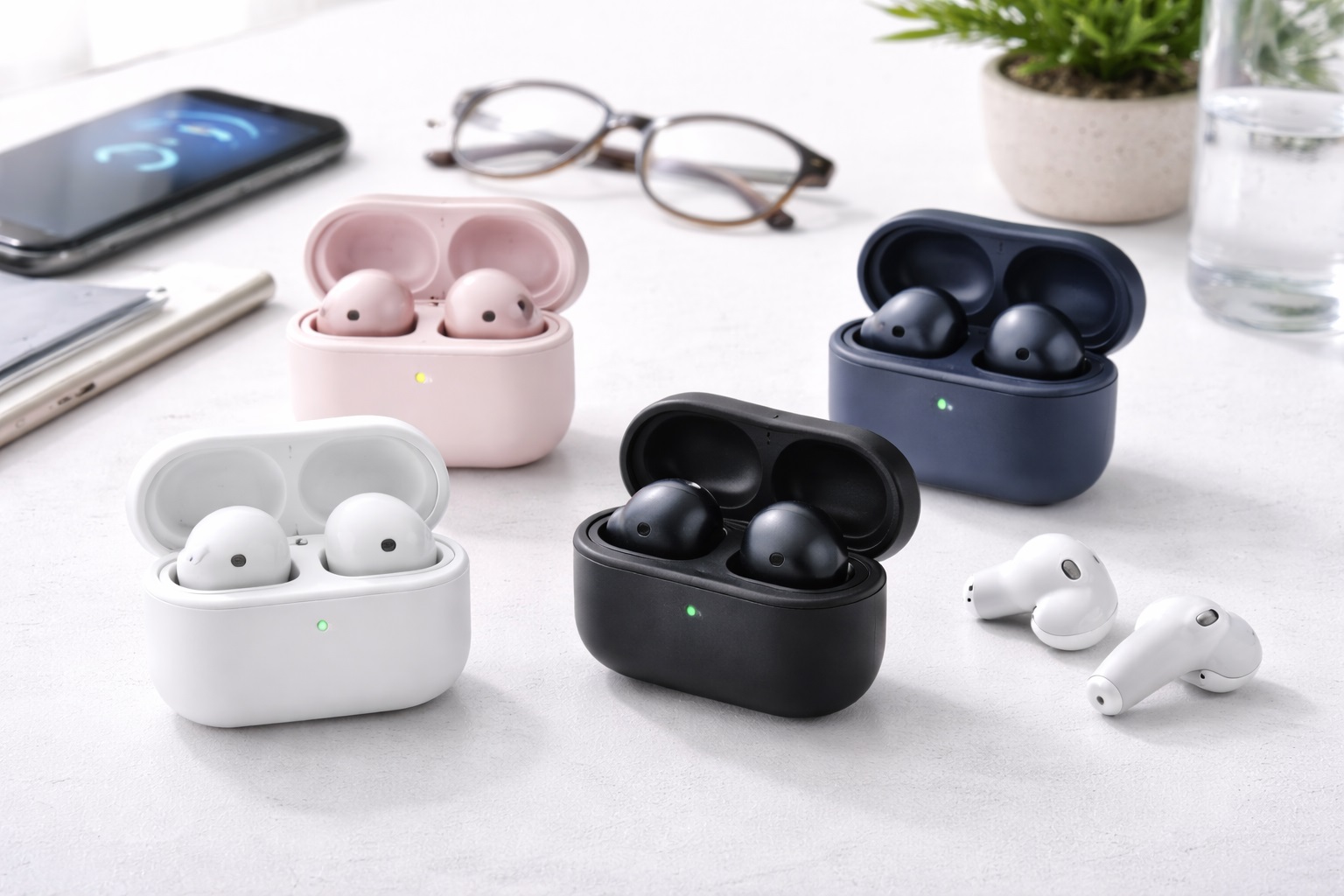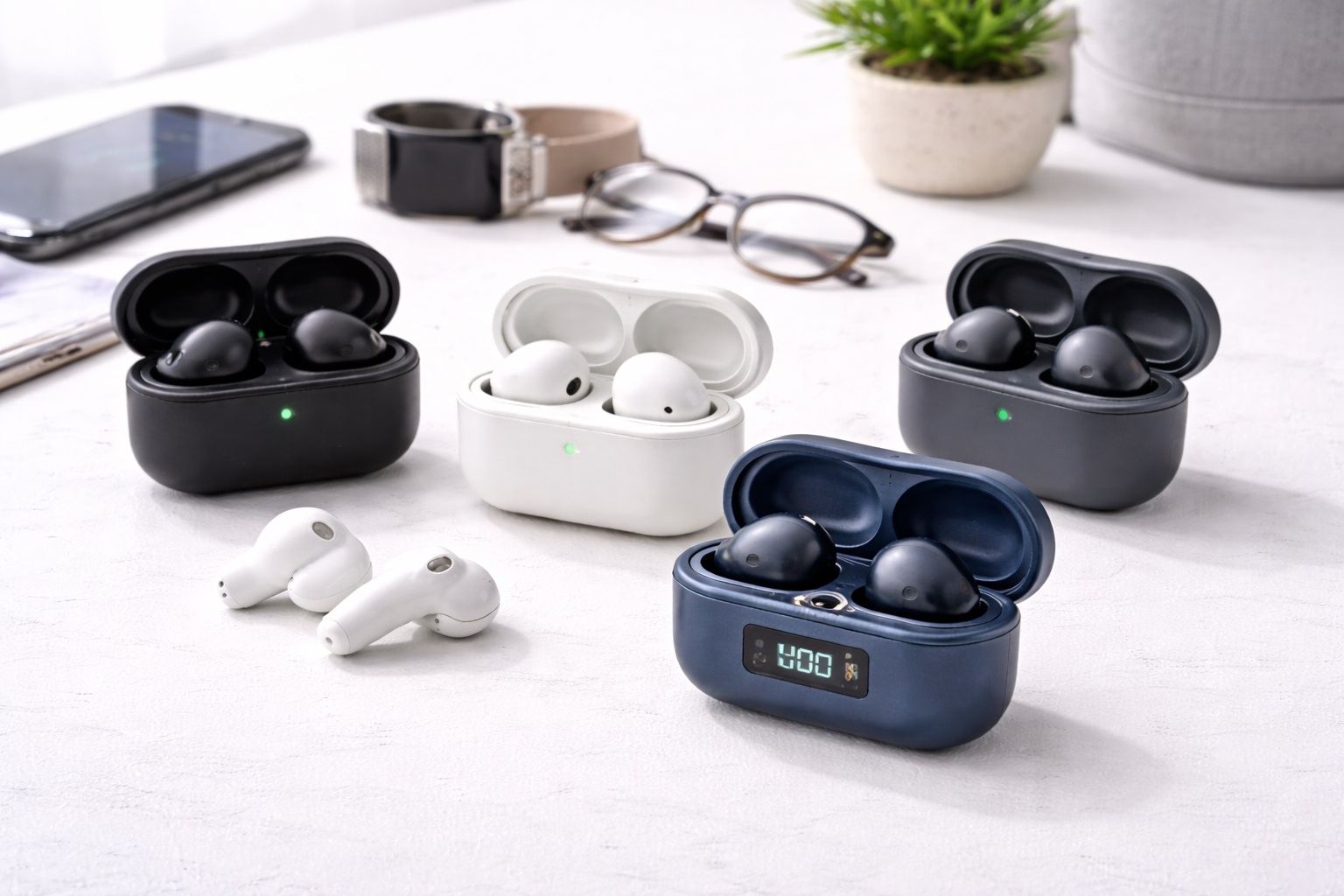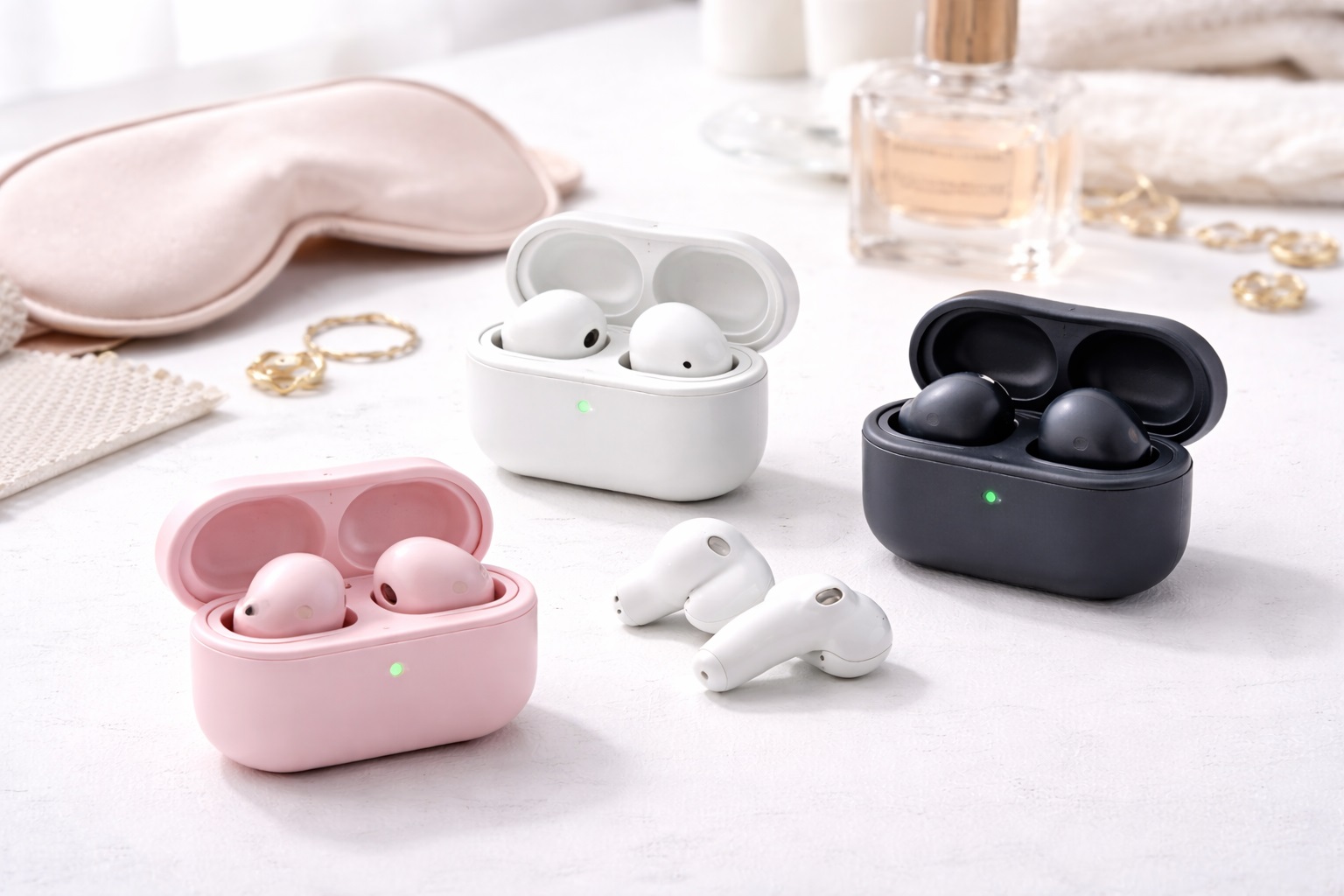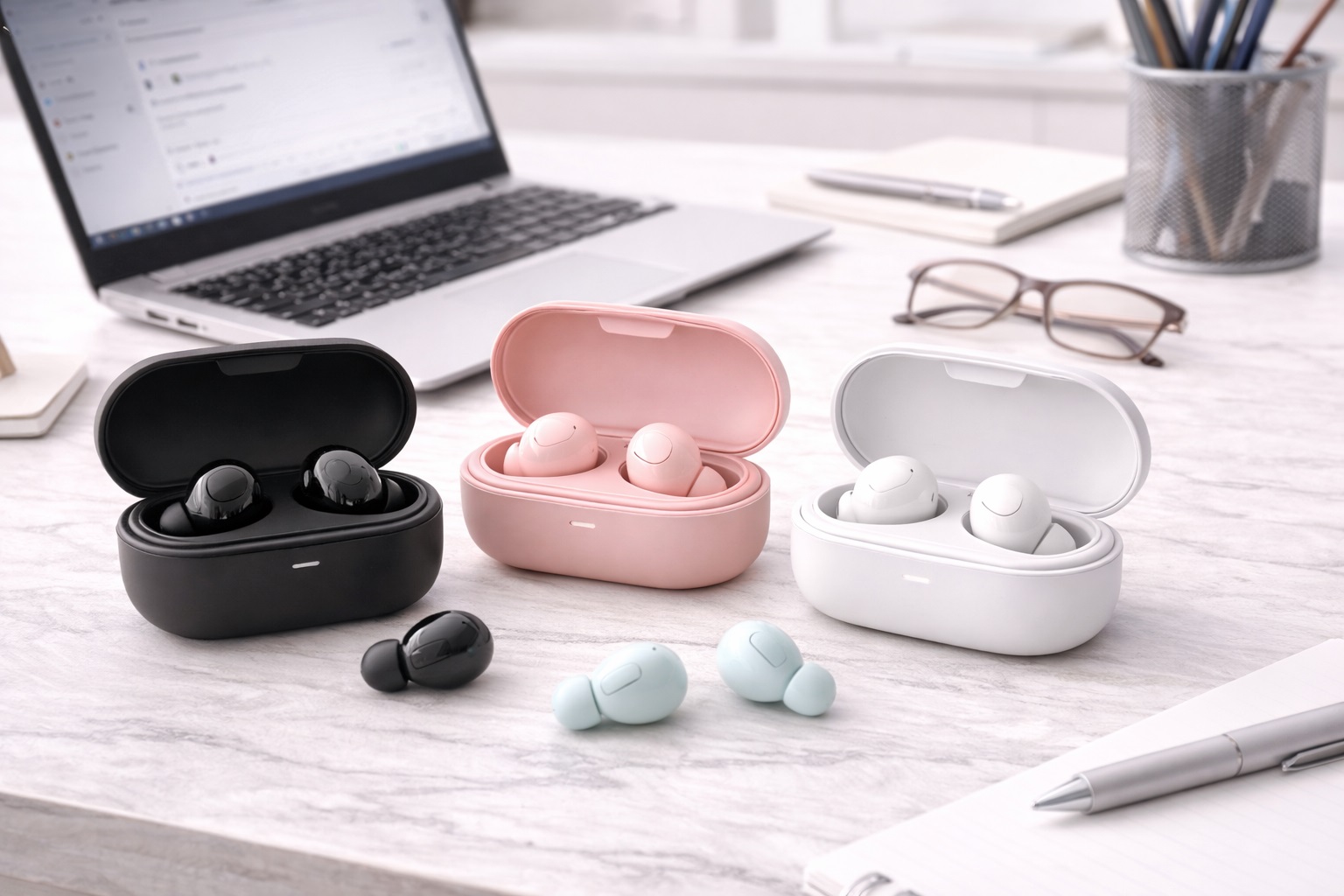
Best Bluetooth Earbuds for Office Use: Calls and Focus
Office and remote work put a specific kind of pressure on a pair of earbuds that general listening does not. They need to survive back-to-back video calls, stay comfortable across an eight-hour workday, block out enough surrounding noise to support focused work, and switch cleanly between a laptop for meetings and a phone for a quick personal call, often without a break long enough to justify taking them out and charging them. A pair that sounds great for a weekend playlist can still fall short the moment it has to carry a full workday of calls and concentration, revealing weaknesses that a casual listening test would never expose.
This guide compares the most practical options for office and remote workers who wear earbuds for calls and focused work throughout a full workday. Instead of ranking earbuds by general audio specs, the reviews below weigh the qualities that matter for a working day specifically: how clearly a microphone array picks up voice against keyboard clatter or a noisy open-plan office, how effectively ANC supports concentration without fully isolating a worker from a colleague's question, and how painlessly the earbuds move between a laptop and a phone throughout the day.
Below is a full comparison table, detailed reviews of the strongest office-oriented options, a buying guide built around workday-specific priorities, and answers to the questions office and remote workers ask most often when choosing a pair for daily work use.
Why Office Use Is a Different Test Than Everyday Listening
A workday is long, and it is a different kind of long than a commute or a workout. Earbuds worn from the first morning meeting through a full afternoon of calls need a level of sustained comfort that a thirty-minute listening session never tests, and even a small pressure point behind the ear becomes a real distraction by mid-afternoon. Battery life matters on a similar timescale — a full workday of near-continuous use, much of it with a microphone active during calls, drains a battery faster than the same hours spent purely listening to music.
Call quality is also judged differently at work than casually. A colleague or client needs to hear a clear, steady voice free of keyboard clatter, HVAC hum, or open-office chatter, which depends specifically on microphone array quality and background noise suppression tuned for speech rather than on general audio fidelity. And because most office workers move between a laptop for meetings and a phone for messages or personal calls throughout the day, seamless multipoint switching stops being a nice-to-have and becomes something noticed every single time it fails, often at an inconvenient moment right before an important call.
Top Picks (Detailed Reviews)
1. Multipoint Business Earbuds – Best Overall for Office Use
Built specifically around the rhythm of an office workday, this option pairs strong multipoint connectivity with dependable call quality and comfortable all-day wear. It handles the constant back-and-forth between a laptop for video meetings and a phone for calls or messages without the manual re-pairing that disrupts focus, and its balanced feature set avoids leaning too heavily into any one area at the expense of daily practicality.
- Pros:
- Reliable multipoint switching between laptop and phone throughout the day
- Clear call quality suited to video meetings and phone calls alike
- Comfortable for extended wear across a full workday
- Balanced ANC that supports focus without fully isolating the wearer
- Cons:
- Priced higher than single-purpose call-focused alternatives
- ANC is tuned for balance rather than maximum isolation
Best For: Office and hybrid workers who move constantly between a laptop and phone throughout the workday.
Why We Recommend It: The daily friction of manually re-pairing between devices adds up over a workweek, and this option removes that friction while still delivering solid call and comfort performance across a long day.
2. Call-Optimized Microphone Array Earbuds – Best for Call Clarity
This option channels its engineering focus into microphone array quality and voice isolation, using multiple microphones and speech-focused noise suppression to keep a caller's voice clear even against keyboard typing, HVAC noise, or a bustling open-plan office. For anyone whose workday is dominated by video calls and conference lines, this narrower focus pays off directly.
- Pros:
- Strong voice isolation against typing and background office noise
- Multiple microphones improve pickup accuracy during calls
- Consistent performance across video conferencing platforms
- Comfortable fit suited to hours of call-heavy work
- Cons:
- Music playback quality is secondary to call performance
- ANC is functional rather than a standout feature
Best For: Workers whose day consists mainly of video calls, conference lines, and voice meetings.
Why We Recommend It: Being clearly heard on a call is often the single most important daily function of office earbuds, and this option is purpose-built around exactly that need.
3. Focus-Mode ANC Earbuds – Best for Concentration in Open Offices
Open-plan offices create a specific kind of background noise — conversation, footsteps, printers — that benefits from ANC tuned for concentration rather than complete isolation. This option balances noise reduction with enough awareness of the immediate surroundings that a colleague can still get the wearer's attention without shouting.
- Pros:
- ANC tuned specifically for reducing office chatter and ambient noise
- Retains enough awareness to notice a colleague or announcement
- Comfortable for extended focused work sessions
- Good battery life for sustained ANC use through the workday
- Cons:
- Not as fully isolating as a flagship travel-focused ANC model
- Call quality is solid rather than the standout feature
Best For: Workers in open-plan or shared office environments who need help concentrating without full isolation.
Why We Recommend It: Complete noise isolation is not always desirable at work, and this option's more moderate ANC tuning suits the specific noise profile and social needs of a shared office.
4. All-Day Comfort Earbuds – Best for Extended Wear
Designed around ergonomics rather than headline audio specs, this option uses a lighter housing and softer ear tip material specifically to reduce the fatigue that builds up over eight or more hours of continuous wear, which matters more for office use than for shorter everyday listening sessions.
- Pros:
- Lightweight housing reduces fatigue over a full workday
- Soft ear tip material stays comfortable through extended wear
- Solid, dependable call and ANC performance
- Multiple tip sizes support a secure all-day fit
- Cons:
- Prioritizes comfort over the most aggressive ANC performance
- Battery life is good but not class-leading
Best For: Workers who have found other earbuds uncomfortable after a few hours of continuous daily wear.
Why We Recommend It: No feature matters if the earbuds become physically uncomfortable by mid-afternoon, and this option is built specifically to avoid that common workday complaint.
5. Budget Office Earbuds – Best Value for Everyday Work Use
Not every office worker needs premium multipoint switching or flagship ANC, and this budget-friendly option covers the core needs — decent call quality, reasonable comfort, and stable connectivity — at a price that makes sense for occasional remote work rather than a daily heavy caller's routine.
- Pros:
- Meaningfully lower price than premium office-focused models
- Functional call quality suitable for occasional meetings
- Reasonable comfort for a partial workday of use
- Good option for hybrid workers who are in the office only part of the week
- Cons:
- Multipoint switching, if present, is less refined than premium options
- ANC and comfort fall short over a truly full workday of continuous use
Best For: Hybrid workers and those with lighter daily call volume who do not need premium office-specific features.
Why We Recommend It: Not every worker's day is call-dominated, and this option delivers the core functionality most people need without paying for capability that would go unused.
6. Long-Battery Workday Earbuds – Best for Back-to-Back Meetings
For workers whose calendars are packed with consecutive meetings, this option prioritizes extended battery life and efficient power use during active calls, reducing the risk of a battery warning appearing in the middle of an important afternoon call.
- Pros:
- Extended battery life even with frequent call use
- Efficient power management during active microphone use
- Case provides several additional full charges for long days
- Solid overall call and comfort performance
- Cons:
- Slightly bulkier case to accommodate the larger battery
- ANC is competent rather than a specialized strength
Best For: Workers with calendars full of back-to-back meetings and limited opportunity to charge during the day.
Why We Recommend It: A battery warning mid-call is one of the more disruptive workday interruptions earbuds can cause, and this option is specifically built to avoid it.
7. Compact Discreet Earbuds – Best for Professional Appearance
Some office environments favor a lower-profile look, and this option's smaller housing sits more discreetly in the ear than bulkier designs, which matters for client-facing roles or workplaces with a more formal dress culture, without giving up core call and comfort performance.
- Pros:
- Smaller, more discreet housing suited to client-facing roles
- Comfortable fit despite the compact design
- Solid call quality for day-to-day meetings
- Good option for formal or client-facing office environments
- Cons:
- Smaller housing means a somewhat smaller battery than bulkier alternatives
- ANC is more basic than dedicated focus-mode options
Best For: Client-facing workers and formal office environments where a lower-profile appearance matters.
Why We Recommend It: Appearance is a legitimate workplace consideration for some roles, and this option balances a discreet look with dependable everyday office performance.
Common Office Earbud Assumptions Worth Questioning
It is easy to assume that the strongest ANC is always the best choice for office use, but complete isolation can be counterproductive in a collaborative environment where colleagues need to get your attention occasionally. A moderate ANC tuning that reduces distracting noise while preserving some awareness of the room often serves office workers better than the most aggressive isolation available, which is better suited to solitary environments like a long flight.
Another common assumption is that call quality and music quality are the same specification. In practice, a microphone array and its noise suppression algorithm are engineered separately from the drivers that produce music playback, so a pair can excel at one without necessarily excelling at the other. Checking feedback specifically about call performance, rather than assuming it follows from good music sound quality, avoids a common disappointment for buyers prioritizing calls.
There is also a tendency to underestimate how much daily wear time office use actually involves once calls, meetings, and focused work sessions are added together. Many workers wear earbuds for six or more hours on a heavy meeting day, which is a meaningfully different comfort test than the shorter sessions most general reviews are based on.
How Remote and Hybrid Work Changed What Office Earbuds Need to Do
A decade ago, office headsets were largely designed around a single use case: a desk phone or a single work computer, used in a single location for the entire working day. The shift toward remote and hybrid work has changed that considerably. A single pair of earbuds now often needs to handle a home office setup, an actual office desk on hybrid days, a phone for personal calls, and sometimes a tablet or secondary device, all within the same week and sometimes the same day.
This is part of why multipoint connectivity and flexible, comfortable all-day wear have become more central to what makes a good office-oriented pair rather than remaining a secondary consideration. Workers are also more likely than before to take calls from varied environments — a home office, a co-working space, a coffee shop, an actual employer's building — each with a different noise profile, which places more weight on adaptable ANC and microphone performance than a single, fixed-location office setup ever required.
Recognizing this shift matters when shopping, because a pair marketed primarily around a traditional office desk setup may not serve a genuinely hybrid or remote schedule as well as one built with more flexible daily use in mind from the start.
Buying Guide: How to Choose the Best Bluetooth Earbuds for Office Use
These are the factors that most directly affect how well a pair of earbuds performs across a real workday of calls and focused work.
1. Microphone Array Quality for Video Calls
Look specifically for feedback on call clarity in noisy environments rather than general audio reviews, since microphone performance during calls is engineered separately from music playback quality and varies significantly between models. A pair praised for music sound quality is not automatically a good choice for calls.
2. Background Noise Suppression During Calls
Effective noise suppression keeps keyboard clatter, HVAC hum, and office chatter from reaching the person on the other end of a call, which matters more for professional communication than general ambient noise reduction for the wearer. This is a distinct specification worth researching on its own.
3. ANC Tuning for Focus vs. Full Isolation
Consider whether your office environment calls for full isolation or a more moderate ANC tuning that preserves some awareness of colleagues and surroundings, since the two serve different working styles and neither is universally correct.
4. All-Day Comfort and Ear Tip Fit
A workday involves several consecutive hours of wear, which is a different comfort test than a short commute. Multiple ear tip sizes and a lightweight housing both support genuine all-day comfort, and trying several sizes before committing to daily use is worthwhile.
5. Battery Life Through a Full Workday
Account for the fact that active call use drains battery faster than passive music listening, and check whether stated battery figures assume typical office use patterns rather than idle listening alone, since the real-world number during a call-heavy day is often lower.
6. Multipoint Connection for Device Switching
Seamless switching between a laptop for meetings and a phone for calls or messages removes a recurring daily friction point that becomes more noticeable the more devices a worker juggles across a typical day.
7. Compatibility With Video Conferencing Platforms
Confirm reliable performance with the specific video conferencing tools your workplace uses, since compatibility and call quality can vary slightly between different meeting platforms and operating systems.
8. Touch Control Reliability During Meetings
Simple, reliable touch controls matter during a live meeting, where an accidental mute or volume change is a more disruptive mistake than it would be during casual listening at home.
9. Discreet Appearance for Client-Facing Roles
Some office cultures favor a lower-profile look, particularly in client-facing or formal roles, making a compact, understated design a meaningful consideration alongside performance factors like call clarity and comfort.
10. Charging Convenience for a Busy Workday
Fast partial charging during a short break can matter more for office use than maximum total battery capacity, since workers rarely have hours of downtime to fully recharge during a workday between meetings.
11. Durability for Daily In-and-Out Use
Office earbuds go in and out of a case, pocket, or bag repeatedly throughout the day, so a durable case hinge and sturdy earbud housing matter more than they might for a pair worn continuously without removal at home.
12. Price Relative to Actual Daily Call Volume
Workers with call-heavy schedules benefit more from premium call-focused features, while those with lighter daily use can reasonably choose a more budget-friendly option without missing much in practice on a typical week.
Frequently Asked Questions
1. What matters most for earbuds used primarily for work calls?
Microphone array quality and background noise suppression during calls matter most, since these are engineered separately from music playback quality and directly affect how clearly colleagues or clients hear you during a meeting.
2. Should office earbuds have strong ANC?
Not necessarily the strongest available. A moderate ANC tuning that reduces distraction while preserving some room awareness often suits a collaborative office better than complete isolation, which can feel isolating in a shared workspace.
3. How important is multipoint connection for office use?
It matters significantly for workers who switch frequently between a laptop and a phone throughout the day, removing the friction of manually re-pairing each time a device changes during a busy schedule.
4. Can earbuds stay comfortable for a full eight-hour workday?
Some can, particularly models specifically designed with lightweight housings and multiple ear tip sizes. Comfort varies significantly between models, so it is worth checking feedback on extended wear specifically before committing to daily use.
5. Do office earbuds need to work with all video conferencing platforms?
Most modern earbuds connect to any platform through the operating system's audio settings, but call quality and compatibility can still vary slightly, so checking feedback for the specific platforms your workplace uses is worthwhile before buying.
6. Is battery life more important than ANC for office use?
For workers with calendars full of back-to-back meetings, battery life reliability often matters more day to day than marginal ANC improvements, since a dead battery mid-call is more disruptive than moderate noise cancellation would be.
7. Are budget earbuds good enough for daily office calls?
Many budget options now offer solid call quality suitable for occasional or moderate daily use, though heavy callers may notice a difference compared to premium call-focused models built specifically for that purpose.
8. How do I stop earbuds from disconnecting during video calls?
Keeping firmware updated, ensuring a strong Bluetooth connection without excessive obstruction, and confirming the earbuds are within stated range typically resolves most disconnection issues during calls in an office setting.
9. Should client-facing workers choose a different style of earbud?
A smaller, more discreet design can suit formal or client-facing roles better than a bulkier, more visually prominent model, though performance need not be sacrificed for a lower profile in most cases.
10. Do office earbuds need a physical charging dock at a desk?
It is not required, but keeping a charging cable at a desk allows for quick top-ups during short breaks, which helps offset the extra battery drain from frequent call use throughout a busy day.
11. How often should office earbuds be replaced?
With daily heavy use, including frequent charging cycles, battery capacity typically declines noticeably after one and a half to two years, which is a reasonable point to consider a replacement for reliability.
12. What is the biggest mistake people make buying office earbuds?
Choosing based on general audio reviews rather than call-specific and comfort-specific feedback is the most common mistake, since those are the qualities that matter most for a genuine workday of daily use.
Matching Earbuds to Your Specific Work Pattern
Not every office job puts the same demands on a pair of earbuds. A worker whose day is dominated by client calls and video meetings should prioritize microphone quality and background noise suppression above nearly everything else, since that is the feature colleagues and clients will actually judge daily. A worker in an open-plan office focused mainly on individual tasks benefits more from a moderate, focus-oriented ANC tuning than from either extreme of full isolation or no noise reduction at all.
Hybrid workers who split time between home and office may find that a mid-tier option covers their actual needs better than a premium model built for someone in back-to-back meetings five days a week, while heavy callers in fully remote roles are more likely to notice and benefit from the premium multipoint and microphone features that a lighter user would rarely test. Being specific about your own weekly pattern of calls, focused work, and device switching is the fastest way to narrow this list to the pick that will actually serve you well.
It is also worth considering how your schedule varies across a typical week rather than assuming every workday looks the same. A worker with two or three meeting-heavy days and several quieter focus days might reasonably prioritize comfort and adaptable ANC over the most specialized call-clarity features, since the earbuds need to perform well across both kinds of days rather than being optimized narrowly for one. Reviewing your calendar from the past month is a genuinely useful exercise before making a final decision, since it often reveals a clearer pattern than a rough guess at your typical day would suggest.
Final Verdict
- Best Overall for Office Use: Multipoint Business Earbuds — seamless device switching with dependable call and comfort performance.
- Best for Call Clarity: Call-Optimized Microphone Array Earbuds — purpose-built for clear voice pickup during meetings.
- Best for Concentration in Open Offices: Focus-Mode ANC Earbuds — moderate isolation tuned for a shared office environment.
- Best for Extended Wear: All-Day Comfort Earbuds — lightweight design built to avoid afternoon fatigue.
- Best Value for Everyday Work Use: Budget Office Earbuds — core functionality for lighter daily call volume.
- Best for Back-to-Back Meetings: Long-Battery Workday Earbuds — removes battery anxiety on meeting-heavy days.
- Best for Professional Appearance: Compact Discreet Earbuds — a lower-profile look for client-facing roles.
Choosing earbuds for office use comes down to being honest about your actual weekly pattern of calls, focused work, and device switching, rather than defaulting to whichever pair has the most impressive general audio reviews. A heavy caller and a mostly-focused individual contributor have genuinely different priorities, and matching the pick above to your own daily reality tends to produce a far better long-term fit than chasing the single most feature-packed option on the market.
It is also worth reassessing your setup periodically as your role or work pattern changes. A pair chosen for an individual-contributor role focused on solo tasks may not serve as well after a shift into a client-facing or management position with far more daily calls, and revisiting the buying guide above with your current responsibilities in mind is a reasonable habit every year or so.
Finally, remember that a good pair of office earbuds is a productivity tool as much as an audio device, and the cost of a poor fit shows up in small daily frustrations rather than one dramatic failure — a slightly muffled call here, a moment of discomfort there, a brief disconnection during an important meeting. Those small costs add up across a working year far more than most buyers initially expect, which is exactly why it is worth spending a little extra time matching the specific factors in this guide to your own actual workday rather than settling for whichever option happens to be most convenient to purchase.