Best Paracord for Camping in 2026
A good length of paracord is one of the few pieces of gear that earns its place in every pack, from a weekend car-camping trip to a multi-day backcountry trek. It sets up a tarp shelter, replaces a broken bootlace, lashes gear to a pack frame, and in a pinch becomes an emergency repair tool for almost anything that snaps, tears, or comes loose around camp. Because it weighs next to nothing and takes up almost no space, there is rarely a good reason to leave it behind.
This guide compares the top paracord options on the market for camping and general outdoor use in 2026, looking at strand construction, strength rating, material quality, and everyday versatility. Whether you want a simple all-purpose cord for tarp lines and gear repairs or a heavier-duty option built for demanding survival scenarios, the picks below cover a wide range of budgets and use cases.
Paracord quality varies more than most campers realize. Two spools that look identical on a store shelf can differ significantly in core strand count, sheath density, and break strength, which matters when the cord is holding up a shelter in bad weather or securing a heavy pack. The reviews and buying guide below are meant to help you match the right cord to the way you actually camp.
It also helps to think about paracord in terms of the specific jobs it will actually do at your campsite rather than buying based on marketing claims alone. A cord that is perfect for a fixed-base car camping trip, where weight barely matters and you might leave a tarp guyline up for a whole week, is not necessarily the best choice for a lightweight backpacking trip where every ounce and every dollar gets scrutinized. Reading through the categories below before you buy will save you from ending up with cord that is either overbuilt for your needs or not quite strong enough for the job.
Top 8 Paracords for Camping in 2026 (Detailed Reviews)
1. Atwood Rope MFG – Best For Everyday Camping Reliability
Atwood Rope MFG has built a strong reputation among campers and outdoor gear makers, and the Atwood Rope MFG paracord reflects that track record. It is made in the USA, which many buyers value for consistent quality control and traceable manufacturing, and it holds up well to the kind of repeated tying, untying, and knot-cinching that camping trips demand. At around $12, it sits in the middle of the pack price-wise, which fits its role as a dependable, do-everything option rather than a specialty cord. Its sheath stays tightly woven even after repeated knotting, which keeps the core strands protected from abrasion when the cord rubs against tree bark, tent poles, or a pack frame over the course of a trip. Many campers keep one spool permanently in their pack and a second at home for projects, since the consistent diameter makes it predictable to work with when tying specific knots.
- Pros:
- Consistent, well-controlled Made in USA manufacturing
- Smooth handling that is easy to knot and unknot repeatedly
- Backed by a long-standing, reputable rope brand
- Cons:
- Costs more than basic bulk cord options
- Standard color selection compared to novelty brands
Best For: Campers who want one dependable spool for tarp setups, gear repairs, and general camp tasks without worrying about sourcing quality.
Why We Recommend It: It offers a strong balance of trusted manufacturing, comfortable handling, and everyday reliability, making it a sensible default choice for most camping kits.
2. TOUGH-GRID 750lb – Best For Heavy-Duty Load Bearing
TOUGH-GRID 750lb is built around a higher strength rating than standard camping paracord, making it a good fit for anyone who wants extra margin when rigging a hammock, securing a heavy load, or building a shelter that has to survive rough weather. At roughly $15, it costs a bit more than standard 550 cord, but the added strength rating is the entire point of choosing this option over a lighter-duty cord. Campers who set up ridgeline tarps in exposed, windy campsites often prefer this extra margin, since a gust that would strain a standard cord to its limit leaves plenty of headroom with a 750-pound rating. The thicker profile also tends to be a little easier to grip when tying knots with cold or wet hands.
- Pros:
- Extra strength rating beyond standard paracord
- Reassuring safety margin for load-bearing camp tasks
- Reputable brand with a following among outdoor and prepper communities
- Cons:
- Higher price than basic 550 cord
- Bulkier profile than lighter cords, which matters for ultralight packing
Best For: Campers rigging hammocks, tarps, or heavier loads who want extra strength margin built into the cord itself.
Why We Recommend It: The added strength rating gives real peace of mind for tasks where cord failure would be inconvenient or unsafe, without straying far from typical paracord pricing.
3. Titan SurvivorCord – Best For Survival and Emergency Prep
Titan SurvivorCord takes the standard paracord concept and builds additional emergency-use materials into the core strands, including integrated fishing line and wire. This makes it more of a compact survival tool than a plain utility cord, which explains its higher price point of around $20. For campers who think in terms of worst-case scenarios, having fishing line and wire already woven into the rope you are already carrying is a meaningful upgrade. Because the extra strands are hidden inside the standard nylon sheath, the cord still handles like ordinary paracord for everyday tasks, and you only need to unravel it when an emergency actually calls for a fishing line, a small game snare, or an improvised repair wire. That dual nature makes it easy to justify carrying a length even on trips where you never expect to need it.
- Pros:
- Integrated fishing line and wire add emergency capability
- Doubles as a compact survival kit component
- Strong build quality from a well-regarded brand
- Cons:
- Premium price relative to standard paracord
- Extra internal strands are only useful if you actually need them
Best For: Backcountry campers and preppers who want built-in emergency tools alongside standard rope strength.
Why We Recommend It: Few cords pack this much emergency utility into one spool, which justifies the higher price for anyone prioritizing self-reliance in remote settings.
4. Bored Paracord 550 – Best For Authentic Mil-Spec Construction
Bored Paracord 550 is certified to mil-spec standards, which appeals to campers who want documented proof of construction quality rather than just a strength number printed on the packaging. At around $9, it is priced closer to the budget end of the market while still carrying that certification, making it a strong pick for anyone who cares about verified quality without paying a survival-cord premium. Certification matters more than most buyers realize, since the paracord market includes plenty of look-alike cord that is thinner and weaker than advertised. Choosing a mil-spec certified spool removes that guesswork and gives campers a documented baseline to trust when the cord is doing something important, like holding up a tarp overnight.
- Pros:
- Mil-spec certified construction
- Competitive pricing for a certified product
- Reputable brand within the paracord community
- Cons:
- Fewer novelty color patterns than hobby-focused brands
- No added internal-strand features beyond standard construction
Best For: Campers who want documented mil-spec quality assurance without paying extra for survival add-ons they may never use.
Why We Recommend It: Certification matters for buyers who have been burned by mislabeled bulk cord in the past, and this option delivers it at a reasonable price.
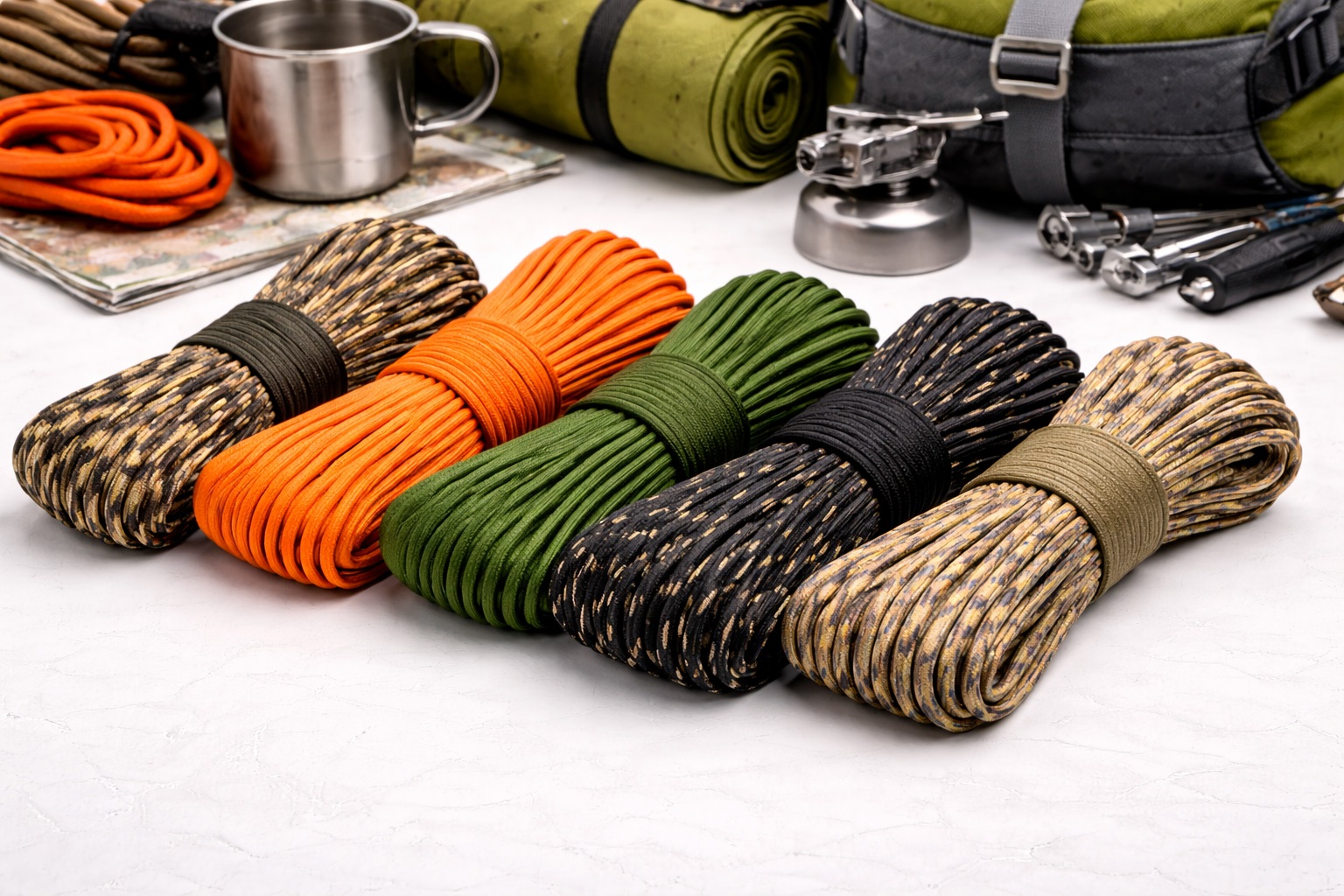
5. Paracord Planet 550 – Best For Color Variety and Camp Organization
Paracord Planet 550 stands out for its wide range of color and pattern options, which is more useful for camping than it might first appear. Color-coding different cords by task, such as one color for tarp lines and another for gear repairs, makes it much faster to grab the right length at camp. At about $8, it is one of the more affordable options on this list. Beyond aesthetics, having several distinct colors on hand means you can dedicate a specific spool to food-related tasks like bear-bag hangs, keeping it separate from cord used for repairs or hygiene-related setups, which some campers prefer for cleanliness reasons alone.
- Pros:
- Extensive color and pattern selection
- Budget-friendly pricing
- Reliable brand with a long catalog history
- Cons:
- Standard strength rating without added reinforcement
- Color availability can vary by length purchased
Best For: Campers who like to organize gear by cord color or simply want a more visually appealing option than plain olive drab.
Why We Recommend It: It proves that a budget-friendly cord does not have to be visually boring, and the color options add genuine organizational value at camp.
6. Rothco 550 Paracord – Best For Tactical-Style Camping Gear
Rothco has a long history supplying military-style and tactical gear, and its 550 paracord reflects that heritage with dependable 7-strand core construction. At around $10, it appeals to campers who already favor tactical-style packs and equipment and want their cord to match that aesthetic and construction philosophy. The brand's long presence in the surplus and outdoor supply space means the cord is widely available and easy to reorder, which is useful for campers who like sourcing all of their kit from one trusted supplier rather than mixing brands.
- Pros:
- 7-strand core construction for consistent strength
- Affordable pricing
- Recognizable, established tactical gear brand
- Cons:
- Color options lean toward military-style patterns
- No specialty internal-strand features
Best For: Campers who prefer tactical-style gear and want a cord that matches the rest of their equipment loadout.
Why We Recommend It: It delivers dependable core construction from a brand with decades of experience supplying rugged, purpose-built gear.
7. West Coast Paracord – Best For Commercial-Grade Durability
West Coast Paracord uses commercial grade nylon in its construction, aiming for a cord that can handle repeated use across camping seasons without breaking down. Priced around $11, it sits in the middle of the market and is a solid choice for campers who use their gear frequently rather than just once or twice a year.
- Pros:
- Commercial grade nylon construction
- Middle-of-market pricing
- Consistent quality across production runs
- Cons:
- Not marketed with certification paperwork like mil-spec options
- Limited specialty color runs
Best For: Frequent campers who want a cord built to withstand repeated seasonal use without premature wear.
Why We Recommend It: Commercial-grade materials mean this cord is built with heavy repeat use in mind, which suits dedicated campers rather than occasional users. That resilience matters most for cord that stays semi-permanently deployed, such as a guyline system on a seasonal campsite tarp, where lesser cord might fray or stiffen with repeated wet-dry cycles well before a commercial-grade option shows similar wear.
8. Golberg 550 Paracord – Best For Budget Bulk Buying
Golberg 550 Paracord is aimed squarely at buyers who want a lot of cord for camp use without spending much per foot. At roughly $7, it is the most affordable option here, and it is commonly sold in bulk spools that suit campers who use cord liberally for tarps, bear-bagging, clotheslines, and other everyday tasks around the site. Because the per-foot cost is so low, it also works well for group camping trips or scout programs where multiple people need their own length without the group needing to invest in premium cord for tasks that rarely demand it.
- Pros:
- Budget-friendly bulk pricing
- Good option for high-volume, everyday camp use
- Solid general-purpose construction
- Cons:
- Fewer premium features than specialty survival cords
- Color and pattern selection is more limited
Best For: Campers who go through a lot of cord and want to stock up affordably without sacrificing basic quality.
Why We Recommend It: When the priority is having plenty of usable cord on hand for everyday camp chores, this is the most economical way to get there.
Buying Guide: How to Choose the Best Paracord for Camping
Paracord looks simple from the outside, but small differences in construction meaningfully affect how it performs at camp. The following factors will help you compare spools beyond just the price tag.
1. Understand Strength Ratings
Paracord is typically sold by its rated break strength, most commonly 550 pounds, with heavier options like 750-pound cord available for tasks that demand extra margin. For most camping chores, standard 550 cord is more than sufficient, but if you plan to rig hammocks or hang heavier loads, a higher-rated cord adds useful safety margin. Remember that rated strength assumes new, undamaged cord tied in a way that does not weaken it, so it is wise to treat any stated rating as a ceiling rather than a guarantee under real-world camp conditions.
2. Check the Core Strand Count
Genuine 550 paracord typically has seven inner core strands wrapped in a woven nylon sheath. Cheaper imitation cord sometimes cuts corners here, which reduces both strength and durability. Reading product descriptions carefully, or buying from brands that specify strand count, helps you avoid inferior imitation cord. A quick way to spot suspect cord is to compare its diameter and weight per foot against a known-good spool; noticeably thinner or lighter cord sold under a 550 label is a common sign of corner-cutting.
3. Decide Between Mil-Spec and Commercial Grade
Mil-spec certified paracord is manufactured to documented military specifications, which offers a level of assurance that commercial-grade cord does not always match. Commercial-grade cord can still be perfectly serviceable for camping, but if certification matters to you, look for it explicitly on the packaging. Buyers who plan to use their cord for anything beyond casual camp chores, such as a survival kit component, often lean toward certified cord simply for the added peace of mind that comes with a documented standard.
4. Consider Diameter and Weight
Standard paracord is thin and lightweight, which is exactly why it is a camping staple, but thickness can still vary slightly between brands. If you are packing for an ultralight trip, small weight differences across a full spool can add up, so check listed weight per foot if that matters to your setup. Car campers, on the other hand, rarely need to worry about this at all, since even a full bulk spool weighs only a few pounds and easily fits in a vehicle without any real packing consideration.
5. Think About Color and Visibility
Bright colors are easier to spot in low light or against foliage, which matters for tasks like marking a trail or securing gear you want to find quickly. Muted tones blend in better for tactical or low-profile setups. Choose based on how you plan to use the cord rather than appearance alone. Some campers even keep two colors on hand, using a bright shade for anything they might need to find quickly in the dark and a muted shade for cord that is meant to stay out of sight.
6. Evaluate Length and Spool Size
Camping projects vary widely in how much cord they consume, from a short bootlace repair to a full tarp shelter setup. Buying a longer spool than you think you need is rarely a mistake, since paracord stores easily and rarely goes to waste. As a rough planning guide, a single tarp shelter with guylines can easily consume 40 to 60 feet once you account for stakeout points and ridgelines, so a 100-foot spool leaves comfortable room for repairs on top of the main setup.
7. Look at Weather and UV Resistance
Nylon paracord holds up well outdoors, but prolonged sun exposure can gradually weaken any synthetic cord over time. If you leave guy lines or tarp cord set up for extended periods, plan to inspect and rotate it periodically rather than assuming indefinite durability. A quick visual check at the start of each season, looking for fading, stiffness, or fraying at the sheath, is usually enough to catch cord that needs replacing before it becomes a safety concern.
8. Consider Built-In Utility Features
Some paracord includes additional internal strands, such as fishing line or wire, that add emergency capability beyond basic rope strength. These features are valuable for backcountry and survival-minded campers, though they add cost and are not necessary for casual car camping. For most day hikers and weekend campers, a standard cord without these extras will cover every realistic scenario, so treat built-in features as a bonus for specific trip types rather than a default requirement.
9. Assess Knot-Tying Flexibility
Softer, more pliable paracord is easier to tie and untie repeatedly, which matters if you set up and break down camp often. Stiffer cord can be harder on the hands and slower to work with, especially in cold weather. If you tend to set up and tear down camp in a hurry, prioritize a supple cord that holds a knot securely but releases easily when you need to pack up quickly.
10. Factor In Brand Reputation
Established paracord brands tend to have more consistent manufacturing and clearer labeling of strength ratings and certifications. Buying from a recognized name reduces the risk of ending up with mislabeled or understrength cord. Reviews from other campers, particularly ones that mention specific use cases like tarp setups or repairs, are often more useful than generic star ratings when judging whether a brand's cord holds up in the field.
11. Weigh Budget Against Extra Features
Basic 550 cord covers the vast majority of camping needs, so there is no need to overspend on survival-specific features unless you genuinely expect to use them. Reserve premium picks for backcountry or emergency-focused kits, and save budget cord for everyday camp tasks. A sensible middle-ground strategy many experienced campers use is to carry one length of standard cord for routine chores and a shorter, separate length of a premium or feature-rich cord reserved strictly for emergencies.
12. Plan for Proper Storage
Coiling paracord loosely and storing it somewhere dry helps prevent kinks, mildew, and unnecessary wear between trips. A simple daisy-chain coil also keeps it tangle-free and ready to deploy quickly at camp. Avoid storing cord in a sealed plastic bag if there is any chance moisture got trapped inside, since prolonged dampness against nylon can eventually encourage mildew growth on the sheath.
Frequently Asked Questions
What does the '550' in paracord mean?
The number refers to the cord's rated minimum breaking strength in pounds. It is the most common paracord rating and is suitable for the great majority of camping tasks, from tarp lines to gear repairs. Ratings above 550, such as 750 or higher, exist for situations that call for additional safety margin, but they are the exception rather than the norm for typical camp use.
Is mil-spec paracord actually stronger than regular paracord?
Mil-spec certification mainly guarantees the cord meets documented military construction standards, which typically means more consistent strand count and materials. It does not always mean a dramatically higher strength rating, but it does mean more reliable, verified construction. For campers who have been disappointed by understrength bulk cord in the past, that verification is often worth the modest price difference.
How much paracord should I bring on a camping trip?
A common approach is to carry at least 25 to 50 feet for general tasks like tarp setup and gear repairs, with backcountry or survival-focused campers often carrying more. Bulk spools make it easy to divide cord across multiple smaller camp uses. Longer trips or group outings naturally call for more, so it is worth over-packing slightly rather than running short mid-trip.
Can paracord be used to hang a hammock?
Standard paracord can work for lightweight hammock setups, but many campers prefer a higher-rated cord or dedicated hammock suspension system for extra safety margin, especially for heavier loads or extended use. Checking the manufacturer's guidance for your specific hammock is always a good idea before relying on any cord as primary suspension.
Does paracord degrade over time?
Like any nylon product, paracord can weaken gradually with prolonged UV exposure and repeated stress. Cord that is stored properly and not left permanently exposed to sunlight will last considerably longer. Signs of aging include a faded color, a stiffer feel, or a sheath that has become slightly fuzzy, any of which suggest it is time to retire that length from critical uses.
What is the difference between 550 and 750 paracord?
The numbers refer to rated breaking strength, with 750-pound cord offering additional strength margin over standard 550 cord. The tradeoff is usually a slightly thicker, heavier cord for the same length. For most camping applications the difference is minor enough that either works, but the heavier rating is worth choosing when you know a task will put real strain on the line.
Are colored paracords as strong as basic olive drab or black cord?
Color does not inherently affect strength; it comes down to core strand count and manufacturing quality rather than dye color. Choose based on visibility and organizational preferences rather than assuming darker cord is stronger. If strength is your priority, focus on the stated rating and strand count rather than the color of the sheath.
Can paracord be taken apart for its inner strands?
Yes, the inner core strands can be pulled out and used separately for finer tasks like sewing repairs or fishing line in an emergency, which is part of why paracord is popular for survival kits. Keep in mind that once you unravel a section, that portion loses its original outer strength rating, so it is best done only on cord you have set aside for that purpose.
How should I store paracord between trips?
Keep it coiled loosely in a dry location away from direct sunlight. Avoid leaving it cinched tightly for long periods, as this can create permanent kinks that are harder to work with later. A simple over-under coiling method, rather than wrapping it tightly around your hand, will help the cord lie flat and untangle easily the next time you need it.
Is buying paracord in bulk worth it?
For campers who use cord frequently for tarps, repairs, and general camp tasks, bulk spools are usually more economical per foot than smaller pre-cut lengths, as long as you have a plan to use it before it degrades. Splitting a bulk spool with fellow campers or using it across multiple seasons is a practical way to make the most of the lower per-foot cost.
Can paracord be used for climbing or rappelling?
No. Paracord is not rated or designed for climbing, rappelling, or any application where a fall could occur. Use certified climbing rope for those purposes and reserve paracord for camp utility tasks. Even a high strength rating on paracord does not account for the dynamic forces and safety factors that climbing equipment is specifically engineered and tested to handle.
What is the easiest way to identify genuine mil-spec paracord?
Look for explicit mil-spec certification listed on the product packaging or description, along with a clearly stated seven-strand core. Reputable brands will state this information directly rather than leaving it ambiguous. If a listing is vague about strand count or certification, it is often safer to assume the cord is commercial grade rather than true mil-spec.
Final Verdict
- Top Pick: Atwood Rope MFG for dependable, everyday camping reliability at a fair price.
- Budget Choice: Golberg 550 Paracord for the most affordable way to stock up on usable camp cord.
- Premium Choice: Titan SurvivorCord for backcountry and survival-focused campers who want built-in emergency features alongside strength.
There is no single best paracord for every camper, but matching the cord's construction and features to how you actually use your gear will steer you toward the right pick. For most people, a dependable mid-range option covers nearly every camp task, while budget bulk cord and survival-focused options serve more specific needs at the edges of that range.
If you are still unsure where to start, buy a modest length of a well-reviewed standard cord first and see how it performs across a season of trips before investing in specialty options like mil-spec certified spools or survival cord with built-in fishing line and wire. Most campers find that a simple, reliable cord handles the overwhelming majority of what actually comes up at a campsite, and any additional features are worth adding only once you know exactly how and when you would use them.