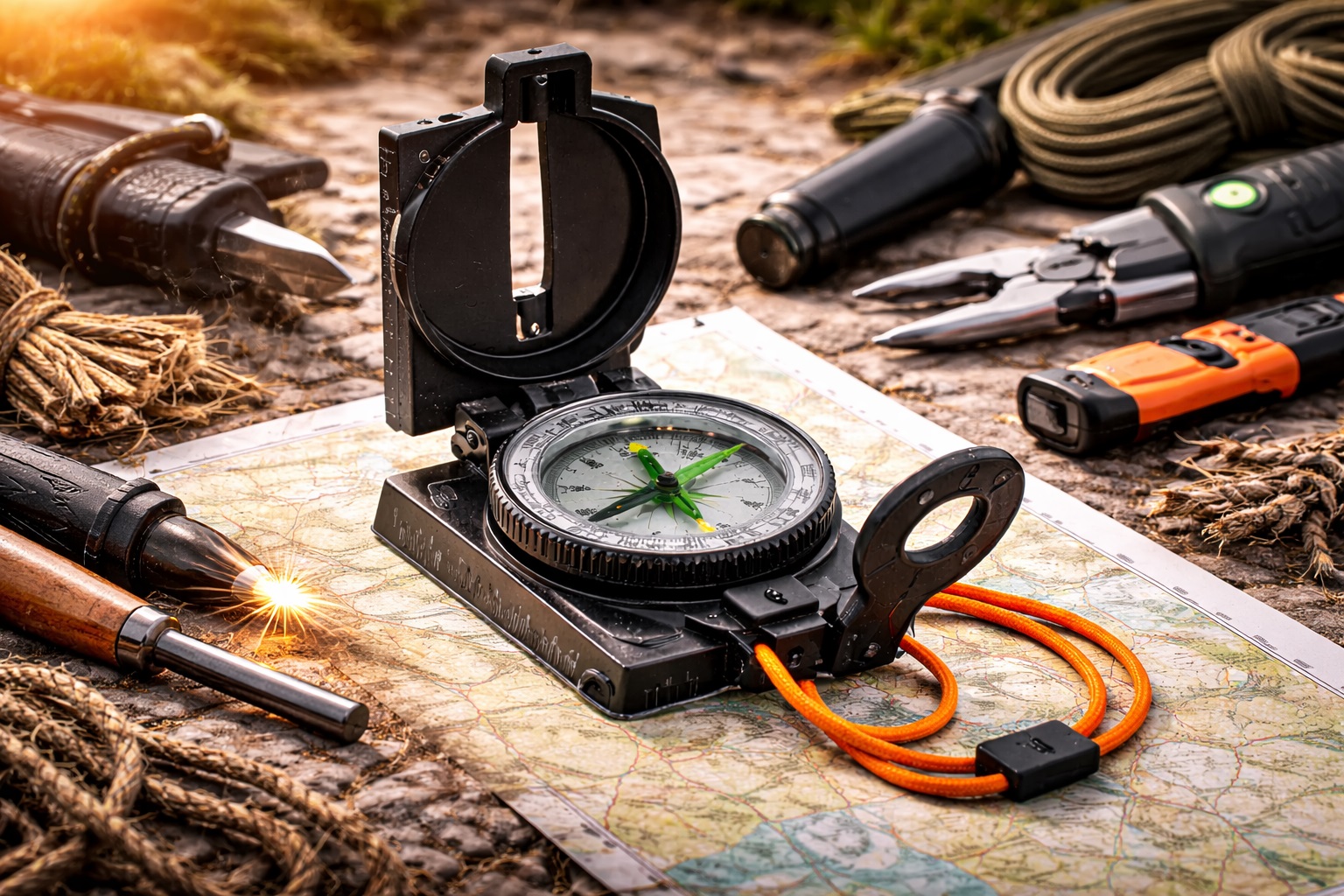
Best Compass for Survival in 2026
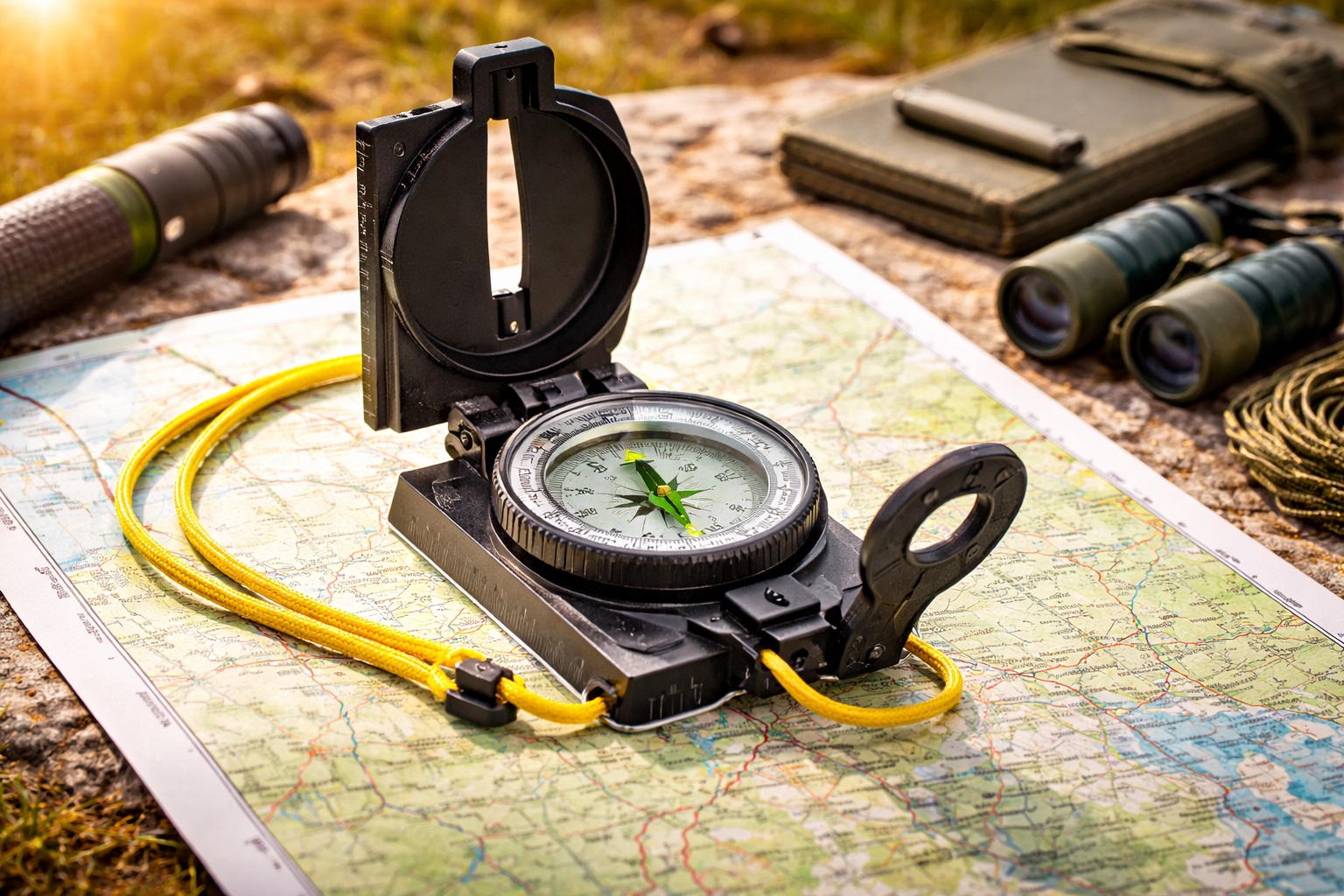
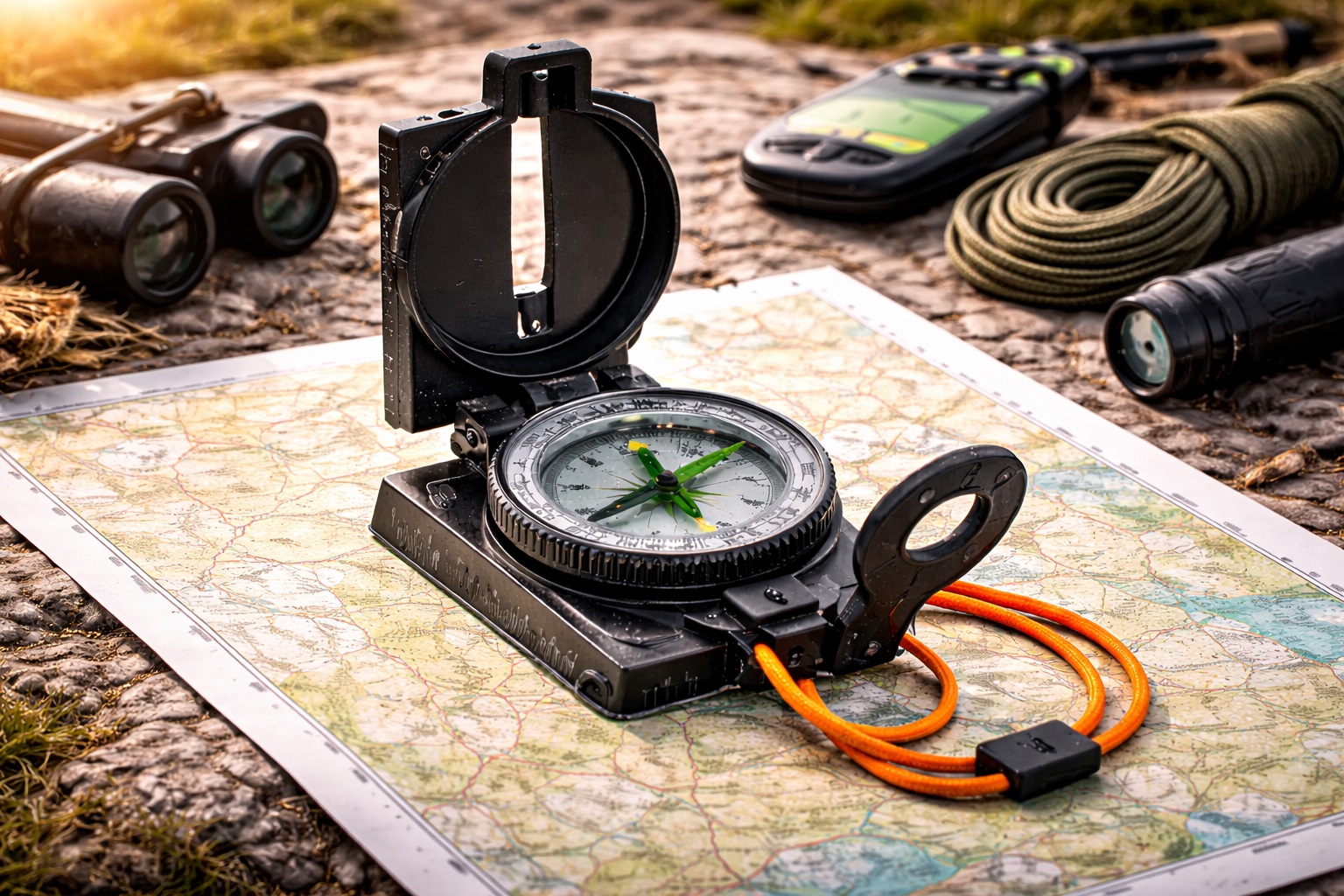
A survival compass has to work when almost nothing else does. Batteries die, phones lose signal, and weather can turn quickly, but a well-made compass keeps functioning through cold, moisture, drops, and years of storage in an emergency kit without ever needing power. That reliability is precisely why experienced preparedness planners treat a physical compass as a non-negotiable part of any serious kit rather than an optional extra. This guide compares the top compass options built for emergency preparedness, weighing durability, low-light readability, and long-term reliability so you can choose a model you can genuinely trust if you ever need it most.
Whether you are building out a bug-out bag, outfitting a vehicle emergency kit, or simply want a dependable backup to digital navigation for backcountry trips, a survival-oriented compass has different priorities than a casual day-hiking model. Comfort features that matter for a leisurely afternoon hike take a back seat to reliability, durability, and the ability to function correctly under genuine stress. Below you will find detailed reviews of eight well-regarded compasses, a buying guide covering the features that matter most in genuine emergency situations, and answers to the questions people ask most often when preparing for worst-case scenarios. Each review focuses specifically on how a model performs under the kind of conditions a survival scenario actually presents, not just how it performs on a casual weekend trail.
Survival navigation is not just about owning a compass, but about owning one that will still work exactly as expected years after you bought it, possibly after sitting untouched in a pack for a long stretch of time. That distinction shapes almost every recommendation in this guide, since features that are merely convenient on a casual hike can become genuinely important when the stakes are higher and options are limited. Durability, night visibility, and simple, foolproof operation all matter more here than they would for a casual weekend hiking compass, and the reviews and buying guide below focus on exactly those priorities. Think of this less as shopping for a piece of hiking gear and more as choosing a piece of insurance you hope you never have to use, but need to know will work if you do.
Top 8 Best Compass Picks (Detailed Reviews)
1. Suunto MC-2 – Best For Serious Backcountry Emergencies
The Suunto MC-2 is built for hikers who take emergency preparedness seriously, combining a global needle and clinometer into a single, capable instrument for genuine backcountry survival situations. The global needle means it reads accurately no matter where an emergency happens to unfold, removing one variable from an already stressful situation, while the clinometer adds the ability to assess slope angle, a genuinely useful skill when evaluating terrain hazards like avalanche risk during an emergency descent. At a price point of around $65, it costs more than the most basic models here, but for a tool you are counting on to work correctly under real pressure, the added capability is a reasonable investment. Its mirror sighting system also allows for more precise bearings when navigating toward a specific rescue point or landmark, a level of precision that matters more the further you may need to travel to reach help or a known road or trail.
- Pros:
- Global needle performs reliably regardless of location
- Clinometer adds genuine terrain-assessment capability
- Mirror sighting improves bearing precision under pressure
- Cons:
- Higher price point than basic backup compasses
- More features mean a slightly steeper learning curve before an emergency
Best For: Serious backcountry travelers who want one capable compass that covers navigation and basic terrain assessment.
Why We Recommend It: Combining reliable global accuracy with a genuinely useful clinometer makes it one of the most complete single tools for real emergency navigation.
2. Suunto M-3 – Best For Cross-Country Bearing Adjustments
The Suunto M-3 makes adjustable declination correction simple and reliable, an important detail in a survival context where an uncorrected bearing error can compound significantly over the miles you might need to travel toward help or a known landmark. Setting the correction once for your general region means every bearing you take afterward stays accurate without doing mental math under stress, which removes one more variable to manage when circumstances are already difficult enough. At around $50, it sits in the middle of the price range, offering genuinely useful accuracy features without the added bulk of a full sighting compass.
- Pros:
- Adjustable declination correction improves long-distance accuracy
- Compact, durable housing suited to emergency kits
- Reliable needle performance from a reputable brand
- Cons:
- Lacks a sighting mirror for precision bearings
- No luminous markings for night use
Best For: Preparedness-minded hikers who want reliable long-distance bearing accuracy without extra bulk.
Why We Recommend It: Removing declination error from the equation is one of the most practically useful survival features a compass can offer.
3. Silva Ranger – Best For Signaling and Precision Sighting
The Silva Ranger's mirror sighting and magnifying lens serve double duty in a survival scenario: the same mirror used for precision bearings can also function as an improvised signaling tool to attract attention from rescuers at a distance. That kind of dual-purpose functionality matters considerably when every item in an emergency kit needs to justify the space it takes up, since a single tool covering both bearing precision and signaling reduces the overall bulk of a well-rounded kit. At around $45, it is priced in the middle of this list, a reasonable cost for a tool that offers both accurate navigation and a genuine backup signaling method.
- Pros:
- Mirror sighting doubles as an emergency signaling tool
- Magnifying lens helps with reading fine map or reference details
- Reputable brand known for precision navigation tools
- Cons:
- Bulkier than simple baseplate-only compasses
- No luminous markings for use in total darkness
Best For: Preppers and backcountry travelers who want a compass that can double as an emergency signaling device.
Why We Recommend It: Few compasses in this price range offer genuine dual-purpose functionality between navigation and rescue signaling.
4. Silva Explorer – Best For Grab-and-Go Emergency Kits
The Silva Explorer's DryFlex grip for comfort makes it easy to operate even with cold, wet, or shaking hands, a realistic condition during an actual emergency rather than a relaxed weekend hike. Its straightforward baseplate design also means there is little to fumble with or misread under stress, which matters considerably when a clear head is not guaranteed. Simplicity here is a genuine safety feature rather than a limitation, since fewer components mean fewer opportunities for a mistake when it counts most. At around $30, it remains an accessible price point, making it easy to keep one in a car kit, a bug-out bag, and a home emergency supply without a significant financial commitment.
- Pros:
- DryFlex grip stays secure even with cold or wet hands
- Simple, low-stress operation under pressure
- Affordable enough to keep multiples in different kits
- Cons:
- Fewer advanced features than the MC-2
- Basic sighting compared to mirror-equipped models
Best For: Anyone building multiple emergency kits who wants an affordable, easy-to-use compass in each one.
Why We Recommend It: A grip that stays functional under real stress conditions is a genuinely underrated survival feature.
5. Brunton 8010 – Best For Reliable Backup Navigation
The Brunton 8010's simple reliability for beginners translates directly into a strong emergency backup role, since a compass with almost nothing to break or misconfigure is exactly what you want tucked away for a scenario you hope never happens. There are no batteries, no complicated dials, just a clean baseplate and a needle that works, exactly the kind of dependable simplicity that matters most for an item you hope to never actually need. At around $20, it is the most affordable option on this list, making it easy to stash multiples across different bags, vehicles, and kits.
- Pros:
- Extremely simple, low-failure-point design
- Most affordable option on this list
- Easy to use with no prior training required
- Cons:
- No declination adjustment or sighting features
- Basic construction compared to premium survival-oriented models
Best For: Stocking multiple emergency kits affordably with a genuinely simple, low-failure backup compass.
Why We Recommend It: Its simplicity is precisely the point for a tool meant to sit untouched until the day it is actually needed.
6. Cammenga 3H Tritium – Best For Night and Low-Visibility Survival
The Cammenga 3H Tritium is built to a military specification, and its self-luminous tritium markings mean it remains fully readable in total darkness without any external light source or battery to fail at the worst possible moment. That single feature can matter enormously in an emergency, since navigation problems disproportionately occur or worsen after dark, when disorientation is more common and visual landmarks are far harder to identify and use for reference. At around $90, it is the priciest option on this list, but its rugged, purpose-built construction reflects genuine survival and military-grade engineering rather than casual hiking convenience.
- Pros:
- Self-luminous tritium markings work without batteries or light
- Military-grade construction withstands harsh handling
- Highly reliable needle performance in demanding conditions
- Cons:
- Highest price point on this list
- Heavier and bulkier than minimalist backup compasses
Best For: Serious preppers who prioritize guaranteed night readability above all other considerations.
Why We Recommend It: No battery dependency and genuine round-the-clock readability make it one of the most dependable survival tools available.
7. Suunto A-10 – Best For Lightweight Bug-Out Bags
The Suunto A-10's easy-to-use baseplate design makes it a sensible pick for a bug-out bag, where every ounce is scrutinized but basic, reliable navigation still needs to be covered. It adds almost no weight or bulk while still delivering the accuracy of a reputable, well-established brand, which matters when every additional item in a bug-out bag needs to be weighed against its actual usefulness. At around $25, it costs slightly more than the most basic option here, but the trusted brand reputation is worth the small premium for a tool your safety may depend on.
- Pros:
- Lightweight design ideal for space-conscious bug-out kits
- Reputable brand with a long track record in navigation
- Simple to use without prior training
- Cons:
- No declination adjustment or sighting mirror
- Fewer features than the MC-2 for complex terrain assessment
Best For: Bug-out bags and lightweight emergency kits where every ounce of added weight matters.
Why We Recommend It: It delivers dependable core navigation without adding meaningful weight to an already carefully packed emergency bag.
8. Brunton TruArc 15 – Best For Long-Term Preparedness Durability
The Brunton TruArc 15 pairs a global needle and evergreen durability in a build clearly meant to survive years of storage in an emergency kit without degrading, an important consideration since a survival compass may sit unused for a very long time before it is ever needed. The global needle setting also means it will read accurately no matter where an emergency situation happens to unfold, whether that is close to home or somewhere entirely unfamiliar during travel. At around $55, it costs more than the most basic options here, reflecting its long-term reliability and construction quality.
- Pros:
- Global needle stays accurate regardless of location
- Durable construction built for long-term storage and use
- Reasonable mid-range price for the reliability offered
- Cons:
- Higher price point than the most basic backup compasses
- Lacks night-visibility features found on the Cammenga 3H Tritium
Best For: Long-term emergency preparedness kits where the compass may sit unused for extended periods before an actual emergency.
Why We Recommend It: Its build quality is specifically suited to surviving years of storage without losing accuracy or reliability.
Buying Guide: How to Choose the Best Compass for Survival
Choosing a survival compass means prioritizing reliability and simplicity over convenience features that matter more for casual day hikes. The sections below cover the details that genuinely affect whether a compass performs when you actually need it most, often after sitting unused for a long stretch of time. Read through all thirteen with your specific preparedness scenario in mind, since a vehicle kit, a bug-out bag, and a backcountry trip each place slightly different demands on the same underlying tool.
1. Reliability Without Batteries
A compass's biggest advantage over digital navigation is that it never needs power. Prioritize models with minimal moving parts and no dependency on batteries or electronics, since the entire point of a backup compass is to work when everything else has failed. A tool that depends on a charge or a signal is not truly a backup at all, since the same emergency that disables your phone can just as easily leave a battery-dependent device useless.
2. Durability for Long-Term Storage
A survival compass may sit unused in a kit for months or years before it is needed. Look for rugged housings, sealed liquid-filled capsules, and quality construction that resists degrading in storage, not just active use. Cheaper compasses sometimes develop bubbles in the liquid capsule or brittle housings after years of temperature swings, so build quality matters even for a tool that spends most of its life sitting still.
3. Night Visibility Features
Emergencies do not wait for daylight, and navigation problems often worsen after dark. Luminous or tritium markings that work without external light or batteries add meaningful safety value for genuine survival situations. A flashlight can die or be lost, but tritium illumination continues working regardless of whether any other light source is available.
4. Simplicity of Operation Under Stress
A complicated compass with unfamiliar dials can be genuinely difficult to operate correctly during a high-stress emergency. Favor designs that are simple enough to use correctly even when calm, careful thinking is harder to come by. Fine motor skills and clear thinking both tend to suffer under real stress, so a compass that only works when you are calm and focused is a real liability.
5. Global Needle Versus Fixed Needle
Since emergencies can happen anywhere, including while traveling, a global needle that reads accurately regardless of hemisphere removes one potential source of dangerous inaccuracy from your gear. A fixed needle bought for one region can quietly give misleading readings if an emergency happens to occur somewhere else entirely.
6. Declination Adjustment
Uncorrected declination error compounds over distance, which matters considerably if you need to navigate several miles toward help or a known landmark. A compass with adjustable declination removes this error from every bearing you take, which is especially valuable when navigating under stress with limited opportunity to double-check calculations.
7. Signaling Capability
Some sighting compasses double as improvised signal mirrors for attracting rescuer attention. This dual-purpose functionality adds genuine value in a kit where every item needs to justify the space it occupies, since a single tool covering two critical needs is always preferable to carrying separate items for each.
8. Weight and Portability
Whether packed in a bug-out bag, vehicle kit, or everyday carry pouch, a survival compass should be light and compact enough that its inclusion is never a burden, encouraging you to actually carry it consistently. A compass left behind because it felt like an inconvenience provides zero value regardless of how capable it is.
9. Redundancy Across Multiple Kits
Affordable, reliable compasses make it practical to keep one in a home emergency kit, a vehicle, and a bug-out bag simultaneously, building redundancy into your overall preparedness plan rather than relying on a single tool. Losing or misplacing one compass should never mean losing your entire navigation capability.
10. Build Quality of the Needle Mechanism
A sluggish or sticky needle undermines the entire purpose of a compass. Check for smooth, quick needle settling in reviews and specifications, since a compass that hesitates to settle can waste critical time in an emergency where every minute genuinely matters.
11. Resistance to Moisture and Temperature Extremes
Emergencies happen in all weather conditions. A compass rated to withstand moisture intrusion and a wide temperature range performs more reliably across the unpredictable conditions a real emergency might involve, whether that means a sudden storm or an unexpected cold snap.
12. Compatibility With Basic Map Skills
A survival compass works best paired with basic map-reading knowledge. Choosing a model with clear orienting lines and standard baseplate scales makes it easier to practice these skills before an emergency ever arises, since a compass alone without any map-reading practice provides limited real benefit.
13. Long-Term Cost Versus Reliability
A slightly more expensive, more durable compass that reliably works after years in storage represents better long-term value than the cheapest option, since a survival tool that fails when needed provides no value at all regardless of its price. Think of a survival compass purchase as insurance rather than a casual gear decision, and budget accordingly.
Frequently Asked Questions
Why do I need a physical compass if I already carry a GPS device?
GPS devices and phones depend on batteries and satellite signal, both of which can fail. A physical compass provides essential redundancy that keeps working regardless of power or connectivity issues. Preparedness planning generally assumes your primary tool will eventually fail, which is precisely why a battery-free backup belongs in every serious kit.
How often should I check or replace my survival compass?
Even though compasses do not wear out through simple storage, it is worth checking the housing and needle function periodically, ideally once or twice a year, to confirm everything still works as expected. Building this check into an existing kit inspection routine makes it easy to remember.
What is the most important feature for a survival compass?
Reliability without batteries is the single most important feature, since the entire value of a physical compass in an emergency is that it works regardless of power availability or signal conditions. Every other feature is secondary to that core dependability.
Should I keep more than one compass in my emergency supplies?
Yes, keeping an affordable, reliable compass in multiple locations, such as a home kit, a vehicle, and a bug-out bag, builds redundancy in case one is lost, damaged, or inaccessible during an emergency. Redundancy is one of the core principles behind effective emergency preparedness generally.
Do I need to know how to use a compass before an emergency happens?
Yes, practicing basic bearings and declination adjustment before an emergency is essential, since trying to learn these skills for the first time under real stress is far more difficult and error-prone. A few practice sessions during calm conditions can make an enormous difference later.
How do tritium compasses work without batteries?
Tritium is a radioactive isotope that naturally emits a faint, continuous glow through a chemical process, allowing markings to remain visible in darkness without any external power source or battery for many years. The glow gradually fades over roughly a decade or more, but requires no maintenance in the meantime.
What is declination and why does it matter in a survival situation?
Declination is the difference between magnetic north and true north as shown on maps. Ignoring it can cause a bearing to drift off course significantly over several miles, a serious concern if you are navigating toward help across unfamiliar or featureless terrain.
Can a compass really help me signal for rescue?
Yes, a compass with a mirror can reflect sunlight over long distances as an improvised signal, similar to a dedicated signal mirror, making it useful for attracting attention from search aircraft or distant rescuers when other signaling tools are unavailable.
How do I store a survival compass properly for long-term readiness?
Keep it away from strong magnets and extreme heat, store it in a protective pouch to prevent scratches or cracking, and periodically check it against a known bearing to confirm it still reads accurately after extended storage.
Is a more expensive survival compass always more reliable?
Not automatically, but higher price often reflects genuine improvements in durability, sealing against moisture, and construction quality, all of which matter considerably for a tool meant to work after long-term storage without any maintenance in between.
What should I look for in a compass for a vehicle emergency kit?
Prioritize durability and simplicity for a vehicle kit, since it may experience temperature extremes and long periods of disuse. An affordable, rugged model is often a better fit than an expensive, feature-heavy one that may never actually get used.
Can children or inexperienced family members use a survival compass?
Yes, especially simple baseplate models without complicated dials, provided basic bearing skills have been practiced in advance rather than left to be learned for the first time during an actual emergency where stakes are far higher.
How do I know if my survival compass has degraded in storage?
Check for a cracked housing, a sluggish or sticking needle, or bubbles in the liquid-filled capsule, and compare readings against a known bearing to confirm the needle still settles accurately after time in storage.
Final Verdict
- Top Pick: Suunto MC-2 for combining reliable global accuracy, declination features, and useful terrain-assessment capability in one tool.
- Budget Choice: Brunton 8010 for stocking multiple emergency kits affordably with a genuinely simple, low-failure design.
- Premium Choice: Cammenga 3H Tritium for hikers and preppers who prioritize guaranteed night readability above all else.
There is no single best survival compass for every situation, since bug-out bags, vehicle kits, and backcountry travel all place slightly different demands on the tool. Weigh durability, night visibility, and simplicity of operation against your specific preparedness plan, and the right compass from this list should stand out clearly as one you can genuinely trust when it matters most. Whichever model you choose, pair it with real practice now, since the worst time to learn how a compass works is during the exact emergency it was meant to help you through.