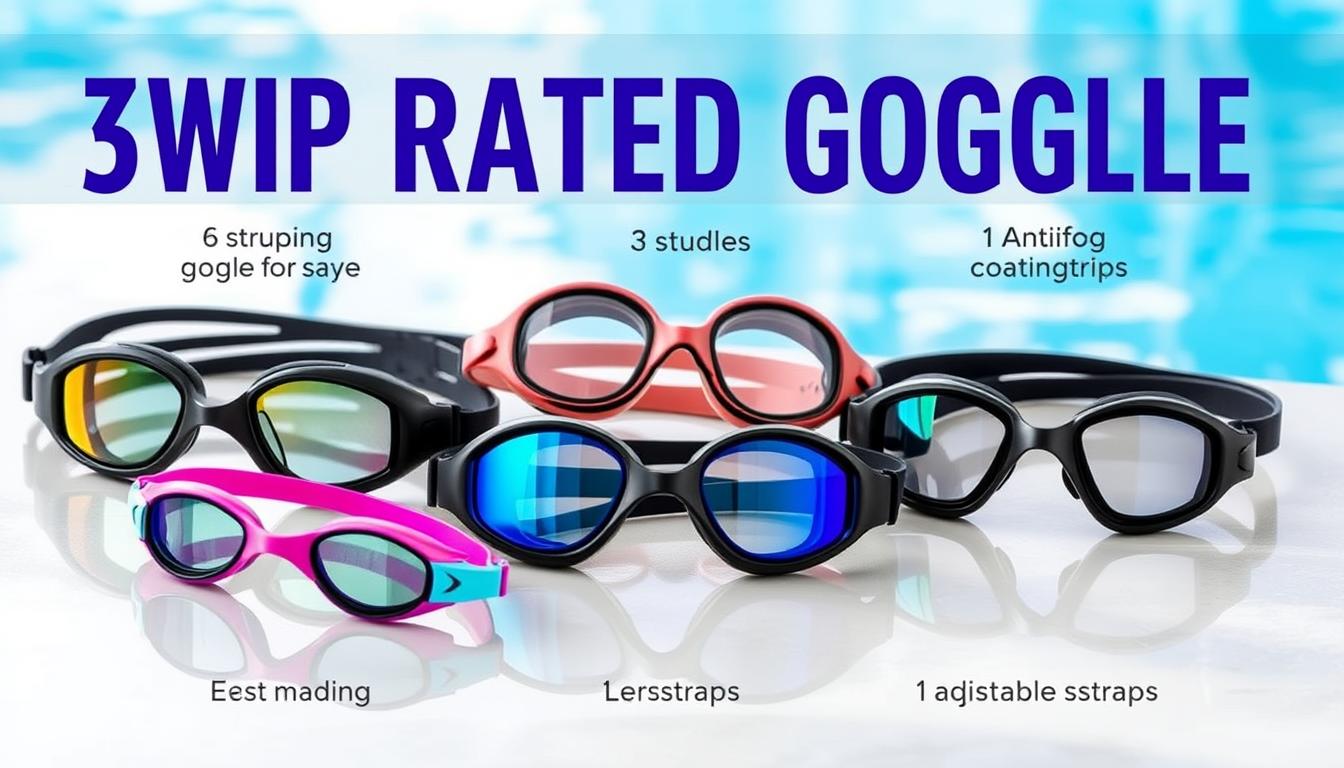
Best Swimming Goggles for a Secure Fit and Clear Vision
Most complaints about swimming goggles trace back to the same handful of causes: a seal that never quite fit the wearer's face, a lens that fogs within the first ten minutes, or a strap that needs constant readjustment mid-lap. None of these problems are inevitable — they almost always come down to choosing a goggle style that doesn't match how or where you actually swim.
A racing swimmer training for competition needs something entirely different from a parent teaching a child to swim, and both need something different again from a triathlete sighting buoys in open water. This guide breaks down the strongest options by exactly that kind of use case, rather than treating "swimming goggles" as a single generic category.
Fit matters more than any spec on the box. Two goggles with identical lens technology can perform completely differently depending on the shape of the swimmer's face, the depth of their eye sockets, and the width of their temples. The reviews below note who each style tends to suit, but the seal test described in the buying guide is worth doing yourself before committing to any pair.
Beyond fit, the details that matter most are lens tint for your typical swimming environment, the quality of the anti-fog coating, and how the strap and nose bridge adjust to your face. Get those right and a pair of goggles becomes something you stop noticing entirely once you push off the wall.
It's also worth thinking about how often you'll actually use them. A swimmer training five days a week has very different priorities from someone who swims occasionally on vacation or during the odd hotel gym session. Frequent swimmers benefit more from investing in durable seals and replaceable straps, while occasional swimmers may get more value from a simple, comfortable pair that doesn't demand much upkeep.
It's also worth considering how goggles interact with the other gear you already use, like swim caps and wetsuits. A poorly matched strap can slip under a silicone cap during a hard set, and open water swimmers wearing a wetsuit collar sometimes find a bulkier mask-style frame catches uncomfortably at the neckline. Trying goggles alongside the other equipment you'll actually wear, rather than testing them in isolation at a store counter, avoids surprises once you're genuinely out in the water and can't easily readjust mid-swim.
Quick Comparison Table
| Product | Best For | Action |
|---|---|---|

Apple AirPods Pro (2nd Generation)
Apple
|
Active Noise Cancellation, Adaptive Transparency, Personalized Spatial Audio wit...
|
|
Sony WH-1000XM5 Wireless Noise Canceling Headphones
Sony
|
Industry-leading noise cancellation with premium sound quality and 30-hour batte...
|
Top Rated Swimming Goggles (Detailed Reviews)
Anti-Fog Racing Goggles – Best for Competitive Swimmers
Racing goggles sit low and close to the face, cutting drag and keeping the lens profile as narrow as possible. Most models in this category rely on a silicone seal for a watertight fit and use UV-protected polycarbonate lenses that hold up well to repeated chlorine exposure. The narrow lens shape sacrifices some peripheral vision in exchange for a lower-profile fit that barely disturbs the water as you cut through it. This narrow profile matters most to swimmers who are already comfortable in the water and chasing marginal speed gains, since the reduced drag becomes meaningfully noticeable only at a fairly high stroke rate — a casual swimmer is unlikely to feel the difference the way a competitive sprinter will.
These are built for performance, not all-day comfort. The tight seal that keeps water out during a hard flip-turn set is the same feature that can start to feel uncomfortable after 45 minutes or more, which is why swimmers who use racing goggles for competition often switch to a softer pair for easier recovery swims. Anyone moving to a racing goggle for the first time from a recreational pair should expect a short adjustment period — the initial sensation of a tighter seal can feel surprising, even mildly alarming, but it typically settles within the first few sessions once the swimmer learns exactly how much strap tension the seal actually needs.
- Pros:
- Minimal drag profile suited to competitive speeds
- Strong, watertight silicone seal
- Wide range of lens options, including tinted and mirrored finishes
- Cons:
- Tighter fit can grow uncomfortable during long sessions
- Narrower field of view than recreational styles
Best For: Competitive swimmers and triathletes who prioritize speed and a secure seal over extended comfort.
Why We Recommend It: Racing goggles deliver the low-drag, performance-oriented design that serious swimmers rely on during competition and high-intensity training sets.
Many racing models also come in a "mirrored" finish specifically for outdoor competition, cutting glare off both the water surface and overhead lighting rigs at outdoor venues. Swimmers who compete in both indoor and outdoor pools often keep two pairs on hand — a clear lens for indoor meets and a mirrored or tinted lens for outdoor ones.
Wide-Lens Comfort Goggles – Best for Recreational and Fitness Swimmers
Recreational goggles are built around a cushioned gasket that can comfortably be worn for thirty minutes to well over an hour. The wider lens shape trades a little bit of hydrodynamic efficiency for noticeably better peripheral vision, which is one reason these are the default choice for beginners still getting comfortable in the water.
Adjustable straps and forgiving nose bridges are standard in this category, since comfort goggles are designed to accommodate a wide range of face shapes without requiring the precise seal test that racing goggles demand. Anti-fog coatings tend to be a little thicker as well, prioritizing longevity over the ultra-clear optics racing swimmers look for.
- Pros:
- Comfortable for extended wear, including hour-long fitness sessions
- Wide peripheral vision that suits casual and open-eye swimming styles
- Easy adjustment across a range of face shapes
- Cons:
- Slightly more drag than a low-profile racing pair
- Seal may loosen slightly during hard flip turns
Best For: Casual lap swimmers, beginners, and fitness swimmers who value comfort over raw racing performance.
Why We Recommend It: Comfort goggles remove the distraction of a too-tight seal, letting swimmers focus on technique and endurance instead of constantly readjusting their equipment mid-set.
Because the fit is more forgiving, this category also tends to be the easiest starting point for someone who has never owned a proper pair of swimming goggles before. There's less risk of buying the wrong size, and the wider lens makes it easier to spot the pool wall or lane markers without turning your head as far.
Swim Mask Style Goggles – Best for Open Water and Snorkeling
Swim mask goggles cover both eyes inside a single frame, closer in design to a snorkeling mask than a traditional racing goggle, but built for active swimming rather than floating and observing. The larger single lens area provides a genuinely panoramic field of view, which matters considerably more in open water, where sighting buoys, boats, and fellow swimmers is a real safety concern rather than a minor convenience.
These typically rely on a softer silicone face skirt rather than a firm gasket seal, spreading pressure more evenly across a larger area of the face. The tradeoff is a bulkier profile that creates noticeably more drag than a racing or comfort goggle, which is part of why swim masks remain uncommon at competitive pool meets.
- Pros:
- Wide, genuinely panoramic field of view
- Comfortable silicone face skirt that spreads pressure evenly
- Well suited to open water navigation and sighting
- Cons:
- Larger profile creates more drag than low-profile styles
- Rarely seen or accepted in formal competitive pool settings
Best For: Open water swimmers, triathletes training in lakes or oceans, and anyone who wants maximum visibility over raw speed.
Why We Recommend It: The wide-angle view offers a genuine safety and navigation advantage in open water, where visibility of your surroundings matters as much as swimming speed itself.
The softer face skirt also tends to hold up better against wetsuit straps and swim caps that can otherwise pull at a standard goggle strap during a triathlon swim leg. Some open water swimmers pair a swim mask with a low-profile swim cap specifically to reduce drag from the strap sitting further back on the head.
Kids' Swim Goggles – Best for Junior Swimmers
Children need goggles sized specifically for smaller faces rather than a scaled-down version of an adult design. Kids' goggles typically use softer seals, simpler one-hand strap adjustments that young swimmers can manage themselves, and brighter color options that make the equipment feel less intimidating during early lessons.
UV protection matters just as much for children as adults, and arguably more, since young swimmers often spend long stretches at outdoor pools during summer lessons and camps. Because children's faces change quickly, expect to replace kids' goggles more often than an adult pair, simply because the fit no longer matches as the child grows.
- Pros:
- Sized appropriately for smaller facial structures
- Soft seals suited to sensitive young skin
- Simple strap adjustment that children can manage with some practice
- Cons:
- Often outgrown within a season or two as the child develops
- Not a workable substitute for an adult-sized pair
Best For: Children learning to swim or participating in youth swim lessons and club programs.
Why We Recommend It: A properly fitting goggle helps young swimmers build confidence in the water and keeps their vision clear during lessons, which speeds up learning noticeably compared to fighting with an ill-fitting adult pair.
Letting a child pick their own color or pattern, within a properly sized range, tends to increase how willingly they wear goggles at all. Involving them in the choice, rather than simply handing over whichever pair a parent picked, is a small detail that measurably improves how consistently young swimmers keep goggles on during lessons.
Buying Guide: How to Choose the Best Swimming Goggles
1. Do the Seal and Fit Test Before You Buy
Press the goggles gently against your eye sockets without using the strap at all. A properly fitting pair creates a light suction and stays in place on its own for a second or two. If they fall away immediately, the seal is unlikely to hold once you're moving through the water, regardless of how good the goggles look on paper. Try this test with the strap fully loose, since many people unconsciously tighten a strap enough to mask a poor seal, only to discover the problem later during an actual swim.
2. Match Lens Tint to Where You Actually Swim
Clear lenses perform best in dimly lit indoor pools. Tinted or mirrored lenses cut glare and suit outdoor swimming under bright sun, while amber or yellow tints boost contrast on overcast days or in low-light conditions. Choose the tint based on your usual swimming environment rather than appearance alone. Swimmers who split time between indoor and outdoor pools often find it worth owning one pair of each rather than compromising with a single tint that works acceptably in both.
3. Understand How Anti-Fog Coatings Actually Work
Nearly all modern swimming goggles include a factory anti-fog coating on the inside of the lens. Avoid wiping the inside surface with fingers or a cloth, since that removes the coating far faster than normal use. Rinsing with clean water after every swim, rather than wiping the lens dry, extends the coating's effective life considerably. If fogging returns despite careful handling, that's usually a sign the coating has simply reached the end of its useful life rather than a defect in the goggles themselves.
4. Prioritize UV Protection for Outdoor Swimming
For anyone swimming outdoors regularly, UV protection built into the lens is worth paying attention to. Reflected UV light off the water's surface adds up over repeated exposure, and looking for goggles that specifically state UV400 protection is a simple way to guard against it. This matters even on cloudy days, since UV exposure from reflected light doesn't disappear simply because the sun isn't directly visible.
5. Check the Strap Adjustment System
A good strap system lets you fine-tune the fit quickly, even with wet hands between sets. Split straps that run both above and below the ear tend to distribute pressure more evenly than a single strap, and an easy-to-operate buckle matters more than it seems once you're adjusting mid-session. Test the buckle mechanism in the store or immediately after purchase, since a stiff or awkward buckle becomes a genuine annoyance every single time you put the goggles on.
6. Get the Nose Bridge Size Right
Many mid-range and premium goggles ship with interchangeable nose bridges in two or three sizes, letting you fine-tune the distance between the lenses to your own face. Using the correctly sized bridge has an outsized effect on comfort and seal quality during longer sessions, and it's an easy adjustment many swimmers skip. A bridge that's too wide creates pressure points at the outer corners of the eyes, while one that's too narrow can pinch the bridge of the nose uncomfortably.
7. Choose Lens Size Based on Performance vs. Comfort Priorities
Racing goggles use smaller, lower-profile lenses to minimize drag, while recreational and swim-mask styles favor larger lenses for wider peripheral vision. Neither is universally correct — the right choice depends entirely on whether shaving fractions of a second or seeing your surroundings clearly matters more to you. Swimmers who train for both racing and general fitness sometimes keep a pair of each rather than trying to find one goggle that does both jobs equally well.
8. Favor Silicone Gaskets Over Foam
Silicone gaskets provide a more comfortable and considerably more durable seal than foam alternatives, which are mostly found on older or budget-oriented models. Foam gaskets absorb water over time, which degrades the seal and makes the goggles progressively less comfortable with continued use. Once a foam gasket has visibly compressed or become misshapen, no amount of strap tightening will restore the original seal, and replacement is really the only fix.
9. Build a Simple Maintenance Routine
Rinse goggles in fresh water after every session to clear away chlorine, salt, and skin oils. Store them out of direct sunlight, since UV exposure degrades both the silicone seal and the lens coating over time. This small habit meaningfully extends the useful life of an otherwise good pair of goggles. A simple mesh bag that lets goggles air dry on the way home is enough — sealing them inside an airtight case while still wet tends to trap moisture and accelerate wear instead.
10. Weigh Price Against Long-Term Value
A well-constructed mid-range pair will typically outlast two or three cheap alternatives bought over the same period. If you swim regularly, spending a bit more upfront on durable silicone seals and a quality anti-fog coating usually works out cheaper across a full year than repeatedly replacing budget pairs. Think of the cost per month of ownership rather than the sticker price alone when comparing a budget option against a mid-range one.
11. Consider Prescription Needs Early
Swimmers who rely on corrective lenses out of the water should factor this in before buying, since retrofitting a non-prescription pair later is rarely straightforward. Purpose-built prescription goggles or models that accept corrective inserts are worth the modest price premium if you need clear vision in the water. Trying to swim without correction, assuming you'll manage without it, often leads to a frustrating session of squinting at pace clocks and lane markers.
12. Don't Ignore Strap and Buckle Replacement Parts
Straps are usually the first part of a goggle to fail, often well before the lens or seal shows any wear. Choosing a brand that sells replacement straps and nose bridges separately can extend the useful life of an otherwise good pair by another season or more, and it's typically far cheaper than replacing the entire goggle over a small, easily fixed failure.
13. Think About How You'll Store and Transport Multiple Pairs
If you end up owning more than one pair — a clear lens for indoor training and a mirrored lens for outdoor practice, for example — a hard protective case prevents the lenses from getting scratched when tossed loose into a swim bag alongside keys, deodorant, or a pool pass. Scratches on the lens surface don't just look bad; they scatter light and make the anti-fog coating's job harder, effectively shortening the useful life of an otherwise good pair. A small dedicated case costs very little compared with replacing a scratched pair early, and it also keeps straps from tangling with other gear between sessions.
14. Be Aware of Skin Sensitivities to Certain Seal Materials
A small percentage of swimmers notice mild skin sensitivity to certain silicone blends or the dyes used in colored gaskets, showing up as slight redness or irritation around the eyes after extended wear. If you notice this reaction, switching to a different brand's silicone formulation — rather than assuming all goggles will cause the same problem — often resolves it entirely. This is a minor consideration for most swimmers, but it's worth knowing before writing off an otherwise well-reviewed pair because of what may simply be an isolated reaction to one specific material.
Frequently Asked Questions
How should swimming goggles fit against my face?
Goggles should form a comfortable seal around the eye socket without digging painfully into the skin. There should be no visible gaps in the seal, and the strap should hold them securely without needing to be pulled uncomfortably tight. Real pain or heavy pressure after a few minutes usually means the size or shape is wrong for your face.
Why do my goggles keep fogging up during a swim?
Fogging almost always means the anti-fog coating has worn away, typically from rubbing the inside of the lens with fingers or a towel. Rinse with clean water instead of wiping, and consider a dedicated anti-fog spray for swimming eyewear if the factory coating has already worn thin.
How long should a decent pair of swimming goggles last?
With reasonable care, a good pair typically lasts one to three years, sometimes longer. Regular chlorine exposure gradually degrades both the seal material and the lens coating, so rinsing after every use and storing away from heat and direct sunlight makes a real difference to lifespan.
Are polarized swimming goggles actually worth the extra cost?
Polarized lenses cut glare bouncing off the water's surface, which is genuinely useful for open water and bright outdoor pool swimming. For indoor pool sessions, the benefit over a standard tinted lens is minor and usually not worth paying extra for.
Can I swim with goggles if I normally wear prescription glasses?
Yes. A number of manufacturers offer dedicated prescription swim goggles with built-in corrective lenses, and some models accept aftermarket prescription inserts. This is a worthwhile investment for anyone who swims regularly and relies on vision correction out of the water.
Why do goggles leave marks around my eyes after swimming?
These marks come from the seal pressing against the skin and typically fade within twenty to thirty minutes on their own. Marks that persist for hours or cause real discomfort usually mean the strap is over-tightened — loosening it slightly, as long as the seal still holds, generally resolves the issue.
Are mirrored lenses better than clear ones overall?
Mirrored lenses are the better choice for bright outdoor conditions where glare reduction genuinely matters. Clear lenses remain the better default for typical indoor pool lighting. Neither option is universally "better" — it depends entirely on where you swim most often.
What's the correct way to clean swimming goggles?
Rinse thoroughly with clean fresh water after every session and avoid soap or harsh cleaning agents on the lens interior, since they can strip the anti-fog coating. Let them air dry away from direct sunlight before storing, and never leave a pair sitting in a hot car for extended periods.
What's the real difference between triathlon and standard pool goggles?
Triathlon goggles generally favor wider peripheral vision for open water navigation and better visibility across changing light conditions, often splitting the difference between a racing goggle's low profile and a swim mask's wide field of view. Many are designed to be pushed up onto the forehead quickly during a fast swim-to-bike transition.
Do children genuinely need goggles designed specifically for kids?
Yes. Children's faces are proportioned differently from adults, and adult-sized goggles simply will not form a reliable seal on a smaller face. Kids' goggles are sized to match, resulting in a more secure fit, greater comfort during lessons, and clearer vision that helps build confidence faster.
How often should I actually replace my swimming goggles?
Replace goggles once the seal no longer holds without leaking, the strap has stretched out and won't stay adjusted, or the anti-fog coating has worn through completely despite proper care. For most regular swimmers, that works out to somewhere between one and two years of consistent use.
Is a more expensive pair of goggles always the better choice?
Not necessarily. Price often reflects lens technology, seal material quality, and brand reputation, but the single biggest factor in performance is still fit. A moderately priced pair that fits your face correctly will outperform an expensive pair that doesn't seal properly, every time.
Can I use anti-fog spray on goggles that already have a factory coating?
Yes, and it's often necessary once the factory coating has worn down from repeated use or accidental wiping. Anti-fog sprays designed specifically for swim goggles can restore much of the original performance, though results tend to fade faster than a fresh factory coating and may need reapplying every few sessions.
Should I buy goggles based on brand or based on fit?
Fit should always come first. A well-known brand's goggles will still leak or fog if the shape doesn't match your face, while a lesser-known brand's pair that seals properly will outperform it in the water. Use brand reputation as a tiebreaker between models that already pass your own fit test, not as the primary deciding factor.
Do goggles need to be broken in before they fit properly?
Most silicone gaskets soften slightly with the first few uses, which can improve comfort marginally, but a pair that fails the seal test out of the box is unlikely to improve dramatically with time. Treat the initial fit test as a reliable guide rather than assuming a poor fit will resolve itself after a few swims.
Do I need different goggles for saltwater or ocean swimming compared to a chlorinated pool?
Not necessarily, but saltwater and sun exposure combined can degrade silicone seals a little faster than chlorinated pool use alone. Rinsing thoroughly with fresh water after ocean or lake swims matters even more than after a pool session, since salt residue left to dry on the seal and strap accelerates wear noticeably over time.
Can goggles that are too tight actually cause headaches?
Yes. A strap pulled too tight, or a seal that's simply too small for your face, can cause a dull headache or pressure around the temples during longer swims. If this happens regularly, loosening the strap slightly or trying a different size or shape of gasket usually resolves it — a properly fitted goggle should never need to be painfully tight to hold its seal.
Final Verdict
- Best for Competition: Anti-fog racing goggles — low profile, strong seal, minimal drag.
- Best for Recreational Use: Wide-lens comfort goggles — a cushioned fit built for extended sessions.
- Best for Open Water: Swim mask style goggles — panoramic vision and a reliable outdoor seal.
- Best for Children: Kids' swim goggles — correctly sized for smaller faces and sensitive skin.
The right swimming goggles depend entirely on how, where, and how often you swim. A competitive swimmer training for a meet has different priorities than a recreational fitness swimmer doing laps twice a week, and both differ again from an open water triathlete sighting buoys in choppy conditions. Use the fit test and the factors covered in this guide to match your goggles to your actual swimming environment — that match matters far more in practice than brand name or price alone.
If you're still unsure which category fits you, start with the seal test on a couple of styles before worrying about lens tint, color, or price. A goggle that seals properly but lacks premium coatings will still serve you well; a goggle with every advanced feature but a poor seal will leak, fog, and frustrate you within the first few minutes regardless of how much it cost. Get the fit right first, and treat everything else as a secondary refinement.