Best Battery-Free Luggage Scale in 2026
There's a particular kind of frustration that comes from pulling a scale out of a drawer the night before a flight only to find its battery has died since the last trip. For travelers who want to avoid that scenario entirely, a luggage scale that skips batteries altogether — or at least sips power so conservatively that a single battery lasts for years of intermittent use — solves the problem for good. Eco friendly shoppers also have a second reason to care: fewer disposable batteries means less waste and one less small environmental cost tied to a tool that only gets used a handful of times a year.
This kind of small, deliberate purchasing decision fits into a larger pattern of choices travelers increasingly weigh, from reusable water bottles to refillable toiletry containers, and a scale is one more place where the sustainable option happens to also be the more reliable one.
It's worth being upfront about how this category actually works. A true mechanical, spring-and-dial scale never needs a battery, full stop. Digital scales, by contrast, do require a small battery to power their display and sensor, but the better-designed ones draw so little current that a single coin-cell battery can last through years of occasional trips, since the scale only actually consumes power for the few seconds it takes to register a reading. Both approaches have a legitimate place in an eco-conscious travel kit, and we cover the trade-offs of each honestly below rather than pretending every scale on this list is identical. There's also a broader sustainability angle worth considering beyond the battery question alone: a scale built to last for a decade of occasional use, regardless of how it's powered, ultimately produces less waste than a cheaper unit that cracks or fails after a couple of seasons and ends up in a landfill.
Below we compare eight widely available luggage scales, starting with the one true battery-free mechanical option and moving through digital models known for efficient, long-lasting power use. We also walk through a buying framework and answer the questions travelers ask most often about battery-free and low-maintenance scales. Throughout, we've tried to be specific about which claims are genuinely tied to battery-free operation and which are simply good general practices, like buying durable gear, that happen to align with a lower-waste mindset.
Top 8 Best Luggage Scale Picks (Detailed Reviews)
Samsonite Manual Scale – Best For Truly Battery-Free Use
The Samsonite Manual Scale is the only entry on this list that never needs a battery under any circumstances, thanks to its compact analog design built around a simple spring-and-dial mechanism. At roughly $10, it's priced in line with most of the digital scales here, but it removes the battery question from the equation entirely. There's no display to power, no circuitry to fail, and no moment where you discover a dead battery right before a trip. The dial mechanism is also unaffected by cold temperatures the way some batteries can be, which makes it a dependable choice for winter travel to colder climates as well.
- Pros:
- Never requires a battery of any kind
- Compact analog design that's simple to operate
- Reputable, long-established luggage brand
- Cons:
- Slightly higher price for a manual mechanism
- Limited availability compared to digital alternatives
Best For: Travelers who want to eliminate battery concerns entirely and prefer a straightforward mechanical readout.
Why We Recommend It: It's the one scale on this list that fully delivers on the promise of a battery-free tool, with no compromise required to get there, and it remains genuinely functional trip after trip without a single moment of second-guessing whether it still has power.
Tarriss Jetsetter – Best Premium Pick For Long-Term Reliability
The Tarriss Jetsetter pairs a stainless steel plate with sturdy overall construction that tends to outlast cheaper alternatives, meaning fewer scales end up discarded and replaced over the years. At around $15, it's the priciest option here, but a scale that lasts significantly longer before needing replacement is itself a small win for anyone trying to reduce unnecessary consumption. The steel hardware in particular resists the kind of corrosion and wear that eventually forces cheaper, plastic-hooked scales into an early retirement.
- Pros:
- Stainless steel plate built for long-term durability
- Premier build quality throughout
- Reputable brand with a track record in travel accessories
- Cons:
- Slightly higher price than the rest of the field
- Limited availability in some regions
Best For: Travelers who want a scale built to last for years rather than being replaced every couple of seasons.
Why We Recommend It: A longer-lasting scale, even a digital one, reduces overall waste compared to a flimsier model that needs replacing every year or two, which matters just as much as the battery question when you look at the full picture.
Etekcity Digital Scale – Best For Efficient Battery Use
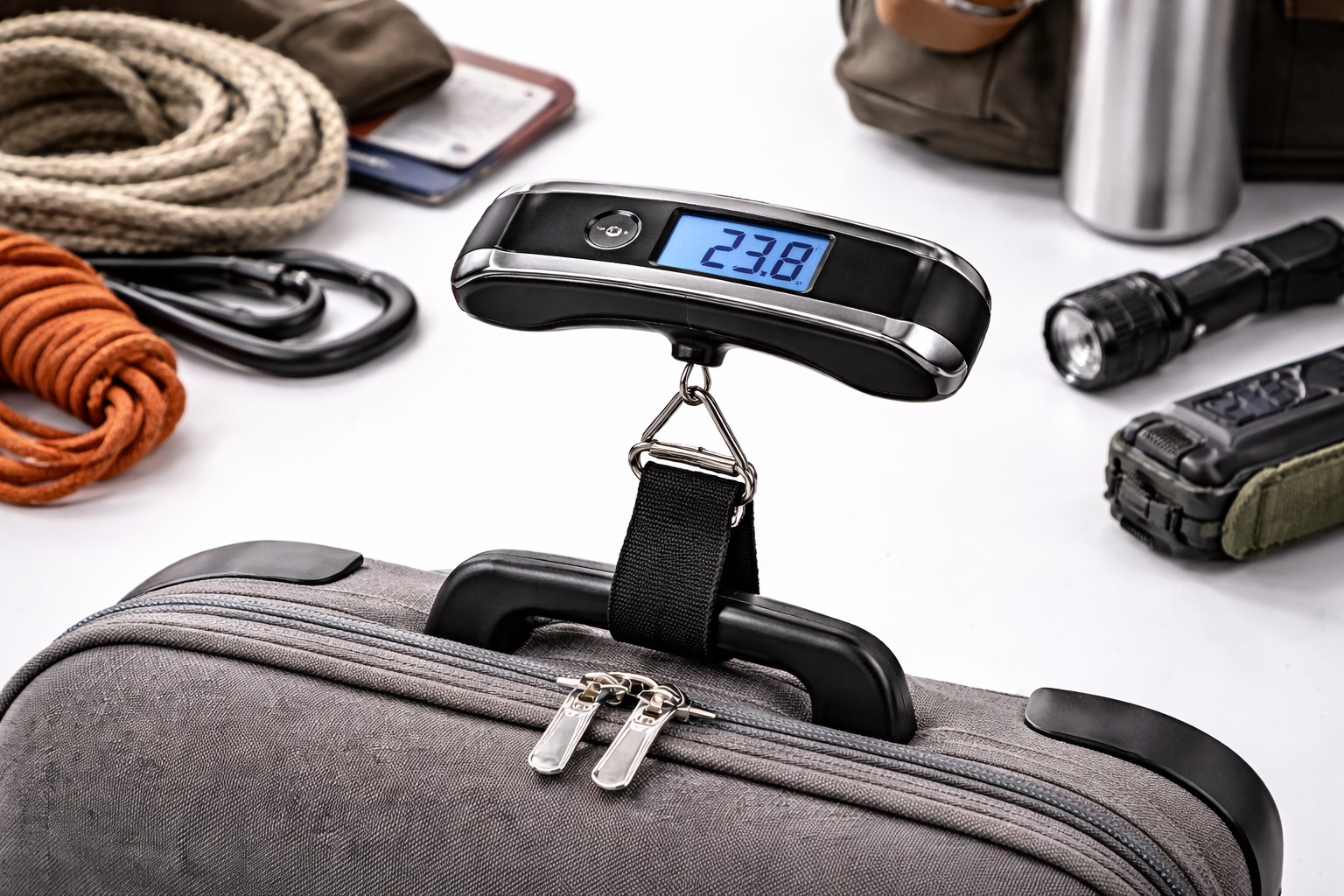
The Etekcity Digital Scale relies on a high precision sensor engineered to draw minimal power, activating only briefly to take and hold a reading rather than staying powered on continuously. At around $12, it's a solid middle-ground choice for travelers who want digital accuracy without worrying about frequent battery changes. Etekcity has applied similar low-power sensor design across its kitchen and bathroom scale lineup, and that same engineering discipline carries over into this travel-focused model.
- Pros:
- High precision sensor with efficient power draw
- Premier build quality consistent with Etekcity's other products
- Reputable brand with strong name recognition
- Cons:
- Still requires a small battery, unlike fully manual scales
- Limited availability in some retail chains
Best For: Travelers who want digital precision but don't want to think about the battery more than once every couple of years.
Why We Recommend It: A sensor that only draws power in short bursts is about as close as a digital scale gets to matching the low-maintenance appeal of a manual design, without giving up the crisp, easy-to-read digital number many travelers prefer.
Travelon Stop & Lock – Best For Simple, Low-Drain Operation
The Travelon Stop & Lock uses a two-handed grip and a straightforward lock mechanism that keeps its electronic components to a minimum. At around $8, it's one of the more affordable choices here, and its simple design means less that can go wrong or drain power unnecessarily over time. Fewer internal components generally also means fewer parts that can eventually fail, which extends the scale's useful life before it needs replacing.
- Pros:
- Two-handed grip for stable, controlled weighing
- Simple design with minimal electronic components
- Reputable travel accessory brand
- Cons:
- Still relies on a battery for the digital display
- Limited availability in some stores
Best For: Travelers who want a no-frills digital scale without extra features that might draw more battery power.
Why We Recommend It: Fewer bells and whistles generally means a longer battery life, since there's less inside the unit competing for the same small power source, and it also tends to mean fewer components that can eventually break or need servicing.
Amazon Basics Digital – Best Budget Pick
The Amazon Basics Digital scale keeps things simple with an easy-to-read LCD and an uncomplicated design that doesn't tax its battery unnecessarily. At around $10, it's an affordable entry point for travelers who want digital convenience without paying extra for features that add to power consumption. Its stripped-down feature set means the battery is only ever asked to power the core display, not any secondary functions competing for the same charge.
- Pros:
- Easy-to-read LCD without excessive power draw
- Premier build quality for an entry-level price
- Backed by Amazon's reliable customer service
- Cons:
- Still requires a small battery to operate
- Limited availability of accessories or replacement parts
Best For: Budget-conscious travelers who want a simple digital reading without unnecessary extras.
Why We Recommend It: A basic, no-frills digital design tends to be gentler on its battery than a scale loaded with secondary functions, and it keeps the total cost of ownership low even accounting for occasional battery replacements down the line.
Fosmon Digital Hanging – Best For Hold-Function Efficiency
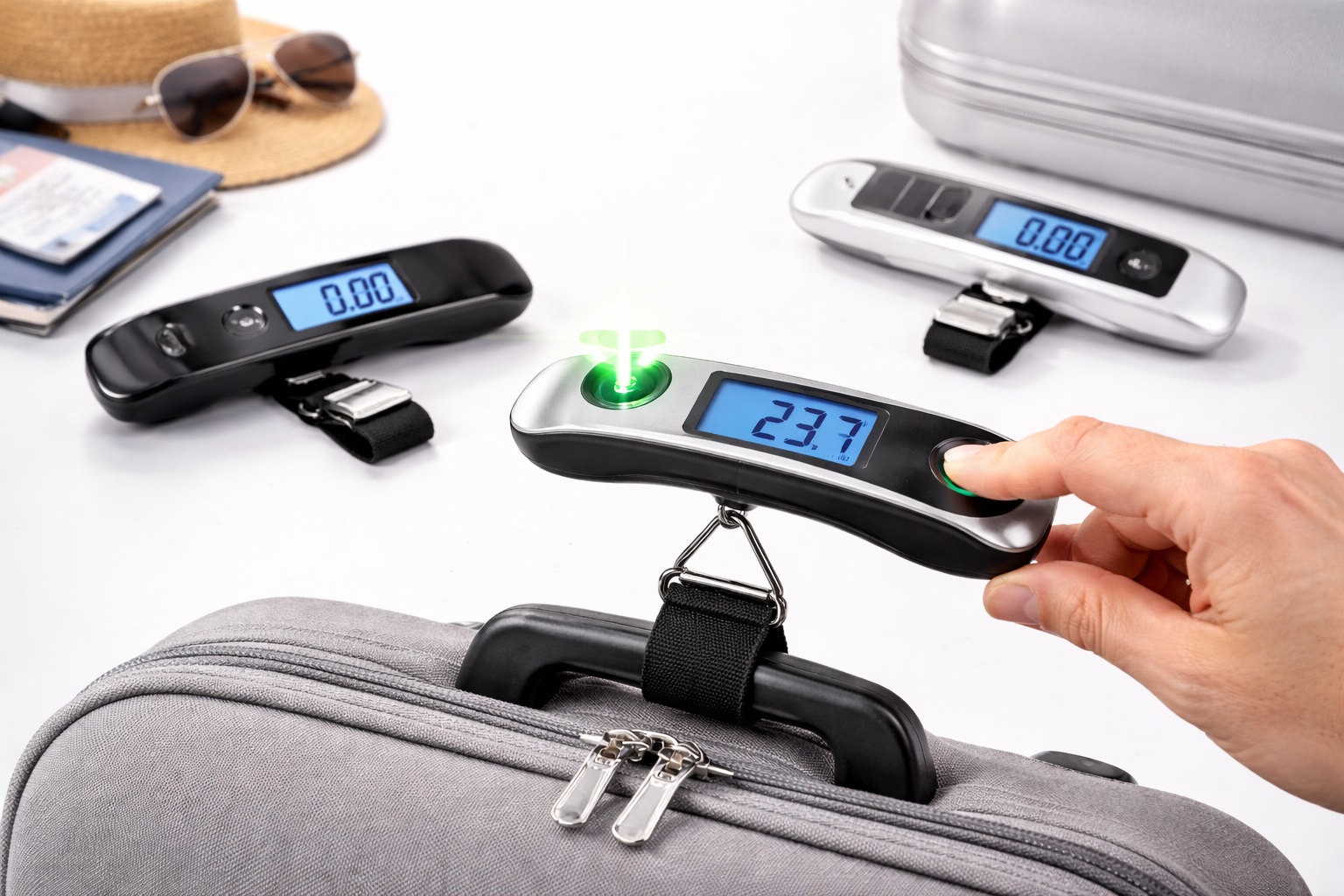
The Fosmon Digital Hanging scale uses a data lock function that briefly powers on to capture and freeze a reading, rather than keeping the display continuously active. At around $9, it's an affordable option that manages its power draw sensibly given the added convenience of the hold feature. The single-button operation also means there's no standby display constantly drawing a trickle of power while the scale sits unused in a drawer between trips.
- Pros:
- Data lock function without excessive continuous power use
- Premier build quality for the price point
- Backed by a reputable, widely available brand
- Cons:
- Still requires a battery, unlike manual alternatives
- Limited availability in some retail locations
Best For: Travelers who want the convenience of a hold-reading feature without worrying that it will drain the battery quickly.
Why We Recommend It: The brief, on-demand power draw needed to lock a reading is a sensible way to add convenience without significantly shortening battery life, striking a fair balance between usability and low power consumption.
Camry Luggage Scale – Best For Extra Display Features
The Camry Luggage Scale adds a temperature display alongside its core weighing function. At about $11, it costs slightly more than the most basic digital scales, and it's worth noting that the extra display does draw a bit more power than a single-purpose scale, so it's a reasonable trade-off for travelers who value the added information over minimal battery use. Camry's long manufacturing history in the scale industry means the added display is at least implemented efficiently, rather than as an unrefined bolt-on feature.
- Pros:
- Temperature display adds a useful secondary function
- Premier build quality for the price
- Reputable brand with a long history in scale manufacturing
- Cons:
- Extra display function uses slightly more battery power
- Limited availability outside of larger retailers
Best For: Travelers who are willing to accept a small trade-off in battery efficiency for a bit of extra display information.
Why We Recommend It: It's an honest middle ground for shoppers who want more than a bare-bones display but still care about reasonable battery habits, without pretending the extra feature comes entirely free of trade-offs.
Dr. Meter Fishing Scale – Best For Multi-Purpose Use
Originally designed for weighing a catch, the Dr. Meter Fishing Scale includes a built-in tape measure alongside its core weighing function. At around $14, it costs more than several alternatives here, but the added measuring tool means one device covers two jobs, which can reduce the total number of battery-powered gadgets you need to own and eventually replace. Its origins as rugged fishing equipment also mean the housing tends to hold up well against the kind of rough handling that shortens the lifespan of more delicate travel gadgets.
- Pros:
- Built-in tape measure adds a second useful function
- Premier build quality carried over from its fishing-gear origins
- Reputable brand in the weighing category
- Cons:
- Still requires a battery to power the digital display
- Limited availability compared to mainstream travel brands
Best For: Travelers who want to consolidate two tools into one rather than owning a separate battery-powered tape measure and scale.
Why We Recommend It: Reducing the total number of small electronic gadgets in a travel kit is its own small step toward a lower-waste packing routine, and it simplifies what you need to remember to pack before every trip.
Buying Guide: How to Choose the Best Battery-Free Luggage Scale
Choosing a battery-free or low-battery-maintenance scale means understanding exactly what you're trading off, since a mechanical dial and an efficient digital sensor solve the same underlying problem in different ways. The sections below walk through what matters most for this category.
1. True Mechanical Versus Efficient Digital
Be clear on which category you actually want. A spring-and-dial mechanical scale never needs a battery, while an efficient digital scale still requires one, just far less often than a poorly designed unit that stays powered on continuously. Deciding this upfront narrows the field considerably before you even start comparing individual models.
2. Battery Type and Replacement Cost
If you do choose a digital model, check whether it uses a widely available battery type. A common coin-cell or button battery is easy to replace almost anywhere, while an obscure or proprietary battery can turn a simple swap into a frustrating search, especially while traveling abroad.
3. Power-On Behavior
Look for scales that only draw power briefly to take a reading rather than staying illuminated or active the whole time they're in use. This single design choice has the biggest impact on how long a single battery actually lasts, often more than the battery's raw capacity does.
4. Mechanical Reliability Over Time
A manual dial scale should be checked periodically against a known weight to confirm the spring mechanism hasn't drifted out of calibration, since mechanical parts can wear slightly differently than electronic sensors over years of use. A simple check with a known five or ten-pound object is usually enough to confirm accuracy.
5. Environmental Impact of Materials
Beyond the battery question, consider the overall build materials. A scale made to last many years, regardless of its power source, ultimately produces less waste than a cheaper model that needs replacing every season, even if that cheaper model happens to be battery-free itself.
6. Display Necessity
Extra display features, like a temperature readout, add convenience but also add to a digital scale's power draw. Decide honestly whether you'll use the extra function enough to justify the trade-off, or whether a simpler display better matches your actual habits.
7. Storage and Standby Drain
Some digital scales continue to draw a tiny amount of power even in standby mode. Removing the battery entirely between trips is one simple way to eliminate this, though it does mean re-inserting it before your next use and remembering where you stored it.
8. Weight Capacity
Whether mechanical or digital, confirm the scale's rated maximum comfortably covers your heaviest bag, since capacity and power source are independent specifications that both deserve attention on their own merits.
9. Accuracy Trade-offs
Manual dial scales are generally slightly less precise than well-made digital sensors, though the difference is often within a pound and rarely matters for everyday travel purposes or avoiding standard overweight fees.
10. Build Quality and Longevity
A scale built from sturdier materials tends to last through more years of use regardless of power source, which reduces the frequency of replacement and the associated waste that comes with it. Metal components at stress points are usually a good sign of this kind of durability.
11. Brand Transparency About Battery Life
Brands that clearly state expected battery life, rather than staying vague about it, tend to be more trustworthy about the actual efficiency of their digital models. A specific number, even an estimate, is more useful than a generic claim of "long-lasting" power, and it lets you plan replacement timing rather than being caught off guard.
12. Portability and Everyday Convenience
A scale you'll actually use consistently, whether mechanical or digital, does more good than a perfectly efficient one left in a drawer because it's inconvenient to access or operate. Convenience and sustainability aren't mutually exclusive goals here, and the best choice usually satisfies both without much compromise.
13. Total Cost of Ownership
Factor in occasional replacement batteries for digital models when comparing prices, since a slightly cheaper digital scale that needs frequent battery swaps may cost more over several years than a pricier, more efficient one or a battery-free alternative, once you tally up every replacement purchase.
14. Packaging and Shipping Footprint
Beyond the product itself, minimal, recyclable packaging is a small but genuine consideration for eco-conscious buyers. It won't make or break a purchase decision, but it's worth a glance at product listings if this matters to you.
15. Repairability
A scale with a simple, accessible battery compartment or an easily replaceable dial mechanism is generally easier to keep in service longer than one with a sealed housing that can't be opened without damaging it.
16. Second-Hand and Resale Value
A well-known, durable scale tends to hold at least some resale value if you ever upgrade or no longer need it, whereas an obscure or flimsy model is more likely to simply be discarded outright.
17. Matching the Scale to Your Actual Travel Frequency
Someone who travels twice a year has very different needs than someone who travels twice a month, and being honest about your own frequency helps you avoid overpaying for durability or efficiency you won't fully use, or underbuying and needing a replacement sooner than expected.
Frequently Asked Questions
Is a manual luggage scale as accurate as a digital one?
A well-made manual scale is generally close in accuracy to a digital model, often within a pound, which is more than sufficient for everyday travel and avoiding overweight baggage fees. Most travelers won't notice the difference in practice.
How long does a battery last in an efficient digital luggage scale?
Many digital scales designed with efficiency in mind can run on a single battery for a year or more of occasional travel use, since the sensor only draws power for the few seconds it takes to register a weight. Frequent travelers who use their scale weekly will naturally see shorter intervals between changes.
Are battery-free scales more environmentally friendly?
Generally, yes, since they eliminate the need for disposable batteries entirely, though the overall environmental impact also depends on how long the scale itself lasts before needing replacement and how it's eventually disposed of.
Can a manual luggage scale handle heavy bags as well as a digital one?
Yes, provided its rated weight capacity is high enough. The spring mechanism inside a well-built manual scale can handle the same weight ranges as most digital competitors without any loss of function.
What happens if a digital luggage scale's battery dies mid-trip?
You'll need a replacement battery to use it again, which is why some travelers prefer to pack a spare or choose a manual scale specifically to avoid this scenario altogether, especially on longer trips.
Do manual scales wear out over time?
The spring mechanism inside a manual scale can gradually lose some precision after years of heavy use, though this typically takes much longer than a digital scale's battery life would allow before needing a replacement anyway.
Is it worth paying more for a scale specifically because it's battery-free?
If avoiding battery maintenance entirely is a priority for you, the answer is generally yes, since the convenience of never worrying about a dead battery can outweigh a modest price difference over the life of the product.
Can I recycle old luggage scale batteries?
Many communities have battery recycling programs at hardware stores, electronics retailers, or municipal drop-off locations, which is a better disposal option than throwing small batteries into household trash.
Do battery-free scales require any maintenance at all?
Occasional recalibration checks against a known weight and keeping the hook and dial mechanism clean of dust or grit are the main maintenance steps for a manual scale, and both take only a few minutes.
Are there any scales that combine manual and digital features?
Some hybrid designs exist, though the eight models above are split cleanly between one manual option and several efficient digital alternatives, which covers the needs of most battery-conscious travelers without added complexity.
How do I know if a digital scale is genuinely power-efficient?
Look for scales that state an auto-off or standby feature and avoid unnecessary always-on displays, since these design choices are the biggest factors in how long a single battery lasts in real-world use.
Should I remove the battery from a digital scale between trips?
If you travel infrequently, removing the battery can prevent slow standby drain and battery corrosion over long periods of storage, though it does mean reinserting it before your next trip and testing it beforehand.
Is a heavier, sturdier scale always a better environmental choice?
Generally yes, since a scale that lasts for many years before needing replacement reduces overall waste more than a lighter, cheaper model that wears out and gets discarded within a season or two.
Does a manual scale need to be stored differently than a digital one?
Not particularly, though keeping any scale away from excess moisture helps prevent rust on metal components and keeps a dial mechanism turning smoothly for longer.
Will choosing a battery-free scale actually save meaningful money over time?
The savings from avoiding replacement batteries are modest on their own, but combined with a longer overall product lifespan, a well-built manual scale can be a genuinely economical choice over several years of use.
Are there downsides to a manual scale beyond slightly lower precision?
Some travelers find a dial slightly less convenient to read at a glance compared to a large digital number, particularly in dim lighting, though this is a matter of personal preference rather than a functional limitation.
Does buying a battery-free scale mean giving up on useful features like a hold function?
Mechanical scales don't offer an electronic hold function in the same way digital ones do, but a steady hand and a moment of patience while reading the dial accomplishes largely the same result.
Is it better to buy one high-quality scale or replace a cheap one every couple of years?
From both a cost and waste perspective, one well-built scale that lasts a decade is almost always the better choice over several cheaper replacements, even if the upfront price is a bit higher, since the math tends to favor durability once you look past the sticker price.
Can a battery-free scale be used by multiple family members without any setup?
Yes, since there's no battery to check or app to configure, a manual scale is essentially ready to use the moment it's picked up, which makes it convenient to share across a household without any setup or handoff instructions needed.
Final Verdict
- Top Pick: Samsonite Manual Scale, for genuinely eliminating the battery question altogether.
- Budget Choice: Amazon Basics Digital, for a simple, low-drain digital reading at an affordable price.
- Premium Choice: Tarriss Jetsetter, for durable construction that reduces the need for frequent replacement.
There's no need to feel like you're compromising by choosing a digital scale over a purely mechanical one, as long as you pick a model that's honest about its power habits and built to last. Whether you go fully battery-free with a manual dial or opt for one of the efficient digital options above, the real win for eco-conscious travelers is choosing a scale built well enough to avoid the trash bin for years, rather than fixating on battery type alone. Small, deliberate choices like this one rarely make headlines, but they add up meaningfully across a lifetime of travel purchases, and a scale is a low-stakes place to start building that habit. If minimizing battery use is your top priority, the manual dial option is the clearest answer; if you'd rather have a digital display and are comfortable with an occasional, infrequent battery swap, several of the other picks here handle that trade-off responsibly without wasting power unnecessarily.