Best Durable Luggage Scale in 2026
A luggage scale doesn't get used every day, but when it's needed, it's usually needed right away — the night before an early flight, in a hurry, often with a heavy bag already half-packed on the floor. That intermittent, high-stakes usage pattern is exactly why longevity matters so much in this category. A scale that survives being tossed in a junk drawer for months at a time, then hauled out and immediately asked to handle a genuinely heavy suitcase, is worth more than one that looks nice on a shelf but starts drifting out of calibration or cracking at the hook after a year or two of real use.
Durability in a luggage scale comes down to a small number of physical details: the strength of the hook that bears the entire load, the quality of the strap or handle material, how the housing is put together, and whether the internal mechanism — spring or sensor — is built to hold up over hundreds of individual weighings rather than dozens. None of these details show up clearly in a product photo, which is exactly why they're worth walking through deliberately rather than assuming a higher price always means a longer life. It's also worth remembering that a scale spends most of its life sitting idle, so the real durability test isn't constant use — it's how well the mechanism holds its calibration through long stretches of storage, temperature swings, and the occasional rough handling that comes with travel, all while being asked to perform flawlessly the one moment it's actually needed.
Below we review eight widely available luggage scales with durability as the central lens, followed by a buying guide focused specifically on the build-quality signals worth checking before you buy, and a set of frequently asked questions covering how long these tools typically last and how to keep one in service longer. Throughout, we've focused on physical, verifiable details — hook material, strap construction, mechanical simplicity — rather than vague marketing language like "heavy duty" or "rugged," since those terms mean very little without specifics behind them.
Top 8 Best Luggage Scale Picks (Detailed Reviews)
Dr. Meter Fishing Scale – Best For Overall Ruggedness
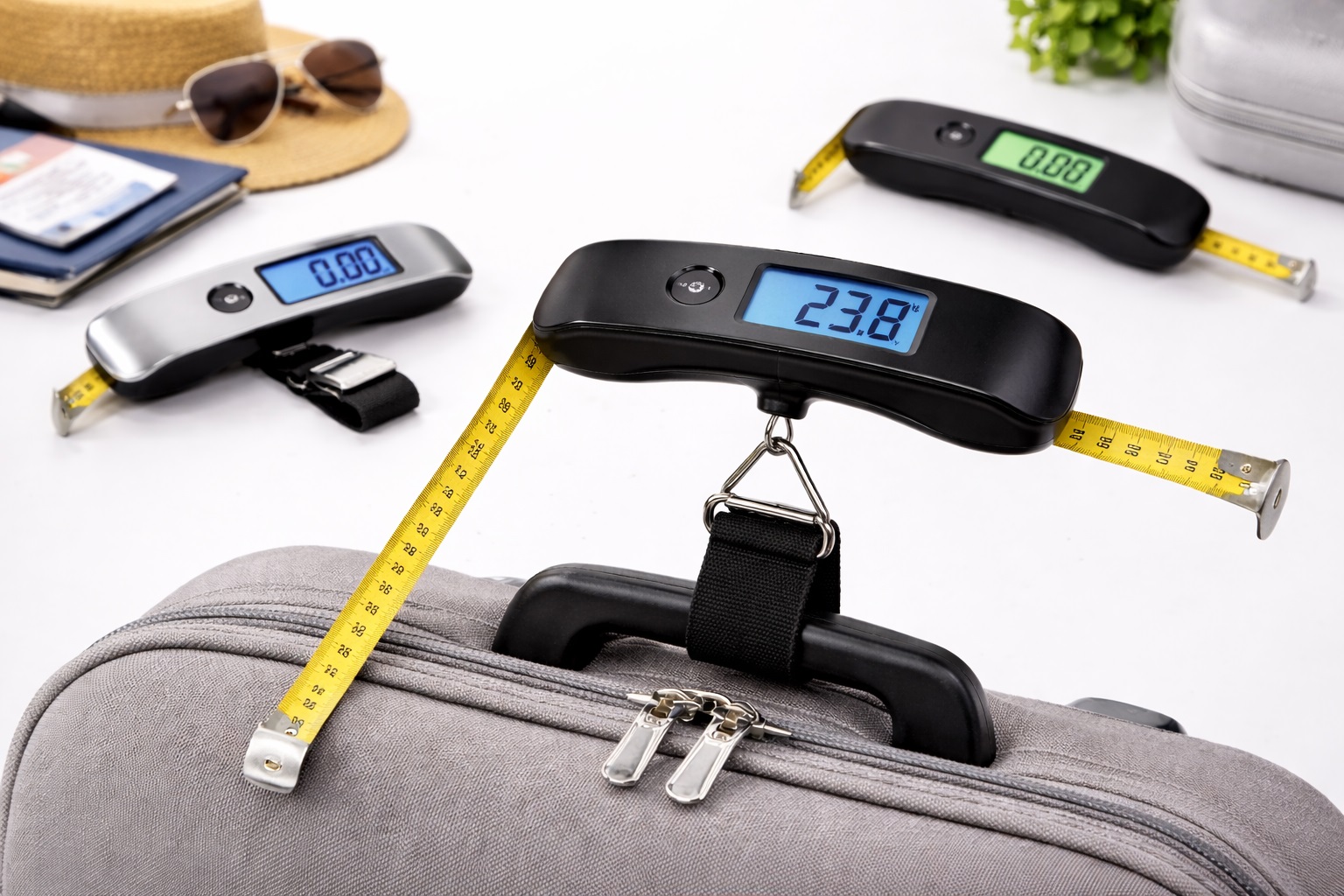
The Dr. Meter Fishing Scale earns the top spot here largely because of its origins: a tool designed to hoist a squirming, unevenly weighted fish out of water and onto a boat deck has to handle sudden, jerking loads without failing, and that same engineering carries over well into weighing a heavy, awkwardly packed suitcase. Its built-in tape measure is a useful bonus, but the underlying spring mechanism and hook are what make it a standout for durability. At around $14, it costs more than several alternatives here, and that price reflects hardware built for genuinely rough handling rather than gentle, occasional use. The spring mechanism inside is designed to absorb a sudden jolt rather than immediately transferring that shock to a delicate internal sensor, which is exactly the kind of stress a heavy, unevenly packed duffel bag puts on a scale every time it's lifted.
- Pros:
- Built to handle sudden, uneven loads without failing
- Premier build quality carried over from its fishing-gear origins
- Reputable brand in the weighing category
- Cons:
- Slightly higher price than single-purpose scales
- Limited availability compared to mainstream travel brands
Best For: Travelers who want a scale engineered for rough, repeated handling rather than delicate, occasional use, particularly those who check heavy, awkwardly shaped bags like duffels or equipment cases.
Why We Recommend It: Few luggage scales are built from equipment originally designed to survive genuinely harsh outdoor conditions, and that heritage shows up directly in how confidently it handles a heavy, unevenly packed bag year after year, without the sensor sulking after a rough lift the way a more delicate design might.
Etekcity Digital Scale – Best For Long-Term Sensor Reliability
Etekcity built its reputation on kitchen and bathroom scales that get used daily for years without drifting out of accuracy, and that same sensor engineering carries over into the high precision sensor inside this luggage model. At around $12, it's a mid-range option, but the underlying sensor technology is the same discipline the company applies across a product line that depends on long-term consistency. A kitchen scale that drifts after a year would generate constant complaints, so the pressure to build genuinely durable sensors runs deep across Etekcity's whole catalog, this travel model included.
- Pros:
- High precision sensor designed for consistent long-term accuracy
- Premier build quality consistent with Etekcity's other products
- Reputable brand with strong name recognition
- Cons:
- Slightly higher price than the most basic digital scales
- Limited availability in some retail chains
Best For: Travelers who want a digital scale that will still read accurately years down the line, not just out of the box, and who value that long-term consistency over any single flashy feature.
Why We Recommend It: A sensor engineered for daily long-term use in other product categories brings that same reliability to a tool that only gets used occasionally, which means it's unlikely to have drifted when you finally do reach for it after months in storage.
Samsonite Manual Scale – Best For Mechanical Simplicity And Longevity
The Samsonite Manual Scale's compact analog design has an inherent durability advantage: with no battery compartment, no digital circuitry, and no display to crack or fade, there's simply less that can go wrong over a long service life. At roughly $10, it's priced similarly to most digital competitors, but the spring-and-dial mechanism inside is a design that's been proven over decades of use in weighing tools generally. It's the same basic principle found in postal scales and kitchen scales that have operated reliably for generations, long before digital sensors existed at all.
- Pros:
- Simple mechanical design with fewer failure points
- Compact analog design that folds away small
- Reputable, long-established luggage brand
- Cons:
- Slightly higher price for a manual mechanism
- Limited availability compared to digital competitors
Best For: Travelers who want a scale with as few components as possible that could eventually fail or wear out, and who are comfortable trading a digital display for long-term mechanical simplicity.
Why We Recommend It: Fewer moving parts and no electronics generally translates directly into a longer working life, since there's less inside the unit for years of use to gradually wear down, and nothing to replace when a battery eventually stops holding a charge.
Camry Luggage Scale – Best For Manufacturer Track Record
Camry has manufactured scales across multiple categories for decades, and that institutional experience shows in the consistency of this model's core weighing function, alongside its bonus temperature display. At about $11, it sits in the middle of the pack on price, backed by a manufacturer whose primary business is building weighing equipment that lasts. That focus tends to produce more conservative, tested engineering decisions than a company that treats scales as a secondary product line alongside unrelated travel gear.
- Pros:
- Backed by a manufacturer with decades of scale-making experience
- Premier build quality for the price
- Reputable brand with a long history in scale manufacturing
- Cons:
- Slightly higher price than scales without the extra display
- Limited availability outside of larger retailers
Best For: Travelers who value buying from a manufacturer whose core, long-standing business is building accurate, lasting scales, rather than a brand better known for unrelated travel products.
Why We Recommend It: A company built around scale manufacturing brings a different level of institutional expertise to durability than a general travel accessory brand adding a scale to its catalog as an afterthought.
Travelon Stop & Lock – Best For Grip And Strap Durability
The Travelon Stop & Lock's two-handed grip distributes the strain of lifting a heavy bag across a wider surface, which reduces wear on any single stress point compared to a thin, single-strap design. At around $8, it's one of the most affordable options here, offering solid physical durability at an entry-level price. The locking mechanism at the top of the strap also takes some of the ongoing stress off the stitching itself, which is often the first part of a cheaper scale to show wear.
- Pros:
- Two-handed grip reduces strain on any single point
- Premier build quality for an entry-level price
- Reputable travel accessory brand
- Cons:
- Slightly higher price than the most basic hook scales
- Limited availability in some stores
Best For: Travelers who want a scale where the strap and grip are built to distribute wear evenly over years of heavy use, especially those with larger or heavier hands who appreciate a broader grip surface.
Why We Recommend It: A wider, two-handed grip design tends to hold up better over time than a narrow strap that concentrates all the stress in one small area, spreading the load in a way that noticeably reduces long-term wear.
Tarriss Jetsetter – Best Premium Pick For Hardware Durability
The Tarriss Jetsetter's stainless steel plate is the standout durability feature on this entire list, resisting the corrosion and metal fatigue that eventually affects cheaper plastic or lower-grade metal hooks. At around $15, it's the most expensive scale here, but the steel hardware is built to outlast the rest of the field by a meaningful margin. Where a plastic hook might show hairline stress cracks after a couple of years of heavy loads, the steel plate here is far more likely to still look and perform the same as the day it was purchased.
- Pros:
- Stainless steel plate resists corrosion and wear
- Premier build quality throughout
- Reputable brand with a track record in travel accessories
- Cons:
- Slightly higher price than the rest of the field
- Limited availability in some regions
Best For: Frequent flyers who check heavy bags often enough that premium hardware durability justifies the higher price, and who would rather pay once than replace a scale every couple of years.
Why We Recommend It: Stainless steel is simply a longer-lasting material than the plastic or basic metal hooks found on cheaper scales, and it shows in how the scale holds up after years of regular, heavy use without any visible sign of fatigue.
Fosmon Digital Hanging – Best For Reliable Everyday Durability
The Fosmon Digital Hanging scale pairs its data lock function with a housing that's proven itself over years as a widely used, dependable option. At around $9, it's an affordable choice that has earned a reputation for holding up well under regular, everyday use rather than being a disposable, one-trip purchase. Its wide adoption among everyday travelers also means any design flaws would have surfaced in reviews long ago, which adds a layer of real-world confidence beyond the manufacturer's own claims.
- Pros:
- Data lock function on a well-tested, dependable housing
- Premier build quality for the price point
- Backed by a reputable, widely available brand
- Cons:
- Slightly higher price than the most basic hook scales
- Limited availability in some retail locations
Best For: Travelers who want a proven, widely used scale rather than an unfamiliar or unproven alternative, and who value real-world track record over unverified marketing claims.
Why We Recommend It: A long track record among everyday travelers is itself a form of durability evidence, since a poorly built scale rarely stays popular for years without a steady stream of complaints surfacing about it.
Amazon Basics Digital – Best Budget Pick For Dependability
The Amazon Basics Digital scale keeps its design simple, with an easy-to-read LCD and a straightforward hook mechanism that has fewer components to fail over time. At around $10, it's an affordable option backed by Amazon's broader customer support infrastructure, which matters if a unit does eventually need to be replaced under warranty. That safety net is itself a kind of durability insurance, since even a modestly built scale becomes a lower-risk purchase when backing it up is straightforward.
- Pros:
- Simple design with fewer components to fail
- Premier build quality for an entry-level price
- Backed by Amazon's reliable customer service
- Cons:
- Slightly higher price than the very cheapest hook scales
- Limited availability of accessories or replacement parts
Best For: Budget-conscious travelers who still want a dependable scale backed by solid customer support, rather than an unbranded alternative with no real recourse if something goes wrong.
Why We Recommend It: A simple, no-frills design paired with reliable customer service offers a reasonable durability bet even at a lower price point, since any early failure is easy to address without much hassle.
Buying Guide: How to Choose the Most Durable Luggage Scale
Assessing durability before you buy means looking past the marketing copy and focusing on a handful of physical and structural details that actually predict how long a scale will last. The sections below walk through what to check.
1. Hook Material and Construction
The hook bears the entire weight of the bag every time the scale is used. Stainless steel or reinforced metal hooks resist bending, corrosion, and metal fatigue far better than thin wire or basic plastic alternatives, especially under repeated heavy loads. Inspect the hook's welds or molding seams closely, since this is where weakness typically first appears after repeated heavy use.
2. Strap or Handle Stitching
Check how the strap attaches to the housing. Reinforced stitching or a molded connection point tends to hold up far longer than a simple glued or single-stitched seam that can fray or separate after repeated stress, particularly at the exact point where the strap meets the main body.
3. Housing Seam Quality
Run a finger along the housing's seams when possible. A tight, well-fitted seam suggests careful assembly, while a loose or uneven seam is often an early sign of a shorter overall lifespan, since gaps let in dust and moisture over time, which can accelerate wear on the internal mechanism regardless of whether it's mechanical or digital.
4. Mechanical Versus Electronic Components
Fewer electronic components generally means fewer things that can fail over a long service life. A simple mechanical design, while sometimes less feature-rich, often has a durability edge over a scale packed with digital extras that each represent one more potential point of failure.
5. Brand's Core Business and Track Record
A brand whose primary business is building scales, rather than one adding a luggage scale as a minor accessory line, often brings more focused engineering attention to long-term durability across every product they sell.
6. Warranty Length and Terms
A manufacturer's stated warranty period is a useful, if imperfect, signal of how confident they are in their own product's longevity. Longer warranties generally correlate with sturdier construction, since few companies would offer extended coverage on a product they expect to fail quickly.
7. Weight Capacity Headroom
A scale used consistently near its maximum rated capacity wears out faster than one with a comfortable buffer above your typical heaviest bag. Buying above your actual needs extends the useful life of the mechanism considerably over years of regular use.
8. Material Response to Temperature Extremes
Plastic housings can become brittle in cold storage conditions, while metal components are generally less affected. If you store your scale in an unheated garage or attic, this is worth considering before your next winter trip.
9. Ease of Cleaning and Maintenance
A scale that's easy to wipe down and keep free of dust or grit in its mechanism tends to perform reliably for longer than one with hard-to-reach crevices that trap debris over time and interfere with moving parts.
10. Consistency of Repeated Readings Over Time
Periodically weigh a known object to confirm the scale hasn't drifted. A durable scale should return the same reading years into its service life, not just when it was new, and any meaningful drift is worth investigating early.
11. Physical Weight and Material Density
A slightly heavier scale often indicates more substantial internal components and housing material, though this should be weighed against the portability trade-offs discussed in other buying guides, since the heaviest option isn't always the most practical.
12. Reviews Mentioning Long-Term Use
Product listings rarely mention longevity directly, but reviews from buyers who've owned a scale for a year or more tend to reveal far more about real-world durability than reviews written immediately after purchase, when early enthusiasm can mask later problems.
13. Replacement Part Availability
Some scales allow the battery or strap to be replaced individually rather than requiring the whole unit to be discarded. This is a meaningful, if less obvious, durability consideration that extends a scale's practical lifespan well beyond its first component failure.
Frequently Asked Questions
How long should a well-built luggage scale last?
A quality luggage scale used a handful of times a year can reasonably last five to ten years or longer, provided it's stored properly and not regularly pushed near its maximum weight capacity. Frequent flyers who use theirs weekly should expect a somewhat shorter practical lifespan given the added wear, though even then a well-built scale should comfortably outlast several years of that heavier usage pattern.
What's the most common failure point on a luggage scale?
The hook and the strap attachment point tend to fail most often, since they bear the full weight of the bag on every single use and experience the most physical stress over time compared to any other component.
Do digital scales fail faster than manual ones?
Not necessarily, though digital models do have more components that could theoretically fail, from the battery compartment to the sensor circuitry, compared to a purely mechanical design with far fewer parts overall.
How can I extend the life of my luggage scale?
Store it somewhere dry and away from temperature extremes, avoid regularly weighing bags right at the maximum rated capacity, and periodically check the hook and strap for early signs of wear before they become serious problems.
Is it worth paying more for a scale specifically for its durability?
If you travel frequently or check heavy bags often, yes. The cost difference between a budget and a premium scale is often smaller than the cost of replacing a failed scale multiple times over the same period of years.
What are the signs that a luggage scale needs to be replaced?
Visible cracks in the hook or housing, inconsistent readings on the same bag, a strap that's fraying or stretching, or a display that's become dim or unreliable are all signs it's time for a replacement rather than continued use.
Do manual scales require any special maintenance to stay durable?
Keeping the dial mechanism free of dust and grit, and avoiding drops or rough handling, are the main steps needed to keep a manual scale's spring mechanism accurate over a long service life without professional servicing.
Can a luggage scale be repaired instead of replaced?
It depends on the specific failure. A frayed strap can sometimes be replaced, but a cracked internal sensor or a bent hook usually means the unit as a whole has reached the end of its useful life and should be replaced.
Does a higher weight capacity rating mean a scale is more durable overall?
Not always directly, but scales built to handle higher maximum weights often use sturdier internal components throughout, which can translate into better overall durability even for lighter, everyday use well below the stated maximum.
Should I look for scales with a stated lifespan or usage cycle rating?
Few consumer luggage scales publish a formal lifespan rating, so relying on build quality signals, brand reputation, and long-term buyer reviews is generally more useful than searching for a specific number that likely doesn't exist.
Are scales made by dedicated scale manufacturers more durable than those from general travel brands?
Often, yes, since a company whose core business is building accurate, lasting scales tends to bring more focused engineering to the task than a travel brand adding a scale as one item among many unrelated products.
How does climate affect a luggage scale's durability?
Frequent exposure to humidity can encourage corrosion on metal components, while extreme heat or cold can affect plastic housings and battery performance, so moderate, dry storage helps preserve any scale's lifespan regardless of type.
Is it normal for a luggage scale's accuracy to drift slightly over many years?
A small amount of drift is common in both mechanical and digital scales after years of heavy use, which is why periodically checking against a known weight is a good habit regardless of which type you own or how often you travel.
Does storing a scale flat versus coiled affect its long-term durability?
Storing a scale in whatever position keeps its strap and hook relaxed rather than bent or kinked tends to preserve its shape and accuracy better than cramming it into an awkward, tightly folded position for months at a time between trips.
Can extreme heat inside a parked car damage a luggage scale left inside?
Repeated exposure to high heat can degrade plastic components and battery performance over time, so it's generally best to avoid leaving a scale in a hot vehicle for extended periods if you can help it.
Does dropping a luggage scale once mean it needs to be replaced?
Not necessarily. A single drop onto a soft surface rarely causes lasting damage, but it's worth checking the hook for visible bends and testing the accuracy against a known weight afterward just to be safe, especially before relying on it for an important trip.
Is a scale with a lifetime warranty always the most durable option?
A lifetime warranty is a positive signal, but it's worth reading the specific terms, since some warranties cover manufacturing defects only and not the ordinary wear and tear that comes with years of regular travel use, which is the more common source of eventual failure.
Final Verdict
- Top Pick: Dr. Meter Fishing Scale, for hardware genuinely engineered to handle rough, repeated use.
- Budget Choice: Amazon Basics Digital, for a simple, dependable design backed by solid customer support.
- Premium Choice: Tarriss Jetsetter, for stainless steel hardware built to outlast the rest of the field.
Durability rarely shows up as a headline feature on a product listing, which is exactly why it's worth checking deliberately rather than assuming every scale will hold up the same way. The eight models above each bring a different kind of durability advantage, whether that's a rugged mechanical origin, a manufacturer's decades of scale-making experience, or simply a design with fewer components that can eventually fail. Whichever you choose, a little attention to build quality upfront tends to save both money and frustration over years of occasional, high-stakes use. Think of it less as buying a single-purpose gadget and more as investing in a small piece of travel infrastructure — something that quietly does its job in the background of every trip for a decade or more, without ever demanding much attention beyond an occasional glance at the hook and strap for wear. A scale that earns that kind of long, uneventful service life is ultimately the best value regardless of its exact purchase price, since the true cost of any tool includes every dollar and minute spent replacing it before it should have needed replacing at all.