Best Instant Pot for Beginners in 2026
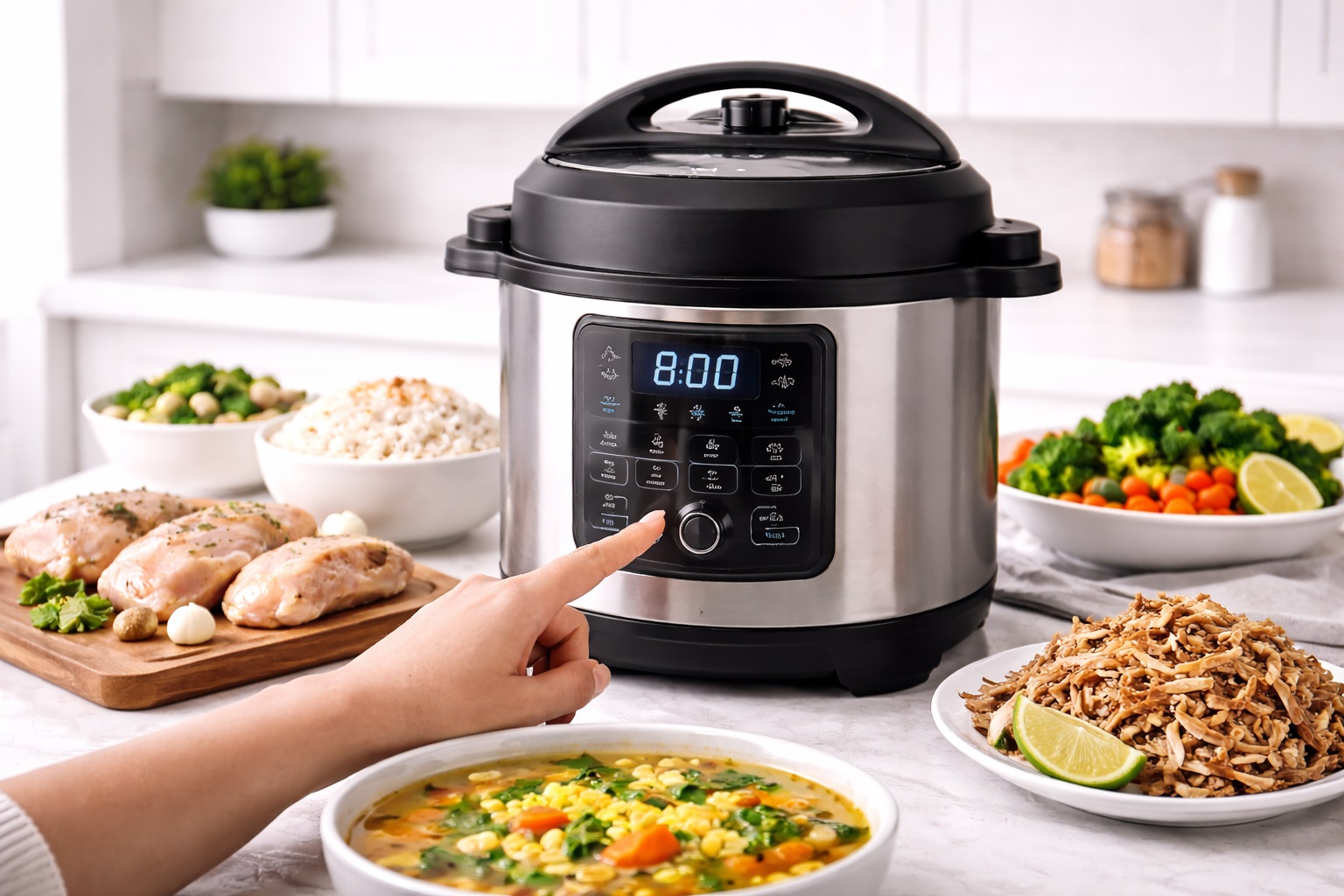
Buying your first multi-cooker can feel more complicated than it needs to be. Between pressure settings, venting valves, and a control panel full of unfamiliar buttons, it is easy to see why so many first-time buyers hesitate before choosing an instant pot. The good news is that the beginner-friendly models on the market in 2026 have simplified almost every part of the experience, from one-touch presets to sealing lids that make user error far less likely.
For anyone new to pressure cooking, the priority should be easy cooking rather than a long list of advanced functions you may never use. A forgiving control panel, a dishwasher-safe inner pot, and clear indicator lights matter more at this stage than extra accessories or a large number of specialty programs. The right instant pot should feel approachable on day one and still leave room to grow into more advanced techniques once the basics feel natural.
This guide compares eight widely available instant pot models against the qualities that matter most to first-time owners: how intuitive the controls are, how safe the appliance feels during everyday use, how easy the parts are to clean, and how the price compares to what each model actually delivers. Use the comparison table below for a quick overview, then read the detailed reviews to see which pick best matches your kitchen and cooking habits. None of these appliances require prior cooking experience, but understanding what separates them before you spend your money will save you both time and frustration in the kitchen.
It also helps to understand why beginners tend to struggle with pressure cooking in the first place. Most hesitation comes down to unfamiliarity rather than any real complexity in the appliance itself: a locking lid that behaves differently from a regular pot lid, a venting sound that can seem alarming the first time you hear it, and a control panel with more buttons than a typical slow cooker. Every model in this guide addresses at least one of those pain points directly, whether through a simplified lid mechanism, a shorter list of clearly labeled presets, or built-in safety features that reduce the chance of user error. Keeping these common beginner concerns in mind while reading the reviews below will make it easier to judge which model actually solves the problems you are most likely to run into.
Top 8 Best Instant Pot Picks (Detailed Reviews)
1. Crock-Pot Express – Best For First-Time Users
Crock-Pot built its reputation on slow cookers that just work, and the Crock-Pot Express carries that same philosophy into pressure cooking. The Easy-seal lid is designed to reduce the guesswork around sealing and venting, which is often the single biggest source of anxiety for someone using a pressure cooker for the first time. At a typical price point of around $90, it sits in the middle of the pack, offering a straightforward control panel and a familiar brand name that many households already trust from other kitchen appliances. For someone who has never so much as glanced at a pressure valve before, that brand familiarity can make the first few cooking sessions feel far less intimidating than starting with an unfamiliar name.
- Pros:
- Easy-seal lid simplifies locking and venting
- Recognizable, trusted brand
- Straightforward, beginner-friendly control panel
- Solid build quality for the price
- Cons:
- Higher price than some entry-level competitors
- Limited color and finish options
- Fewer specialty programs than higher-end models
Best For: First-time buyers who want a dependable, easy-to-understand pressure cooker without a steep learning curve.
Why We Recommend It: The simplified sealing system and clear button layout make the Crock-Pot Express one of the least intimidating ways to start pressure cooking at home.
2. Mueller UltraPot – Best For Tight Budgets
The Mueller UltraPot is often the most affordable of the mainstream instant pot options, typically priced around $70. Mueller markets the UltraPot around its German engineering heritage, positioning it as a value-focused alternative to pricier competitors while still covering the core pressure-cooking, slow-cooking, and steaming functions that most beginners actually use. It will not impress with an especially long list of presets, but it covers the fundamentals reliably, which is often exactly what a first-time buyer testing out pressure cooking actually needs before committing to a pricier machine.
- Pros:
- One of the lowest price points in this roundup
- Covers all the core cooking functions beginners need
- Compact enough for smaller kitchens
- Simple dial-and-button interface
- Cons:
- Fewer advanced programs than premium models
- Accessories may need to be purchased separately
- Build quality feels less premium than pricier options
Best For: Budget-conscious shoppers who want to try pressure cooking without a large upfront investment.
Why We Recommend It: It delivers the essential functions a beginner needs at one of the lowest prices in this category, making it a low-risk way to get started.
3. Mealthy MultiPot – Best For Everyday Reliability
The Mealthy MultiPot is built around a Stainless steel inner pot, a detail that matters more than it might seem for a first-time owner. Stainless steel resists scratching, does not react with acidic ingredients, and tends to hold up better over years of regular use than lower-grade coatings. Priced at roughly $80, the MultiPot sits comfortably between the budget and mid-tier options, and its straightforward layout keeps the learning curve short. It is a sensible middle-ground choice for a beginner who wants better long-term materials without paying for features they will not use in the first year.
- Pros:
- Durable stainless steel inner pot
- Balanced price for the features included
- Simple, uncluttered control panel
- Handles everyday meals without fuss
- Cons:
- Design is more functional than stylish
- Limited smart or app-connected features
- Accessory ecosystem is smaller than bigger brands
Best For: Beginners who want a dependable everyday cooker with an inner pot built to last.
Why We Recommend It: The stainless steel construction and simple controls make it easy to trust with daily meals from the very first use.
4. Cosori Electric Pressure Cooker – Best For Programmable Cooking
Cosori's electric pressure cooker leans into convenience with 17 cooking programs covering everything from rice and soup to yogurt and slow cooking. For a beginner, having a dedicated preset for a specific dish removes much of the guesswork around cook times and pressure levels. At around $110, it costs a bit more than the entry-level options, but the expanded preset list can shorten the learning curve considerably, especially for anyone who prefers to trust a button over a recipe card during their first few weeks of ownership.
- Pros:
- 17 built-in programs cover most common dishes
- Reduces the need to guess at cook times
- Clear digital display
- Reputable, widely available brand
- Cons:
- Costs more than the most basic models
- Some presets may go unused by casual cooks
- Limited color options
Best For: New users who would rather rely on a preset button than learn manual pressure and time settings.
Why We Recommend It: The large number of dedicated programs takes much of the decision-making out of early pressure-cooking attempts, which can be a real confidence boost during the first month of ownership when everything else about the appliance still feels new.
5. Ninja Foodi Deluxe – Best For Air-Frying and Crisping
The Ninja Foodi Deluxe uses TenderCrisp Technology to combine pressure cooking with air frying in a single appliance, letting a beginner pressure-cook a protein and then crisp it under the same lid. At around $200, it is the most expensive model in this lineup, and that price reflects the added hardware and versatility rather than a fundamentally different learning curve. It is a strong pick for anyone who wants one appliance to replace several countertop gadgets, since it can free up meaningful storage space in a smaller kitchen where every drawer and cabinet is already spoken for.
- Pros:
- Combines pressure cooking and air frying
- Reduces the number of separate appliances needed
- Strong all-around performance
- Well-regarded brand support
- Cons:
- Highest price point in this roundup
- Larger footprint on the counter
- More features to learn than a basic model
Best For: Beginners who want to skip buying a separate air fryer and are comfortable with a higher upfront cost.
Why We Recommend It: The added crisping function delivers genuine everyday value once you move past the first few basic recipes.
6. Instant Pot Ultra – Best For Precise Control
The Instant Pot Ultra includes an Altitude adjustment setting, a small but genuinely useful feature for anyone cooking above sea level, where standard pressure and time settings can otherwise produce undercooked results. Priced around $150, it sits toward the higher end of the market and pairs its more advanced dial-based interface with the dependable core functions the Instant Pot brand is known for. Beginners who plan to keep learning past the basics often appreciate having that extra layer of control available once they are ready for it.
- Pros:
- Altitude adjustment improves accuracy for many home cooks
- Well-known, widely supported brand
- More precise control over pressure and time
- Sturdy build quality
- Cons:
- Dial interface takes a little longer to learn than simple buttons
- Priced above several beginner-focused alternatives
- Not the simplest option for absolute first-timers
Best For: New users who live at higher elevations or who want finer control once they move past the basics.
Why We Recommend It: The altitude adjustment and precise controls solve real problems that a beginner might otherwise blame on their own technique.
7. Instant Pot Duo 7-in-1 – Best For Multi-Function Versatility
The Instant Pot Duo 7-in-1 is arguably the model most people picture when they hear the words "instant pot." Marketed as 7 appliances in one, it covers pressure cooking, slow cooking, rice cooking, steaming, sautéing, warming, and yogurt making in a single unit priced around $100. That combination of familiarity, moderate price, and broad functionality is a major reason it remains a default recommendation for people buying their first pressure cooker. It also tends to be the model that friends and family already own, which means a beginner is rarely more than a phone call away from someone who can answer a quick question.
- Pros:
- Covers seven common kitchen functions
- Reasonable price for the functionality offered
- Huge amount of online recipes and community support
- Straightforward button layout
- Cons:
- No dedicated air-frying function
- Standard design, nothing flashy
- Some functions overlap with cheaper single-purpose appliances
Best For: Beginners who want the single most versatile, well-documented option to learn on.
Why We Recommend It: Its popularity means a beginner can find a tutorial or recipe for almost any question that comes up during the first few months of ownership, from getting a burn notice to figuring out the right release method for a specific dish.
8. Instant Pot Duo Crisp – Best For Combo Pressure and Air Fry
The Instant Pot Duo Crisp pairs the brand's familiar pressure-cooking base with an Air fryer lid included in the box, letting new owners try both cooking styles without buying a second appliance later. At around $180, it costs noticeably more than the standard Duo, but for a beginner who already knows they want air-frying capability, buying it as a bundled feature can work out cheaper than purchasing two separate appliances over time. It is a reasonable way to future-proof a first purchase for anyone who already suspects they will want to crisp, roast, or broil in addition to basic pressure cooking.
- Pros:
- Air fryer lid included at purchase
- Familiar, well-documented Instant Pot ecosystem
- Two cooking styles in one footprint
- Good build quality
- Cons:
- More expensive than the standard Duo model
- Two lids to store and manage
- Slightly steeper learning curve than a single-lid model
Best For: Beginners who are confident they want both pressure cooking and air frying from day one.
Why We Recommend It: Including the air fryer lid from the start removes the temptation to buy a second appliance a few months into ownership.
Buying Guide: How to Choose the Best Instant Pot for Beginners
Choosing a first instant pot is less about finding the model with the most features and more about finding one that matches your comfort level, your kitchen space, and the way you actually plan to cook. The sections below walk through the factors that matter most for someone buying their first pressure cooker, roughly in the order most beginners should think about them.
1. Capacity and Household Size
Start by matching capacity to how many people you typically cook for. A compact model suits singles or couples, while a larger multi-quart pot better serves families or anyone who likes cooking in batches for the week ahead. Buying larger than you need mostly costs counter space; buying smaller than you need means recipes may not fit, so it is worth measuring your available counter and cabinet space before you decide.
2. Number and Clarity of Presets
Beginners generally benefit from models with clearly labeled presets for common dishes like rice, beans, soup, and yogurt. A long list of programs is only useful if the buttons are easy to understand at a glance, so look for clear labeling over sheer preset count. Reading a few real owner reviews can reveal whether a model's menu is actually intuitive in daily use, since marketing copy rarely mentions a confusing button layout.
3. Safety Features and Certifications
Modern instant pots include multiple safety mechanisms, such as lid-locking systems that prevent opening under pressure and automatic pressure release valves. Look for models that clearly document these safety features, since they are what make pressure cooking approachable for someone who has never used a pressure appliance before. Independent safety certifications are also worth checking on the product listing.
4. Ease of Cleaning
A dishwasher-safe inner pot, lid, and sealing ring save meaningful time on busy weeknights. Check whether the sealing ring is easy to remove and reinsert, since this part needs regular cleaning to avoid retaining odors from strongly flavored meals. A pot that is a chore to clean quickly becomes a pot that sits unused in the cabinet.
5. Control Panel and Display
A simple, well-lit digital display with clearly marked buttons reduces the chance of selecting the wrong setting. Dial-based interfaces can offer finer control but usually take slightly longer to learn than straightforward button layouts. If possible, look at photos or videos of the actual control panel before buying rather than judging from the box alone.
6. Sealing Ring and Lid Design
The sealing ring is one of the most important parts of any pressure cooker, since a worn or improperly seated ring is the most common reason a pot fails to build pressure. Favor lids that make it obvious when the ring is correctly seated and the valve is set to seal. Replacement rings should also be easy to find for the model you choose.
7. Noise During Pressure Release
Every pressure cooker makes some noise when releasing steam, but the intensity varies between models. If you live in a small apartment or have young children or pets, it is worth reading how loud a specific model's venting process tends to be. Venting near an open window can also help reduce how noticeable the sound feels indoors.
8. Included Accessories
Many instant pots ship with a steaming rack, extra sealing rings, or a rice paddle, while others require these items to be purchased separately. Factoring accessory costs into your budget avoids a surprise once you start cooking a wider variety of recipes. A spare sealing ring in particular is worth having on hand from the start.
9. Build Quality and Materials
A stainless steel inner pot generally holds up better over time than lower-grade alternatives, resisting scratches and reacting less with acidic ingredients like tomatoes or vinegar-based sauces. Solid exterior construction also tends to correlate with a longer overall lifespan and fewer issues after months of regular use. Checking owner reviews after a year or more of use is often more informative than reading the specification sheet alone.
10. Brand Support and Community Resources
Established brands with large user communities make it easier to find recipes, troubleshooting guides, and video tutorials suited to beginners. This kind of community support can shorten the learning curve significantly during your first few weeks of ownership, especially when a recipe does not turn out quite as expected.
11. Warranty Coverage
A longer warranty period is a reasonable proxy for how confident a manufacturer is in its own build quality. Beginners in particular benefit from solid warranty coverage, since early mistakes with a new appliance are common and a good warranty offers peace of mind while you are still learning how everything works.
12. Countertop Footprint and Storage
Instant pots are not small appliances, and a beginner often underestimates how much counter or cabinet space one will take up alongside its lid, sealing ring, and accessories. Measure your available space before ordering, and consider whether you plan to store the unit on the counter permanently or tuck it away between uses. A heavier appliance that needs to be lifted in and out of a cabinet every time is far less likely to get regular use.
13. Price Versus Long-Term Value
The cheapest model is not always the best value if it lacks basic safety features or presets you will actually use, and the most expensive model is not automatically the best fit for a beginner's needs. Weigh the price against how much of the feature set you expect to use regularly, and remember that a mid-priced model with strong reviews often serves a beginner better than either extreme. It is also worth watching for seasonal sales, since prices on established models fluctuate throughout the year.
Frequently Asked Questions
Is an instant pot good for someone who has never used a pressure cooker before?
Yes. Modern instant pots are designed with beginner-friendly safety features like locking lids and automatic pressure release, which make them considerably easier and safer to use than older stovetop pressure cookers. Most beginners are cooking confidently within their first two or three attempts.
How long does it usually take to feel comfortable using one?
Most new owners feel confident with the basic functions within their first few uses, especially if they start with simple recipes like rice, soup, or steamed vegetables before moving on to more complex dishes.
Do I need to buy extra accessories right away?
Not necessarily. Many models include a steaming rack and basic tools in the box, so it is worth checking what is included before purchasing extra accessories you may not need immediately.
Is it safe to leave an instant pot cooking unattended?
Most models are designed to be left unattended during the cooking cycle thanks to built-in safety mechanisms, though it is still good practice to stay nearby during your first few uses until you are familiar with how the appliance behaves.
Can an instant pot really replace multiple other kitchen appliances?
Many models can handle the roles of a slow cooker, rice cooker, steamer, and yogurt maker, and some combination units add air frying as well, which can meaningfully reduce counter clutter for a beginner just building out a kitchen. This consolidation is often the single biggest reason new buyers choose an instant pot over several single-purpose appliances.
What size should a first-time buyer choose?
A mid-size capacity works well for most households, since it can handle both small meals and moderate batch cooking without taking up excessive counter or storage space.
How loud is the pressure release process?
It varies by model, but all pressure cookers make a notable hissing sound while venting steam. This is normal and not a sign of malfunction, though the exact volume differs slightly between brands. If noise is a major concern, look specifically for owner feedback that mentions the venting sound rather than relying on the spec sheet alone.
Is a premium instant pot worth it for a beginner?
A premium model can be worth it if you already know you want features like air frying or precise altitude adjustment, but a simpler, more affordable model is often the smarter starting point for someone still learning the basics. You can always add a second appliance later once you know exactly which extra features you actually use.
How do I clean the sealing ring properly?
Remove the sealing ring after each use and wash it separately with warm, soapy water, allowing it to air dry fully before reinserting it. Many models also list the ring as dishwasher safe.
Can I air fry in a basic instant pot without an air fryer lid?
No, standard pressure-cooking lids are not designed for air frying. You would need a model that specifically includes an air fryer lid or attachment to add that function.
What is the difference between quick release and natural release?
Quick release manually vents steam immediately after cooking, while natural release lets pressure drop on its own over time. Recipes typically specify which method works best for a given dish, and using the wrong one is a common early mistake that is easy to correct once you understand the difference.
How long do instant pots typically last with regular use?
With reasonable care, including regular cleaning of the sealing ring and inner pot, most well-built models can last for several years of regular home use before parts need replacing. Sealing rings and gaskets are the parts most likely to need replacement first, and most manufacturers sell them individually rather than requiring a whole new lid.
Do instant pots use a lot of electricity?
Most models are relatively efficient compared with a stovetop or oven, since pressure cooking shortens overall cook times considerably. For a beginner watching household running costs, this can be a modest but genuine benefit over slower cooking methods.
Should a beginner buy accessories at the same time as the instant pot itself?
It is reasonable to wait. Most beginners are better served by learning the appliance's core functions with the parts it ships with before deciding which accessories, such as a springform pan or extra sealing rings, are actually worth adding later. Spending a few weeks with the basics first also helps you avoid buying accessories you never end up using.
Final Verdict
- Top Pick: Instant Pot Duo 7-in-1 for the best balance of price, versatility, and beginner-friendly support.
- Budget Choice: Mueller UltraPot for the lowest-cost way to try pressure cooking.
- Premium Choice: Ninja Foodi Deluxe for beginners who want pressure cooking and air frying combined from day one.
There is no single instant pot that is objectively right for every beginner, but the models above cover the range of needs a first-time buyer is likely to have. If you want the shortest path to a confident first meal, prioritize clear presets, dishwasher-safe parts, and a straightforward control panel over a long list of specialty functions you may not touch for months. Whichever model you choose, starting with simple, well-tested recipes will help you build confidence quickly before experimenting with more ambitious dishes. Give yourself permission to make a few early mistakes, keep the manual close by for the first month, and treat the first several meals as a chance to learn how your specific model behaves rather than expecting perfect results right away. Most beginners find that pressure cooking becomes second nature faster than they expected once they get comfortable with a handful of go-to recipes.