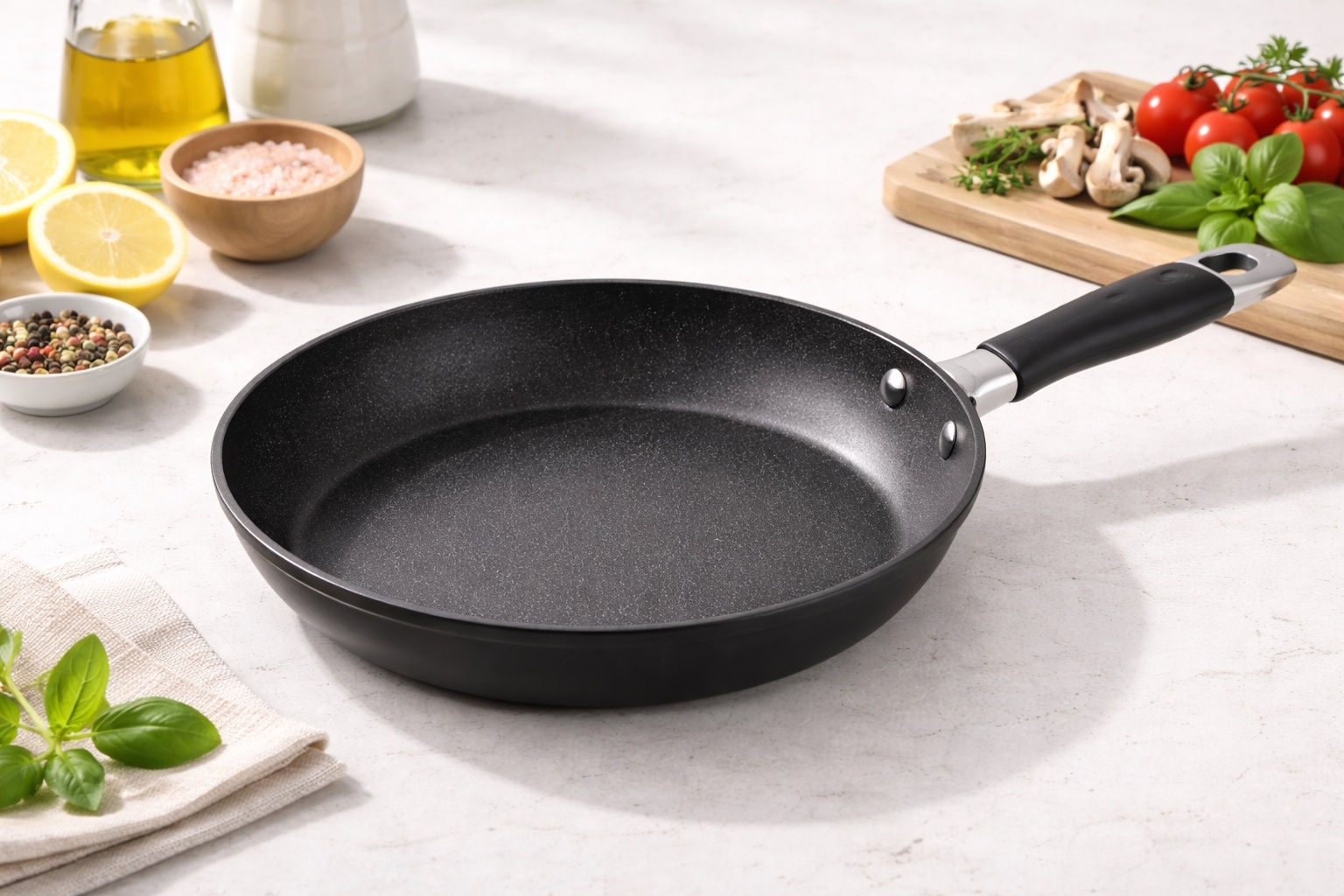
Best Nonstick Pans for Small Apartments: Essential Cooking Without the Bulk
The nonstick pan is arguably the most democratizing piece of cookware ever invented. Before nonstick surfaces, cooking eggs without fat, fish without sticking, and crepes without disaster required either significant skill or acceptance of regular cooking failures. Nonstick surfaces eliminated the skill barrier for an enormous range of daily cooking tasks.
Yet the nonstick pan category is also one of the most confusing to navigate — filled with coating types, certification claims, durability promises, and health concerns that vary from completely accurate to marketing-driven half-truths. Understanding the actual science behind how nonstick coatings work, how long they realistically last, and what actually damages them separates confident pan selection from guesswork.
This guide provides the complete picture: an honest assessment of the coating types available, practical durability expectations, evidence-based safety context, and specific buying guidance for every household type — from single-person apartments to large daily-cooking family kitchens.
Quick Comparison: Top Picks at a Glance
| Product Type | Best For | Our Take |
|---|---|---|
| Multi-Layer PTFE Nonstick Pan | Best for Consistent Daily Performance | Best reliable daily nonstick performance with meaningful durability. |
| Ceramic Nonstick Pan | Best PTFE-Free Option | Best fluoropolymer-free nonstick option for conscientious buyers. |
| Hard-Anodized Nonstick with Stainless Handle | Best for Oven-to-Stovetop Versatility | Best professional-technique nonstick for advanced home cooking. |
Top nonstick pan for small apartments Picks — In-Depth Reviews
Each product type below has been evaluated based on real performance factors relevant to apartment cooks who need a versatile daily-cooking nonstick pan in a space-efficient size. We've included detailed performance notes, value assessments, and clear guidance on who each option suits best.
1. Multi-Layer PTFE Nonstick Pan — Best for Consistent Daily Performance
Multi-layer PTFE (polytetrafluoroethylene) nonstick coatings use 3–5 layers of progressively finer PTFE formulation applied to a hard-anodized aluminum base. Each layer adds to the total coating thickness, with the final layer providing the ultra-smooth cooking surface and the inner layers contributing reinforcement. This approach produces coatings that outlast single-layer alternatives significantly with equivalent daily care.
PFOA-free multi-layer coatings are the food safety standard for modern PTFE nonstick pans. The cooking surface permits food to release cleanly with minimal or no added fat, making it ideal for eggs, fish, crepes, and any protein that typically sticks on stainless steel or cast iron. Heat distribution on quality hard-anodized aluminum bases is significantly more even than uncoated aluminum, reducing hot spots that cause uneven cooking.
- Pros:
- 3-5 layer PTFE provides superior durability over single-layer alternatives
- PFOA-free — meets all current food safety standards
- Excellent food release for delicate foods like eggs and fish
- Hard-anodized base provides even heat distribution
- Cons:
- Still degrades over time with high heat and metal utensil use
- Oven temperature limits (typically 350-400°F) lower than stainless alternatives
Best For: Daily home cooks who prioritize easy food release for eggs, fish, and other delicate foods over maximum oven temperature capability.
Performance Verdict: Multi-layer PTFE coatings are the technical standard for performance nonstick cooking. The additional layers provide meaningful durability improvement over budget single-layer coatings — this is where the price difference between a $15 pan and a $60 pan manifests most directly.
Who Should Buy This: Home cooks who make eggs, fish, crepes, and low-fat cooking central to their daily routine and want the best available nonstick performance from a PTFE coating.
Value Assessment: Mid-range multi-layer PTFE pans represent the best value in nonstick cooking. The investment in quality coating lasts 3–5 years of daily use versus 12–18 months for budget single-layer alternatives.
2. Ceramic Nonstick Pan — Best PTFE-Free Option
Ceramic nonstick pans use a silicone-derived sol-gel coating applied to aluminum that is completely free of PTFE, PFOA, and other fluorinated compounds. This makes them the choice for consumers who prefer to avoid fluoropolymer coatings entirely. Quality ceramic coatings produce excellent initial nonstick performance — sometimes better than PTFE on first use — with a smooth, hard surface that tolerates somewhat higher oven temperatures.
The trade-off with ceramic coatings is durability over time. Ceramic nonstick degrades more quickly than multi-layer PTFE under the same conditions — typically 1–3 years of daily use before nonstick properties diminish meaningfully. Ceramic coatings are also more sensitive to thermal shock (sudden temperature changes) and are more prone to chipping under impact. For PTFE-averse buyers who replace pans regularly, ceramic remains a strong daily choice.
- Pros:
- Completely PTFE and PFOA free
- Higher oven temperature tolerance than PTFE alternatives
- Excellent initial nonstick performance
- Available in attractive colors and designs
- Cons:
- Degrades faster than quality PTFE under equivalent use
- Sensitive to thermal shock — do not add cold liquid to a hot ceramic pan
Best For: PTFE-averse buyers and those who prefer to avoid fluoropolymer coatings, willing to replace pans more frequently in exchange for fluoropolymer-free cooking.
Performance Verdict: Ceramic coatings produce genuinely excellent nonstick performance for their first 18–24 months. After this period, performance typically degrades to the point that eggs and fish begin sticking — at which point replacement rather than attempted restoration is the practical approach.
Who Should Buy This: Consumers who prefer fluoropolymer-free cookware and are comfortable with a pan replacement cycle of 1–3 years rather than the 3–5 years achievable with maintained multi-layer PTFE.
Value Assessment: Ceramic pans typically cost similar to or slightly more than equivalent multi-layer PTFE alternatives despite shorter effective lifespans. The fluoropolymer-free formulation commands a premium that buyers must decide is worth the shorter coating lifespan.
3. Hard-Anodized Nonstick with Stainless Handle — Best for Oven-to-Stovetop Versatility
Hard-anodized aluminum pans coated with PTFE and featuring stainless steel handles rated for 500°F+ provide the most versatile daily cooking surface — capable of use on the stovetop at high heat and then transferred to the oven for finishing without switching pans. Standard nonstick pans with plastic or silicone handle components are typically limited to 350°F in the oven; all-metal handle designs extend this to 500°F or more.
The hard-anodized surface is approximately twice as hard as stainless steel, making the aluminum base highly resistant to scratching and warping under daily use. Combined with multi-layer PTFE coating on the interior and a stay-cool riveted stainless handle, these represent the closest to professional-grade nonstick pans available in the consumer market. They handle searing, sautéing, and oven finishing — tasks that plastic-handled nonstick pans cannot perform.
- Pros:
- High-temperature oven use with all-metal handle design
- Hard-anodized surface resists warping and scratching
- Stovetop to oven transfer without switching pans
- Dishwasher safe on most models
- Cons:
- Higher cost than standard nonstick alternatives
- All-metal handles transmit heat — use oven mitt always
Best For: Serious home cooks who regularly finish stovetop-started dishes in the oven and want a single versatile pan for the full cooking process.
Performance Verdict: The stovetop-to-oven capability expands what's achievable with a single nonstick pan to include frittatas, roasted chicken thighs, and any preparation requiring both stovetop browning and oven finishing — preparations that would otherwise require transferring between pans.
Who Should Buy This: Technique-conscious home cooks who sear proteins and finish in the oven regularly, wanting the best available nonstick surface with full professional cooking versatility.
Value Assessment: The higher upfront cost is offset by reduced pan count — one versatile all-temperature nonstick replaces both a standard nonstick and an oven-safe pan for many daily cooking needs.
Complete Buying Guide: How to Choose the Best Best Nonstick Pans for Small Apartments: Essential Cooking Without the Bulk
Knowing which product to buy is one challenge. Understanding why one product is better suited to your specific situation is the more useful skill. The following guide explains every important buying factor in plain, practical terms.
1. Understanding PTFE, PFOA, and Safety
PTFE (Teflon) is the fluoropolymer coating that creates nonstick surfaces. It is safe to cook on at temperatures below 500°F — well within stovetop and oven cooking ranges for household use. PFOA (perfluorooctanoic acid) was used in the manufacturing process of older PTFE coatings and has been linked to health concerns. All major manufacturers eliminated PFOA from production by 2013. PFOA-free is now the standard for all modern nonstick pans.
Pro Tip: The concern about overheating nonstick pans is valid: PTFE begins to break down above 500°F, releasing fumes harmful to birds and irritating to humans at very high concentrations. This happens when empty pans are preheated on high heat — not during normal cooking with food present. Never preheat a nonstick pan empty on high heat; always have food or liquid in the pan before increasing to medium-high heat.
2. Metal Utensils: The Coating Killer
Metal spatulas, whisks, and spoons scratch nonstick coatings on contact, creating channels where the coating weakens and eventually peels. This is the most common cause of premature nonstick coating failure. Use only silicone, wooden, or nylon utensils in any nonstick pan. This single habit extends coating lifespan from 1–2 years to 3–5 years under equivalent daily use.
Pro Tip: Keep metal utensils in a separate section of your utensil holder, visually separated from nonstick-compatible tools. The separation prevents reaching for the wrong utensil during hurried cooking.
3. Washing: The Right Technique
Dishwasher use degrades nonstick coatings significantly faster than hand washing — the high-temperature water jets and harsh detergents in dishwasher cycles accelerate coating breakdown. Hand washing with warm soapy water and a soft sponge preserves coating quality. Allow the pan to cool before washing — thermal shock from running cold water over a hot pan warps the aluminum base and can crack ceramic coatings.
Pro Tip: Clean nonstick pans immediately after use rather than soaking — food residue is easiest to remove while warm. A brief 30-second wipe with a paper towel while the pan is still warm removes most residue before washing is even needed.
4. Heat Level Recommendations
Nonstick pans perform best at low to medium heat for most cooking tasks. The coating's food release properties work at all temperatures — the high-heat use of stainless steel or cast iron is rarely necessary with nonstick surfaces. Medium heat for sautéing, low-medium for eggs, medium-high for proteins you want lightly browned — these cover 95% of nonstick cooking applications without approaching coating-damaging temperatures.
Pro Tip: A simple test for correct nonstick pan temperature: a drop of water should sizzle and evaporate immediately but not immediately scatter in beads. This indicates the pan is at medium-low heat — the right temperature for most nonstick cooking tasks.
5. Restoring a Degrading Nonstick Surface
Once a nonstick coating begins to scratch, peel, or produce food sticking, restoration is not possible — replace the pan. The coating cannot be repaired, reapplied, or restored through seasoning (unlike cast iron). Continuing to use a significantly degraded nonstick pan means cooking on a damaged surface with potentially compromised coating integrity. Plan for periodic pan replacement as a normal kitchen maintenance cost rather than attempting to extend use beyond the coating's practical lifespan.
Pro Tip: Budget for pan replacement every 2–3 years for daily-use nonstick pans with careful maintenance, or every 12–18 months for less carefully maintained versions. This cost is modest relative to the cooking convenience nonstick surfaces provide.
6. Seasoning Nonstick Pans
Unlike cast iron, nonstick pans do not require traditional seasoning. However, lightly oiling the interior of a new nonstick pan before first use and periodically thereafter maintains the cooking surface and preserves the coating's food release properties. Apply a thin layer of high-smoke-point oil (grapeseed, vegetable, or canola) with a paper towel, heat to medium briefly, and wipe off excess. This is maintenance oiling, not seasoning.
Pro Tip: If your nonstick pan's food release begins to diminish but the coating isn't visibly damaged, try a maintenance oil treatment before concluding the coating is failing. Occasionally, food residue buildup that isn't visible creates a layer that reduces release performance without coating damage.
7. Induction Compatibility
Not all nonstick pans work on induction cooktops. Induction requires a magnetic base material — typically stainless steel or cast iron. Aluminum-base nonstick pans (the majority of the category) don't work on induction. Induction-compatible nonstick pans include an encapsulated stainless steel plate bonded to the aluminum base. Verify induction compatibility explicitly if your cooktop is induction — the package will indicate "suitable for induction" if compatible.
Pro Tip: If you have an induction cooktop and want nonstick capability, verify induction compatibility before purchasing. The price premium for induction-compatible nonstick is typically 20–30% over non-induction alternatives.
8. Size Selection for Your Cooking Needs
For everyday cooking: an 8-inch pan handles 1–2 eggs, small portions, and individual servings. A 10-inch handles 2–4 eggs, 2 chicken breasts, or small family sides. A 12-inch handles large proteins, family-size portions, and one-pan meals for 4+. Most households benefit from two sizes: a small pan for individual cooking and a large pan for family meals.
Pro Tip: If you own only one nonstick pan, a 10-inch is the most versatile single size for most cooking tasks — large enough for family-size portions of eggs and smaller proteins, but not so large that single-person portions are inefficient.
9. High vs Low Sides: Skillet vs Sauté Pan
A skillet has lower, flared sides for maximum evaporation — ideal for browning, searing, and cooking with liquid reduction. A sauté pan has higher, straight sides for cooking with more liquid — ideal for stir-fries, braises, and one-pan meals. For most households, a nonstick skillet handles 80% of daily nonstick cooking tasks. A sauté pan adds value for specific one-pan meal preparations.
Pro Tip: For a first nonstick pan, choose a skillet. The flared sides provide better access for spatulas and produce better browning than the vertical sides of a sauté pan for the same food types.
10. Handles: Material, Length, and Comfort
Long handles stay cooler farther from the heat source. Short handles require oven mitts more frequently but are more compact for storage. Silicone-wrapped handles provide the best grip and heat resistance. Stainless steel handles transmit heat — always use a mitt when handling a stainless-handled pan after cooking. Riveted handles are more durable than welded ones for daily long-term use.
Pro Tip: Before purchasing, consider how you typically grip a pan during cooking — palm grip or finger-through grip. Your natural grip determines which handle length and shape is most comfortable for daily use.
11. When to Switch from Nonstick to Stainless or Cast Iron
Nonstick is ideal for delicate foods, low-fat cooking, and any application where food sticking is the primary concern. Stainless steel is better for very high heat searing, browning, and building fond (the caramelized bits that form the base of pan sauces). Cast iron is best for sustained high heat, oven use at very high temperatures, and cooking where the pan's heat retention is an asset. A complete home kitchen ideally includes a quality nonstick alongside one of these alternatives for different cooking tasks.
Pro Tip: The most common first kitchen mistake is buying multiple cheap nonstick pans rather than one quality nonstick plus one stainless or cast iron pan. Two pans of different types provide better cooking versatility than two pans of the same type at any quality level.
Understanding nonstick pan for small apartments: What the Specifications Actually Mean
Product listings for nonstick pan for small apartments use technical language that can be difficult to evaluate without context. This section translates the most important specifications into plain terms so you can compare products accurately.
The Science Behind Nonstick Surfaces
PTFE (polytetrafluoroethylene) has one of the lowest coefficients of friction of any solid material — approximately 0.04 on the COF scale, compared to 0.3–0.6 for most metals. This extremely low friction is what allows food to release without sticking. The fluorine-carbon bonds in PTFE are among the strongest in organic chemistry, making the material chemically inert and resistant to both acidic and alkaline compounds at cooking temperatures.
The reason eggs don't stick to PTFE isn't temperature — it's surface energy. PTFE has the lowest surface energy of almost any solid, meaning molecular forces that would normally attract a protein like egg white to a metal surface cannot form. The protein's adhesion mechanism simply has nothing to grab onto at the PTFE surface level.
Why Pans Warp and How to Prevent It
Pan warping occurs when metal expands and contracts unevenly — typically from thermal shock (rapid heating or cooling) or extreme heat. Aluminum expands significantly with heat; if one area of the pan expands faster than adjacent areas (from an uneven heat source or rapid cold water application to a hot pan), permanent deformation occurs. Warped pans rock on flat cooktops and don't distribute heat evenly, producing uneven cooking results.
Prevention: always preheat nonstick pans gradually, starting at low heat and increasing. Never add cold water or cold food to a very hot empty pan. Choose pans with heavier gauge aluminum bases (look for 3–4mm base thickness minimum) which resist warping better than thin-gauge alternatives.
The Real Cost of Cheap vs Quality Nonstick
A $20 single-layer nonstick pan replaced every 12–18 months costs $13–20 per year. A $60 multi-layer PTFE quality pan lasting 4–5 years costs $12–15 per year. A $100 premium all-clad nonstick lasting 7–10 years costs $10–14 per year. The cost-per-year of ownership actually favors quality pans over cheap alternatives when replacement frequency is factored in — and quality pans perform better throughout their entire lifespan.
The common false economy in nonstick pans: buying the cheapest pan, replacing it frequently, and believing quality pans aren't worth the premium. Over a 10-year cooking period, quality nonstick pans typically cost the same or less than repeatedly replacing budget alternatives — while providing significantly better cooking results throughout.
Nonstick Pan Safety: The Complete Picture
At normal cooking temperatures (under 400°F) in daily home use, PTFE-coated pans are completely safe. The safety concerns relate to overheating empty pans — which can occur when preheating without food on high heat. At temperatures above 500°F, PTFE begins to decompose into compounds harmful at high concentrations. Birds are particularly sensitive; PTFE fume exposure can be fatal to pet birds. Human fume exposure at severely elevated temperatures causes temporary flu-like symptoms known as polymer fume fever.
Practical safety: never preheat a nonstick pan on high heat without food. Use medium heat for nonstick cooking — it's more effective anyway for the delicate foods nonstick is suited to. Keep kitchen ventilation adequate. Do not use nonstick pans that are significantly scratched or showing peeling coating — though ingesting small amounts of PTFE is considered safe (PTFE passes through the body), the degraded coating will no longer perform its intended function.
Frequently Asked Questions About nonstick pan for small apartments
These are the questions buyers most commonly ask before purchasing a nonstick pan for small apartments. Each answer reflects real-world usage rather than manufacturer marketing language.
1. How long do nonstick pans last?
With proper care (hand washing, no metal utensils, medium heat cooking): quality multi-layer PTFE pans last 3–5 years daily. Budget single-layer pans last 12–18 months. Ceramic coatings last 1–3 years. Without proper care (dishwasher use, metal utensils, high heat): any nonstick pan degrades within 12 months of daily use regardless of initial quality.
2. Can I use nonstick pans in the oven?
Most nonstick pans with silicone or plastic handle components are oven-safe to 350–400°F. Pans with all-metal handles or specifically oven-rated handles are safe to 500°F+. Check the manufacturer's stated oven temperature rating — never assume. Exceeding the rated temperature damages both the coating and handle materials.
3. Why does my nonstick pan stick even though it's new?
Common causes: pan not heated adequately before adding food, food added when pan is cold, very high heat preventing the coating from functioning properly, or residue from manufacturing not fully cleaned. Pre-season the pan by heating to medium with a teaspoon of oil for 30 seconds, wipe out, cool, then begin cooking. This initializes the coating properly for optimal food release.
4. Is ceramic or PTFE nonstick better?
For initial performance: comparable, with ceramic sometimes slightly better on first use. For durability: PTFE multi-layer is significantly more durable (3–5 years vs 1–3 years with proper care). For health preference: ceramic is PTFE-free for those who prefer to avoid fluoropolymers. For most daily cooks: multi-layer PTFE provides better long-term value. For fluoropolymer-averse buyers: ceramic is the right choice.
5. Can I cook acidic foods in a nonstick pan?
Yes. PTFE is chemically inert and unaffected by acidic ingredients like tomatoes, citrus, and vinegar at cooking temperatures. Ceramic coatings are more sensitive to prolonged contact with very acidic foods — avoid simmering highly acidic tomato sauce in a ceramic pan for extended periods. For both types, standard cooking with acidic ingredients is fine; prolonged high-acid contact is the situation to avoid with ceramic coatings.
6. What oil should I use in a nonstick pan?
Any cooking oil works. For low to medium heat cooking: butter, olive oil, coconut oil. For medium to medium-high heat: vegetable, canola, or grapeseed oil. Butter adds flavor but burns at high heat, potentially leaving a brown residue that reduces nonstick performance over time. Aerosol cooking sprays should be avoided — they contain propellants that build up as a residue on nonstick surfaces that standard washing doesn't fully remove.
7. Should I wash my nonstick pan before first use?
Yes — always wash a new pan with warm soapy water before first use to remove manufacturing residue and packaging oils. Then apply a light pre-seasoning oil coating as described above. Skipping the initial washing means the first several meals are cooked in a pan with manufacturing residues from the production process — not a food safety concern, but a quality one.
8. Can nonstick pans be recycled?
Standard household recycling does not accept nonstick pans due to their multi-material construction. Some manufacturers (Anolon, Scan Pan, others) operate take-back programs where old pans are properly disposed of or recycled through industrial processes that separate materials. Check the manufacturer's website for current pan recycling programs in your region.
9. What is hard-anodized aluminum?
Hard anodizing is an electrochemical process that creates a thick, extremely hard aluminum oxide layer on the aluminum surface. This layer is approximately 2–3x harder than stainless steel, making it highly scratch-resistant and more durable than standard anodized or bare aluminum. Hard-anodized pans maintain their base integrity significantly longer than standard aluminum alternatives under daily use.
10. Why does food still brown in a nonstick pan if nothing sticks?
Browning (Maillard reaction) is a surface chemical process driven by temperature and protein/sugar interaction — it occurs regardless of the pan surface material when food reaches the necessary temperature (around 280°F/140°C). The nonstick surface prevents the browned food from adhering to the pan, not from browning itself. You get the same browning with significantly easier release on a nonstick surface versus stainless.
Final Verdict — Which nonstick pan for small apartments Should You Buy?
Nonstick pan selection is simpler than the category complexity suggests. For most daily cooks: a multi-layer PTFE pan from an established brand in the 10-inch size is the right choice. For PTFE-averse buyers: ceramic is the appropriate alternative with realistic replacement expectations. For technique-conscious cooks who finish in the oven: an all-metal handle hard-anodized model is the right investment.
- Best for Consistent Daily Performance: Multi-Layer PTFE Nonstick Pan — Best reliable daily nonstick performance with meaningful durability.
- Best PTFE-Free Option: Ceramic Nonstick Pan — Best fluoropolymer-free nonstick option for conscientious buyers.
- Best for Oven-to-Stovetop Versatility: Hard-Anodized Nonstick with Stainless Handle — Best professional-technique nonstick for advanced home cooking.
Whatever coating you choose, the rules that determine longevity are simple and universal: no metal utensils, hand wash only, medium heat maximum, and replace when the coating degrades rather than continuing to use a damaged surface. Following these four rules extends any quality nonstick pan to its maximum effective lifespan.