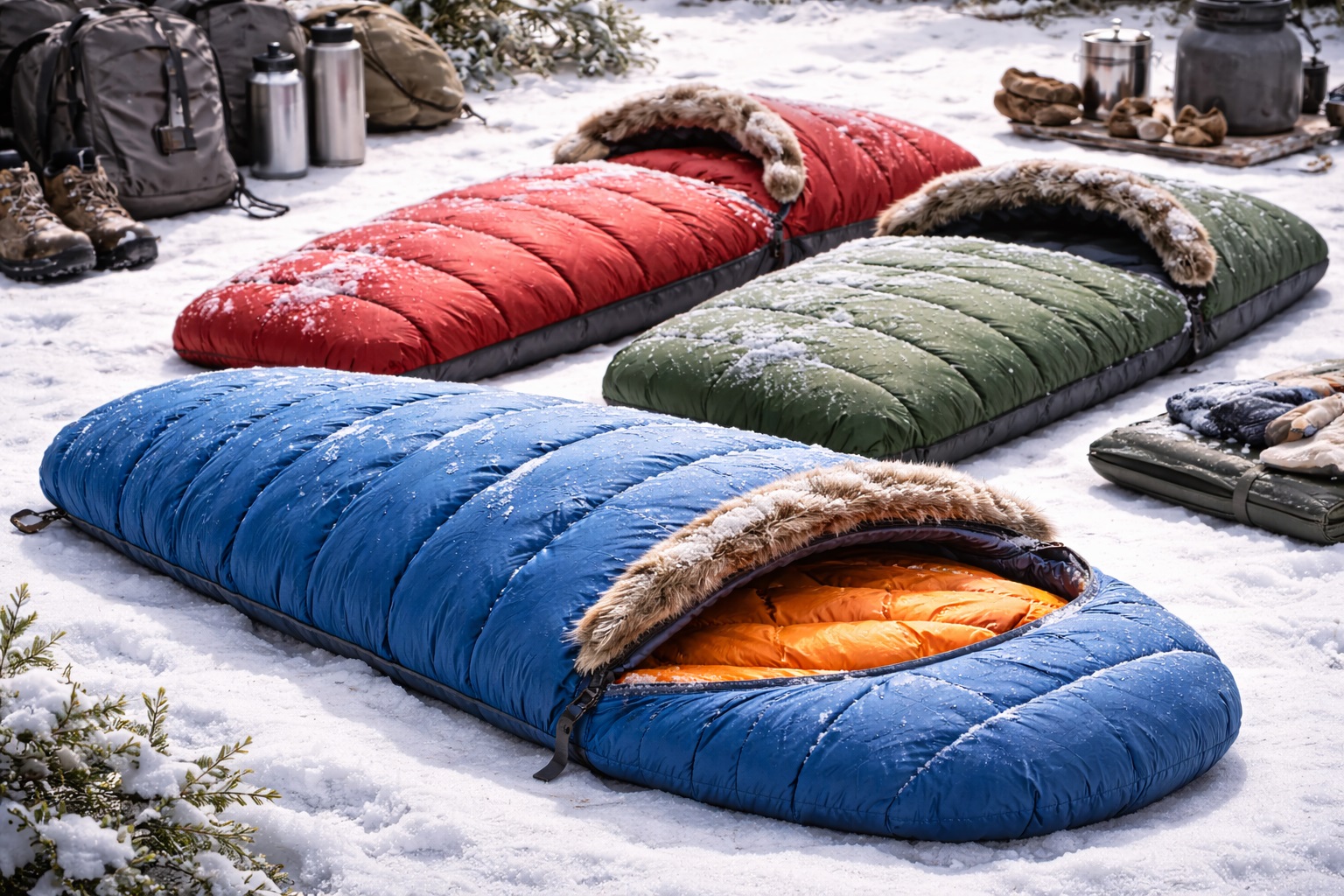
Best Cold Weather Sleeping Bag in 2026
Cold weather camping punishes mediocre gear quickly. A sleeping bag that felt perfectly fine on a mild autumn night can leave you shivering and sleepless once temperatures drop toward freezing or below, and the consequences of getting this choice wrong go beyond simple discomfort. In genuinely extreme conditions, an underrated sleeping bag is a real safety concern, not just an inconvenience, which is exactly why cold weather campers tend to research this purchase more carefully than almost any other piece of gear.
Staying warm through a freezing night comes down to a combination of factors working together rather than any single spec on a label. Insulation type and quantity matter enormously, but so does the bag's shape, how well it seals around the neck and zipper to prevent drafts, and how the shell material handles condensation that tends to build up inside a bag during long, cold nights. We looked at eight widely available sleeping bags that take meaningfully different approaches to cold weather performance, from budget-friendly options with genuinely low temperature ratings to premium bags built specifically for serious winter conditions.
Below you will find detailed reviews of all eight sleeping bags, covering how each one performs specifically in cold conditions. After the reviews, a full buying guide walks through the concrete factors worth understanding before choosing a cold weather sleeping bag, and a FAQ section answers the questions we hear most often about staying genuinely warm through freezing nights outdoors.
It is worth being clear from the outset that temperature ratings printed on a sleeping bag are a helpful starting point, not a guarantee. Individual cold tolerance varies significantly from person to person, and factors like what you are wearing to bed, whether you are using a sleeping pad, and even how well you ate and hydrated that day all affect how warm you actually feel overnight. The reviews and buying guide below account for this nuance, focusing on the underlying design choices that genuinely affect cold weather performance rather than treating a single number as the whole story.
It also helps to think about cold weather camping as a system rather than a single purchase. The best sleeping bag in the world will underperform if paired with a thin, uninsulated sleeping pad that lets cold radiate up from the ground, or if worn over damp clothing that traps moisture against the skin overnight. Keeping that broader system in mind while reading the reviews below will help you get a more realistic picture of how warm any given bag is likely to feel in your specific conditions.
It is also worth acknowledging that cold weather camping tolerance differs enormously between individuals, which is exactly why buying with a genuine safety margin below your expected coldest night matters more here than in almost any other camping decision. Someone who naturally sleeps cold might need a bag rated significantly lower than someone who runs warm, even for the exact same trip and forecast. Rather than assuming the printed temperature rating applies equally to everyone, it is worth being honest with yourself about your own cold tolerance before making a final choice, since that self-assessment often matters more than any single feature comparison between the bags themselves.
Top 8 Best Cold Weather Sleeping Bag Picks (Detailed Reviews)
1. Hyke & Byke Quandary – Best For Cold, Damp Conditions
Cold weather and damp conditions often go hand in hand, whether from snow, condensation, or unexpected precipitation, and the Hyke & Byke Quandary's hydrophobic down fill is specifically built to handle that combination. Untreated down loses much of its insulating power when wet, which can be genuinely dangerous in freezing conditions, but the hydrophobic treatment helps the Quandary maintain its loft and warmth even when moisture becomes a factor. For campers heading into conditions where dampness is a real possibility, that resilience matters enormously. That kind of resilience is exactly what separates a bag you can trust in serious conditions from one that merely looks capable on paper.
- Pros:
- Hydrophobic down maintains warmth better than untreated down when damp
- Strong warmth-to-weight ratio for cold-weather packing
- Compresses well despite its cold-weather performance
- More affordable than many premium cold-weather competitors
- Cons:
- Requires more careful care than synthetic-filled bags
- Costs more upfront than basic three-season bags
Best For: Cold-weather campers who may encounter damp or snowy conditions and need insulation that keeps performing even if moisture becomes an issue.
Why We Recommend It: Its moisture-resistant down fill addresses one of the most genuinely dangerous scenarios in cold weather camping — insulation that fails when it gets wet.
2. Marmot Trestles 15 – Best For Adjustable Cold-Weather Comfort
Cold weather nights are not always uniformly cold, and the Marmot Trestles 15's fold-down second zipper gives campers a way to fine-tune temperature regulation rather than being locked into either fully sealed or fully open. That kind of adjustability matters more in cold weather than people often expect, since venting slightly during a warmer stretch of the night helps manage condensation buildup without letting in a dangerous amount of cold air. Marmot's reputation for quality outdoor gear backs up the Trestles' thoughtful, cold-weather-conscious design. For campers who have been caught off guard by a colder-than-expected night before, that adjustability offers real peace of mind.
- Pros:
- Fold-down second zipper allows fine-tuned temperature control
- Reputable brand known for quality cold-weather gear
- Helps manage condensation buildup during long cold nights
- Comfortable, adjustable design for variable conditions
- Cons:
- Not rated as low as dedicated extreme cold-weather bags
- Costs more than basic budget alternatives
Best For: Cold-weather campers who experience variable overnight temperatures and want the ability to fine-tune ventilation and warmth.
Why We Recommend It: Its adjustable ventilation genuinely helps manage the tricky balance between staying warm and avoiding uncomfortable condensation buildup in cold conditions.
3. TETON Sports Celsius – Best For Rugged Cold-Weather Durability
Cold weather camping tends to be harder on gear than milder three-season trips, with more strain from stiff, cold-weather zippers, frost, and repeated setup in less forgiving conditions. The TETON Sports Celsius's double-layer stitching is built to withstand exactly that kind of repeated stress, holding up over multiple winter seasons rather than showing wear after just one demanding trip. For campers who venture into cold conditions regularly and need gear that can take a beating, that reinforced construction is a genuine asset. It is the sort of build quality that pays off gradually, across seasons of hard use, rather than in any single dramatic moment.
- Pros:
- Double-layer stitching withstands repeated cold-weather stress
- Reasonably priced for a cold-weather-capable bag
- Reputable brand known for accessible, durable outdoor gear
- Built to handle multiple winter seasons of use
- Cons:
- Heavier than premium cold-weather down bags
- Bulkier when packed compared to lightweight alternatives
Best For: Regular cold-weather campers who need a durable, budget-conscious bag that can withstand repeated demanding use.
Why We Recommend It: Its reinforced stitching holds up to the added strain that cold weather conditions typically place on gear, extending its useful cold-weather lifespan.
4. REI Co-op Trailmade 20 – Best For Reliable Three-Season Cold-Weather Warmth
The REI Co-op Trailmade 20's synthetic warmth makes it a dependable choice for the colder edges of three-season camping, performing consistently even if condensation or light moisture becomes a factor overnight, which is a common occurrence in cold weather camping. Backed by REI's reputation for reliable outdoor gear, the Trailmade offers genuine peace of mind for campers heading into conditions that are cold but not quite at the extreme end of the spectrum. That dependable middle-ground performance is exactly why it remains a popular recommendation for campers easing into colder trips.
- Pros:
- Synthetic warmth performs reliably even with overnight condensation
- Backed by REI's reputation for dependable cold-weather-capable gear
- Reasonably priced for consistent three-season performance
- Suitable for the colder edges of typical camping seasons
- Cons:
- Not rated for the most extreme winter conditions
- Heavier than comparable down-filled cold-weather bags
Best For: Campers facing cold but not extreme conditions who want dependable, moisture-resistant warmth from a trusted brand.
Why We Recommend It: Its reliable synthetic insulation performs consistently through the kind of cold, sometimes damp conditions common at the edges of camping season.
5. Coleman 0°F Mummy – Best For Budget Sub-Freezing Nights
The Coleman 0°F Mummy is built specifically for genuinely cold, sub-freezing conditions, and its heat-locking architecture is designed to trap warmth efficiently within the tapered mummy shape rather than losing it to excess interior air space. At a price point notably below many premium cold-weather bags, the Coleman gives budget-conscious campers a realistic option for facing seriously cold nights without the investment a premium down bag typically requires. It has earned a loyal following among budget-conscious winter campers precisely because it delivers on its cold-weather promise without excuses.
- Pros:
- Genuinely low temperature rating suited to sub-freezing nights
- Heat-locking architecture designed for efficient cold-weather warmth
- Accessible price point compared to premium cold-weather bags
- Reputable brand with widespread availability
- Cons:
- Heavier and bulkier than premium down cold-weather bags
- Less packable for backpacking into cold-weather terrain
Best For: Budget-conscious campers facing genuinely cold, sub-freezing conditions who want reliable warmth without a premium price tag.
Why We Recommend It: It delivers a meaningfully low temperature rating specifically built for cold conditions at a price most premium alternatives cannot match.
6. Kelty Cosmic 20 – Best For Balanced Cold-Weather Down Performance
Kelty's 600-fill DriDown gives the Cosmic 20 a strong warmth-to-weight ratio well suited to cold weather trips, while the DriDown treatment helps the fill resist losing loft if moisture becomes a factor, which is a genuine concern in cold, sometimes snowy conditions. For campers who want a well-balanced cold-weather bag that does not require an extreme premium investment, the Cosmic 20 strikes a sensible middle ground between performance and price. That balance of price and cold-weather capability is difficult to find elsewhere in this particular price range.
- Pros:
- 600-fill DriDown offers strong cold-weather warmth-to-weight performance
- Moisture-resistant treatment adds reliability in snowy or damp cold
- Reasonably priced relative to premium cold-weather down bags
- Reputable brand with a long history in cold-weather gear
- Cons:
- Not rated as low as the most extreme cold-weather specialty bags
- Costs more upfront than basic synthetic alternatives
Best For: Cold-weather campers who want a well-balanced down bag without paying for the most extreme, specialty-level cold ratings.
Why We Recommend It: Its treated down fill delivers genuinely strong cold-weather performance at a price that avoids the steepest premium cold-weather price tags.
7. Oaskys 3-Season – Best For Entry-Level Cold-Weather Camping
For campers just starting to venture into colder conditions and not yet ready to invest heavily in specialty gear, the Oaskys 3-Season's weatherproof coating offers a basic layer of protection against the moisture that often accompanies cold weather camping. It is best suited to the milder end of cold conditions rather than serious sub-freezing nights, but as an entry point for testing out cooler-weather camping without a significant investment, it serves a genuine purpose. For campers still deciding how much they enjoy cold-weather trips, that low-risk entry point is genuinely valuable.
- Pros:
- Weatherproof coating adds basic protection in cold, damp conditions
- Extremely accessible price point for testing cold-weather camping
- Useful as an entry-level option before investing in specialty gear
- Good backup option for milder cold-weather trips
- Cons:
- Not suited to genuinely extreme or sub-freezing conditions
- Bulkier and heavier than dedicated cold-weather bags
Best For: New cold-weather campers who want an affordable way to test cooler conditions before investing in specialty gear.
Why We Recommend It: It offers a genuinely accessible entry point into cold-weather camping without requiring a significant upfront investment.
8. Western Mountaineering MegaLite – Best For Extreme Cold Performance
When conditions turn genuinely extreme, the Western Mountaineering MegaLite's hand-filled down quality represents the kind of premium, meticulous construction that serious cold-weather and winter campers rely on. Hand-filling down ensures even distribution throughout the bag, avoiding the cold spots that can occur with less careful manufacturing, which becomes critically important the colder and more demanding the conditions get. For experienced cold-weather campers and mountaineers who cannot afford gear failure, that level of craftsmanship justifies the premium price. That level of craftsmanship is precisely why experienced winter campers are willing to pay a meaningful premium for it.
- Pros:
- Hand-filled down quality ensures even warmth distribution
- Exceptional performance suited to genuinely extreme cold conditions
- Reputable brand respected among serious mountaineers
- Reliable, meticulous construction for demanding trips
- Cons:
- Significantly higher price than the rest of this list
- Overkill for casual or mild cold-weather camping
Best For: Experienced cold-weather campers and mountaineers facing genuinely extreme conditions who need dependable, premium-level performance.
Why We Recommend It: Its meticulous hand-filled construction delivers the kind of consistent, reliable warmth that serious extreme-cold conditions genuinely demand.
Buying Guide: How to Choose the Best Cold Weather Sleeping Bag
Choosing a cold weather sleeping bag well means understanding how insulation, shape, and construction work together to keep you warm through genuinely freezing conditions. When selecting a sleeping bag, consider weight and material strength alongside temperature rating and insulation type. For extreme conditions, ensure the design fits your specific needs and the improved warmth genuinely justifies the investment for the coldest nights you actually expect to face.
1. Temperature Rating and Safety Margin
A sleeping bag's temperature rating indicates the lowest temperature at which an average sleeper should stay reasonably warm, but individual cold tolerance varies significantly. For genuinely cold trips, choosing a bag rated several degrees colder than the coldest night you expect provides a meaningful safety margin rather than cutting it dangerously close.
2. Down vs Synthetic Insulation for Cold Weather
Down insulation offers a superior warmth-to-weight ratio, making it a popular choice for serious cold-weather trips, but untreated down loses much of its insulating power when wet. Hydrophobic down treatments, like those found in the Hyke & Byke Quandary and Kelty Cosmic 20, help address this vulnerability, while synthetic insulation remains more forgiving of moisture at the cost of extra weight.
3. Fill Power for Cold-Weather Performance
Higher fill power means more loft, and therefore more warmth, per ounce of down. Cold-weather bags generally benefit from higher fill power than mild-weather bags, since it allows for genuinely low temperature ratings without excessive weight, which matters especially for backpackers into cold terrain.
4. Mummy Shape and Thermal Efficiency
A tapered mummy shape reduces the excess interior air space your body needs to heat, which becomes increasingly important as temperatures drop. Nearly all dedicated cold-weather bags use this shape rather than a roomier rectangular design, since thermal efficiency takes priority over spaciousness in genuinely cold conditions.
5. Draft Collars and Draft Tubes
A draft collar around the neck and a draft tube running along the zipper prevent warm air from escaping through these common leak points. These features matter far more in cold weather than in mild three-season conditions, where minor heat loss is a smaller concern.
6. Hood Design and Coverage
In cold conditions, a significant amount of body heat is lost through the head, making a well-fitted, cinchable hood an important feature rather than a minor extra. Look for a hood that can be tightened snugly around the face while still allowing comfortable breathing room.
7. Shell Material and Moisture Management
Cold weather often brings condensation, whether from breath, tent walls, or snow, and a shell material with a weatherproof or water-resistant coating, like the one on the Oaskys 3-Season, helps manage that moisture without compromising the insulation underneath.
8. Zipper Design and Draft Prevention
A zipper with a insulated draft tube behind it prevents cold air from seeping in through the seam, which is a meaningfully bigger concern in freezing conditions than in mild weather. Two-way zippers, like the fold-down design on the Marmot Trestles 15, also allow for careful ventilation without fully compromising the seal.
9. Weight and Packability for Cold-Weather Trips
Cold-weather bags with higher fill power and more insulation tend to weigh more or pack down less than three-season bags, though premium options like the Western Mountaineering MegaLite manage to minimize this tradeoff through more efficient, hand-filled construction.
10. Durability Under Cold-Weather Stress
Cold conditions place extra strain on zippers, seams, and stitching, since materials can become stiffer and more brittle in freezing temperatures. Reinforced construction, like the double-layer stitching on the TETON Sports Celsius, helps a bag hold up to this added stress over repeated winter use.
11. Sleeping Pad Pairing
No sleeping bag alone fully protects against cold radiating up from the ground, so pairing a cold-weather bag with an adequately insulated sleeping pad is essential. Skipping this step undermines even the warmest, most expensive sleeping bag on this list.
12. Layering and Base Layer Strategy
Wearing appropriate, dry base layers to bed improves overall warmth regardless of which bag you choose, while damp clothing worn to bed can actually make you colder by trapping moisture against your skin. Cold-weather camping works best as a complete system rather than relying on the bag alone.
13. Price and Long-Term Value
Extreme cold-weather performance generally comes at a premium price, but that investment can be genuinely worthwhile for anyone who camps regularly in serious winter conditions. Budget cold-weather options like the Coleman 0°F Mummy offer a sensible middle ground for those who only occasionally face sub-freezing nights.
14. Testing Your Bag Before a Serious Trip
Trying out a new cold-weather bag on a lower-stakes trip, or even in a backyard, before relying on it for a genuinely remote or extreme cold trip helps you learn how it actually performs on your body before conditions turn unforgiving. This kind of trial run has caught more than a few unpleasant surprises before they became genuinely dangerous ones.
Frequently Asked Questions
Is a premium cold weather sleeping bag worth it?
Yes, higher end models often offer better warmth-to-weight ratios, more reliable moisture resistance, and superior construction compared to budget alternatives, which matters significantly more in genuinely extreme cold conditions.
How do I maintain a cold weather sleeping bag?
Keep your gear clean and dry, and ensure it is fully dry before storage to prevent loss of loft or mildew. Cold-weather bags in particular should be stored loosely rather than tightly compressed for long periods.
What temperature rating do I need for winter camping?
For genuinely cold or sub-freezing winter camping, a bag rated at 0 degrees Fahrenheit or lower is generally recommended, with an additional safety margin below the coldest temperature you realistically expect to encounter.
Is down or synthetic better for cold weather?
Down generally offers superior warmth-to-weight performance for cold weather, especially when treated with a hydrophobic coating for moisture resistance, while synthetic insulation remains more forgiving if the bag gets significantly wet.
How do I stay warm in a sleeping bag on a freezing night?
Pair your bag with an insulated sleeping pad, wear dry base layers to bed, and ensure the hood and draft collar are properly cinched to minimize heat loss through common leak points.
What is a draft tube on a sleeping bag?
A draft tube is an insulated strip of fabric running behind the zipper that prevents cold air from seeping in through the seam, which is a significant source of heat loss in cold-weather bags without this feature.
Can I use a three-season bag in freezing temperatures?
It is not recommended without additional insulation, such as a liner, since a three-season bag is not designed for genuinely freezing conditions and may leave you dangerously cold on a sub-freezing night.
How does condensation affect a cold weather sleeping bag?
Condensation can build up inside a bag from breath and body moisture, particularly in very cold conditions, which is why moisture-resistant shell materials and treated down fills help maintain warmth despite this common issue.
What is hand-filled down and why does it matter?
Hand-filled down is distributed manually during manufacturing to ensure even loft throughout the bag, avoiding the cold spots that can occur with less careful, machine-only filling processes, which matters more the colder the conditions get.
How much warmer does a sleeping bag liner make a bag?
A liner can add a meaningful amount of extra warmth, often several degrees, making it a useful and affordable way to extend the usable range of an existing bag rather than buying a new one for slightly colder trips.
Do I need a mummy-shaped bag for cold weather?
A mummy shape is strongly recommended for genuinely cold conditions, since it minimizes excess interior air space that your body needs to heat, improving overall thermal efficiency compared to a roomier rectangular design.
How do I know if my sleeping bag is warm enough?
If you find yourself consistently cold at the bag's rated temperature, either your personal cold tolerance runs lower than average or the rating was optimistic. Adding a liner or upgrading to a lower-rated bag are both reasonable solutions.
Can cold weather sleeping bags be used in warmer conditions too?
Yes, though they may feel too warm on milder nights. Many cold-weather bags include zippers or venting options that allow some temperature regulation, but a dedicated three-season bag will generally feel more comfortable in milder weather.
Does altitude affect how cold a sleeping bag feels?
Yes, higher altitudes are typically colder and windier than lower elevations at the same latitude, so it is worth budgeting extra warmth margin for high-altitude cold-weather trips compared to lower, more sheltered camping locations.
How do I dry out a damp cold weather sleeping bag on a trip?
Airing the bag out during the day, ideally in sunlight and away from moisture, helps prevent damp insulation from accumulating over a multi-night trip, which is especially important for down-filled bags that lose loft when wet.
Final Verdict
- Top Pick: Coleman 0°F Mummy for overall excellence and dependable sub-freezing performance at an accessible price.
- Budget Choice: Oaskys 3-Season for great value as an entry point into colder-weather camping.
- Premium Choice: Western Mountaineering MegaLite for high-end performance in genuinely extreme cold conditions.
Cold weather sleeping bags earn their keep on the nights when the temperature drops further than expected and a lesser bag would leave you shivering until sunrise. The eight bags above cover a genuinely useful range of cold-weather approaches, from accessible budget options with real sub-freezing ratings to premium, hand-filled down bags built for the most demanding winter conditions. Whichever one you choose, pair it with an adequately insulated sleeping pad and appropriate base layers, since even the warmest sleeping bag performs best as part of a complete cold-weather sleep system rather than as a solution on its own. Buying with an honest safety margin below the coldest night you actually expect, rather than cutting the rating too close, is the single habit most likely to keep you warm when it matters most.