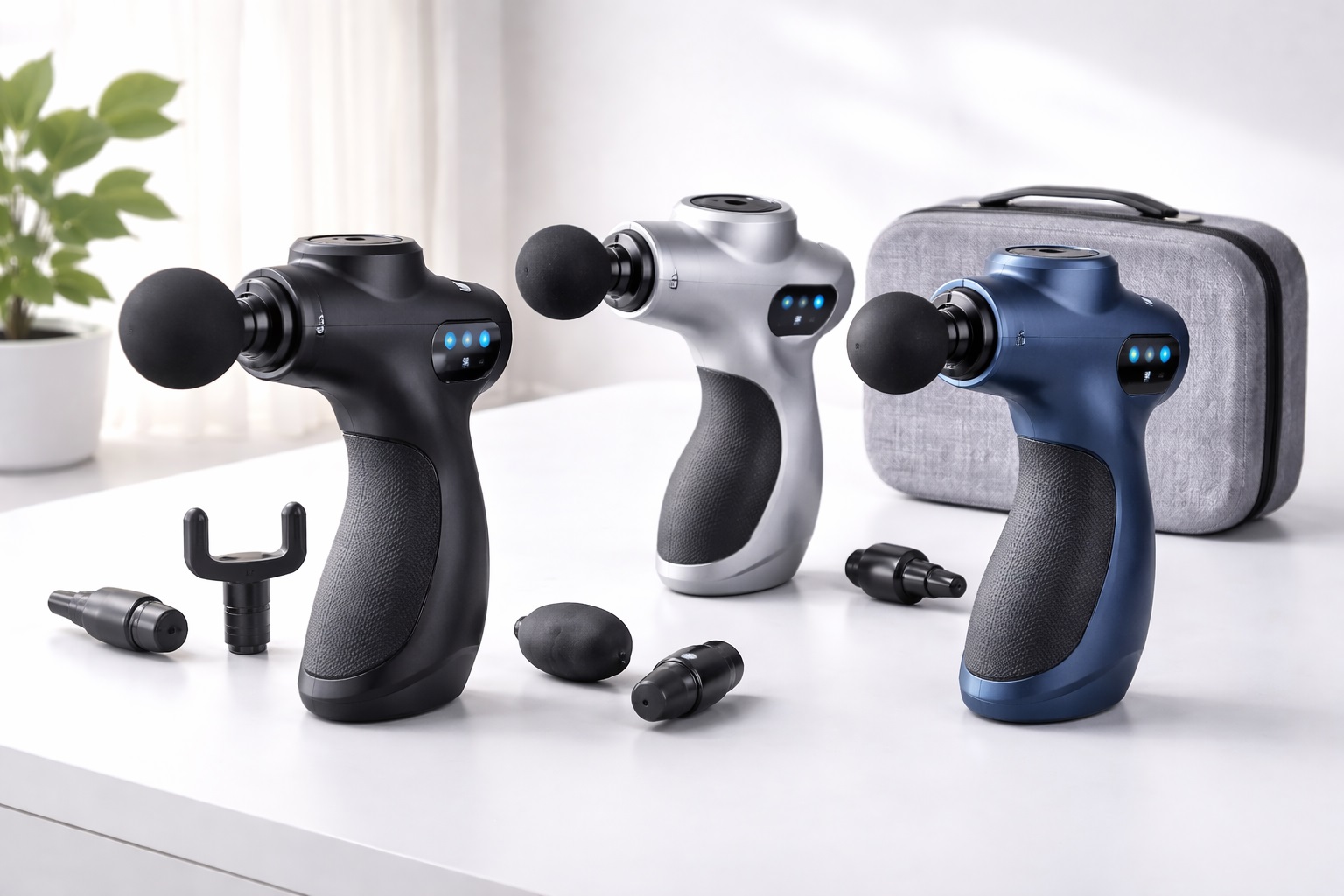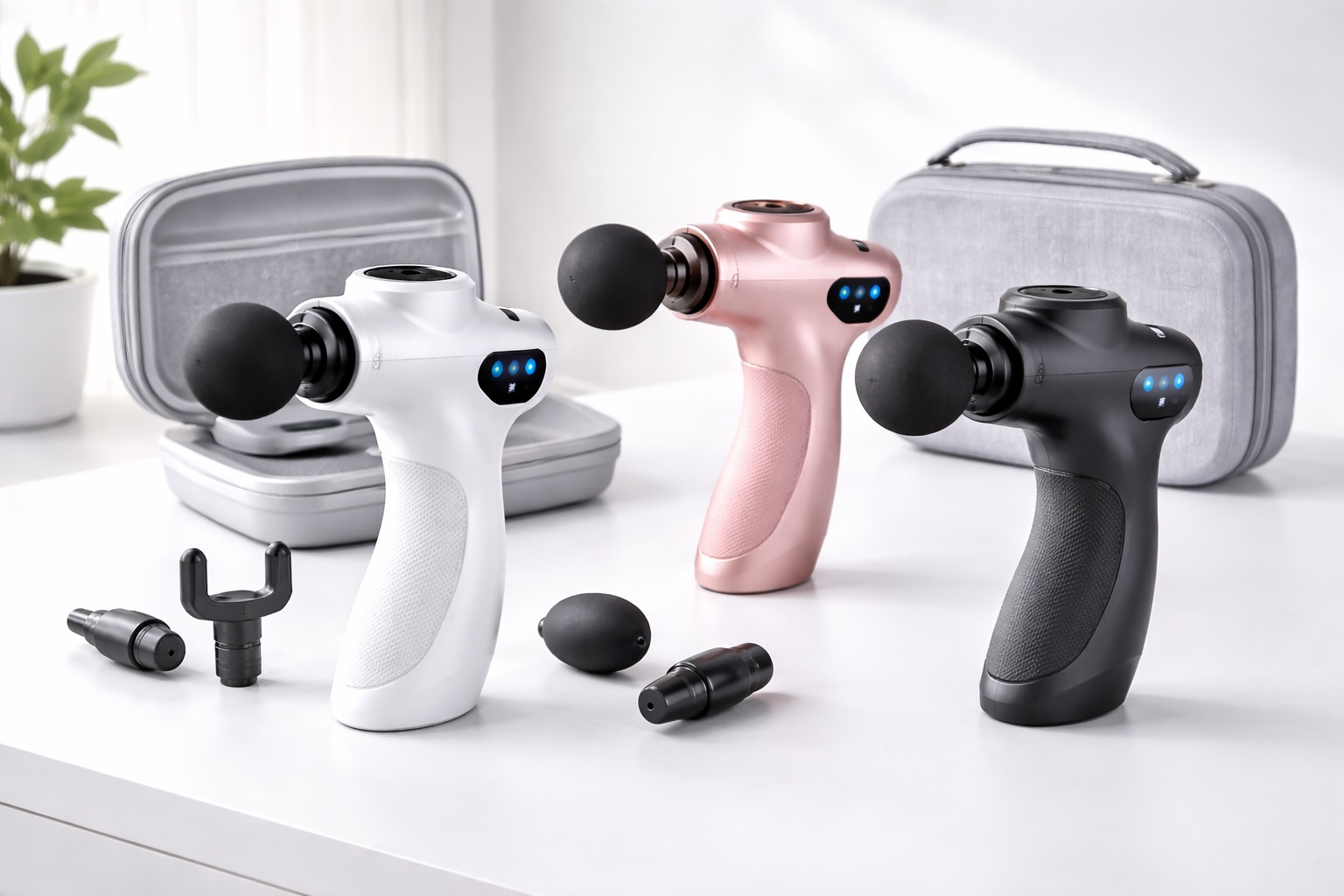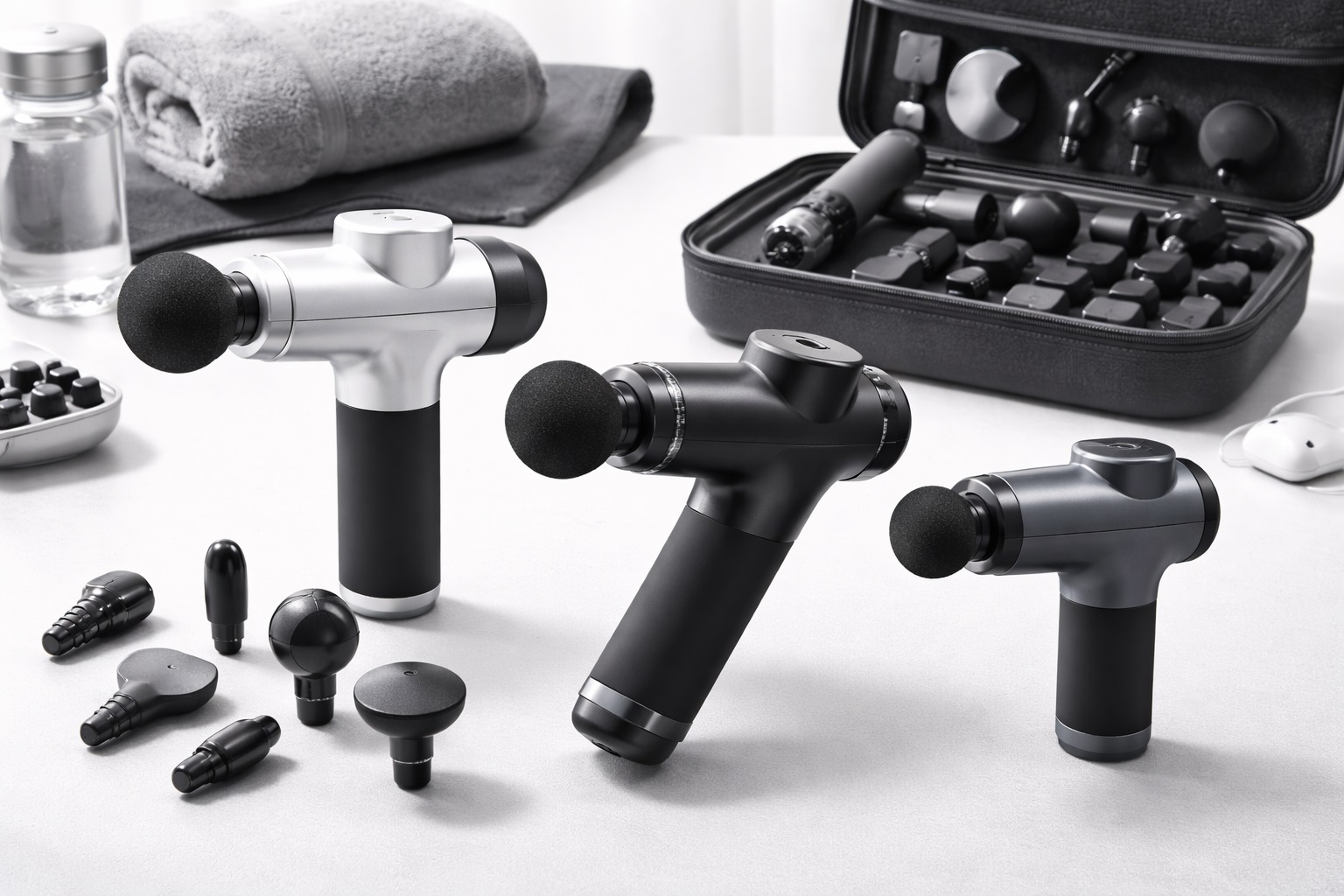
Best Massage Guns for Muscle Recovery and Deep Tissue Relief
Percussive massage devices have gone from a niche piece of physical therapy equipment to something sitting in gym bags, office drawers, and living rooms everywhere. The appeal is straightforward: a few minutes of targeted percussion on a tight calf, a sore shoulder, or an overworked lower back can loosen muscle tension in a way that's hard to replicate with stretching alone, and doing it yourself at home means not scheduling around a therapist's availability.
What isn't as straightforward is picking the right one. Massage guns range from compact, single-speed devices that fit in a pocket to heavy-duty models with a dozen speed settings and a case full of attachments, and the right choice depends heavily on who's using it and for what. An athlete working through post-training soreness has different needs than someone who wants something quiet enough to use at a desk during a break, and a device built for occasional home use doesn't need the same durability as one seeing daily use in a gym bag.
This guide walks through the categories of massage guns that consistently come up in recovery and wellness recommendations, laying out honestly what each one does well and where its compromises show up. Rather than assuming more power or more attachments always means a better product, the goal here is matching the device to the actual use case in front of you.
A few core factors separate a genuinely useful massage gun from one that ends up in a drawer after a few uses: percussive strength and amplitude, how loud it is during operation, how long the battery lasts between charges, the variety and quality of interchangeable heads, and how comfortable it is to hold and maneuver over sore or hard-to-reach muscles. Keeping those factors in mind while reading through the options below will make the eventual decision considerably easier.
It's also worth setting realistic expectations from the start. A massage gun is a recovery aid, not a substitute for proper warm-ups, stretching, or professional treatment when something is actually injured rather than simply tight. Used sensibly, alongside good training and recovery habits, it can meaningfully reduce everyday muscle tightness and speed up how quickly you feel ready for the next session, but it works best as one part of a broader recovery routine rather than a stand-alone fix for every ache.
It's also worth understanding how percussive therapy fits alongside other common recovery tools rather than replacing them outright. Foam rolling applies broad, sustained pressure across a muscle group and tends to work well as a general warm-up or cool-down tool, while a massage gun's rapid, localized percussion is often more effective for pinpointing a specific knot or tight spot that a foam roller simply glides over. Static stretching, meanwhile, addresses muscle length and flexibility in a way percussive therapy doesn't directly target. None of these tools is a strict replacement for the others, and many experienced athletes rotate between them depending on what a particular day's soreness actually calls for.
Top Massage Guns (Detailed Reviews)
1. Premium Massage Gun – Best Overall
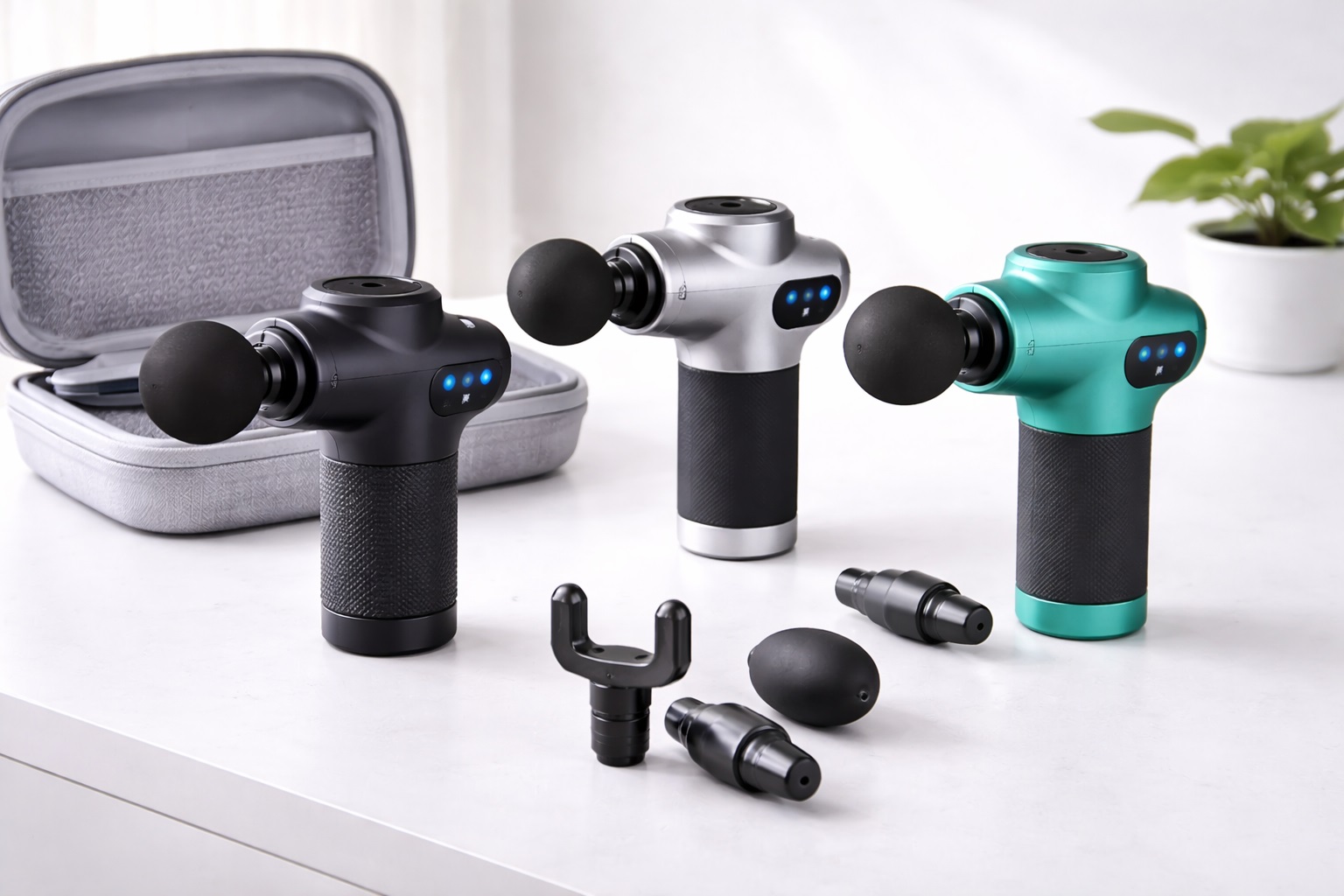
Premium massage guns typically combine strong percussive amplitude, a wide range of adjustable speeds, and a full set of attachment heads designed for different muscle groups, from broad flat heads for large areas like the back to narrower bullet heads for targeting knots. Build quality tends to be noticeably better at this tier too, with quieter brushless motors and sturdier housings that hold up to frequent use.
- Pros:
- Strong, adjustable percussive power suited to deep tissue work
- Wide range of attachment heads for different muscle groups
- Quieter brushless motors compared to entry-level devices
- Generally more durable for frequent, long-term use
- Cons:
- Highest price point in the category
- More features than casual, occasional users may need
Best For: Athletes and serious fitness enthusiasts who use a massage gun regularly and want the full range of intensity and attachment options.
Why We Recommend It: It delivers the most complete experience in the category, with enough power and attachment variety to handle everything from light warm-ups to deep, targeted recovery work.
2. Budget Percussion Massager – Best Budget Pick
Budget percussion massagers cover the fundamentals, a motor, a couple of speed settings, and two or three basic attachment heads, at a fraction of the price of premium models. They won't match the amplitude or attachment variety of pricier options, but for straightforward, occasional muscle relief, they get the job done without a significant investment.
- Pros:
- Low price makes it an accessible entry point into percussive therapy
- Simple controls with no learning curve
- Adequate for light, occasional muscle relief
- Cons:
- Weaker percussive amplitude than premium models
- Fewer attachment heads and speed settings
- Build quality and battery life tend to fall short of pricier models over time
Best For: First-time buyers or anyone who wants occasional muscle relief without a large upfront cost.
Why We Recommend It: It covers the basic use case, occasional percussive relief, at a price that makes sense for anyone unsure whether they'll use a massage gun often enough to justify a premium model.
3. Compact Travel Massage Gun – Best for Travel
Built to fit in a gym bag or carry-on, compact travel massage guns trade some percussive power and battery capacity for a smaller, lighter housing. This category is aimed at people who want recovery tools on hand during trips, tournaments, or trips to the gym, where a full-size device would simply be inconvenient to carry.
- Pros:
- Small, lightweight design that fits easily into a bag
- Quick to charge and easy to pack for travel
- Still capable of meaningful percussive relief despite the smaller size
- Cons:
- Generally less powerful than full-size premium models
- Smaller battery means shorter run time between charges
Best For: Athletes and travelers who want a recovery tool that fits easily into a gym bag or suitcase.
Why We Recommend It: It keeps percussive recovery available on the road or between gym sessions, without asking you to carry a bulky, full-size device you might not have room for.
4. Mini Massage Gun – Best for On-the-Go Relief
Even smaller than the compact travel category, mini massage guns are built to be held in one hand and used briefly throughout the day, whether that's a quick pass over a tight shoulder at a desk or a few seconds of relief between sets at the gym. They sacrifice the most in raw power and attachment variety, but their size makes them genuinely convenient for quick, frequent use.
- Pros:
- Extremely portable and easy to use one-handed
- Good for quick, frequent sessions rather than long deep-tissue work
- Usually among the most affordable options available
- Cons:
- Limited percussive power compared to larger devices
- Fewer or no interchangeable attachment heads
- Smaller battery capacity limits extended use sessions
Best For: Anyone who wants quick, on-the-go muscle relief rather than a dedicated deep-tissue recovery session.
Why We Recommend It: Its convenience is the entire point, small enough to keep in a desk drawer or gym bag for a quick session whenever mild tension builds up.
5. Quiet Massage Gun for Office Use – Best for Shared Spaces
Designed around lower decibel operation, this category uses quieter motors and dampened housings so it can be used in a shared office, a quiet home, or around sleeping family members without drawing attention. The trade-off is usually a somewhat gentler maximum percussive strength compared to louder, higher-amplitude devices.
- Pros:
- Noticeably quieter operation than standard massage guns
- Suitable for use in shared or quiet environments
- Still effective for light to moderate muscle tension
- Cons:
- Generally less powerful at maximum settings than louder premium models
- May not satisfy users seeking intense deep-tissue percussion
Best For: Office workers and anyone in a shared living space who needs muscle relief without disturbing others nearby.
Why We Recommend It: It solves a genuine, practical problem, using a massage gun without the loud percussive noise most models produce, while still delivering useful relief for everyday tension.
6. Massage Gun for Athletes – Best for Intensive Recovery
Built specifically with athletic recovery in mind, this category emphasizes maximum percussive amplitude, higher stall force for pushing into dense muscle tissue, and attachment heads designed for large muscle groups used heavily in training, like quads, hamstrings, and the upper back. Battery life and motor durability also tend to be prioritized, since these devices are meant to handle daily post-training use.
- Pros:
- High stall force suited to dense, well-trained muscle tissue
- Attachment heads designed for large muscle groups common in athletic training
- Built for frequent, near-daily use without performance dropping off
- Cons:
- Loud at higher settings, similar to premium models
- More device than casual or occasional users typically need
Best For: Athletes and serious trainees dealing with regular post-workout muscle soreness and tightness.
Why We Recommend It: It's built around the specific demands of athletic recovery, strong percussive force against dense muscle and the durability to handle daily use, rather than lighter, occasional wellness use.
Buying Guide: How to Choose the Best Massage Gun
1. Percussive amplitude and stall force
Amplitude refers to how far the massage head travels with each stroke, while stall force measures how much pressure the motor can handle before stalling out. Higher numbers on both generally mean a more effective deep-tissue experience, which matters more for athletes with dense muscle tissue than for someone seeking light, general relief.
2. Number and range of speed settings
A wider range of speed settings lets you start gently on sensitive areas and increase intensity for larger, tolerant muscle groups. Devices with only one or two speeds are more limiting, especially if multiple people with different tolerance levels will share the same unit.
3. Noise level
Quieter motors matter enormously if you plan to use the device around others, in an office, or late at night. Read reviews specifically for decibel comparisons rather than assuming all massage guns are equally loud, since the difference between models can be substantial.
4. Battery life and charging
Battery life varies significantly by device size and motor power, with smaller mini and travel models generally offering shorter run times than full-size premium units. Consider how often you'll use the device and whether you're willing to charge it frequently versus wanting it ready at all times.
5. Attachment head variety
Different heads, flat, round, bullet, and fork-shaped, are designed for different muscle groups and levels of sensitivity. A wider selection lets one device serve multiple purposes, from broad back coverage to targeted knot release, without needing separate tools.
6. Weight and ergonomics
A heavier device can become tiring to hold during longer sessions, particularly when reaching awkward areas like the upper back. Look for a design with a comfortable grip angle, since this affects usability as much as raw power does.
7. Build quality and durability
Devices used daily, particularly by athletes in recovery-heavy training routines, benefit from sturdier construction and motors rated for more frequent use. Occasional users can generally get by with lighter-duty construction without issue.
8. Price relative to how often you'll use it
A device used several times a week justifies a bigger investment in power, attachments, and durability than one that will sit mostly unused after the first few sessions. Be honest about your actual usage pattern before choosing a price tier.
9. Portability
If the massage gun needs to travel to the gym, a competition, or in carry-on luggage, size and weight become as important as percussive strength. Compact and mini categories exist specifically to serve this need.
10. Warranty and manufacturer support
Given that these are motorized devices with moving parts, a solid warranty is a meaningful signal of build confidence. Check the warranty length and the manufacturer's reputation for support before committing to a higher-priced model.
11. Skin contact and heat features
Some models include added features like gentle heat therapy alongside percussion, which some users find enhances the relief on tight muscles. This is a nice-to-have rather than a necessity, so weigh whether it's worth any added cost.
12. App connectivity and guided routines
Certain premium models pair with a companion app offering guided routines or automatic intensity adjustment based on muscle group. This adds convenience for newer users unfamiliar with proper technique, though it isn't essential for anyone who already knows how to use a massage gun effectively.
13. Case and accessory storage
A hard carrying case with cutouts for each attachment head keeps everything organized and protects the device during travel or storage. This is a small detail, but it matters more than it seems once you're managing four or five different attachment heads that can otherwise get lost in a gym bag.
14. Charging method and cable compatibility
Devices that charge via a common cable standard are more convenient than ones requiring a proprietary charger, particularly if you travel and want to minimize the number of cables you carry. Check the charging port type before buying if this matters to your routine.
15. Grip design and one-handed use
A textured, ergonomic grip becomes especially important for reaching your own back or shoulders, since an awkward grip angle can make self-treatment of hard-to-reach areas genuinely difficult. Some devices include an angled or rotating head specifically to make solo use of these areas easier.
16. Overall value across the full package
Rather than judging a massage gun on a single spec like top speed, consider the full package together: percussive strength, noise level, attachment variety, battery life, build quality, and price. The best value option is the one where all of these line up with how you'll realistically use the device, not the one that wins on a single number.
17. Second battery and charging redundancy
Some premium and athlete-focused models ship with a second, swappable battery pack, letting you keep one charging while the other stays in use. This matters most for people who use the device heavily throughout the day, such as trainers working with multiple clients back-to-back, where waiting for a single battery to recharge would create real downtime. For occasional home use, a single battery with a reasonable charge time is usually more than sufficient, so this feature is worth paying for only if your actual usage pattern demands it.
18. Return policy and trial period
Because comfort with a massage gun's noise, weight, and grip is genuinely personal, a manufacturer or retailer that offers a reasonable trial or return window takes some of the risk out of buying sight unseen. This is particularly useful for anyone choosing between two similarly specced models, since specifications alone don't always predict how a device will actually feel in the hand after twenty minutes of real use. Reading the fine print on restocking fees or condition requirements before buying helps avoid surprises if the device isn't the right fit.
Frequently Asked Questions
How often can I safely use a massage gun?
Most guidance suggests limiting sessions to one or two minutes per muscle group, once or twice a day, though this varies by individual tolerance and the intensity setting used. Starting with shorter sessions at lower intensity is a reasonable way to gauge your own comfort level.
Can a massage gun replace a professional massage or physical therapy?
A massage gun can help manage everyday muscle tightness and soreness, but it isn't a substitute for professional treatment of injuries or chronic conditions. For persistent pain or a diagnosed condition, consulting a healthcare professional remains the appropriate step.
Is a louder massage gun always more powerful?
Not necessarily. Noise level and percussive strength are related but not identical, since motor design and dampening materials affect how loud a device sounds independent of its actual amplitude and stall force. Check specifications for amplitude and stall force rather than assuming volume equals power.
Are cheaper massage guns actually less effective, or just less feature-rich?
Budget models generally still provide genuine percussive relief for light, occasional use; the difference mainly shows up in amplitude, attachment variety, and long-term durability rather than whether the device works at all.
Can I use a massage gun directly on a joint or bone?
Massage guns are generally intended for use on muscle tissue rather than directly on joints, bones, or the spine, since percussion on these areas can cause discomfort or, in some cases, injury. Stick to fleshy muscle areas and avoid bony prominences.
Do massage guns help with soreness after every type of workout?
They tend to be most useful for general muscle tightness and delayed-onset soreness following exercise, rather than acute injuries. For sharp or unusual pain, it's worth pausing use and considering whether the issue needs medical attention rather than percussive therapy.
How do I know which attachment head to use for a specific muscle?
As a general rule, larger flat or round heads work well for big muscle groups like the back and thighs, while smaller bullet or fork heads target specific knots or areas along the spine's edges. Many manufacturers include a basic usage guide with the device to help match heads to muscle groups.
Is it worth buying a massage gun with a companion app?
For newer users, app-guided routines can help with learning proper technique and intensity levels. Experienced users who already know how to use percussive therapy effectively may find the app feature less necessary.
How long should the battery last on a good massage gun?
This varies widely by device size and power, with mini and travel models generally offering shorter run times than full-size units. Checking manufacturer-stated battery life and real user reviews together gives a more realistic picture than specifications alone.
What's the most common mistake people make with a massage gun?
Using too high an intensity setting too soon, particularly on sensitive areas, which can cause bruising or discomfort rather than relief. Starting at a lower speed and gradually increasing intensity as tolerance builds is the safer, more effective approach.
Should I buy a massage gun online or try one in person first?
Trying a massage gun in person, if possible, helps gauge noise level and grip comfort before committing. For well-reviewed models, buying online based on detailed specifications and verified reviews is also a reasonable and common approach.
Is it normal for a massage gun to feel uncomfortable at first?
A degree of discomfort on tight or sensitive muscles is common, especially at higher intensity settings, but sharp or lasting pain is not a normal response and is a sign to stop and lower the intensity. Starting gently and building up tolerance over several sessions is the safer approach for new users.
Can a massage gun help with tension headaches or neck tightness?
Some people use lighter settings around the upper shoulders and neck muscles for general tension relief, though direct use on the neck or head should be approached carefully and at the lowest intensity. If headaches are frequent or severe, it's worth discussing with a healthcare provider rather than relying solely on a massage gun.
Do massage guns work well on larger body types or very muscular athletes?
Devices with higher stall force and amplitude tend to perform better on denser muscle tissue, which is one reason models marketed specifically for athletes emphasize these specifications. Lower-powered budget or mini devices may feel less effective on larger, more muscular areas.
What should I do if my massage gun stops working properly?
Check the warranty terms first, since manufacturing defects are typically covered for a set period after purchase. Keeping the original receipt and packaging during the warranty window makes any necessary return or replacement process considerably smoother.
Can multiple people in the same household share one massage gun?
Yes, as long as the attachment heads and grip design suit different users comfortably, and it's good practice to clean the attachment heads between users. A device with a wider range of speed settings tends to work better for households where tolerance for intensity varies between people.
Does a more expensive massage gun necessarily last longer than a budget one?
Generally, yes, since premium models tend to use sturdier motors and housings rated for more frequent use, but this isn't guaranteed across every brand. Checking user reviews specifically for long-term durability feedback gives a more reliable picture than price alone.
Is there an ideal time to use a massage gun, before or after exercise?
Many people use a lighter setting briefly before exercise to help warm up muscles, then a more thorough session afterward to aid recovery from soreness. Both uses are common; the right approach depends on personal preference and how your body responds to each timing.
Do I need a massage gun if I already stretch and foam roll regularly?
A massage gun isn't strictly necessary if stretching and foam rolling already keep muscle tightness manageable, but many people find it complements those habits by reaching areas or providing a type of pressure that's harder to replicate manually. It's an addition to a recovery routine rather than a required replacement for existing habits.
Are massage guns safe to use every day?
For most healthy adults using moderate settings on general muscle tightness, daily use in short sessions is generally considered reasonable, though individual tolerance varies. If you notice persistent bruising, numbness, or pain rather than relief, it's a sign to reduce frequency or intensity and consult a professional if the issue continues.
Can a massage gun cause bruising if used incorrectly?
Yes, particularly at high intensity settings on sensitive areas or with prolonged pressure in one spot rather than gliding movement. Bruising is generally a sign that the setting was too aggressive for that particular muscle or that too much static pressure was applied, and easing off intensity or moving the device more fluidly across the muscle usually resolves it.
Final Verdict
- Best Overall: The premium massage gun, for its combination of power, attachment variety, and build quality.
- Best Budget Pick: The budget percussion massager, for occasional relief at an accessible price.
- Best for Travel: The compact travel massage gun, for athletes and travelers who need a portable option.
- Best for Shared Spaces: The quiet massage gun for office use, for anyone who needs relief without the noise.
The right massage gun depends far more on how and where you'll actually use it than on which model has the most attachments or the highest price tag. An athlete recovering from daily training has different needs than someone who wants a quiet tool for occasional desk-break relief, and matching the device to that real pattern of use, rather than chasing maximum specifications, is what leads to a purchase that actually gets used regularly instead of sitting in a drawer.
It's also worth thinking about how the device fits into your broader routine rather than treating the purchase decision in isolation. Someone training five or six days a week has very different recovery needs than someone reaching for a massage gun once or twice a month after an unusually long walk or a stressful day at a desk. Buying more device than you'll realistically use rarely pays off, just as buying too little power can leave serious athletes frustrated with a tool that can't keep up with dense, well-trained muscle. Start from an honest read of your own habits, not the most impressive spec sheet, and the right category from this list becomes fairly clear.