Best Espresso Coffee Maker in 2026: Barista-Quality Picks
Getting barista quality coffee at home doesn't always mean buying a true espresso machine, though for many people that's exactly the right move. This guide looks at eight coffee makers relevant to that goal: one genuine espresso machine capable of pulling real shots and steaming milk, plus several strong drip and single-serve alternatives that get you closer to café-level consistency without the learning curve or cost of espresso equipment. Being clear about which is which matters, since these machines solve fairly different problems.
If pulling actual espresso shots and making milk-based drinks at home is the goal, only one machine on this list is truly built for that. The rest are included because "barista quality" also describes consistent extraction, precise temperature control, and reliable results, qualities that several well-regarded drip and pod machines deliver in their own way, even without an espresso machine's pressure-brewing process. Below, we break down what each option actually offers so you can match the right machine to what you're hoping to get out of your morning coffee.
Price is a reasonable rough guide here, but it isn't the whole story. A true espresso machine with a built-in grinder typically costs significantly more than a drip or pod machine, reflecting the added mechanical complexity of pressure-based brewing. That doesn't mean cheaper machines can't produce genuinely good coffee, just that they're solving a different problem than espresso extraction, and it's worth being clear-eyed about that distinction before you spend your money.
Top 8 Best Coffee Makers for Barista-Quality Coffee (Detailed Reviews)
1. Mr. Coffee 12-Cup – Best For Bare-Bones Budget Buyers Who Just Want Good Drip Coffee
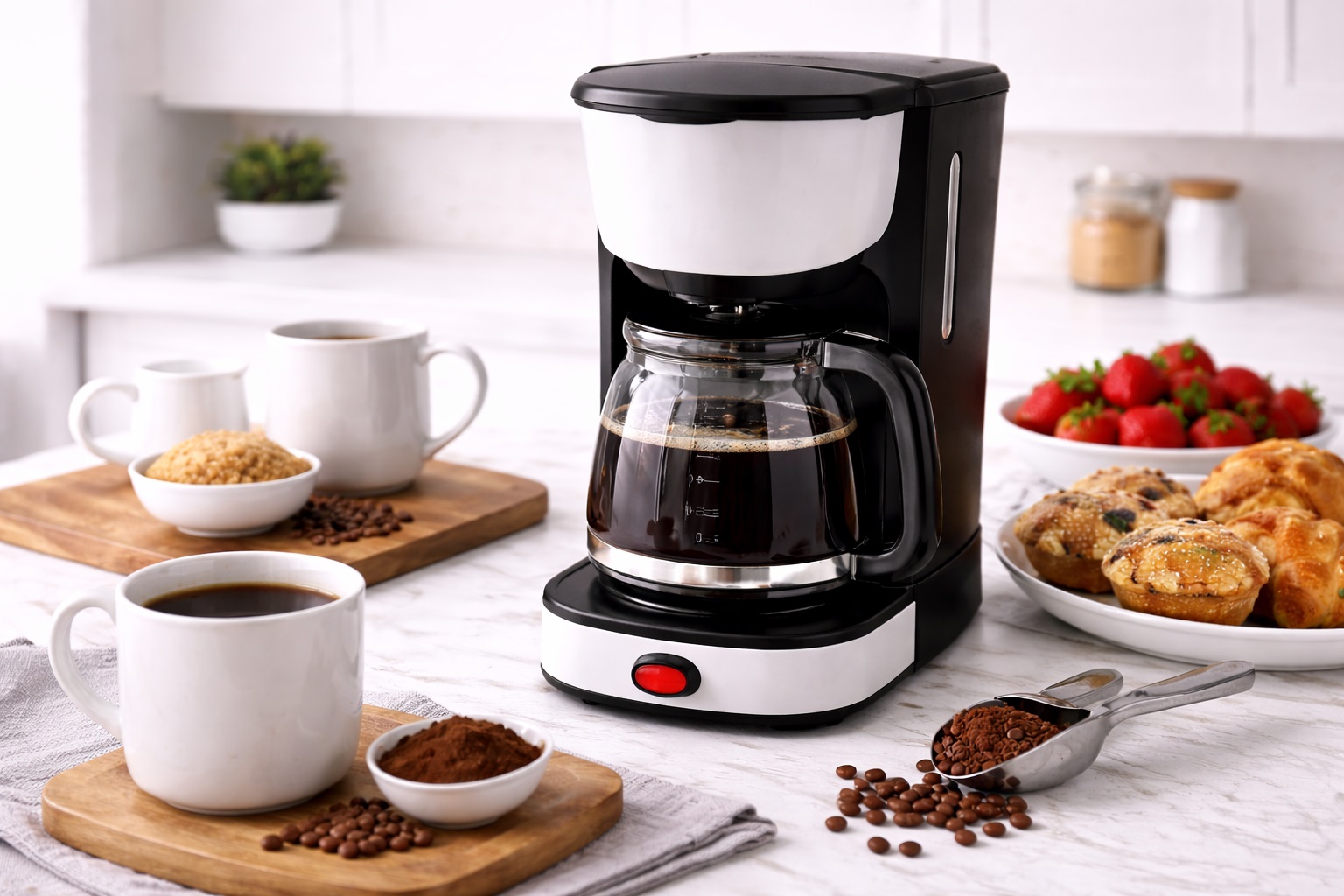
The Mr. Coffee 12-Cup isn't an espresso machine and doesn't try to be one, but it's included here as the honest budget baseline: a simple, reliable drip brewer for anyone who wants a decent cup without chasing café-level extraction. Its Grab-a-Cup feature lets you pour mid-brew, a small convenience on busy mornings when you can't wait for the full cycle.
For coffee drinkers who are curious about the "barista quality" conversation but aren't ready to invest in specialized equipment, this machine is a reasonable place to start, and the money saved can go toward better beans, which arguably has more impact on cup quality than the brewer itself at the entry level.
It won't deliver espresso or the extraction precision of pricier machines, and it's worth setting that expectation clearly before buying. What it does offer is dependable, no-fuss coffee at one of the lowest prices in this roundup.
- Pros:
- Among the lowest prices in the category
- Grab-a-Cup pause-and-serve function
- Simple to use with no learning curve
- Cons:
- Not an espresso machine
- No advanced brew-strength or temperature settings
Best For: Budget-conscious buyers who want decent everyday coffee without paying for espresso-specific equipment.
Why We Recommend It: It's an honest, affordable starting point for anyone not yet ready to commit to true espresso equipment.
2. Keurig K-Elite – Best For Quick, Consistent Café-Style Convenience
The Keurig K-Elite isn't an espresso machine either, but its pod-based system does deliver one thing consistently well: the same cup, brewed the same way, every single time. That kind of repeatability is part of what people mean when they talk about café-quality consistency, even if the underlying brewing method is different from pulling a shot.
Its iced coffee setting adjusts the brew for cold drinks, which broadens what it can do beyond a basic hot cup. For anyone who wants quick, dependable results without learning an espresso machine's more involved process, this covers a meaningful part of what "barista quality" means to casual coffee drinkers.
The tradeoff is an ongoing cost per pod that's higher than ground coffee, and the flavor profile is inherently different from an actual espresso shot, so it's best understood as a different kind of quality rather than a substitute for true espresso.
- Pros:
- Highly consistent results cup after cup
- Iced coffee setting for cold brew drinks
- Quick, simple operation
- Cons:
- Not a substitute for true espresso
- Ongoing pod costs add up over time
Best For: Coffee drinkers who value consistency and convenience over the ritual of pulling shots themselves.
Why We Recommend It: Consistency is a real component of quality, and this machine delivers it reliably without any learning curve.
3. Cuisinart DCC-3200P1 – Best For Specialty-Grade Drip Brewing at Home
The Cuisinart DCC-3200P1 is a drip machine, not an espresso maker, but its 14-cup glass carafe and programmable features make it a solid choice for households that want good, consistent coffee at a larger scale than a single-serve or espresso setup allows. It's included here as a practical alternative for anyone whose interest in "barista quality" centers more on consistency and volume than on espresso specifically.
Programmable timing means you can have a fresh pot ready without babysitting the brew cycle, and the larger carafe suits households or gatherings where an espresso machine's one-shot-at-a-time approach would be too slow.
It doesn't offer the pressure-based extraction that defines true espresso, so buyers specifically chasing that should look elsewhere on this list. For everyone else, it's a dependable way to get a good cup at scale.
The auto-shutoff feature adds a layer of everyday convenience and safety, turning the warming plate off automatically rather than requiring you to remember it each morning. Combined with its larger carafe, it's a practical fit for shared kitchens or offices where several people are drawing coffee from the same pot throughout the morning.
- Pros:
- Large 14-cup glass carafe
- Programmable settings for brew timing
- Affordable relative to its capacity
- Cons:
- Not an espresso machine
- Glass carafe can affect taste if coffee sits too long
Best For: Larger households that want consistent, good-quality coffee at volume rather than single-serve espresso.
Why We Recommend It: It's a practical, affordable option for anyone whose priority is consistent quality at scale rather than true espresso extraction.
4. Breville Barista Express – Best For True At-Home Espresso and Milk Drinks
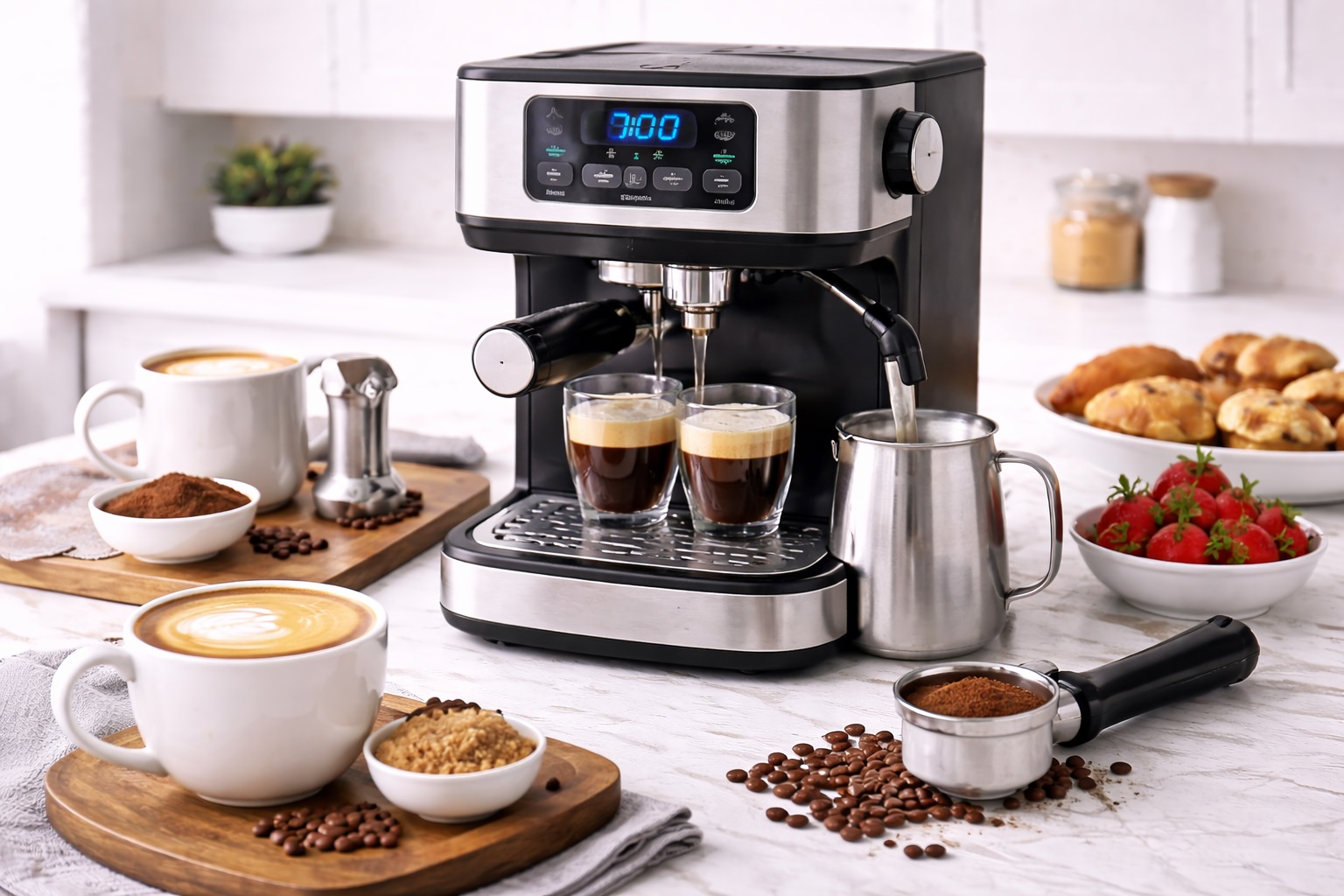
The Breville Barista Express is the one machine on this list built specifically around genuine espresso, and it's the closest most home setups get to actual café output. Its integrated conical burr grinder takes whole beans through grinding, tamping, and shot extraction, while a steam wand handles milk texturing for lattes and cappuccinos.
Getting consistently good results does take practice. Dialing in grind size, tamp pressure, and extraction time is a real skill, and new owners should expect a learning period before shots start tasting the way they hope. That said, once you're past the initial curve, the results genuinely rival what you'd get from a coffee shop.
Regular maintenance, including cleaning the grinder hopper and wiping the steam wand after each milk drink, keeps the machine performing well over time. It's the highest-priced option here, but it's also the only one actually built to produce espresso rather than approximate the idea of it.
For anyone weighing this against regular café spending, the math often works in the machine's favor over a year or two of daily use, especially for people who drink multiple espresso-based beverages a day. It's a meaningful upfront commitment, both in cost and in the time it takes to get comfortable with the process, but it's also the only path on this list to genuinely authentic results.
- Pros:
- Built-in conical burr grinder
- Produces genuine espresso and milk-based drinks at home
- Sturdy stainless steel construction
- Cons:
- Highest upfront cost on this list
- Real learning curve before results are consistent
Best For: Coffee drinkers who specifically want true espresso and milk-based drinks made at home, and are willing to learn the process.
Why We Recommend It: It's the only machine on this list that actually produces espresso, making it the clear choice for anyone whose goal is genuine barista-style output.
5. Breville Precision Brewer – Best For Café-Grade Drip Consistency
The Breville Precision Brewer applies specialty-coffee thinking to drip brewing, using PID temperature control to keep water within the range professionals recommend for proper extraction. It's not espresso, but the resulting consistency and depth of flavor is a meaningful step up from a basic drip machine.
Multiple brew modes let you adjust for different beans and batch sizes, and the more advanced basket configurations give you real control over the drip rate, something most machines at this price point don't bother offering.
For anyone who's decided espresso equipment isn't the right fit but still wants specialty-level results from drip coffee, this is one of the more capable options available, backed by a reputable brand with solid parts support.
It's worth noting that this level of control comes with a slightly steeper price than basic drip machines, but for buyers who've already ruled out espresso and just want the best possible drip coffee, that extra cost buys meaningfully better consistency than a standard machine offers.
- Pros:
- PID temperature control for consistent extraction
- Multiple brew modes for different strengths and batch sizes
- Reputable brand with strong parts and service support
- Cons:
- Not a substitute for true espresso
- Costs more than basic drip machines
Best For: Detail-oriented coffee drinkers who want specialty-grade drip consistency without moving to espresso.
Why We Recommend It: Precise temperature control is normally reserved for pricier specialty equipment, making this a strong pick for drip coffee drinkers who care about quality.
6. Ninja Hot and Cold Brewed – Best For Variety Beyond Just Espresso
The Ninja Hot and Cold Brewed system doesn't attempt espresso, but its six brew styles cover a wide range of preferences, from a classic cup to a stronger over-ice concentrate. For households where different people want different things, that variety is arguably more valuable than a single espresso machine that only does one type of drink well.
The over-ice setting in particular produces a genuinely stronger concentrate rather than just diluted hot coffee, which holds up reasonably well against melting ice, a detail that matters for anyone comparing it to espresso-based iced drinks.
Controls are handled through a simple dial rather than a complicated menu, keeping day-to-day use approachable despite the added functionality built into one machine. Its larger reservoir and carafe are sized generously enough to keep up with a household where preferences change from one day to the next.
- Pros:
- Six brew styles in one machine
- Handles both hot and cold coffee well
- Reasonable price for the feature set
- Cons:
- Not an espresso machine
- More buttons and settings than a simple drip machine
Best For: Households where different people want different styles of coffee without buying an espresso machine.
Why We Recommend It: Getting six brew styles from a single machine is good value for households that prioritize variety over espresso specifically.
7. Hamilton Beach 2-Way – Best For Budget Buyers Who Don't Need True Espresso
The Hamilton Beach 2-Way is a straightforward drip machine, not an espresso maker, and it's included here as a budget-friendly option for anyone whose interest in "barista quality" is more about a good, reliable cup than the espresso process itself. Its dual brewing modes offer a single serve or a full carafe, adding some flexibility at a low price.
It won't replicate espresso in any meaningful way, but for casual coffee drinkers, a well-made drip cup with fresh, quality beans can still be genuinely satisfying without the investment an espresso setup requires.
Because the mechanism is so simple, there's also very little that can go wrong or need repair over the years. Replacement carafes are cheap and easy to find, and the whole unit is light and compact enough to tuck away if counter space is limited in a smaller kitchen.
- Pros:
- Low upfront price
- Dual brewing modes for flexibility
- Compact enough for small kitchens
- Cons:
- Not an espresso machine
- Build quality reflects its low price
Best For: Budget-conscious buyers who want a decent cup of coffee without any interest in learning espresso.
Why We Recommend It: It's a sensible, low-cost option for anyone prioritizing a reliable everyday cup over espresso-specific features.
8. Technivorm Moccamaster – Best For Elevated Drip Coffee as an Espresso Alternative
The Technivorm Moccamaster isn't built for espresso, but its reputation among coffee enthusiasts for consistent, high-quality drip brewing makes it a legitimate alternative for anyone who wants a noticeably better cup without moving to espresso equipment. Handmade in the Netherlands, it uses a copper heating element to reach and hold proper brewing temperature quickly.
Its brew cycle finishes considerably faster than many machines, and the resulting cup is often described by enthusiasts as a meaningful step up from typical drip coffee, even without any pressure-based extraction involved.
For buyers who've decided that espresso specifically isn't the goal, but who still want a machine respected for quality and durability, this is one of the stronger drip-focused options on this list.
Its handmade construction and long-standing design also mean replacement parts are typically easier to source years down the line than with machines that get redesigned every model cycle, which is worth factoring into the higher upfront price.
- Pros:
- Handmade construction with a strong reliability track record
- Fast, consistent brew cycle
- Widely available replacement parts
- Cons:
- Not an espresso machine
- Higher upfront cost than typical budget picks
Best For: Coffee enthusiasts who want an elevated drip experience without moving to espresso.
Why We Recommend It: It has a strong reputation among coffee enthusiasts for consistent quality, making it a respected alternative for anyone not chasing espresso specifically.
Buying Guide: How to Choose the Best Coffee Maker for Barista-Quality Coffee
"Barista quality" means different things depending on whether you're chasing true espresso or simply better, more consistent drip coffee. The sections below help clarify what actually drives quality, so you can choose the right kind of machine for your goals, rather than assuming every machine on the market is trying to solve the same problem.
1. True Espresso vs. Espresso-Style Convenience
A genuine espresso machine uses pressure to force water through finely ground coffee, producing a concentrated shot that drip and pod machines simply can't replicate. Decide early whether that specific process matters to you or whether consistent, high-quality drip coffee would satisfy the same craving, since the two paths lead to very different purchases.
2. The Role of the Grinder
Freshly ground coffee makes a noticeable difference in flavor compared to pre-ground beans. A built-in grinder adds convenience and consistency, though a quality standalone grinder paired with any brewer can achieve similar results if you'd rather buy the two components separately.
3. Temperature Consistency During Brewing
Water temperature has a major effect on extraction quality, whether you're pulling espresso or brewing drip coffee. Machines with precise temperature control, like PID systems, tend to produce more consistent results.
4. The Learning Curve of Espresso Equipment
True espresso machines require learning grind size, tamp pressure, and shot timing. Be honest with yourself about whether you want to invest that time, since a drip machine can deliver satisfying results with far less effort.
5. Milk Frothing and Steam Wands
If lattes and cappuccinos are part of the appeal, look specifically for a steam wand or milk frother, since this feature is largely exclusive to espresso machines rather than drip or pod brewers.
6. Consistency Across Repeated Brews
Pod-based machines often excel at producing the exact same result every time, which is its own form of quality even without the complexity of espresso extraction.
7. Bean Freshness and Storage
Regardless of the machine, fresh beans stored properly have a bigger impact on flavor than many people expect. This matters even more for espresso, where flaws in the beans are harder to mask.
8. Maintenance Demands of Espresso Machines
Espresso machines typically require more regular cleaning, including the grinder, steam wand, and portafilter, compared to simpler drip or pod machines.
9. Cost of Ongoing Consumables
Pod machines carry an ongoing per-cup cost, while espresso and drip machines mainly require whole or ground beans, which are generally cheaper per cup over time.
10. Counter Space for Espresso Equipment
Espresso machines with built-in grinders tend to be bulkier than drip machines, so measure your available counter space before assuming a compact fit.
11. Noise During Grinding and Extraction
Built-in grinders and high-pressure pumps are noticeably louder than a simple drip cycle, which is worth considering if you brew early in the morning.
12. Realistic Expectations for Budget Machines
A budget drip or pod machine won't replicate true espresso, and it's worth setting that expectation clearly rather than being disappointed by a machine that was never designed for that purpose. Judging a drip machine against espresso is comparing two different categories rather than a fair test of either one.
13. Long-Term Value of Investing in Espresso Equipment
For frequent espresso drinkers, a quality machine can pay for itself over time compared to regular café visits, even accounting for the higher upfront cost and the learning curve involved. The math generally favors buyers who drink several espresso-based drinks a week rather than just occasionally.
Frequently Asked Questions
Is a premium coffee maker worth it?
It depends on what you're chasing. If true espresso is the goal, a premium machine with a grinder and steam wand offers capabilities budget machines simply don't have. For drip coffee, a well-chosen mid-range machine can still deliver very good results.
How do I maintain my coffee maker?
Regular cleaning of removable parts after each use and periodic descaling every one to three months, depending on your local water hardness, will keep most machines running well. Espresso machines also need the grinder and steam wand cleaned regularly.
Can a drip coffee maker really taste as good as espresso?
Not exactly the same, since the extraction methods are fundamentally different. A well-made drip coffee can be excellent in its own right, but it won't replicate the concentrated intensity of true espresso, so comparing the two directly isn't quite a fair measure of either one.
Do I need a separate grinder for an espresso machine without one?
Yes, ideally. Espresso requires a much finer, more consistent grind than most standalone grinders produce, so a burr grinder capable of fine settings is important for good results.
How long does it take to learn to use an espresso machine well?
Most people need several weeks of regular practice to consistently dial in grind size, tamp pressure, and extraction time. Results typically improve steadily over the first month or two of ownership.
Are pod machines a good substitute for espresso?
They're a different category rather than a substitute. Pod machines offer consistency and convenience, but they don't replicate the pressure-based extraction that defines true espresso.
What's the biggest factor in getting café-quality coffee at home?
Fresh, quality beans matter enormously, often more than the machine itself at a given price point. Consistent water temperature and correct grind size for your brewing method are the next most important factors, and getting all three right tends to matter more than any single feature on the machine.
Is it worth buying an espresso machine if I mostly drink drip coffee?
Probably not. If drip coffee is your everyday preference, a quality drip machine with good temperature control will likely serve you better than an espresso machine you rarely use for its intended purpose.
How often should I clean an espresso machine's grinder?
Wiping out the hopper and grinding chamber every couple of weeks helps prevent stale oil buildup, with a deeper clean recommended every few months depending on how often the machine is used.
Can I make lattes and cappuccinos without an espresso machine?
Not authentically, since these drinks are built around actual espresso shots. Some pod and drip machines offer milk-frothing accessories, but the base coffee will still be different from true espresso.
Why does espresso equipment cost more than drip machines?
Espresso machines require precise pressure pumps, temperature regulation, and often an integrated grinder, all of which add engineering complexity and cost compared to a simpler drip brewing mechanism.
Does grind size really matter that much for espresso?
Yes, significantly. Espresso requires a much finer and more consistent grind than drip coffee, and small variations can noticeably affect extraction time and flavor.
What should a beginner look for in their first espresso machine?
A semi-automatic machine with a built-in grinder simplifies the process by keeping fewer separate pieces of equipment to manage, which is generally more approachable for someone new to espresso. It also helps to start with a machine that has clear guidance or documentation, since the early learning curve is the biggest hurdle for most new owners.
Final Verdict
- Top Pick: Breville Barista Express for anyone who wants true espresso and milk-based drinks at home.
- Budget Choice: Keurig K-Elite for quick, consistent café-style coffee without the cost or learning curve of espresso equipment.
- Premium Choice: Technivorm Moccamaster for coffee enthusiasts who want elevated drip quality as an alternative to espresso.
If genuine espresso is what you're after, the Breville Barista Express is the clear choice on this list, since it's the only machine actually built to pull real shots and steam milk, even though it asks for a real time investment before results feel consistent. If you'd rather skip the learning curve and ongoing maintenance that espresso equipment demands, the Keurig K-Elite delivers dependable, café-style consistency at a much lower cost and complexity, making it a sensible choice for anyone who values simplicity over the espresso ritual itself. And for coffee enthusiasts who want a noticeably better cup without moving to espresso at all, the Technivorm Moccamaster has built its reputation on exactly that, offering a genuinely elevated drip experience for a price well below true espresso equipment. The right choice ultimately comes down to whether you're chasing true espresso or simply better, more consistent coffee, since those are genuinely different goals that happen to get grouped under the same "barista quality" label.