Best Durable Instant Pot in 2026
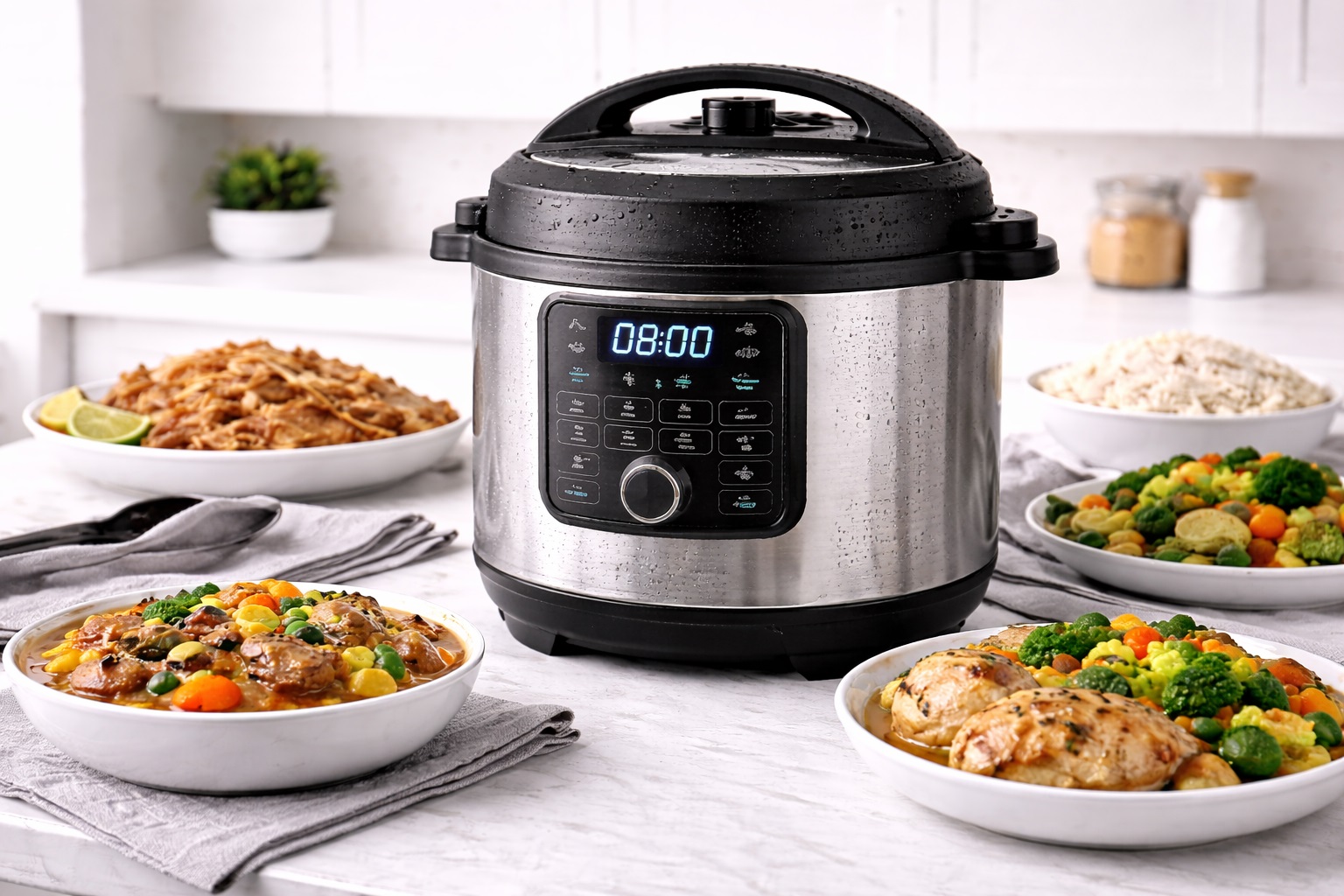
An instant pot earns its keep by becoming a daily habit, not a gadget that gets used twice and forgotten in a cabinet. That's exactly why durability matters so much when shopping for one built for long term use: the household that pressure cooks four nights a week needs a different level of build quality than someone who fires theirs up occasionally for a holiday side dish. A cooker that holds its seal, resists wear on the inner pot, and keeps its control panel responsive after hundreds of cycles will save money and frustration compared with one that starts showing problems within the first year.
Durability in this category comes down to a handful of concrete factors rather than any single spec: how sturdy the lid-lock mechanism feels, whether the inner pot resists scratching, how the housing holds up to daily handling, and how well-supported the model is with replacement parts once something eventually does wear out. Brand reputation and years on the market matter here more than in almost any other kitchen appliance category, since a longer track record means more real-world data on how a given model actually ages.
It's also worth acknowledging that no appliance lasts forever, and setting realistic expectations helps avoid disappointment. Even the most durable multi-cooker will eventually need a new sealing ring, and some will need a replacement valve or float pin after years of regular use. The goal isn't finding a unit that never needs any maintenance, but one where those inevitable, inexpensive fixes are easy to make rather than a reason to replace the entire appliance.
This guide compares eight widely available multi-cookers with an eye toward which ones are genuinely built to last, alongside a detailed buying guide covering the specific features that determine long-term reliability and a set of frequently asked questions about keeping a pressure cooker running well for years. Where relevant, each review calls out the specific design choices, such as a reinforced latch or a wear-resistant inner pot, that most directly affect how the unit is likely to hold up after hundreds of cook cycles.
It's worth noting that "durable" doesn't necessarily mean "expensive." Some of the most heavily reinforced components, like a sturdy sealing gasket or a well-designed lid latch, show up across a wide range of price points, while a few pricier models spend more of their budget on digital displays and extra presets than on the mechanical parts that actually determine how long the unit survives daily use.
It also helps to think about durability in terms of the specific parts most likely to fail first, rather than judging the appliance as a single unit. A pressure cooker rarely dies all at once; instead, a sealing ring loses its grip, a valve gets sticky, or a control panel button stops responding reliably, well before the base unit's core electronics or heating element give out. Understanding which components wear fastest, and how easy they are to replace, is often a better predictor of real-world longevity than any marketing claim about build quality.
Top 8 Durable Instant Pot Picks (Detailed Reviews)
1. Instant Pot Duo Crisp – Best For Long-Term, Do-It-All Reliability
The Duo Crisp pairs a sturdy pressure-cooking base with an included air fryer lid, and the dual-lid design is built to handle years of switching between moist and crisp cooking styles without a drop in performance. At around $180, it is one of the pricier options here, but the reinforced hardware needed to support two separate lid systems tends to translate into a genuinely long service life.
- Pros:
- Reinforced dual-lid hardware built for frequent daily switching
- Backed by the most established brand name in the category
- Wide availability of replacement parts and accessories
- Cons:
- Higher price than single-lid models with similar pot capacity
- Storing two lids requires more cabinet or counter space
- Swapping lids adds a small extra step to meal prep
Best For: Households that cook often and want an appliance engineered to hold up to years of near-daily use.
Why We Recommend It: The reinforced dual-function hardware and long-standing brand support give it one of the strongest long-term reliability profiles on this list, and the ability to replace either lid independently if one eventually wears out adds an extra layer of long-term flexibility.
2. Crock-Pot Express – Best For a Long-Lasting, Simple Design
Fewer moving parts and simpler mechanisms generally mean fewer things that can wear out, and the Crock-Pot Express leans into that philosophy with its Easy-seal lid, which locks consistently without the fiddly alignment that can wear down more complex latch systems over time. At roughly $90, it offers straightforward, dependable construction at a mid-range price.
- Pros:
- Easy-seal lid reduces wear on the locking mechanism over time
- Backed by a brand with decades of slow-cooking experience
- Straightforward controls with fewer parts prone to failure
- Cons:
- Fewer advanced features than premium, feature-heavy rivals
- Plastic exterior components feel less premium than stainless models
- Smaller third-party accessory ecosystem
Best For: Buyers who want a simple, dependable design that avoids the complexity that can shorten an appliance's lifespan.
Why We Recommend It: Simpler mechanisms tend to age better, and the Easy-seal lid is a good example of a design choice that reduces long-term wear rather than adding complexity that could eventually fail.
3. Mealthy MultiPot – Best For Long-Term Inner Pot Durability
The Mealthy MultiPot's stainless steel inner pot is built to resist scratching and coating breakdown over years of regular use, which matters more for long-term ownership than almost any other single component. Priced around $80, it delivers that durability at a price well below premium-branded competitors.
- Pros:
- Stainless steel inner pot resists scratching and wear over years
- Competitive price relative to other steel-pot competitors
- Dishwasher-safe components simplify long-term upkeep
- Cons:
- Fewer companion-app features than flagship connected models
- Handles can get hot and require mitts during handling
- Smaller accessory catalog than the market leaders
Best For: Cooks who prioritize a long-lasting inner pot over digital extras or brand prestige.
Why We Recommend It: A pot that resists wear at the component level most likely to fail first gives it strong long-term value, especially for households that sauté and brown food directly in the pot on a regular basis.
4. Ninja Foodi Deluxe – Best For Heavy Daily Use
Ninja built the Foodi Deluxe around a sturdy lid mechanism and a wide temperature range that supports its TenderCrisp Technology, and that same robust hardware holds up well to households that cook multiple times a day. At around $200, it's priced at the top of this list, reflecting the reinforced components needed to support both pressure cooking and crisping.
- Pros:
- Sturdy, well-built housing designed for frequent daily use
- TenderCrisp lid adds long-term versatility beyond basic pressure cooking
- Backed by an established, widely trusted appliance brand
- Cons:
- Higher price point than basic pressure-cooker-only models
- Bulkier footprint that takes up more counter and storage space
- Limited exterior color and finish choices
Best For: Households that cook multiple times a day and need hardware built to withstand that pace.
Why We Recommend It: The reinforced lid and housing are built with heavy daily use in mind, which is exactly the kind of durability this list prioritizes, and the brand's long track record backs that impression up with real-world longevity data.
5. Mueller UltraPot – Best For Long-Term Value
Mueller's German engineering heritage gives the UltraPot a reputation for solid mechanical reliability, and at about $70, it delivers that dependability without asking buyers to pay a premium-brand price. For anyone worried that a lower price signals shorter lifespan, the UltraPot's consistent mechanical performance argues otherwise.
- Pros:
- Solid mechanical build quality for the price tier
- Lowest price point among comparable multi-cookers on this list
- Covers the core pressure cooking, sauté, and steam functions well
- Cons:
- Smaller accessory selection compared to market leaders
- Basic digital display lacks some of the visual polish of rivals
- Fewer premium finish options than costlier competitors
Best For: Budget-conscious buyers who still want dependable, repeatable performance over years of use.
Why We Recommend It: It proves that a lower price doesn't have to mean a shorter lifespan, provided the core mechanics are sound, making it a smart pick for budget-conscious buyers who still want years of reliable use.
6. Instant Pot Duo 7-in-1 – Best For Proven, Long-Term Track Record
The Duo 7-in-1 has been on the market long enough to build an enormous base of long-term owner feedback, and its seven appliances in one design has been refined over many production years. At around $100, it remains one of the most thoroughly tested designs in the category simply by virtue of how many households have used one for years at a time.
- Pros:
- Long production run with well-understood long-term performance
- Backed by the most recognized brand name in the category
- Wide availability of replacement parts and sealing rings
- Cons:
- Basic display lacks the visual flair of newer touchscreen units
- Sealing ring requires regular attention to avoid odor retention
- No standout single feature compared to specialized rivals
Best For: Buyers who want a model with a long, well-documented history of holding up over years of ownership.
Why We Recommend It: Few models in this category have as much accumulated long-term usage data behind them, which reduces the guesswork around durability and makes it easier to predict how the unit will hold up in your own kitchen.
7. Cosori Electric Pressure Cooker – Best For Program Variety in a Sturdy Build
Cosori's Electric Pressure Cooker pairs 17 cooking programs with a solidly built housing designed to handle frequent switching between presets without excessive wear. At roughly $110, it offers a good balance of feature depth and everyday durability.
- Pros:
- Solid housing built to handle frequent preset switching
- 17 dedicated presets reduce guesswork for common dishes
- Competitively priced relative to its feature count
- Cons:
- Newer brand in this category with a smaller long-term track record
- Fewer third-party accessories designed specifically for this model
- Less established reputation for long-term durability than legacy brands
Best For: Cooks who want a deep preset library alongside a housing built for regular, everyday use.
Why We Recommend It: The solid build quality paired with program variety makes it a well-rounded choice for households that cook a wide range of dishes regularly and want that variety without sacrificing everyday reliability.
8. Instant Pot Ultra – Best For Long-Term Precision Control
The Instant Pot Ultra pairs a durable housing with a customizable altitude adjustment setting that continues to deliver accurate results year after year for cooks living at elevation. Priced around $150, it targets buyers who want precise, long-lasting control rather than simple preset buttons.
- Pros:
- Altitude adjustment continues to deliver accurate results over years of use
- Sturdy construction that holds up to frequent use
- Backed by the most recognized brand name in the category
- Cons:
- Steeper learning curve for cooks who prefer simple preset buttons
- Priced above several competitors with similar core capacity
- Advanced features go underused by casual, once-a-week cooks
Best For: Experienced cooks who want precise, long-lasting control that continues to perform accurately for years.
Why We Recommend It: The combination of precise programming and durable construction makes it a strong long-term investment for cooks who use their appliance heavily and expect it to keep performing accurately for years.
Buying Guide: How to Choose the Most Durable Instant Pot
Buying for long-term durability means looking past the spec sheet toward the components most likely to wear out first. The thirteen factors below cover what separates an instant pot that lasts a decade from one that starts showing problems within the first year or two, roughly ordered from the parts that fail most often to the details that matter more at the margins.
1. Lid-Lock Mechanism Durability
The lid latch is one of the most heavily used mechanical parts on any pressure cooker, engaged every single time you cook. A sturdy, well-engineered latch that doesn't require excessive force to seal will hold up far better over years of daily use than a flimsier design, and a latch that feels loose or requires fiddling out of the box is unlikely to improve with age.
2. Inner Pot Material and Wear Resistance
Stainless steel inner pots resist scratching and generally last far longer than nonstick-coated pots, which can degrade after repeated exposure to high heat and metal utensils. For long-term ownership, steel is typically the safer bet, particularly in households where more than one person cooks and utensil habits vary.
3. Sealing Ring Longevity and Replacement Availability
Every silicone sealing ring wears out eventually, typically every twelve to eighteen months with regular use. Choosing a model with widely available, inexpensive replacement rings prevents durability concerns about the base unit from being compounded by hard-to-find parts, which is a bigger issue for niche or discontinued models.
4. Brand Track Record and Years on the Market
A longer production history means more real-world data on how a given model holds up over years of ownership. Newer brands may perform just as well, but there's simply less long-term evidence to judge them by, so weigh enthusiastic early reviews against the fact that they can't speak to five-year reliability yet.
5. Capacity and Household Size
Instant pots typically range from small 3-quart units up to 8-quart models for large families or batch cooking. Choosing the right capacity for your household reduces strain on the unit from being pushed beyond its intended use case, such as constantly running a small pot at maximum capacity.
6. Housing and Control Panel Build Quality
A sturdy housing and a responsive, well-sealed control panel matter as much as the inner pot for long-term reliability. Reading user feedback focused specifically on longevity, rather than first impressions, is the best way to judge this, since a unit can look and feel great in the first month and still develop issues later.
7. Safety Certifications and Pressure Sensors
Models certified by recognized safety testing organizations and equipped with reliable pressure sensors and lid locks tend to be engineered with more attention to long-term mechanical integrity overall, since passing those certifications typically demands more rigorous component testing upfront.
8. Availability of Replacement Parts
Even a well-built appliance eventually needs a new sealing ring, valve, or float pin. Brands with a wide, easily accessible parts catalog make it much easier to keep an otherwise sound unit running for years rather than replacing it prematurely over one worn-out component.
9. Warranty Length and Coverage
A longer manufacturer warranty is often a signal of the brand's own confidence in its build quality. Comparing warranty terms across similarly priced models can reveal which manufacturers are willing to stand behind their durability claims, and it's worth reading exactly what the warranty covers, not just its length.
10. Ease of Cleaning and Maintenance
Units that are easy to fully disassemble and clean tend to avoid the buildup that can degrade seals and sensors over time. Regular, thorough cleaning is one of the simplest ways to extend an appliance's practical lifespan, and it costs nothing beyond a few extra minutes after each use.
11. Noise and Vibration During Operation
Excessive vibration or unusually loud operation can sometimes signal a less balanced or less well-assembled unit. While some noise during pressure release is normal, persistent rattling during cooking is worth investigating before a purchase, since it may point to looser internal tolerances.
12. Included Accessories and Their Build Quality
Steam racks, sealing rings, and lids that come included with a unit should be sturdy enough to last as long as the base appliance itself. Flimsy included accessories can be an early sign of where a manufacturer cut costs, even if the base unit itself feels solid.
13. Balancing Price Against Long-Term Durability
The most durable option isn't always the most expensive one, and some mid-priced models are built with simpler, more failure-resistant mechanisms than pricier, feature-heavy competitors. Weighing actual component quality against price, rather than assuming cost equals durability, leads to better long-term decisions and can save money without sacrificing longevity.
Frequently Asked Questions
The questions below cover what shoppers most want to know about keeping a pressure cooker running reliably for years rather than months, from spotting early warning signs to knowing which parts are worth stocking up on.
Is a premium instant pot worth it?
Often, yes, particularly when the premium goes toward genuinely durable components like a reinforced lid latch or a heavier-gauge inner pot rather than just extra digital features. A cook who uses the appliance daily will get more value from that durability than someone who uses it occasionally.
How do I maintain my instant pot for long-term durability?
Clean the inner pot, lid, and sealing ring after every use, inspect the anti-block shield and valve regularly, and replace the sealing ring before it visibly wears out rather than waiting for it to fail completely. Drying all components fully before storage also helps prevent buildup.
How long does a well-built instant pot typically last?
With proper care, a quality unit can last many years of regular use, though components like the sealing ring and occasionally the inner pot may need replacing before the base unit's electronics wear out. Heavier daily use naturally shortens this timeline somewhat compared to occasional weekend cooking.
What's the most common point of failure in a multi-cooker?
The sealing ring and lid-lock mechanism tend to show wear first, since they're engaged with every single cook cycle. Keeping both clean and replacing the sealing ring proactively helps avoid bigger issues later, including pressure loss during cooking.
Does a higher price always mean better durability?
Not necessarily. Some higher-priced models spend more of their budget on digital displays and extra presets rather than on the mechanical components that actually determine long-term reliability, so it pays to look at the specific parts rather than the price tag alone.
Is a stainless steel inner pot more durable than a nonstick one?
Generally, yes. Stainless steel resists scratching and doesn't degrade the way nonstick coatings can after years of high-heat use, making it the more durable choice for long-term ownership, especially in busy kitchens with multiple cooks.
How long do sealing rings typically last?
Most sealing rings last around twelve to eighteen months with regular use before needing replacement, regardless of how durable the rest of the unit is, so budgeting for that periodic cost is part of realistic long-term ownership.
Are instant pots safe over years of regular use?
Yes, modern multi-cookers include multiple safety mechanisms such as lid locks, pressure sensors, and anti-block shields that continue to function reliably for years when the unit is maintained as directed and inspected periodically.
Can I extend the lifespan of my instant pot with regular maintenance?
Yes. Keeping the valve, anti-block shield, and sealing ring clean, and replacing worn parts proactively rather than waiting for failure, meaningfully extends how long a unit stays reliable and performs consistently.
What's the difference between quick release and natural release?
Quick release vents steam immediately through the valve, while natural release lets pressure drop gradually on its own, which is gentler on both the food and, over time, the release valve mechanism itself.
Can I use an instant pot as a slow cooker too?
Yes, nearly all multi-cookers include a slow-cook function alongside pressure cooking, sautéing, and steaming, and using these gentler functions regularly can reduce overall wear on the pressure-specific components.
What accessories should I buy for long-term ownership?
An extra sealing ring, a spare float valve, and a glass lid for non-pressure cooking are commonly recommended so you're not caught without a working part when one eventually wears out mid-recipe.
How do I know if my instant pot needs to be replaced versus repaired?
If the issue is limited to the sealing ring, valve, or a similar inexpensive part, replacement parts are usually the better option. Persistent problems with the base unit's heating element or electronics typically signal it's time for a new appliance rather than another repair.
Does frequent use shorten an instant pot's lifespan significantly?
It accelerates wear on consumable parts like the sealing ring somewhat, but a well-built unit is designed to handle daily use for years. Choosing a model rated for heavy household use matters more than trying to limit how often you cook with it.
Should I buy an extended warranty for long-term peace of mind?
It depends on the manufacturer's standard coverage and how heavily you plan to use the appliance. For households cooking with it almost daily, an extended warranty can be worthwhile insurance against the electronics failing outside the standard coverage window.
Is it normal for an instant pot to get louder or noisier as it ages?
Some increase in noise during pressure release can be normal as seals and gaskets age slightly, but a sudden change in sound, especially during otherwise quiet phases of cooking, is worth investigating rather than ignoring.
Final Verdict
- Top Pick: Instant Pot Duo Crisp, for its reinforced dual-lid hardware and strong brand backing built to withstand years of heavy use.
- Budget Choice: Mueller UltraPot, for dependable mechanical performance at the lowest price point on this list.
- Premium Choice: Ninja Foodi Deluxe, for households willing to pay more for sturdy construction that supports heavy daily cooking.
Durability rarely comes down to a single feature; it's the sum of a sturdy lid latch, a wear-resistant inner pot, a responsive control panel, and a brand willing to keep parts and support available for years after purchase. Matching the picks above against your own cooking frequency and the buying-guide criteria should help you land on an instant pot that's still working reliably long after the warranty period ends.
If your household cooks with a pressure cooker several times a week, it's worth leaning toward models with reinforced hardware and a long track record, even if that means paying somewhat more upfront. For lighter, more occasional use, a simpler and more affordable model can deliver years of reliable service just as easily, since it won't be pushed nearly as hard.
Whichever model you choose, a small amount of routine care goes a long way toward maximizing its lifespan. Cleaning the sealing ring and valve after each use, replacing worn parts before they fail outright, and avoiding overloading the pot beyond its rated capacity are simple habits that matter more than any single spec on the box. Treated well, any of the picks above should provide years of dependable service well beyond their initial price tag.